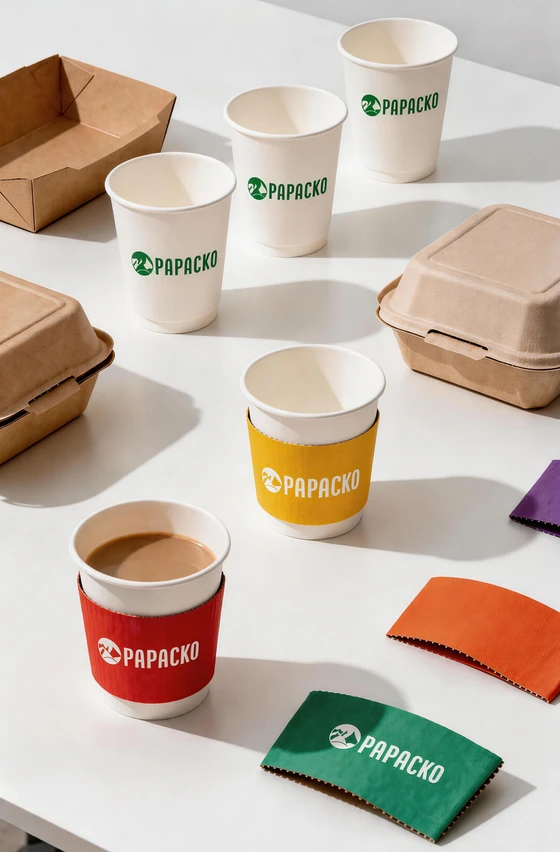
Sei pronto a creare i tuoi bicchieri di carta o le tue confezioni personalizzati con il tuo marchio?
Comunicateci le vostre esigenze — dimensioni, rivestimento, stampa e destinazione — e il nostro team vi preparerà un preventivo dettagliato entro 24 ore.
Sei pronto a creare i tuoi bicchieri di carta o le tue confezioni personalizzati con il tuo marchio?
Comunicateci le vostre esigenze — dimensioni, rivestimento, stampa e destinazione — e il nostro team vi preparerà un preventivo dettagliato entro 24 ore.
Ultimo aggiornamento: dicembre 2025 Tempo di lettura: 14 minuti Autore: Il team editoriale di Papacko
Introduzione
La tua prima importazione all’ingrosso di bicchieri di carta: 500.000 unità al prezzo di $0,055 per bicchiere, FOB Cina. Hai calcolato un costo del prodotto pari a $27.500, hai aggiunto $3.500 per la spedizione, per un totale di $31.000: budget approvato. Quattro mesi dopo, costo finale allo sbarco: $38.400. La differenza? $2.200 in dazi doganali imprevisti, $1.800 in tasse portuali e trasporto su gomma, $950 per i servizi di ispezione, $850 per spese di documentazione e intermediazione, più $1.100 per lo stoccaggio delle unità respinte che non hanno superato Conformità alle norme della FDA Test. Il costo effettivo: $0,077 per tazza — 40% in più rispetto al budget, e ora devi spiegare la differenza all’ufficio finanziario.
L’importazione all’ingrosso di bicchieri di carta comporta il calcolo dei costi effettivi allo sbarco (FOB + nolo + dazi + adempimenti normativi + costi nascosti), la gestione della logistica internazionale (ottimizzazione dei container, sdoganamento, controllo qualità), la gestione di tempi di consegna compresi tra 60 e 90 giorni e la mitigazione dei rischi (difetti di qualità, ritardi nelle spedizioni, non conformità normativa). Gli importatori esperti affrontano sistematicamente questi fattori, ottenendo costi totali inferiori del 15-25% rispetto ai principianti grazie a una selezione più oculata dei fornitori, all’ottimizzazione dei container e a un controllo di qualità proattivo.
In questa guida, imparerai:
•Calcolo del costo effettivo di importazione: tutte le spese dalla fabbrica al magazzino
•Ottimizzazione del carico dei container: massimizzazione del numero di bicchieri per container (riduzione del costo unitario)
•Valutazione dei fornitori internazionali: stabilimento vs società commerciale, valutazione delle capacità
•Documentazione doganale e strategie di ottimizzazione dei dazi
•Protocolli di controllo qualità per gli ordini transfrontalieri (prima della produzione, durante la produzione, prima della spedizione)
•Gestione dei tempi di consegna: produzione, spedizione, sdoganamento (pianificazione realistica delle tempistiche)
•Condizioni di pagamento e misure di mitigazione del rischio nelle transazioni internazionali
In sintesi: Prezzi FOB per bicchieri di carta all’ingrosso: $0,045-0,075/bicchiere (oltre 100.000 unità, produttori asiatici). Il costo effettivo allo sbarco aggiunge 50-80%: Spese di spedizione $0,018-0,025/bicchiere (trasporto marittimo) — Dazi 5-8% (variabili a seconda del Paese), Adempimenti normativi $0,008-0,015/bicchiere (test FDA, ispezioni, intermediazione). L’ottimizzazione dei container è fondamentale: un container da 20 piedi contiene 800.000-1,2 milioni di tazze (12 oz) a seconda dell’efficienza dell’imballaggio — ottimizzare a $0,018-0,022 per tazza di spedizione contro $0,030-0,040 con un carico non ottimale. Realtà dei tempi di consegna: 15-25 giorni di produzione + 25-35 giorni di trasporto marittimo + 5-10 giorni di sdoganamento = 45-70 giorni in totale. Controllo qualità: campioni pre-produzione + ispezione durante la produzione (30-50% completi) + ispezione pre-spedizione (obbligatoria prima del rilascio del pagamento). Termini di pagamento: acconto del 30% + 70% a fronte di copia del B/L (polizza di carico) o L/C (lettera di credito per ordini di grandi dimensioni). Mitigazione dei rischi principali: ispezioni di controllo qualità da parte di terzi ($250-400), assicurazione sul trasporto marittimo (0,3-0,5% del valore della merce), portafoglio fornitori diversificato.
Comprendere i mercati di esportazione dei bicchieri di carta sfusi
Panorama globale del settore manifatturiero
La scelta dei vari tipi di bicchieri di carta sfusi dipende da:
Principali paesi esportatori (Capacità produttiva e posizionamento in termini di costi):
Cina (Dominant, 60%: produzione globale di bicchieri di carta):
•Capacità produttiva: 150-200 miliardi di tazze all'anno
•Vantaggi: Costi minimi, produzione su vasta scala, catena di fornitura completa (dal cartoncino ai bicchieri finiti), capacità di stampa all’avanguardia
•Tempi di consegna: 30-45 giorni di produzione + 25-35 giorni di trasporto via mare (verso gli Stati Uniti/l'Europa)
•Considerazioni: Dazi commerciali (USA: 10-25% a seconda della classificazione del prodotto), variazioni di qualità (valutare attentamente i fornitori)
•Ideale per: Ordini di grandi volumi (oltre 500.000 unità), progetti in cui il costo è un fattore determinante, personalizzazioni complesse
Vietnam (Growing Alternative, quota di mercato 15%):
•Prezzo FOB: $ 0,050-0,070/tazza (10-15% premium rispetto alla Cina)
•Vantaggi: Tariffe più basse verso gli Stati Uniti e l'UE (accordi commerciali), miglioramento degli standard di qualità, favori politici
•Tempi di consegna: Analogamente alla Cina (30-45 giorni + 25-35 giorni di spedizione)
•Considerazioni: Base di fornitori più ridotta, produzione limitata di materie prime (importa cartoncino dalla Cina e dagli Stati Uniti)
•Ideale per: Importatori statunitensi e dell'UE alla ricerca di un'ottimizzazione tariffaria e di una diversificazione rispetto alla Cina
India (Mercato interno + esportazioni regionali, quota di mercato 12%):
•Prezzo FOB: $ 0,055-0,075/tazza (paragonabile alla Cina)
•Vantaggi: Ampio mercato interno, fornitori di lingua inglese, infrastrutture per l'esportazione in espansione
•Tempi di consegna: 35-50 giorni di produzione + 30-40 giorni di spedizione (tempi di transito più lunghi verso gli Stati Uniti e l'Europa)
•Considerazioni: Inconsistenza nella qualità, procedure burocratiche per l'esportazione, possibilità limitate di stampa di alta qualità
•Ideale per: Importazioni dal Medio Oriente, dall’Africa e dall’Asia-Pacifico (tempi di trasporto più brevi), acquirenti attenti all’ambiente (forte produzione di PLA e bagassa)
Turchia (Polo regionale per l'Europa e il Medio Oriente, quota di mercato 8%):
•Prezzo FOB: $ 0,060-0,085/tazza (15-25% premium rispetto alla Cina)
•Vantaggi: Spedizione rapida in Europa (10-15 giorni), standard di qualità UE, dazi doganali ridotti per gli importatori dell'UE
•Tempi di consegna: 25-35 giorni di produzione + 10-20 giorni di spedizione (verso l'Europa)
•Ideale per: Gli importatori europei privilegiano la rapidità e la qualità rispetto al costo più basso in assoluto
Altri mercati: Indonesia, Thailandia, Malesia (mercati emergenti), Stati Uniti/Canada (mercati nazionali ad alto costo), Sudamerica (mercati regionali)
Fasce di volume delle esportazioni e aspetti economici
La scelta dei bicchieri di carta sfusi dipende dai seguenti fattori:
•Acquirente tipo: distributori regionali, grandi catene di ristoranti (5-10 sedi), società di organizzazione di eventi
•Utilizzo dei container: Container parziale (LCL – Less than Container Load) o container condiviso
•Prezzo FOB: $ 0,065-0,080/tazza (volume inferiore, costo unitario più elevato)
•Spedizioni: $ 0,025-0,035/tazza (premio LCL rispetto a FCL)
•Costo totale all'arrivo: $0,110-0,140/tazza
•Analisi del punto di pareggio: Il trasporto LCL è più economico rispetto al trasporto aereo, ma il trasporto FCL è preferibile se i volumi lo giustificano
Ordini di media entità (200.000-1.000.000 di unità):
•Acquirente tipo: Distributori nazionali, catene con più sedi (oltre 25 sedi), fornitori del settore della ristorazione
•Utilizzo dei container: 1-2 container FCL (Full Container Load) da 20 piedi o 1 container da 40 piedi
•Prezzo FOB: $ 0,055-0,065/tazza (si applicano sconti sul volume)
•Spedizioni: $ 0,018-0,025/tazza (efficienza FCL)
•Costo totale all'arrivo: $ 0,085-0,105/tazza
•Ottimizzazione: Un singolo container da 40 piedi è più efficiente di due da 20 piedi (costi di spedizione unitari inferiori)
Ordini all'ingrosso di grandi quantità (oltre 1.000.000 di unità):
•Acquirente tipo: catene nazionali (oltre 100 punti vendita), distributori all’ingrosso, catene di negozi al dettaglio
•Utilizzo dei container: Diversi container HC (High Cube) da 40 piedi
•Prezzo FOB: $0,045-0,055/tazza (sconti sul volume massimi)
•Spedizioni: $ 0,015-0,020/tazza (tariffe per contenitori multipli)
•Costo totale all'arrivo: $ 0,070-0,090/tazza
•Considerazioni: I costi di magazzinaggio sono elevati, la previsione della domanda è fondamentale, è possibile ricorrere al finanziamento da parte dei fornitori
Metodologia per il calcolo del costo effettivo all’arrivo
Analisi dettagliata della formula dei costi
Nel valutare i bicchieri sfusi, occorre tenere conto dei seguenti aspetti:
Modello completo dei costi di importazione:
“`
Costo di importazione unitario =
(Prezzo FOB per unità)
+ (Trasporto internazionale / Totale unità)
+ (Assicurazione / Totale unità)
+ (Dazi all’importazione % × [FOB + nolo])
+ (Spese di sdoganamento / Totale unità)
+ (Ispezioni e collaudi / Numero totale di unità)
+ (Trasporti nazionali / Totale unità)
+ (Costo del capitale circolante / Totale unità)
+ (Contingenza difetti % × Totale)
“`
Esempio dettagliato dei costi (500.000 bicchieri da 12 once, dalla Cina agli Stati Uniti)
Per comprendere le diverse tipologie di bicchieri di carta sfusi è necessario prestare attenzione ai seguenti fattori:
Costi del prodotto di base:
Voce di bilancio
Calcolo
Costo per tazza
Costo totale
Note
Prezzo FOB
500K × $0,055
$0.0550
$27,500
Prezzo franco fabbrica
Trasporto interno in Cina
Dalla fabbrica al porto
$0.0015
$750
Trasporto su gomma verso il porto di Shanghai/Ningbo
Trasporti internazionali:
Voce di bilancio
Calcolo
Costo per tazza
Costo totale
Note
Trasporto marittimo
2 container da 20 piedi a $2.200 ciascuno
$0.0088
$4,400
Spedizione da porto a porto
THC (Movimentazione merci in terminal)
Tasse portuali di origine
$0.0010
$500
Caricamento, documentazione
Assicurazione sul trasporto marittimo
0,41 TP3T del valore delle merci
$0.0002
$110
Copre le perdite e i danni subiti durante il trasporto
Destinazione THC
Scarico merci nei porti statunitensi
$0.0012
$600
Scarico dei container
Dazi doganali e imposte:
Voce di bilancio
Calcolo
Costo per tazza
Costo totale
Note
Dazio all'importazione
6,51 TP3T × (1 TP4T 27.500 + 1 TP4T 4.400)
$0.0041
$2,074
Dazio statunitense sui bicchieri di carta (HS 4823.69)
Commissioni dello spedizioniere doganale
Tariffa fissa
$0.0007
$350
Documentazione, archiviazione
MPF (Elaborazione delle merci)
0,3464% del valore delle merci (max $528)
$0.0010
$528
Tassa doganale statunitense
HMF (Manutenzione portuale)
0,1251 TP3T del valore della merce
$0.0001
$34
Tassa sulle infrastrutture portuali
Controllo qualità e conformità:
Voce di bilancio
Calcolo
Costo per tazza
Costo totale
Note
Campione di pre-produzione
Una tantum
$0.0002
$120
Approvare prima della produzione
Controllo durante la produzione
Controllo qualità effettuato da terzi
$0.0006
$300
Produzione del modello 50% completata
Ispezione pre-spedizione
Controllo qualità obbligatorio
$0.0007
$350
Prima di autorizzare il pagamento
Test di conformità alle norme della FDA
Analisi di laboratorio
$0.0010
$500
Sicurezza dei materiali, prove di migrazione
Consegna e gestione delle spedizioni nazionali:
Voce di bilancio
Calcolo
Costo per tazza
Costo totale
Note
Trasporto su gomma
Dal porto al magazzino (50 miglia)
$0.0016
$800
Trasporto di container dal porto
Scarico e stoccaggio
Manodopera + 1 mese di deposito
$0.0012
$600
Ricezione, controllo e sistemazione delle scorte
Costi finanziari e di rischio:
Voce di bilancio
Calcolo
Costo per tazza
Costo totale
Note
Elaborazione dei pagamenti
Commissioni sui bonifici, conversione valutaria
$0.0005
$250
Commissioni bancarie 3%
Costo del capitale circolante
75 giorni × tasso annuo 8%
$0.0035
$1,750
Liquidità immobilizzata (costo opportunità)
Contingenza relativa ai difetti
1,51 TP3T: tasso di difetti previsto
$0.0010
$500
Sostituire/smaltire le unità difettose
Riserva per imprevisti
3% per imprevisti
$0.0025
$1,250
Ritardi, costi aggiuntivi
Riepilogo del costo totale allo sbarco:
Categoria
Costo totale
Per tazza
% del totale
Prodotto (FOB + mercato interno)
$28,250
$0.0565
65.2%
Trasporto e assicurazione
$5,610
$0.0112
13.0%
Dazi e dazi doganali
$2,986
$0.0060
6.9%
Controllo qualità
$1,270
$0.0025
2.9%
Consegna e stoccaggio
$1,400
$0.0028
3.2%
Finanza e rischio
$3,750
$0.0075
8.7%
COSTO TOTALE AL DESTINATARIO
$43,266
$0.0865
100%
Approfondimento critico: Il prezzo FOB ($0,055) rappresenta solo il 64% del costo effettivo allo sbarco ($0,0865). Gli importatori che si basano esclusivamente sui prezzi FOB sottostimano l'investimento di 57%.
Strategie di ottimizzazione dei costi
Per comprendere le caratteristiche dei comuni bicchieri di carta sfusi è necessario prestare attenzione ai seguenti fattori:
Strategia 1: Ottimizzazione del carico dei container
Impatto dell'efficienza degli imballaggi:
Metodo di imballaggio
Tazze per cartone
Cartoni per pallet
Pallet per container da 20 piedi
Totale coppe
Costo di spedizione per tazza
Imballaggio inadeguato
500
40
10
200,000
$0.0110
Imballaggio standard
1,000
40
10
400,000
$0.0055
Imballaggio ottimizzato
1,000
50
12
600,000
$0.0037
Tattiche di ottimizzazione:
•Utilizzare imballaggi ad alta densità (impilamento a incastro per i bicchieri conici)
•Massimizzare l'altezza dei pallet (fino a 2,2 m in un container da 20 piedi, 2,5 m in un container da 40 piedi HC)
•Ridurre gli sprechi di materiale cartone (scatole più leggere = maggiore capacità di carico del prodotto)
•Abbina le taglie in modo strategico (riempi gli spazi vuoti con taglie più piccole)
Risparmi reali: Ottimizzando da 200.000 a 400.000 tazze per container, si dimezzano i costi di spedizione per tazza ($0,011 → $0,0055) = $2.200 di risparmio per ogni ordine da 400K.
Strategia 2: Ottimizzazione delle aliquote d'imposta
L'importanza della classificazione secondo i codici HS:
I bicchieri di carta classificati in base a codici HS (Sistema Armonizzato) diversi sono soggetti ad aliquote di dazio diverse:
Codice HS
Descrizione
Aliquota dei dazi statunitensi
Aliquota dei dazi dell'UE
Strategia
4823.69.00
Bicchieri di carta (standard)
6.5%
6.5%
Classificazione standard
4823.61.00
Bicchieri in bambù/bagassa
0%
0%
Utilizzo di materiali sostenibili = esenzione dai dazi doganali
4823.70.00
Carta stampata/pressata
3.5%
4.0%
Tazze in fibra stampata: riduzione dei dazi
Azione: Collaborare con lo spedizioniere doganale per classificare i prodotti in base all'aliquota d'imposta più bassa applicabile (la classificazione deve essere legittima e non deve costituire una falsa dichiarazione).
Risparmi potenziali: 500.000 tazze, $32.000 valore delle merci × 3% dazio ridotto = Risparmio $960 per spedizione.
Strategia 3: Negoziazione dei termini di pagamento
Impatto delle condizioni di pagamento sul capitale circolante:
Condizioni di pagamento
Quando viene pagato
Liquidità immobilizzata
Costo annuo degli interessi (8%)
Livello di rischio
100% in anticipo
Prima della produzione
75 giorni
$1,370
Molto elevato (senza leva finanziaria)
30% + 70% prima della spedizione
Standard
60 giorni
$1,096
Medio (standard del settore)
30% + 70% contro B/L
Dopo la spedizione
45 giorni
$822
Basso (pagamento alla spedizione della merce)
L/C (Lettera di credito)
Al momento della presentazione del documento
50 giorni
$913
Molto basso (garanzia bancaria)
Tattica di negoziazione: Offrire un prezzo unitario leggermente più alto (1-2%) in cambio della condizione “70% contro copia della polizza di carico” anziché “70% prima della spedizione”.”
Valore: Per le aziende in crescita, un miglioramento del flusso di cassa vale più di un piccolo sovrapprezzo.
Ottimizzazione dei container e logistica
Tipi di container e pianificazione della capacità
La scelta dei comuni bicchieri di carta sfusi dipende da:
Specifiche standard dei container:
Container standard da 20 piedi:
•Dimensioni interne: 5,9 m di lunghezza × 2,35 m di larghezza × 2,39 m di altezza
•Volume: 33 metri cubi
•Carico utile massimo: 28.000 kg (61.730 libbre)
•Capacità tipica del bicchiere: 400.000-600.000 (bicchieri da 12 once, a seconda della confezione)
•Costo del trasporto marittimo: $ 1.800-2.500 (dall'Asia alla costa occidentale degli Stati Uniti), $ 2.500-3.200 (verso la costa orientale degli Stati Uniti)
•Costo per tazza: $0,0045-0,0063 (Costa occidentale), $0,0062-0,0080 (Costa orientale)
Container High Cube da 40 piedi:
•Dimensioni interne: 12,03 m di lunghezza × 2,35 m di larghezza × 2,69 m di altezza
•Volume: 76 metri cubi (2,3 volte la capacità di un container da 20 piedi)
•Carico utile massimo: 26.500 kg (58.400 libbre — leggermente inferiore a 20 piedi a causa del peso del container)
•Capacità tipica del bicchiere: 950.000-1.200.000 (bicchieri da 12 once)
•[ ] Export history: 3+ years exporting to your target market
•[ ] Order retention: >70% customer reorder rate (indicates satisfaction)
Segnali di allarme (Reject supplier if found):
•❌ Refuses factory visit or only allows “marketing” tour (hides actual production)
•❌ No quality certifications or expired certificates
•❌ Outdoor material storage or visibly damaged raw materials
•❌ Machinery >15 years old with no maintenance records
•❌ Cannot provide customer references or references are unverifiable
•❌ Claimed capacity doesn’t match equipment count (exaggerating capability)
•❌ No formal QC processes or testing equipment
Bandiere verdi (Prioritize supplier):
•✅ Welcomes unannounced visits (confidence in operations)
•✅ Current ISO 9001 + FDA + FSC certifications
•✅ Modern equipment (<5 years) with automated systems
•✅ Provides 5+ verifiable references with 2+ year relationships
•✅ Detailed QC documentation and defect tracking
•✅ Climate-controlled storage with inventory management system
•✅ English-speaking QC manager available for technical discussions
Quality Control for International Orders
Pre-Production Quality Control
The key to choosing available bulk paper cups depends on:
Phase 1: Material Specifications Verification
Critical Specifications to Lock Down:
Specifiche tecniche
Standard Range
Metodo di verifica
Criteri di accettazione
Paperboard GSM
230-280 GSM (12-16oz cups)
Request mill certificate
Must match order spec ±5%
PE/PLA coating weight
15-20 gsm per side
Lab testing report
Within ±2 gsm tolerance
Capacità del bicchiere
As specified (12oz = 355ml)
Fill test
±5% tolerance (338-372ml)
Rim curl diameter
3-4mm curl
Caliper measurement
2.5-4.5mm acceptable
Sovrapposizione delle cuciture
3-5 mm
Visual + measurement
3-6mm acceptable
Print colors
Pantone specified
Proof sample comparison
ΔE <6.0 acceptable
Pre-Production Sample Approval:
What Is PPS (Pre-Production Sample):
•50-100 cups manufactured using production materials and equipment
•Represents final production quality exactly
•Produced BEFORE bulk production begins (your last chance to catch issues)
PPS Inspection Process:
1.Request PPS after order placement (before production starts)
2.Receive samples via express shipping (DHL/FedEx, 3-5 days)
3.Inspect thoroughly:
– Measure dimensions (height, diameter) with caliper
– Fill with water, check for leaks (let sit 30 minutes)
– Inspect print quality (compare to Pantone swatches)
– Test rim quality (smooth, no sharp edges)
– Check structural integrity (squeeze cup, verify rigidity)
4.Approve in writing or request revisions
5.Retain samples as reference standard for production inspection
Critico: Production should NOT begin until PPS approved. This is your contractual protection—rejected production can reference “does not match approved PPS.”
During-Production Inspection (DPI)
Understanding different bulk paper cups requires attention to these factors:
When to Conduct DPI:
•Orders >100,000 units (large investment justifies inspection cost)
•First order with new supplier (validate production capability)
•Custom printing or specialized specifications (higher risk of errors)
•Azione: Require rework, replacement, or cancel order with full refund
Costo: $280-400 per PSI (includes inspector travel to factory, 4-6 hour inspection, detailed report with photos).
ROI: PSI catches defects before paying balance and incurring shipping costs. Finding 5% defect rate on $30,000 order = $1,500 saved vs PSI cost of $300 = 400% ROI.
Customs Documentation and Import Compliance
Required Documentation Checklist
Understanding available bulk paper cups requires attention to these factors:
Core Shipping Documents:
1. Fattura commerciale:
•Scopo: Declares shipment value for customs duty calculation
•Critico: Values must match across all documents (invoice, packing list, B/L)
2. Distinta di imballaggio:
•Scopo: Details shipment contents for inspection and unloading
•Required information:
– Number of cartons: 500 cartons
– Cartons per pallet: 50 cartons per pallet = 10 pallets
– Gross weight: 5,200 kg total (10.4 kg per carton)
– Net weight: 4,800 kg (9.6 kg per carton—cups only)
– Carton dimensions: 60cm × 40cm × 50cm each
– Total volume: 10 pallets × 1.44 CBM = 14.4 CBM
– Container number: ABCU1234567 (matches bill of lading)
3. Polizza di carico (B/L):
•Scopo: Proof of shipment, title document for goods ownership
•Tipi:
– Polizza di carico marittima: Sea freight (most common)
– Lettera di trasporto aereo: Air freight (faster but 5-10× more expensive)
– Telex Release: Electronic B/L (faster customs clearance)
•Key details:
– Shipper: Factory/exporter name
– Consignee: Importer name (or “To Order” for L/C transactions)
– Notify party: Customs broker contact
– Port of loading: Shanghai, China
– Port of discharge: Los Angeles, USA
– Container number and seal number
– Number of packages: 500 cartons
– Freight terms: Prepaid or Collect (who pays ocean freight)
4. Certificate of Origin (COO):
•Scopo: Declares country of manufacture, determines duty eligibility
•Tipi:
– Form A: Generalized System of Preferences (GSP) for developing countries (duty reduction)
– Form E: ASEAN-China Free Trade Area (ACFTA) for preferential rates
– Non-preferential COO: Standard certificate (no duty benefits)
•When required: Especially important for duty optimization (can reduce duties 30-100%)
•Pubblicato da: Chamber of Commerce in exporting country
5. FDA Prior Notice (US imports):
•Scopo: Required for all food-contact articles imported to US
•Processo: Customs broker submits Prior Notice to FDA 4 hours before arrival (sea freight)
•Information required:
– Manufacturer name and address
– Product description: Paper cups for food/beverage contact
– Intended use: Single-use disposable food service
– Country of origin
•Failure to file: Shipment refused entry, returned to origin (catastrophic delay/cost)
Customs Clearance Process Timeline
When evaluating standard bulk paper cups, consider the following:
Step-by-Step US Customs Clearance (typical timeline):
Day 0: Vessel Arrival at Port
•Container ship arrives at destination port (Los Angeles, Long Beach, etc.)
•Steamship line notifies customs broker: “Container ABCU1234567 arrived”
•Submits FDA Prior Notice (for food-contact items)
•Pays estimated duties (importer’s bond used as guarantee)
Days 2-3: Customs Examination Decision
•US Customs reviews entry, decides:
– Green light (95% of shipments): Released without physical exam
– Yellow light (4% of shipments): Document review required
– Red light (1% of shipments): Physical inspection required
•Days 5-7: Export customs clearance in China, trucking to port, container loading
•Durata: 7-10 days
Phase 5: Ocean Freight (Weeks 9-13)
•Destination determines transit time:
– Asia to US West Coast: 14-21 days (Los Angeles, Long Beach)
– Asia to US East Coast: 25-35 days (New York, Savannah)
– Asia to Europe: 25-35 days (Rotterdam, Hamburg)
– Asia to Middle East: 18-25 days (Dubai, Jeddah)
•Durata: 14-35 days (port-to-port)
Phase 6: Customs Clearance and Delivery (Weeks 13-14)
•Days 1-3: Arrive at port, customs documentation filed
•Days 3-5: Customs review (physical inspection if selected)
•Days 5-7: Release, drayage to warehouse, unloading
•Durata: 5-10 days
Total Lead Time Summary:
Destination
Pre-produzione
Produzione
Spedizioni
Customs
Cronologia completa
Costa occidentale degli Stati Uniti
14 days
20 giorni
18 days
7 days
59 days (8.5 weeks)
US East Coast
14 days
20 giorni
30 giorni
7 days
71 days (10 weeks)
Europa
14 days
20 giorni
30 giorni
7 days
71 days (10 weeks)
Medio Oriente
14 days
20 giorni
22 days
7 days
63 days (9 weeks)
Planning Rule: Add 15-20% buffer for unexpected delays (weather, port congestion, inspections).
•Safe planning timeline: 70-90 days from order to warehouse receipt
Managing Delays and Contingencies
For available bulk paper cups, focus on:
Common Delays and Mitigation:
Production Delays (Most common: 30% of orders):
•Causes: Raw material shortages, equipment breakdowns, underestimated capacity
•Impatto: 5-15 day delay
•Mitigazione:
– During-production inspection (catch delays early)
– Penalty clauses in contract (5-10% discount for delays >1 week)
– Backup supplier for urgent situations
Shipping Delays (Seasonal, 20% of shipments):
•Causes: Port congestion (Chinese New Year, peak season), weather, vessel schedule changes
•Impatto: 5-20 day delay
•Mitigazione:
– Avoid peak seasons (September-October, pre-Chinese New Year)
– Book freight 2-3 weeks before production completes
– Consider air freight for critical shipments (expensive but 5-7 day transit)
Customs Delays (Rare but severe, 5% of shipments):
•Causes: FDA holds, physical inspections, documentation errors
•Buyer perspective: Medium-high risk (pays 100% before receiving goods)
•When appropriate: Established suppliers with good track record, moderate order values ($10K-50K)
Option 2: 30% Deposit + 70% Against Bill of Lading Copy (Better for Buyers)
•Processo:
1. Pay 30% deposit when placing order 2. Pay 70% balance when supplier provides B/L copy (proof goods shipped)
•Supplier perspective: Medium risk (ships goods before receiving full payment, but has B/L leverage)
•Buyer perspective: Lower risk (goods already shipped, verifiable through B/L, can inspect before clearance)
•When appropriate: First orders with new suppliers, larger orders ($30K+), quality-sensitive products
Option 3: Letter of Credit (L/C) (Safest for Large Orders)
•Processo:
1. Buyer’s bank issues L/C guaranteeing payment to supplier upon document presentation 2. Supplier ships goods, presents documents to bank (B/L, invoice, packing list, inspection report) 3. Bank verifies documents match L/C terms, releases payment to supplier 4. Buyer receives documents, clears customs, pays bank
•Supplier perspective: Very low risk (bank guarantee payment)
•Buyer perspective: Very low risk (payment only if documents prove shipment/quality)
•Costs: Bank fees 0.5-2% of transaction value ($150-600 for $30K order)
•When appropriate: Large orders (>$50K), new suppliers, high-risk countries, quality-critical products
Option 4: 100% Advance Payment (Avoid if Possible)
•Processo: Pay 100% upfront before production begins
•Supplier perspective: Zero risk (full payment secured)
•Buyer perspective: Very high risk (no leverage if quality poor or delivery delayed)
•When appropriate: Very small orders (<$2,000), long-term trusted suppliers only, samples
•Avviso: Never pay 100% upfront to new/unverified suppliers
Payment Term Negotiation Strategy:
Supplier Proposal
Your Counter-Offer
Justification
“100% upfront”
“30% deposit + 70% against B/L copy”
“We need shipment proof before full payment—standard practice”
“50% deposit + 50% before shipment”
“30% deposit + 70% against B/L copy”
“We’ll pay 70% upon B/L to align cash flow with shipment”
“No pre-shipment inspection”
“PSI mandatory before balance payment”
“PSI protects both parties—ensures quality before shipping”
Compromise Approach: Offer 1-2% price premium for better payment terms (worth the cost for risk mitigation).
Risk Mitigation Instruments
Understanding available bulk paper cups requires attention to these factors:
1. Third-Party Escrow Services:
Come funziona:
•Buyer deposits payment to escrow company (e.g., Alibaba Trade Assurance, Payoneer Escrow)
•Escrow holds funds until buyer confirms goods received and acceptable
•Supplier receives payment after buyer approval or dispute resolution
Fees: 2-5% of transaction value Ideale per: First orders with unproven suppliers, orders $5K-30K (too small for L/C, too large for 100% risk)
2. Marine Cargo Insurance:
Cosa comprende:
•Loss or damage during ocean transit (storms, ship sinking, container falling overboard)
•Theft or pilferage at port
•Water damage, fire, collision
What It Doesn’t Cover:
•Poor quality manufacturing (QC catches this before shipping)
•Delays or late delivery (need separate delay insurance)
•Improper packaging by supplier (supplier’s responsibility)
Costo: 0.3-0.5% of goods value
•Example: $30,000 order × 0.4% = $120 insurance (covers up to $30,000 loss)
When to Buy: ALL ocean freight shipments >$10,000 value (cost is negligible compared to loss risk).
3. Supplier Credit Checks and Vetting:
Third-Party Verification Services:
•Dun & Bradstreet: Credit reports for international companies ($50-150 per report)
Conclusione: QC inspections aren’t costs—they’re investments with 150-250% ROI.
Conclusion: Key Takeaways for Successful Bulk Imports
Bulk paper cup importing delivers 40-60% cost savings vs domestic purchasing, but success requires systematic approach to landed cost calculation, supplier vetting, quality control, and logistics management. Experienced importers achieve 15-25% lower total costs than novices through container optimization, proactive QC, and strategic supplier relationships.
Critical Success Factors:
1.Calculate TRUE Landed Cost: FOB price represents only 55-65% of total cost. Include freight, duties, inspections, compliance, working capital, and contingencies. Formula:
5.Use Appropriate Payment Terms: 30% deposit + 70% against B/L copy for most orders. L/C for large orders (>$50K) or new suppliers. NEVER 100% upfront with unverified suppliers.
6.Plan Realistic Timelines: 60-90 days from order to warehouse (production 20-25 days + shipping 18-35 days + customs 7-10 days). Add 15-20% buffer for delays.
Bulk paper cup importing isn’t just cost reduction—it’s strategic advantage. Implement the frameworks in this guide systematically, and you’ll achieve lowest total costs while mitigating risks and ensuring quality consistency across international supply chains.
Ready to Start Importing? Partner with Papacko for end-to-end support: supplier sourcing, quality control coordination, customs compliance guidance, and logistics optimization for your bulk paper cup imports.
•Blog #041: Wholesale Paper Cups (bulk ordering strategies)
•Blog #045: Paper Cup Suppliers (supplier selection guide)
•Blog #028: Paper Cup Wholesale (export pricing analysis)
Questions About Bulk Paper Cup Imports? Contact Papacko’s export team for supplier recommendations, landed cost calculations, and quality control coordination.
Prossime letture consigliate
Bulk cup buying usually needs to connect export math with supplier type, factory capability, and the commercial cup ranges the final order will actually cover.
Papacko Content Team — Realizziamo guide pratiche e basate sull’esperienza di fabbrica per il packaging B2B nel settore alimentare e delle bevande. Gli argomenti trattati includono la scelta di bicchieri e ciotole di carta, rivestimenti in PE/PLA/a base acquosa, conformità alle normative sul contatto con gli alimenti, stampa, controllo qualità e flussi di lavoro pronti per l’esportazione, affinché caffetterie, ristoranti, distributori e partner OEM possano crescere con una fornitura affidabile.