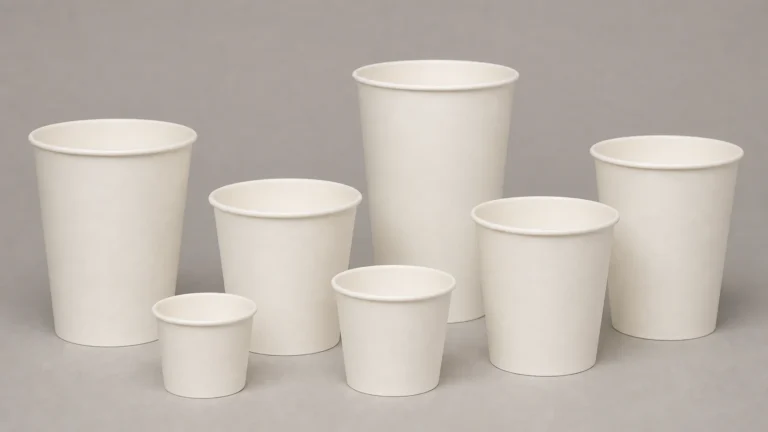
Sei pronto a creare i tuoi bicchieri di carta o le tue confezioni personalizzati con il tuo marchio?
Comunicateci le vostre esigenze — dimensioni, rivestimento, stampa e destinazione — e il nostro team vi preparerà un preventivo dettagliato entro 24 ore.
Sei pronto a creare i tuoi bicchieri di carta o le tue confezioni personalizzati con il tuo marchio?
Comunicateci le vostre esigenze — dimensioni, rivestimento, stampa e destinazione — e il nostro team vi preparerà un preventivo dettagliato entro 24 ore.
Bicchieri di carta all'ingrosso per grossisti — Guida all'esportazione e all'approvvigionamento
Your distribution company ordered 500,000 paper cups from an overseas supplier offering 35% lower prices than domestic options, only to discover 18% of the shipment arrived crushed from poor pallet stacking, another 12% had.
Ultimo aggiornamento: aprile 2026 Tempo di lettura: 10 minuti Autore: Il team editoriale di Papacko
Introduzione
Your distribution company ordered 500,000 “>paper cups from an overseas supplier offering 35% lower prices than domestic options, only to discover 18% of the shipment arrived crushed from poor pallet stacking, another 12% had moisture damage from container condensation, and the remaining usable inventory had inconsistent GSM weights that caused complaints from 40% of your restaurant clients. The $12,000 “savings” cost $28,000 in customer refunds, replacement shipments, and lost accounts.
Bulk paper cup sourcing isn’t just about finding low unit prices—it requires systematic supplier verification (certifications, capacity audits, sample testing), container loading optimization (preventing crushing and moisture damage), quality control protocols (pre-shipment inspection catching defects before shipping), and logistics planning (customs compliance, insurance, payment terms) that separate successful bulk importers from those learning expensive lessons. The difference between amateur and professional bulk sourcing can mean 15-30% landed cost variations and 5-20% quality failure rates.
•MOQ negotiation strategies and break-even analysis
•Container loading optimization: preventing damage and maximizing density
•Quality control checkpoints: pre-production, in-line, pre-shipment inspection
•Customs and compliance: FDA, CE marking, documentation requirements
•Payment terms and trade finance for bulk orders
•Common mistakes costing importers thousands per shipment
💡 In sintesi: Bulk paper cup imports require 50,000-500,000 unit MOQs, with 40ft container holding 1.8-2.5 million cups (8oz standard) or 800,000-1.2 million (16oz).
Critical specs: verify supplier ” target=”_blank” rel=”noopener”>ISO 9001 + Certificazione FSC, conduct pre-shipment inspection (catches 80% of defects), optimize pallet stacking (8-10 pallets per container), and budget 8-12% of FOB value for shipping + duties + customs clearance.
Best pricing: FOB $0.015-0.025 per 8oz cup (250,000+ MOQ), landed cost $0.018-0.032 after logistics.
Typical lead time: 4-6 weeks production + 4-6 weeks ocean freight.
Insurance critical: $50-150 per $10,000 cargo value prevents total loss disasters.
Supplier Evaluation and Verification
Choosing reliable bulk suppliers prevents quality disasters and ensures consistent supply for distribution operations.
Requisiti di certificazione
ISO 9001 (Gestione della qualità) — Mandatory:
•Scopo: Verifies manufacturer has systematic quality control processes
•Verifica: Request certificate copy, confirm validity on ISO database
•Bandiera rossa: Supplier refuses to provide certificate or shows expired certification
•Impatto: ISO-certified suppliers have 60-80% fewer quality defects vs non-certified
•Test: Migration testing shows no harmful chemical transfer to beverages
•Non-Compliance Risk: US Customs can seize entire shipment, $50,000-200,000 loss
CE Marking (EU Markets):
•Requisito: EU Regulation 1935/2004 for food contact materials
•Documentazione: Declaration of Compliance (DoC) required at customs
•Standard di collaudo: EN 1230-2 for paper and board contact materials
•Impatto del guasto: Cannot legally sell in EU without compliance
Capacity and Reliability Verification
Production Capacity Audit:
•Domanda: “What is your daily production capacity for [specific cup size]?”
•Metodo di verifica: Request factory tour video or third-party audit report
•Warning Sign: Supplier claims 2 million cups/day but factory tour shows 4-6 production lines only (realistic capacity: 600,000-800,000/day for that setup)
•Capacity Buffer: Only commit to 60-70% of claimed capacity to ensure delivery reliability
Order History Verification:
•Richiesta: References from current wholesale customers (3-5 contacts)
•Questions for References:
– Average defect rate on deliveries? (Acceptable: <2%, Warning: >5%)
– On-time delivery rate? (Target: 90%+, Red flag: <75%)
- Responsiveness to quality issues? (Fast resolution or dismissive?)
•Alibaba/Trade Platform Reviews: Check 50+ reviews, focus on detailed complaints
Financial Stability:
•Credit Report: Request company credit report (Dun & Bradstreet for China suppliers)
•Years in Business: Prefer 5+ years (stability indicator)
•Diminishing returns: 500k → 1M (saves only $0.002/cup = $2,000 on additional 500k)
•Sweet Spot for Most Distributors: 250,000-500,000 balances price vs inventory carrying cost
Negotiation Tactics
Tactic #1: Multi-SKU Consolidation
•Strategia: Commit to high total volume across multiple cup sizes
•Esempio: “I’ll order 100k of 8oz + 100k of 12oz + 50k of 16oz = 250k total. Apply your 250k tier pricing to all SKUs.”
•Supplier Incentive: Larger total order justifies better pricing on individual SKUs
Tactic #2: Long-Term Partnership Commitment
•Strategia: Indicate repeat ordering intention to secure better initial pricing
•Approccio: “This is a test order for 100k units. If quality satisfies, we’ll reorder 200k-300k quarterly. Can you offer future-volume pricing now?”
•Risultato: Suppliers often reduce initial order price by 5-10% to secure recurring business
Tactic #3: Competitor Benchmarking
•Strategia: Obtain 2-3 quotes, use lowest to negotiate with preferred supplier
•Approccio: “Supplier B quoted $0.019/cup for 250k units. Your product quality is better—can you match $0.020?”
•Importante: Be truthful (suppliers verify competitor pricing), only use with legitimately preferred supplier
Tactic #4: Payment Terms Trade-Off
•Strategia: Offer faster payment in exchange for lower unit price
•Esempio: “Standard terms are 30% deposit + 70% before shipment. I’ll pay 50% deposit + 50% on production completion (before inspection) for 3% price reduction.”
Total Damage Prevention Investment: ~$200-400 per 40ft container Typical Damage Without Prevention: 10-20% product loss = $1,500-3,000 (on $15,000 cargo value) ROI: 375-750% (invest $400 to prevent $1,500-3,000 loss)
Quality Control and Inspection Protocol
Systematic quality control catches defects before shipping, preventing expensive customer complaints and returns.
Three-Stage Inspection Process
Stage 1: Pre-Production Inspection (PPI)
•Tempistica: Before mass production starts, after samples approved
•Scopo: Verify raw materials match specifications
•Checkpoints:
– Paperboard GSM weight (within ±5% of spec)
– Coating type/thickness (PE, PLA) via lab test
– Printing plates match approved artwork (colors, dimensions)
– Production equipment calibrated (cup forming, lid sealing)
•Costo: $200-400 per inspection visit
•Valore: Catches 40% of potential defects at earliest stage (cheapest to fix)
Stage 2: During Production Inspection (DUPRO)
•Tempistica: When 30-50% of order completed
•Scopo: Verify production quality consistency, catch issues before full run completed
•Checkpoints:
– Random sample testing (50-100 cups from production line)
– Dimensions: height, rim diameter, bottom diameter (±1mm tolerance)
– Weight consistency (±3% variation acceptable)
– Printing alignment/quality (logo centered, colors match Pantone)
– Structural defects: leaking, weak seams, rim deformation
•Costo: $250-500 per visit
•Valore: Allows mid-course corrections, prevents 30% of defects from reaching finished goods
– For 100,000 cup order: Inspect 315 random samples
– Major defects allowed: 0 (leaking, unable to use)
– Minor defects allowed: 10 (cosmetic issues not affecting function)
•Criteri di esclusione:
– Major defect rate >0%: Reject entire batch
– Minor defect rate >3%: Negotiate rework or discount
•Costo: $300-600 per inspection
•Valore: Catches 80% of remaining defects before shipping (most cost-effective intervention point)
Common Defect Types and Acceptance Thresholds
Critical Defects (0% acceptable):
•Leaking cups (seam failure, coating gaps)
•Structural collapse (can’t stand when filled)
•Hazardous material presence (toxicity in coating)
Major Defects (<0.5% acceptable):
•Rim deformation preventing lid fit
•Printing misalignment >3mm
•Significant color mismatch (ΔE >5 vs Pantone target)
•Carton moisture damage (>5% RH above ambient)
Minor Defects (<3% acceptable):
•Small printing imperfections (minor ink spots)
•Slight dimension variance (±2-3mm on non-critical dimensions)
•Carton labeling errors (incorrect count on <5% of cartons)
Customs, Compliance, and Documentation
Proper documentation and compliance prevent costly customs delays and rejection at ports.
Documentazione richiesta
Commercial Invoice:
•Scopo: Customs valuation, duty calculation
•Da includere obbligatoriamente:
– Detailed product description (“Disposable paper cups, 8oz, PE-coated”)
– HS Code: 4823.69.00 (paper tableware, not trays/dishes/plates)
– Quantity, unit price, total value (FOB)
– Payment terms (T/T, L/C, etc.)
– Supplier and buyer full details
•Protection: If goods don’t match agreement, escrow refunds buyer
Inspection Contingency Clause:
•Contract Language: “70% balance payment released only after third-party PSI confirms <2% defect rate and compliance with specifications dated [X]"
•Enforcement: Supplier accepts PSI result as binding for payment release
•Ispettore: Use independent inspection companies (SGS, Bureau Veritas, Intertek)
Partial Shipment with Quality Hold-Back:
•Strategia: For very large orders (5+ containers), ship first container as quality test
•Terms: “First container payment 30%+70%. If quality acceptable, remaining 4 containers proceed with 30%+70% each. If first container fails, order cancelled with 30% deposit forfeit only.”
•Protection: Limits exposure to 1 container value (~$25,000) vs full order value ($125,000)
Common Mistakes and Cost Traps
Learn from these frequent errors that cost bulk importers 15-30% of order value.
❌ Mistake #1: Skipping Pre-Shipment Inspection to Save $400
Problema: Ordering 500,000 cups ($15,000 value), skipping PSI to save $400 inspection fee. Discover 15% defect rate (75,000 cups unusable) after goods arrive. Loss: $2,250 + customer complaints.
L'approccio corretto: Always conduct PSI for orders $5,000+ ($300-600 cost). Catches 80% of defects before shipping. ROI: 375-750% (saves $2,000-3,000 in defects per $400 spent).
❌ Mistake #2: Ordering Mixed Container Without SKU-Level MOQ Verification
Problema: Ordering 10 different cup sizes/designs in one 40ft container (25,000 each). Supplier later reveals 50,000 MOQ per SKU—order only possible with 5 SKUs (100,000 each). Wasted time, missed shipping window.
L'approccio corretto: Confirm MOQ applies per SKU, not total container value. If mixing SKUs, verify each meets individual MOQ before finalizing order.
❌ Mistake #3: Ignoring Container Desiccants to Save $50
Problema: Shipping during humid season without desiccants. 12-18% of cartons experience moisture damage from container condensation. Loss: $1,800-2,700 on $15,000 shipment.
L'approccio corretto: Always use 2-4 container desiccants ($30-60 total). Prevents 90% of moisture damage. Tiny investment prevents 10-20% cargo loss.
❌ Mistake #4: Paying Full Balance Before Quality Verification
Problema: Paying 30% deposit + 70% balance upon production completion (before PSI). Discover 8% defect rate during PSI—but money already paid, leverage lost. Supplier offers 3% discount (insufficient compensation).
L'approccio corretto: Payment terms must tie 70% balance to PSI approval: “Balance released within 48 hours of passing PSI with <2% defect rate." Protects leverage for quality negotiation.
❌ Mistake #5: Underestimating Total Landed Cost
Problema: Supplier quotes $0.020 FOB per cup. Importer budgets $0.022 landed (assumes 10% markup). Reality: $0.027 landed after freight, duties, port fees, inland transport. Pricing to customers based on $0.022 → selling at loss.
L'approccio corretto: Budget 30-40% markup from FOB to landed cost (not 10%). Use landed cost calculator including all fees: freight, insurance, duty, brokerage, port charges, transport, inspection, miscellaneous. Validate with freight forwarder before committing.
1. Qual è la quantità minima ordinabile per i bicchieri di carta sfusi?
Il MOQ varia a seconda delle dimensioni dei bicchieri: per quelli da 8 oz/12 oz è in genere compreso tra 100.000 e 250.000 unità, mentre per quelli da 16 oz/20 oz è compreso tra 50.000 e 150.000 unità. La capacità del container determina la redditività: un container da 40 piedi contiene da 1,8 a 2,5 milioni di bicchieri da 8 oz o da 800.000 a 1,2 milioni di bicchieri da 16 oz. I fornitori stabiliscono il MOQ in base all’efficienza del ciclo produttivo (i costi di avviamento si ammortizzano su quantità maggiori). I prezzi più vantaggiosi si ottengono con 250.000-500.000 unità per SKU, con un risparmio del 30-50% rispetto agli ordini di piccole dimensioni (50.000 unità).
2. Quanto costano i bicchieri di carta all’ingrosso?
Prezzi FOB (da fornitori asiatici): bicchieri da 8 oz $0.015-0.025 per bicchiere (quantità minima d’ordine 250.000+), da 12 oz $0,020-0,032, da 16 oz $0,025-0,040. Costo franco a destinazione (compresi spedizione, dazi e logistica): aggiungere 30-40% al prezzo FOB = $0,020-0,035 per 8 oz. Fattori che influenzano il prezzo: materiale (rivestimento in PE vs PLA, +20-30% per il PLA), stampa (1 colore è la più economica, a colori +40-60%), certificazioni (FSC +3-8%). Sconti sul volume: da 100k a 250k si risparmiano 19%, da 250k a 500k si risparmiano ulteriori 14%.
3. Quanto tempo richiede la spedizione all'ingrosso di bicchieri di carta?
Tempi complessivi: 8-12 settimane. Produzione: 4-6 settimane (comprende ispezione pre-produzione, fabbricazione e controllo qualità). Trasporto marittimo: 4-6 settimane (Asia → Costa occidentale degli Stati Uniti: 18-25 giorni; Asia → Costa orientale degli Stati Uniti/Europa: 35-45 giorni). Sdoganamento: 3-7 giorni (a condizione che la documentazione sia corretta). Alternativa via aerea: 7-10 giorni in totale, ma con costi pari a 3-5 volte quelli del trasporto marittimo (conveniente solo per piccoli ordini urgenti <5.000 kg).
4. Quali misure di controllo qualità sono necessarie per gli ordini all'ingrosso?
Ispezione in tre fasi fondamentale: (1) L’ispezione pre-produzione (PPI) verifica che le materie prime siano conformi alle specifiche prima dell’avvio della produzione ($200-400, individua 40% di potenziali difetti), (2) L’ispezione in corso di produzione (DUPRO), effettuata al 30-50% del completamento, verifica l’uniformità ($250-500, consente correzioni a metà processo), (3) L’ispezione pre-spedizione (PSI) verifica che l’ordine completato al 100% sia conforme allo standard AQL 2,5 prima del carico ($300-600, individua l’80% dei difetti rimanenti). La PSI è la soluzione più conveniente in termini di costi: investire $400 per prevenire $2.000-3.000 in resi/reclami dei clienti.
5. Quali documenti sono necessari per importare bicchieri di carta?
Obbligatori: fattura commerciale (valutazione doganale, calcolo dei dazi), lista di imballaggio (verifica del carico), polizza di carico (prova di proprietà), certificato di origine (determinazione dell’aliquota dei dazi ai sensi dell’accordo di libero scambio). Specifico per gli Stati Uniti: Notifica preventiva alla FDA (4 ore prima dell’arrivo per gli articoli a contatto con gli alimenti). Specifico per l’UE: Dichiarazione di conformità (conformità al Regolamento UE 1935/2004). Facoltativi ma raccomandati: rapporti di ispezione (PSI), certificato di assicurazione, certificato fitosanitario (se il cartone proviene da paesi soggetti a regolamentazione). La mancanza di documenti causa ritardi in porto con costi di stoccaggio pari a $50-150 al giorno.
6. How do you prevent damage during bulk shipping?
Five-point damage prevention: (1) Container desiccants (2-4 units per 40ft, $30-60) eliminate condensation moisture damage (15-20% of failures), (2) Pallet shrink wrap creates moisture barrier + stability ($5-10/pallet), (3) Double-wall cartons for bottom 3 pallet layers prevent crushing ($0.10-0.15/carton, stops 30-40% of damage), (4) Load locking bars secure pallets against container walls preventing shifting ($50-100/container, prevents 10-15% damage), (5) Corner boards protect pallet edges from strap compression ($3-5/pallet). Total investment: $200-400/container prevents 10-20% product loss ($1,500-3,000 on typical $15,000 cargo).
7. What are the best payment terms for bulk paper cup orders?
Standard industry terms: 30% deposit + 70% balance before shipment offers balanced risk. Buyer protection: Withhold 70% until pre-shipment inspection (PSI) passes quality standards (<2% defect rate). Supplier protection: 30% covers raw materials, guaranteed balance after compliance. Alternative for first-time suppliers: Letter of Credit (L/C) provides bank guarantee of payment if documents prove shipment compliance (costs 0.5-2% + $200-500 fees). Avoid: 100% prepayment (maximum buyer risk) or open account/net terms (maximum supplier risk) unless 3+ year established relationship.
Conclusione
Bulk paper cup sourcing success depends on systematic supplier verification, container optimization, quality control protocols, and customs compliance—not just finding lowest FOB pricing. The 30-40% markup from FOB to landed cost and 10-20% potential damage from poor logistics planning mean professional importers who invest $600-800 in inspections and $200-400 in container protection consistently outperform price-focused amateurs by 15-30% in total cost and <2% defect rates vs 10-20% for unverified shipments.
Punti chiave:
1.Supplier verification prevents disasters: ISO 9001 + FSC certifications mandatory, verify capacity with factory audits/references, avoid new trading companies (middlemen reduce control and increase costs)
2.MOQ sweet spot: 250,000-500,000 units per SKU balances pricing (30-50% savings vs small orders) with inventory carrying costs; diminishing returns above 500k
4.Three-stage quality control essential: Pre-shipment inspection ($300-600) most cost-effective, catching 80% of defects before shipping—delivers 375-750% ROI by preventing $2,000-3,000 in customer returns per $400 spent
5.Payment terms balance risk: 30% deposit + 70% withheld until PSI approval protects buyer leverage while ensuring supplier payment; Letter of Credit ($200-500 + 0.5-2%) recommended for first-time suppliers
For distributors, importers, and wholesale operations, professional bulk paper cup sourcing delivers 15-30% total cost advantages and <2% quality failure rates through systematic verification, container optimization, inspection protocols, and customs compliance—transforming commodity purchasing into competitive advantage.
Papacko supplies bulk paper cups to wholesalers, distributors, and importers worldwide. We offer factory verification services, quality inspection coordination, container loading optimization, and customs compliance support to ensure successful bulk sourcing.
Ultimo aggiornamento: aprile 2026 Team dei contenuti: Papacko A cura di: Export Operations & Quality Assurance Department
krad lin
Papacko Content Team — Realizziamo guide pratiche e basate sull’esperienza di fabbrica per il packaging B2B nel settore alimentare e delle bevande. Gli argomenti trattati includono la scelta di bicchieri e ciotole di carta, rivestimenti in PE/PLA/a base acquosa, conformità alle normative sul contatto con gli alimenti, stampa, controllo qualità e flussi di lavoro pronti per l’esportazione, affinché caffetterie, ristoranti, distributori e partner OEM possano crescere con una fornitura affidabile.