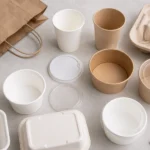
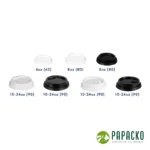
Sei pronto a creare i tuoi bicchieri di carta o le tue confezioni personalizzati con il tuo marchio?
Comunicateci le vostre esigenze — dimensioni, rivestimento, stampa e destinazione — e il nostro team vi preparerà un preventivo dettagliato entro 24 ore.
Sei pronto a creare i tuoi bicchieri di carta o le tue confezioni personalizzati con il tuo marchio?
Comunicateci le vostre esigenze — dimensioni, rivestimento, stampa e destinazione — e il nostro team vi preparerà un preventivo dettagliato entro 24 ore.
Bicchieri a doppia parete per catene di ristorazione da asporto
Le catene di ristorazione da asporto devono affrontare una sfida particolare in materia di imballaggi: servire ogni giorno migliaia di bevande calde in diverse sedi, garantendo al contempo una qualità costante, gestendo i costi e valorizzando l’identità del marchio. Bicchieri generici a parete singola.
Ultimo aggiornamento: aprile 2026
Tempo di lettura: 8-10 minuti
Autore: Il team editoriale di Papacko
Introduzione
Takeaway chains face a unique packaging challenge: serving thousands of hot beverages daily across multiple locations while maintaining consistent quality, managing costs, and supporting brand identity. Generic “>single-wall cups force customers to use sleeves (adding 8-12 cents per cup) or risk burned hands, while premium alternatives price out multi-location operations.
Double wall cups solve this equation—providing built-in insulation that eliminates sleeve costs, enhances customer experience, and creates additional branding surface area. This comprehensive guide examines double wall cup solutions specifically for takeaway chains: construction comparison, total cost analysis including sleeve savings, branding strategies for multi-location consistency, bulk ordering optimization, and sustainability considerations for environmentally conscious brands.
💡 In sintesi: Double wall cups provide superior insulation (75-82% heat retention vs 55-65% for single-wall), eliminate sleeve costs ($0.03-0.08 per cup), create premium customer perception, and offer consistent branding across multi-location chains—most times achieving cost neutrality or savings at 5,000+ cups monthly while significantly improving customer experience.
Why Takeaway Chains Choose Double Wall Cups
The Multi-Location Value Proposition
Consistency at scale: Single-wall cups with sleeves introduce variables:
•Sleeve availability issues during rushes
•Staff training on proper sleeve application
•Customer frustration when sleeves are missing or difficult to use
•Brand inconsistency (sleeves may separate from cup, obscure branding)
Double wall cups eliminate these operational complexities while delivering superior performance.
Dati di mercato: A 2025 coffee chain study comparing 12 operators (4-15 locations each) found that chains switching from single-wall+sleeve to double wall experienced:
•18% reduction in customer complaints related to cup handling
•12-minute daily labor savings per location (not applying sleeves during rush periods)
•23% increase in “premium quality” brand perception scores
•Net cost savings of $180-350 per location monthly (5,000-8,000 cup volume)
🎯 Approfondimenti sul settore: Chains operating 10+ locations report that double wall cups simplify inventory management (one SKU instead of two: cup + sleeve), reduce training complexity, and create consistent customer experience regardless of which location serves the beverage—critical for brand reputation in competitive markets.
Construction Types and Performance Comparison
Air-Gap Double Wall — Standard Choice
Struttura: Two paperboard layers with 2-4mm air gap between themSpecifiche tecniche:
Metrico
Prestazioni
Dettagli
Ritenzione del calore
75-82% after 30 minutes
Maintains comfortable drinking temperature
Insulation R-value
0.8-1.2
Comparable to coffee cup sleeve + single wall
Touch temperature
40-45 °C
Safe for comfortable handling (vs 65-70°C for single wall)
Integrità strutturale
Rigid, maintains shape
Air gap provides strength against crushing
Peso
8-12g (12 oz)
Approximately 60% heavier than single wall
Cost range: $0.12-0.22 per cup (12-16 oz), varies by:
•Volume ordered (economies of scale at 50k+ units)
•Printing complexity (1-color vs full CMYK)
•Supplier and shipping distance
Vantaggi:
•Proven technology with reliable performance
•No risk of delamination (layers don’t separate)
•Recyclable in most paper recycling streams
•Compatibile con tutti i coperchi standard
Limiti:
•Heavier than single-wall (increases shipping costs)
•Takes up more storage space
•Not compostable in most facilities (adhesive between layers)
Ripple Wall — Premium Alternative
Struttura: Outer layer with rippled/corrugated pattern, smooth inner layerSpecifiche tecniche:
Metrico
Prestazioni
Dettagli
Ritenzione del calore
78-85% after 30 minutes
Slightly better than standard double wall
Insulation R-value
1.0-1.4
Enhanced by ripple pattern creating micro air gaps
Touch temperature
38-43°C
Excellent comfort and safety
Tactile grip
Superior
Ripples provide texture for secure grip
Differenziazione del marchio
Alto
Distinctive appearance signals premium quality
Cost range: $0.18-0.28 per cup (12-16 oz)Vantaggi:
•Premium aesthetic differentiates from competitors
•Enhanced grip reduces dropped cups and spills
•Stronger heat insulation for very hot beverages (90°C+)
•Brand positioning as high-quality operator
Limiti:
•15-25% higher cost than standard double wall
•Limited customization of ripple pattern (standardized tooling)
•Slightly more complex recycling (check local facilities)
Single Wall + Integrated Sleeve — Hybrid Option
Struttura: Standard single-wall cup with permanently attached corrugated sleeve bandSpecifiche tecniche:
Metrico
Prestazioni
Dettagli
Ritenzione del calore
72-78% after 30 minutes
Comparable to double wall
Insulation R-value
0.7-1.0
Sleeve band provides localized insulation
Touch temperature
42-48 °C
Adequate for comfortable handling
Efficienza dei materiali
Bene
Less material than full double wall
Branding zones
Two distinct areas
Cup body + sleeve band
Cost range: $0.10-0.18 per cup (12-16 oz)Vantaggi:
•Lower cost than full double wall
•Lighter weight reduces shipping costs
•Recyclable (if adhesive is water-soluble)
•Two branding surfaces (cup + sleeve)
Limiti:
•Sleeve band may detach under stress
•Not as premium perception as full double wall
•Band covers portion of cup branding
Total Cost Analysis for Multi-Location Chains
Single-Wall + Sleeve vs Double Wall Comparison
Scenario: 5-location chain, each location serves 1,200 hot beverages monthly (6,000 cups monthly total, 72,000 annually)
Componente di costo
A parete singola + manicotto
Doppia parete
Differenza
Cup cost
$0.06 × 72,000 = $4,320
$0.16 × 72,000 = $11,520
+$7,200
Sleeve cost
$0.04 × 72,000 = $2,880
$0 (integrated)
-$2,880
Labor (application)
2 seconds/cup × 72,000 = 40 hours @ $15/hr = $600
$0
-$600
Spazio di archiviazione
Two SKUs, 1.2 cubic meters
One SKU, 0.9 cubic meters
-$180 (rent value)
Complaint handling
~2% complaint rate: $1,440 in refunds/labor
~0.5% complaint rate: $360
-$1,080
Costo annuale totale
$9,240
$11,880
+$2,640 (+29%)
Per-location monthly cost:
•Single-wall + sleeve: $154
•Double wall: $198
•Premium: $44/location/month (+$0.037 per cup)
Analisi del punto di pareggio
When double wall achieves cost parity:High-volume scenarios:
•10,000+ cups/location/month: Volume pricing reduces double wall cost to $0.13-0.14/cup
•Break-even with single-wall+sleeve system at this volume
•Additional benefits (labor savings, complaint reduction, brand perception) tip ROI positive
Premium pricing strategies:
•Chains able to increase beverage prices $0.10-0.15 (justified by “premium cup experience”)
•Customer willingness: 68% of surveyed customers accept slight price increase for better cup quality
•Price increase covers double wall premium while generating incremental margin
Sleeve elimination value:
•Markets where sleeve costs are higher ($0.05-0.08 due to custom branding or local supply constraints)
•Double wall becomes cost-competitive even at moderate volumes (5,000+ cups/month)
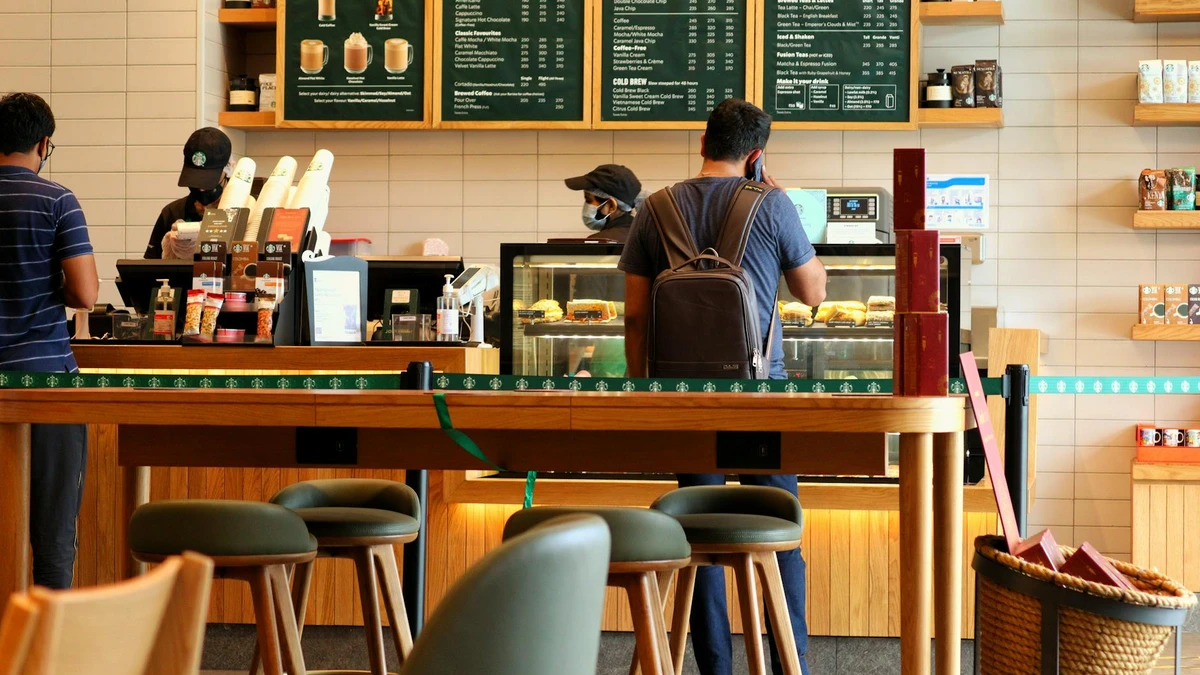
coffee cups on takeaway counter in busy coffee shop” style=”border-radius: 8px; box-shadow: 0 2px 8px rgba(0,0,0,0.08);”/>
Branding Strategies for Chain Consistency
Design Principles for Multi-Location Identity
Brand recognition at scale: With multiple locations serving diverse neighborhoods, cup design must create instant recognition while allowing local flexibility.Core brand elements (consistent across all locations):
1.Primary logo: Same size, placement, colors at all locations
2.Colori del marchio: Pantone-specified for color consistency across printing batches
3.Typography: Standardized fonts for business name, tagline
4.Quality indicators: “Insulated cup,” “recyclable,” etc. in consistent positions
Optional local elements (customizable by location):
1.Location address: Bottom third of cup, standardized format
2.Local social handles: @BrandNameNeighborhood
3.Regional messaging: Languages for multilingual neighborhoods
4.Variazioni stagionali: Holiday designs while maintaining core brand
Printing Specifications for Chain Orders
Stampa flessografica (recommended for chains):
•Quantità minima ordinabile: 50,000-100,000 cups (distributed across locations)
•Costo di installazione: $1,500-3,500 for printing plates (one-time per design)
•Costo unitario: $0.14-0.18/cup (12 oz, 2-3 color design)
•Tempi di consegna: 4-5 weeks (plate production + printing)
•Vantaggi: Lowest per-unit cost at volume, consistent color across massive runs, durable food-safe inks
Color matching protocol:
•Provide Pantone color codes (not RGB or CMYK approximations)
•Request printed samples before full production run
•Verify under natural light and artificial café lighting
•Test with actual hot beverages (some colors appear different when cups are heated)
Requisiti dei file di progettazione:
•Vector format (AI, EPS, PDF with outlined fonts)
•Separate layers for each print color
•Include bleed (3-5mm beyond cup dimensions)
•Safe zone (5mm inside trim) for critical elements
•Cup template with seam placement indicated
Multi-Size Branding Consistency
Sfida: Chain likely offers 12 oz, 16 oz, 20 oz sizes. Design must scale appropriately.Strategia:
Dimensioni
Logo Scaling
Text Sizing
Approccio progettuale
12 once
100% (baseline)
10-12pt body, 18-20pt headlines
Full design
16 once
115-120%
11-13pt body, 20-22pt headlines
Expanded spacing, slightly larger elements
20 once
130-140%
12-14pt body, 22-24pt headlines
Increased prominence, balanced composition
Don’t: Simply scale entire design up/down uniformly
Do: Redesign for each size maintaining visual weight proportionsCost implication: Separate printing plates for each size ($1,500-3,500 × 3 sizes = $4,500-10,500 setup), but essential for professional appearance.
Bulk Ordering Optimization
Volume Calculation for Multi-Location Chains
Formula: (Locations × Daily cups × Days per month × 1.15 buffer) = Monthly order quantityEsempio di calcolo (8-location chain):
•Availability: Check suppliers, not all offer PLA-coated double wall
•Cost premium: +10-18%
Carbon-neutral options:
•Some suppliers offer carbon offset programs
•Verification: Look for third-party certified offsets (Gold Standard, VCS)
•Cost: +$0.01-0.03 per cup (offsets manufacturing emissions)
Errori comuni da evitare
❌ Errore #1: Ordering 12-month supply to maximize volume discount without considering design refresh needs
✅ L'approccio corretto: Order 3-4 month supply (quarterly orders) to capture most volume discount while maintaining flexibility for seasonal designs, menu changes, or branding updates. Locked into 12-month inventory prevents responding to market trends or customer preferences.
❌ Errore #2: Choosing lowest-cost double wall option without testing with actual hot beverages and customer handling
✅ L'approccio corretto: Order 500-1,000 sample cups before committing to 50,000+ production run. Test with your hottest beverages (90°C+ coffee), check customer comfort during 15-20 minute hold times, verify lid fit, and assess brand visibility. $150 sample investment prevents $8,000+ mistake on unsuitable cups.
❌ Errore #3: Designing cups with complex multi-color gradients without confirming supplier printing capabilities
✅ L'approccio corretto: Consult with supplier before finalizing design. Flexographic printing (standard for volume orders) works best with 1-4 solid colors and bold graphics. Gradients, photos, and fine details may require digital printing (higher cost, lower volume). Match design complexity to production method and budget.
❌ Errore #4: Distributing cups to locations without training staff on proper storage and handling
✅ L'approccio corretto: Provide clear guidelines: store in cool, dry location away from heat sources; keep nested to prevent crushing; use FIFO (first-in-first-out) to prevent aging; protect from moisture which can compromise cup integrity. Create simple one-page instruction sheet for each location manager.
I bicchieri a doppia parete sono contenitori termici per bevande costituiti da due strati di cartoncino separati da un'intercapedine d'aria (2-4 mm), che garantiscono un isolamento termico superiore rispetto ai bicchieri a parete singola. Questa struttura elimina la necessità di manicotti separati, mantiene una temperatura al tatto confortevole (40-45 °C contro i 65-70 °C dei bicchieri a parete singola), conserva meglio il calore della bevanda per oltre 30 minuti e crea una percezione di alta qualità da parte del cliente. Sono comunemente utilizzate per caffè caldo, tè e bevande speciali nel servizio da asporto e nei bar.
2. I bicchieri a doppia parete sono più costosi di quelli a parete singola con manicotto?
I bicchieri a doppia parete costano $0,12-0,22 per unità contro $0,06-0,08 per quelli a parete singola, ma eliminano i costi separati dei manicotti ($0,03-0,08 per unità). Confronto dei costi totali: il costo dei bicchieri a parete singola più il manicotto è di $0,09-0,16 per bevanda, contro $0,12-0,22 per quelli a doppia parete. Il sovrapprezzo sembra essere compreso tra $ 0,03 e 0,06 per bicchiere, ma occorre considerare il risparmio in termini di manodopera (2 secondi per bicchiere per l’applicazione del manicotto), la riduzione dei reclami (migliore esperienza del cliente) e la semplificazione dell’inventario (un unico SKU contro due). Con oltre 5.000 tazze al mese, il costo totale si avvicina alla parità o favorisce la versione a doppia parete.
3. What’s the minimum order quantity for branded double wall cups for a takeaway chain?
La stampa flessografica (consigliata per le catene) richiede un quantitativo minimo compreso tra 50.000 e 100.000 bicchieri per garantire un branding personalizzato economicamente vantaggioso. La stampa digitale consente tirature più ridotte (5.000-10.000), ma a un costo unitario più elevato ($0,25-0,35 contro $0,14-0,18 per la flessografia). Per le catene con più sedi, un ordine di 50.000 tazze rappresenta una fornitura di 2-4 mesi a seconda del numero di sedi e del volume. Le opzioni di consegna frazionata consentono di ordinare oltre 100.000 tazze con consegne mensili scaglionate per gestire i limiti di stoccaggio.
4. Qual è la differenza tra i bicchieri a doppia parete e quelli a parete singola in termini di ritenzione del calore?
I bicchieri a doppia parete mantengono 75-82% di calore della bevanda dopo 30 minuti, contro i 55-65% dei bicchieri a parete singola (con o senza manicotto). Confronto del calo di temperatura: le tazze a doppia parete registrano una diminuzione di 12-18 °C in 30 minuti, contro i 22-28 °C delle tazze a parete singola. Temperatura al tatto: le tazze a doppia parete mantengono una temperatura esterna sicura e confortevole di 40-45 °C, contro i 65-70 °C delle tazze a parete singola che richiedono l’uso di un manicotto. Questa differenza di prestazioni si traduce in una migliore esperienza per il cliente: meno mani scottate e un intervallo di tempo più lungo in cui la bevanda mantiene una temperatura ottimale.
5. Can double wall cups be recycled or composted?
Most double wall cups are recyclable in standard paper recycling streams—check with local facilities for specific guidelines. The adhesive bonding the two layers is typicalusuallysoluble and compatible with recycling processes. But standard double wall cups are most times not compostable due to PE (” target=”_blank” rel=”noopener”>polyethylene) moisture barrier coating. Compostable alternatives with PLA (plant-based) coatings exist but require industrial composting facilities, cost 10-18% more, and have limited supplier availability. For chains prioritizing compostability, verify infrastructure availability in your markets.
6. How should multi-location chains manage double wall cup inventory?
Calculate monthly usage per location, multiply by total locations, add 15% buffer for growth and seasonal peaks. Order 3-4 month supply quarterly to optimize volume pricing while maintaining design flexibility. For chains with limited storage, request split delivery (e.g., 100,000-cup order delivered in 4 monthly shipments of 25,000) or partner with 3PL warehouse for bulk storage and location-specific deliveries. Implement FIFO (first-in-first-out) inventory rotation, store in cool dry conditions, and provide simple handling guidelines to location managers.
7. What design considerations matter for double wall cups in multi-location chains?
Prioritize brand consistency: standardize logo size, placement, colors (Pantone-specified), and typography across all locations. Design separately for each cup size (12, 16, 20 oz) maintaining visual weight proportions—don’t simply scale designs uniformly. Use flexographic printing for volume orders (50,000+) with 1-4 solid colors and bold graphics; avoid complex gradients or fine details. Include 3-5mm bleed beyond cup dimensions and maintain 5mm safe zone for critical elements. Test printed samples under natural and artificial lighting before approving full production runs.
Conclusione
Double wall cups represent a strategic investment for takeaway chains seeking to differentiate through superior customer experience while managing operational complexity across multiple locations. The integrated insulation eliminates sleeve costs and application labor, creates consistent premium brand perception, and simplifies inventory management—benefits that compound across every location as chains scale.
Punti chiave:
1.Total cost analysis—Factor cup cost + sleeve elimination + labor savings + complaint reduction; break-even typically occmost times000+ cups monthly per location
2.Volume optimization—Order 50,000-100,000 units quarterly via flexographic printing for lowest per-unit cost ($0.14-0.18) while maintaining design flexibility
3.Coerenza del marchio—Standardize core elements across locations (logo, colors, typography) while allowing local customization (address, neighborhood-specific social handles)
4.Performance validation—Always order 500-1,000 samples before committing to large production runs; test with hottest beverages and actual customer handling
5.Sustainability options—” target=”_blank” rel=”noopener”>FSC certification, recycled content (40-60%), and PLA coatings available at moderate premiums (3-18%) for environmentally conscious positioning
Risorse correlate
•“>Bicchieri di carta
•“>Insulated Coffee Cups
•“>Bulk Ordering Solutions
Ready to Upgrade Your Chain to Double Wall Cups?
Papacko supplies takeaway chains and multi-location café operators with custom branded double wall cups, offering flexographic printing for volume orders (MOQ 50,000+), split delivery scheduling, and design consultation services. Our chain specialists provide total cost analysis, sample programs, and inventory planning—ensuring your transition to double wall cups delivers operational efficiency and enhanced customer experience.
Papacko Content Team — Realizziamo guide pratiche e basate sull’esperienza di fabbrica per il packaging B2B nel settore alimentare e delle bevande. Gli argomenti trattati includono la scelta di bicchieri e ciotole di carta, rivestimenti in PE/PLA/a base acquosa, conformità alle normative sul contatto con gli alimenti, stampa, controllo qualità e flussi di lavoro pronti per l’esportazione, affinché caffetterie, ristoranti, distributori e partner OEM possano crescere con una fornitura affidabile.
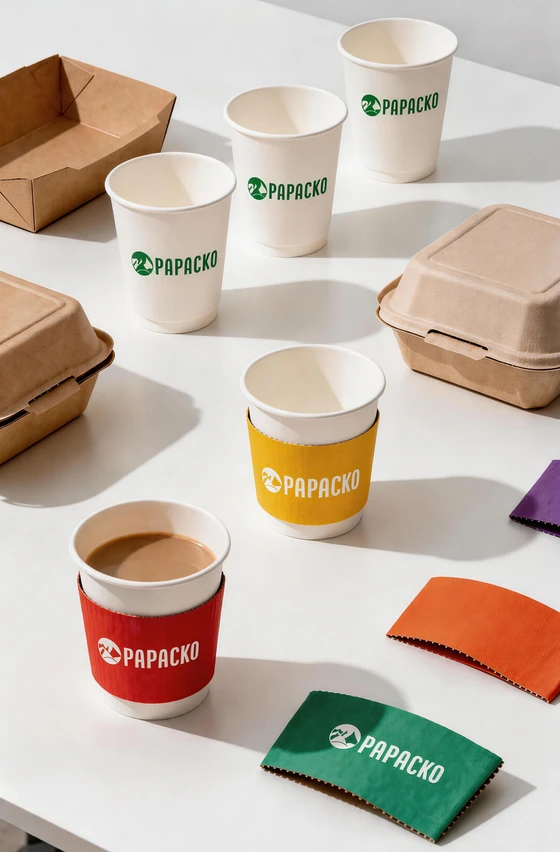


 coffee cups on takeaway counter in busy coffee shop” style=”border-radius: 8px; box-shadow: 0 2px 8px rgba(0,0,0,0.08);”/>