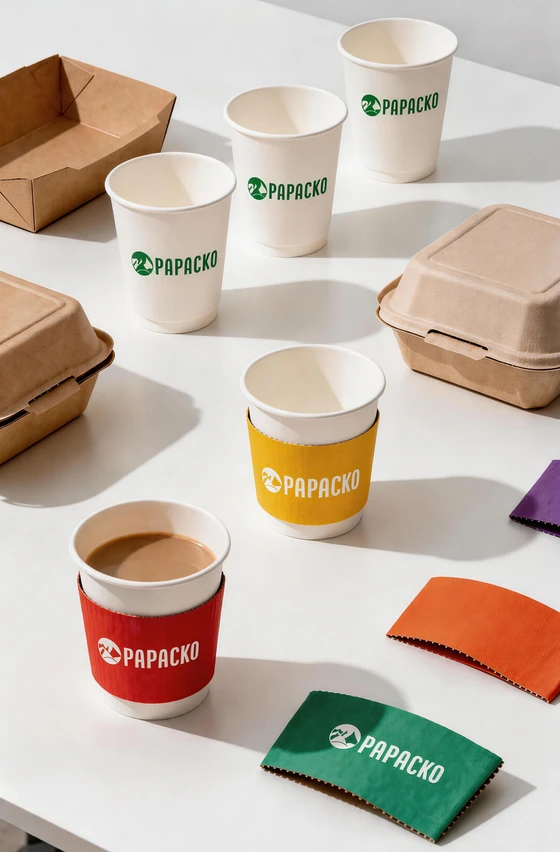
Sei pronto a creare i tuoi bicchieri di carta o le tue confezioni personalizzati con il tuo marchio?
Comunicateci le vostre esigenze — dimensioni, rivestimento, stampa e destinazione — e il nostro team vi preparerà un preventivo dettagliato entro 24 ore.
Sei pronto a creare i tuoi bicchieri di carta o le tue confezioni personalizzati con il tuo marchio?
Comunicateci le vostre esigenze — dimensioni, rivestimento, stampa e destinazione — e il nostro team vi preparerà un preventivo dettagliato entro 24 ore.
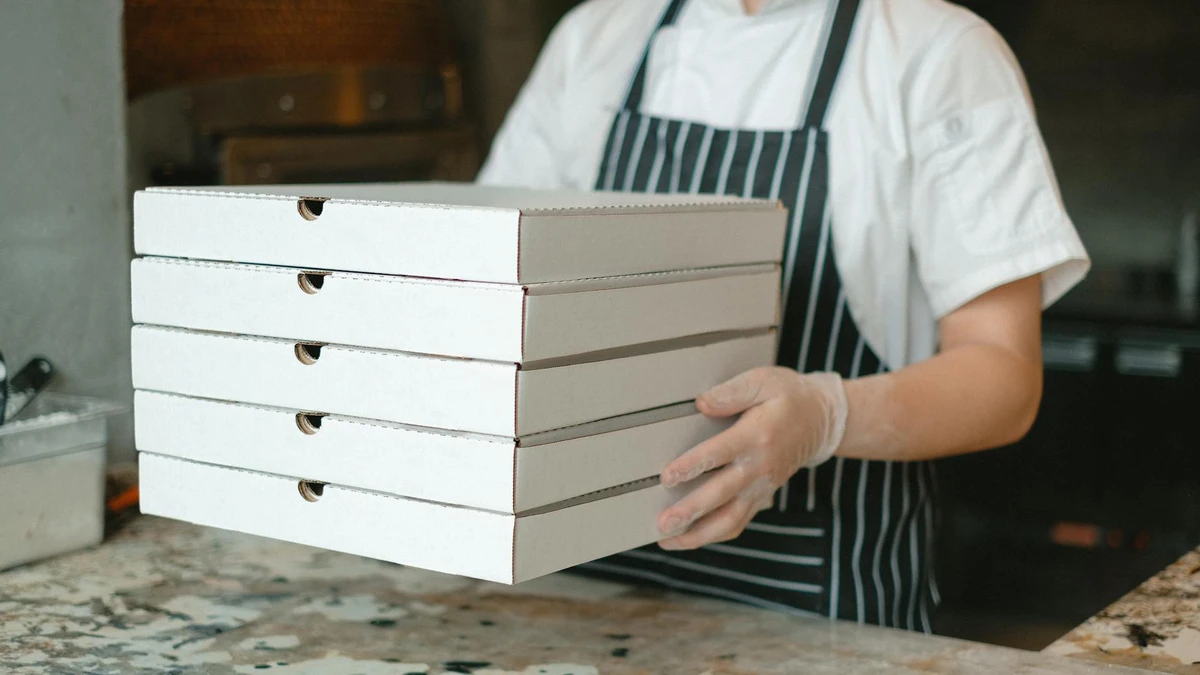
Scatole di cartone personalizzate per alimenti per marchi in franchising
I marchi in franchising distribuiscono ogni anno dai 2,5 agli 8 milioni di contenitori per alimenti attraverso le loro reti, ma 45-60% devono fare i conti con incongruenze nel packaging: colori dei loghi non uniformi tra i vari punti vendita e dimensioni delle confezioni variabili che creano confusione nei clienti.
Ultimo aggiornamento: aprile 2026
Tempo di lettura: 10-12 minutes
Autore: Il team editoriale di Papacko
Introduzione
Franchise brands distribute 2.5-8 million food containers annually across their networks, yet 45-60% struggle with packaging inconsistencies—mismatched logo colors between locations, varying box sizes that confuse customers, and quality fluctuations that damage brand perception. A single franchise location using off-brand packaging can generate 200-400 negative brand impressions daily as customers associate inconsistent packaging with quality control failures.
This comprehensive customization guide addresses the unique challenges franchise brands face when implementing custom paper food boxes across multiple locations: establishing design standards that maintain brand integrity at scale, coordinating printing specifications across regional suppliers to ensure color consistency, creating centralized ordering systems that prevent location-specific variations, implementing quality control protocols that detect defects before customer-facing use, and optimizing costs through consolidated purchasing while accommodating local operational needs.
💡 In sintesi: Successful franchise packaging customization requires centralized design governance (Pantone-matched color standards, locked template files), multi-supplier coordination (max 2-3 approved vendors, quarterly quality audits), tiered ordering systems (corporate bulk purchasing with local distribution), strict specifications (±5% dimensional tolerance, ±10% color variance limits), and consolidated MOQs of 50,000-500,000 units achieving $0.12-0.28 per box costs across 5-500+ locations.
Market research: A 2025 franchise industry study found that brands with standardized packaging across all locations achieved 22-31% higher customer brand recall scores and 15-20% higher repeat visit rates compared to franchises allowing location-specific packaging choices.
🎯 Approfondimenti sul settore: Fast-casual chains report that packaging consistency ranks as the #3 factor in brand perception (after food quality and service speed), with 68% of customers citing “professional packaging” as indicator of franchise quality standards.
Centralized Design Standards and Template Systems
Creating the Master Design Template
Understanding custom paper boxes requires attention to these factors:
Essential design elements for franchise consistency:
Elemento
Specification Standard
Tolleranza
Lock Status
Primary logo
Vector format, minimum 50mm width
±2mm size variance
Locked (no modifications)
Colori del marchio
Pantone PMS codes (not RGB/CMYK approximations)
±5% color variance
Locked
Typography
Licensed fonts, specified weights/sizes
±1pt variance
Locked
Layout grid
Fixed positioning zones
±3mm placement tolerance
Locked
Franchisee info
Designated variable fields (address, phone)
Location-specific
Unlocked/templated
Regulatory text
Allergen, nutrition, legal copy
Fixed content, 6-8pt minimum
Locked
Template file architecture:
•Master template: Held by corporate, never distributed to franchisees
•Location templates: Pre-populated variable fields, locked design elements
•File formats: Vector source (AI/EPS) + print-ready PDF with embedded fonts
•Version control: Sequential numbering (v1.0, v1.1, v2.0) with change logs
Color Management Across Print Runs
Understanding the custom paper boxes requires attention to these factors:
The Pantone imperative:
Color System
Consistency
Multi-Supplier Compatibility
Impatto sui costi
Franchise Suitability
RGB (screen)
Poor (device-dependent)
None (not printable)
N/A
❌ Never use
CMYK (process)
Moderate (varies by press, paper)
Medium (15-25% variance)
Valori di riferimento
⚠️ Avoid for brand colors
Pantone PMS (spot)
Excellent (standardized ink formulas)
High (5-10% variance max)
+$0.02-0.05/box
✅ Required for logos
Pantone + CMYK
Best (spot for logo, process for photos)
Alto
+$0.03-0.08/box
✅ Ideal for complex designs
Franchise color specification example:Primary brand color: Pantone 185 C (red)
Secondary color: Pantone 432 C (gray)
Accent: Pantone 123 C (yellow)
DO NOT convert to CMYK equivalents
All suppliers must use genuine Pantone inks
Color variance tolerance: ΔE < 2.0 (perceptually identical)Color proofing protocol:
1.Corporate approves printed color samples from each supplier
2.Samples become reference standards for future production runs
3.Each print batch includes color control strips for QC verification
4.Franchisees report color deviations within 7 days of delivery
5.Suppliers replace batches exceeding ΔE 2.0 variance at no cost
Variable Data Management for Location Information
The key to choosing custom paper boxes depends on:
Franchisee-specific customization zones:
Variable Element
Implementation Method
Impatto sui costi
Update Frequency
Location address
Digital variable printing
+$0.03-0.06/box
Annual (relocation rare)
Phone number
Pre-printed per location batch
Incluso
2-5 years (number changes)
Store number
Small text field (6-8pt)
Incluso
Never (permanent ID)
QR code
Location-specific landing page
+$0.01-0.02/box
Quarterly (campaign updates)
Nomi utente sui social media
Standardized corporate accounts
Incluso
Annuale
Centralized vs local customization:Centralized approach (recommended for 10+ locations):
•Corporate orders all boxes with location-specific printing
•Each franchisee receives shipment with their info pre-printed
•Eliminates local design modifications
•Requires accurate location database maintenance
Decentralized approach (viable for 3-5 locations):
•Franchisees order from approved template with their info
•Corporate reviews proofs before production approval
•Higher risk of template violations
•Allows faster local reordering
Multi-Supplier Coordination and Standardization
Approved Vendor Network Structure
When evaluating the custom paper boxes, consider the following:
Supplier qualification criteria:
Requisito
Minimum Standard
Metodo di verifica
Disqualification Triggers
Capacità produttiva
100,000+ boxes/month
Factory audit
Cannot meet corporate minimums
Quality certifications
ISO 9001, FDA food contact
Certificate review
Expired certifications
Color management
Pantone matching system, spectrophotometer QC
Equipment inspection
>10% color variance
Geographic coverage
Regional distribution (not single-location)
Logistics review
Cannot serve 30%+ of locations
Minimum order flexibility
Accept 5,000-10,000 unit franchisee orders
Contract terms
Force 50,000+ minimums on small locations
Optimal vendor network size:
•5-20 locations: 1-2 suppliers (consolidate volume for pricing)
•Cost: +$0.04-0.08/box for variable compliance printing vs standardized domestic design
•Suppliers: Qualified 2 EU-based vendors meeting same Pantone, dimensional specs as US suppliers
Common Franchise Customization Mistakes
❌ Errore #1: Allowing franchisees to “customize” templates with local design preferences (different fonts, colors, layouts)
✅ L'approccio corretto: Lock all brand elements (logo, colors, typography, layout) in master template files. Only franchisee-specific data (address, phone, store number) should be variable. Brand consistency across 100 locations is more valuable than local “creative input” that dilutes recognition.
❌ Errore #2: Using CMYK color specifications instead of Pantone — well-known to 20-40% color variation between suppliers and print runs
✅ L'approccio corretto: Specify Pantone PMS codes for all brand colors. Invest $0.02-0.05 more per box for spot color printing. Require suppliers to use spectrophotometers for color QC (ΔE < 2.0 tolerance). Inconsistent brand colors communicate poor quality control.
❌ Errore #3: Decentralized purchasing—each franchisee orders independently, losing 35-55% volume discounts and quality control
✅ L'approccio corretto: Implement centralized or regional hub purchasing for 10+ locations. Corporate negotiates master pricing, approves suppliers, and coordinates orders. A franchise network using 1 million boxes annually saves $180,000-300,000 through consolidated purchasing vs decentralized model.
❌ Errore #4: No formal quality control—franchisees discover defective boxes only when customers complain
✅ L'approccio corretto: Implement three-stage QC: (1) pre-production proof approval, (2) first-article inspection from each print run, (3) franchisee incoming inspection of 5% sample. Require suppliers to replace batches exceeding 0.5% defect rates. QC prevents customer-facing brand damage.
❌ Mistake #5: Over-designing boxes with 4-6 colors — full coverage, specialty finishes—paying $0.38-0.52/box for complexity that doesn’t improve brand recognition
✅ L'approccio corretto: Simplify to 2 Pantone colors, front-panel-only printing (40-60% coverage), standard sizes. Achieve same brand impact at $0.18-0.28/box. The $0.20/box savings across 1 million annual units = $200,000 redeployed to food quality or marketing.
1. Cosa sono le scatole di cartone personalizzate per i marchi in franchising e perché sono importanti?
Custom paper boxes for franchise brands are “>food packaging containers printed with standardized logos, colors, and designs that maintain consistent brand identity across all locations. They matter because packaging consistency drives 22-31% higher brand recall, reduces customer confusion that causes 25-35% recognition loss, and signals quality control professionalism. Franchise networks using standardized custom boxes achieve 15-20% higher repeat visit rates vs chains allowing location-specific packaging variations. With 2.5-8 million annual containers distributed across networks, consistent boxes become primary brand touchpoint.
2. In che modo i marchi in franchising garantiscono l’uniformità delle confezioni nelle diverse sedi?
I marchi in franchising garantiscono l’uniformità attraverso: (1) una gestione centralizzata del design con modelli master fissi (in cui variano solo l’indirizzo e il numero di telefono dell’affiliato), (2) specifiche cromatiche Pantone PMS con limiti di tolleranza di ±5% applicati a tutti i fornitori, (3) reti di fornitori approvati composte da 2-4 fornitori qualificati che soddisfano specifiche tecniche identiche, (4) un controllo di qualità in tre fasi (prove di stampa pre-produzione, ispezione del primo articolo, controlli in entrata da parte degli affiliati) e (5) portali di ordinazione online che impediscono la modifica dei modelli. L’azienda controlla i file di progettazione e la qualificazione dei fornitori: gli affiliati effettuano gli ordini da un catalogo pre-approvato, senza progettare autonomamente.
3. I marchi in franchising dovrebbero optare per un sistema di acquisto degli imballaggi centralizzato o decentralizzato?
Si raccomanda l’acquisto centralizzato per più di 20 sedi, consolidando oltre 500.000 colli all’anno per ottenere un risparmio sui costi compreso tra 30 e 551 TP3T (da 1 TP4T90.000 a 440.000 all’anno) rispetto all’acquisto decentralizzato. Modelli di implementazione: centralizzazione completa (l'azienda gestisce gli ordini e le spedizioni di tutto il magazzino) per più di 100 sedi, hub regionali (3-5 centri di distribuzione) per 20-100 sedi, oppure acquisti di gruppo tramite fornitori approvati (gli affiliati ordinano individualmente a prezzi aziendali fissi) per 5-20 sedi. Gli acquisti decentralizzati sono sostenibili solo per reti composte da 3-5 sedi; oltre tale numero, i risparmi derivanti dal consolidamento dei volumi superano i costi di coordinamento.
4. Quanto costano le scatole per alimenti personalizzate per i marchi in franchising?
I costi delle scatole personalizzate variano in base al volume e alla complessità: i piccoli affiliati che ordinano 10.000-25.000 scatole all'anno pagano $0,32-0,42 per scatola, le sedi di medie dimensioni (25.000-75.000 unità) pagano $0,24-0,32, mentre quelle di grandi dimensioni (75.000-200.000) pagano $0,18-0,24. L’acquisto consolidato in rete per un totale di 1 milione di scatole consente di ottenere un costo unitario compreso tra $0,12 e 0,16, con un risparmio annuo di $220.000-440.000 rispetto agli acquisti decentralizzati. La complessità del design incide sul costo: la stampa Pantone a 2 colori su un unico pannello costa $0,18-0,28/scatola rispetto ai design a copertura totale a 4 colori a $0,38-0,52/scatola. Budget annuale per gli imballaggi di una rete di 50 sedi: $160.000-480.000.
5. What are the most important specifications for franchise food box standardization?
Critical specifications: (1) Pantone PMS color codes (not CMYK) with ΔE < 2.0 variance tolerance for brand consistency, (2) dimensional tolerances of ±3mm on length/width/height ensuring uniform presentation, (3) paperboard weight 300-320 GSM SBS with aqueous coating for structural integrity, (4) leak-test standard (hold 16 oz liquid 10 minutes), (5) locked design template with variable fields only for franchisee contact info, and (6) defect acceptance threshold of <0.5% per batch. Specification document distributed to all approved suppliers with requirement for pre-production sample approval.
6. How do franchise brands qualify and manage multiple packaging suppliers?
Supplier qualification requires: production capacity of 100,000+ boxes/month, ” target=”_blank” rel=”noopener”>ISO 9001 and FDA food-contact certifications, Pantone color-matching capability with spectrophotometer QC, regional distribution covering 30%+ of franchise locations, and flexibility to accept 5,000-10,000 unit minimum orders from individual franchisees. Optimal vendor networks: 1-2 suppliers for 5-20 locations, 2-3 for 20-100 locations, 3-4 for 100-500 locations. Management includes quarterly comparative audits (test boxes from each supplier side-by-side), annual contract reviews with performance scorecards, and archived reference samples for quality benchmarking.
7. What quality control processes prevent defective packaging in franchise networks?
Three-stage QC: (1) Pre-production—corporate approves digital proof (2-5 days), then physical proof on production material (5-10 days), plus first-article inspection of initial 50-100 boxes from print run; (2) In-production—suppliers conduct color control strip readings, dimensional checks every 500 units, leak testing (1 per 1,000), drop testing (1 per 5,000); (3) Post-delivery—franchisees inspect 5% of first batch within 7 days, report defects via standardized form. Defect thresholds: critical defects (structural/major misprints) >0.1% trigger full replacement, major defects >0.5% warrant partial replacement, minor cosmetic issues <2% accepted with credit.
Conclusione
Implementing custom paper boxes across franchise networks transforms packaging from operational necessity to strategic brand asset—but only when executed with rigorous standardization, centralized governance, and multi-supplier quality control. Success requires balancing corporate brand consistency with franchisee operational flexibility, consolidating purchasing power while maintaining local service levels, and enforcing specifications without stifling growth.
Punti chiave:
1.Lock brand elements—Pantone colors, logo placement, typography non-negotiable; only franchisee contact info variable
2.Centralize purchasing at scale—20+ locations justify regional hubs or corporate ordering, saving 30-55% ($90,000-440,000 annually for mid-size networks)
3.Qualify 2-4 suppliers maximum—more vendors = consistency challenges, fewer = supply risk; sweet spot is regional coverage with competitive redundancy
5.Simplify design for cost efficiency—2 Pantone colors on single panel achieves brand impact at $0.18-0.28/box vs complex designs at $0.38-0.52/box
Risorse correlate
•“>Food Packaging Containers
•“>Franchise Brand Guidelines
•“>Multi-Location Quality Control
Ready to Standardize Your Franchise Packaging?
Papacko partners with franchise brands operating 5-500+ locations to design, produce, and distribute custom paper food boxes with guaranteed consistency across all markets. Our franchise packaging program includes centralized design management, multi-supplier coordination, online ordering portals, quality control protocols, and consolidated pricing—ensuring brand integrity while optimizing costs.
Papacko Content Team — Realizziamo guide pratiche e basate sull’esperienza di fabbrica per il packaging B2B nel settore alimentare e delle bevande. Gli argomenti trattati includono la scelta di bicchieri e ciotole di carta, rivestimenti in PE/PLA/a base acquosa, conformità alle normative sul contatto con gli alimenti, stampa, controllo qualità e flussi di lavoro pronti per l’esportazione, affinché caffetterie, ristoranti, distributori e partner OEM possano crescere con una fornitura affidabile.