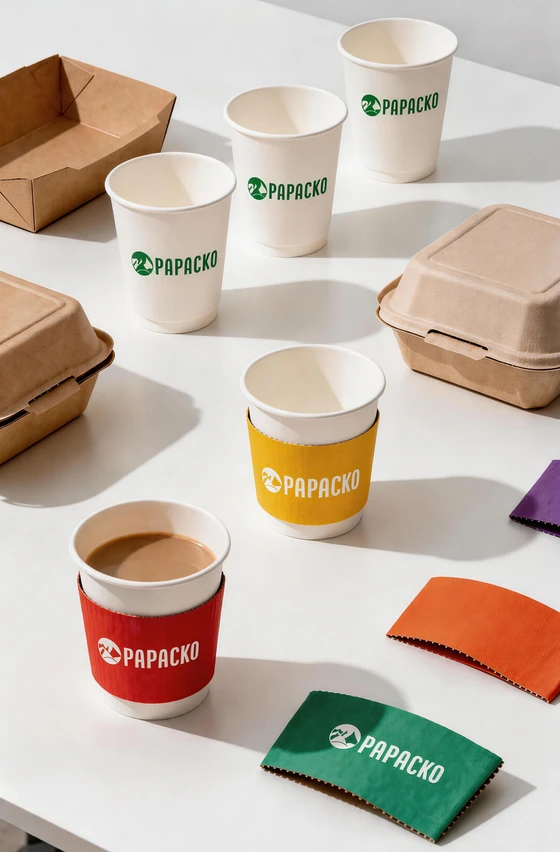
Sei pronto a creare i tuoi bicchieri di carta o le tue confezioni personalizzati con il tuo marchio?
Comunicateci le vostre esigenze — dimensioni, rivestimento, stampa e destinazione — e il nostro team vi preparerà un preventivo dettagliato entro 24 ore.
Sei pronto a creare i tuoi bicchieri di carta o le tue confezioni personalizzati con il tuo marchio?
Comunicateci le vostre esigenze — dimensioni, rivestimento, stampa e destinazione — e il nostro team vi preparerà un preventivo dettagliato entro 24 ore.
A customer winces after touching a scalding hot cup - and switches to a competitor offering better insulated cups. Ripple wall cups solve the dual challenge of heat protection and thermal retention: their distinctive textured.
Ultimo aggiornamento: aprile 2026 Tempo di lettura: 8-10 minuti Autore: Il team editoriale di Papacko
Introduzione
A customer winces after touching a scalding hot cup—and switches to a competitor offering better insulated cups. Ripple wall cups solve the dual challenge of heat protection and thermal retention: their distinctive textured design creates an air pocket insulation layer that keeps beverages hot 35-45% longer while remaining comfortable to hold at exterior temperatures of just 38-42°C (versus 55-65°C for “>single-wall cups).
This guide covers the material science behind ripple wall construction: layer composition, GSM requirements, air gap engineering, and comparative performance against single-wall and double-wall alternatives. You’ll learn how to select ripple cups that deliver optimal heat retention, structural integrity, and customer comfort across different beverage types and service models.
💡 In sintesi: Effective ripple wall cups require 280-350 GSM total construction (outer + inner walls), 2-3mm air gap spacing with embossed ripple patterns every 8-12mm, PE coating for liquid barrier, and tested thermal retention of 65°C+ after 30 minutes for 12oz servings.
What Makes Ripple Wall Cups Different
Structural Design and Material Architecture
Ripple wall cups feature triple-layer construction that fundamentally outperforms single-wall alternatives:
•Reduces heat transfer by 60-75% compared to solid paperboard
•Pattern geometry determines air pocket volume and insulation efficiency
Layer 3 – Inner Wall: 90-100 GSM paperboard with PE coating
•15-25 gsm PE coating provides liquid barrier (prevents seepage into air gap)
•Smooth interior surface for drinking comfort
•Thinner than outer wall (reduced material cost while maintaining strength)
Total GSM: 280-350 GSM combined (vs 350-450 GSM for “>double-wall cups with similar insulation)
🎯 Approfondimenti sul settore: Testing by the Paper Cup Alliance found ripple wall cups reduce exterior surface temperature by 18-24°C compared to single-wall cups holding the same 90°C beverage—making them comfortable to hold without sleeves while saving 30-40% material cost versus double-wall construction.
Material Requirements and GSM Specifications
Paperboard Weight Distribution
Componente
Copertura GSM
Scopo
Performance Impact
Outer Wall
190-250 GSM
Structural strength, grip comfort
Higher GSM = better crush resistance
Inner Wall
90-100 GSM
Liquid containment, drinking surface
Thinner = cost savings, adequate strength
Rivestimento in PE
15-25 g/m²
Moisture barrier on inner wall
Prevents liquid seepage into air gap
Total Construction
280-350 GSM
Overall performance
Balances insulation vs material cost
### Outer Wall Paperboard Quality
Virgin vs Recycled Fiber:
Materiale
Vantaggi
Limiti
Cost Difference
Virgin pulp
Clean white appearance, consistent embossing, superior strength
Higher cost, less eco perception
Valori di riferimento
Recycled (30-50%)
Lower cost, eco-friendly marketing
Slightly gray color, variable fiber quality
-8-15%
100% riciclato
Maximum sustainability claims
Inconsistent embossing depth, weaker structure
-12-20%
Raccomandazione: 80% virgin + 20% recycled balances appearance, strength, and sustainability messaging for most coffee shop applications.
Inner Wall Coating Requirements
PE (” target=”_blank” rel=”noopener”>Polyethylene) Coating – Standard:
•Application: 15-25 gsm on interior surface
•Heat resistance: 110-130°C melting point (safe for 95°C beverages)
•Moisture barrier: Zero liquid penetration for 2-4 hours
•Microwave safety: 30-60 second reheat compatible
•Costo: valore di riferimento
•Drawback: Not recyclable in standard streams, petroleum-based
Posizionamento premium: Many cafes charge $0.25-0.50 extra for “premium insulated cup” option, converting additional cost to profit center.
Considerazioni ambientali
Recyclability and Compostability
PE-Coated Ripple Cups: ❌ Not accepted in standard curbside recycling (coating separation required) ✅ Recyclable in specialized facilities (Starbucks FPI program, Huhtamaki ReCUP) ⚠️ Consumer confusion: Outer ripple layer looks paper-like but inner PE coating prevents standard recycling 📊 Actual recycling rate: <5% of PE-coated cups reach proper recycling facilities PLA-Coated Ripple Cups: ✅ Commercially compostable in certified facilities (BPI/CMA certified) ❌ Not home compostable (requires 58-70°C for 90-180 days) ⚠️ Limited commercial composting infrastructure (available in <15% of US municipalities) 📊 Actual composting rate: 8-12% reach commercial facilities; most landfilled Water-Based Coating Ripple Cups (PFAS-free): ✅ Recyclable in standard paper streams (coating breaks down in pulping) ✅ Compostable in home/commercial settings ⚠️ Emerging technology, limited supplier availability (2024-2026 ramp-up) 📊 Best environmental outcome when collection infrastructure exists
Material Usage Comparison
Environmental footprint per 1000 cups (12oz):
Tipo di coppa
Total Material Weight
Recyclable Portion
Virgin Fiber Content
CO₂ Footprint
Single-wall + sleeves
4.2 kg (280 GSM + sleeves)
65-75% (if separated)
3.0-3.4 kg
8.5 kg CO₂e
Parete a onde
3.8 kg (320 GSM)
5-12% (actual rate)
2.6-3.0 kg
7.8 kg CO₂e
A doppia parete
4.8 kg (400 GSM)
5-12% (actual rate)
3.4-3.8 kg
9.2 kg CO₂e
Approfondimento chiave: Ripple cups use 10-15% less material than single-wall + sleeve combinations, but recycling infrastructure limitations negate environmental benefits unless:
1.PLA coating + commercial composting access
2.Water-based coating + paper recycling participation
•Ink coverage varies between ridges (valleys) and peaks
•Fine text (<8pt) may be illegible across ridples
•Gradients and photos show banding along ripple lines
Design best practices: ✅ Use bold, simple logos (minimum 15mm height) ✅ Stick to 1-2 spot colors for clean appearance ✅ Place text in vertical bands that align with ripple direction ✅ Test print samples under cafe lighting (fluorescent shows flaws) ❌ Avoid fine serif fonts, intricate illustrations, or photo backgrounds
❌ Errore #1: Assuming all ripple cups provide equal insulation ✅ L'approccio corretto: Check total GSM (280-350 range), air gap depth (2-3mm), and embossing pattern density. Low-cost ripple cups (260 GSM total) offer only marginal improvement over single-wall and collapse under hot liquid pressure.
❌ Errore #2: Using PLA-coated ripple cups for very hot beverages (92-95°C) ✅ L'approccio corretto: PLA softens at 55-60°C. For espresso-based drinks and freshly brewed coffee, use PE-coated cups. Reserve PLA for warm beverages ≤85°C or cafes with temperature control (coffee held at 80-85°C).
❌ Errore #3: Selecting ripple cups solely based on exterior appearance without lid testing ✅ L'approccio corretto: Request sample lids with cups and test fit. 30-40% of customer spill complaints trace to lid incompatibility. Verify rim diameter, curl design, and seal integrity with your preferred lid style.
❌ Errore #4: Expecting ripple cups to be recyclable in standard municipal programs ✅ L'approccio corretto: PE-coated ripple cups require specialized recycling. If sustainability is a priority, choose PLA-coated cups and verify commercial composting access in your area, or select water-based coating cups with paper recycling certification.
Ripple wall cups are insulated “>paper cups featuring triple-layer construction: an embossed outer wall (190-250 GSM), 2-3mm air gap, and PE-coated inner wall (90-100 GSM). The ripple pattern creates trapped air pockets that reduce heat transfer by 60-75%, keeping beverages hot while maintaining comfortable exterior temperatures of 38-42°C.
2. I bicchieri con pareti ondulate sono migliori di quelli a doppia parete?
I bicchieri con parete ondulata offrono prestazioni di isolamento a doppia parete pari a 85-90% al costo del materiale di 70-75%. Per un caffè da 12 oz, i bicchieri con parete ondulata mantengono una temperatura di 68 °C dopo 30 minuti contro i 70 °C dei modelli a doppia parete: una differenza marginale per la maggior parte delle applicazioni. I bicchieri Ripple utilizzano meno materiale (320 GSM contro 400 GSM) ma offrono un comfort al tatto simile. Scegliete la doppia parete per un posizionamento premium; i bicchieri Ripple per un isolamento economicamente vantaggioso.
3. I manicotti sono necessari per i manicotti a onda?
No. Le tazze Ripple Wall sono progettate per garantire una presa comoda senza bisogno di manicotti. Lo spazio d'aria e la texture goffrata mantengono la superficie esterna a una temperatura compresa tra 38 e 42 °C quando contengono bevande a 90 °C, ben al di sotto della soglia di disagio di 44 °C. L'eliminazione dei manicotti consente un risparmio di $0,025-0,035 per tazza e accelera il servizio di 3-5 secondi.
4. Qual è la dimensione ideale della tazza con bordo ondulato per il caffè standard?
12oz (350ml) suits 80% of coffee shop applications—ideal for cappuccino, flat white, standard latte, and regular brewed coffee. This size provides optimal surface-to-volume ratio for heat retention (68°C after 30 minutes) and matches customer expectations for “medium” coffee servings in most markets.
5. I bicchieri con pareti ondulate sono riciclabili?
PE-coated ripple cups are not accepted in standard curbside recycling (coating must be separated). PLA-coated cups are commercially compostable in certified facilities but require specialized infrastructure. Water-based coating ripple cups (emerging technology) are recyclable in standard paper streams. Actual end-of-life recovery rates: <5% for PE, 8-12% for PLA, 25-35% for water-based coatings.
6. How long do ripple wall cups keep coffee hot?
Ripple wall cups maintain coffee above 65°C (ideal serving temperature) for 30-35 minutes when starting at 90°C (ambient 22°C, no lid). Adding a lid extends this to 40-45 minutes. For comparison, single-wall cups drop to 62°C in 30 minutes, while double-wall maintains 70°C. Performance varies with cup size, fill level, and ambient conditions.
7. What’s the minimum order quantity for custom ripple wall cups?
Stock plain ripple cups: 1,000-5,000 units from distributors. Flexographic custom printing: 50,000-100,000 units (die tooling costs $800-1,500). Digital printing: 1,000-5,000 units at $0.12-0.18 per cup (no tooling). Offset lithography for premium designs: 100,000-250,000 units. Many suppliers offer semi-custom options (stock cups + printed sleeves/labels) at 5,000-10,000 MOQ.
Conclusione
Selecting ripple wall cups for hot beverages requires understanding the relationship between material weight, air gap engineering, and thermal performance. Prioritize 320+ GSM total construction with 2-3mm air gaps, PE coating for maximum heat tolerance, and proper lid compatibility for spill prevention.
Punti chiave:
1.320 GSM total construction is optimal—balances insulation, structural strength, and material cost
2.Air gap geometry matters more than paper weight alone—2-3mm gaps with 8-12mm ripple pitch provide best thermal retention
3.PE coating outperforms PLA for very hot beverages—but PLA suits eco-brands with warm drinks ≤85°C
4.Ripple cups eliminate sleeve costs—saves $0.025+ per cup and improves service speed
5.Lid fit is critical—test seal integrity with your preferred lid style before bulk ordering
Risorse correlate
•“>Bicchieri di carta
•“>Sustainable Cup Solutions
•“>Coffee Shop Packaging Guide
Ready to Source Ripple Wall Cups?
Papacko supplies coffee shops, cafes, and foodservice operations with high-performance ripple wall cups in 8-20oz sizes. Our range includes PE and PLA coated options, custom printing capabilities, and full food safety certification (FDA, UE 10/2011, ” target=”_blank” rel=”noopener”>ISO 22000)—with MOQs starting from 50,000 units for flexographic printing and 1,000 units for digital printing.
Papacko Content Team — Realizziamo guide pratiche e basate sull’esperienza di fabbrica per il packaging B2B nel settore alimentare e delle bevande. Gli argomenti trattati includono la scelta di bicchieri e ciotole di carta, rivestimenti in PE/PLA/a base acquosa, conformità alle normative sul contatto con gli alimenti, stampa, controllo qualità e flussi di lavoro pronti per l’esportazione, affinché caffetterie, ristoranti, distributori e partner OEM possano crescere con una fornitura affidabile.