Ready to create your own branded paper cups or packaging?
Tell us your requirements — size, coating, printing, and destination — and our team will prepare a detailed quotation within 24 hours.

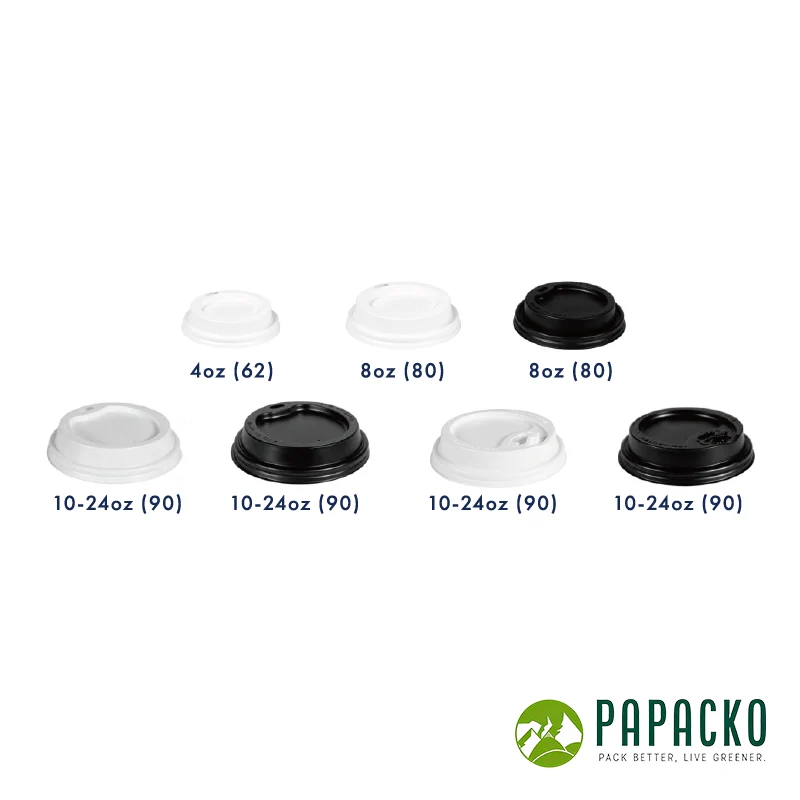
Choose coffee cup lids by diameter, material, drink type, spill risk, and fit. Compare flat, sip-through, dome, vented, and compostable lids for cafes.
Last Updated: April 2026
Reading Time: 8 minutes
Author: Papacko Content Team
A leaking coffee lid can ruin a customer’s entire day — and your brand reputation along with it.
The right lid isn’t just a cover. It’s the difference between a customer arriving at work with a perfect latte or wearing it on their shirt. Between a 5-star review praising your attention to detail or a 1-star rant about “terrible packaging.”
But here’s the problem: not all lids fit all cups. An 80mm lid won’t seal on a 90mm cup. A dome lid for iced drinks will leak hot coffee. And that “universal” lid your supplier promised” It probably isn’t.
In this guide, you’ll learn:
•Lid diameter standards and how to match them to your cups
•Different lid types for hot vs cold drinks
•Seal mechanisms that actually prevent leaks
•Common fit problems and how to avoid them
💡 Quick Takeaway: Cup lid fit depends on three factors: top diameter (80mm or 90mm standard), cup wall thickness, and seal design (friction fit vs tab lock). Mismatched specs = guaranteed leaks, regardless of lid quality.
Your customer remembers the leak, not the coffee.
Customer Experience Impact:
•Customers blame the café, not the lid manufacturer
Operational Issues:
•Staff time wasted replacing spilled drinks (5-10 minutes per incident)
•Product waste from remakes ($3-7 per incident)
•Delivery bag contamination affecting other orders
•Increased refund requests and negative review responses
Hidden Costs:
•Inventory waste from incompatible lid/cup combinations
•Storage space for multiple lid types
•Staff confusion about which lid fits which cup
•Customer service time handling complaints
Secure Fit: Lid must seal tightly during:
•Initial placement (doesn’t pop off when pressed)
•Transport vibration (walking, car cup holders, delivery bikes)
•Drink consumption (stays sealed until customer opens it intentionally)
Functional Design:
•Easy for staff to apply quickly (2-3 seconds max)
•Simple for customers to open without spilling
•Drinking opening sized appropriately for beverage type
•Reclosable for customers who want to save some for later
Temperature Appropriate:
•Hot drink lids: vented to release steam, prevent pressure buildup
•Cold drink lids: sealed to prevent condensation drips
•Must maintain integrity at beverage temperature (160-180°F for coffee)
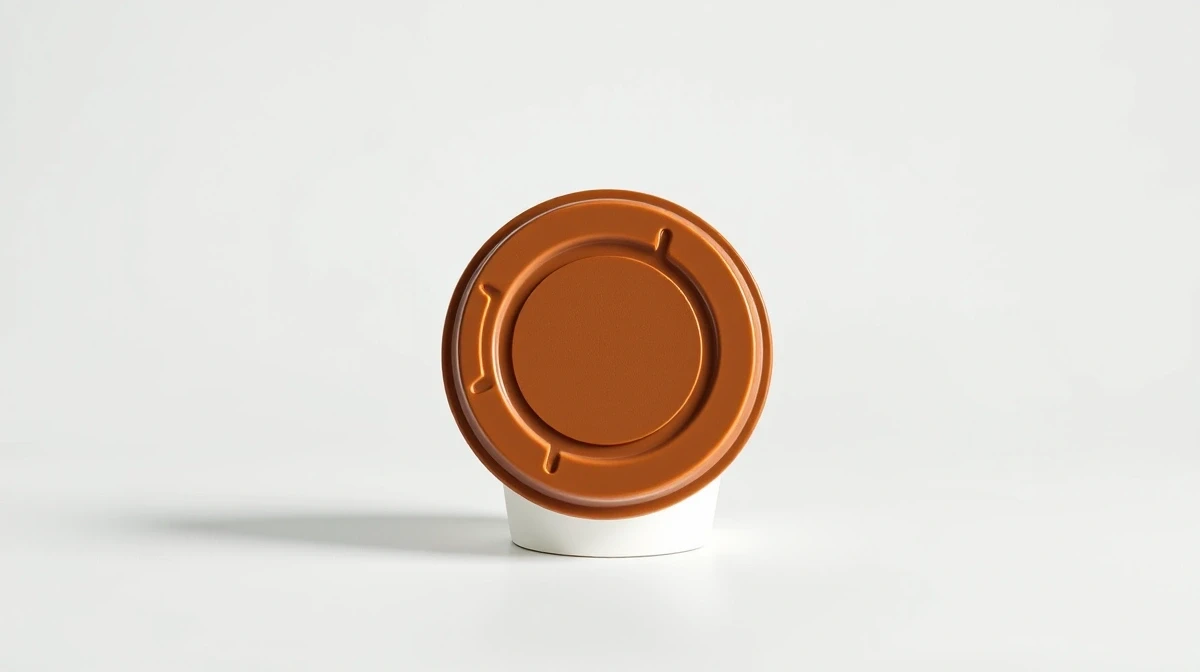
Description: Low-profile lid with small sip opening, designed for hot beverages.
Best For:
•Hot coffee, espresso drinks, tea
•Takeaway orders with short transport time (under 15 minutes)
•Cost-conscious operations
✅ Advantages:
•Lowest cost option ($0.02-0.04 per lid)
•Stacks efficiently for storage (saves warehouse space)
•Works with standard cup sleeves
•Most familiar to customers (intuitive use)
❌ Limitations:
•Small opening makes sipping slower (some customers dislike)
•No reclosable option (once opened, stays open)
•Steam vent can drip if cup tilts during transport
•Not suitable for drinks with whipped cream or toppings
Typical Specifications:
•Top diameter: 80mm or 90mm
•Material: PS (polystyrene) or PP (polypropylene)
•Heat resistance: up to 200°F
•Seal type: Friction fit or tab lock
Common Applications: Regular coffee shops, quick-service restaurants, office break rooms, budget cafés
Description: High-dome lid with cross-slot opening, designed for iced drinks and beverages with whipped cream or toppings.
Best For:
•Iced coffee, cold brew, smoothies
•Hot drinks with whipped cream topping
•Specialty drinks with height (frappuccinos, milkshakes)
•Visual presentation (dome showcases toppings)
✅ Advantages:
•Extra height accommodates whipped cream without crushing
•Cross-slot opening allows straw insertion
•Clear dome shows drink attractively (marketing benefit)
•Larger opening for easier drinking
❌ Limitations:
•Higher cost ($0.04-0.08 per lid)
•Takes more storage space (doesn’t stack as efficiently)
•Not ideal for hot drinks (condensation can drip from inside dome)
•Straw required for most beverages (additional cost)
Typical Specifications:
•Top diameter: 90mm (most common), some 80mm available
•Material: PET (clear plastic) or PP
•Heat resistance: up to 140°F (cold drinks only)
•Seal type: Pressure fit
Common Applications: Specialty coffee shops, bubble tea shops, ice cream shops, dessert cafés
Description: Lid with flip-top or slide mechanism that allows opening and reclosing.
Best For:
•Long commutes (30+ minutes)
•Office workers who drink slowly over hours
•Premium coffee concepts
•Customers who want to prevent spills between sips
✅ Advantages:
•Reclosable feature prevents spills when not drinking
•Premium feel (customers perceive as higher quality)
•Better heat retention (closes between sips)
•Reduces accidental spills from bumps
❌ Limitations:
•Highest cost ($0.06-0.12 per lid)
•More complex for staff to apply correctly
•Flip mechanism can break if handled roughly
•Requires customer education (some struggle with mechanism)
Typical Specifications:
•Top diameter: 80mm
•Material: PP or PLA (compostable versions available)
•Heat resistance: up to 200°F
•Seal type: Pressure fit + flip/slide mechanism
Common Applications: Premium cafés, airport coffee shops, highway rest stops, upscale hotel coffee service
Description: Flat or slightly domed lid with pre-cut X-shaped slot for straw insertion.
Best For:
•Iced coffee specifically designed for straw use
•Bubble tea and boba drinks
•Cold brew with added flavors
•Younger demographic preferences
✅ Advantages:
•Straw stays secure in place (doesn’t float up)
•Less spillage than open-top drinking
•Works well for layered drinks
•Simple, familiar design
❌ Limitations:
•Requires straw (additional cost and environmental concern)
•Not suitable for hot drinks
•X-slot can leak if no straw inserted
•Customer must remove lid to add sugar/cream
Typical Specifications:
•Top diameter: 90mm standard
•Material: PP or PET
•Heat resistance: up to 140°F
•Seal type: Friction or pressure fit
Common Applications: Bubble tea shops, juice bars, smoothie shops, fast-casual iced coffee
The #1 cause of lid leaks: diameter mismatch.
80mm Diameter (Small/Medium Cups):
•Fits: 4oz, 8oz, 12oz cups from most manufacturers
•Top opening diameter: 79-81mm (slight variance between brands)
•Most common for traditional coffee shops
•most times cheaper lids
90mm Diameter (Large/XL Cups):
•Fits: 16oz, 20oz, 22oz cups from most manufacturers
•Top opening diameter: 89-91mm
•Standard for QSR (quick-service restaurants)
•Dome lids almost always 90mm
Why 80mm and 90mm”
These became industry standards decades ago when major disposable cup manufacturers (Dart, Solo) established specifications. Most Asian manufacturers now follow the same standards to ensure global compatibility.
If you’re unsure which lid size you need:
Method 1 – Direct Measurement:
•Place a ruler across the very top of the cup opening
•Measure the widest internal diameter
•Don’t measure the rolled rim edge (measure inside it)
Method 2 – Test Fit:
•Try an 80mm lid first (most common)
•If it falls in easily without friction = cup is likely 90mm
•If it requires light pressure to snap = correct fit
•If it won’t go on at all = wrong size
Method 3 – Check Cup Specification Sheet:
•Ask your cup supplier for top diameter specification
•Should be listed as “top opening diameter” or “lid fit diameter”
⚠️ Warning: Don’t assume cup size (oz) determines lid size. Some manufacturers make 12oz cups with 90mm tops — others with 80mm tops. Always verify diameter, not just capacity.
Even if the diameter matches, wall thickness can affect fit:
Thin-Wall Cups (0.3-0.5mm):
•Standard disposable paper cups
•Lids fit more loosely
•May need extra pressure to seal
Thick-Wall Cups (0.6-0.8mm):
•Premium double-wall cups
•Tighter lid fit
•Sometimes require specific lid designs
Solution: Always test lids with your actual cups before ordering bulk. Request samples from lid suppliers.
How It Works: Lid edge compresses against cup rim through friction alone. No tabs, locks, or adhesive.
Visual Characteristics:
•Smooth inner rim on lid
•Slight taper (wider at top, narrower at bottom)
•Requires pushing straight down with even pressure
✅ Pros:
•Simplest design, easiest for staff to apply
•Works with most cup types
•Lowest manufacturing cost
•Easy for customers to remove
❌ Cons:
•Weakest seal (more prone to popping off)
•Affected by cup rim irregularities
•Less reliable for delivery/transport
Best For: Dine-in service, short takeaway distances, cost-sensitive operations
Typical Failure Points:
•Customer squeezes cup sides → rim flexes → lid pops off
•Delivery bag pressure on lid → unseals
•Cup has damaged/irregular rim from poor manufacturing
How It Works: Lid has small tabs or ridges that lock into matching grooves on cup rim.
Visual Characteristics:
•Small tabs visible on lid interior
•Cup must have matching rim design
•Requires slight twist or firm press to engage lock
✅ Pros:
•Much stronger seal than friction fit
•Resists pressure from squeezing or impact
•Audible/tactile “click” confirms proper sealing
•Better for transport and delivery
❌ Cons:
•Lid and cup must be from same manufacturer (usuallyghtly more expensive to manufacture
•Staff need brief training on application
•Customers sometimes struggle to remove
Best For: Delivery service, long transport, premium brands, leak-prevention priority
Typical Failure Points:
•Staff don’t press hard enough to engage tabs
•Cup rim damaged during manufacturing (tabs can’t engage)
•Using tabs lid on non-tab cup (no grooves to lock into)
How It Works: Lid rim designed with specific angle and thickness to create compression seal when pressed onto cup.
Visual Characteristics:
•Thicker lid rim (1-2mm)
•Requires firm, even pressure across entire lid
✅ Pros:
•Excellent seal strength (best for hot liquids)
•Works across different cup brands if diameter matches
•Reliable for high-temperature beverages
•Moderate cost
❌ Cons:
•Requires more force to apply (staff fatigue with high volume)
•Can crack if applied unevenly
•Customers sometimes find hard to remove
•Not suitable for thin-wall cups (cup may crush)
Best For: Hot beverage specialists, specialty coffee, catering, meal delivery
Typical Failure Points:
•Applied at an angle instead of straight down → uneven seal
•Cup rim warped from hot liquid → gaps in seal
•Lid material too thin (deflects instead of compressing)
Symptoms:
•Lid seals fine in-store but pops off in delivery bag
•Customers report lids coming loose in car cup holders
•Happens more with certain cup sizes than others
Root Causes:
•Diameter mismatch (lid is 80mm, cup is actually 81mm)
•Friction-fit lid on cups designed for tab-lock system
•Cup rim damaged or irregular from manufacturing defect
•Delivery bag pressure squeezing cup sides
Solutions:
1.Verify exact cup top diameter with caliper measurement (not just supplier spec sheet)
2.Upgrade to tab-lock or pressure-fit lids for delivery orders
3.Test sample batch before ordering full cases
4.Train delivery staff on proper bag packing (don’t stack heavy items on cups)
5.Use cup carriers/trays for multiple drinks instead of loose in bag
Symptoms:
•Frequent customer complaints about difficulty opening
•Staff applying lids notice they require excessive force
•Lids crack or split when customers try to remove them
Root Causes:
•Pressure-fit lid on thin-wall cups (creates vacuum seal)
•Lid material too rigid (PP instead of flexible PS)
•Overly aggressive tab-lock design
•Hot beverage cooling creates negative pressure inside cup
Solutions:
1.Switch to slightly looser friction-fit for dine-in service
2.Use flexible lid material (PS for easier flex, PP for durability)
3.Don’t fill cups completely (leave 5-10mm air gap to prevent vacuum)
Symptoms:
•Hot drinks drip from lid vent during transport
•Customers complain about wet cup sleeves
•Drink temperature drops quickly
Root Causes:
•Vent holes too large for beverage fill level
•Cup overfilled (liquid touches underside of lid)
•Incorrect lid type (cold drink lid on hot beverage)
•Cup tilted during transport (liquid sloshes into vent)
Solutions:
1.Implement maximum fill line (fill to 1cm below rim)
2.Use lids with smaller vent holes or directional vents
3.Switch to reclosable lids for delivery (vent only opens when drinking)
4.Use cup carriers to keep drinks upright during transport
5.Educate customers about keeping cup level
Symptoms:
•Staff grab wrong lid size during rush
•Inventory mix-ups (80mm lids stored with 90mm)
•Customer receives drink with loose/wrong lid
Root Causes:
•Similar packaging makes lid sizes look identical
•No clear labeling system
•Staff not trained on size differences
•Storage area disorganized
Solutions:
1.Color-code lid packaging (80mm = blue box, 90mm = red box)
2.Label dispensers clearly with large, visible size markers
3.Separate storage areas for each lid size
4.Implement visual guides (photo of each cup size with correct lid)
5.Standard operating procedure: Match cup size to lid (small/medium = 80mm, large/XL = 90mm)
| Cup Size | Typical Use | Lid Diameter | Recommended Lid Type | Seal Mechanism |
|---|---|---|---|---|
| 4oz (120ml) | Espresso, samples | 80mm | Flat lid | Friction fit |
| 8oz (240ml) | Small coffee, kids drinks | 80mm | Flat or reclosable | Friction or tab lock |
| 12oz (360ml) | Regular coffee (most common) | 80mm | Flat or reclosable | Tab lock recommended |
| 16oz (480ml) | Large coffee, iced drinks | 90mm | Flat or dome (iced) | Pressure fit |
| 20oz (600ml) | XL coffee, smoothies | 90mm | Dome or straw-slot | Pressure fit |
| 22oz (650ml) | Jumbo iced drinks | 90mm | Dome with straw slot | Pressure fit |
Characteristics:
•Rigid, crystal-clear or white opaque
•Most economical option
•Good heat resistance (up to 180-200°F)
•Lightweight
✅ Best For: Budget operations, high-volume QSR, standard hot coffee service
❌ Concerns: Not recyclable in most programs, being phased out in some jurisdictions (California, NYC)
Typical Cost: $0.02-0.04 per lid
Characteristics:
•More flexible than PS
•Translucent or white
•Excellent heat resistance (up to 220°F)
•Recyclable #5 plastic
✅ Best For: Hot beverages, microwave-safe applications, eco-conscious brands
❌ Concerns: Slightly more expensive than PS, less crystal-clear appearance
Typical Cost: $0.03-0.06 per lid
Characteristics:
•Crystal-clear dome lids
•Excellent clarity for visual presentation
•Limited heat resistance (max 140°F)
•Recyclable #1 plastic
✅ Best For: Cold drinks, smoothies, iced coffee with toppings, dessert beverages
❌ Concerns: Not suitable for hot drinks, can warp at high temperatures
Typical Cost: $0.04-0.08 per lid
Characteristics:
•Plant-based bioplastic (corn/sugarcane)
•Looks and feels like PS
•Industrially compostable (not home compostable)
•Heat resistance: up to 140°F
✅ Best For: Eco-brands with access to commercial composting, cold/lukewarm drinks
❌ Concerns: 30-50% more expensive, softens above 140°F, requires commercial composting (won’t decompose in landfills)
Typical Cost: $0.05-0.10 per lid
80mm lids fit cups with a top opening diameter of 79-81mm — usually 4oz-12ozoften90mm lids fit cups with 89-91mm openings, usually 16oz-22oz most timesThe size refers to the diameter of the cup’s top opening, not the cup capacity. Some manufacturers make 12oz cups with 90mm tops — while others use 80mm tops for the same capacity.
To find your size, measure the internal diameter of your cup’s top opening, or try a test fit — if an 80mm lid falls in easily with no resistance, you need 90mm.
Technically yes, but it’s not ideal. Hot drink lids have steam vents to release pressure and prevent vacuum seal when cooling. Cold drink lids (dome or straw-slot) are sealed to prevent condensation drips.
Using a cold drink lid on hot coffee can cause:
•Pressure buildup (lid may pop off or blow hot liquid through drink opening)
•Difficulty removing lid when beverage cools (vacuum seal)
•Lack of ventilation (drink cools slower, steam condenses inside lid)
For operational simplicity, many cafés use flat vented lids for all hot drinks and dome/straw lids exclusively for cold drinks.
Leaks with “fitted” lids usually come frSeal mechanism mismatch**: Friction-fit lid on a cup designed for tab-lock system (or vice versa) — looks like it fits but doesn’t seal properly.
Diameter variance: Cup measures 81mm but lid is designed for 80mm spec — creates 1mm gap around entire rim.
Overfilling: Liquid touches underside of lid, finds path through vent holes or drinking opening.
Cup rim defects: Manufacturing irregularities, damaged rim, or warping from hot liquid prevents even seal.
Solution: Always test lids with your actual cups under transport conditions before ordering bulk. Fill to realistic levels, shake gently, place in delivery bag for 10 minutes.
Minimum order quantities for custom printed coffee cup lids:
Flexographic printing: 50,000-100,000 lids per design (most common, most economical)
Digital printing: 10,000-25,000 lids (higher per-unit cost, faster turnaround)
Offset printing: 100,000+ lids (best quality, highest MOQ)
Lead times:
•Design approval and plate-making: 7-10 days
•Production: 20-30 days
•Shipping (if importing): 30-45 days
•Total: 60-85 days for first order
Cost impact:
•Setup fee: $300-800 (one-time per design)
•Printing adds: $0.01-0.03 per lid depending on colors
•Full-color printing: $0.03-0.05 per lid premium
Many cafés start with stock (unprinted) lids and use custom cup sleeves instead (much lower MOQ of 5,000-10,000).
Depends on your market and infrastructure.
When PLA lids make sense:
•You have confirmed access to commercial composting (less than 5% of US does)
•Customers actively seek and pay premium for compostable options
•Local regulations incentivize or mandate compostable packaging
•Brand positioning is sustainability-first
When they don’t make sense:
•No commercial composting available (lids end up in landfill anyway, no environmental benefit)
•Price-sensitive customer base (30-50% premium hard to justify)
•Serving hot drinks above 140°F (PLA softens, loses structural integrity)
•High-volume budget operation (cost differential adds up quickly)
Reality check: If lids go to landfill, PLA doesn’t decompose any faster than regular plastic. Only choose compostable if you have the disposal infrastructure to support it.
Best practices:
Match seal type to use case: Use tab-lock or pressure-fit lids for delivery, not friction-fit.
Don’t overfill cups: Leave 5-10mm gap between liquid and lid to prevent pressure on seal.
Test transport conditions: Shake cups gently after applying lid — if it pops off, it will pop off in delivery.
Use cup carriers: Prevents bags from crushing cups and unsealing lids.
Verify diameter match: Even 1mm variance causes seal failure under transport pressure.
Train staff on application: Lids must be pressed evenly across entire rim, not just one side.
Quality control spot checks: Check 1 in every 10 orders for proper lid seal before bagging.
Short answer: No, always remove lid before microwaving.
Why:
•Pressure buildup: Steam can’t escape, may cause explosive lid removal or cup rupture
•Material concerns: Most lids (PS, PP) aren’t tested for microwave safety
•Metal components: Some lids have metal foil or decorative elements (sparking risk)
•Warping: Heat can deform lid, preventing resealing
Even if the cup is microwave-safe, the lid should be removed. Customers reheating coffee at home or office should:
1.Remove lid completely
2.Microwave cup uncovered or with microwave-safe cover
3.Allow to cool 30 seconds before replacing lid
Include microwave warning on lid or cup sleeve if you serve a lot of office workers who may reheat.
The right coffee cup lid prevents spills, preserves temperature, and protects your brand reputation.
Key Takeaways:
1.Lid fit depends on three factors: top diameter (80mm vs 90mm), seal mechanism (friction/tab-lock/pressure), and cup wall thickness
2.Hot and cold drinks need different lid types — vented flat lids for hot, sealed dome or straw lids for cold
3.“Universal” lids rarely work across all cup brands — always test fit before bulk ordering
4.Lid failures during delivery usually stem from diameter mismatch or friction-fit lids on delivery orders
5.Material choice (PS/PP/PET/PLA) should match beverage temperature, environmental goals, and budget constraints
Don’t treat lids as an afterthought. The worst coffee with a perfect lid beats the best coffee spilled all over a customer’s car.
Explore more packaging accessories:
•Packaging Accessories – Complete range of lids, sleeves, and more
•Paper Cups & Coffee Packaging – Hot and cold drink cups
•Food Packaging Containers – Bowls, boxes, and clamshells
Papacko supplies export-ready coffee cup lids to cafés, restaurants, and distributors worldwide.
Whether you need sample testing or container-load shipments, we ensure proper fit, consistent quality, and on-time delivery.
Why choose Papacko:
•Perfect fit guaranteed: Diameter verification with your specific cups
•Mix-and-match MOQ: Combine multiple lid types in single order (from 10,000 units)
•Quality assured: Drop tests, seal tests, temperature tests before shipment
•Custom printing: Full-color branding with 30-35 day lead times
•Reliable logistics: FOB, CIF, or DDP terms available
•Expert matching: We help you select lid type for your beverage menu
Lid selection is rarely isolated from the cup system around it. Buyers usually need to confirm rim type, drink temperature, transport use, and whether carriers or sleeves also affect spill performance. These guides continue that packaging path.
Get in touch:
•Request a Quote – Contact us for detailed pricing
•Free Sample Kit – Test lids with your actual cups before ordering
•Learn more about our export-ready solutions