Ready to create your own branded paper cups or packaging?
Tell us your requirements — size, coating, printing, and destination — and our team will prepare a detailed quotation within 24 hours.

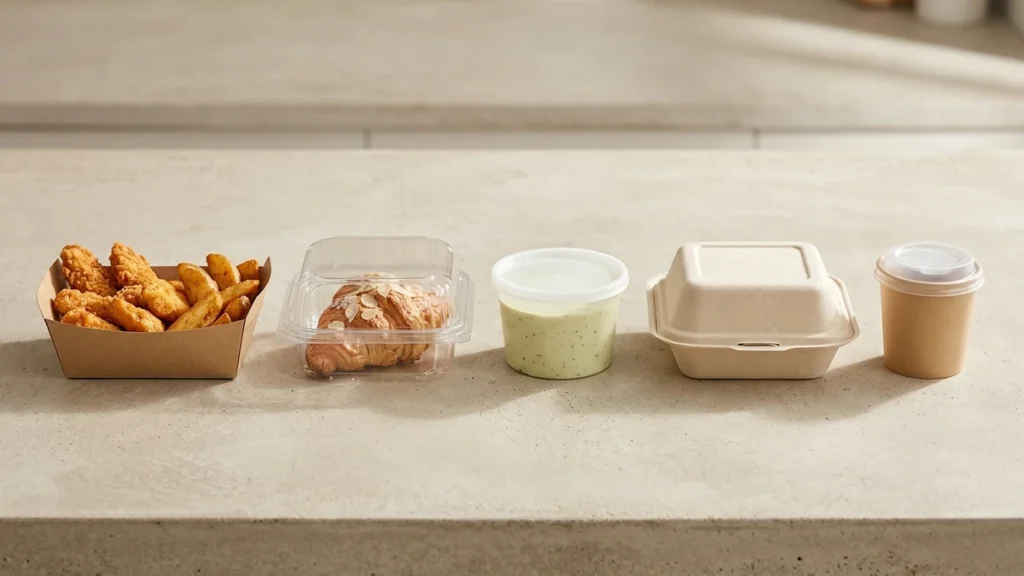
The best snack containers are matched to the product’s oil, moisture, temperature, hold time, and handling route. Dry snacks usually run well in paperboard trays or kraft boxes, hot snacks often need PP, foil, or coated fiber, and chilled display performs best in clear PET or rPET.
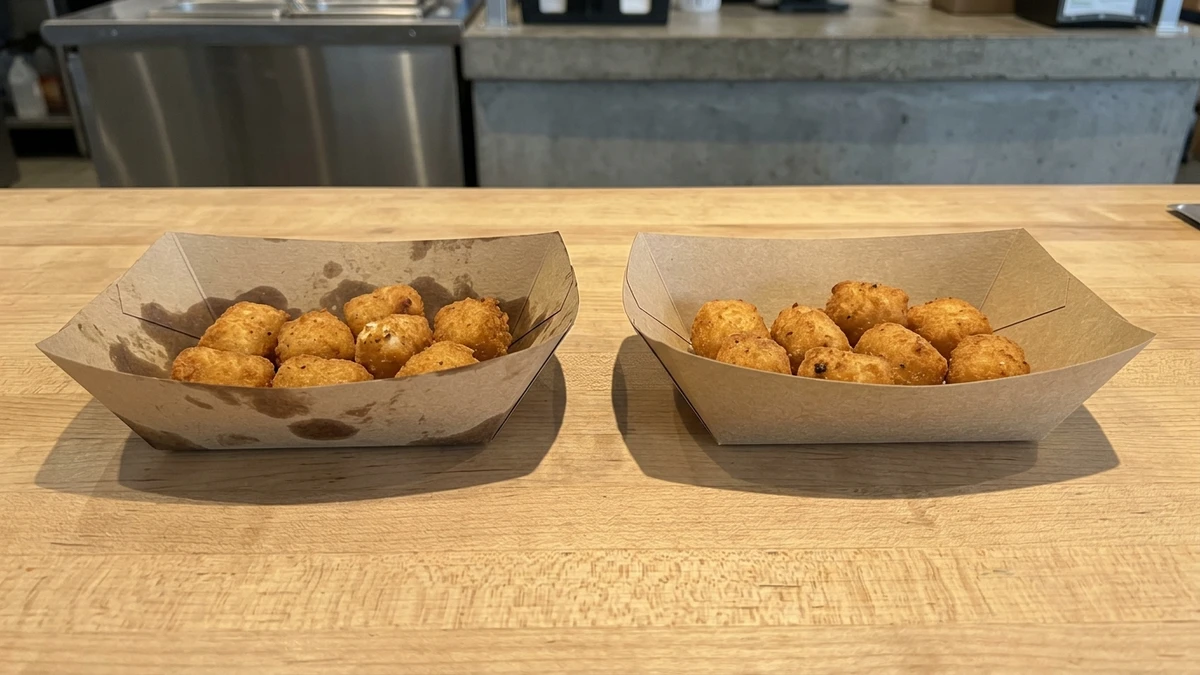
Direct selection logic by snack type
The deciding factors are base stiffness, coating or liner, venting, lid retention, stackability, and food-contact suitability. For a broad view of commercial paper formats, see paper cups and related foodservice packaging formats.
Material choice determines how the pack behaves once it meets oil, steam, refrigeration, or transport. The useful comparison is mechanism first: how the structure handles grease, heat, and moisture; then the commercial consequence if it fails.
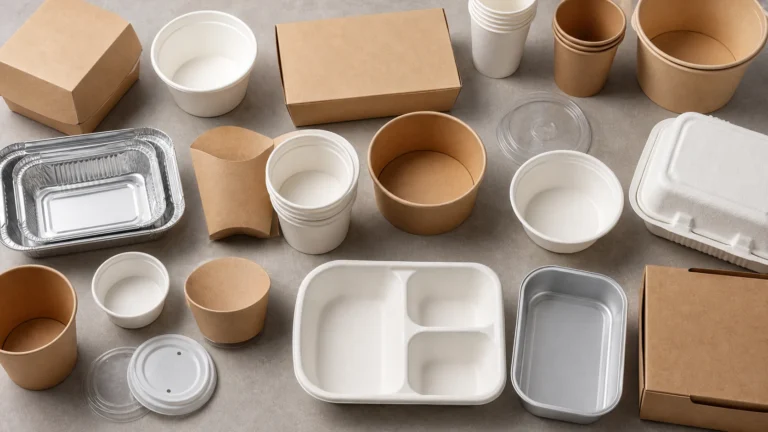
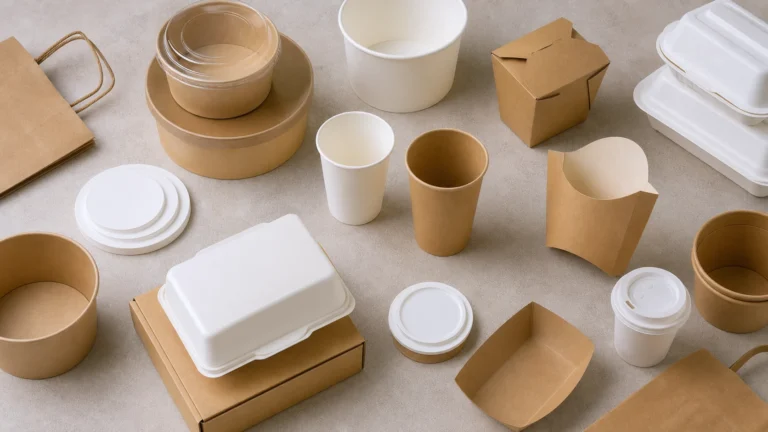
Paperboard and kraft containers
Paperboard and kraft work well for cookies, pastries, fries, popcorn chicken, churros, and snack assortments, with typical board structures around 250-350 gsm for open trays. Plain board takes on oil and moisture quickly, so fried or glazed items usually need a grease-resistant coating or liner.
Coated paperboard
PE coating improves grease and moisture resistance and is the common commercial choice for short hot-hold and takeaway. Under-specifying barrier performance usually produces complaints after rollout, not during sampling.
PET and rPET containers
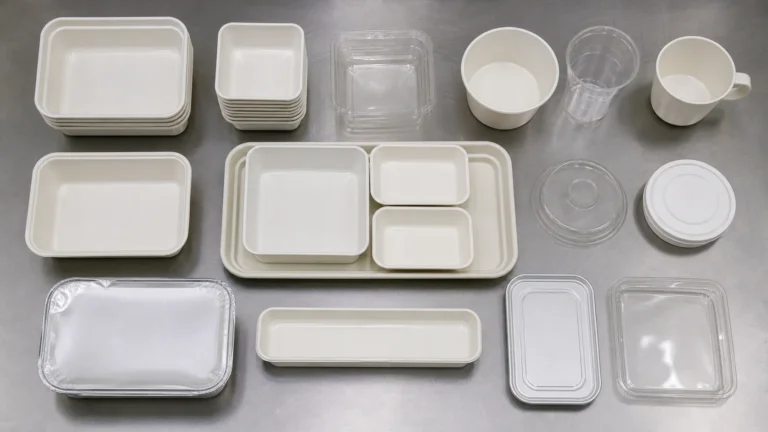
PET and rPET are strongest where visibility drives purchase: fruit cups, cakes, bakery singles, and chilled grab-and-go snacks. Standard PET is a poor fit for hot fried snacks because heat can deform the pack. For buyers comparing chilled display options, food packaging containers are a practical starting point.
PP containers
PP handles heat better than PET, with typical service capability up to roughly 120 degrees C depending on format and wall design. It becomes the standardization choice when operators want one structure to cover both hot-side portions and leak-sensitive snack items.
Bagasse and molded fiber containers
A molded fiber clamshell may survive a short service window but lose stiffness after around 2 hours with hot, wet contents. Request grease-resistance data and run actual fill tests before committing.
Aluminum foil containers
Foil handles oven use better than most plastic formats and provides strong grease resistance. It is a back-of-house performance choice given its limited printable surface and weaker cafe aesthetics.
For snack packaging, failure often comes from the coating system, not the base material. Barrier choice should be evaluated as a sourcing decision, not an afterthought.
What buyers should verify
Suppliers should provide food-contact documentation relevant to the destination market and intended use. The U.S. FDA framework explains how packaging substances are assessed for contact with food and why intended conditions of use matter: FDA Food Contact Substances. If the pack will contact hot, oily, acidic, or alcohol-containing foods, test conditions and declarations should reflect that use.
Barrier-driven selection comparison
| Use case | Better choice | Why it usually wins | Common downside |
|---|---|---|---|
| Fried snacks, short takeaway | PE- or aqueous-coated paperboard | Grease holdout with good printability | Limited recycling acceptance in some waste streams |
| Hot snack with sauce | PP with matched lid | Heat tolerance and leak control | Lower premium shelf appearance |
| Chilled display snack | PET/rPET | Product visibility and merchandising | Not suitable for hot fill |
| Event compostable program | Bagasse with validated lid fit | Natural presentation and venue alignment | Bulkier storage, more variable moisture performance |
Practical notes for buyers: for fried snacks, request both barrier details and a filled hold-time sample, not just a dry sample. If the item will travel in a delivery bag, test after closure and stacking, because oil migration often shows up after movement. For multi-location rollouts, lock coating spec and supplier SKU together to avoid line drift.
Each format solves a different commercial problem: speed at the counter, structural protection in delivery, visual impact in display, or cost control in volume purchasing.
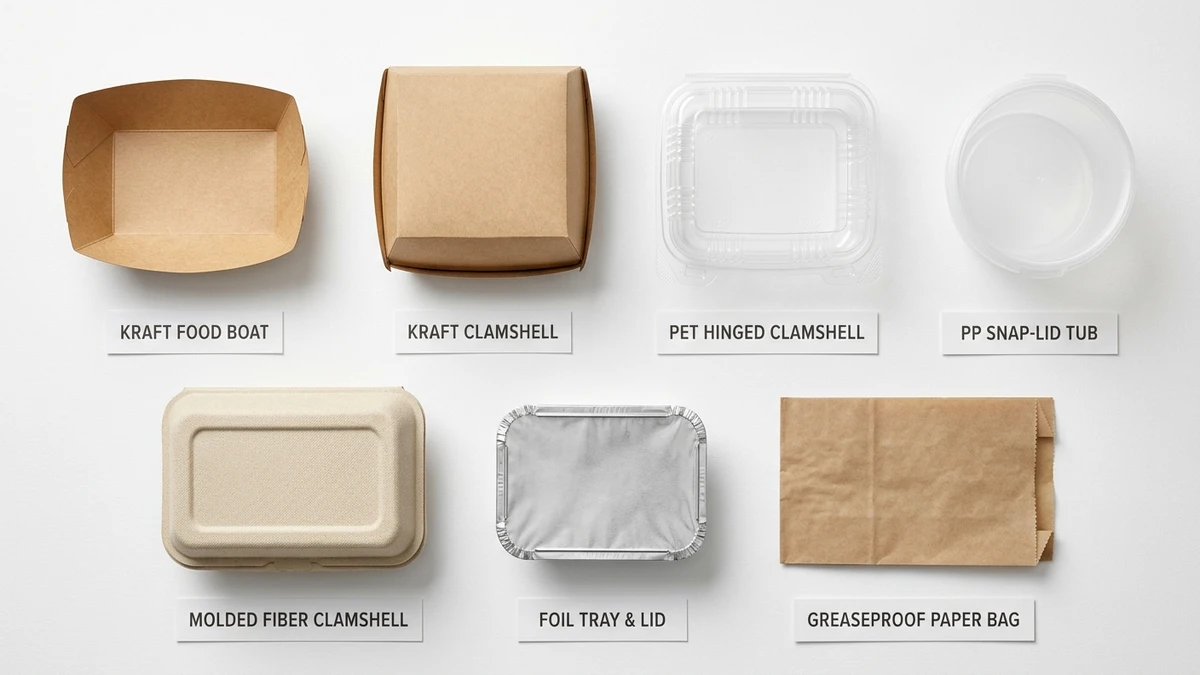
Paper-based open trays and boats
Open trays and food boats are common for fast handoff service, with typical board weights of 250-350 gsm and PE or PLA coating for grease resistance during 30-60 minutes of use. Best for fries, churros, and concession snacks; poor fit for sauced items or stacked delivery.
Closed paper boxes and kraft clamshells
Common for cafe takeaway sets, bakery packs, and event catering. Auto-bottom constructions assemble faster than tuck-bottom versions and can cost 10-20% more, but at 300 or more covers per day the labor saving often justifies the premium.
Rigid plastic clamshells: PET, PP, rPET
Clear hinged clamshells dominate chilled grab-and-go. PET gives the best clarity, PP gives better heat tolerance, and rPET helps meet recycled-content targets. Check hinge performance if consumers may reopen the pack multiple times.
Bagasse, molded fiber, and compostable-positioned formats
Often selected for venues with sustainability requirements and best for moderate-temperature service. Cost is often 30-80% above equivalent PE-coated paper, and performance is poor for long hot-wet holds or operations without the right end-of-life stream.
Foil trays and lidded foil containers
Best for buffet service, oven-finish items, and reheated snacks. Poor fit for microwave use, visibility-focused merchandising, or metal-free packaging programs.
Cups, tubs, and portion containers
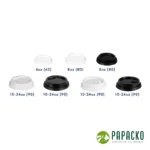
Round paper or PP cups in roughly 60-500 ml cover sauces, parfaits, snack mixes, yogurt, and side portions. Verify lid and base as a matched pair; diameter alone is not a reliable sourcing method.
Flexible pouches and paper bags
Greaseproof bags, window bags, and stand-up pouches suit dry and semi-dry snacks like cookies, nuts, and popcorn. Best for low unit cost and light freight; poor fit for rigid presentation or hot wet foods.
For distributor stock programs, formats with broad lid compatibility usually reduce dead inventory. If storage space is tight, compare nested stack height before unit price; freight and shelving often erase a small item-cost saving. Export buyers should check master-carton compression and moisture protection, not just the inner pack spec.
Printing affects MOQ, lead time, substrate choice, and the speed at which a new design moves into service.
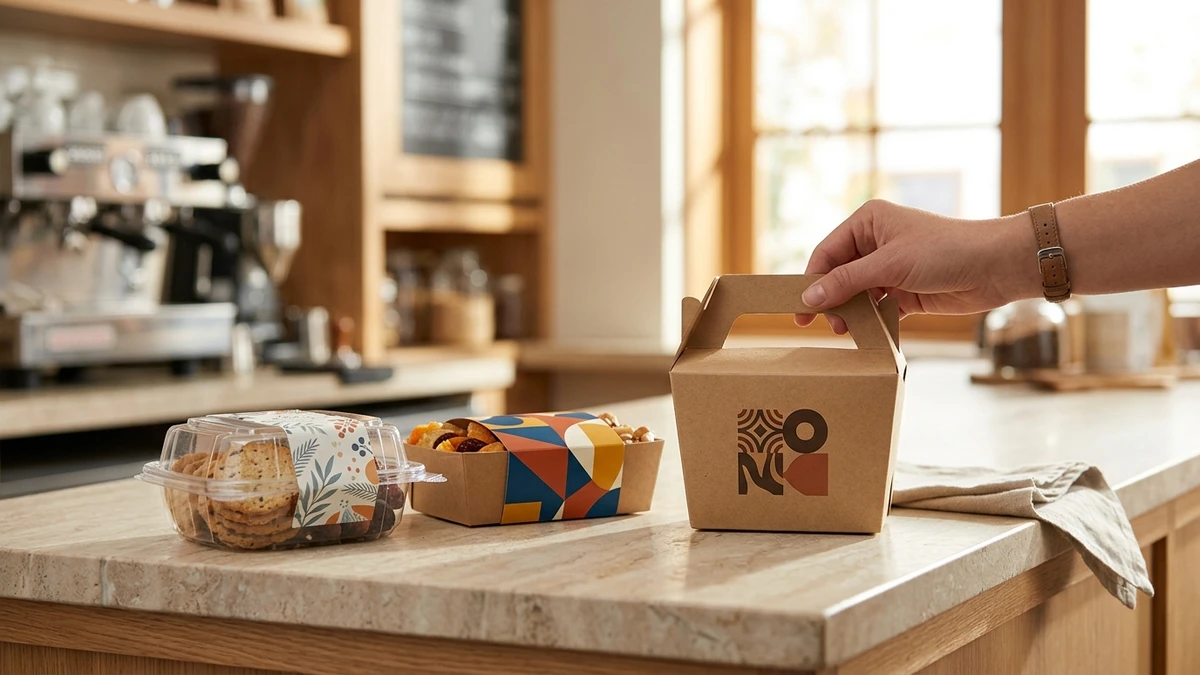
How print methods compare
| Method | Best substrate | Minimum run | Lead time | Commercial use |
|---|---|---|---|---|
| Flexographic | Kraft paper, coated board | 5,000-50,000+ | 3-6 weeks | Best for high-volume standard SKUs |
| Digital | Paper, light board | 250-2,000 | 1-2 weeks | Useful for trials, seasonal runs, events |
| Offset lithography | Flat board blanks | 10,000+ | 4-8 weeks | Premium print quality for large runs |
| Screen printing | Rigid plastic, metal | 500-5,000 | 2-4 weeks | Direct print on formed packs |
| Thermal label application | Most surfaces | 50-500 | Days | Fast, flexible short runs |
Flexo remains the main commercial method for high-volume paper snack packaging; digital removes plate cost and is more practical for pilots, promotional runs, or first market tests.
Material and ink system realities
Paperboard usually works with water-based or UV-curable inks; PET and PP often require surface treatment or sleeves because ink adhesion is weaker on low-surface-energy materials. A recurring rollout issue is approving artwork from a digital screen without a physical drawdown on kraft or recycled board, where natural substrates mute color, especially reds and blues. For brands building a broader low-material visual system, minimal packaging design is a useful reference.
Where branding investment pays back
Branded snack containers create the clearest return in self-service grab-and-go packs where the container sells the product, event catering where many units are visible at once, and distributor programs where branding supports margin. A 300-unit event may justify digital even at higher unit cost, while a daily cafe SKU usually needs flexo or offset economics.
A good purchase order starts with a usable specification. Without one, buyers often approve a sample that looks right but fails under actual service conditions.
Build the specification before asking for quotes
A workable snack-container spec should include: material and grade; fill volume and dimensional range; closure type and lid retention requirement; temperature exposure in service and storage; barrier or grease-resistance expectation; compliance documentation needed; print or finish requirement; and case-pack and delivery format. If the base and lid are a pair, specify them as a pair.
What suppliers need to quote accurately
Suppliers need estimated monthly or annual volume, delivery region, stock versus custom requirement, artwork format if printed, and compliance documents required at quote stage. For custom work, vector artwork and Pantone references reduce approval delays; for compliance-sensitive programs, ask for food-contact documentation before sample approval, not after.
Lid and closure selection by snack type
| Snack type | Recommended closure | Why |
|---|---|---|
| Popcorn, puffed snacks | Open-top tray or friction-fit lid | Limits moisture trap and preserves crispness |
| Mixed nuts, trail mix | Snap-fit lid with limited venting | Controls spillage and extends display window |
| Sauced snacks | Tight snap-fit or tamper-evident closure | Improves leak resistance in handling |
| Dips with accompaniment | Dual-compartment with sealed dip well | Keeps components separate until service |
Friction-fit lids can become unreliable once dimensional variance moves beyond about plus or minus 0.3 mm; if you source bases and lids from different runs or suppliers, batch validation matters.
Validate under real operating conditions
Sample approval should include filling to real portion weight, closing and inverting, holding for the actual service window, testing in chilled or hot conditions as required, and stacking to the intended transport or display height. This is where practical issues appear: lids releasing under stack pressure, fogging that hides the product, softened corners, or condensation pooling in the base.
Compliance and documentation layer
Snack container planning for events
For first-time events, a 25% buffer on projected quantity is a practical starting point. For repeat events with good historical data, 10-15% is often enough. Dry finger foods warrant about 20% overage for self-serve; dips and spreads need only 5-8%. Limited storage favors nested cups and flat-packed folded formats. Outdoor heat can rule out low-heat-tolerance materials, and the absence of a composting stream weakens the commercial case for compostable packaging even when the marketing claim sounds attractive.
For buyers aligning fill volume with service format, eco paper cups and adjacent fiber packaging solutions are often evaluated as part of the same front-of-house packaging system.
If you are selecting snack containers for rollout, the most efficient path is to standardize by service mode first, then validate the base-lid system against your top failure risks: grease breakthrough, venting, leak control, stack load, and storage footprint. Papacko’s commercial packaging range covers paper-based formats, containers, and accessory components that can be compared as a system, including packaging accessories for lid, sleeve, and handling alignment. The technical objective is straightforward: reduce SKU overlap, lock in matched specifications, test with actual food and dwell time, and keep documentation tied to each approved packaging structure.
For most fried snacks, coated paperboard, PP, or foil are the safer choices because they handle grease better than plain paperboard. The right option depends on whether you need venting, visibility, or leak control.
Usually no for standard PET. PET performs best in chilled display and can deform or fog when used with hot-filled snack items.
Choose bagasse when venue requirements or brand positioning support fiber-based compostable-positioned packaging and the service window is moderate. Choose coated paperboard when you need better print quality, lower cost, and more predictable storage efficiency.
Because nominal diameter does not guarantee tooling compatibility. Small differences in rim profile, tolerance, and material shrink behavior can make lids pop off or fit too tightly.
For many snack applications, coating or barrier system matters more than the base material alone. A strong-looking paper tray without the right grease barrier can fail faster than a lighter structure with the correct coating.
For first-time events, a 25% buffer is a practical starting point. For repeat events with good historical data, 10-15% is often enough.
Not always. Compostable packaging only delivers its intended end-of-life value when the right collection and processing infrastructure is available, and it can involve cost, heat, and storage trade-offs.