Ready to create your own branded paper cups or packaging?
Tell us your requirements — size, coating, printing, and destination — and our team will prepare a detailed quotation within 24 hours.

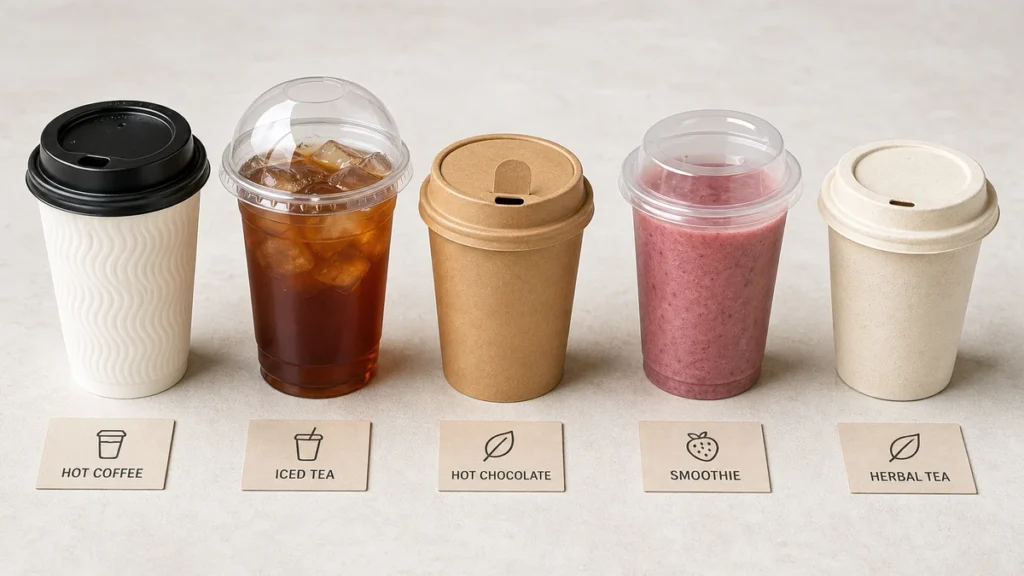
Choosing disposable cups with lids should start with service conditions, not just beverage names. A hot latte, an iced coffee, a smoothie, and a soup order can all require different cup walls, coatings, lid geometries, and transport performance. For B2B buyers, the goal is not simply to find a cup that holds liquid. It is to source a cup and lid system that fits the menu, survives handling, meets compliance needs, and works within MOQ, lead time, and storage limits.
The fastest way to narrow options is to ask three questions. What is the fill temperature? How long will the customer hold or transport the drink? Does the lid need to resist steam, pressure, inversion, or delivery-bag movement? Once those answers are clear, cup and lid selection becomes much more practical.
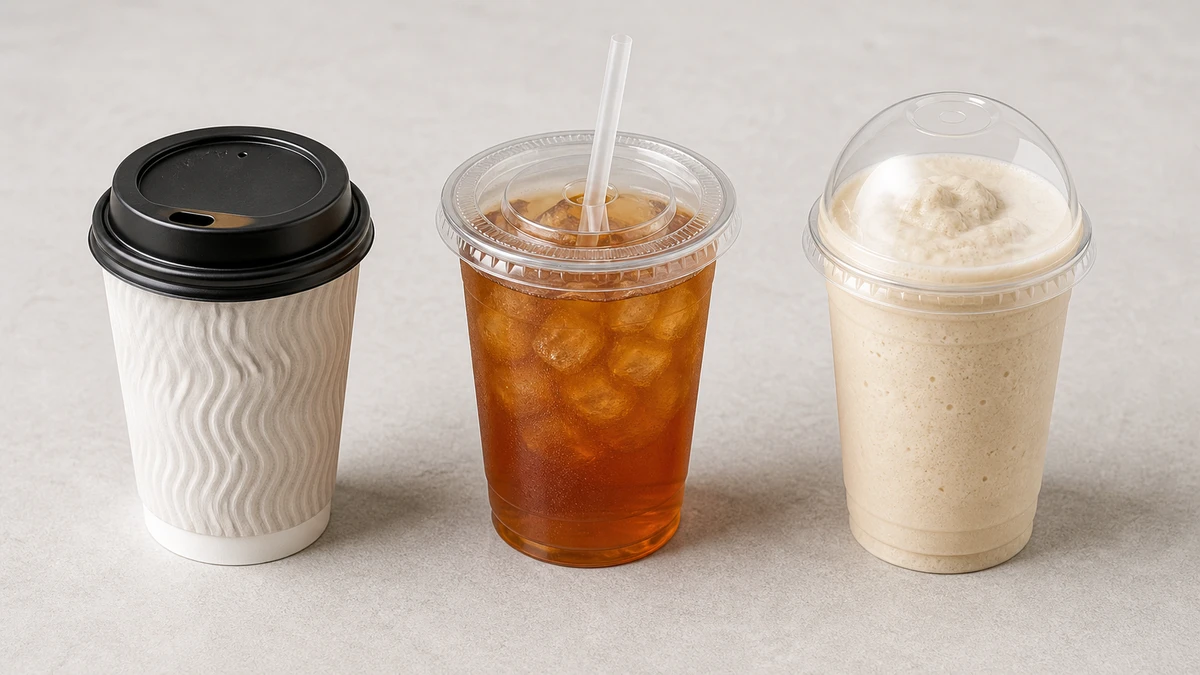
Drink type affects more than capacity. It changes heat exposure, condensation, pressure, and the risk of spills during transport.
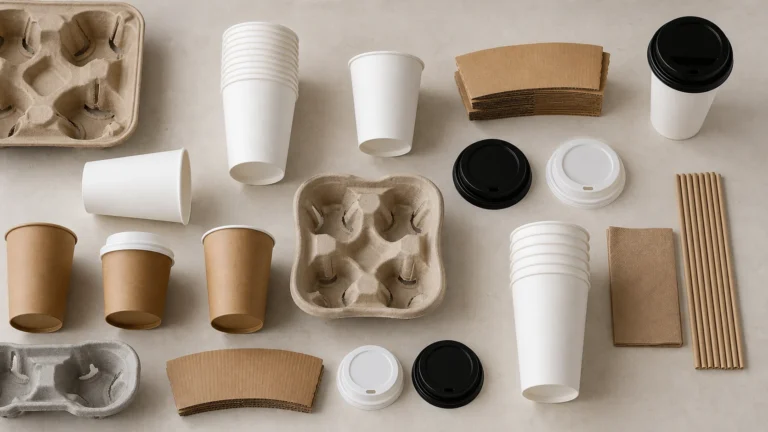
For hot beverages, double-wall paper cups are often the safest default for takeaway programs. They improve handling comfort and reduce the need for sleeves. Single-wall formats can still work for short service windows or lower-cost programs, but they usually need a sleeve for customer comfort. Where paper is the preferred route, paper cups and their matched lids should be qualified together rather than purchased as unrelated SKUs.
For cold beverages with ice, PET and PP cups remain common because they handle condensation and preserve structure during longer carry times. Clear PET is especially useful when product visibility matters. Paper cold cups can work in short counter-service use, but they need suitable coating and structural specification if ice contact is extended.
Specialty beverages create extra sourcing challenges. Smoothies need dome or wide-opening lids. Carbonated drinks may build headspace pressure that can stress shallow cold lids. Soup and broth need stronger retention because liquid weight and carry time increase spill risk. In these cases, the lid becomes a control point, not a minor accessory.
A practical buyer rule is to select for the highest-risk condition first. If a menu item is hot and delivered, prioritize heat resistance and seal retention. If it is cold and highly mobile, prioritize condensation handling and lid security. If the drink is thick or topped, the opening geometry may matter more than the cup wall.
Material choice influences insulation, branding, stackability, storage behavior, disposal pathway, and lid compatibility. It also affects whether a sample that performs well at the counter will still perform after delivery.
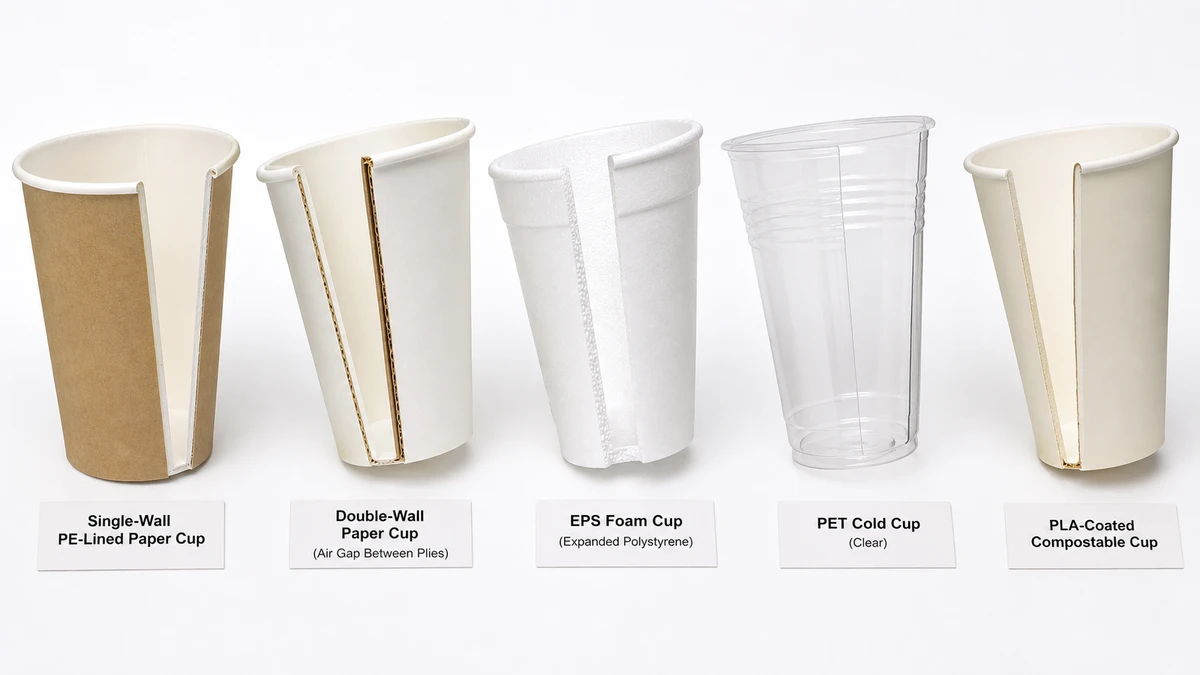
Paper cups remain a leading option for hot beverage service because they offer familiar rim standards, good print surfaces, and broad size availability. Single-wall paper is economical, but double-wall construction usually gives a better customer experience for coffee and tea. Coating matters as much as wall style. PE-lined paper is common for hot and short-hold applications, while different barrier options may be specified depending on service needs. If your beverage program overlaps with snacks or sides, aligning cup sourcing with related food packaging containers can reduce unnecessary SKU spread.
PET cups are widely used for iced coffee, cold brew, soft drinks, and visual specialty beverages. Their clarity supports merchandising, but they are not intended for hot-fill use. PP cups are less transparent, yet they offer useful impact resistance and may suit thicker drinks or tougher handling conditions better than PET.
Foam cups still offer strong insulation for hot drinks, but local restrictions and branding limitations make them less suitable for many modern foodservice programs. Compostable formats can make sense where disposal pathways are real and documented, but buyers should confirm whether the product is intended for cold use only or whether a heat-resistant version is specified.
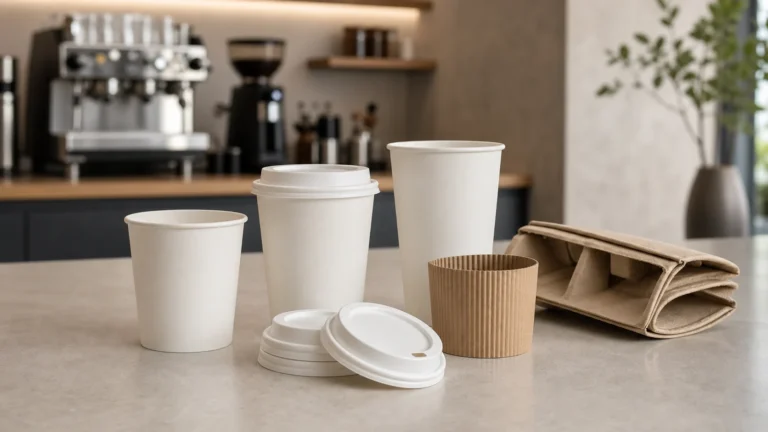
Lid fit cannot be assumed across materials. Two cups labeled with the same nominal diameter may still fail with the same lid if the rim bead or sealing profile differs. This is why disposable cups with lids must be tested as a system.
Hot beverage programs should be specified around insulation, venting, grip comfort, and leak control. The correct lid for coffee is not always the best lid for tea or soup.
Coffee and espresso drinks usually perform best in double-wall paper cups from 8 oz to 16 oz with a PP hot sip lid. This combination balances heat retention, customer comfort, and broad lid availability. Single-wall cups can still work, but sleeve use and handling should be validated during service trials.
Tea often sits hot for longer than coffee before consumption. That makes venting and drink opening design more important. Some tea programs benefit from lids with a shape that avoids interfering with tea bag strings and tags. This detail seems small, but it can affect service speed and customer experience.
Soup and broth require more caution. They create higher fill weight, longer carry windows, and higher leakage risk. Oils and fats may also stress coatings and seals differently than water-based beverages. A reinforced paper cup with a high-retention lid is often more appropriate than a standard hot drink setup. If your team needs lids, stoppers, sleeves, or other add-ons reviewed together, coordinating with packaging accessories can help keep the specification package complete.
Before approving a hot cup program, request samples and run practical tests:
– Fill at actual service temperature.
– Snap on the intended lid.
– Carry the cup for the expected customer hold time.
– Tilt and invert briefly to check seal integrity.
– Place samples in bags if delivery is part of the channel.
These simple checks often reveal more than a product listing or dimension chart.
Cold drinks fail for different reasons than hot drinks. The biggest issues are condensation, straw mismatch, lid pop-off, and rough handling during takeaway or delivery.
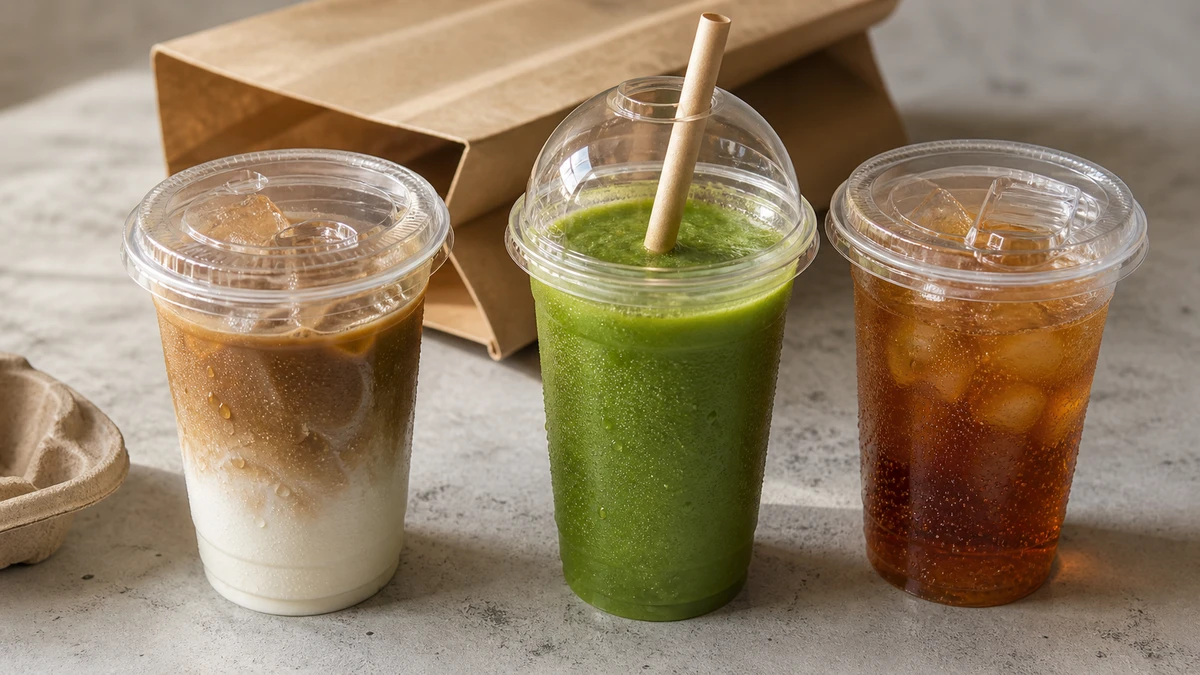
PET cups are usually the first choice for iced coffee, layered beverages, and cold drinks where appearance matters. PP can be a better fit when impact resistance matters more than clarity. For operators consolidating across beverages and related takeaway needs, a broader review of disposable food packaging may help reduce duplicate stock decisions.
Lid style should follow drink behavior:
– Flat sipper lids suit iced coffee and cold brew.
– Straw-slot lids fit standard fountain and cold tea service.
– Dome lids are common for smoothies and topped drinks.
– Resealable or stronger-retention lids may be better for carbonated or delivery-oriented beverages.
Smoothies and thick drinks also require attention to opening size. A standard straw slot can tear or leak if paired with a wide smoothie or boba straw. If several thick-drink SKUs are on the menu, standardizing one suitable dome or wide-opening lid may be more efficient than carrying multiple similar cold lids.
Carbonated beverages deserve extra testing because gas pressure can affect lid stability. Buyers should not rely on nominal size alone. Real-use testing under actual fill conditions is the safer route. For food-contact questions, especially where beverage formulas differ, buyers should review supplier declarations and applicable guidance from the FDA.
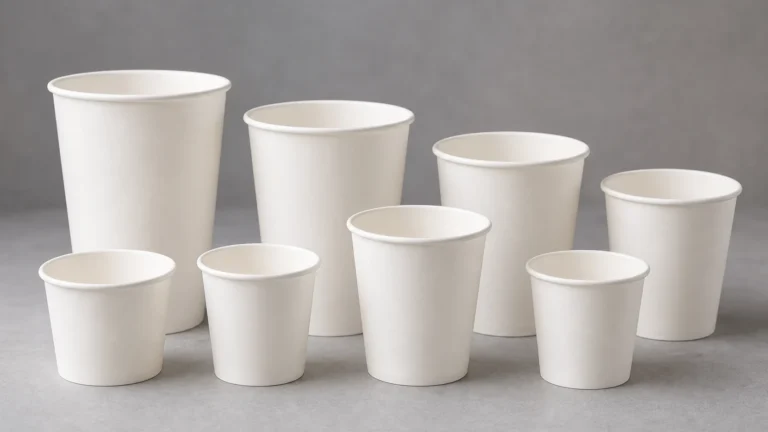
Volume planning matters too. Ice reduces actual liquid fill, so menu sizing should reflect beverage reality rather than printed cup capacity. Many operations simplify replenishment by standardizing around a limited number of rim diameters across 12 oz to 24 oz cold drink sizes.
The cup may be the visible product, but the lid often determines success or failure in service. That is why disposable cups with lids should be sourced through technical review, not visual approval alone.
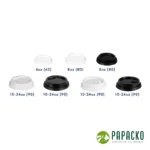
Start with lid fit. A nominal 90 mm lid from one source may not seal reliably on another supplier’s 90 mm cup. Rim roll, bead profile, and sealing geometry vary. Always request matched cup and lid samples and test them together under hot-fill or cold-hold conditions.
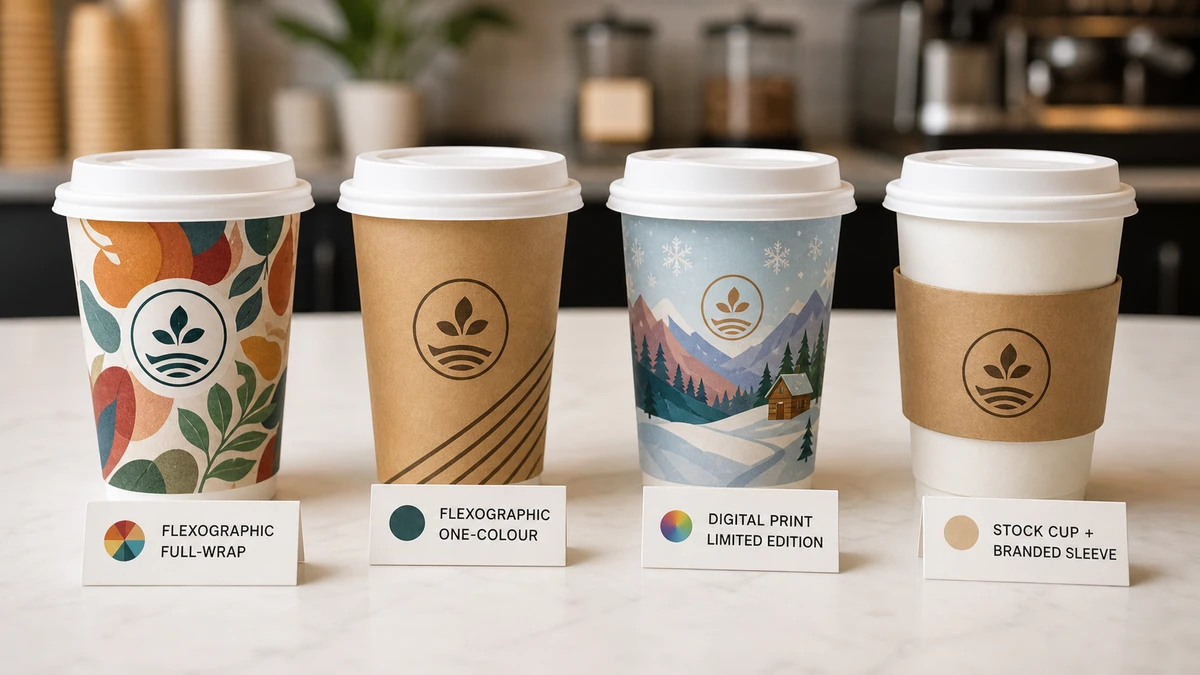
MOQ should also be reviewed early. Stock cups may be available from case quantities or low-thousands, but custom printed runs are usually much higher. Practical market ranges often look like this:
– Stock SKUs: about 1,000 to 5,000 units per size
– Custom single-color runs: about 10,000 to 25,000 units per size
– Full-color or proprietary formats: 50,000 units and above, sometimes container-based
Lead time depends on whether the item is stock or custom, and whether production is domestic or overseas. Buyers should expect shorter windows for stock items and digital short runs, and longer windows for flexographic printing or custom tooling. A reasonable sourcing discussion should cover artwork approval timing, production schedule, packing details, and replenishment planning.
Ask suppliers for documentation before issuing a PO. At minimum, the file set should include:
– Technical specification sheet
– Material and coating information
– Intended temperature range
– Matched lid fitment details
– Food-contact compliance documents for the target market
– Carton pack and pallet information
– Sample approval process and replacement policy
Samples are not a formality. They are the point where lid retention, nesting, print quality, and handling issues become visible. If branding is part of the project, buyers can also align cup graphics with other items such as custom printed paper bags to keep launches consistent and reduce fragmented planning.
Double-wall paper cups with a PP hot sip lid are usually the safest default for takeaway coffee. They balance heat retention, handling comfort, and broad lid availability.
They can work for short service windows, but extended ice contact can weaken seams and structure. For takeaway or delivery, PET or PP is usually more reliable.
Not reliably. Even when the nominal diameter matches, rim profile and sealing geometry can differ enough to cause leaks or pop-offs.
PET works well when product visibility matters, while PP is often better for rough handling or thicker blends. The final choice should also match the dome or wide-straw lid format.
Only when the disposal pathway is real and verified. If compostable cups end up in landfill or mixed recycling, the operational benefit becomes much less clear.
Test cup-and-lid fit, hot-fill or cold-hold performance, leakage on tilt or invert, and case-pack handling. Those checks reveal the issues that product pages usually miss.