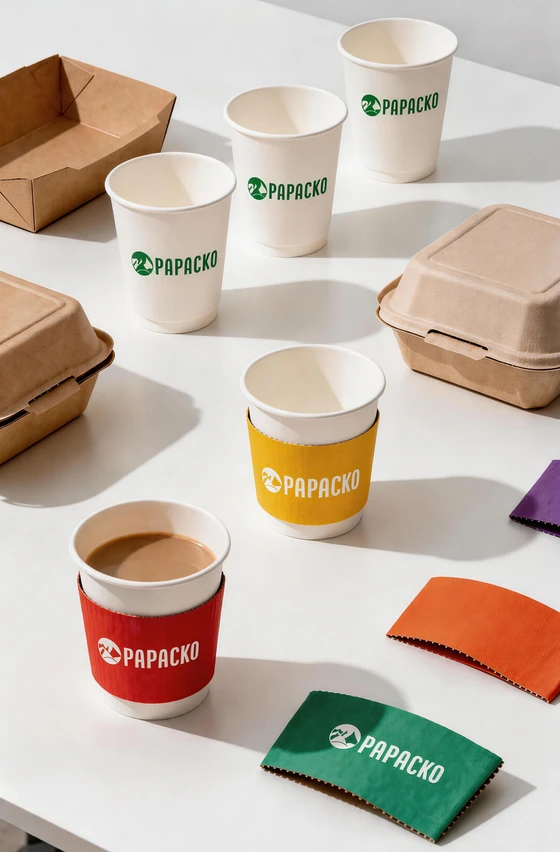
Ready to create your own branded paper cups or packaging?
Tell us your requirements — size, coating, printing, and destination — and our team will prepare a detailed quotation within 24 hours.


A compostable claim on a packaging item is not self-executing. It requires demonstrable evidence tied to a specific product SKU, tested under defined conditions, accepted by a named receiving facility, and matched to the actual disposal route available at the point of use. Without each of those links in place, the claim remains promotional language rather than operational fact.

Before evaluating any packaging material, a buyer must identify the real infrastructure available at their sites and in their delivery zones. Compostability is only meaningful when an appropriate facility exists to receive, process, and finish the material correctly. Industrial composting facilities operate under conditions that differ substantially from home composting environments, and many municipalities route food-service waste to landfill or energy-recovery regardless of what is printed on the packaging.
The sequence runs in reverse from what most marketing suggests. Rather than starting with a claim printed on a box, start by confirming which facilities accept which material streams in each destination market. Then match packaging specifications to confirmed acceptance criteria at those facilities. Any SKU under consideration must carry documentation showing it meets the intake requirements of a facility you can actually reach.
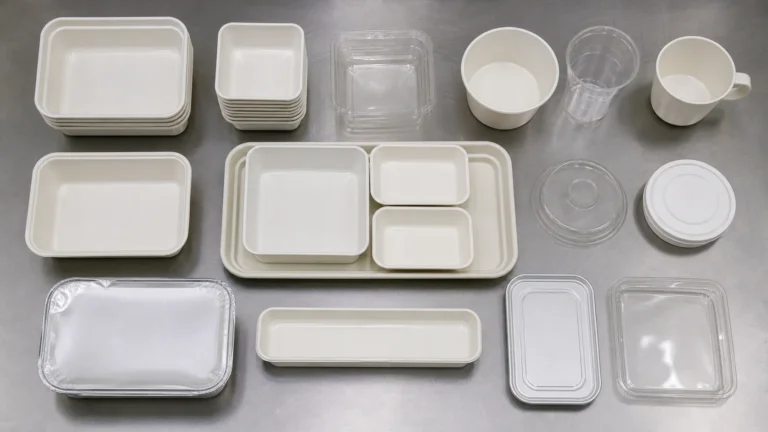
Food packaging container systems exist across a wide range of material constructions, and not every item marketed as compostable will be accepted by every composting operator. Facility operators regularly update their accepted materials lists, and a product approved one season may be removed from a list the next. Building a purchasing process that treats facility acceptance as a living, verified condition rather than a one-time check is essential.

Buyers frequently encounter packaging described by its primary input material. These descriptions communicate something about origin but nothing reliable about end-of-life behavior. A material sourced from agricultural residue may still require industrial processing conditions to break down. A fiber-based container may carry a coating whose compostability has not been independently confirmed for that specific coating thickness and application.
The gap between marketing language and documented performance is widest in this area. Treat every material name as a starting prompt for evidence gathering, not as a disposal instruction. Ask your supplier to provide SKU-specific documentation rather than general material-category information. General category claims rarely translate cleanly to individual product performance in real composting infrastructure.
Disposable food packaging systems span a wide range of construction methods, and two items that appear visually identical may have significantly different documented behaviors depending on their coatings, adhesives, and structural layers. Request documentation for the exact item number you intend to order, not a category-level summary from the supplier.
Credible compostable packaging is accompanied by documentation that identifies the specific SKU, names the testing body and scheme under which the item was evaluated, and states the conditions of that evaluation. Where third-party verification has been completed, the documentation should be traceable to a verifiable source rather than reproduced only on the packaging artwork.
Buyers should request documentation packages that include evidence of how the item performs in relation to the acceptance criteria used by industrial composting facilities. This evidence is SKU-specific. A supplier who provides a blanket statement covering an entire product range without item-level traceability is providing less evidence than a buyer should require before making a sourcing decision.
The European Commission food-contact materials guidance addresses the intersection of material safety and food contact in ways relevant to buyers sourcing into markets subject to those frameworks. Compostability evidence and food-contact compliance evidence are separate documentation streams, and both must be present for regulated markets.

A packaging item’s documented behavior in a composting facility is entirely separate from its suitability for the food it will carry. Hot liquids, oily foods, acidic ingredients, and high-moisture preparations each place different demands on packaging materials and coatings. A container that performs well with dry goods may not perform equivalently when used to hold sauced dishes at serving temperature.
Operational testing under real menu conditions is necessary before a buyer commits to volume. This includes stress-testing containers and cups at the temperatures, hold times, and fill weights typical of your specific menu rather than relying on generic claims about the material category.
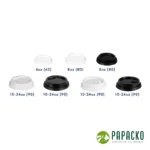
Eco paper cup options illustrate this point clearly. A cup construction that maintains structural integrity with a cold beverage may behave differently with a high-temperature liquid, depending on the internal coating and how that coating interacts with heat and moisture over the expected hold period. Menu-condition testing must match your actual service scenario, not a generalized use case.
The table below organizes commonly encountered packaging formats by key evaluation factors. No entry should be read as a claim that any category is universally compostable, accepted by any facility, or suitable for any specific use. All entries require SKU-level evidence from your supplier and confirmation of facility acceptance in your destination market.
| Format | Common Use Cases | Key Evaluation Factors | Facility Dependency |
|---|---|---|---|
| Molded fiber containers | Hot and cold food service | Coating type, moisture resistance, structural integrity | Industrial facility acceptance of coated fiber must be confirmed |
| Paper-lined cups | Hot and cold beverages | Lining material, heat performance, bond integrity | Lining compostability must be documented separately from the cup body |
| Flat-bottom bags | Dry goods, bakery items | Laminate layers, closure adhesives, grease barriers | Each component layer requires independent evidence |
| Clamshell containers | Takeout meals, catering | Hinge integrity, coating behavior, lid seal | Full assembled-item evidence required, not only the shell material |
| Cutlery and serviceware | Full-service and delivery | Rigidity under load, heat distortion, coating presence | Specific facility processing thresholds must be checked |
| Flexible film wraps | Sandwich, deli, wrap service | Multi-layer construction, print inks, adhesives | Frequently excluded from intake; verify with each operator individually |
Compostable packaging frequently involves trade-offs that conventional packaging does not present. Cost per unit is typically higher, and the price premium must be evaluated against the operational benefit actually delivered — which depends entirely on whether the waste stream can reach a compliant facility.
Storage conditions matter because some compostable materials are sensitive to heat, humidity, and extended warehouse time. Stock rotation, storage environment controls, and order cycle length must all be reviewed to ensure packaging maintains its intended performance by the time it reaches service.
Paper cup systems and other high-volume service items require particular attention to storage because large order quantities held over extended periods may expose material to conditions that degrade performance before use. Shorter order cycles with supplier-confirmed shelf life documentation reduce this risk significantly.
Staff handling and customer education are operational factors that documentation alone cannot address. Even correctly specified and properly sourced compostable packaging fails to deliver its intended benefit if it enters the wrong waste stream at the point of disposal. Site-level infrastructure — clearly marked bins, staff training, and consistent waste contractor arrangements — is a prerequisite for closing the loop on any claim.
Destination-market verification means confirming, for each city, region, or jurisdiction where your packaging will be used or delivered, whether a composting facility exists that accepts your specific packaging type, what the facility’s intake documentation requirements are, whether your packaging supplier’s documentation satisfies those requirements, and whether your waste contractor has a confirmed route to that facility.
This process is not a one-time exercise. Facilities change their accepted materials lists. Contractor routes change. Regulatory frameworks evolve. A verification that was accurate at the time of sourcing may be outdated within a relatively short operating period. Building a scheduled re-verification process into your procurement cycle is a practical necessity rather than an optional refinement.
Food packaging category resources can support buyers at the research and specification stage, but destination-market verification must ultimately be conducted by the buyer in relation to the specific markets, facilities, and contractors relevant to their operation.

A packaging brief is the most effective tool for translating operational requirements into sourcing specifications. A well-constructed brief documents the menu items the packaging must contain, the service conditions under which it will be used, the waste infrastructure available in your operating locations, the documentation requirements your facilities have confirmed, and your volume and order cycle expectations.
Working from a brief allows a supplier to match SKUs to stated requirements rather than presenting a general catalog. It also creates a documented basis for evaluating whether a proposed item satisfies your conditions and provides a reference point for re-evaluation if conditions change. Buyers who arrive with a brief rather than a general inquiry receive more targeted responses and avoid wasted evaluation cycles on items that cannot meet their fundamental requirements.

The information provided here describes a framework for evaluating compostable packaging claims rather than making specific product recommendations or confirming compliance outcomes. No material category, format type, or packaging construction is represented here as universally compostable, recyclable, food-safe, or accepted by any specific facility.
All claims about specific packaging items must be verified against SKU-level supplier documentation, confirmed against the acceptance criteria of composting facilities in your destination markets, and checked against the food-contact and regulatory requirements applicable to your operating jurisdiction. Editorial content cannot substitute for that process, and no purchasing decision should rest on category-level guidance alone.
No. Facility acceptance is determined by the intake criteria of each individual composting operator, which varies by location, processing method, and accepted materials list. A label or claim does not guarantee acceptance. Buyers must confirm acceptance directly with each facility relevant to their waste route before making sourcing commitments.
Supplier-only claims without traceable third-party evaluation provide a lower level of evidence than independently verified documentation. While supplier statements may be accurate, buyers sourcing for regulated markets or making sustainability representations to customers should require documentation that identifies the evaluating body and is traceable to a verifiable source independent of the manufacturer.
Not always. Some compostable materials behave differently from conventional counterparts under heat, moisture, extended hold times, and warehouse storage conditions. Operational testing under your specific menu and service conditions is necessary before volume commitment. General category performance data does not substitute for testing under actual use conditions relevant to your operation.
No. A coating or lining applied to a base material must carry its own documentation separate from the base material itself. Buyers should request evidence for the complete assembled item, including any coatings, adhesives, inks, or laminates, not only for the primary structural component. A base material with an undocumented coating may not be accepted by composting operators.
Compostable packaging that does not reach a suitable composting facility does not deliver the end-of-life outcome the compostability claim describes. In landfill, the conditions necessary for composting are absent. In recycling streams, compostable materials may be treated as contaminants by sorting operations. Destination-market verification and robust site-level waste management are both necessary to close the intended material loop.
Verification should be treated as a scheduled, recurring process rather than a one-time sourcing check. Facility intake criteria, contractor routes, and applicable regulatory requirements all change over time. Buyers operating across multiple locations or jurisdictions should establish a review cycle that reflects the pace of change in their operating markets and the volume of packaging currently in use.