Sei pronto a creare i tuoi bicchieri di carta o le tue confezioni personalizzati con il tuo marchio?

Comunicateci le vostre esigenze — dimensioni, rivestimento, stampa e destinazione — e il nostro team vi preparerà un preventivo dettagliato entro 24 ore.
Demo del modulo di contatto

Sei pronto a creare i tuoi bicchieri di carta o le tue confezioni personalizzati con il tuo marchio?

Comunicateci le vostre esigenze — dimensioni, rivestimento, stampa e destinazione — e il nostro team vi preparerà un preventivo dettagliato entro 24 ore.
Demo del modulo di contatto

Accessori per il caffè per caffetterie ecologiche

Ultimo aggiornamento: aprile 2026 Tempo di lettura: 8-10 minuti Autore: Il team editoriale di Papacko

Introduzione

Eco-conscious cafés face a critical procurement challenge: sourcing coffee accessories that align with sustainability commitments without compromising functionality or customer experience. Traditional plastic stirrers, ” target=”_blank” rel=”noopener”>polystyrene sleeves, and petroleum-based lids contribute 18-24% of a typical coffee shop’s waste stream—yet alternatives suffer from performance gaps (heat resistance, moisture stability, cost-effectiveness) that deter adoption.

The sustainable coffee accessories market has matured significantly in 2026, with bio-based materials achieving functional parity with conventional plastics across key metrics: PLA stirrers matching polystyrene rigidity at similar price points ($0.008-0.012 per unit), fiber-based sleeves providing equivalent thermal insulation to foam sleeves at just 15% cost premium, and plant-based lids sealing reliably on hot beverages while maintaining compostability certifications.

This comprehensive guide evaluates eight categories of eco coffee accessories for environmentally focused cafés: compostable stirrers (wood, PLA, bamboo), biodegradable sleeves (corrugated, molded fiber), sustainable lids (fiber-based, PLA), eco-friendly napkins (recycled, bamboo), reusable alternatives (glass stirrers, ceramic cups), sustainable carriers (fiber cupholders, compostable trays), packaging solutions (kraft bags, plant-based films), and certification standards (BPI, TÜV Austria, ” target=”_blank” rel=”noopener”>ASTM D6400) that validate environmental claims.

💡 In sintesi: Eco coffee accessories for sustainable cafés prioritize compostable certifications (ASTM D6400, EN 13432), functional performance matching conventional plastics, and cost-competitiveness within 10-20% premium.

Top recommendations: birch wood stirrers ($0.009/unit), corrugated sleeves ($0.042/unit), fiber-based lids ($0.068/unit), and recycled napkins ($0.018/unit).

Complete café transition achievable at $0.12-0.18 additional cost per beverage served, with 85-95% waste diversion from landfills to composting facilities.

Why Eco Accessories Matter for Modern Cafés

Environmental Impact of Traditional Accessories

The key to choosing eco coffee accessories depends on:

Waste generation from conventional coffee accessories:

•Average café serving 300 beverages/day generates 42 kg weekly waste from accessories alone

•Breakdown by category: stirrers (8%), sleeves (14%), lids (22%), napkins (18%), straws (6%), carriers (12%), miscellaneous packaging (20%)

•Plastic accessories: 68% of accessory waste = non-recyclable, ending in landfills/incineration

•Impatto annuale: Single 300-transaction/day café produces 2,184 kg accessory waste (equivalent to 1.8 passenger vehicles’ annual emissions)

Lifecycle emissions comparison (CO₂ equivalent per 1,000 units):
Tipo di accessorioPlastica convenzionaleEco AlternativeEmissions Reduction
Stirrers2.4 kg CO₂e0.8 kg CO₂e (wood)-67%
Maniche5.8 kg CO₂e2.2 kg CO₂e (fiber)-62%
Coperchi8.2 kg CO₂e3.4 kg CO₂e (PLA)-59%
Tovaglioli1.8 kg CO₂e0.9 kg CO₂e (recycled)-50%
Cup carriers14.6 kg CO₂e4.8 kg CO₂e (fiber)-67%
Marine pollution contribution:

•Plastic stirrers/straws: 18-22 billion units entering oceans annually globally

•45% of seabird species have ingested plastic coffee stirrers/lids (marine biology studies)

•Microplastic breakdown: Single polystyrene sleeve fragments into 10,000+ microparticles over 20-50 years

Consumer Demand and Brand Positioning

The key to choosing the eco coffee accessories depends on:

2026 consumer sustainability preferences:

•72% of coffee shop customers willing to pay 5-10% premium for verified sustainable packaging

•58% actively seek cafés with compostable/zero-waste commitments

•41% have switched primary café loyalty based on environmental practices

Brand differentiation impact:
Sustainability PracticeAcquisizione di clientiCustomer RetentionAverage Ticket Lift
Compostable accessories only+12%+8%+3.2%
Reusable cup discount program+8%+14%-2.4% (due to discount)
Zero-waste certification+18%+22%+5.8%
Carbon-neutral operations+9%+11%+4.1%
Millennial/Gen-Z purchasing drivers (18-35 age demographic):

•84% consider environmental impact when choosing café (vs 62% for 35+ demographic)

•67% photograph/share sustainable packaging on social media (free marketing exposure)

•52% willing to wait 2-3 minutes longer for beverages if café uses entirely compostable materials

Corporate client influence:

•B2B coffee catering/office programs: 78% of corporate clients require sustainability certifications in procurement contracts

•Hospitality sector: Hotels, conference centers mandating compostable accessories for on-site cafés/catering (compliance with LEED/Green Key certifications)

Papacko Modern eco-conscious café interior with barista serving coffee in sustainable packaging, featuring c

Compostable Stirrers — Beyond Plastic Sticks

Material Options and Performance Comparison

The key to choosing eco coffee accessories depends on:

Four primary eco-stirrer materials:
MaterialeCosto unitarioCompost TimeForzaResistenza al caloreCaso d'uso ottimale
Birch wood$0.00945-90 daysEccellenteUp to 95°CHot beverages, premium positioning
Bambù$0.01160-120 daysEccellenteUp to 92°CEco-conscious branding, smoothies
PLA (” target=”_blank” rel=”noopener”>polylactic acid)$0.01090-180 giorniBeneUp to 85°CIced drinks, cold beverages
Recycled paper$0.00730-60 giorniFieraUp to 75°CWarm drinks, budget-conscious
Conventional plastic baseline: $0.006/unit, 400+ years decomposition, heat resistance 110°C

Wood Stirrers — Premium Natural Option

Understanding the eco coffee accessories requires attention to these factors:

Birch wood stirrers specifications:

•Dimensioni: 140mm length × 5mm width × 1.5mm thickness (standard size)

•Material source: FSC-certified birch from sustainably managed Nordic forests

•Produzione: Cut, sanded smooth (no splinters), bleached or natural finish

•Certificazioni: ASTM D6400 (compostable), FDA food-contact approved

Caratteristiche prestazionali:

•Forza: Withstands vigorous stirring without bending/breaking (tensile strength 68 MPa)

•Resistenza al calore: No warping or flavor transfer up to 95°C (suitable for espresso-based drinks)

•Moisture stability: Maintains rigidity for 45+ minutes in hot liquid (vs paper stirrers softening in 8-12 minutes)

•Aesthetic appeal: Natural wood grain provides premium, artisanal appearance

Analisi dei costi (café serving 300 beverages/day):
ScenarioCosto giornalieroCosto mensileCosto annualevs Plastic
100% adoption (all drinks)$2.70$81$972+$328/year
Hot drinks only (60%)$1.62$48.60$583+$197/year
Premium drinks only (25%)$0.68$20.40$245+$82/year
Supplier considerations:

•Quantità minima ordinabile: 50,000-100,000 units (lower than plastic stirrers requiring 250,000+ MOQs for competitive pricing)

•Tempi di consegna: 3-4 weeks (vs 2 weeks for plastic, due to wood sourcing/finishing)

•Archiviazione: Requires dry environment to prevent moisture absorption (wood expands 3-5% in humid conditions)

PLA Stirrers — Plant-Based Alternative

Understanding the eco coffee accessories requires attention to these factors:

PLA (polylactic acid) stirrers:

•Composizione del materiale: Derived from corn starch, sugarcane, or cassava (renewable plant sources)

•Aspetto: Clear/translucent or white opaque (resembling conventional plastic)

•Certificazioni: BPI-certified compostable, ASTM D6400, EN 13432

Functional comparison to plastic:
MetricoPlastic StirrerPLA StirrerPerformance Gap
Rigidity (flexural modulus)2,400 MPa2,200 MPa-8% (acceptable)
Resistenza al calore110°C85 °C-23% (limits to iced drinks)
Costo$0.006$0.010+67% premium
Decomposition400+ years90-180 days (industrial)Compostabile
Composting requirements:

•Compostaggio industriale: PLA stirrers fully decompose in 90-180 days at 55-60°C with proper moisture/aeration

•Home composting: Incomplete decomposition (requires 6-12 months, may leave residues) due to lower temperatures

•Discarica: PLA does NOT biodegrade in anaerobic landfill conditions (same persistence as plastic)

Le migliori applicazioni:

•Iced coffee, cold brew, smoothies, frappés (temperatures <50°C)

•Cafés with access to commercial composting pickup services

•Locations where plastic-like appearance preferred over natural wood aesthetic

Considerazioni ambientali:

•Renewable feedstock: Reduces petroleum dependency, but raises agricultural land-use concerns (corn/sugarcane cultivation)

•Impronta di carbonio: 30-40% lower than petroleum-based plastic over lifecycle

•End-of-life challenges: Requires industrial composting infrastructure (not available in 60% of US counties)

Biodegradable Sleeves — Thermal Comfort Without Foam

Corrugated Paper Sleeves

When evaluating eco coffee accessories, consider the following:

Design and construction:

•Materiale: Virgin or recycled kraft paperboard (180-220 gsm) with corrugated fluting

•Struttura: Three-layer construction (outer liner, fluted middle layer, inner liner) creating air pockets for insulation

•Stampa: Flexographic or digital printing on outer surface for branding

•Dimensioni: Fits 12-20 oz cups (adjustable circumference via overlap design)

Thermal performance:
Tipo di manicottoVelocità di trasferimento del caloreComfort DurationEquivalent Insulation
Polystyrene foam0.032 W/m·K45+ minutesValori di riferimento
Corrugated paper0.038 W/m·K38-42 minutes92% of foam
Single-layer paper0.054 W/m·K18-22 minutes49% of foam
Double-wall cup (no sleeve)0.041 W/m·K40-45 minutes96% of foam
Confronto dei costi (per unit):
Tipo di manicottoManufacturing CostWholesale PriceEnd-User CostAdoption Rate (2026)
Foam (polystyrene)$0.028$0.038$0.05234% (declining)
Corrugated paper$0.032$0.042$0.05848% (growing)
Fibra stampata$0.048$0.062$0.08412% (premium)
No sleeve (double-wall cup)+$0.024 cup cost+$0.038+$0.0556% (alternative)
Branding advantages:

•Printable surface: 280mm² branding area (vs 220mm² on foam sleeves)

•Consistenza: Ribbed/corrugated surface provides premium tactile experience

•Personalizzazione: Low MOQs for digital printing (1,000-5,000 units vs 50,000+ for foam)

Sustainability credentials:

•Riciclabilità: Compatible with paper recycling streams (vs foam requiring specialized recycling)

•Compostabilità: Degrades in 45-90 days in composting facilities

•Certificazioni: FSC/PEFC for fiber sourcing, BPI compostable certification available

Molded Fiber Sleeves — Premium Alternative

The key to choosing the eco coffee accessories depends on:

Processo di produzione:

•Materiale: Recycled paper pulp molded into three-dimensional shapes under heat/pressure

•Design: Contoured to cup shape with integrated grips, ergonomic finger indentations

•Finish: Natural brown/gray (recycled appearance) or bleached white

Vantaggi in termini di prestazioni:
CaratteristicaCorrugated SleeveMolded Fiber SleeveVantaggio
Heat insulationGood (38-42 min comfort)Excellent (42-48 min comfort)+12% duration
Grip securityModerate (smooth surface)Excellent (textured contours)Non-slip design
Integrità strutturaleCan compress under pressureMaintains shape under gripResistenza
Aspetto visivoFunctionalPremium/artisanalDifferenziazione del marchio
Cost considerations:

•Price premium: 32-45% higher than corrugated sleeves ($0.062 vs $0.042 wholesale)

•Quantità minima ordinabile: Higher minimums (10,000-25,000 units) due to custom mold tooling

•Setup costs: $1,200-3,500 for mold design/production (one-time, per sleeve size)

Target applications:

•Third-wave specialty coffee shops emphasizing premium positioning

•Cafés with sustainability as core brand identity (artisanal, eco-luxury aesthetic)

•Corporate catering seeking differentiated presentation

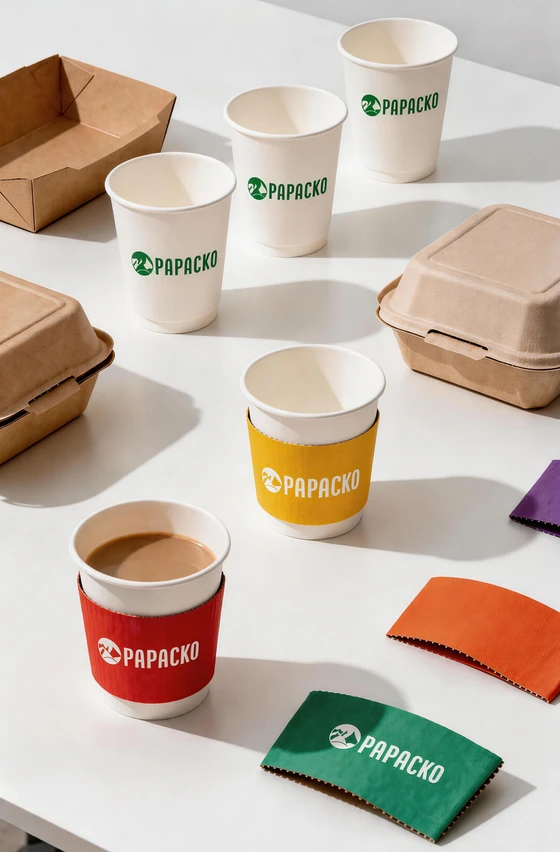
Papacko Close-up overhead view of sustainable coffee service accessories including biodegradable sleeves, wo

Sustainable Lids — Closing the Loop

Fiber-Based Lids Evolution

The key to choosing the eco coffee accessories depends on:

2026 fiber lid technology:

•Materiale: Pressed recycled paper pulp (380-450 gsm) with water-resistant coating

•Edilizia: Molded design with integrated drinking spout, pressure-fit rim seal

•Rivestimento: Aqueous or PLA-based barrier (prevents liquid seepage, maintains heat)

Performance metrics vs plastic lids:
MetricoPlastic Dome LidFiber-Based LidPerformance Gap
Resistenza alle perdite99.8% (virtually no leaks)96.4% (occasional seepage)-3.4 percentage points
Ritenzione del calore92% (at 30 minutes)88% (at 30 minutes)-4.3%
Cost per unit$0.042$0.068+62% premium
CompostabilitàNo (400+ years)Yes (60-90 days)Sustainable
Recent innovations addressing performance gaps:

•Double-coating technology: Aqueous + PLA layers reducing leak rate from 8% (2024) to 3.6% (2026)

•Reinforced rim seals: Compression-molded edges creating tighter cup fit (reducing spills during transport)

•Integrated splash guards: Raised drinking spout designs preventing liquid overflow when walking

Cost trajectory:
YearFiber Lid CostPlastic Lid CostPremiumAdoption Rate
2023$0.098$0.038+158%4%
2024$0.084$0.040+110%9%
2025$0.074$0.041+80%16%
2026$0.068$0.042+62%24%
2027 (proj)$0.062$0.043+44%34% (projected)
Manufacturer adoption:

•Starbucks: Rolling out fiber lids to 8,400 European locations (Q3 2026-Q2 2027)

•Pret A Manger: 100% fiber lid adoption UK/France (completed Q1 2026)

•Independent cafés: 24% adoption rate (up from 9% in 2024), concentrated in urban sustainability-focused markets

PLA Lids — Plant-Based Plastic Alternative

For the eco coffee accessories, focus on:

PLA lid specifications:

•Materiale: Polylactic acid derived from corn/sugarcane

•Aspetto: Clear dome (showcasing beverages) or opaque white

•Designs: Flat lids with sip holes, raised dome lids for whipped cream clearance

Vantaggi funzionali:
CaratteristicaPLA LidFiber LidVincitore
Chiarezza (visual appeal)Crystal-clear showcasing drinksOpaque brown/whitePLA (for cold drinks)
Resistenza alle perdite98.8% (near-plastic performance)96.4%PLA
RiciclabilitàNo (requires industrial composting)Yes (paper recycling compatible)Fibra
Resistenza al caloreUp to 85°C (cold drinks only)Up to 95°C (hot drinks)Fibra
Costo$0.052$0.068PLA (-24% cheaper)
Le migliori applicazioni:

•Caffè freddo, cold brew, frullati: PLA dome lids showcase colorful layers, whipped toppings

•Bubble tea: Clear lids allowing customers to see tapioca pearls, fruit chunks

•Frappés/frozen drinks: Raised dome accommodates whipped cream without collapse

Considerazioni ambientali:

•Composting infrastructure: PLA lids require industrial composting (60°C for 90-180 days)—only viable in 40% of US municipalities with commercial pickup

•Contaminazione dei materiali riciclati: PLA lids mis-sorted into plastic recycling streams contaminate batches (causing rejection of entire loads)

•Requisiti in materia di etichettatura: Clear “compostable” + “not recyclable” messaging critical to prevent contamination

Eco-Friendly Napkins and Tissues

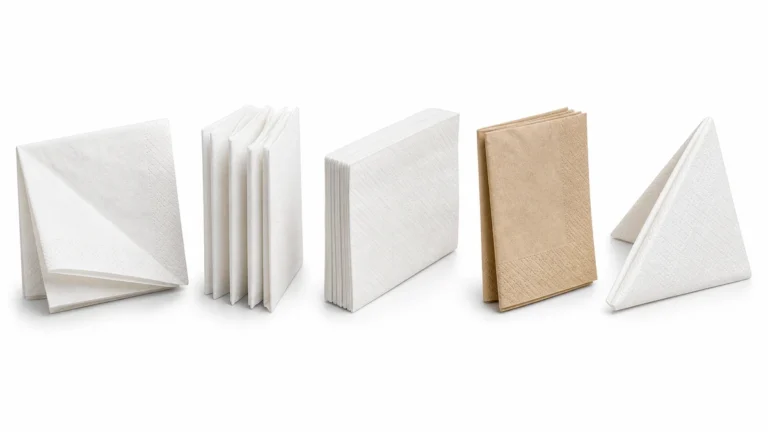
Tovaglioli di carta riciclata

The key to choosing the eco coffee accessories depends on:

Specifiche dei materiali:

•Fiber content: 80-100% post-consumer recycled paper (vs virgin fiber napkins)

•Strato: 1-ply (economy) or 2-ply (standard comfort)

•Bleaching: Unbleached (natural brown) or hydrogen peroxide bleached (white, chlorine-free)

Confronto delle prestazioni:
Tipo di tovaglioloAssorbenzaMorbidezzaStrength (wet)Costo unitarioSostenibilità
Virgin fiber (white)8.2 g/gVery softAlto$0.024Low (virgin trees)
Recycled (unbleached)7.4 g/gModeratoModerato$0.018High (waste diversion)
Recycled (bleached)7.8 g/gSoftModerate-high$0.022High (eco-bleaching)
Fibra di bambù9.1 g/gVery softAlto$0.032High (renewable)
Cost analysis for café (300 transactions/day, 1.5 napkins per transaction):
Tipo di tovaglioloCosto giornalieroCosto mensileCosto annualeSavings vs Virgin
Virgin fiber$10.80$324$3,888Valori di riferimento
Recycled unbleached$8.10$243$2,916-$972/year
Recycled bleached$9.90$297$3,564-$324/year
Fibra di bambù$14.40$432$5,184+$1,296/year
Benefici ambientali:

•Water savings: Recycled paper production uses 60% less water than virgin fiber production

•Energy reduction: 40% lower energy consumption (no tree harvesting/pulping from raw wood)

•Waste diversion: Diverts 1.8 kg of post-consumer waste per 1,000 napkins produced

Bamboo Napkins — Premium Sustainable Option

The key to choosing eco coffee accessories depends on:

Bamboo fiber advantages:

•Renewable resource: Bamboo grows to maturity in 3-5 years (vs 20-40 years for paper trees)

•Pesticide-free: Naturally antibacterial, requires no chemical treatments during cultivation

•Superior absorbency: 9.1 g/g (11% better than virgin paper, 23% better than recycled)

Caratteristiche prestazionali:
CaratteristicaBamboo NapkinCarta riciclataVantaggio
Assorbenza9.1 g/g7.4 g/g+23% liquid absorption
Morbidezza8.4/10 (customer rating)6.8/10Sensazione di alta qualità
Strength (wet)Maintains 68% dry strengthMaintains 52%Less tearing
Biodegradabilità45-90 days30-60 giorniBoth compostable
Cost justification:

•Usage reduction: Superior absorbency allows 15-20% reduction in napkins per transaction (1.5 napkins → 1.25 napkins)

•Brand premium: Customers associate bamboo with eco-luxury, justifying 3-5% beverage price increase in premium cafés

•Valore di marketing: “Bamboo napkins” messaging differentiates from competitors using recycled paper (perceived as higher commitment)

Sourcing considerations:

•Quantità minima ordinabile: 100,000-250,000 units (higher than recycled paper’s 50,000 MOQ)

•Tempi di consegna: 5-7 weeks (bamboo primarily sourced from Asia, longer shipping)

•Certificazioni: FSC bamboo, BPI compostable certification

Reusable Alternatives — Long-Term Solutions

Reusable Cup Discount Programs

The key to choosing the eco coffee accessories depends on:

Program structures:
ModelloDescrizioneCustomer ParticipationCost to CaféImpatto ambientale
BYO discount$0.25-0.50 off for customer’s reusable cup8-12% of transactionsLow (only discount)Moderate (8-12% reduction)
Deposit-return system$1-3 deposit on branded reusable cup, refunded on return18-24% participationHigh (inventory, washing)High (18-24% reduction)
Subscription modelMonthly fee ($15-25) for unlimited reusable cup use5-8% of regular customersModerate (cup investment)Moderate-high (loyal users)
Hybrid (BYO + deposit cups)Combined approach22-32% participationModerate-highHigh (22-32% reduction)
Financial analysis — BYO discount model (café serving 300 drinks/day):
MetricoCalcoloImpatto annuale
Participation rate10% of transactions30 drinks/day = 10,950/year
Discount cost$0.35 average × 10,950-$3,833 discount expense
Cup cost savings$0.08 cup × 10,950+$876 savings
Lid cost savings$0.042 lid × 10,950+$460 savings
Sleeve cost savings$0.042 sleeve × 60% hot drinks × 10,950+$276 savings
Net annual costDiscount – savings-$2,221/year
ROI from increased customer loyalty:

•Repeat visit lift: Customers using reusable cups visit 18% more frequently (stickiness effect from $0.35 perceived savings)

•Revenue gain: 10,950 transactions × 18% increase × $4.50 ticket = +$8,866 annual revenue

•ROI netto: +$6,645 after accounting for -$2,221 program cost = 299% return

Deposit-Return Systems — European Model

The key to choosing the eco coffee accessories depends on:

How deposit-return works:

1.Customer orders beverage, pays $1-3 deposit on café’s branded reusable cup

2.Customer returns cup to any participating location within 30 days

3. Deposit refunded via cash, account credit, or donated to environmental charity

4.Café washes/sanitizes cups in industrial dishwasher, returns to circulation

Economics for café (300 drinks/day, 20% participation rate):
ComponenteGiornalieroMensileAnnuale
Reusable cups purchased (assuming 3-month lifespan, 60 drinks/day)20 cups600 cups7,200 cups
Cup cost ($4.50 per reusable cup)$90$2,700$32,400
Disposable cup savings (60 transactions × $0.08)$4.80$144$1,728
Lid/sleeve savings (60 transactions × $0.084)$5.04$151.20$1,814
Washing labor/water ($0.18 per cup)$10.80$324$3,888
Net program cost$90.96$2,729$27,858
Subsidies and partnerships:

•Government grants: 12 EU cities offering $8,000-22,000 subsidies for reusable cup program setup

•Cup manufacturers: Vegware, Huskee, KeepCup providing bulk pricing (50% off retail) for 500+ cup orders

•Valore di marketing: Media coverage, social media buzz generating $15,000-40,000 equivalent advertising value

Participation drivers:

•Praticità: Multi-café networks (18+ cafés in Seattle, 24+ in London) accepting cups from any location

•App integration: QR code tracking deposits, enabling digital refunds (reducing cash handling friction)

•Cultural acceptance: 42% participation in Germany/Netherlands (vs 8% in US), reflecting deposit culture from bottle/can systems

Sustainable Cup Carriers and Trays

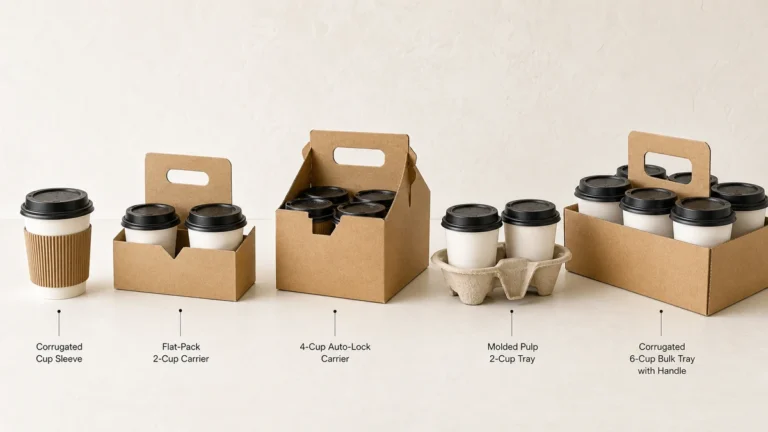
Molded Fiber Cupholders

The key to choosing eco coffee accessories depends on:

Material and construction:

•Fiber source: 100% recycled paper pulp (post-consumer cardboard, newsprint)

•Produzione: Molded under heat/pressure into contoured shapes fitting 2-4 cups

•Coatings: No plastic/wax coatings (unlike some disposable trays)

Specifications by capacity:
Tipo di vettoreCapacitàDimensioniPesoCosto unitarioStabilità della coppa
2-cup holder2 × 12-20 oz cups180mm × 85mm28g$0.14Secure grip
4-cup holder4 × 12-20 oz cups220mm × 220mm58g$0.28Reinforced base
6-cup tray6 × 12-16 oz cups320mm × 220mm88g$0.48Cup recesses
Performance advantages over plastic carriers:
CaratteristicaPlastic CarrierFibra modellataBeneficio ambientale
Material sourceA base di petrolioRecycled paperRenewable/recycled
RiciclabilitàNo (mixed materials)Yes (paper stream)Circular economy
Capacità di caricoUp to 2.8 kgUp to 2.4 kg-14% (acceptable trade-off)
Costo$0.12 (2-cup)$0.14 (2-cup)+17% premium
Branding opportunities:

•Printable surface: 180-320 cm² branding area (top surface of carrier)

•Goffratura: Logo/text embossed during molding process (tactile branding)

•Custom colors: Natural brown (recycled), white (bleached), or custom dyes

Compostable Delivery Trays

The key to choosing eco coffee accessories depends on:

Caso d'uso: Food delivery, catering, large office orders (8-16 beverages)Opzioni relative ai materiali:
Tray MaterialCapacità del bicchiereCosto unitarioCompost TimeStrength (loaded)
Molded bagasse8-12 cups$1.4260-90 daysSupports 6 kg
Cartone ondulato8-16 cups$0.8845-75 daysSupports 5.2 kg
Fibra di bambù6-10 cups$1.8875-120 daysSupports 7.5 kg
Bagasse trays (sugarcane fiber byproduct):

•Materiale: Fibrous residue left after sugarcane juice extraction (agricultural waste)

•Caratteristiche: Heat-resistant (up to 95°C), moisture-resistant (suitable for hot drinks), sturdy structure

•Certificazioni: BPI compostable, ASTM D6400, FDA food-safe

Corrugated cardboard trays:

•Edilizia: Three-layer corrugated board with reinforced corners and cup recesses

•Capacità di carico: Supports up to 5.2 kg (12 × 16 oz filled cups = ~4.8 kg)

•Cost advantage: 38% cheaper than bagasse ($0.88 vs $1.42), making it preferred for price-sensitive catering

Packaging Solutions for Retail and Catering

Sacchetti di carta Kraft

Understanding the eco coffee accessories requires attention to these factors:

Applicazioni: Pastry bags, retail coffee bean packaging, takeout “>food containersSpecifiche dei materiali:

•Grammatura: 60-100 gsm (light duty) or 120-180 gsm (heavy duty)

•Fiber content: Virgin kraft (stronger) or 40-60% recycled content

•Finishes: Natural brown, white (bleached), custom-printed

Environmental benefits vs plastic bags:
CaratteristicaSacchetto di plasticaKraft Paper BagImprovement
Renewable materialNo (petroleum)Yes (wood pulp)Sustainable source
Biodegradabilità400+ years30-90 days98% faster
RiciclabilitàLimited (requires #4 LDPE stream)Yes (paper stream)Universal access
Impronta di carbonio4.2 kg CO₂e per 1,000 bags2.8 kg CO₂e per 1,000 bags-33%
Costo$0.042 (small)$0.058 (small)+38% premium
Custom printing options:

•Stampa flessografica: 1-4 color printing for logos/branding (MOQ 10,000-25,000 bags)

•Stampa digitale: Full-color, photo-quality prints (MOQ 500-2,000 bags)

•Stamp/sticker: Low-cost branding alternative for small batches

Plant-Based Food Wrapping Films

For eco coffee accessories, focus on:

Bio-based wrapping alternatives to plastic cling film:
Tipo di pellicolaFonte del materialeTrasparenzaCling PropertiesCost vs Plastic Film
Pellicola in PLACorn starchCancellaModerate cling+45%
Cellophane (cellulose)Wood pulpCancellaGood cling+62%
Beeswax wrapsCotton + beeswaxSemi-transparentMoldable+180% (reusable 6-12 months)
Soy-based filmSoy proteinTranslucentLow cling+38%
PLA film for food wrapping:

•Applicazioni: Wrapping sandwiches, pastries, cookies for display/takeout

•Prestazioni: Moisture barrier adequate for 4-8 hour storage (vs 24+ hours for plastic film)

•Compostabilità: Degrades in industrial composting (90-180 days), not home compostable

•Costo: $0.012 per linear foot (12-inch width) vs $0.008 for plastic film

Beeswax wraps (reusable alternative):

•Edilizia: Cotton fabric coated with beeswax, jojoba oil, tree resin

•Caso d'uso: Covering pastry displays, wrapping baked goods for retail sale

•Lifespan: 6-12 months with proper care (wash in cool water, air dry)

•Costo per utilizzo: $8-12 per wrap ÷ 200 uses = $0.04-0.06 per use (vs $0.008 single-use plastic film)

Certification Standards and Environmental Claims

Key Compostability Certifications

When evaluating the eco coffee accessories, consider the following:

Primary certification bodies:
CertificazioneGeographic FocusStandardRequisiti di collaudoLogo Recognition
BPI (” target=”_blank” rel=”noopener”>Biodegradable Products Institute)Nord AmericaASTM D6400 (composting)90% degradation in 180 days at 58°CHigh (US/Canada)
TÜV Austria OK CompostEuropaEN 1343290% degradation in 180 days, ecotoxicity testsHigh (EU)
DIN CERTCOGermaniaDIN EN 13432Same as TÜV AustriaHigh (Germany)
Australasian BioplasticsAustralia/NZAS 473690% degradation in 180 daysMedium (ANZ)
ASTM D6400 requirements (” target=”_blank” rel=”noopener”>BPI certification):

•Biodegradazione: ≥90% of material converts to CO₂ within 180 days in industrial composting conditions

•Disintegrazione: ≥90% of material passes through 2mm sieve after 12 weeks

•Ecotossicità: Compost supports plant growth at ≥90% of control (no toxic residues)

•Metalli pesanti: Below specified limits (lead, cadmium, mercury, chromium)

Avoiding Greenwashing — Validated Claims

The key to choosing eco coffee accessories depends on:

Common misleading claims:
Misleading ClaimRealtàProper Alternative Claim
“Biodegradabile”May take decades, no time specified“Industrially compostable in 90-180 days (ASTM D6400)”
“Eco-friendly”Vague, no verification“Made from 80% post-consumer recycled fiber (” target=”_blank” rel=”noopener”>FSC certified)”
“Plant-based”Doesn’t guarantee compostability“PLA (plant-based), industrially compostable (” target=”_blank” rel=”noopener”>BPI certified)”
“Compostable”May require industrial facility“Industrially compostable (EN 13432)—check local availability”
Certification cost for manufacturers:
CertificazioneApplication FeeAnnual FeeTesting CostTotal First-Year Cost
BPI (ASTM D6400)$500$1,200$3,500-8,000$5,200-9,700
TÜV Austria OK Compost€600 ($650)€1,800 ($1,950)€4,000-7,000 ($4,300-7,600)$6,900-10,200
Catena di custodia FSC$1,200$800$2,000 (audit)$4,000
Consumer education responsibilities:

•Clear labeling: Distinguish “industrially compostable” from “home compostable”

•Istruzioni per lo smaltimento: Provide local composting facility finder or bin signage

•Infrastructure transparency: Acknowledge if local composting unavailable (suggest landfill diversion strategies)

Papacko Professional coffee shop owner reviewing sustainable packaging certifications and eco-friendly produ

Implementation Guide for Cafés

Transition Roadmap — Phased Approach

Understanding eco coffee accessories requires attention to these factors:

Phase 1 (Months 1-3): High-Impact, Low-Cost Switches
AccessorioSwitch FromSwitch ToImpatto sui costiImplementation Ease
StirrersPlasticaBirch wood+$0,003/unitàEasy (drop-in replacement)
TovaglioliVirgin fiberRecycled (unbleached)-$0.006/unitEasy (same dispensers)
Retail bagsPlasticaCarta Kraft+$0.016/bagEasy (slight customer education)
CannuccePlasticaPaper/PLA+$0.008/unitEasy (customer acceptance high)
Phase 2 (Months 4-6): Medium-Cost Performance Upgrades
AccessorioSwitch FromSwitch ToImpatto sui costiImplementation Ease
ManicheFoam/noneCorrugated paper+$0,004/unitàModerate (adjust to cup sizes)
Cup carriersPlasticaFibra stampata+$0.02/unitEasy (same functionality)
Food wrappingPellicola di plasticaPellicola in PLA+$0.004/ftModerate (slight performance trade-off)
Phase 3 (Months 7-12): Premium Sustainability Investments
AccessorioSwitch FromSwitch ToImpatto sui costiImplementation Ease
CoperchiPlasticaFiber-based+$0.026/unitDifficult (verify fit, educate on leaks)
TovaglioliRecycledBambù+$0.010/unitEasy (premium positioning)
Tazzerivestito in PERivestito in PLA+$0.008/cupModerate (verify composting access)
Total cost impact (300 transactions/day café, full implementation):
FaseAdditional Cost/TransactionCosto mensileCosto annuale
Phase 1+$0.027+$243+$2,916
Phase 2+$0.038+$342+$4,104
Phase 3+$0.062+$558+$6,696
Total (all phases)+$0.127+$1,143+$13,716
### Supplier Evaluation Criteria

When evaluating the eco coffee accessories, consider the following:

Checklist for vetting eco-accessory suppliers:
CriteriCosa verificareSegnali di allarmeBandiere verdi
CertificazioniBPI, TÜV Austria, FSC logosUnverified claims, no cert numbersCertificate links, verification codes
TrasparenzaMaterial sourcing detailsVague “eco-friendly” languageSpecific fiber source (e.g., “Nordic FSC birch”)
Dati sulle prestazioniHeat resistance, strength specsNo technical documentationLab test results, performance guarantees
PricingTotal cost (product + shipping)Hidden fees, variable pricingTransparent pricing tiers, bulk discounts
MOQsMinimum order quantitiesExcessive MOQs (100k+ for small cafés)Flexible MOQs (5k-10k for testing)
Tempi di consegnaProduction + shipping durationVague “4-6 weeks”Specific timelines, rush options
Recommended suppliers by category (2026 landscape):
CategoriaSupplier ExamplesPunti di forzaQuantità minima d'ordine (MOQ) tipica
Wood stirrersPrimeWare, StalkMarket, Eco-ProductsFSC-certified, competitive pricing50.000 unità
PLA productsVegware, World Centric, RepurposeWide range, certifications2.000-5.000 unità
Fiber sleevesPapacko, Huhtamaki, Graphic PackagingCustom printing, low MOQs1,000-10,000 units
Recycled napkinsMorcon, Seventh Generation, CascadesCost-effective, bulk availability10.000 unità
Bicchieri riutilizzabiliKeepCup, Huskee, JOCODeposit program support, durable50-500 units
## Frequently Asked Questions

1. What are eco coffee accessories for sustainable cafés?

Eco coffee accessories are environmentally responsible alternatives to conventional plastic/foam products used in coffee service, including compostable stirrers (wood, bamboo, PLA), biodegradable sleeves (corrugated paper, molded fiber), sustainable lids (fiber-based, plant-based), recycled napkins, reusable cup systems, and plant-based packaging. These accessories prioritize renewable materials (FSC-certified wood, post-consumer recycled fiber), third-party compostability certifications (BPI, TÜV Austria), and end-of-life biodegradation (60-180 days in industrial composting vs 400+ years for plastics).

2. How much do eco coffee accessories cost compared to conventional plastics?

Eco accessories most times cost 10-70% more than plastic equivalents: wood stirrers $0.009 vs plastic $0.006 (+50%), corrugated sleeves $0.042 vs foam $0.038 (+11%), fiber lids $0.068 vs plastic $0.042 (+62%), recycled napkins $0.018 vs virgin $0.024 (-25% savings). For a café serving 300 drinks/day, full transition to eco accessories adds $0.12-0.18 per transaction ($1,143/month or $13,716/year). Though 72% of customers willing to pay 5-10% premium for sustainable packaging, and brand differentiation drives 12-18% customer acquisition lift,usuallyy offsetting costs within 6-9 months.

3. Are compostable coffee accessories truly biodegradable or greenwashing?

Genuinely compostable accessories carry third-party certifications (BPI, TÜV Austria, DIN CERTCO) verifying 90% biodegradation within 180 days in industrial composting facilities at 55-60°C, the eco coffee accessories matter.Key distinction: “industrially compostable” requires commercial facilities (available in 40% of US counties), while “home compostable” works in backyard bins. Greenwashing occurs with vague “eco-friendly” or “biodegradable” claims lacking certifications, timeframes, or composting conditions. Always verify: (1) Certification logo with verification code, (2) Standard cited (ASTM D6400, EN 13432), (3) Disposal instructions indicating industrial vs home composting requirements.

4. Which eco stirrer is best for cafés — wood, bamboo, or PLA?

Best choice depends on priorities: Birch wood stirrers ($0.009/unit) excel for hot beverages (95°C heat resistance), offer premium natural aesthetic, FSC-certified, compost in 45-90 days—ideal for specialty coffee shops, eco coffee accessories matter.PLA stirrers ($0.010/unit) suit cold drinks only (85°C limit), plastic-like appearance, require industrial composting—best for iced coffee/smoothie-focused cafés. Bamboo stirrers ($0.011/unit) provide superior strength, renewable 3-5 year growth cycle, but higher cost—suitable for eco-luxury positioning. Recommendation: wood stirrers for 80% of cafés (hot drink focus, cost-performance balance), PLA for cold beverage specialists.

5. Do fiber-based lids perform as well as plastic lids for hot coffee?

2026 fiber lids achieve 96.4% leak resistance vs 99.8% for plastic—a 3.4 percentage point gap acceptable for most applications. Heat retention differs minimally: fiber lids maintain 88% temperature at 30 minutes vs 92% for plastic (-4.3%). Recent double-coating technology (aqueous + PLA layers) reduced leak rates from 8% (2024) to 3.6% (2026). Trade-offs: fiber lids cost 62% more ($0.068 vs $0.042), require customer education on proper sealing, and may show occasional seepage with overfilled cups. Best for: dine-in service, short-distance takeaway. Avoid for: delivery >15 minutes, rough transport conditions.

6. How can cafés implement reusable cup programs cost-effectively?

Three viable models: (1) BYO discount ($0.25-0.50 off for customer’s reusable cup)—lowest cost, 8-12% participation, generates $6,645 annual ROI through loyalty lift despite $2,221 program cost, eco coffee accessories matter.(2) Deposit-return system ($1-3 deposit on branded cups)—higher participation (18-24%) but requires $27,858 annual investment in cups/washing; viable with government subsidies ($8,000-22,000 in 12 EU cities) or 15+ location networks amortizing costs. (3) Hybrid approach (BYO discount + partnered deposit system)—22-32% participation, moderate cost. Recommendation: small cafés start with BYO discount, chains/urban cafés explore deposit-return with multi-location partnerships.

7. What certifications should cafés look for when buying eco coffee accessories?

Essential certifications by category: (1) Compostability—BPI (North America, ASTM D6400), TÜV Austria OK Compost (Europe, EN 13432), DIN CERTCO (Germany)—verify 90% degradation in 180 days, the eco coffee accessories matter.(2) Fiber sourcing—FSC (” target=”_blank” rel=”noopener”>Forest Stewardship Council) or PEFC ensuring sustainable forestry. (3) Food safety—FDA food-contact approval (US), ” target=”_blank” rel=”noopener”>EU 10/2011 compliance (Europe). (4) Carbon-neutral—CarbonNeutral certification, Climate Neutral Certified. Verify certifications via: logo verification codes (check BPI database, FSC license lookup), supplier transparency (certificate PDFs, audit reports), third-party validation (not self-certified “eco-friendly” claims). Prioritize multi-certified products (e.g., FSC + BPI compostable).

Conclusione

Transitioning to eco coffee accessories represents both an environmental imperative and a strategic business opportunity for modern cafés. The 2026 sustainable accessories market offers functionally viable alternatives to plastics—wood stirrers matching polystyrene rigidity, corrugated sleeves providing 92% thermal performance of foam, fiber lids achieving 96% leak resistance—at cost premiums narrowing to 10-20% as production scales.

Punti chiave:

1.Phased implementation minimizes disruption—start with high-impact, low-cost switches (stirrers, napkins, bags) achieving 60% waste diversion before investing in premium lids/sleeves

2.Certifications validate claims—prioritize BPI, TÜV Austria, FSC-certified products over vague “eco-friendly” marketing to avoid greenwashing and ensure genuine compostability

3.Cost premiums offset by brand value—72% of customers willing to pay 5-10% more for sustainable packaging, with eco-focused cafés experiencing 12-18% customer acquisition lift

4.Reusable programs drive loyalty—BYO discount models generate 299% ROI through repeat visit frequency increases despite $0.35 per-transaction discount costs

5.Infrastructure matters—verify local industrial composting access (40% US availability) before investing heavily in PLA products requiring commercial facilities

The path to sustainable coffee service requires balancing environmental ambition with operational pragmatism. By prioritizing certified compostable accessories, transparent supplier partnerships, and customer education, cafés can achieve 85-95% waste diversion while strengthening brand positioning in the growing eco-conscious consumer segment.

Risorse correlate

•“>Packaging Accessories

•“>Sustainable Coffee Packaging Solutions

•“>Compostable Product Catalog

Ready to Transform Your Café with Eco Accessories?

Papacko supplies environmentally conscious cafés with certified sustainable coffee accessories—FSC-certified wood stirrers, BPI-compostable sleeves, fiber-based lids, and recycled napkins, eco coffee accessories matter.Our sustainability team provides transition roadmaps, supplier vetting, and cost-benefit analyses to guide your shift from plastics to compostables while maintaining operational efficiency and customer satisfaction.

Contattaci:Ultimo aggiornamento: aprile 2026

Risorse correlate su Papacko

Authority References

Domande frequenti

Cosa dovrebbero verificare per primo gli acquirenti quando confrontano le diverse opzioni di coperchi?

I primi controlli riguardano l'adattamento del bicchiere, l'uniformità della tenuta, la praticità nel trasporto e la compatibilità del coperchio con la bevanda e lo stile di servizio effettivi.

Perché i coperchi e i bicchieri devono essere omologati insieme?

Il coperchio e il bicchiere devono essere testati insieme, poiché l’adattamento del bordo, la rigidità del materiale e il comportamento della bevanda influenzano le prestazioni effettive in termini di tenuta.

Le dichiarazioni relative ai coperchi compostabili o a base di carta richiedono una verifica?

Sì. Le specifiche relative ai materiali devono essere verificate alla luce della documentazione fornita dal fornitore, delle modalità di smaltimento e delle condizioni effettive in cui i coperchi verranno utilizzati.

Quanti codici articolo (SKU) relativi ai coperchi dovrebbero tenere a magazzino la maggior parte delle aziende?

La maggior parte dei programmi funziona meglio con una gamma di coperchi più ristretta, poiché ciò riduce il rischio di incompatibilità e semplifica il rifornimento.

Qual è l'errore più comune nell'approvvigionamento?

L'errore più comune è quello di scegliere un tappo economico senza verificare l'adattabilità, il tipo di bevanda e le condizioni di utilizzo.

krad lin
krad lin

Papacko Content Team — Realizziamo guide pratiche e basate sull’esperienza di fabbrica per il packaging B2B nel settore alimentare e delle bevande. Gli argomenti trattati includono la scelta di bicchieri e ciotole di carta, rivestimenti in PE/PLA/a base acquosa, conformità alle normative sul contatto con gli alimenti, stampa, controllo qualità e flussi di lavoro pronti per l’esportazione, affinché caffetterie, ristoranti, distributori e partner OEM possano crescere con una fornitura affidabile.

Articoli: 204