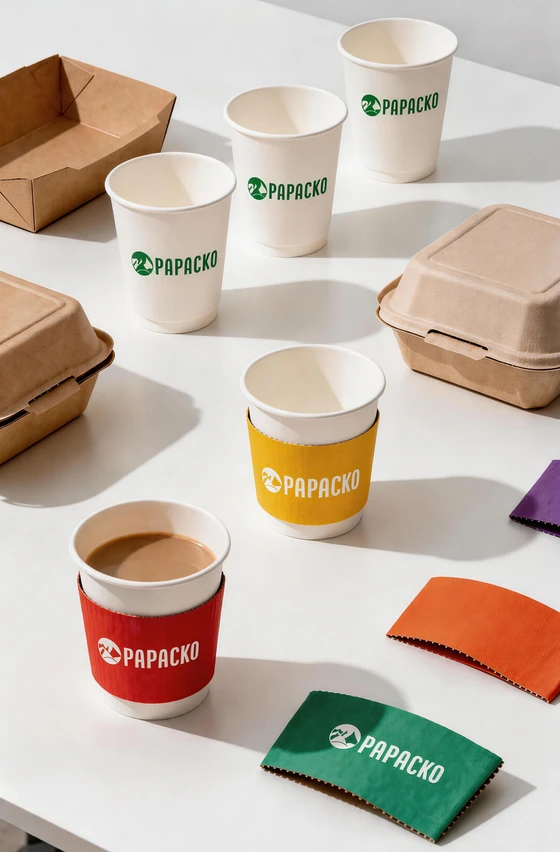
Sei pronto a creare i tuoi bicchieri di carta o le tue confezioni personalizzati con il tuo marchio?
Comunicateci le vostre esigenze — dimensioni, rivestimento, stampa e destinazione — e il nostro team vi preparerà un preventivo dettagliato entro 24 ore.
Sei pronto a creare i tuoi bicchieri di carta o le tue confezioni personalizzati con il tuo marchio?
Comunicateci le vostre esigenze — dimensioni, rivestimento, stampa e destinazione — e il nostro team vi preparerà un preventivo dettagliato entro 24 ore.
Quick Answer: How to Plan Bakery and Pastry Packaging
Selecting the right packaging system for a bakery or pastry operation involves more than choosing a box that fits your product. Before committing to a format, buyers should evaluate four core variables that shape how packaging performs across the full service cycle:
Display clarity and window format — Window panels vary in size, placement, and material; buyers should run structured trials to assess visual presentation under counter lighting, ambient temperature changes, and condensation conditions before ordering at volume.
Grease and moisture behaviour — The relationship between your specific baked products and a given box board, liner, or coating is a buyer-trial variable; no result should be assumed from product descriptions alone, and grease migration patterns differ across items, fill conditions, and hold times.
Closure and transport integrity — Tuck-lock, snap-lock, and tray-style closures each carry different handling risks during counter pickup and delivery routes; test your actual route, stack height, and carrier method before finalising a closure type.
Regulatory and local requirements — Food-contact materials are governed by layered local, national, and international frameworks; buyers should consult the FDA general framework for food-contact substances as a reference point, while confirming requirements for their specific jurisdiction and use case independently.
Start with the complete display and takeaway packaging system.
Operating Requirements for Bakery and Pastry Packaging
Before specifying any packaging format, bakery and foodservice buyers should document the full operating context. This means identifying where the product will be displayed — countertop, glass case, open shelf, or grab-and-go rack — and how it moves through the service chain.
A patisserie counter presents different demands than a wholesale delivery route. Counter presentation may prioritize visual access, structural tidiness, and brand presentation. A delivery channel adds transport stress: vibration, stacking pressure, and time in transit that counter-only packaging may not accommodate without a buyer-led review.
Key operating variables to document before specification include:
Product characteristics — Weight, moisture content, filling type, surface finish, and fragility all influence what a buyer should assess in a box structure, liner, or board-grade brief. Buyers should not assume that a format reviewed for dry biscuits will behave the same way with filled croissants or glazed pastries.
Service temperature context — Whether products are packed warm, at ambient, or after chilling affects how condensation, grease, and window clarity behave inside the box. These are trial variables that differ by product and environment.
Volume and turnover — High-turnover counters may prioritize rapid assembly and consistent presentation. Lower-volume specialty operations may prioritize premium appearance and structural weight. Both influence which box format, closure type, and print specification is worth exploring.
Brand and display requirements — Custom print, embossing, ribbon-tie closures, or window shape are design choices that can affect lead time and minimum order quantities. Buyers should clarify these requirements before requesting samples.
Map display, closure and handling variables before ordering.
Recommended Packaging System for Bakery Operations
No single box format covers every bakery category. A planned packaging system can layer two or three formats that serve distinct roles: a primary display box for counter or gifting, a secondary workhorse format for takeaway handling, and a separate format for catering or high-volume service lines.
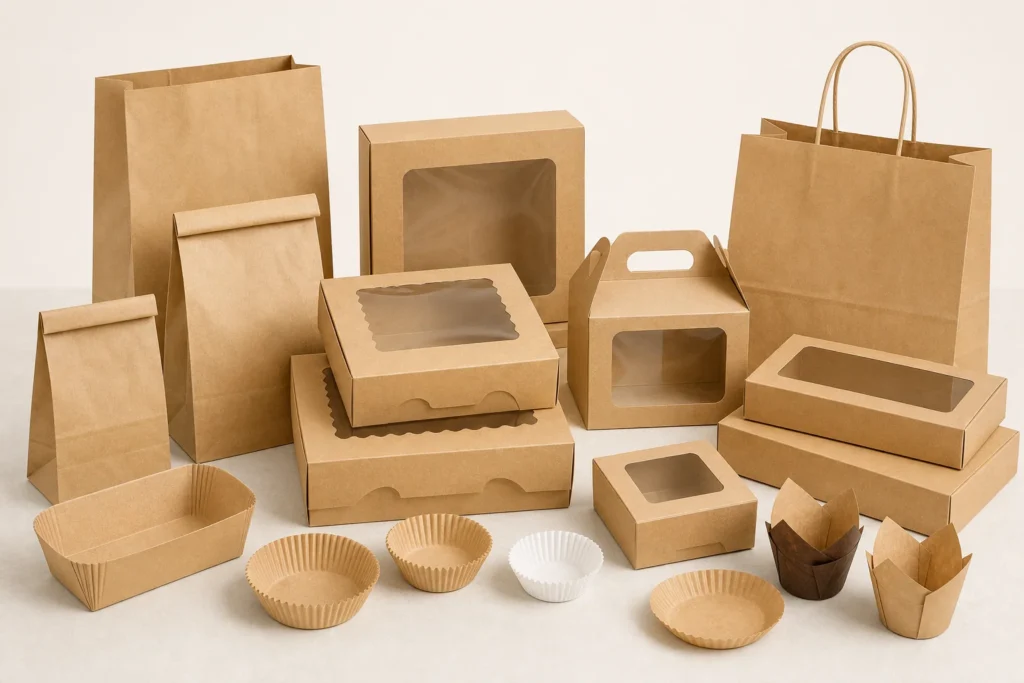
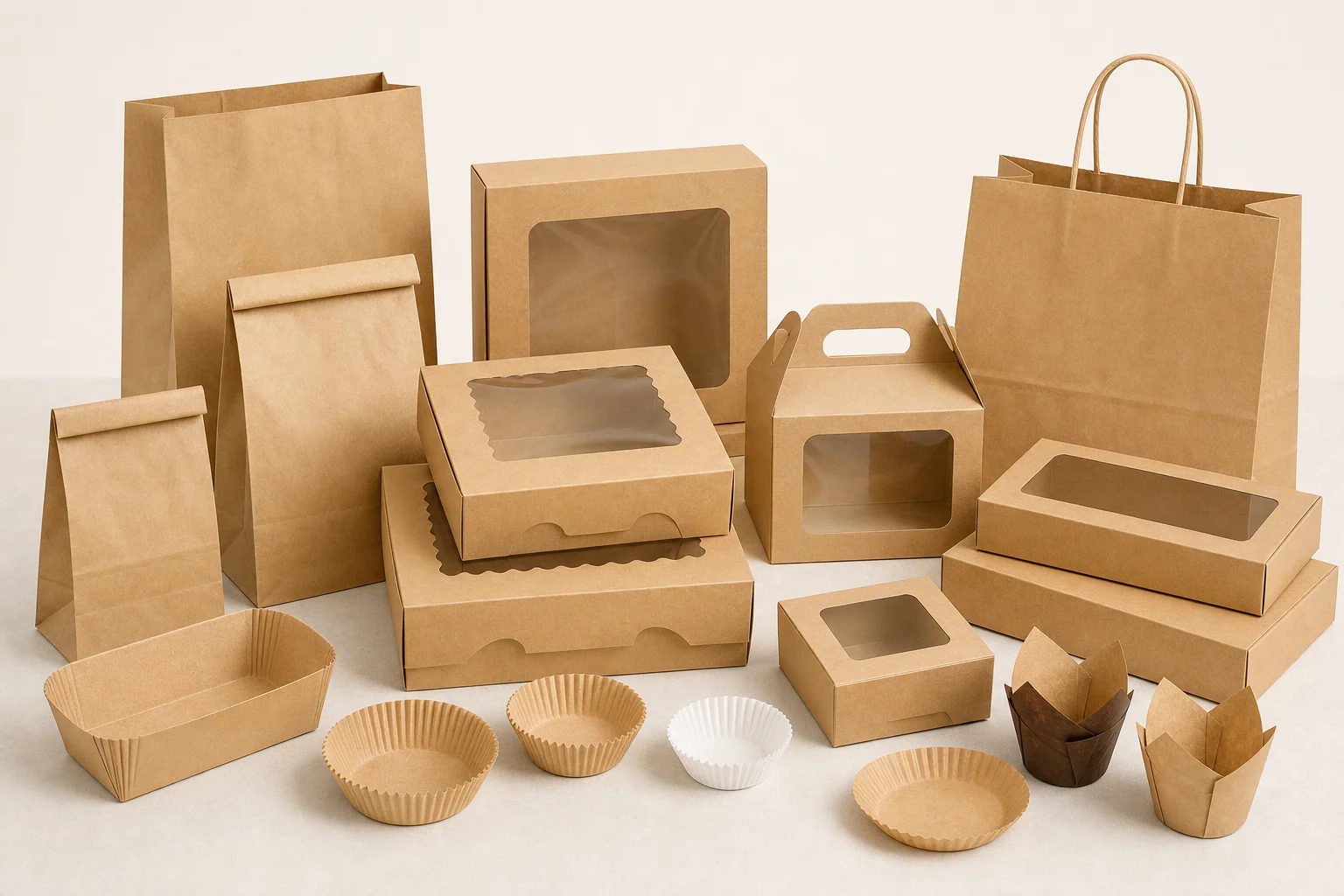
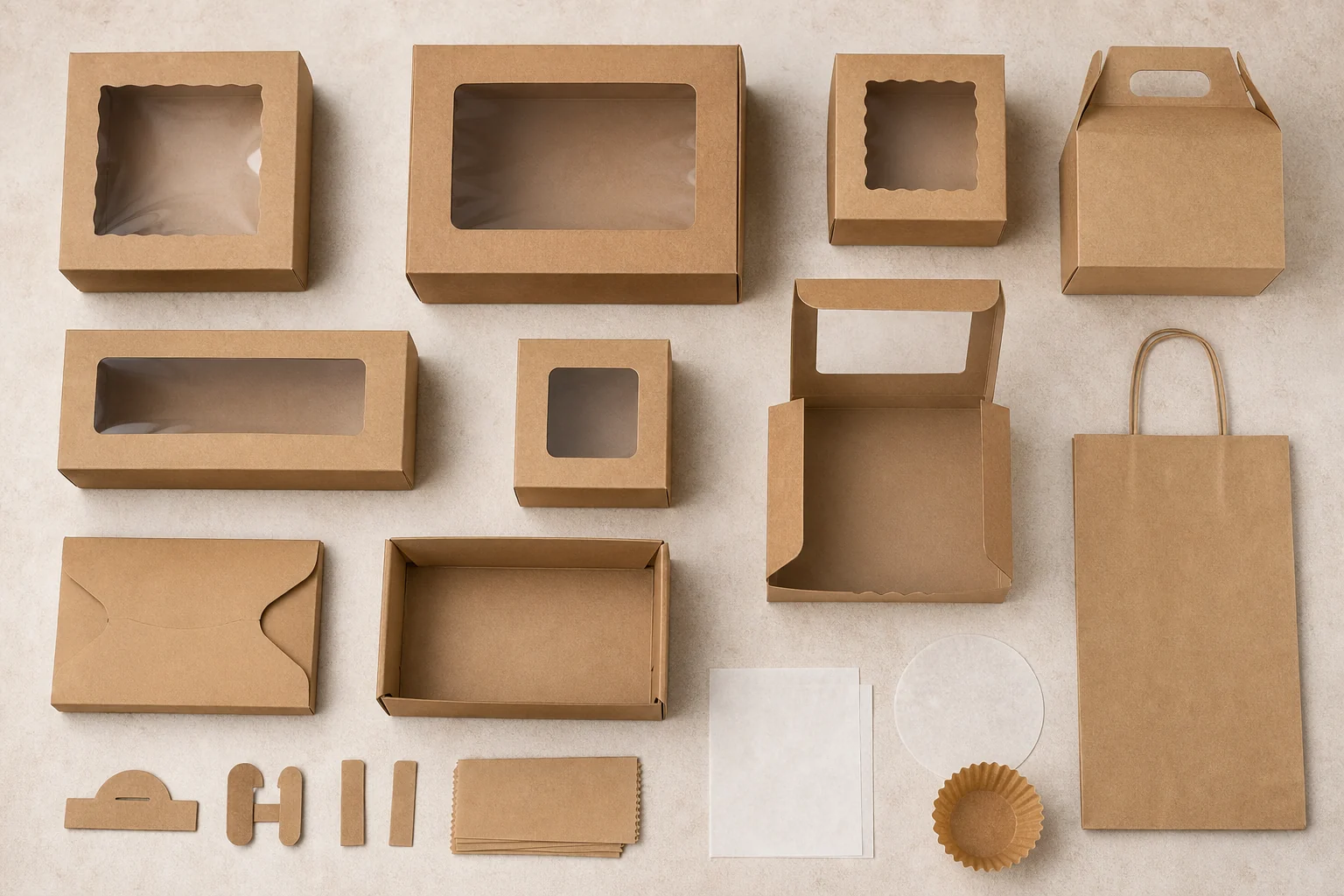
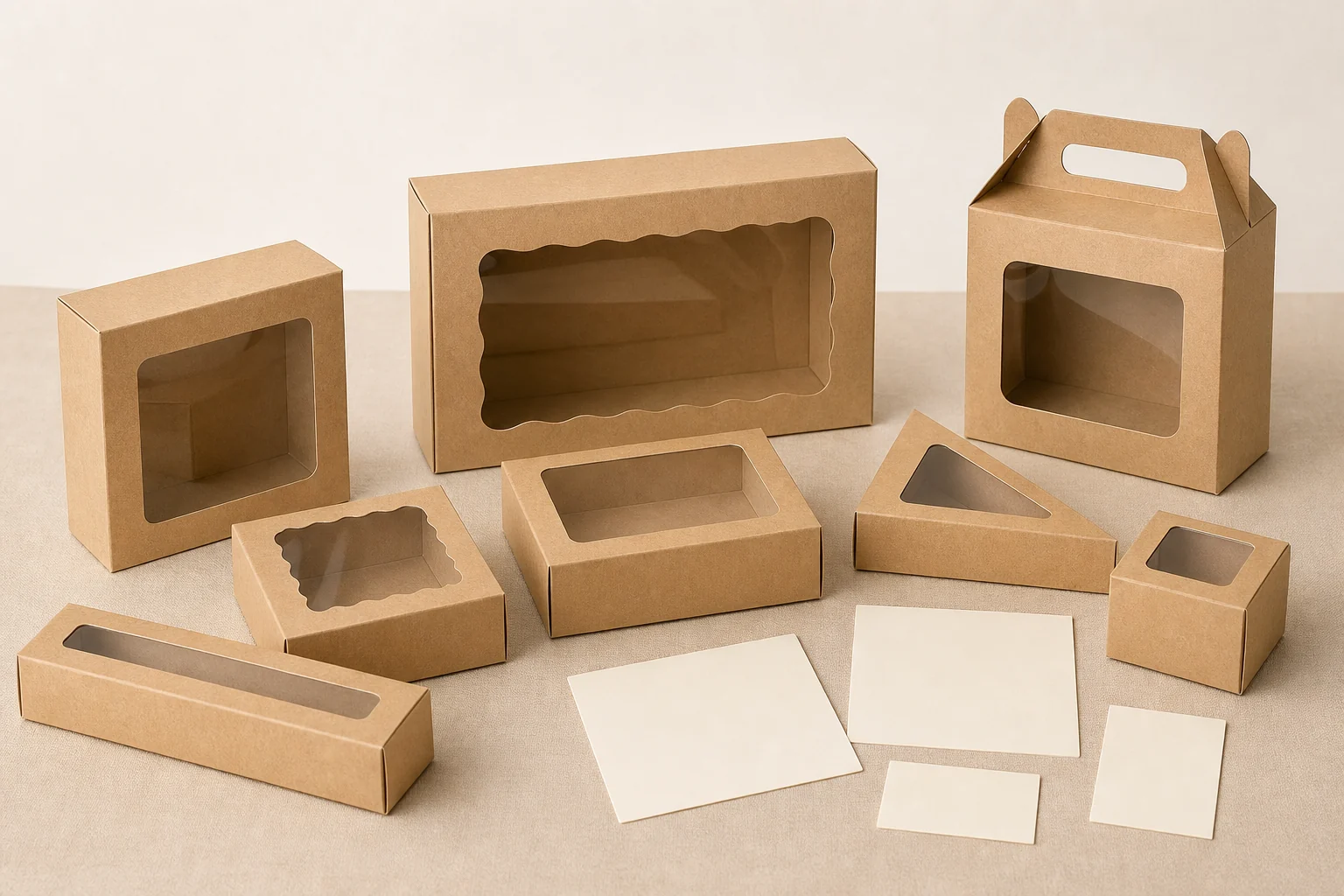
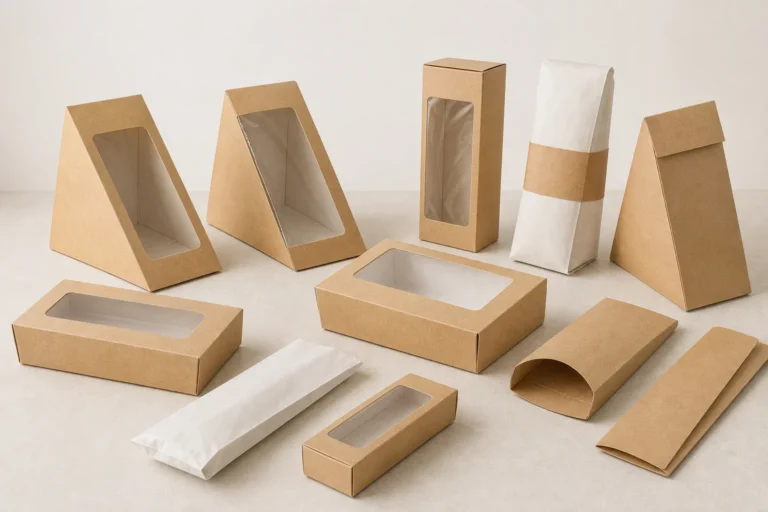
Paper boxes with window are a starting point for counter-facing bakery presentation. The window provides a viewing area without opening the box. Buyers should trial specific window dimensions and panel placement against their own product range, since the position relative to product height, colour, and glaze varies across categories.
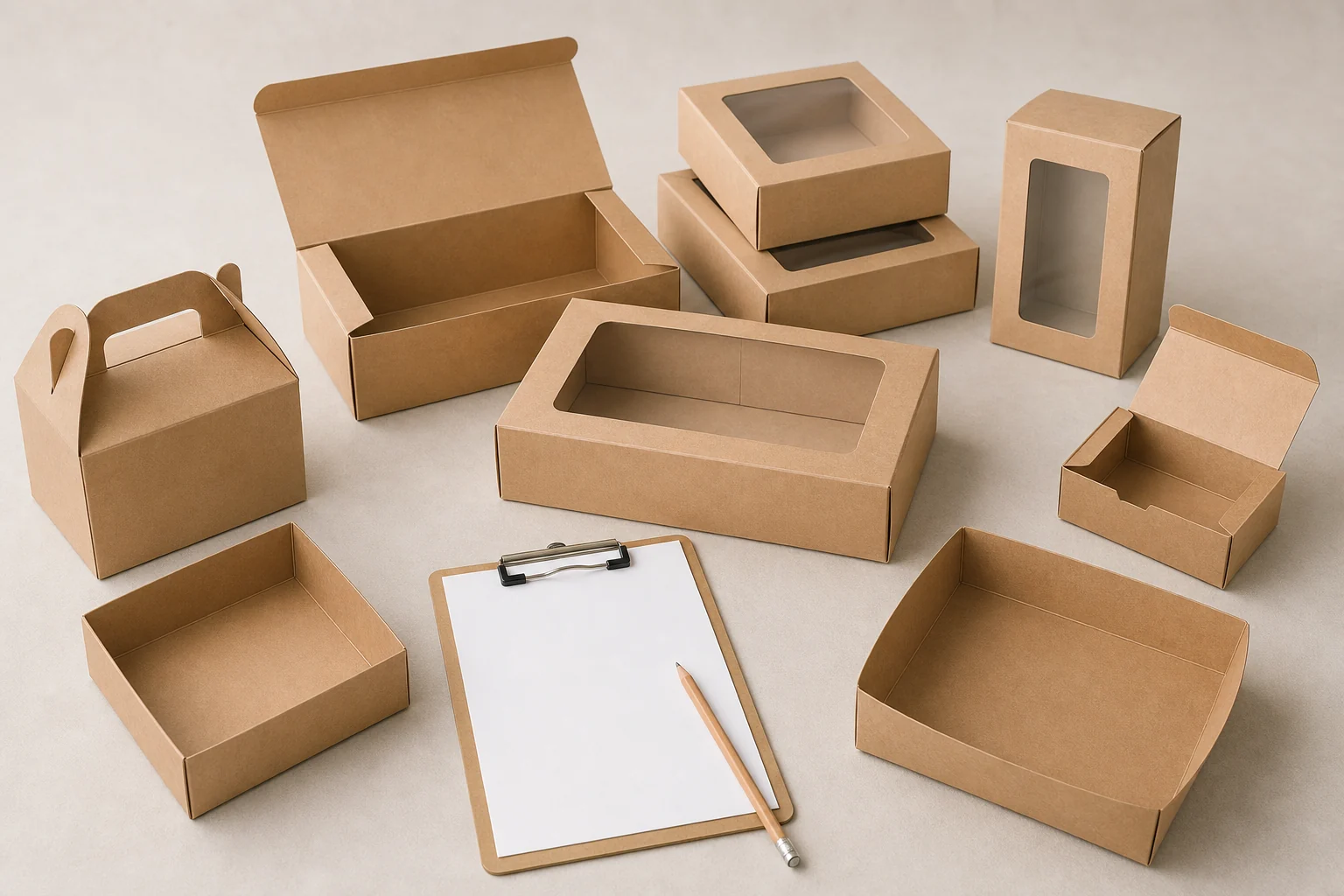
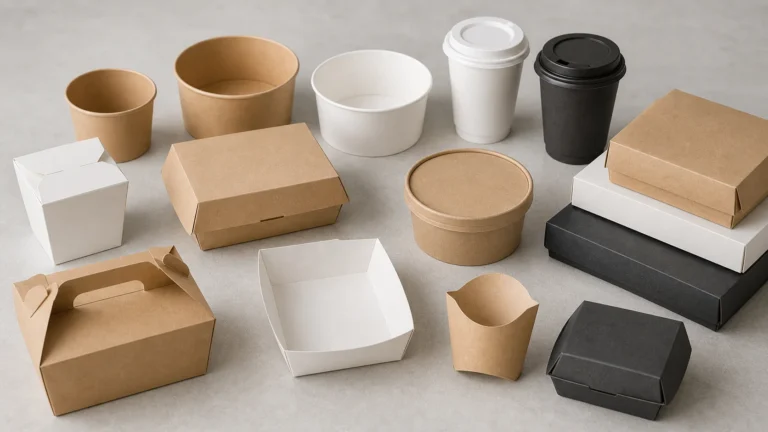
Paper food boxes provide a broader structural context — from simple tuck-end cartons to deeper tray-style boxes — for a buyer to review. These formats may be considered where assembly speed and stackability are part of the service workflow, but exact SKU, closure and actual use conditions require confirmation.
Paper food pails can be included in an alternative-format review for catering quantities, gifting presentations, or baked-snack service. A pail format is not universally appropriate for delicate pastry items, so buyers should assess handle load, interior space, and product movement during representative transport trials.
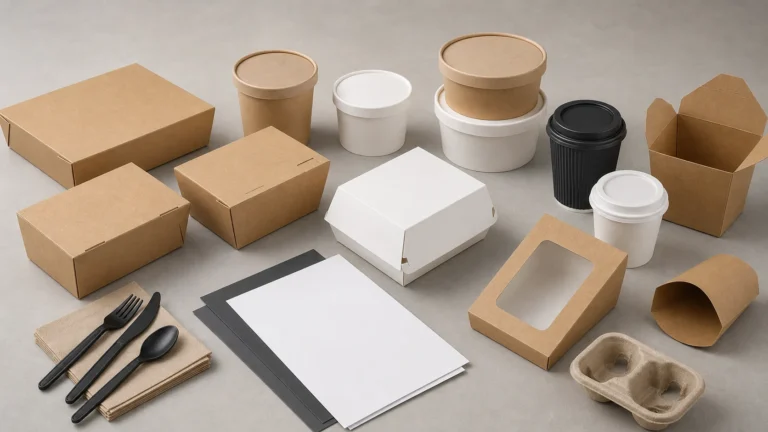
Contenitori per alimenti provide wider product-system context when a carton alone is not the buyer’s preferred starting point. Confirm interior dimensions, supplied product documentation, and any liner or coating specification directly with the supplier before making a volume decision.
Product-by-Product Specification Approach
A product-by-product specification process helps a buyer avoid using a broad category label as evidence of fit. For each bakery line you intend to package, document the approximate footprint and height at point of pack, surface fragility, whether it contains a liquid or semi-liquid filling that may move under pressure or temperature change, and the expected display or hold duration from pack to sale or consumption.
These notes form the brief that should accompany any sample request. Suppliers can then identify format candidates, but buyers should treat those candidates as starting points for trials, not confirmed solutions. Named bakery-item suitability is a trial variable, not a product claim.
Compare exact format references and window configurations.
Window and Display Review
Window panels on bakery boxes serve a presentation function that should be evaluated under realistic display conditions rather than from a product image or specification sheet. Key variables that affect a counter or retail review include:
Condensation and fogging — When warm or freshly baked products are placed in a windowed box, temperature differences between the product and the surrounding environment can affect window clarity. This is a buyer-trial variable and should be assessed under your specific packing temperature, display environment, and hold time.
Window size and placement — A window that works for a round tart may not present a rectangular slice or a tall layered cake as intended. Buyers should physically test window-panel dimensions against their specific products rather than assuming a standard window will work consistently across a range.
Material interaction with product surface — In some cases, a window or box surface may contact or press against a product during transport. Buyers should assess whether this affects presentation under realistic handling and stacking conditions.
Grease-Control Buyer Trials
Grease behaviour in bakery packaging is a variable that should be tested at the specification stage. Buyers should not assume that a box described broadly for food use will manage grease migration from a particular product. The relationship between board grade, liner specification, coating type, fill weight, hold time, and product fat content is specific to each combination.
A structured grease-control trial can include packing the actual product at the intended fill weight, holding it for the expected service duration in the display or transport environment, and inspecting the exterior of the box for visible migration. Repeat this trial across multiple batches and relevant temperature conditions before drawing conclusions.
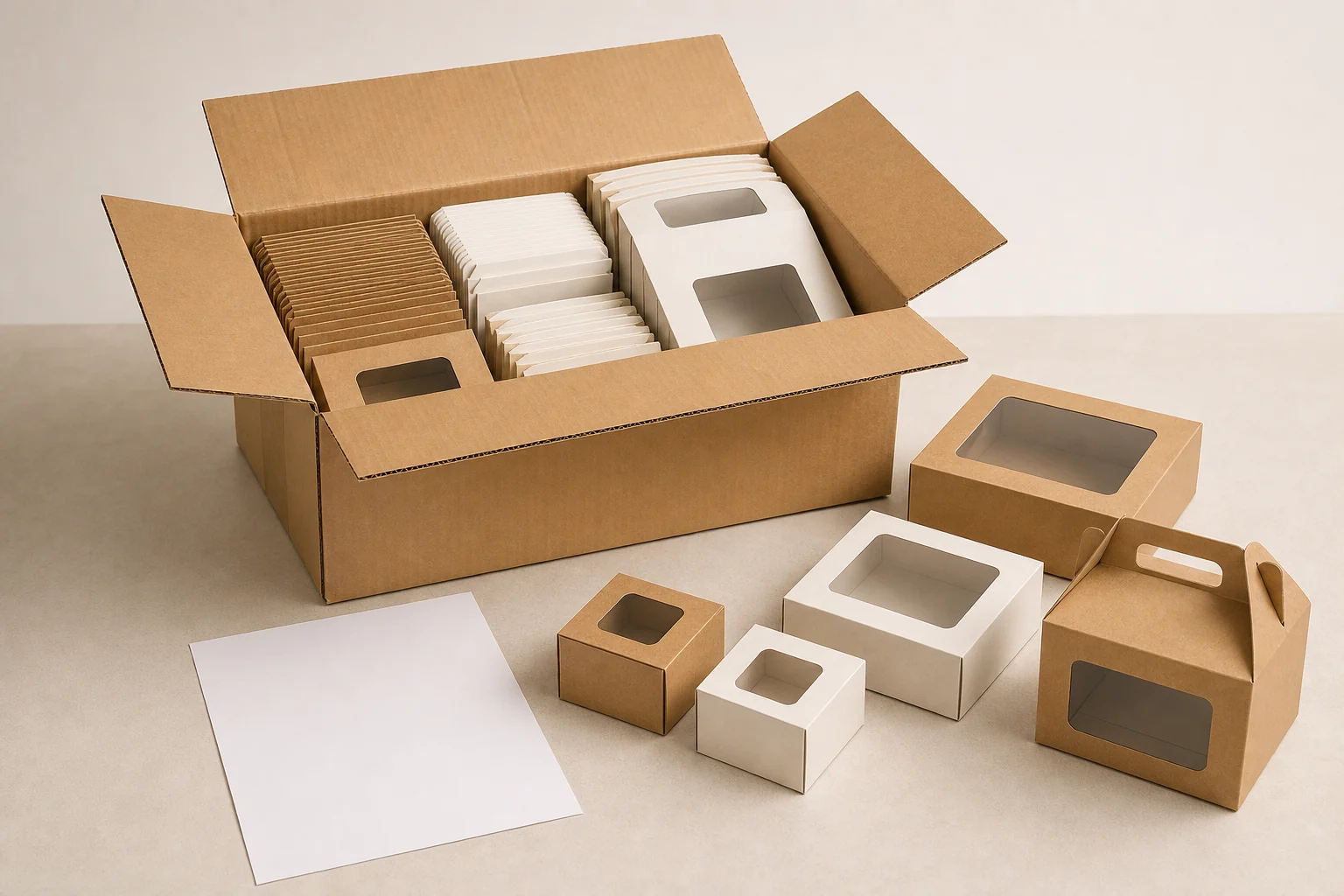
Approvvigionamento da parte degli acquirenti custom paper boxes with a specified board or liner should request confirmation of what materials are included in the exact format and ask for trial guidance based on their product category. Do not rely on general descriptors to determine whether a format fits your products.
Review trial observations with the exact packaging reference.
Failure Modes in Bakery Packaging
Understanding common failure modes helps buyers design better trials and ask more precise questions during supplier engagement. Issues worth including in a trial plan include:
Structural change under stack pressure — A box that looks acceptable individually may behave differently when stacked in a delivery crate. Test the actual stack configuration.
Closure movement during transport — A closure that stays closed on a flat counter can respond differently to vibration or lateral pressure during delivery. Assess the planned route conditions.
Window distortion or separation — A window panel can change appearance after exposure to humidity or temperature variation. Evaluate it under the buyer’s actual environment.
Product movement and surface damage — Excess interior space can allow products to move during transport. Assess box-to-product fit with the actual product.
Grease migration at base or seam — Base folds and seam areas should be included in inspection after each representative trial.
Rollout Checklist for Bakery Packaging Buyers
Before placing a volume order, confirm the following with your supplier and internal team:
Exact SKU, dimensions, board grade, liner, and coating confirmed in writing.
Window material, size, and placement reviewed against the product range.
Grease and moisture trial completed under the buyer’s product and environment conditions.
Closure type assessed against the actual transport route and stack height.
Local food-contact requirements checked with the appropriate compliance or legal resource.
Custom-print specification, minimum order quantity, and lead time agreed.
Sample sign-off from operations and front-of-house teams completed.
Compare delivered packaging with the approved reference before rollout.
Ambito editoriale e verifica degli acquirenti
This article is a planning framework for B2B bakery and foodservice buyers. It is not product approval, regulatory guidance, or a recommendation of a specific material, coating, or format for a named bakery item. Window clarity, grease behaviour, moisture management, closure integrity, and transport suitability are buyer-trial variables that must be evaluated under the buyer’s own operating conditions.
Buyers should confirm SKU, liner, coating, window material, closure, and applicable requirements directly with their packaging supplier and relevant authorities before committing to volume orders or commercial deployment.
Contact and Next Steps
If you are ready to discuss format options, request samples, or explore custom print specifications for a bakery packaging program, contact the Papacko team. Bring a product brief, volume estimates, and any trial notes already gathered so the team can identify relevant format candidates and keep sample requests focused.
Domande frequenti
What is the difference between a window box and a standard bakery carton for counter display?
A window box includes a viewing panel, typically on the top or front face, while a standard carton provides full enclosure. The choice depends on the display environment, product presentation, and operating process. Both formats require buyer trials under the intended conditions.
How should I approach grease trials before ordering bakery boxes at volume?
Pack the actual product at the intended fill weight, hold it for the expected service duration in the display or delivery environment, and inspect the exterior for visible migration. Repeat across batches and relevant temperature conditions. Do not infer results from broad product descriptions.
Can I use the same box format across multiple pastry categories?
Not necessarily. Products vary in weight, moisture, surface fragility, and filling, all of which can affect the buyer’s trial result. A product-by-product specification and trial process is appropriate.
What should I confirm with a supplier when ordering custom print bakery boxes?
Confirm the exact SKU, board grade, liner, coating, window specification where relevant, minimum order quantity, lead time, print method, and colour-registration expectations. Request a physical sample before approving production.
How do closure types affect pastry packaging during delivery?
Closures can behave differently under vibration, lateral movement, or stack pressure. Test the chosen closure against the actual route and stack configuration during buyer trials before finalising a format.
What regulatory framework applies to food-contact bakery packaging in my market?
Requirements vary by country, jurisdiction, and specific use case. The FDA general framework is a reference point for US-context research, but buyers should confirm applicable requirements with compliance or legal resources and verify the exact product documentation before commercial deployment.
krad lin
Papacko Content Team — Realizziamo guide pratiche e basate sull’esperienza di fabbrica per il packaging B2B nel settore alimentare e delle bevande. Gli argomenti trattati includono la scelta di bicchieri e ciotole di carta, rivestimenti in PE/PLA/a base acquosa, conformità alle normative sul contatto con gli alimenti, stampa, controllo qualità e flussi di lavoro pronti per l’esportazione, affinché caffetterie, ristoranti, distributori e partner OEM possano crescere con una fornitura affidabile.