Ready to create your own branded paper cups or packaging?
Tell us your requirements — size, coating, printing, and destination — and our team will prepare a detailed quotation within 24 hours.

Last Updated: November 2025
Reading Time: 10 minutes
Author: Papacko Content Team
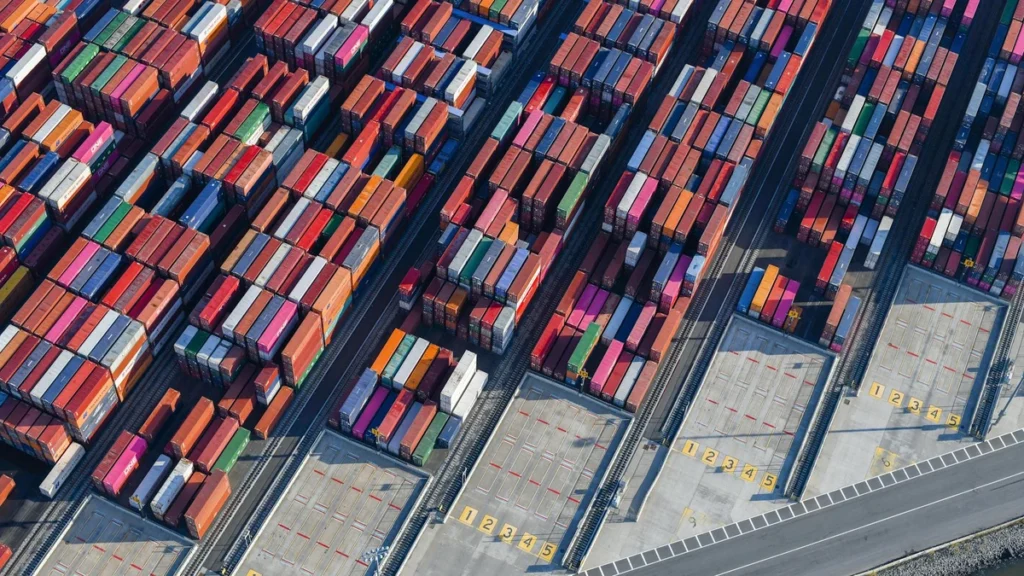
Your container sits at the port for three weeks. Why? A missing certificate. One document you didn’t know you needed.
Exporting food packaging crosses borders, regulations, and compliance requirements that vary by country. FDA registration, FSC certificates, customs codes, migration testing, declarations of compliance, and country-specific attestations. Miss one, and your shipment gets detained, inspected, or rejected.
In this guide, you’ll learn:
•Core certifications required globally (FDA, FSC, BRC, ISO)
•Region-specific requirements (US, EU, China, Middle East, Australia)
•HS codes and tariff classifications for packaging
•Complete documentation checklist (commercial invoice, packing list, certificates)
•Shipping logistics, inspection procedures, and lead times
•How to vet suppliers and verify compliance
💡 Quick Takeaway: FDA FCN required for US food contact packaging. EU needs Declaration of Compliance (DoC) and BRC preferred. FSC certification mandatory for major corporate buyers. Always verify HS codes (4823.69 for most paper packaging) to avoid duty miscalculation. Total lead time: 60-90 days (production 40-50 days + shipping 20-30 days + customs 3-7 days).
Requirement: Mandatory for all food contact packaging imported to United States
What It Is: FDA approval confirming materials are safe for food contact under Title 21 CFR (Code of Federal Regulations)
Who Issues:
•Food Contact Notification (FCN): Material manufacturer (paper mill, coating supplier) submits to FDA
•Certificate of Compliance: Packaging manufacturer issues based on FCN
Documentation Package Required:
1.FCN Number (Food Contact Notification):
– Example: “FCN 1234” issued by paper mill
– Verify at fda.gov/food/food-ingredients-packaging/food-contact-notifications
– Covers specific material (paper, PLA coating, PE film, etc.)
2.Certificate of Compliance:
– Statement from packaging manufacturer
– Text: “Product complies with FDA 21 CFR 176.170 (paper and paperboard components of single and repeated use food contact surfaces)”
– Signed and dated (within 1 year for best practice)
3.Migration Testing Reports:
– Lab testing showing no harmful substance migration to food
– Testing simulants: Aqueous (water), acidic (acetic acid), fatty (ethanol or oil)
– Temperature and contact time: Match intended use (e.g., 100°C for 2 hours for hot food)
– ISO 17025 accredited lab preferred
4.FDA Prior Notice:
– Electronic submission before shipment arrival
– Required timing: 4 hours (truck/rail), 4 hours (air), 8 hours (ocean from Canada/Mexico), 24 hours (ocean other countries)
– Submitted via FDA Prior Notice System Interface (PNSI)
Cost: No cost for importer (supplier handles). Initial testing: $1,000-3,000 per product line if not already done.
Consequences of Non-Compliance:
•Shipment detained at port (FDA hold)
•Inspection and sampling ($2,000-5,000 fees)
•Testing required (2-4 weeks delay, $3,000-10,000 cost)
•Rejection and re-export (total loss: $5,000-20,000+)
Pro Tip: Always request FDA compliance letter and FCN number from supplier BEFORE ordering. Verify FCN online before production starts.
Requirement: Voluntary but effectively mandatory for major buyers (Walmart, Starbucks, McDonald’s, Amazon) and government contracts
What It Is: Chain-of-custody certification proving paper from responsibly managed forests
FSC Types:
•FSC 100%: All paper from FSC-certified forests (premium, rare)
•FSC Mix: Combination of certified and controlled sources (most common, 70%+ certified content)
•FSC Recycled: From recycled paper (lower quality for food contact, less common)
Documentation Required:
1.FSC Certificate:
– Certificate number (format: FSC-C123456)
– Verify at info.fsc.org/certificate (online lookup)
– Supplier name, valid dates (5-year validity with annual audits)
– Scope: Must include “food packaging” or relevant product category
2.Chain-of-Custody Documentation:
– Tracks paper from forest → mill → converter → printer → finished product
– All intermediaries must have FSC certification
– Invoice must state FSC claim (e.g., “FSC Mix Credit” + license code)
3.Transaction Certificate (TC):
– Issued per shipment
– Links your specific order to FSC-certified materials
– Required if you resell with FSC claims
FSC Trademark License (If printing FSC logo on packaging):
•Required for logo usage
•Cost: $500-1,000/year for small businesses (<$1M revenue), $1,000-5,000/year for larger
•Application: 4-8 weeks processing
•Without license: Can sell FSC products, but cannot print FSC logo
Cost Premium: 15-25% more than non-certified paper (+$0.02-0.05 per unit depending on product)
Why It Matters:
•Corporate buyers require FSC (Walmart mandates 100% FSC paper packaging)
•Government contracts (US, EU) often specify FSC
•Consumer perception (eco-conscious positioning)
•Risk mitigation (proves legal sourcing, avoids illegal logging association)
Market Reality: 60-70% of exported food packaging to developed markets has FSC certification (standard expectation).
Requirement: Mandatory for EU retailers, highly valued in UK, Australia, Canada
What It Is: Safety and quality management standard for packaging manufacturers (covers hygiene, traceability, risk management)
BRC Grades:
•AA: Highest (no critical or major non-conformities)
•A: High (few minor non-conformities)
•B: Acceptable (some major non-conformities, corrected)
•C: Marginal (significant issues, action plan required)
•D: Ungraded (failed audit)
Major Retailers Require: Grade A minimum, Grade AA preferred
Documentation Required:
1.BRC Certificate:
– Issue date, expiry (valid 12 months, re-audit annually)
– Grade (A or AA for major buyers)
– Scope: Must cover product type (paper cups, food boxes, etc.)
– Audit body: Accredited third-party (SGS, Bureau Veritas, Intertek)
2.Audit Summary:
– Number of non-conformities (critical, major, minor)
– Corrective actions taken
– Next audit date
Cost: Supplier responsibility. BRC certification: $5,000-15,000 annually (audit fees + consultant). Premium passed to buyer: 5-10% higher unit cost.
Alternatives:
•FSSC 22000: Food safety certification (alternative to BRC, also accepted by many retailers)
•ISO 22000: Less stringent than BRC but growing acceptance
Market Reality: EU exports without BRC face delays, additional scrutiny, or outright rejection by major retailers.
ISO 9001 (Quality Management):
•Standard for consistent production quality
•Ensures processes documented, monitored, improved
•Required by many corporate buyers
•Cost: $3,000-10,000 annually
•Validity: 3 years with annual surveillance audits
ISO 22000 (Food Safety Management):
•Integrates HACCP principles with ISO 9001
•Covers entire food supply chain including packaging
•Increasingly required for Middle East, Asia exports
•Cost: $5,000-15,000 annually
ISO 14001 (Environmental Management):
•Optional but valued for sustainability positioning
•Shows commitment to reducing environmental impact
•Cost: $4,000-12,000 annually
Documentation: Request certificate copy with scope, validity, and accreditation body verification.
Key Regulations:
•FDA 21 CFR 176.170: Paper and paperboard in contact with food
•FDA Prior Notice: 4-24 hours before arrival (mandatory electronic submission)
•FDA facility registration: Supplier must register manufacturing facility
Required Documents:
1.Commercial invoice (with HS code 4823.69 or specific sub-code)
2.Packing list (carton-by-carton breakdown)
3.Bill of Lading (B/L)
4.Certificate of Origin
5.FDA compliance letter (FCN number, migration testing)
6.FDA Prior Notice confirmation (electronic filing receipt)
Import Duties:
•HS 4823.69: 0-5% typically (verify specific sub-code at usitc.gov)
•Paper packaging often duty-free or low duty
Customs Clearance Time: 1-3 days with complete documentation
Inspection Rate: 1-5% of shipments (risk-based: new importers, first-time products higher risk)
Common Delays:
•Missing FDA Prior Notice (automatic hold)
•Incorrect HS code (duty recalculation, delay)
•No FDA compliance documentation (sampling and testing, 2-4 weeks)
Pro Tip: Use licensed customs broker for first shipments ($150-400 fee prevents expensive mistakes).
Key Regulations:
•EU Regulation 1935/2004: Framework for materials and articles intended to contact food
•EU Regulation 2023/2006: Good manufacturing practices (GMP)
•Declaration of Compliance (DoC): Mandatory written statement
Required Documents:
1.Commercial invoice (with CN code 4823.69.00 or specific)
2.Packing list
3.Bill of Lading
4.Certificate of Origin (EUR.1 for preferential duty if applicable)
5.Declaration of Compliance (DoC): Written statement that packaging meets EU Reg 1935/2004
6.BRC or FSSC 22000 certificate (highly recommended, often required by retailers)
7.Migration testing reports (EU-compliant testing)
Declaration of Compliance Template:
We, [Manufacturer Name], declare that the packaging materials supplied comply with:
•EU Regulation 1935/2004 on materials and articles intended to come into contact with food
•EU Regulation 2023/2006 on good manufacturing practices
•Applicable specific measures
This declaration is based on migration testing conducted according to EU standards.
Signed: [Authorized Representative]
Date: [Date]
Import Duties: 0-6% for paper packaging (verify TARIC code at ec.europa.eu/taxation_customs/dds2)
Customs Clearance Time: 2-5 days with complete documentation
Inspection Rate: 2-10% (varies by EU member state)
Common Delays:
•Missing Declaration of Compliance (automatic hold)
•Non-BRC suppliers (higher scrutiny, longer clearance)
•Incorrect TARIC code (duty recalculation)
Pro Tip: BRC certification dramatically smooths EU customs process. Investment worthwhile for regular exports.

Key Regulations:
•GB 4806 Standards: National food safety standards for food contact materials
•China Customs Declaration: Electronic declaration system
•CIQ Inspection (China Inspection and Quarantine): Mandatory for food contact materials
Required Documents:
1.Commercial invoice (Chinese translation may be required)
2.Packing list
3.Bill of Lading
4.Certificate of Origin (attested by Chinese consulate in exporting country)
5.GB 4806 compliance test report (from CNAS-accredited lab)
6.Supplier registration (foreign manufacturers must register with GACC – General Administration of Customs China)
7.CIQ filing: Pre-shipment filing with inspection authority
Compliance Testing:
•Migration testing per GB 4806 standards (similar to FDA/EU but specific China requirements)
•Heavy metals, fluorescent whitening agents, formaldehyde testing
•Cost: $2,000-5,000 per product line
Import Duties: 5-10% typically (verify HS code 4823.6900.00 in China tariff system)
Customs Clearance Time: 3-7 days (CIQ inspection adds time)
Inspection Rate: 30-50% (higher than most markets, especially for food contact materials)
Language Requirements: Documentation in Chinese (invoices, packing lists, product labels)
Common Delays:
•No GB 4806 test report (rejection or re-testing required, 3-4 weeks)
•Incorrect CIQ filing (re-filing, 1-2 weeks)
•Certificate of Origin not consulate-attested (rejection, must re-do)
Pro Tip: Work with China-experienced freight forwarder. Compliance requirements complex and frequently updated.
Key Regulations:
•Gulf Cooperation Council (GCC) Standards: GSO standards for food contact materials
•ISO 22000: Increasingly required for food-related imports
•Halal certification: Not typically required for packaging, but some buyers request
Required Documents:
1.Commercial invoice (Arabic translation may be required)
2.Packing list
3.Bill of Lading
4.Certificate of Origin (attested by Chamber of Commerce AND Ministry of Foreign Affairs AND destination country embassy/consulate)
5.ISO 22000 certificate (recommended, increasingly required)
6.Declaration of Compliance (stating conformity with GCC standards)
7.Halal certificate (if buyer requests, even for packaging)
Attestation Process (Critical for Middle East):
1.Certificate issued by relevant authority (Chamber of Commerce for Origin, supplier for DoC)
2.Attested by exporting country’s Ministry of Foreign Affairs
3.Attested by destination country’s embassy/consulate in exporting country
4.Time: 2-4 weeks
5.Cost: $50-200 per document
Import Duties: 5% standard for most GCC countries
Customs Clearance Time: 3-7 days (longer if attestation missing)
Inspection Rate: 10-20% (moderate)
Common Delays:
•Certificates not properly attested (rejection, must re-do attestation)
•Missing Arabic translations (requested during customs)
•ISO 22000 not provided (some destinations require, delays if missing)
Pro Tip: Start attestation process immediately after production (long timeline). Work with agent familiar with GCC requirements.
Key Regulations:
•Food Standards Australia New Zealand (FSANZ) Code: Standard 1.4.3 (Articles and Materials in Contact with Food)
•Australian Border Force: Import documentation requirements
•Biosecurity: ISPM-15 compliance for wood pallets (heat treatment)
Required Documents:
1.Commercial invoice
2.Packing list
3.Bill of Lading
4.Certificate of Origin
5.Declaration of Compliance (stating conformity with FSANZ Standard 1.4.3)
6.BRC certificate (highly valued, smooths clearance)
7.ISPM-15 certificate (for wood pallets, proving heat treatment)
Import Duties: 0-5% (many paper products duty-free under free trade agreements)
Customs Clearance Time: 2-4 days
Biosecurity Screening: Strict (prevent pests/diseases entering ecosystem)
•All wood packaging must be ISPM-15 compliant (heat-treated, stamped)
•Alternative: Plastic pallets (no biosecurity issue, more expensive)
Inspection Rate: 5-10% (moderate, but biosecurity inspection higher: 20-30%)
Common Delays:
•Non-compliant wood pallets (fumigation required on arrival, 1-2 weeks, $500-2,000)
•Missing Declaration of Compliance (hold pending submission)
Pro Tip: Use plastic pallets or verify ISPM-15 heat treatment stamp before shipping. Australia unforgiving on biosecurity.
HS = Harmonized System: International classification for traded products
Structure:
•First 6 digits: Universal worldwide (set by World Customs Organization)
•Additional digits: Country-specific (US adds 4 = 10 digits total, EU adds 2 = 8 digits)
Common HS Codes for Food Packaging:
4823.69: Paper, paperboard, cellulose wadding and webs of cellulose fibers (general category for food packaging)
Sub-Codes:
•4823.69.10 (or .0040 in US HTS): Trays, dishes, plates, cups and the like
•4823.69.90: Other (general paper food packaging)
4823.70: Molded or pressed articles of paper pulp
•For molded fiber containers (bagasse, bamboo pulp)
4819.20: Folding cartons, boxes and cases, of non-corrugated paper or paperboard
•For retail food boxes (bakery boxes, pastry boxes)
•Not for shipping boxes (those are corrugated, different code)
3920.43 (for PLA films, coatings):
•Polymers of vinyl chloride or polymerization (plastics chapter)
•Check if PLA-coated cups classified here vs paper chapter (varies by country)
Country-Specific Examples:
•US HTS: 4823.69.0040 (plates, cups, trays)
•EU CN: 4823.69.00.10 (similar breakdown)
•China: 4823.6900.00
Consequences of Wrong Code:
1.Incorrect duty calculation: Overpay or underpay (underpayment = penalties)
2.Customs delays: Reclassification process (1-3 days minimum)
3.Penalties: Repeated errors = fines ($1,000-10,000 depending on country)
4.Different documentation requirements: Some codes require extra permits
Duty Rate Variations:
•HS 4823.69 (paper cups): 0-5% in most markets
•HS 3920.43 (plastic films): 5-15% in most markets
•Correct classification = significant cost savings
How to Verify Correct Code:
1.Consult customs broker (recommended for first shipments)
2.Check target country’s tariff database:
– US: usitc.gov/tata/hts (Harmonized Tariff Schedule search)
– EU: ec.europa.eu/taxation_customs/dds2 (TARIC database)
– WCO: wcoomd.org (general HS database)
3.Request supplier’s standard HS code (verify it matches your research)
4.Binding Ruling: Request official classification from customs (takes 30-60 days, but definitive)
Pro Tip: Different product types in same shipment may have different HS codes. Break down commercial invoice line-by-line with correct codes.
1. Commercial Invoice:
Must Include:
•Seller (supplier) full business name, address, contact
•Buyer (your business) full details
•Invoice number and date
•Detailed product description: “Paper food boxes, kraft paperboard, 180gsm, 1000ml capacity, rectangular, 100 pieces per carton”
•HS code: 6-10 digits depending on destination
•Quantity: Cartons and total pieces
•Unit price and total value
•Currency (USD most common)
•Incoterm: FOB, CIF, DDP, etc. (defines who pays what)
•Payment terms (e.g., “30% deposit, 70% before shipment”)
•Country of origin
•Packing details (carton count, pallet count)
Format: Most countries require specific invoice layout. Check with customs broker.
2. Packing List:
Must Include:
•Matches commercial invoice (buyer, seller, date)
•Carton-by-carton breakdown:
– Carton number (1 of 50, 2 of 50, etc.)
– Contents per carton (e.g., “100 pieces, 1000ml food boxes”)
– Gross weight per carton (kg)
– Net weight per carton (kg)
– Dimensions per carton (L × W × H in cm)
•Total cartons, total pallets
•Total gross weight, total net weight
•Total volume (cubic meters)
•Carton marks (for identification during inspection)
Purpose: Customs verification, warehouse handling, freight calculation
3. Bill of Lading (B/L) or Air Waybill (AWB):
What It Is: Contract between shipper and carrier, receipt for goods
Types:
•Ocean B/L: For sea freight (most common for packaging)
•Air Waybill: For air freight (urgent orders, samples)
Issued By: Freight forwarder or shipping line
Purpose: Proof of shipment, required for customs clearance and cargo release
Key Details:
•Shipper (supplier), consignee (buyer or customs broker)
•Notify party (who customs contacts upon arrival)
•Port of loading, port of discharge
•Container number (for ocean), flight number (for air)
•Number of packages, weight, volume
•Freight terms (prepaid or collect)
4. Certificate of Origin:
What It Is: Document certifying product’s country of manufacture
Types:
•Non-preferential CO: Standard origin statement
•Preferential CO: For free trade agreements (reduces/eliminates duty)
– Examples: EUR.1 (EU), USMCA Certificate (US-Mexico-Canada), Form E (ASEAN)
Issued By: Chamber of Commerce in exporting country, or supplier
Format: Specific forms per destination (e.g., EUR.1 for EU preferential duty)
Cost: $20-50 per certificate
Required For: Most countries (US, EU, Australia require for food contact materials)
What It Is: Third-party inspection before shipment leaves factory
Inspection Scope:
•Product quality (dimensions, material, printing accuracy)
•Quantity verification (carton count, piece count per carton)
•Packaging condition (no damage, proper labeling)
•Documentation review (certificates present and correct)
Inspection Companies: SGS, Intertek, Bureau Veritas, QIMA
Cost: $300-500 per inspection day
Report Timeline: 24-48 hours after inspection
When to Use:
•First orders (catch issues before shipping)
•Large orders ($20,000+, significant financial risk)
•New suppliers (trust not yet established)
•Complex products (multiple components, tight specs)
Value: Prevents costly post-arrival issues (easier to resolve with supplier before shipment than after arrival).
Avoid Suppliers Who:
❌ Refuse to provide certificates for verification
❌ Have expired certifications (BRC expired = not certified)
❌ Claim certifications but won’t provide certificate numbers
❌ Have no previous export experience to your target market
❌ Communication is poor (slow responses, unclear English)
❌ Won’t arrange pre-shipment inspection (“Trust us”)
❌ Prices 30%+ below market (too good to be true = quality/compliance shortcuts)
Safer Suppliers:
✅ Provide certificates proactively (before you ask)
✅ Have multi-year export track record (show references)
✅ English-speaking dedicated export team
✅ Welcome factory audits and pre-shipment inspections
✅ Transparent about lead times and potential issues
✅ Pricing competitive but reasonable (within 10-20% of market average)
Varies by HS code and destination:
United States (HS 4823.69):
•Most paper packaging: 0-5%
•Example: $10,000 shipment = $0-500 duty
European Union (CN 4823.69.00):
•Paper packaging: 0-6%
•Example: €10,000 shipment = €0-600 duty
China (HS 4823.6900.00):
•Paper packaging: 5-10%
•Example: ¥70,000 shipment (≈$10,000) = ¥3,500-7,000 duty
Middle East (GCC):
•Standard: 5%
•Example: $10,000 shipment = $500 duty
Australia:
•Many paper products duty-free under FTAs
•Example: $10,000 shipment = $0-500 duty
Other Fees (Beyond Duty):
•Customs brokerage: $150-400
•Port fees: $200-500
•Insurance: 0.5-1% of cargo value
Total Import Costs: Typically 5-15% of cargo value (duty + fees)
Always Verify: Exact HS code for your product with customs broker before ordering.
Possible Outcomes:
1. Provide Missing Documents (Most Common):
•Supplier sends corrected/missing certificates
•Customs releases after review
•Delay: 1-3 weeks
•Cost: Storage fees ($50-200/day), customs broker time ($200-500)
2. Sampling and Testing:
•Customs sends samples to lab (FDA, EU approved lab)
•Testing: Migration, heavy metals, material composition
•Cost: $3,000-10,000 (importer pays)
•Delay: 2-4 weeks
•If passed: Release. If failed: See #3.
3. Rejection:
•Shipment refused entry (fails safety standards or documentation irreparable)
•Options:
– Re-export: Return to origin ($2,000-5,000 freight + handling)
– Destroy: Disposal at port ($1,000-3,000)
•Total loss if product defective
4. Penalty for Fraud (Intentional Misrepresentation):
•Fines: $1,000-50,000 depending on severity
•Importer flagged for future inspections
•Supplier blacklisted
Prevention:
•Complete documentation review BEFORE shipping (2 weeks before shipment date)
•Pre-shipment inspection (catch issues at factory)
•Work with experienced customs broker (verify all docs)
Depends on certification scope:
FDA FCN:
•Material-specific: FCN covers material (paper, PLA coating, PE film)
•If you order cups AND boxes with same material/coating → same FCN covers both
•If you order PLA cups AND PE cups → different coatings = different FCN numbers
FSC Certificate:
•Product category: Certificate lists scope (e.g., “food packaging”)
•All paper products under “food packaging” covered by one certificate
•One FSC certificate can cover cups, boxes, bags if all paper-based
BRC Certificate:
•Facility-based: Covers all products manufactured at that facility
•One BRC certificate covers supplier’s entire food packaging range (if all in scope)
ISO Certifications:
•System-based: Covers quality/safety management system
•One certificate covers all products from that supplier
Practical Answer:
•Most suppliers have certifications covering broad product ranges
•Request certificates and verify your specific products are in scope
•If product very different (e.g., plastic vs paper), may need different FCN
Yes, with limitations:
Samples (Low Value): Many countries have simplified procedures
•US: Shipments under $800 (de minimis) exempt from formal entry (no FDA Prior Notice required if clearly marked “SAMPLE”)
•EU: Shipments under €150 simplified clearance
•Australia: Shipments under AUD $1,000 simplified
Sample Marking:
•Label shipment: “SAMPLE – NO COMMERCIAL VALUE” or “SAMPLE – FOR TESTING ONLY”
•Invoice shows $0 value or nominal value
•Quantity: Small (e.g., 100 cups, not 10,000)
Documentation Still Needed:
•Commercial invoice (even for $0 value)
•Accurate product description
•HS code (even for samples)
Limitations:
•Samples cannot be resold (for testing only)
•Frequency limits (can’t abuse sample status for repeated imports)
•Value limits enforced (over threshold = full import process)
Pro Tip: ALWAYS test samples before bulk order. Worth the $100-300 shipping cost to avoid $10,000-50,000 bulk order issues.
Step-by-Step Verification:
1. Request FDA Compliance Letter:
•Supplier provides written statement
•Should include: FCN number, applicable CFR regulation (21 CFR 176.170), product description
2. Verify FCN Number:
•Visit fda.gov/food/food-ingredients-packaging/food-contact-notifications
•Search FCN database by number
•Confirm: Material type matches, manufacturer name matches, effective date valid
3. Request Migration Testing Reports:
•Lab tests showing no harmful migration to food
•Check: ISO 17025 accredited lab, testing simulants (aqueous, acidic, fatty), temperature/time match intended use
4. Check FDA Facility Registration (Optional but Recommended):
•Supplier’s manufacturing facility should be FDA-registered
•Ask for FDA registration number (format: 12345678901 + 11 digits)
•Cannot verify online (FDA doesn’t publish), but legitimate suppliers provide upon request
5. Request FDA Prior Notice Guide:
•Ask supplier for guidance on FDA Prior Notice filing
•Experienced exporters provide templates or filing services
Red Flags:
•“FDA approved” language (FDA doesn’t “approve” packaging, accepts notifications)
•Refusal to provide FCN number
•FCN for unrelated material (e.g., FCN for plastic film when buying paper)
•Migration testing from non-accredited lab or internal-only testing
Safe Approach: Ask for complete FDA documentation BEFORE placing order. Verify FCN online. If supplier hesitates or provides vague answers, find different supplier.
Incoterms Define Responsibilities:
EXW (Ex Works) – Buyer Does Everything:
•Seller: Makes product available at factory
•Buyer: Arranges pickup, export customs, freight, insurance, import customs, delivery
•Risk transfer: At factory door
•Use case: Buyer has own logistics, wants full control
•Price: Lowest (seller’s cost ends at factory)
FOB (Free on Board) – Most Common:
•Seller: Delivers to port, loads on ship, handles export customs
•Buyer: Pays ocean freight, insurance, import customs, delivery
•Risk transfer: When cargo on ship
•Use case: Buyer arranges own freight forwarder
•Price: Mid-range (seller covers up to port)
CIF (Cost, Insurance, Freight):
•Seller: Pays ocean freight and insurance to destination port
•Buyer: Pays import customs, local delivery
•Risk transfer: When cargo on ship (seller pays freight but buyer bears risk)
•Use case: Buyer wants less logistics management
•Price: Higher (seller includes freight cost)
DDP (Delivered Duty Paid) – Seller Does Everything:
•Seller: Handles everything to buyer’s door (export, freight, insurance, import customs, duties, delivery)
•Buyer: Receives at door, pays nothing more
•Risk transfer: At buyer’s location
•Use case: Buyer wants zero logistics involvement
•Price: Highest (seller assumes all costs and risks)
Example ($10,000 product value, shipping to US):
•EXW: $10,000 (buyer arranges and pays $3,000 shipping + $500 import costs) = $13,500 total
•FOB: $10,200 (buyer pays $2,500 freight + $500 import costs) = $13,200 total
•CIF: $12,500 (buyer pays $500 import costs) = $13,000 total
•DDP: $13,500 (buyer pays nothing more) = $13,500 total
Recommendation: FOB for most B2B (you control freight forwarder, customs broker). DDP if you want simplicity and supplier experienced with your market.
Recommended Lead Times:
First Order (New Product):
•Ideal: 90-120 days before you need product
•Breakdown:
– Design finalization: 7-10 days
– Sample approval: 7-10 days (+ shipping time)
– Production: 40-50 days
– Ocean freight: 20-30 days
– Customs clearance: 3-7 days
– Delivery to warehouse: 3-5 days
– Total: 80-112 days + buffer for delays
Reorders (Same Product):
•Ideal: 60-75 days before need date
•Breakdown:
– Order confirmation: 2-3 days
– Production: 25-35 days
– Freight: 20-30 days
– Customs: 3-7 days
– Delivery: 3-5 days
– Total: 53-80 days + buffer
Buffer for Delays:
•20% time buffer recommended (if 60 days needed, order 75 days out)
•Common delays: Production backlog (holiday season), port congestion (peak season), customs inspections
Rush Orders:
•Production rush: +20-30% cost, minimum 3-4 weeks saved
•Air freight: +400-700% shipping cost, 2-3 weeks saved
•Only use for emergencies (very expensive)
Seasonal Considerations:
•Chinese New Year (Jan/Feb): Factories closed 2-4 weeks, avoid ordering Dec-Feb
•Peak season (Sep-Nov): Port congestion, order 2-3 weeks earlier
•Holiday rush (Nov-Dec): Production backlog, order by August for December arrival
Pro Tip: Establish reorder schedule (quarterly, bi-annually) based on usage forecast. Prevents rush orders and maintains consistent supply.
Successful food packaging exports require meticulous compliance preparation and documentation long before shipment.
Key Takeaways:
1.Core certifications: FDA FCN (US), FSC (corporate buyers), BRC (EU), ISO 22000 (Middle East/Asia)
2.HS code accuracy critical: Verify 4823.69 for most paper packaging, double-check sub-codes for duty calculation
3.Documentation completeness: Commercial invoice, packing list, B/L, Certificate of Origin, plus market-specific (DoC for EU, FDA Prior Notice for US, attestation for Middle East)
4.Total lead time: 90 days first order (production 50 + shipping 30 + customs 7 + buffer), 60-75 days reorders
5.Supplier verification essential: Verify certifications online, request references, consider pre-shipment inspection for large orders
6.Customs clearance time: 1-7 days typically, but incomplete documentation = 1-4 weeks delay
7.Incoterm choice: FOB most common for B2B control, DDP for simplicity if supplier experienced
Work with suppliers who provide proactive documentation and have proven export track records to your target market.
•Food Packaging Containers – Complete product range
•Paper Food Boxes Export – Detailed export guide
•Sustainable Paper Packaging – FSC certification details
Papacko provides complete export documentation, compliance support, and logistics coordination for international food packaging buyers.
Why choose Papacko:
•Full certification suite: FDA, FSC, BRC, ISO 9001, ISO 22000 provided with verification
•Export documentation service: Complete customs package prepared (commercial invoice, packing list, certificates, DoC)
•Customs broker network: Partnerships in US, EU, China, Middle East, Australia
•Pre-shipment inspection: Arranged with SGS/Intertek before shipping
•Attestation services: MFA and consulate legalization for Middle East (2-4 weeks)
•Incoterm flexibility: FOB, CIF, DDP available based on your preference
•15+ years export experience: 50+ countries, 10,000+ successful shipments
Export planning works better when compliance checks are paired with market demand, supplier consistency, and product categories that can travel well across different buying regions.
Get in touch:
•Request a Quote – Export pricing (FOB/CIF/DDP) with full documentation
•Compliance Consultation – Verify requirements for your target market
•Sample Shipment – Test import process with small order before bulk