Ready to create your own branded paper cups or packaging?
Tell us your requirements — size, coating, printing, and destination — and our team will prepare a detailed quotation within 24 hours.

Last Updated: December 2025
Reading Time: 13 minutes
Author: Papacko Content Team
You’ve launched a new takeout menu, ordered 10,000 containers from the cheapest supplier ($0.35 each), and disaster strikes on day three: soup containers leak in delivery bags (12% failure rate), salad boxes collapse from condensation, and hot entree containers warp from heat. Customer refunds total $1,840 in the first week, negative reviews pile up (“food arrived destroyed,” “leaking mess”), and you’re scrambling to source emergency replacement packaging at 50% premium pricing while your original $3,500 inventory sits unusable in storage.
Food service packaging isn’t a commodity—it’s the final mile of food quality. Wrong container type means leaks, temperature loss, presentation failure, and brand damage. Right packaging protects food integrity, maintains temperature (hot stays hot 45+ minutes, cold stays cold 2+ hours), prevents cross-contamination, and enhances customer experience. The difference between 5-star and 1-star reviews sometimes comes down to whether food arrives intact and appetizing.
In this guide, you’ll learn:
•Packaging category breakdown: Cups, containers, boxes, bags, utensils
•Material selection matrix: Paper, plastic, foam, biodegradable options
•Temperature management: Insulation, venting, condensation control
•Cost optimization strategies: Volume discounts, mixed orders, waste reduction
•Supplier vetting: Quality verification, compatibility testing
•Operational efficiency: Storage, staff training, customer experience
•Sustainability balance: Environmental impact vs performance vs cost
Quick Takeaway: Food service packaging categories: Cups (hot/cold beverages), food containers (plastic clamshells, paper bowls, aluminum pans), boxes (pizza, sandwich, bakery), bags (paper, plastic), utensils/accessories (cutlery, napkins, condiments). Material selection critical: Polypropylene (PP) heat-resistant to 200°F for hot foods, PET cold food clarity, kraft paper eco-friendly for dry/moderate moisture, foam insulation for temperature retention but poor environmental reputation. Common mistakes: Using cold containers for hot food (warping — melting), oversizing containers (excess cost 15-25%, food looks sparse), mixing incompatible materials (paper lids on plastic containers = poor seal). Cost optimization: Right-sizing saves $0.05-0.15 per order (500 orders/day = $9,000-27,000 annually), volume discounts 12-20% at 100K+ units, mixed material orders reach MOQ thresholds. Supplier red flags: No sample testing offered — vague material specs, defect rate >2%, lead times <20 days (overseas suppliers). Best practice: Order sample kits, test with actual menu items (leak test soups, heat test entrees, cold test salads), train staff on proper container selection per dish.
When evaluating the food service packaging, consider the following:
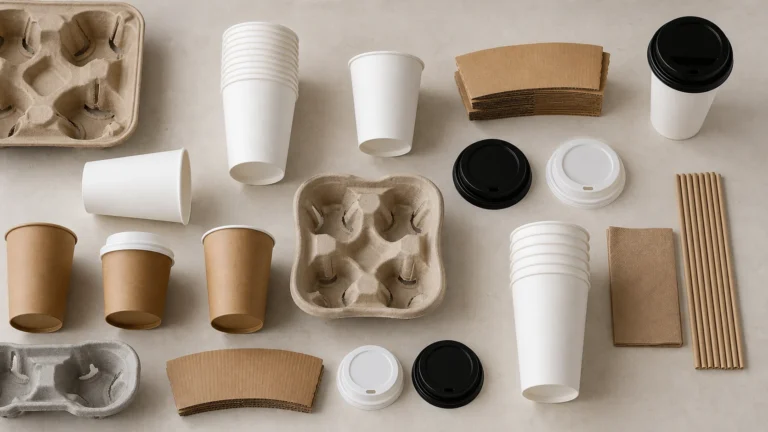
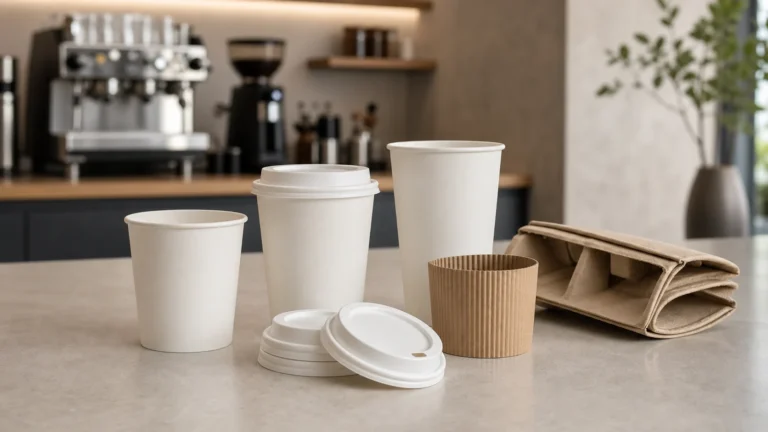
Paper cups (hot and cold):
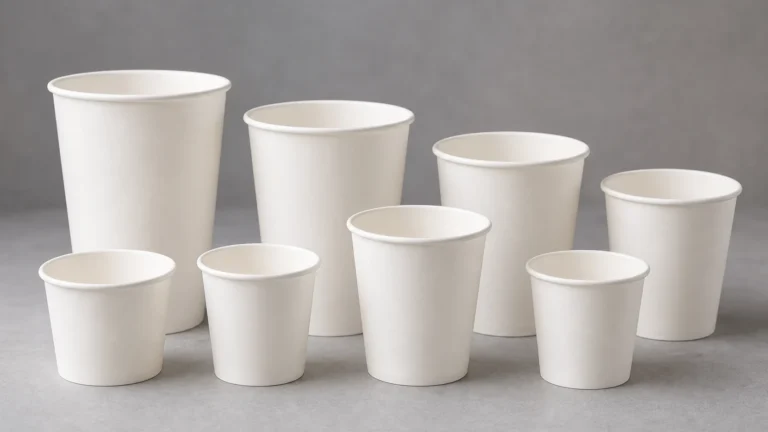
•Hot cups: 8oz, 12oz, 16oz, 20oz (double-wall or sleeve for insulation)
•Cold cups: 12oz, 16oz, 20oz, 24oz (single-wall with dome lids)
•Cost: $0.045-0.085 per cup+lid (depending on size, material, insulation)
•Best for: Coffee, tea, soft drinks, smoothies, bubble tea
Plastic cups (cold beverages):
•PET clear cups: Maximum clarity, recyclable, cold drinks only
•PP cups: More durable, works for hot and cold (less common for beverages)
•Cost: $0.055-0.095 per cup+lid
•Best for: Iced drinks where product visibility critical (colorful smoothies, layered drinks)
Selection criteria:
•Beverage temperature (hot vs cold determines material and insulation)
•Volume accuracy (under-sizing = refills, over-sizing = excessive cost)
•Lid compatibility (verify rim diameter matches, see Blog #047 for detailed guidance)
The key to choosing quality food service packaging depends on:
Plastic clamshells (PP or PET):
Hot food clamshells (PP, heat-resistant):
•Sizes: 6″, 8″, 9″ (small, medium, large)
•Temperature rating: Up to 200°F (suitable for hot entrees, cooked foods)
•Vented lids (steam release prevents soggy food)
•Cost: $0.25-0.55 per container (size and thickness dependent)
•Best for: Hot entrees, grilled proteins, pasta dishes, stir-fry
Cold food clamshells (PET, clarity):
•Clear plastic (product visibility)
•Temperature rating: Up to 140°F (suitable for cold foods, room temp items)
•Tight-sealing lids (leak prevention for salads with dressing)
•Cost: $0.20-0.45 per container
•Best for: Salads, sandwiches, sushi, cold appetizers
Foam containers (EPS, polystyrene):
•Excellent insulation (keeps hot foods hot longer)
•Lightweight (reduces shipping costs)
•Temperature rating: Up to 200°F
•Environmental concern: Non-recyclable, banned in some jurisdictions
•Cost: $0.15-0.35 per container (cheapest insulated option)
•Best for: Budget operations in areas without foam bans, hot takeout entrees
Paper-based containers:
•Lined interior (PE or PLA coating for liquid/moisture barrier)
•Sizes: 12oz, 16oz, 24oz, 32oz
•Temperature rating: Up to 185°F (suitable for soups, hot cereals, chili)
•Cost: $0.18-0.40 per bowl+lid
•Best for: Soups, noodle bowls, grain bowls, hot liquids
Paper lunch boxes (hinged or fold-lock):
•Grease-resistant coating (prevents oil soaking through)
•Sizes: Small (5″×4″×3″), Medium (8″×6″×3″), Large (9″×6.5″×3″)
•Temperature rating: Moderate heat only (up to 160°F, not suitable for very hot or liquid-heavy foods)
•Cost: $0.20-0.45 per box
•Best for: Sandwiches, wraps, dry entrees, bakery items
Aluminum containers:
•Oven-safe (can reheat in oven, 400°F+)
•Excellent heat retention (keeps food hot 60+ minutes)
•Recyclable (aluminum recycling infrastructure widespread)
•Cost: $0.30-0.70 per container+lid
•Best for: Catering, family-style portions, lasagna, casseroles, items intended for reheating
For eco-friendly food service packaging, focus on:
Pizza boxes:
•Corrugated cardboard (insulated design, vented holes)
•Sizes: 10″, 12″, 14″, 16″, 18″
•Grease-resistant interior coating (prevents oil soaking through)
•Cost: $0.40-1.20 per box (size dependent)
•Ventilation design (allows steam escape, prevents soggy crust)
Bakery boxes:
•Paperboard construction (lightweight, economical)
•Sizes: 4″×4″, 6″×6″, 8″×8″, 10″×10″ (square or rectangular)
•Window options (clear plastic window for product visibility)
•Cost: $0.25-0.80 per box
•Best for: Cakes, pastries, cookies, donuts
Sandwich/wrap boxes:
•Clear plastic (PET) or kraft paperboard
•Hinged or sleeve design (easy access, secure closure)
•Sizes: 5″×5″×3″, 6″×5″×3.5″ (typical sandwich dimensions)
•Cost: $0.15-0.35 per box
•Best for: Sandwiches, wraps, paninis, subs
When evaluating food service packaging, consider the following:
•Kraft paper (brown, recyclable, eco-friendly image)
•Handle types: Twisted paper, flat paper, die-cut handles
•Sizes: Small (8″×4.5″×10″), Medium (10″×5″×13″), Large (12″×7″×17″)
•Bottom reinforcement (SOS style or flat bottom for stability)
•Cost: $0.08-0.25 per bag
•Best for: Dry items, boxed food, lightweight orders
Plastic bags (T-shirt style or drawstring):
•HDPE or LDPE plastic (moisture-resistant, waterproof)
•Sizes: Small (11″×6″×21″), Medium (13″×8″×23″), Large (16″×10″×26″)
•Cost: $0.03-0.12 per bag
•Regulatory note: Banned or taxed in many jurisdictions (check local regulations)
•Best for: Wet/moist food containers, soup containers (leak containment)
Insulated delivery bags (for drivers):
•Heavy-duty nylon or polyester exterior
•Foil-lined interior (heat/cold retention)
•Sizes: 12″×12″×12″ to 18″×18″×18″
•Cost: $8-25 per bag (reusable, one-time investment)
•Best for: Delivery operations prioritizing temperature control
The key to choosing the food service packaging depends on:
Cutlery:
•Plastic (PS or PP): $0.008-0.015 per piece
•Wood (biodegradable): $0.012-0.025 per piece
•Compostable PLA: $0.018-0.030 per piece
•Cutlery kits (fork+knife+spoon+napkin): $0.05-0.10 per kit
Napkins:
•1-ply (budget): $0.005-0.008 per napkin
•2-ply (standard): $0.012-0.018 per napkin
•3-ply (premium): $0.020-0.030 per napkin
Condiment packets:
•Ketchup, mustard, mayo: $0.015-0.025 per packet
•Salt, pepper, sugar: $0.005-0.010 per packet
•Soy sauce, hot sauce: $0.020-0.035 per packet
Straws:
•Plastic: $0.005-0.010 per straw (being phased out in many jurisdictions)
•Paper: $0.012-0.020 per straw (most common replacement)
•Biodegradable PLA: $0.018-0.028 per straw
For food service containers, focus on:
Properties:
•Heat resistance: Up to 200-210°F (microwave-safe, dishwasher-safe)
•Durability: Impact-resistant, flexible (won’t crack if dropped)
•Clarity: Translucent (can see food contents, not crystal clear like PET)
•Chemical resistance: Resistant to oils, acids (suitable for all food types)
Applications:
•Hot food containers (entrees, sides, pasta)
•Soup containers (paired with secure lids)
•Microwavable meal prep containers
Cost: $0.25-0.55 per container (mid-range pricing)
Environmental profile:
•Recyclable (Code #5, widely accepted at recycling facilities)
•Petroleum-based (non-renewable, but better perception than PS foam)
For sustainable food service packaging, focus on:
Properties:
•Clarity: Crystal clear (best visibility for showcasing food)
•Strength: Impact-resistant, crack-resistant
•Heat resistance: Limited to 140-160°F (cold foods only, not suitable for hot foods)
•Lightweight: Reduces shipping costs
Applications:
•Cold salads (dressing on the side)
•Sushi and poke bowls
•Fruit cups and parfaits
•Cold sandwiches and wraps
Cost: $0.20-0.45 per container
Environmental profile:
•Highly recyclable (Code #1, most recycled plastic globally)
•Existing infrastructure (PET bottle recycling compatible)
For quality food service packaging, focus on:
Properties:
•Natural brown color (rustic, eco-friendly aesthetic)
•Coated interior required (PE or PLA for moisture/grease resistance)
•Heat resistance: Moderate (up to 185°F with proper coating)
•Biodegradable: Paperboard base biodegrades, coating determines compostability
Applications:
•Soup bowls (with proper liquid barrier coating)
•Grain bowls and noodle dishes
•Dry food boxes (sandwiches, wraps, bakery)
•Coffee cups (hot beverage service)
Cost: $0.18-0.40 per container (competitive with plastic)
Environmental profile:
•Recyclable: Water-based coatings compatible with paper recycling
•Compostable: PLA-coated options compost in commercial facilities
•FSC-certified: Option for sustainable forestry sourcing
The key to choosing sustainable food service packaging depends on:
Properties:
•Heat conductivity: Excellent heat retention (keeps food hot longest)
•Oven-safe: Can withstand 400-500°F (customer can reheat in oven)
•Durability: Rigid, leak-proof (perfect for saucy dishes)
•Weight: Heavier than plastic/paper (increases shipping costs)
Applications:
•Catering trays (lasagna, casseroles, roasted dishes)
•Family-size portions (meal prep services)
•Premium takeout (where heat retention critical)
Cost: $0.30-0.70 per container (premium pricing)
Environmental profile:
•Highly recyclable (aluminum recycling widespread, infinite recyclability)
•Energy-intensive production (high carbon footprint to manufacture)
Understanding quality food service packaging requires attention to these factors:
Properties:
•Insulation: Excellent (keeps hot food hot 45-60 minutes)
•Lightweight: Minimal weight (lowest shipping costs)
•Cost: Cheapest insulated option
•Heat resistance: Up to 200°F
Applications:
•Budget takeout operations
•Food trucks and quick service restaurants
•High-volume cafeterias
Cost: $0.15-0.35 per container (cheapest)
Environmental profile:
•Non-recyclable (most facilities don’t accept foam)
•Long persistence (500+ years to break down in environment)
•Regulatory trend: Banned in 20+ US cities and several states
Recommendation: Avoid foam unless budget absolutely requires it and no local bans exist. Transitioning away from foam proactively prevents future regulatory compliance issues.
Understanding the food service packaging requires attention to these factors:
Temperature retention standards:
•Target: Food above 140°F for 30-45 minutes (FDA safe holding temp)
•Critical: Hot food below 140°F enters “danger zone” (bacteria growth accelerates)
Insulation methods:
Material insulation:
•Foam containers: Best insulation (air pockets trap heat)
•Aluminum containers: Excellent heat retention (reflects heat back)
•Double-wall paper: Good insulation (air gap between walls)
•Single-wall plastic: Minimal insulation (heat escapes quickly)
Supplemental insulation:
•Insulated delivery bags (foil-lined, adds 15-30 minutes heat retention)
•Cup sleeves for hot beverages (prevents heat loss through sides)
•Heat packs (chemical heat packs for long-distance delivery)
Venting essential for hot foods:
•Steam release: Vent holes prevent condensation (keeps food from getting soggy)
•Pressure relief: Prevents lid pop-off from steam pressure
•Optimal vent placement: Opposite side from food item (prevents steam from dripping back onto food)
When evaluating the food service packaging, consider the following:
Temperature control challenges:
•Condensation: Cold containers sweat (moisture damages paper bags, creates mess)
•Cross-contamination: Cold items warm up, bacteria risk increases
•Ice packs: Add weight and cost ($0.25-0.50 per pack)
Cold packaging strategies:
Material selection:
•PET plastic: Handles condensation well (doesn’t absorb moisture)
•Wax-coated paper: Resists moisture penetration (suitable for short-duration cold items)
•Avoid: Uncoated paper absorbs condensation (box weakens, potential collapse)
Leak prevention:
•Secure-sealing lids: Tight fit prevents dressing/sauce leaks
•Separated compartments: Keep wet and dry ingredients apart (prevents sogginess)
•Double-bagging: Plastic bag inside paper bag (moisture barrier + aesthetic)
Ice pack usage:
•Critical for: Delivery times >30 minutes in warm weather
•Placement: Between food containers (maximizes cooling contact surface)
•Customer instruction: “Remove ice pack before consuming”
When evaluating quality food service packaging, consider the following:
Challenge: Hot and cold items in same order (hot entree + cold salad)
Separation strategies:
Physical barriers:
•Separate bags: Hot items in one bag, cold in another (prevents temperature transfer)
•Insulated dividers: Foil-lined divider within single large bag
•Sequenced packing: Cold items on bottom (heat rises), hot items on top
Container selection:
•Avoid direct contact: Don’t stack hot container directly on cold container
•Air gaps: Space between containers (reduces heat transfer)
Delivery instructions:
•Train drivers: “Keep hot and cold items separated during transport”
•Bag labeling: “HOT” and “COLD” labels for driver clarity
When evaluating quality food service packaging, consider the following:
Problem: Over-sizing containers (using 9″ clamshell for 6″ portion)
Cost impact:
•Container cost difference: 9″ clamshell $0.45 vs 6″ clamshell $0.28 = $0.17 wasted per order
•Volume: 500 orders/day × $0.17 = $85/day = $31,000 annually
•Hidden cost: Food looks sparse in oversized container (poor presentation)
Right-sizing process:
Step 1: Measure actual portion sizes
•Plate each menu item, measure dimensions (length, width, height)
•Record volume needed (oz or ml for liquids/sauces)
Step 2: Map portions to container sizes
•6″ entrees: 6″ clamshell (not 8″ or 9″)
•12oz soups: 12oz bowl (not 16oz)
•8″ sandwiches: 8″ box (not 10″)
Step 3: Test with actual food
•Pack menu items in proposed containers
•Check: Food fits comfortably (not cramped or excessively loose)
•Verify: Lid closes without crushing food, container doesn’t look empty
Cost savings: Proper sizing reduces packaging costs 15-25% (typical over-sizing waste)
When evaluating the food service packaging, consider the following:
MOQ (Minimum Order Quantities):
•10,000 units: Baseline pricing
•50,000 units: 8-12% discount
•100,000+ units: 15-20% discount
Mixed material orders (reach MOQ efficiently):
•Example: 30K soup bowls + 20K salad containers = 50K total (reach 50K discount tier)
•Supplier accepts: Mixed SKUs count toward MOQ (verify this policy)
Annual commitment discounts:
•Lock pricing for 12 months (protects against raw material price increases)
•Quarterly deliveries (spreads cash flow, reduces storage needs)
•Typical discount: Additional 5-10% vs spot pricing
For the food service packaging, focus on:
Inventory management:
Problem: Over-ordering creates waste
•Packaging expires (paper absorbs moisture, becomes unusable)
•Storage costs (warehouse space, management labor)
•Cash flow tied up (inventory sitting unused)
Solution: Just-in-time ordering
•Calculate usage rate: Track containers used per week for 4 weeks
•Order quantity: 6-8 weeks supply (balance MOQ with storage capacity)
•Reorder trigger: When inventory drops to 2-week supply (buffer for lead time)
Staff training reduces waste:
Common mistakes:
•Using wrong container size (grabbing first container seen, not appropriate size)
•Over-packing items (using 2 small containers instead of 1 large, doubles cost)
•Damaged packaging (careless handling, containers cracked before use)
Training protocol:
•Visual guides: Photos showing correct container for each menu item
•Container organization: Label storage clearly, group by size and type
•Quality checks: Inspect containers before filling (reject damaged ones before food added)
Estimated waste reduction: 5-10% packaging cost savings through proper training and inventory management
When evaluating the food service packaging, consider the following:
Question 1: “What is your defect rate and how is it measured?”
Good answer: “Our defect rate is <1% measured as containers with cracks, warping, or seal failures. Batches exceeding 2% defect rate are replaced at no cost."Red flag: “We have excellent quality” (no specific metrics, no replacement policy)
Question 2: “Can I order sample kits with different container types and sizes?”
Good answer: “Yes, we offer sample kits with 5-10 units of each container type. Sample kit cost $50-100, refunded with first bulk order.”
Red flag: “Samples available after order placed” (prevents testing before commitment)
Question 3: “What materials are your containers made from? Can you provide material safety data sheets (MSDS)?”
Good answer: “PP containers (Code #5), FDA-compliant for food contact. Here’s the MSDS and FDA compliance letter.”
Red flag: “Food-grade plastic” (vague, no specific material identified)
Question 4: “What is your lead time from order to delivery?”
Good answer: “25-35 days total: 15 days production, 10-20 days ocean freight. Air freight available for rush orders (7-10 days total).”
Red flag: “Very fast, 10-15 days” (unrealistic for overseas production, likely overpromising)
For food service packaging, focus on:
Testing checklist (before bulk order):
Leak testing:
•Fill container with water to capacity
•Seal lid, invert for 30 seconds
•Tilt 45° and hold for 2 minutes
•Pass criteria: Zero leaks (even small seepage = fail)
Heat testing (hot food containers):
•Fill with hot water or food (185-200°F)
•Seal and wait 10 minutes
•Check: Container doesn’t warp, lid remains sealed, safe to handle
•Pass criteria: No deformation, lid stays secure
Cold testing (cold food containers):
•Fill with cold item (salad with dressing, ice water)
•Refrigerate for 2 hours
•Check: Condensation management, lid seal integrity
•Pass criteria: No excessive condensation inside bag, lid still sealed
Drop testing (structural integrity):
•Fill container with food-weight equivalent (use water, rice, or actual food)
•Drop from 3 feet onto hard surface
•Pass criteria: Container doesn’t crack or leak, lid stays attached
Real-world testing:
•Pack actual menu items (not just water tests)
•Deliver to staff homes (simulate real delivery conditions)
•Wait 30-45 minutes before unpacking (realistic delivery time)
•Evaluate: Food quality, temperature, presentation, packaging integrity
Sample testing cost: $100-200 (worth investment to prevent $5,000-15,000 bulk order mistakes)
Understanding eco-friendly food service packaging requires attention to these factors:
Challenge: 50+ different container SKUs (sizes, types, lids) = chaos
Organization system:
Categorize by use:
•Hot food station: PP containers, aluminum pans
•Cold food station: PET clamshells, clear containers
•Beverage station: Cups, lids, straws
Label clearly:
•Container size: “6” Clamshell” “12oz Soup Bowl”
•Menu item: “Burger,” “Salad,” “Pasta”
•Color-coded labels: Hot (red), Cold (blue), Dry (green)
Vertical storage racks:
•Wall-mounted racks (save floor space)
•Adjustable shelves (accommodate different container heights)
•First-in-first-out (FIFO): Older stock in front (prevents expiration waste)
For the food service packaging, focus on:
Training modules:
Module 1: Container selection (30 minutes)
•When to use each container type
•Sizing guidelines (avoid over/under sizing)
•Special requirements (vented lids for hot items, secure seals for liquids)
Module 2: Packing techniques (45 minutes)
•How to pack containers efficiently (prevent crushing, leaking)
•Lid sealing: Ensure audible snap (prevents accidental opening)
•Bag loading: Heavy items on bottom, delicate on top
Module 3: Quality checks (20 minutes)
•Inspect containers before filling (reject cracked/damaged)
•Final check before bagging (lids secure, no visible leaks)
•Customer instructions (include utensils, napkins, condiments)
Training ROI:
•Reduced waste: 5-10% packaging cost savings
•Fewer complaints: 20-30% reduction in “food arrived damaged” reviews
•Faster service: Trained staff pack orders 15-20% faster (know exact container for each item)
Understanding eco-friendly food service packaging requires attention to these factors:
Reality check: Most eco-friendly ≠ most cost-effective
Sustainability spectrum:
Tier 1: Budget (lowest cost, highest environmental impact):
•Foam containers, plastic bags, plastic utensils
•Cost: Baseline (cheapest options)
•Environmental impact: High (non-recyclable, long persistence)
•Regulatory risk: Medium-High (bans increasing)
Tier 2: Standard recyclable (balanced):
•PP hot containers, PET cold containers, paper bags, paper cups
•Cost: +10-25% vs Tier 1
•Environmental impact: Medium (recyclable but petroleum-based)
•Regulatory risk: Low (widely accepted)
Tier 3: Compostable (highest environmental commitment):
•PLA-coated paper containers, compostable utensils, biodegradable bags
•Cost: +40-80% vs Tier 1
•Environmental impact: Low (plant-based, compostable with infrastructure)
•Infrastructure requirement: Commercial composting access
Recommendation for most businesses: Tier 2 (standard recyclable)
•Reasonable cost premium (10-25%)
•Credible sustainability messaging (PP and PET widely recyclable)
•No infrastructure barriers (recycling broadly available vs composting limited)
The key to choosing eco-friendly food service packaging depends on:
Research requirements (before ordering):
Foam bans:
•20+ US cities ban foam containers (San Francisco, New York, Seattle, Portland, etc.)
•Check: Search “[your city] foam ban” or check city environmental regulations website
Plastic bag bans/taxes:
•Many jurisdictions ban single-use plastic bags or impose fees ($0.05-0.25 per bag)
•Check: State and city plastic bag regulations
Straw regulations:
•Some areas restrict plastic straws (offer by request only, not automatically provided)
•Alternative: Switch to paper straws (comply proactively)
Compostable material standards:
•If claiming “compostable,” must meet ASTM D6400 or D6868 standards
•Requires: BPI or CMA certification (see Blog #046 for detailed guide)
Penalty for non-compliance: $500-5,000 fines, potential business license issues
Prevention: Verify local regulations before bulk ordering, especially if new to market or expanding to new cities.
Q1: How do I calculate how much packaging I need to order?
Step-by-step calculation:
Step 1: Track current usage (2-4 weeks)
•Count containers used daily by type (soup bowls, salad containers, cups, etc.)
•Record for at least 2 weeks (accounts for weekday vs weekend variation)
•Calculate average: Total containers ÷ days tracked = daily average
Example:
•12oz soup bowls: 420 used over 14 days = 30/day average
Step 2: Project forward
•Determine order period: How many weeks supply to order (6-8 weeks typical)
•Calculate: Daily average × 7 days × weeks supply
Example:
•30 bowls/day × 7 × 8 weeks = 1,680 bowls needed
Step 3: Add buffer
•Safety stock: 10-15% buffer for usage spikes, holidays, supply delays
•Calculation: 1,680 × 1.15 (15% buffer) = 1,932 bowls
Step 4: Round to MOQ
•Supplier MOQ: 2,000 units minimum
•Round up to nearest MOQ: Order 2,000 bowls
Step 5: Verify storage capacity
•Check: Can you store 2,000 bowls (approximately 8-10 cubic feet)
•If no: Reduce to 4-week supply (1,000 bowls), increase order frequency
Pro tip: For new businesses without usage history, estimate based on menu sales projections, order 4-week supply minimum (shorter commitment until you establish actual usage patterns).
Q2: Can I mix different container types to reach MOQ discounts?
Answer: Yes, most suppliers allow mixed orders (verify policy)
Example:
•Supplier MOQ: 50,000 units for volume discount pricing
•Your needs: 20K soup bowls + 15K salad containers + 10K lunch boxes + 5K pizza boxes = 50K total
•Result: Qualify for 50K discount tier across all products
Supplier policies vary:
•Flexible: Count all products toward total (best for buyers)
•Category-based: Separate MOQs for containers, cups, boxes (less flexible)
•SKU-specific: Each size/type has own MOQ (least flexible, common with custom printing)
Verification: Ask supplier: “Can I mix container types to reach the 50,000 unit MOQ threshold?”
Strategy: Plan comprehensive packaging order (all containers, cups, bags, utensils) to maximize volume discount leverage.
Q3: What’s the difference between vented and non-vented lids?
Vented lids (with steam release holes):
Design: Small holes (1-5mm) in lid surface
Function:
•Steam escape: Prevents condensation buildup inside container
•Pressure relief: Avoids lid pop-off from steam pressure
•Crispness preservation: Keeps fried foods, bread items from getting soggy
Best for:
•Hot foods: Fried chicken, French fries, pizza
•Grilled items: Burgers, steaks, roasted vegetables
•Bread-based items: Sandwiches on toasted bread
Trade-off: Faster heat loss (steam carries heat away)
Non-vented lids (sealed):
Design: No holes, completely sealed
Function:
•Maximum heat retention (no heat escapes via steam)
•Moisture retention (keeps food from drying out)
•Liquid security (no leaks through vent holes)
Best for:
•Soups, stews, saucy dishes
•Braised or moist items (where moisture desired)
•Long-distance delivery (heat retention priority)
Trade-off: Condensation risk (steam condenses inside, can make food soggy if too much moisture)
Selection guideline:
•Crispy/fried foods: Vented lids (preserve texture)
•Saucy/liquid foods: Non-vented (retain moisture, prevent leaks)
•Hot entrees (general): Lightly vented (1-2 small holes, balance heat retention and moisture control)
Q4: Should I use biodegradable packaging even if it costs 40-60% more?
Decision factors:
When biodegradable worth premium:
1. Customer expectations aligned:
•Target demographic: Eco-conscious millennials, Gen Z (willing to pay premium for sustainability)
•Brand identity: Sustainability core value (inconsistent to claim eco-brand but use foam)
•Market positioning: Premium/high-end (customers expect sustainable practices)
2. Infrastructure available:
•Commercial composting accessible (composting collection service in your area)
•Without infrastructure: Biodegradable provides minimal benefit (landfilled PLA ≈ landfilled plastic)
3. Regulatory proactive:
•Anticipating future bans (transitioning now avoids forced scramble later)
•City trends toward stricter regulations (foam bans expanding, plastic bans increasing)
When standard recyclable sufficient:
1. Budget-conscious operation:
•Tight margins (40-60% packaging premium = significant profit impact)
•Customer base price-sensitive (won’t pay extra for sustainability)
2. No composting infrastructure:
•Compostable packaging goes to landfill (minimal environmental benefit over recyclable plastic)
•Better choice: PP or PET (widely recyclable, 10-25% premium vs foam)
3. Performance priority:
•Heat retention critical (aluminum or PP outperforms compostable options)
•Leak prevention essential (PET cold containers seal better than paper alternatives)
Balanced approach (recommended for most):
•Tier 2: Standard recyclable materials (PP, PET, paper cups)
•Cost premium: 10-25% vs foam/cheap plastic (reasonable for most businesses)
•Environmental messaging: Credible (“recyclable packaging” vs greenwashing “biodegradable”)
•Regulatory compliance: Low risk (recyclable materials widely accepted)
Reserve compostable for:
•Specific high-visibility items (branded coffee cups for eco marketing)
•Catering clients requiring sustainability (pass premium cost to client)
•Premium product lines (where price point supports higher packaging cost)
Q5: How do I prevent soup containers from leaking during delivery?
Multi-layer leak prevention strategy:
Layer 1: Right container selection:
•Material: PP containers with secure-locking lids (not paper bowls without leak-proof lids)
•Lid type: Four-corner lock or snap-seal design (not simple press-on lids)
•Capacity: Don’t overfill (leave 0.5-1 inch headspace, allows movement without spilling)
Layer 2: Proper sealing technique:
•Lid application: Press lid firmly at all seal points (corners and edges)
•Verification: Run finger around lid perimeter (should be flush, no gaps)
•Audible check: Listen for snap sound when lid engages (confirms seal activated)
Layer 3: Secondary containment:
•Plastic bag: Place soup container in plastic bag (leak containment if primary seal fails)
•Paper bag: Place plastic-bagged soup inside paper bag (absorbs condensation, provides structure)
•Seal top: Fold or twist-tie plastic bag closed (prevents tipping inside delivery bag)
Layer 4: Transport orientation:
•Upright position: Keep soup containers level (use cup holders, cardboard dividers in delivery bag)
•Separation: Don’t stack heavy items on soup containers (pressure can pop lids)
•Driver training: “Soup containers must stay upright, no sharp turns or sudden stops”
Layer 5: Temperature management:
•Hot soup: Use insulated delivery bag (reduces condensation on outside of container)
•Lid venting: Non-vented lids for soup (prevent leaks through vent holes)
Testing protocol (before offering soup delivery):
•Fill soup container, seal lid properly
•Place in plastic bag, then paper bag
•Drive 15-20 minutes (simulate delivery route)
•Open and inspect: No leaks into paper bag = pass
Failure rate target: <1% soup leak incidents (2-3% acceptable for challenging dishes like thin broths) Alternative: Offer soup as “dine-in only” or charge premium for delivery (cover extra packaging cost and leak risk)
Q6: What certifications should I verify with packaging suppliers?
Critical certifications:
1. FDA compliance (food contact materials):
•What: Certifies materials safe for direct contact with food
•Regulation: 21 CFR 176.170 (paper/paperboard), 21 CFR 177 (plastics)
•Verification: Request FDA compliance letter from supplier, check material specs
2. BPI certification (if compostable packaging):
•What: Third-party verification that product commercially compostable (see Blog #046)
•Standard: Meets ASTM D6400 or D6868
•Verification: Check certification number on bpiworld.org
3. FSC certification (paper products):
•What: Paperboard from responsibly managed forests
•Verification: FSC logo on packaging — certificate number verifiable on fsc.org
•Marketing value: “FSC-certified packaging” credible sustainability claim
4. ISO 9001 (quality management):
•What: Supplier has documented quality control systems
•Verification: Request ISO certificate, verify not expired
•Benefit: Indicates consistent quality processes (lower defect rates)
5. Recycling codes (plastic products):
•What: Code #5 (PP), #1 (PET), #6 (PS) stamped on plastic containers
•Verification: Check physical product, verify code matches supplier claims
•Benefit: Customers can verify recyclability claims
Red flags (uncertified claims):
•“Food-safe” without FDA documentation
•“Biodegradable” without BPI/CMA certification
•“Eco-friendly” without specific certifications (FSC, BPI, etc.)
•Supplier refuses to provide certificates (hiding non-compliance)
Best practice: Request all certificates upfront, verify online before bulk order (prevents greenwashing and ensures food safety compliance).
Q7: Can I use the same container for both dine-in and takeout?
Answer: Technically yes, but not always optimal
When same container works:
Pizza: Pizza boxes suitable for dine-in (serve pizza in box, rustic casual aesthetic)
Fast casual: Bowls/containers integral to brand (Chipotle burrito bowls, Sweetgreen salads—same container dine-in or takeout)
Food trucks: Limited space (one container type simplifies operations)
When separate containers better:
Fine dining / Full service:
•Dine-in: Ceramic plates, glassware (elevates experience)
•Takeout: Disposable containers (practicality)
•Reason: Dine-in experience worth investment in reusables, takeout requires disposables
Temperature considerations:
•Dine-in: Serve immediately on regular plates (no insulation needed)
•Takeout: Insulated containers (food travels 15-30+ minutes)
•Different needs: Takeout requires better heat retention vs dine-in
Presentation differences:
•Dine-in: Open plating, garnish display (visual appeal maximized)
•Takeout: Closed containers (presentation secondary to protection)
•Example: Salads look better plated on dish vs in closed clamshell
Cost-benefit analysis:
Single container system:
•Pro: Simplified inventory (one SKU for all service)
•Pro: Lower training complexity (staff use same container always)
•Con: Compromise (container not optimized for either use case)
Dual container system:
•Pro: Optimized experience (best container for each service style)
•Con: Higher inventory complexity (2× container SKUs)
•Con: Higher cost (reusable dine-in plates + disposable takeout containers)
Recommendation: Fast casual and QSR (quick service restaurants) can use single container system successfully. Full service restaurants benefit from dual system (quality dine-in experience + practical takeout packaging).
Papacko offers complete food service packaging solutions with material expertise, compatibility verification, and cost optimization guidance for restaurants and food businesses.
Our Packaging Range:
•Hot food containers: PP clamshells (vented options), kraft paper bowls, aluminum pans
•Cold food containers: PET clear clamshells, salad bowls, sandwich boxes
•Beverage cups: Paper hot/cold cups, plastic cups, full lid compatibility
•Boxes and bags: Pizza boxes, bakery boxes, kraft paper bags, handled bags
•Utensils and accessories: Cutlery kits, napkins, straws, condiment packets
Material Transparency:
•Detailed spec sheets (material type, heat resistance, dimensions)
•FDA compliance documentation (food safety verification)
•Recyclability information (recycling codes, disposal guidance)
•Sustainable options (FSC paper, compostable PLA, recyclable plastics)
Custom Testing Services:
•Sample kits (10-15 units per container type for menu testing)
•Leak testing protocol (instructions for proper testing)
•Heat retention testing (thermal performance verification)
•Drop testing (structural integrity confirmation)
Cost Optimization:
•Volume discount tiers (50K, 100K, 250K+ units)
•Mixed material orders (reach MOQ thresholds efficiently)
•Right-sizing consultation (avoid over/under sizing waste)
•Annual commitment pricing (lock rates for 12 months)
Operational Support:
•Storage organization guides (maximize warehouse efficiency)
•Staff training materials (packing best practices)
•Sustainability compliance (verify local regulations)
Get Started:
•Menu consultation (map dishes to optimal container types)
•Sample kit request (test with actual menu items)
•Cost analysis (compare current spend vs optimized packaging)
•Detailed quote (transparent pricing breakdown)
Foodservice packaging strategy usually expands into takeaway systems, disposable-format trade-offs, carrier bags, beverage packaging, and the product categories that let operators simplify sourcing.