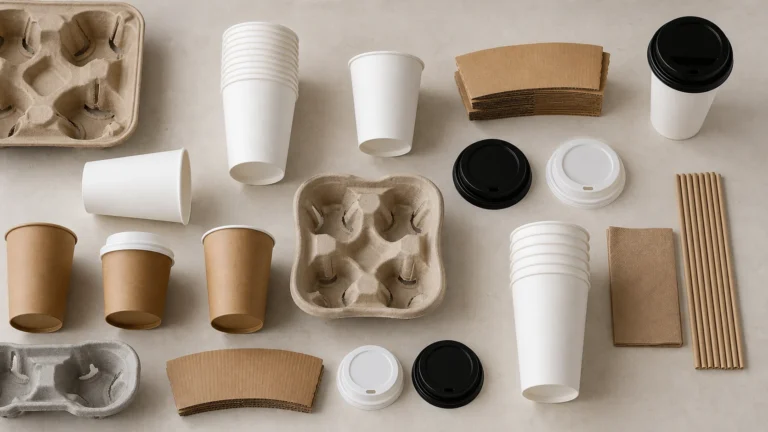
Ready to create your own branded paper cups or packaging?
Tell us your requirements — size, coating, printing, and destination — and our team will prepare a detailed quotation within 24 hours.

Last Updated: November 2025
Reading Time: 10 minutes
Author: Papacko Content Team
Your café proudly switched to “eco-friendly” PLA coated paper cups six months ago, only to discover your city’s recycling facility rejects them, the composting service requires separate collection, and customers complain the cups soften with hot drinks after 15 minutes. Meanwhile, the coffee shop across the street uses water-based coating cups that actually get recycled, cost 20% less, and customers never complain about structural integrity.
The choice between PLA coated paper cups and water-based coating isn’t just about “being eco-friendly”—it requires understanding performance trade-offs, local waste infrastructure, actual recyclability vs marketing claims, cost implications, and realistic customer behavior. The coating you choose determines whether your cups truly divert waste from landfills or simply greenwash your operation while creating new problems.
In this guide, you’ll learn:
•What PLA and water-based coatings actually are (chemistry explained simply)
•Performance comparison: heat resistance, moisture barrier, durability
•Recyclability reality: infrastructure requirements and acceptance rates
•Compostability requirements and facility availability
•Cost analysis: material, disposal, and total ownership
•How to choose based on your local waste management system
•Common misconceptions and marketing traps
💡 Quick Takeaway: PLA coated paper cups are commercially compostable (90-180 days in industrial facilities) but NOT recyclable and NOT home compostable.
Water-based coating cups are potentially recyclable (infrastructure-dependent), perform similarly for cold drinks, struggle with hot beverages above 85°C for extended periods.
Cost difference: PLA coating +15-25% vs water-based.
Critical decision factor: local waste infrastructure availability.
PLA makes sense ONLY if commercial composting access exists; water-based coating better for markets with paper recycling programs.
PE coating (traditional plastic) outperforms both for pure performance but offers zero end-of-life benefits.
Paper cups require moisture barriers because untreated paperboard absorbs liquid within seconds. The coating type determines performance, recyclability, and end-of-life options.
PLA (Polylactic Acid) = Bioplastic derived from plant starches (typically corn, sugarcane, or cassava)
Production Process:
1.Extract starch from plants
2.Ferment starch into lactic acid
3.Polymerize lactic acid into long-chain polylactic acid
4.Apply as 15-25 gsm (grams per square meter) coating to paperboard
Key Properties:
•Bio-based (not petroleum-based like traditional plastic)
•Commercially compostable in 90-180 days at 55-60°C with proper moisture and microbes
•NOT home compostable (requires industrial conditions)
•NOT recyclable in standard paper streams (contaminates fiber recovery)
•Temperature limit: Softens at 55-60°C, unsuitable for hot drinks above 85°C for extended periods
Common Marketing Claims vs Reality:
•✅ Claim: “Compostable” → TRUE, but requires commercial facility
•❌ Claim: “Biodegradable” → Misleading (only under specific industrial conditions, not general environment)
•❌ Claim: “Recyclable” → FALSE (contaminates paper recycling)
•❌ Claim: “Better for environment” → Depends (only if commercial composting exists)
Water-Based Dispersion Coating = Polymer particles suspended in water, applied and dried onto paperboard
Composition:
•Acrylic or styrene-acrylic copolymer (15-25% of coating)
•Water (70-80% during application, evaporates during drying)
•Additives for adhesion and flexibility (5-10%)
•Applied as 12-20 gsm coating
Key Properties:
•Reduced plastic content (60-80% less than PE coating)
•Potentially recyclable (infrastructure and facility-dependent)
•NOT compostable (won’t break down in composting facilities)
•Temperature resistance: Good up to 80-85°C for cold/warm drinks
•Performs well for cold drinks, adequate for warm drinks, limited for very hot drinks
Common Marketing Claims vs Reality:
•✅ Claim: “Recyclable” → PARTIALLY TRUE (facilities must accept, not universal)
•❌ Claim: “Plastic-free” → FALSE (contains acrylic polymers, but less than traditional)
•✅ Claim: “Reduced plastic” → TRUE (60-80% less than PE coating)
•? Claim: “Eco-friendly” → Depends (only if recycling infrastructure exists)
PE (Polyethylene) = Petroleum-based plastic, industry standard for decades
Key Properties:
•Excellent moisture barrier for hot and cold drinks
•Temperature resistant: Handles 95°C+ without softening
•Lowest cost option
•NOT recyclable (plastic lamination prevents fiber recovery)
•NOT compostable (petroleum-based plastic)
•Zero end-of-life benefits (landfill only)
Why still widely used: Proven performance, lowest cost, no infrastructure dependency
Real-world performance determines customer satisfaction and operational reliability.
Cold Drinks (5-15°C):
•PLA Coating: Excellent (no issues)
•Water-Based: Excellent (no issues)
•PE Coating: Excellent (baseline standard)
Verdict: All coatings perform equally well for cold beverages like iced coffee, smoothies, juice.
Warm Drinks (60-70°C):
•PLA Coating: Good (suitable for 20-30 minutes)
•Water-Based: Good (suitable for 20-30 minutes)
•PE Coating: Excellent (baseline standard)
Verdict: PLA and water-based adequate for warm drinks, with slight softening after 30+ minutes.
Hot Drinks (80-95°C):
•PLA Coating: Limited (softens after 10-15 minutes, risk of structural failure)
•Water-Based: Adequate (handles 80°C, struggles above 85°C)
•PE Coating: Excellent (handles 95°C+ indefinitely)
Verdict: For traditional hot coffee (85-95°C), PE remains superior. PLA and water-based work better for slightly cooled coffee or double-wall cups that reduce liquid temperature.
Test Method: Fill cup, wait 60 minutes, measure moisture penetration into paperboard
PLA Coating (15-25 gsm):
•Cold drinks: Zero penetration
•Hot drinks: Minimal penetration (<5%) if within temperature limit
•Problem: Coating can separate from paperboard if overheated
Water-Based Coating (12-20 gsm):
•Cold drinks: Zero penetration
•Hot drinks (80°C): <3% penetration
•Hot drinks (90°C): 5-10% penetration (noticeable softening)
•Advantage: Better adhesion to paperboard (less separation risk)
PE Coating (18-22 gsm):
•Cold drinks: Zero penetration
•Hot drinks: Zero penetration at any serving temperature
•Industry baseline: What customers expect from traditional cups
30-Minute Hold Test (simulates typical consumption time):
Real-World Impact:
•PLA for hot coffee: 5-8% customer complaints about softening/leaking
•Water-based for hot coffee: 2-4% complaints
•PE for hot coffee: <1% complaints (baseline expectation)
#### Coating Performance Comparison Matrix
 eco-friendly paper cups with alternative coatings – Papacko green packaging” style=”border-radius: 8px; box-shadow: 0 2px 8px rgba(0,0,0,0.08);”/>
Marketing claims mean nothing without compatible local waste infrastructure.
Commercial Composting Facility Requirements:
•Temperature: 55-60°C maintained consistently
•Moisture: 50-60% humidity
•Oxygen: Regular turning/aeration
•Time: 90-180 days
•Microorganisms: Specific bacteria and fungi present
Certifications:
•BPI (Biodegradable Products Institute) – North America
•EN 13432 – Europe
•AS 4736 – Australia/New Zealand
Reality Check:
•US commercial composting facilities: ~300 nationwide (serves ~15% of population)
•Facilities accepting food-service ware: ~185 (62% of total composting facilities)
•Facilities specifically accepting PLA cups: ~120 (40% of total)
Result: If you use PLA cups without commercial composting access, they’re functionally equivalent to landfill-bound trash. No environmental benefit over PE coating.
Customer Behavior Problem:
•Most customers don’t know PLA cups require special handling
•75-80% of PLA cups end up in trash, not composting bins
•10-15% mistakenly thrown in recycling (contaminates paper stream)
•Only 5-10% actually reach commercial composting facilities
Paper Recycling Facility Requirements:
•Pulping system that handles mixed coatings
•Screening or flotation to remove non-fiber materials
•Quality control for coating residue levels
•Market demand for recycled paperboard with coating residue
Acceptance Criteria (varies by facility):
•Coating must separate from fiber during pulping
•Residual coating <2% of final pulp weight
•No contamination of recycled paper products
Reality Check:
•US paper recycling facilities: 400+ nationwide
•Facilities accepting food-service paperboard: ~200 (50%)
•Facilities specifically accepting water-based coated cups: ~80-100 (20-25%)
Geographic Availability:
•Strong: Western Europe (Germany, Netherlands, Scandinavia), California, Oregon, Washington
•Moderate: US Northeast, parts of Canada
•Weak: US Southeast, Midwest, most developing markets
Important Limitation: Even where accepted, actual recycling rate for food-service paperboard is only 20-35% (vs 65% for office paper).
Recyclability: Not recyclable in paper stream (plastic lamination prevents fiber recovery)
Compostability: Not compostable (petroleum-based plastic doesn’t break down)
End-of-Life: Landfill only
Environmental Impact:
•Contributes to landfill volume
•No nutrient return to soil (vs composting)
•Plastic coating persists for decades
•But: Well-understood disposal, no infrastructure dependency, no confusion
Why Still Used: Performance reliability, cost-efficiency, no false environmental promises
Understanding total cost beyond unit price reveals true economic impact.
Standard 12oz Hot Coffee Cup Comparison:
PLA Coated Cup: $0.10-0.14 per unit (MOQ: 20,000-50,000)
•Premium: +15-25% vs water-based, +35-50% vs PE
•Justification: Bio-based materials, specialized production
•Volume breaks: Limited (narrow supplier base)
Water-Based Coated Cup: $0.08-0.12 per unit (MOQ: 20,000-50,000)
•Premium: +12-20% vs PE
•Justification: Newer technology, lower production volumes
•Volume breaks: Moderate (growing supplier base)
PE Coated Cup: $0.07-0.09 per unit (MOQ: 20,000-50,000)
•Baseline pricing (industry standard for decades)
•Highest volume production = lowest cost
•Maximum volume breaks available
PLA Cups with Commercial Composting (if available):
•Composting service: $150-300/month for café (covers all compostables)
•Collection frequency: Weekly
•Education overhead: Signage ($100 one-time), staff training (2 hours)
•Customer contamination: 15-20% (reduces composting efficiency)
Water-Based Cups with Recycling (if accepted):
•Recycling service: Usually included in standard waste service ($0 incremental)
•Collection frequency: Weekly (same as paper/cardboard)
•Education overhead: Minimal (customers understand recycling)
•Customer participation: 40-50% (higher than composting)
Any Cup without Compatible Infrastructure:
•Trash service: Standard commercial waste ($100-200/month baseline)
•No environmental benefit
•No customer education needed (but brand perception risk if eco claims made)
PLA Cups Premium Positioning:
•Enables “compostable packaging” marketing claim (if infrastructure exists)
•Appeals to eco-conscious customers (willingness to pay 5-10% premium)
•Differentiation from competitors using PE
•Risk: Greenwashing backlash if no composting available
Water-Based Cups Transparency Positioning:
•“Recyclable where accepted” (honest, less impressive than compostable)
•“Reduced plastic content” (factual, less emotional appeal)
•Lower brand risk (no false promises)
PE Cups Traditional Positioning:
•No eco claims (honest)
•Focus on quality, reliability, value
•No risk of eco-backlash
Estimated Marketing Value:
•PLA: $0.05-0.10 per cup in brand value (eco-conscious markets)
•Water-based: $0.02-0.05 per cup
•PE: $0 (but also $0 risk)
#### Total Cost of Ownership Analysis (1000 cups)
Key Insight: Water-based coating offers best total economics IF recycling infrastructure exists. PLA competitive only if brand premium offsets higher material and failure costs.
Decision framework based on waste infrastructure, customer base, and operational priorities.
Step 1: Assess Local Waste Infrastructure
Question: Does your city have commercial composting that accepts food-service ware?
•YES → PLA coating is viable option, proceed to Step 2
•NO → Skip PLA, proceed to Step 2 with water-based vs PE
Question: Does your recycling facility accept water-based coated cups?
•YES → Water-based coating is viable, proceed to Step 2
•NO → Only PE coating makes practical sense
•UNKNOWN → Contact waste hauler, request acceptance confirmation
Step 2: Evaluate Customer Base and Brand Positioning
Question: Do customers value sustainability claims enough to pay 5-10% premium?
•YES → If infrastructure exists, invest in PLA or water-based
•NO → Stick with PE for pure performance/value
Question: Are customers willing to tolerate slight performance trade-offs (softening for hot drinks)?
•YES → PLA or water-based acceptable
•NO → PE coating required for customer satisfaction
Step 3: Calculate Total Cost of Ownership
Use the TCO formula:
TCO = (Cup Cost + Disposal Cost + Education Cost + Failure Cost) – Brand Value
If PLA TCO < PE TCO AND composting exists → Choose PLA If Water-Based TCO < PE TCO AND recycling exists → Choose Water-Based Otherwise → Choose PE
## Common Misconceptions and Marketing Traps
Avoid these frequent misunderstandings that lead to poor decisions.
❌ Misconception #1: “PLA is biodegradable, so it’s better for environment”
Reality: PLA only degrades in industrial composting facilities at 55-60°C with specific microbes. In landfills or natural environment, PLA persists similarly to traditional plastic (decades to centuries). Without commercial composting access, PLA offers ZERO environmental advantage over PE.
Correct Understanding: PLA is conditionally compostable (infrastructure-dependent), not universally biodegradable.
❌ Misconception #2: “Water-based coating means plastic-free”
Reality: Water-based coatings contain acrylic or styrene-acrylic polymers—still plastic, just less of it (60-80% reduction vs PE). “Water-based” refers to application method (polymer suspended in water during coating), not final composition.
Correct Understanding: Water-based = reduced plastic, not plastic-free. Still performs moisture barrier function via polymer coating.
❌ Misconception #3: “All recycling facilities accept recyclable cups”
Reality: “Recyclable” means theoretically possible to recycle, not universally accepted. Only 20-25% of US recycling facilities accept water-based coated cups. Always verify local acceptance before making recyclability claims.
Correct Understanding: Recyclability is infrastructure-dependent. Confirm local facility acceptance before marketing as recyclable.
❌ Misconception #4: “Compostable cups can go in home compost”
Reality: PLA cups require commercial composting conditions (55-60°C, specific microbes, 90-180 days). Home compost piles typically reach only 40-45°C and lack necessary microorganisms. PLA cups won’t break down in home compost.
Correct Understanding: Commercial composting ≠ home composting. PLA requires industrial facilities.
❌ Misconception #5: “Eco-friendly coating performs as well as traditional plastic”
Reality: PE coating outperforms both PLA and water-based for hot drinks above 85°C. PLA and water-based adequate for cold/warm drinks, but involve performance trade-offs for very hot beverages. Choose based on actual serving temperature.
Correct Understanding: Performance trade-offs exist. Match coating to application (cold drinks = any coating fine; hot drinks = PE superior).
PLA coated paper cups use polylactic acid (bioplastic derived from plant starches like corn or sugarcane) as a 15-25 gsm moisture barrier coating on paperboard. They’re commercially compostable in 90-180 days at industrial facilities (55-60°C with specific microbes) but NOT recyclable in paper streams and NOT home compostable. Best for cold drinks and warm drinks up to 60°C; soften with very hot drinks above 85°C after 10-15 minutes.
PLA cups are better for the environment ONLY if commercial composting infrastructure exists and cups actually reach composting facilities. Without composting access, they offer zero environmental benefit over traditional PE cups and functionally become landfill waste. Reality: Only 5-10% of PLA cups reach commercial composting; 75-80% go to landfill. They’re better only when infrastructure and customer behavior align.
Water-based coating cups are potentially recyclable, but acceptance varies by facility. Only 20-25% of US recycling facilities accept them. They work best where paper recycling programs explicitly accept food-service paperboard with water-based coatings. Always verify with your local waste hauler before making recyclability claims. Actual recycling rate: 20-35% even where accepted (vs 65% for office paper).
PE coating remains superior for hot coffee (85-95°C), maintaining structural integrity indefinitely. Water-based coating adequate for drinks up to 80-85°C for 20-30 minutes (2-4% complaint rate). PLA coating struggles above 60°C, with softening after 10-15 minutes (5-8% complaint rate). For traditional hot coffee service, PE outperforms alternatives. For slightly cooled coffee or double-wall cups, water-based acceptable.
PLA coated cups cost 15-25% more than water-based coating and 35-50% more than PE coating. Price ranges: PLA ($0.10-0.14/unit), water-based ($0.08-0.12/unit), PE ($0.07-0.09/unit) for standard 12oz hot cups at typical wholesale MOQs. Total cost of ownership (including disposal, education, and failure rates) narrows this gap but PLA remains most expensive option in most scenarios.
No. PLA cups require commercial composting conditions: 55-60°C temperature, specific microorganisms, proper moisture and aeration, and 90-180 days. Home compost piles typically reach only 40-45°C and lack necessary bacteria/fungi. PLA cups won’t break down in home compost and may contaminate the pile. Commercial composting facility access is mandatory for PLA cups to fulfill their compostability potential.
Choose based on local waste infrastructure: (1) If commercial composting exists and accepts food-service ware → PLA viable, (2) If paper recycling accepts water-based coated cups → water-based viable, (3) If neither infrastructure exists → PE coating most practical. Then consider: drink temperature (cold/warm = any coating; hot = PE better), customer expectations (eco-conscious = invest in alternative; price-sensitive = PE), and total cost of ownership (calculate with disposal and failure rates).
The choice between PLA coated paper cups and water-based coating isn’t about which is universally “better”—it’s about matching coating technology to your local waste infrastructure, serving temperature, customer expectations, and total cost requirements. Both alternatives offer environmental benefits over traditional PE coating, but only when compatible systems exist to process them at end-of-life.
Key Takeaways:
1.PLA coated paper cups deliver environmental benefits ONLY with commercial composting access—without infrastructure, they’re functionally equivalent to landfill-bound PE cups
2.Water-based coating cups offer better hot drink performance than PLA (adequate up to 80-85°C) and potential recyclability where paper facilities accept them
3.Total cost of ownership (material + disposal + education + failures – brand value) often favors water-based coating for best economics
4.PE coating still outperforms both alternatives for hot drinks above 85°C—performance trade-offs exist with eco-friendly options
5.Infrastructure availability (commercial composting for PLA, specialized recycling for water-based) determines which coating delivers genuine environmental impact vs greenwashing
For cafés and food service operations, honest assessment of local waste systems combined with transparent customer communication about coating limitations builds more credibility than making unverified “eco-friendly” claims. Choose the coating that aligns with actual infrastructure availability, deliver genuine environmental benefits, and set realistic customer expectations about performance and disposal.
Explore more food packaging solutions:
•Paper Cups & Coffee Packaging
•Eco Paper Cups Selection Guide
Papacko supplies paper cups with PLA coating, water-based coating, and traditional PE coating to cafés and food service operations worldwide. We provide honest guidance on coating selection based on your waste infrastructure, performance requirements, and sustainability goals.
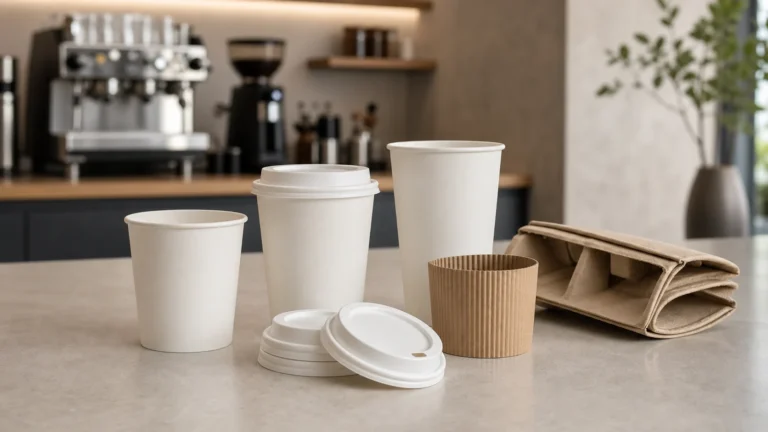
Cup-coating comparisons are most useful when they are tied to cold-drink applications, sustainability claims, and the accessory choices that affect the full beverage packaging system.
Get in touch:
Last Updated: November 2025
Content Team: Papacko
Reviewed by: Materials Science & Sustainability Department