Ready to create your own branded paper cups or packaging?
Tell us your requirements — size, coating, printing, and destination — and our team will prepare a detailed quotation within 24 hours.

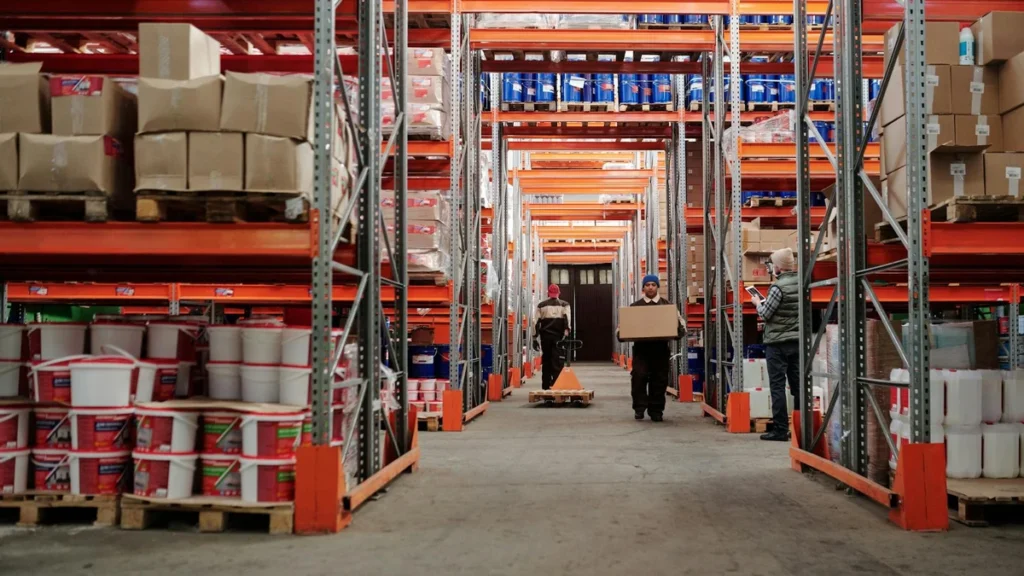
Your distribution company ordered 500,000 paper cups from an overseas supplier offering 35% lower prices than domestic options, only to discover 18% of the shipment arrived crushed from poor pallet stacking, another 12% had.
Last Updated: April 2026
Reading Time: 10 minutes
Author: Papacko Content Team
Your distribution company ordered 500,000 “>paper cups from an overseas supplier offering 35% lower prices than domestic options, only to discover 18% of the shipment arrived crushed from poor pallet stacking, another 12% had moisture damage from container condensation, and the remaining usable inventory had inconsistent GSM weights that caused complaints from 40% of your restaurant clients. The $12,000 “savings” cost $28,000 in customer refunds, replacement shipments, and lost accounts.
Bulk paper cup sourcing isn’t just about finding low unit prices—it requires systematic supplier verification (certifications, capacity audits, sample testing), container loading optimization (preventing crushing and moisture damage), quality control protocols (pre-shipment inspection catching defects before shipping), and logistics planning (customs compliance, insurance, payment terms) that separate successful bulk importers from those learning expensive lessons. The difference between amateur and professional bulk sourcing can mean 15-30% landed cost variations and 5-20% quality failure rates.
In this guide, you’ll learn:
•Supplier evaluation: capacity verification, certification requirements
•MOQ negotiation strategies and break-even analysis
•Container loading optimization: preventing damage and maximizing density
•Quality control checkpoints: pre-production, in-line, pre-shipment inspection
•Customs and compliance: FDA, CE marking, documentation requirements
•Payment terms and trade finance for bulk orders
•Common mistakes costing importers thousands per shipment
💡 Quick Takeaway: Bulk paper cup imports require 50,000-500,000 unit MOQs, with 40ft container holding 1.8-2.5 million cups (8oz standard) or 800,000-1.2 million (16oz).
Critical specs: verify supplier ” target=”_blank” rel=”noopener”>ISO 9001 + FSC certification, conduct pre-shipment inspection (catches 80% of defects), optimize pallet stacking (8-10 pallets per container), and budget 8-12% of FOB value for shipping + duties + customs clearance.
Best pricing: FOB $0.015-0.025 per 8oz cup (250,000+ MOQ), landed cost $0.018-0.032 after logistics.
Typical lead time: 4-6 weeks production + 4-6 weeks ocean freight.
Insurance critical: $50-150 per $10,000 cargo value prevents total loss disasters.
Choosing reliable bulk suppliers prevents quality disasters and ensures consistent supply for distribution operations.
ISO 9001 (Quality Management) — Mandatory:
•Purpose: Verifies manufacturer has systematic quality control processes
•Verification: Request certificate copy, confirm validity on ISO database
•Red Flag: Supplier refuses to provide certificate or shows expired certification
•Impact: ISO-certified suppliers have 60-80% fewer quality defects vs non-certified
FSC/PEFC (Sustainable Forestry) — Increasingly Required:
•Purpose: Confirms paperboard sourced from responsibly managed forests
•Market Requirement: EU, US health-conscious brands increasingly mandate
•Chain of Custody: Certificate must show “FSC Mix” or “FSC 100%” claim
•Cost Impact: FSC-certified +3-8% vs non-certified, but prevents market access barriers
FDA Food Contact Compliance (US Markets):
•Requirement: All food-contact paper cups must meet FDA CFR Title 21
•Verification: Supplier provides FDA compliance test reports for coatings (PE, PLA)
•Testing: Migration testing shows no harmful chemical transfer to beverages
•Non-Compliance Risk: US Customs can seize entire shipment, $50,000-200,000 loss
CE Marking (EU Markets):
•Requirement: EU Regulation 1935/2004 for food contact materials
•Documentation: Declaration of Compliance (DoC) required at customs
•Testing Standards: EN 1230-2 for paper and board contact materials
•Failure Impact: Cannot legally sell in EU without compliance
Production Capacity Audit:
•Question: “What is your daily production capacity for [specific cup size]?”
•Verification Method: Request factory tour video or third-party audit report
•Warning Sign: Supplier claims 2 million cups/day but factory tour shows 4-6 production lines only (realistic capacity: 600,000-800,000/day for that setup)
•Capacity Buffer: Only commit to 60-70% of claimed capacity to ensure delivery reliability
Order History Verification:
•Request: References from current wholesale customers (3-5 contacts)
•Questions for References:
– Average defect rate on deliveries? (Acceptable: <2%, Warning: >5%)
– On-time delivery rate? (Target: 90%+, Red flag: <75%)
- Responsiveness to quality issues? (Fast resolution or dismissive?)
•Alibaba/Trade Platform Reviews: Check 50+ reviews, focus on detailed complaints
Financial Stability:
•Credit Report: Request company credit report (Dun & Bradstreet for China suppliers)
•Years in Business: Prefer 5+ years (stability indicator)
•Export License: Verify supplier holds legal export authorization
•Red Flag: Newly established trading company with no factory ownership (middlemen increase costs and reduce control)
Understanding MOQ drivers and break-even economics enables effective negotiation and cost optimization.
Small Sizes (4oz, 6oz, 8oz):
•Standard MOQ: 100,000-250,000 cups per size/design
•Rationale: Smaller cups = more cups per carton = easier to reach MOQ
•Container Capacity: 40ft container holds 2.0-2.5 million 8oz cups
•Single Container: Can mix 8-10 SKUs (different sizes/prints) in one container
Medium Sizes (12oz, 16oz):
•Standard MOQ: 50,000-150,000 cups per size/design
•Container Capacity: 40ft holds 1.2-1.5 million 12oz cups
•Pricing Sweet Spot: 100,000+ units achieves best unit cost
Large Sizes (20oz, 24oz):
•Standard MOQ: 30,000-100,000 cups per size/design
•Container Capacity: 40ft holds 800,000-1.0 million 20oz cups
•Consideration: Larger cups = lower density = may need FCL for best pricing
Example: 8oz PE-coated paper cups, 1-color print
Key Observations:
•Biggest price drop: 50k → 250k (saves $0.011/cup = $2,750 on 250k order)
•Diminishing returns: 500k → 1M (saves only $0.002/cup = $2,000 on additional 500k)
•Sweet Spot for Most Distributors: 250,000-500,000 balances price vs inventory carrying cost
Tactic #1: Multi-SKU Consolidation
•Strategy: Commit to high total volume across multiple cup sizes
•Example: “I’ll order 100k of 8oz + 100k of 12oz + 50k of 16oz = 250k total. Apply your 250k tier pricing to all SKUs.”
•Supplier Incentive: Larger total order justifies better pricing on individual SKUs
Tactic #2: Long-Term Partnership Commitment
•Strategy: Indicate repeat ordering intention to secure better initial pricing
•Approach: “This is a test order for 100k units. If quality satisfies, we’ll reorder 200k-300k quarterly. Can you offer future-volume pricing now?”
•Result: Suppliers often reduce initial order price by 5-10% to secure recurring business
Tactic #3: Competitor Benchmarking
•Strategy: Obtain 2-3 quotes, use lowest to negotiate with preferred supplier
•Approach: “Supplier B quoted $0.019/cup for 250k units. Your product quality is better—can you match $0.020?”
•Important: Be truthful (suppliers verify competitor pricing), only use with legitimately preferred supplier
Tactic #4: Payment Terms Trade-Off
•Strategy: Offer faster payment in exchange for lower unit price
•Example: “Standard terms are 30% deposit + 70% before shipment. I’ll pay 50% deposit + 50% on production completion (before inspection) for 3% price reduction.”
•Supplier Benefit: Improved cash flow, reduced payment risk
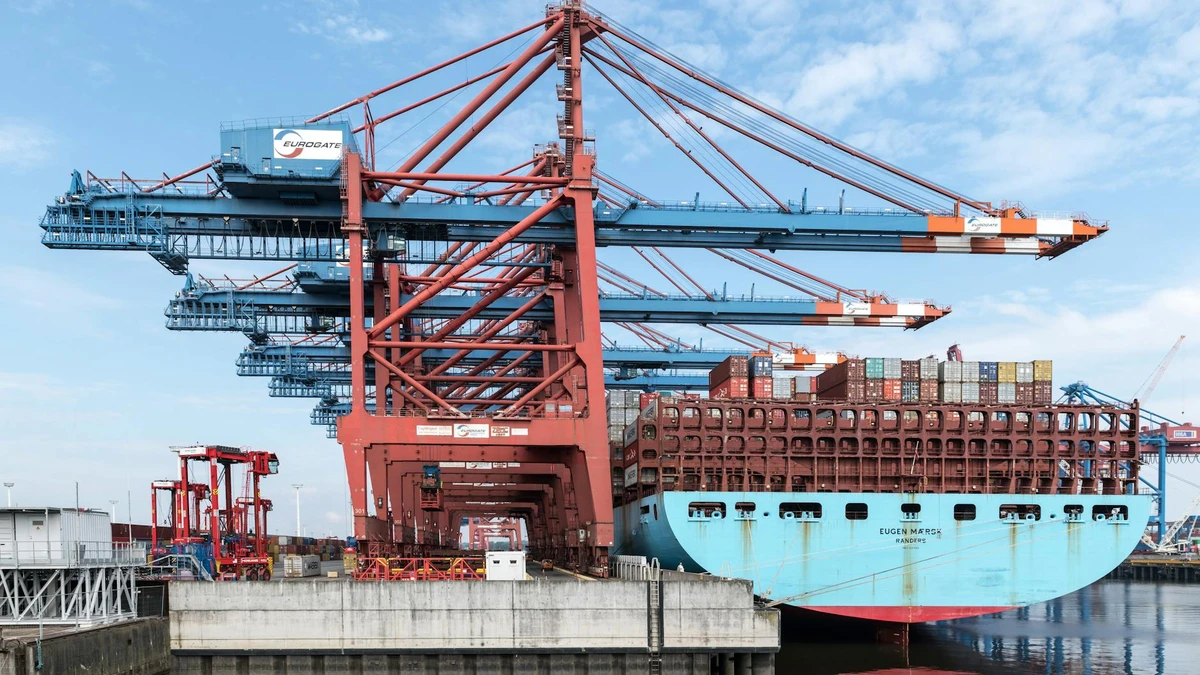
Proper container loading prevents 10-20% product damage common in poorly planned shipments.
20ft Standard Container:
•Internal Dimensions: 5.9m L × 2.35m W × 2.39m H
•Max Weight: 28,000 kg gross (25,000 kg cargo typical limit)
•Capacity (8oz cups): 900,000-1.2 million cups
•Capacity (16oz cups): 400,000-600,000 cups
•Use Case: Smaller orders, mixed SKU shipments, testing new supplier
40ft Standard Container:
•Internal Dimensions: 12.03m L × 2.35m W × 2.39m H
•Max Weight: 30,000 kg gross (27,000 kg cargo typical limit)
•Capacity (8oz cups): 1.8-2.5 million cups
•Capacity (16oz cups): 800,000-1.2 million cups
•Use Case: Standard bulk orders, best cost per cup for shipping
40ft High Cube (HC) Container:
•Internal Dimensions: 12.03m L × 2.35m W × 2.69m H (+30cm height)
•Advantage: +10-15% capacity for lightweight goods (paper cups)
•Capacity (8oz cups): 2.0-2.8 million cups
•Cost Premium: +$100-200 vs standard 40ft (freight cost)
•Use Case: Maximizing volume when weight not limiting factor
Standard Pallet Size: 1200mm × 1000mm (Euro pallet) or 1200mm × 1200mm (American pallet)
Pallet Loading Density (8oz cups, carton size 50 cups):
•Cartons per Layer: 16-20 cartons (depending on carton dimensions)
•Layers per Pallet: 8-12 layers (max height ~2.2m for container stacking)
•Cups per Pallet: 6,400-12,000 cups (128-240 cartons × 50 cups)
Container Pallet Configuration:
•20ft Container: 8-10 pallets (single row, 2 wide)
•40ft Container: 20-22 pallets (double row, 2 wide × 10-11 deep)
•40ft HC: 22-24 pallets (taller stacking possible)
Problem #1: Crushing from Overstacking
•Cause: Bottom pallets compressed by weight of 10+ pallets above
•Solution: Limit stack height to 10 pallets max, use corner boards for pallet stability
•Reinforcement: Double-wall cartons for bottom layers (+$0.10-0.15 per carton, prevents 80% of crushing)
Problem #2: Moisture Damage from Container Condensation
•Cause: Temperature differential (hot exterior, cool cargo) → water condenses on container ceiling → drips onto cartons
•Solution: Container desiccants (2-4 units per 40ft container, $30-60 total cost)
•Additional: Wrap pallets in shrink wrap (creates moisture barrier around each pallet)
Problem #3: Shifting During Transit
•Cause: Containers experience lateral forces (ship rolling, truck turning) → pallets slide → cartons fall
•Solution: Load locking bars securing pallets against container walls ($50-100 per container)
•Strapping: Horizontal straps around pallet groups prevent shifting
#### Container Loading Optimization Checklist
Total Damage Prevention Investment: ~$200-400 per 40ft container
Typical Damage Without Prevention: 10-20% product loss = $1,500-3,000 (on $15,000 cargo value)
ROI: 375-750% (invest $400 to prevent $1,500-3,000 loss)
Systematic quality control catches defects before shipping, preventing expensive customer complaints and returns.
Stage 1: Pre-Production Inspection (PPI)
•Timing: Before mass production starts, after samples approved
•Purpose: Verify raw materials match specifications
•Checkpoints:
– Paperboard GSM weight (within ±5% of spec)
– Coating type/thickness (PE, PLA) via lab test
– Printing plates match approved artwork (colors, dimensions)
– Production equipment calibrated (cup forming, lid sealing)
•Cost: $200-400 per inspection visit
•Value: Catches 40% of potential defects at earliest stage (cheapest to fix)
Stage 2: During Production Inspection (DUPRO)
•Timing: When 30-50% of order completed
•Purpose: Verify production quality consistency, catch issues before full run completed
•Checkpoints:
– Random sample testing (50-100 cups from production line)
– Dimensions: height, rim diameter, bottom diameter (±1mm tolerance)
– Weight consistency (±3% variation acceptable)
– Printing alignment/quality (logo centered, colors match Pantone)
– Structural defects: leaking, weak seams, rim deformation
•Cost: $250-500 per visit
•Value: Allows mid-course corrections, prevents 30% of defects from reaching finished goods
Stage 3: Pre-Shipment Inspection (PSI) ⭐ Critical:
•Timing: When 100% production complete, before container loading
•Purpose: Final verification before committing to shipment
•Sampling Standard: AQL 2.5 (Acceptable Quality Level)
– For 100,000 cup order: Inspect 315 random samples
– Major defects allowed: 0 (leaking, unable to use)
– Minor defects allowed: 10 (cosmetic issues not affecting function)
•Rejection Criteria:
– Major defect rate >0%: Reject entire batch
– Minor defect rate >3%: Negotiate rework or discount
•Cost: $300-600 per inspection
•Value: Catches 80% of remaining defects before shipping (most cost-effective intervention point)
Critical Defects (0% acceptable):
•Leaking cups (seam failure, coating gaps)
•Structural collapse (can’t stand when filled)
•Hazardous material presence (toxicity in coating)
Major Defects (<0.5% acceptable):
•Rim deformation preventing lid fit
•Printing misalignment >3mm
•Significant color mismatch (ΔE >5 vs Pantone target)
•Carton moisture damage (>5% RH above ambient)
Minor Defects (<3% acceptable):
•Small printing imperfections (minor ink spots)
•Slight dimension variance (±2-3mm on non-critical dimensions)
•Carton labeling errors (incorrect count on <5% of cartons)
Proper documentation and compliance prevent costly customs delays and rejection at ports.
Commercial Invoice:
•Purpose: Customs valuation, duty calculation
•Must Include:
– Detailed product description (“Disposable paper cups, 8oz, PE-coated”)
– HS Code: 4823.69.00 (paper tableware, not trays/dishes/plates)
– Quantity, unit price, total value (FOB)
– Payment terms (T/T, L/C, etc.)
– Supplier and buyer full details
•Common Error: Vague description (“paper products”) triggers customs inspection delay
Packing List:
•Purpose: Cargo verification, damage assessment
•Must Include:
– Carton-by-carton breakdown (carton #, contents, quantity)
– Gross/net weight per carton and total
– Pallet configuration (cartons per pallet, pallet count)
– Carton dimensions for freight calculation
Bill of Lading (B/L):
•Purpose: Proof of cargo ownership, required to claim goods at destination
•Types:
– Original B/L: Transferable ownership document (3 originals issued)
– Telex Release: Electronic release (faster, no physical document shipping)
– Sea Waybill: Non-negotiable, direct to consignee (cannot transfer ownership en route)
•Critical: Without B/L, cargo remains at port incurring storage fees ($50-150/day)
Certificate of Origin (CoO):
•Purpose: Qualify for preferential duty rates under trade agreements (FTA)
•Benefit: Can reduce import duty from 6.5% to 0% (US-China trade, if eligible)
•Issuance: Chamber of Commerce in exporting country
•Cost: $50-150 per certificate
FDA Prior Notice (US Imports):
•Requirement: Food-contact items require FDA notification 4 hours before arrival (ocean) or 2 hours (air)
•Filing: Via FDA PNSI system, includes product details, manufacturer, arrival port/date
•Failure: Cargo held at port, $500-2,000 demurrage fees + inspection costs
EU Declaration of Compliance (DoC):
•Requirement: Supplier provides written declaration that cups meet EU Regulation 1935/2004
•Content: Material composition, intended use, test reports showing no migration
•Validation: Retain for 5 years, present to authorities if requested
HS Code 4823.69.00: Paper cups and similar articles
US Import Duties:
•Standard MFN Rate: 0% (paper tableware duty-free under most conditions)
•Exceptions: Coated paper products may incur 3.3-6.5% depending on coating type/origin
•Verification: Check USITC Harmonized Tariff Schedule for current rates
EU Import Duties:
•Standard Rate: 2.5-4.2% depending on member country and product coating
•VAT: Additional 19-27% (varies by country, e.g., Germany 19%, Hungary 27%)
Example Landed Cost Calculation (40ft container, 1 million 8oz cups, $18,000 FOB):
Unit Landed Cost: $24,035 / 1,000,000 = $0.024 per cup
•FOB: $0.018/cup
•Markup from FOB to Landed: +33% (typical for bulk imports)
Balancing payment security and supplier relations determines successful long-term sourcing.
100% T/T Advance (Bank Wire Transfer, full prepayment):
•Buyer Risk: Maximum (supplier could fail to deliver, quality issues, no recourse)
•Supplier Benefit: Zero risk, immediate cash flow
•When Acceptable: Small test orders (<$5,000), established trusted suppliers with 5+ years history
•Negotiation Leverage: Demand 5-10% discount for assuming all risk
30% Deposit + 70% Before Shipment ⭐ Most Common:
•Buyer Risk: Moderate (30% at risk if production issues, but 70% withheld until quality verified)
•Supplier Benefit: Deposit covers raw material costs, balance ensures payment
•Protection: Withhold 70% until PSI (pre-shipment inspection) passes
•Industry Standard: 90% of bulk paper cup transactions use this structure
Letter of Credit (L/C):
•Mechanism: Bank guarantees payment if supplier provides compliant documents
•Buyer Protection: Payment only released when documents prove shipment compliance
•Supplier Protection: Guaranteed payment if they meet terms (no buyer payment default)
•Cost: 0.5-2% of order value (bank fees), $200-500 issuance fee
•Best For: First-time suppliers, large orders ($50,000+), high-risk countries
Open Account (Net 30/60/90):
•Terms: Supplier ships goods, buyer pays 30-90 days after receipt
•Buyer Risk: Low (inspect goods before payment)
•Supplier Risk: Maximum (buyer could default after receiving goods)
•When Used: Long-established relationships (3+ years, 10+ successful orders), buyers with strong credit
Escrow Services:
•Mechanism: Third party holds payment until buyer confirms goods received as specified
•Platforms: Alibaba Trade Assurance, Payoneer Escrow
•Cost: 1-3% of transaction
•Protection: If goods don’t match agreement, escrow refunds buyer
Inspection Contingency Clause:
•Contract Language: “70% balance payment released only after third-party PSI confirms <2% defect rate and compliance with specifications dated [X]"
•Enforcement: Supplier accepts PSI result as binding for payment release
•Inspector: Use independent inspection companies (SGS, Bureau Veritas, Intertek)
Partial Shipment with Quality Hold-Back:
•Strategy: For very large orders (5+ containers), ship first container as quality test
•Terms: “First container payment 30%+70%. If quality acceptable, remaining 4 containers proceed with 30%+70% each. If first container fails, order cancelled with 30% deposit forfeit only.”
•Protection: Limits exposure to 1 container value (~$25,000) vs full order value ($125,000)
Learn from these frequent errors that cost bulk importers 15-30% of order value.
❌ Mistake #1: Skipping Pre-Shipment Inspection to Save $400
Problem: Ordering 500,000 cups ($15,000 value), skipping PSI to save $400 inspection fee. Discover 15% defect rate (75,000 cups unusable) after goods arrive. Loss: $2,250 + customer complaints.
Correct Approach: Always conduct PSI for orders $5,000+ ($300-600 cost). Catches 80% of defects before shipping. ROI: 375-750% (saves $2,000-3,000 in defects per $400 spent).
❌ Mistake #2: Ordering Mixed Container Without SKU-Level MOQ Verification
Problem: Ordering 10 different cup sizes/designs in one 40ft container (25,000 each). Supplier later reveals 50,000 MOQ per SKU—order only possible with 5 SKUs (100,000 each). Wasted time, missed shipping window.
Correct Approach: Confirm MOQ applies per SKU, not total container value. If mixing SKUs, verify each meets individual MOQ before finalizing order.
❌ Mistake #3: Ignoring Container Desiccants to Save $50
Problem: Shipping during humid season without desiccants. 12-18% of cartons experience moisture damage from container condensation. Loss: $1,800-2,700 on $15,000 shipment.
Correct Approach: Always use 2-4 container desiccants ($30-60 total). Prevents 90% of moisture damage. Tiny investment prevents 10-20% cargo loss.
❌ Mistake #4: Paying Full Balance Before Quality Verification
Problem: Paying 30% deposit + 70% balance upon production completion (before PSI). Discover 8% defect rate during PSI—but money already paid, leverage lost. Supplier offers 3% discount (insufficient compensation).
Correct Approach: Payment terms must tie 70% balance to PSI approval: “Balance released within 48 hours of passing PSI with <2% defect rate." Protects leverage for quality negotiation.
❌ Mistake #5: Underestimating Total Landed Cost
Problem: Supplier quotes $0.020 FOB per cup. Importer budgets $0.022 landed (assumes 10% markup). Reality: $0.027 landed after freight, duties, port fees, inland transport. Pricing to customers based on $0.022 → selling at loss.
Correct Approach: Budget 30-40% markup from FOB to landed cost (not 10%). Use landed cost calculator including all fees: freight, insurance, duty, brokerage, port charges, transport, inspection, miscellaneous. Validate with freight forwarder before committing.

MOQ varies by cup size: 8oz/12oz typically 100,000-250,000 units, 16oz/20oz require 50,000-150,000 units. Container capacity drives economics—40ft container holds 1.8-2.5 million 8oz cups or 800,000-1.2 million 16oz cups. Suppliers set MOQ based on production run efficiency (setup costs amortize across larger quantities). Best pricing achieved at 250,000-500,000 units per SKU, with 30-50% savings vs small orders (50,000 units).
FOB pricing (from Asia suppliers): 8oz cups $0.015-0.025 per cup (250,000+ MOQ), 12oz $0.020-0.032, 16oz $0.025-0.040. Landed cost (after shipping, duties, logistics): add 30-40% to FOB = $0.020-0.035 for 8oz. Factors affecting price: material (PE vs PLA coating, +20-30% for PLA), printing (1-color cheapest, full-color +40-60%), certifications (FSC +3-8%). Volume discounts: 100k→250k saves 19%, 250k→500k saves additional 14%.
Total timeline: 8-12 weeks. Production: 4-6 weeks (includes pre-production inspection, manufacturing, quality control). Ocean freight: 4-6 weeks (Asia→US West Coast 18-25 days, Asia→US East Coast/Europe 35-45 days). Customs clearance: 3-7 days (assuming proper documentation). Air freight alternative: 7-10 days total but costs 3-5× ocean freight (only economical for urgent small orders <5,000 kg).
Three-stage inspection critical: (1) Pre-production inspection (PPI) verifies raw materials match specs before production starts ($200-400, catches 40% of potential defects), (2) During-production inspection (DUPRO) at 30-50% completion checks consistency ($250-500, enables mid-course corrections), (3) Pre-shipment inspection (PSI) verifies 100% completed order against AQL 2.5 standard before loading ($300-600, catches 80% of remaining defects). PSI most cost-effective—invest $400 to prevent $2,000-3,000 in customer returns/complaints.
Mandatory: Commercial invoice (customs valuation, duty calculation), packing list (cargo verification), bill of lading (proof of ownership), Certificate of Origin (duty rate qualification under FTA). US-specific: FDA Prior Notice (4 hours before arrival for food-contact items). EU-specific: Declaration of Compliance (EU Regulation 1935/2004 conformity). Optional but recommended: inspection reports (PSI), insurance certificate, phytosanitary certificate (if paperboard origin from regulated countries). Missing documents cause port delays costing $50-150/day in storage fees.
Five-point damage prevention: (1) Container desiccants (2-4 units per 40ft, $30-60) eliminate condensation moisture damage (15-20% of failures), (2) Pallet shrink wrap creates moisture barrier + stability ($5-10/pallet), (3) Double-wall cartons for bottom 3 pallet layers prevent crushing ($0.10-0.15/carton, stops 30-40% of damage), (4) Load locking bars secure pallets against container walls preventing shifting ($50-100/container, prevents 10-15% damage), (5) Corner boards protect pallet edges from strap compression ($3-5/pallet). Total investment: $200-400/container prevents 10-20% product loss ($1,500-3,000 on typical $15,000 cargo).
Standard industry terms: 30% deposit + 70% balance before shipment offers balanced risk. Buyer protection: Withhold 70% until pre-shipment inspection (PSI) passes quality standards (<2% defect rate). Supplier protection: 30% covers raw materials, guaranteed balance after compliance. Alternative for first-time suppliers: Letter of Credit (L/C) provides bank guarantee of payment if documents prove shipment compliance (costs 0.5-2% + $200-500 fees). Avoid: 100% prepayment (maximum buyer risk) or open account/net terms (maximum supplier risk) unless 3+ year established relationship.
Bulk paper cup sourcing success depends on systematic supplier verification, container optimization, quality control protocols, and customs compliance—not just finding lowest FOB pricing. The 30-40% markup from FOB to landed cost and 10-20% potential damage from poor logistics planning mean professional importers who invest $600-800 in inspections and $200-400 in container protection consistently outperform price-focused amateurs by 15-30% in total cost and <2% defect rates vs 10-20% for unverified shipments.
Key Takeaways:
1.Supplier verification prevents disasters: ISO 9001 + FSC certifications mandatory, verify capacity with factory audits/references, avoid new trading companies (middlemen reduce control and increase costs)
2.MOQ sweet spot: 250,000-500,000 units per SKU balances pricing (30-50% savings vs small orders) with inventory carrying costs; diminishing returns above 500k
3.Container protection ($200-400 investment) prevents 10-20% cargo damage: desiccants stop moisture (15-20% failure cause), double-wall cartons prevent crushing (30-40% cause), load bars prevent shifting (10-15% cause)
4.Three-stage quality control essential: Pre-shipment inspection ($300-600) most cost-effective, catching 80% of defects before shipping—delivers 375-750% ROI by preventing $2,000-3,000 in customer returns per $400 spent
5.Payment terms balance risk: 30% deposit + 70% withheld until PSI approval protects buyer leverage while ensuring supplier payment; Letter of Credit ($200-500 + 0.5-2%) recommended for first-time suppliers
For distributors, importers, and wholesale operations, professional bulk paper cup sourcing delivers 15-30% total cost advantages and <2% quality failure rates through systematic verification, container optimization, inspection protocols, and customs compliance—transforming commodity purchasing into competitive advantage.
Explore more packaging solutions:
•“>Paper Cups & Coffee Packaging
•“>Food Packaging Containers
•“>Packaging Accessories
Papacko supplies bulk paper cups to wholesalers, distributors, and importers worldwide. We offer factory verification services, quality inspection coordination, container loading optimization, and customs compliance support to ensure successful bulk sourcing.
Get in touch:
Last Updated: April 2026
Content Team: Papacko
Reviewed by: Export Operations & Quality Assurance Department