Ready to create your own branded paper cups or packaging?
Tell us your requirements — size, coating, printing, and destination — and our team will prepare a detailed quotation within 24 hours.

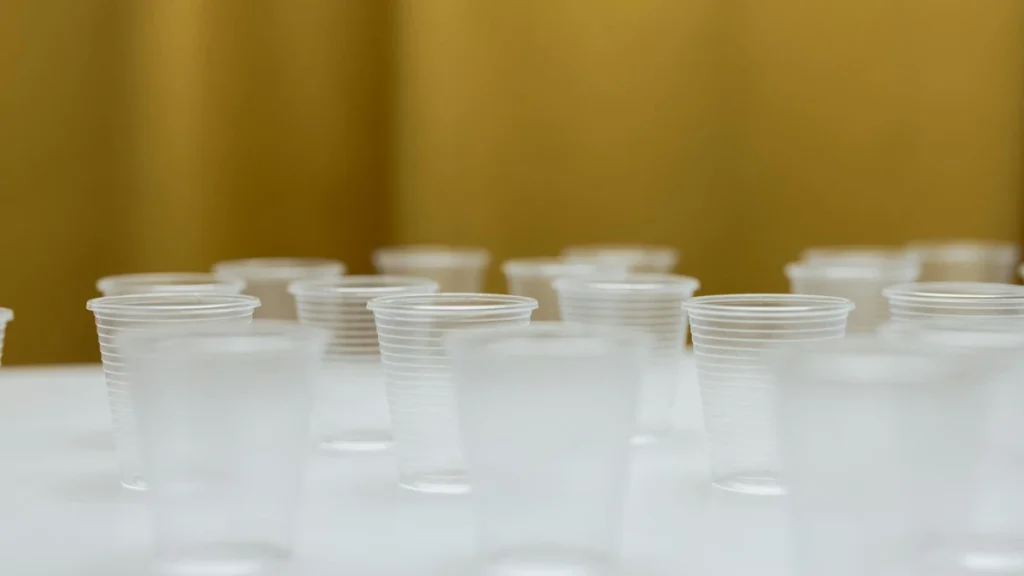
The global shift toward sustainable packaging has placed transparent drink cups under scrutiny. Restaurants, cafés, bubble tea shops, and juice bars face a critical material choice: traditional PET (polyethylene terephthalate) plastic cups or bio-based PLA (polylactic acid) alternatives. This decision impacts environmental footprint, customer perception, regulatory compliance, and bottom-line costs.
Transparent PLA cups have emerged as the top eco-friendly alternative to conventional PET plastics, offering comparable clarity and functionality while boasting compostability and renewable sourcing. The material comparison extends far beyond “plastic vs bioplastic”—encompassing heat resistance, barrier properties, production costs, end-of-life processing, and real-world performance across different beverage applications.
This comprehensive guide provides data-driven analysis comparing transparent PLA cups and PET cups across 12 critical performance dimensions. You’ll learn material composition differences, environmental lifecycle impacts, cost breakdowns for different order volumes, regulatory compliance requirements, and application-specific recommendations for cold beverages, smoothies, bubble tea, and juice service.
1.Fermentation: Corn or sugarcane starches ferment to produce lactic acid
2.Polymerization: Lactic acid molecules link into polylactic acid chains (molecular weight 50,000-200,000)
3.Pellet production: PLA resin forms into pellets for thermoforming or injection molding
4.Cup forming: Heat-formed into transparent cups via thermoforming at 160-180°C
Key characteristics:•Renewable sourcing: 100% plant-based feedstock vs petroleum-based PET
•Biodegradability: Breaks down into lactic acid → water + CO₂ under composting conditions
•Transparency: Crystal PLA achieves 88-92% light transmission (comparable to PET)
•Heat sensitivity: Glass transition temperature 55-60°C (lower than PET’s 70-80°C)
1.Polymerization: Ethylene glycol reacts with terephthalic acid at 260-280°C
2.Pellet production: PET resin forms into pellets
3.Sheet extrusion: PET resin is extruded into sheet for thermoforming.
4.Cup thermoforming: Heated PET sheet is formed into cups and trimmed.
Key characteristics:•Petroleum-based: Non-renewable fossil fuel feedstock
•Non-biodegradable: PET is not designed for composting.
•Transparency: 90-93% light transmission (slightly higher than PLA)
•Heat tolerance: Use the finished cup’s rated conditions; standard clear PET cold cups are not a general-purpose choice for hot drinks.
•Recyclability: Widely recyclable (recycling code #1), 29% global recycling rate
•Week 1-2: Surface etching, 5-10% weight loss
•Week 4-6: Hydrolysis begins, polymer chains break down, 30-50% weight loss
•Week 8-12: Fragmentation into smaller pieces, 70-85% weight loss
•Week 16-24: Complete degradation into CO₂, water, and humus
Critical requirements:•Temperature: 55-60°C minimum (industrial composting facilities)
•Humidity: 50-60% relative humidity
•Oxygen: Aerobic conditions for microbial activity
•Time: 90-180 days for complete breakdown
Home composting: PLA cups do NOT reliably compost in backyard bins (temperatures too low, 30-40°C typical). Only industrial/commercial composting facilities reach required 55-60°C.PET degradation: PET doesn’t biodegrade in any meaningful timeframe. Studies show:•Global infrastructure: Widely available (87% of US communities accept PET #1)
•Recycling rate: 29% globally, 45-55% in Europe, 20-25% in USA
•Process: Mechanical recycling (shredding, washing, re-melting) or chemical recycling
•Quality: Food-contact use of rPET depends on the recycling process, material purity and intended conditions of use.
•Contamination: PLA contamination in PET recycling streams causes quality issues
PLA recycling:•Global infrastructure: Limited (requires PLA-specific facilities separate from PET)
•Recycling rate: <5% globally (insufficient infrastructure)
•Process: Must separate from PET (similar appearance causes contamination issues)
•Quality: Recycled PLA viable but underdeveloped market
•Reality: Most PLA cups currently end up in landfills despite being “compostable”
Infrastructure gap: Only 12% of US commercial composting facilities accept PLA. In Europe, 25-30% of facilities accept bioplastics. Most consumers lack access to proper PLA disposal.•Raw material: PLA resin 30-50% more expensive than PET resin ($2.20-2.80/kg vs $1.50-2.00/kg)
•Production volume: PLA manufacturing less mature, smaller economies of scale
•Tooling: Similar tooling costs for thermoforming/molding
•Supply chain: PET more established suppliers, competitive pricing
•PET status: Permitted but subject to EPR (Extended Producer Responsibility) fees
•PLA status: Bio-based and biodegradable plastics fall within the SUP Directive’s scope; EN 13432 certification does not create a general exemption.
United States (state/local level):•California: Requires compostable foodware to meet ASTM D6400 or D6868 standards
•New York City: Banned foam, encourages compostable alternatives
•Seattle: Single-use food-service items must be approved compostable for onsite use, and recyclable or compostable for takeaway; local acceptance and collection requirements apply.
Canada:•Federal: Canada’s Single-use Plastics Prohibition Regulations cover six specified product categories, including checkout bags and foodservice ware containing specified problematic plastics.
•PLA status: Compostability certification does not provide a blanket exemption from Canada’s Single-use Plastics Prohibition Regulations.
Asia-Pacific:•Japan: Promotes bio-based plastics, offers subsidies for PLA adoption
•Australia: State-level bans on single-use plastics (South Australia, Queensland)
•US food contact: PET formulations must meet applicable requirements, including 21 CFR 177.1630 where relevant, for the intended use.
•EU food contact: Confirm the finished cup’s compliance documentation for its intended use under the applicable food-contact rules, including Regulation (EU) No 10/2011.
•Recycling codes: #1 PET widely recognized in recycling programs
1.Cold beverage service within the finished cup’s specified temperature limits
2.Access to industrial composting (commercial compost pickup or municipal program)
3.Eco-conscious branding (target market values sustainability)
4.Regulatory compliance (operating in ban-heavy jurisdictions: EU, California, Seattle)
5.Non-carbonated drinks (juices, teas, coffee—not sodas)
Business types:•Specialty coffee shops emphasizing sustainability
•Juice bars with organic/health positioning
•Cafés in eco-conscious neighborhoods (college towns, progressive cities)
•Restaurants with zero-waste initiatives
•Event catering with compost infrastructure
ROI drivers:•Customer willingness to pay 3-8% premium for sustainable packaging
•Brand differentiation in competitive markets
•Marketing value of “100% compostable” messaging
1.A PET cup rated for the intended beverage and service conditions
2.Carbonated beverages (sodas, sparkling drinks requiring CO₂ retention)
3.Existing recycling infrastructure (customers have #1 PET recycling access)
4.Cost sensitivity (need lowest per-unit cost, 30-50% savings vs PLA)
5.No compost access (area lacks industrial composting, PLA would landfill anyway)
Business types:•Fast-food chains prioritizing cost efficiency
•Convenience stores selling carbonated fountain drinks
•Bubble tea shops needing maximum clarity for topping visibility
•Food trucks operating in areas without compost programs
•Businesses in regions with established PET recycling (high recycling rates)
ROI drivers:•Lower material costs (30-50% savings at volume)
•Established recycling infrastructure (29% global recycling rate vs <5% for PLA)
•Superior carbonation retention (critical for soda quality)
•Temperature tolerance: Match the cup to the beverage; one cold-cup type is not suitable for every drink
•Order 5,000 PLA cups + 5,000 PET cups
•Use PLA for iced coffee/tea, PET for smoothies/bubble tea
•Collect customer feedback via receipts (“How do you rate our eco-friendly cups?”)
•Measure disposal behavior (do customers use compost bins correctly?)
Phase 2 (Months 4-6): Optimize mix•Analyze Phase 1 data: customer preference, disposal accuracy, cost impact
•Adjust ratio based on findings (e.g., 70% PLA / 30% PET if mostly cold drinks)
•Negotiate bulk pricing based on projected annual volumes
•Train staff to follow each cup’s temperature rating and beverage-use instructions
Phase 3 (Months 7-12): Scale and refine•Place annual contract for optimal PLA/PET mix
•Implement clear labeling (cup sleeves indicating “Compost me!” or “Recycle me!”)
•Partner with waste hauler for compost pickup if not already available
•Market sustainability efforts via social media, in-store signage
•✅ Cold drinks (0-15°C) → PLA cups
•✅ Warm drinks → use a cup specifically rated for the serving temperature
•✅ Carbonated drinks → check the cup’s temperature rating and lid compatibility
•✅ Bubble tea with toppings → PET (better clarity)
•✅ All cups: verify customer has correct disposal bin (compost vs recycle)
Labeling system:•PLA cups: Green rim or “Compostable” stamp
•PET cups: Blue rim or “Recyclable #1” stamp
•Color-coded storage bins in back-of-house
•Point-of-sale reminder for baristas
❌ Myth #1: “PLA cups are always better for the environment” ✅ Reality: Environmental performance depends on production, transport, cup design and actual disposal conditions. If your area has strong PET recycling but no compost, recycled PET may be more sustainable than landfilled PLA.
❌ Myth #2: “PLA cups can go in backyard compost bins” ✅ Reality: Most home compost bins reach only 30-40°C, far below the 55-60°C required for PLA degradation. PLA needs industrial composting facilities. Telling customers to home-compost PLA causes contamination and disappointment.
❌ Myth #3: “PLA and PET cups look identical, so customers won’t care” ✅ Reality: While visually similar (88-93% transparency), customer perception differs significantly. Studies show 68% of consumers view compostable packaging more favorably, willing to pay 3-8% premiums. Branding PLA cups as eco-friendly drives loyalty.
❌ Myth #4: “PLA cups cost 2-3× more than PET” ✅ Reality: At volume (10,000+ units), PLA costs 30-50% more, not 2-3×. For a café serving 500 drinks/day, the difference is $10-15/day ($300-450/month)—sometimes offset by 1-2% price increases or absorbed as marketing expense.
❌ Myth #5: “PET is bad for health because it leaches chemicals” ✅ Reality: PET food-contact suitability depends on the formulation and intended conditions of use; the material name alone does not guarantee zero migration or a safe temperature range. Concerns about BPA do not apply to PET (BPA is used in polycarbonate plastics, not PET). Food-contact compliance must be established for the finished PLA or PET cup and its intended use.
•Crystallized PLA: Increasing crystallinity can improve stiffness above the glass-transition temperature; finished-product heat resistance must be evaluated separately.
•Cost impact: Heat-resistant PLA 15-25% more expensive than standard PLA
Improved barrier PLA:•PLA-PHA blends: Adding PHA (polyhydroxyalkanoates) reduces oxygen permeability 40-60%
•Nano-coatings: Silica or clay nanoparticles create oxygen barriers comparable to PET
•Application: Enables PLA use for carbonated beverages by 2027-2028
•Current state: 29% of PET cups contain recycled content
•2027 projection: 50-60% recycled content in food-grade PET cups
•Carbon impact: rPET reduces emissions 60-70% vs virgin PET (competitive with PLA)
Chemical recycling:•Process: Depolymerizing PET into monomers, re-polymerizing into virgin-quality resin
•Timeline: Commercial-scale chemical recycling facilities operational 2026-2030
•Impact: Could make PET fully circular, closing sustainability gap with PLA
1.Certification: “Do cups carry BPI (ASTM D6400) or EN 13432 certification?”
2.Clarity grade: “What’s the light transmission percentage?” (Target: 88%+)
3.Heat tolerance: “What’s the maximum safe beverage temperature?” (Check the rating for the actual cup and beverage)
4.Pricing tiers: “Provide quotes for 5k, 10k, 25k, 50k units” (assess volume discounts)
5.Lead times: “What’s production time for initial order vs reorders?” (4-6 weeks typical)
6.Minimum orders: “What’s MOQ for custom printing?” (10,000-50,000 common)
7.Sample policy: “Can I receive 50-100 samples before bulk order?” (Always test first)
Red flags:•⚠️ No compostability certification (BPI, EN 13432, OK Compost)
•⚠️ Vague “biodegradable” claims without specifying conditions/timeline
•⚠️ Refusing samples or charging excessive sample fees
1.Recycled content: “What percentage rPET?” (30-50% increasingly common)
2.FDA compliance: “Is PET FDA-approved for food contact?” (Verify 21 CFR 177.1630)
3.Clarity: “Light transmission percentage?” (Target: 90%+)
4.Wall thickness: “Available options?” (0.3-0.7mm range for durability/cost balance)
5.Compatibility: “Which lid systems fit?” (Ensure lid availability)
6.Volume pricing: “Quotes for 10k, 50k, 100k units” (PET scales better than PLA)
7.Customization: “MOQ for printing/branding?”
Preferred attributes:•✅ Uses recycled PET (rPET) content 30%+
•✅ Provides recycling code #1 labeling
•✅ Offers multiple size options (12, 16, 20, 24 oz)
•✅ Clear pricing structure with volume discounts
•✅ Fast reorder turnaround (2-3 weeks)
Transparent PLA cups are biodegradable drink containers made from plant-based polylactic acid (derived from corn, sugarcane, or cassava starches), while PET cups are petroleum-based plastic containers made from polyethylene terephthalate. PLA cups compost in 3-6 months under industrial composting conditions (55-60°C), whereas PET persists 450+ years in landfills but is widely recyclable. PLA offers 60-70% lower carbon footprint but costs 30-50% more and is commonly used for cold beverages within the finished cup’s specified limits. PET cup suitability depends on the finished product’s rating; oxygen-barrier data alone does not establish carbonation retention.
PLA cups generate 58-65% lower carbon emissions than PET across their lifecycle and fully biodegrade in industrial composting facilities within 3-6 months. However, environmental advantage depends on disposal infrastructure: PLA sent to landfills (due to lack of composting access) offers minimal benefit over PET. If your region has robust PET recycling (29% global rate) but limited composting facilities (12% US access), recycled PET may deliver comparable sustainability. PLA is environmentally superior only when proper industrial composting infrastructure exists and cups are correctly disposed.
Standard transparent PLA cold cups should not be used for hot drinks. PLA cups can soften and deform when used beyond the finished product’s rated conditions. This creates burn risks and customer complaints. Standard clear PET cold cups should not be assumed suitable for warm or hot drinks. For hot coffee and tea, use appropriately rated paper cups with PLA or PE linings.
Transparent PLA cups cost 30-50% more than PET cups at comparable volumes. At 10,000 units (16 oz size), PLA costs $0.15-0.20 per cup vs $0.11-0.15 for PET. At 50,000 units, PLA costs $0.12-0.16 vs $0.08-0.12 for PET. The premium stems from higher raw material costs ($2.20-2.80/kg for PLA resin vs $1.50-2.00/kg for PET) and less mature manufacturing scale. For a café using 8,000 cups/month, the annual cost difference is approximately $2,500-3,500, or $0.027 per beverage—offset by sustainability-driven customer loyalty.
PLA cups work adequately for bubble tea served cold (5-25°C) but PET offers 2-5% better clarity for showcasing toppings like tapioca pearls and fruit. For carbonated beverages, PET is strongly preferred due to superior CO₂ barrier properties. PLA’s oxygen permeability is 10-20× higher than PET, causing carbonated drinks to go flat within 2-4 hours vs 8-12 hours in PET. Choose PET for bubble tea requiring maximum visual appeal or any carbonated drinks. Use PLA for bubble tea only if prioritizing compostability over slight clarity differences and serving non-carbonated versions.
PLA cups require industrial composting for proper end-of-life processing—they do not biodegrade in backyard compost bins (insufficient temperature) or landfills (anaerobic conditions). While technically recyclable, PLA recycling infrastructure is extremely limited (<5% global availability) and requires separation from PET recycling streams (mixing PLA with PET contaminates recycling batches). Most municipalities do not accept PLA in curbside recycling. Only 12% of US commercial composting facilities accept PLA cups. Verify your area has industrial composting access before choosing PLA; otherwise, cups end up in landfills, negating environmental benefits.
For transparent PLA cups, verify compostability certifications: BPI Certification (USA, ASTM D6400 standard), EN 13432 (Europe), BNQ ISO 17088 certification (Canada), AS 4736 (Australia), or OK Compost (TÜV Austria). Certification refers to defined test conditions and does not guarantee processing time or acceptance at a particular facility. Avoid cups with vague “biodegradable” or “eco-friendly” claims lacking third-party certification. For PET cups, request food-contact compliance documentation for the intended use (21 CFR 177.1630) and look for recycled content (rPET) percentages of 30-50%. The #1 code identifies PET; confirm that the local program accepts the specific cup.
The choice between transparent PLA cups and PET cups extends beyond simple “plastic vs bioplastic” categorization—requiring nuanced evaluation of beverage applications, disposal infrastructure, customer values, cost tolerance, and regulatory environment. Neither material is universally superior; each excels in specific contexts.
Key Takeaways:1.PLA delivers 60-70% lower carbon footprint but only when properly composted—verify industrial composting access before committing
2.Choose PLA for cold beverages (iced coffee, juice, smoothies) served by sustainability-focused brands with compost infrastructure
3.Choose PET for carbonated drinks and bubble tea due to superior CO₂ retention and 2-5% better clarity for topping visibility
4.Hybrid approach optimizes performance and cost—use PLA for 60-70% of cold drinks, PET for compatible cold drinks (30-40%)
5.Future innovations closing gap—heat-resistant PLA (2027-2028) and chemical-recycled PET (2026-2030) will expand application ranges
6.Certification is critical—verify BPI/EN 13432 for PLA compostability, FDA approval for PET food contact safety
•Paper Cups
•Food Packaging Containers
•Sustainable Packaging Solutions