Ready to create your own branded paper cups or packaging?
Tell us your requirements — size, coating, printing, and destination — and our team will prepare a detailed quotation within 24 hours.

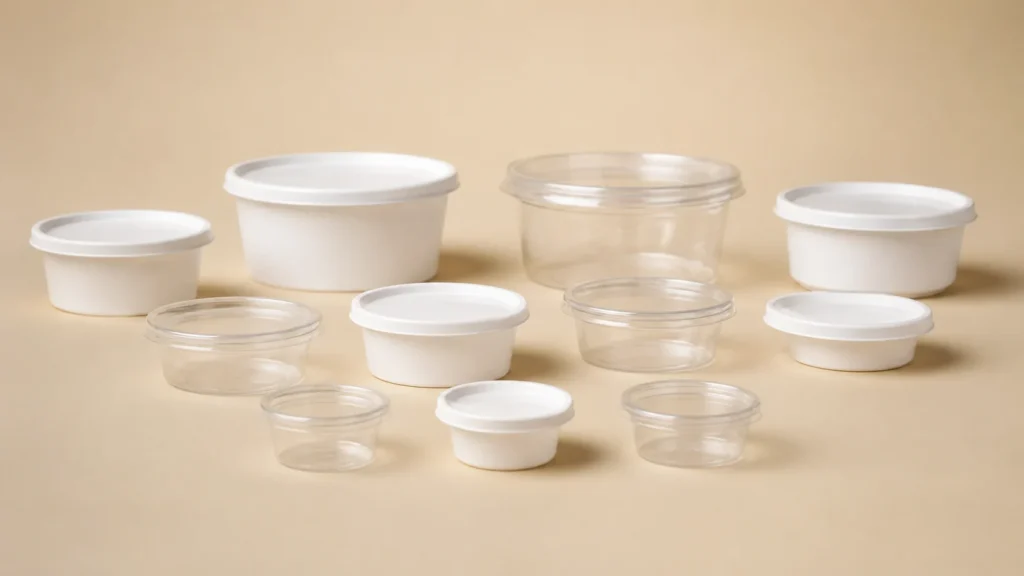
A condiment cup system should align with three operational layers: the menu items being portioned, the service format moving those items to guests, and the physical lid or closure required to keep contents intact during transit or tray presentation. Matching all three before ordering prevents stock mismatches, guest complaints, and avoidable reorders.
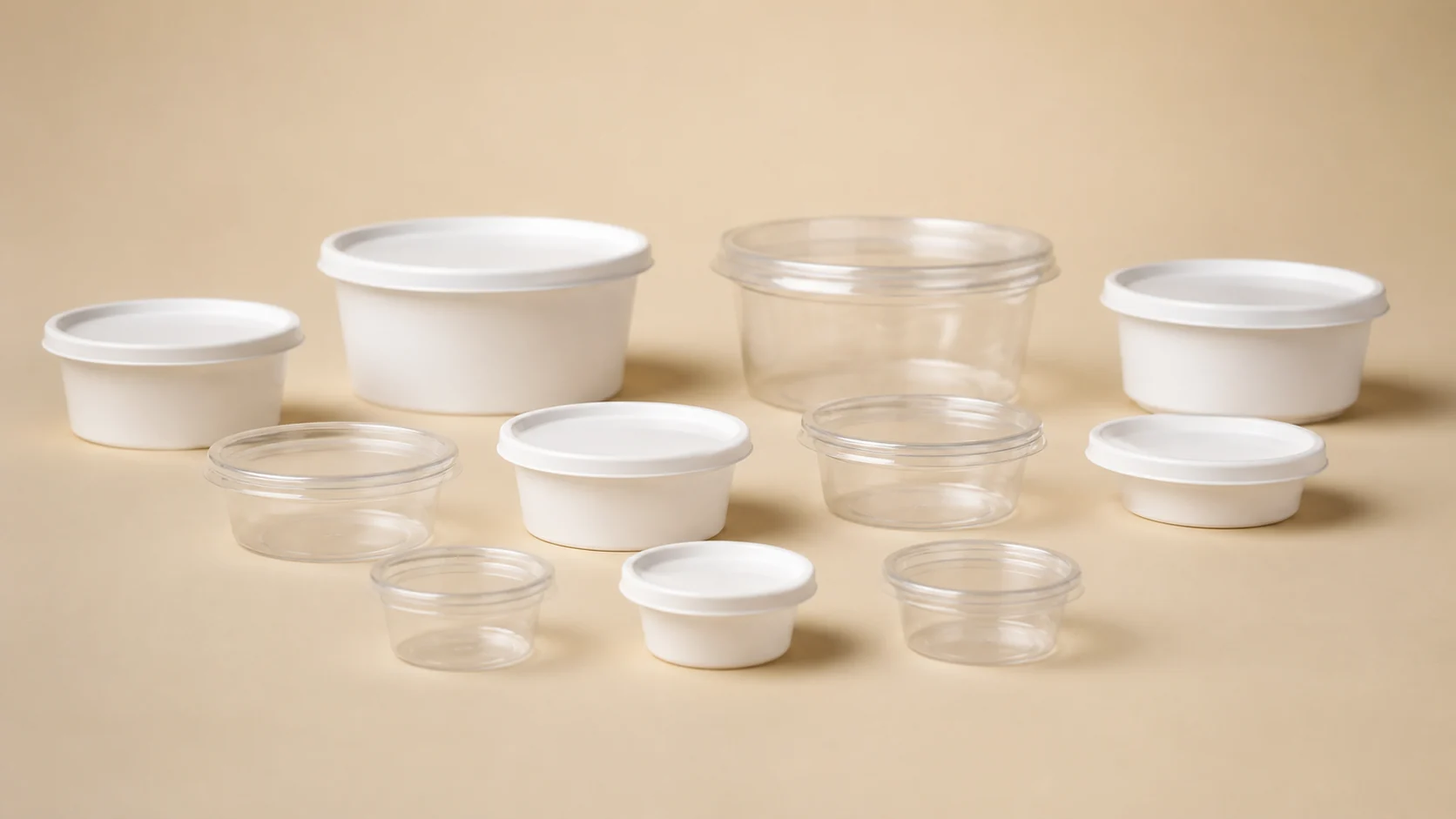
Before any cup specification is written, a buyer needs a clear map of how each condiment travels from kitchen to guest. A dipping sauce at a counter-service window follows a different route than a composed dressing portioned onto a delivery tray. A ramekin of hot gravy handled at a warming station behaves differently from a cold vinaigrette set beside a boxed lunch. Each route creates distinct requirements for cup rigidity, base stability, and whether a lid is required at all.
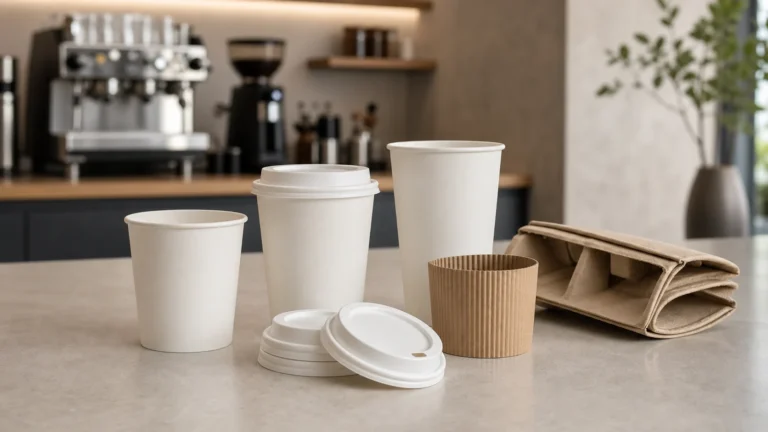
Service format also determines how many cups are handled per shift, which affects how a cup stack is stored and dispensed. A busy line where staff grab cups one-handed during peak service needs a cup that releases cleanly from a dispenser stack without collapsing. A prep kitchen filling cups hours before service needs a cup that holds its shape when stacked full and refrigerated. Buyers reviewing Paper cup lid products alongside their menu map can identify which service routes require a sealed cup and which can use an open format without a lid. Neither requirement is visible from a product photograph alone. Mapping the route creates the brief before any supplier conversation begins.
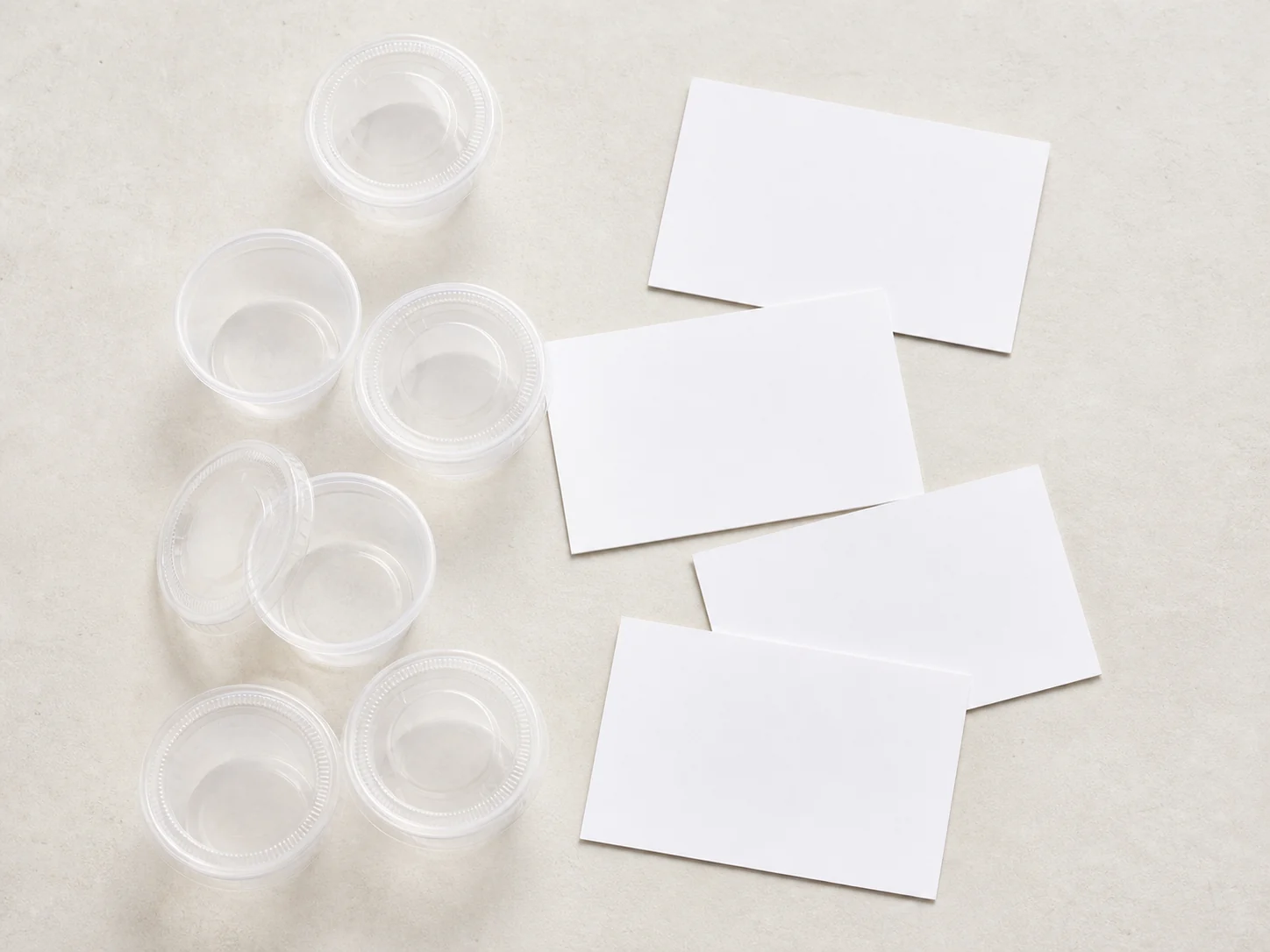
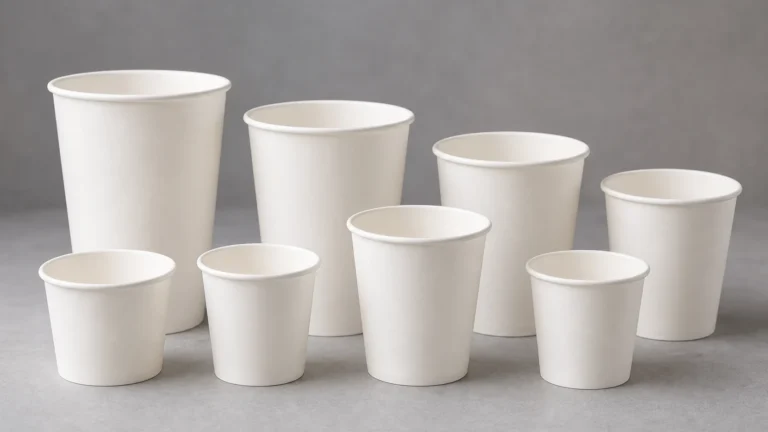
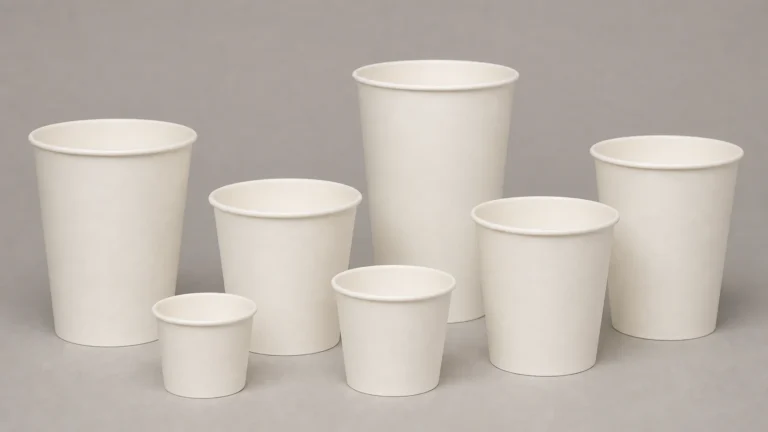
Portion size for condiments is not set by the cup. The cup is chosen to match a portion already decided by the menu team. When a recipe calls for a specific volume of a sauce, dressing, or topping, the cup must hold that portion without being so oversized that guest perception suffers or so undersized that the condiment cannot be dispensed cleanly.
Buyers sourcing Disposable sauce cups should begin with a recorded portion weight or volume for each condiment that will be served. That figure then becomes the minimum internal capacity required, with headspace factored in for liquids that expand slightly or need a lid to seat properly. A cup holding a thick aioli may tolerate less headspace than one holding a vinaigrette that can spill on the rim during lidding.
When multiple condiments share a single cup size across a menu, procurement is simpler, but the menu team must accept that one format fits all those items. When different condiments require different portions, multiple SKUs enter the system, multiplying storage requirements, dispenser formats, and lid compatibility questions. Both strategies are valid. The choice belongs to the menu and operations team, not the packaging supplier.
Cup material affects how a condiment behaves in contact with the cup wall and how the cup holds its shape through the service window. Paper cups with an interior coating are common for liquid condiments. Rigid plastic formats offer wall stiffness that supports lidding under pressure. Before choosing, a buyer should confirm the intended food type and the conditions under which the cup will be used, referencing the FDA food types and conditions of use guidance when documenting internal specifications for food contact conditions.
No material choice should rest on general category claims. The specific SKU, the supplier’s product data sheet, and a physical sample tested in actual operational conditions form the qualified basis for a decision. A cup that holds its shape with a cold sauce may not maintain the same rigidity with a hot condiment at serving temperature. Construction details such as wall thickness, base design, and rim geometry vary between SKUs even within the same nominal size category. Review the actual product, not only the category description.
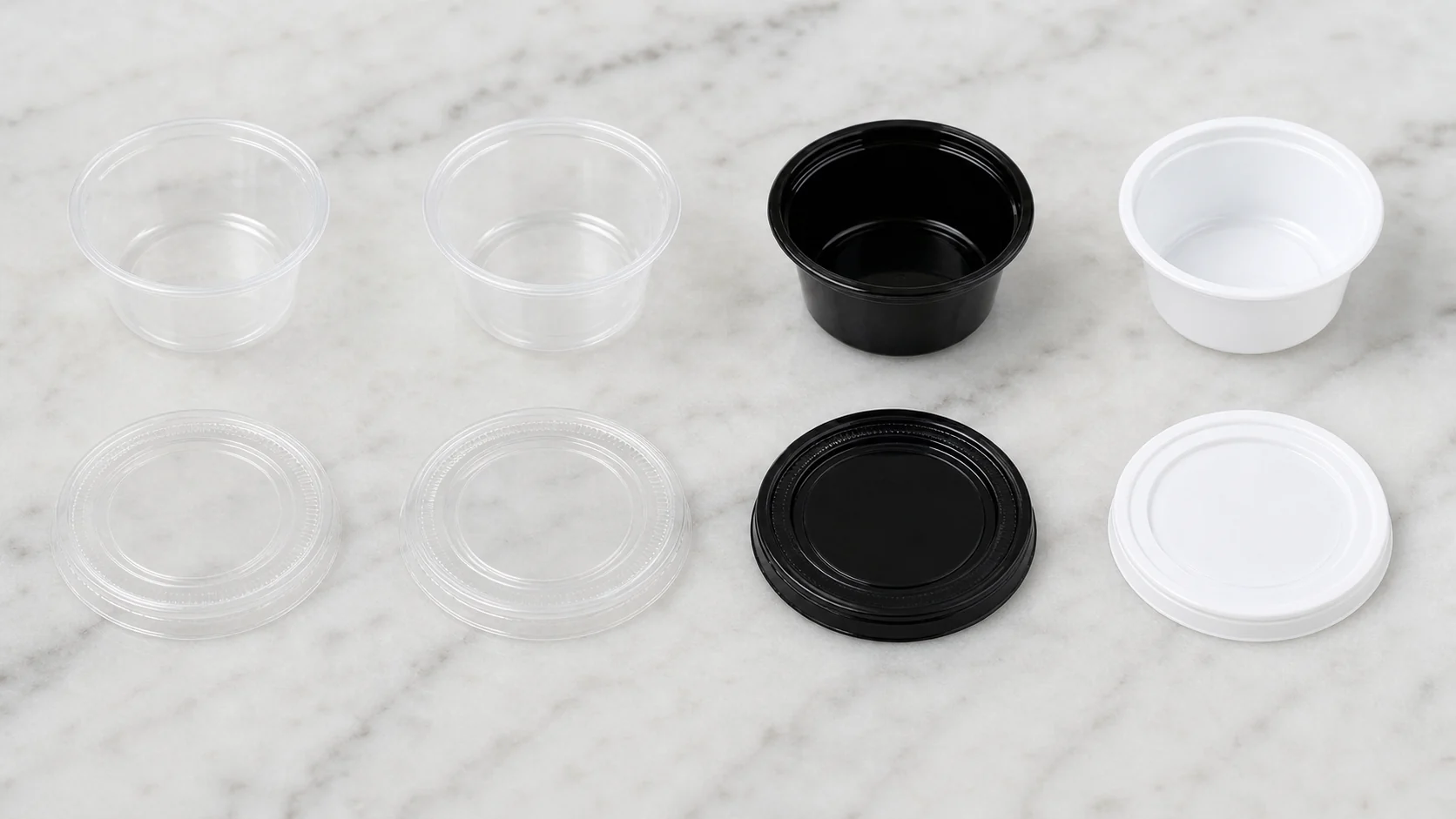
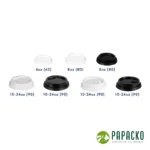
Lids are not universal accessories. A lid specified for one cup rim diameter will not seal reliably on a cup with a slightly different rim profile, even from the same material family. The fit between cup rim and lid must be verified by physically pressing the lid onto a filled cup, applying a brief inversion, and reviewing whether the seal holds under the handling pressure a guest is likely to apply when carrying the cup.
Flat lids differ from dome lids in how they affect stacking height on a tray, which matters for delivery configurations where vertical clearance is limited by bag or container depth. Snap-fit lids differ from pressure-seal lids in the hand motion required to apply them at service speed. Each variation creates a staff training consideration and a potential failure point if the wrong combination reaches the line. Confirming compatibility using the specific cup SKU and the specific lid SKU, rather than assuming category-level fit, is the only reliable method.
| Factor | Paper-Based Cup | Rigid Plastic Cup | Paperboard Ramekin |
|---|---|---|---|
| Wall rigidity under heat | Lower | Higher | Moderate |
| Lid compatibility options | Depends on rim SKU | Depends on rim SKU | Depends on rim SKU |
| Stacking behavior when filled | Varies by wall thickness | Varies by wall construction | Varies by base design |
| Dispenser compatibility | Requires matching sleeve | Requires matching sleeve | Typically manual placement |
| Supplier SKU verification required | Yes | Yes | Yes |
| Physical sample recommended before order | Yes | Yes | Yes |
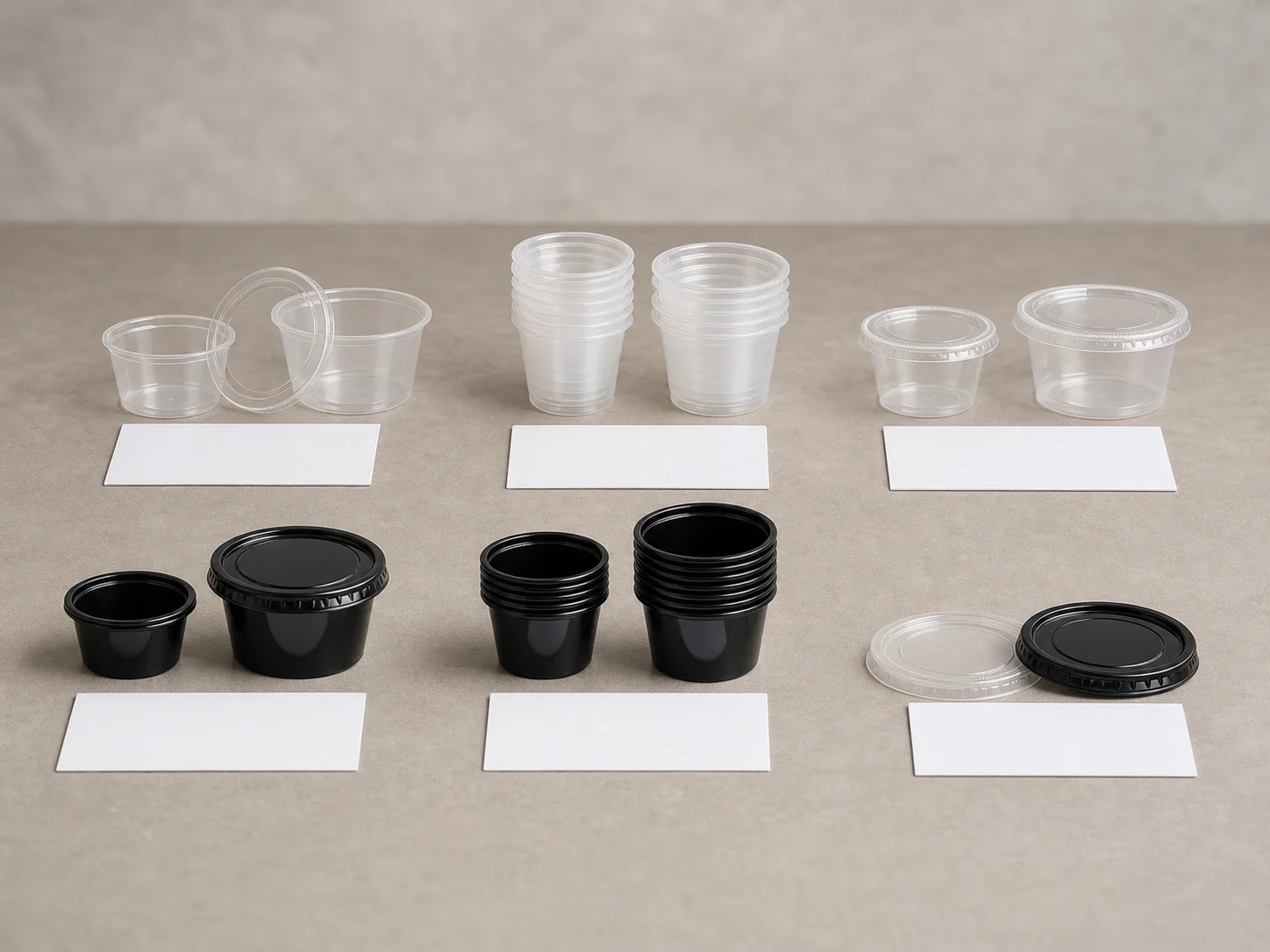
Delivery and takeaway create movement stress that counter-service does not. A cup that holds position on a stationary tray may shift, tilt, or allow lid separation when placed in a bag carried at an angle, set in a vehicle cup holder, or stacked beneath other items during transit. A lid that closes securely for a brief counter-service transfer may unseat when packaging is jostled repeatedly.
Buyers sourcing cups for delivery should build a sample review that simulates actual transit conditions. Fill cups with the heaviest and most liquid condiment planned, apply lids, place the assembly into the intended bag or container, and subject it to the physical movement expected during transit. No supplier claim replaces this step. The review uses real product at real fill levels in real packaging configurations. Reviewing Disposable food packaging systems as a category helps buyers consider whether cup selection connects to broader packaging decisions, such as whether a bag or insert is needed to hold cups upright during transport.
A structured checklist prevents common gaps between purchasing decisions and operational readiness. Before any condiment cup SKU enters active inventory, each of the following areas should be confirmed directly with the operations team and the supplier.
Confirm that the cup SKU matches the recorded portion volume for each condiment it will serve. Verify lid compatibility using the specific lid SKU alongside the specific cup SKU, not by category assumption. Confirm the dispenser or storage format in the kitchen and whether the cup stacks or nests correctly for that format. Confirm that staff have handled the cup and lid combination and can apply the lid at service speed without misalignment.
Confirm that the supplier can maintain stock of the chosen SKU at the order volumes the operation requires. A cup selected through a careful review process loses its operational value if it becomes unavailable mid-season. Run a brief transit test if any cups will leave the premises in a bag or container. Reviewing Paper cup systems alongside sauce cup selections ensures that any format overlap between beverage cups and condiment cups is identified before ordering, preventing incorrect substitution during service.
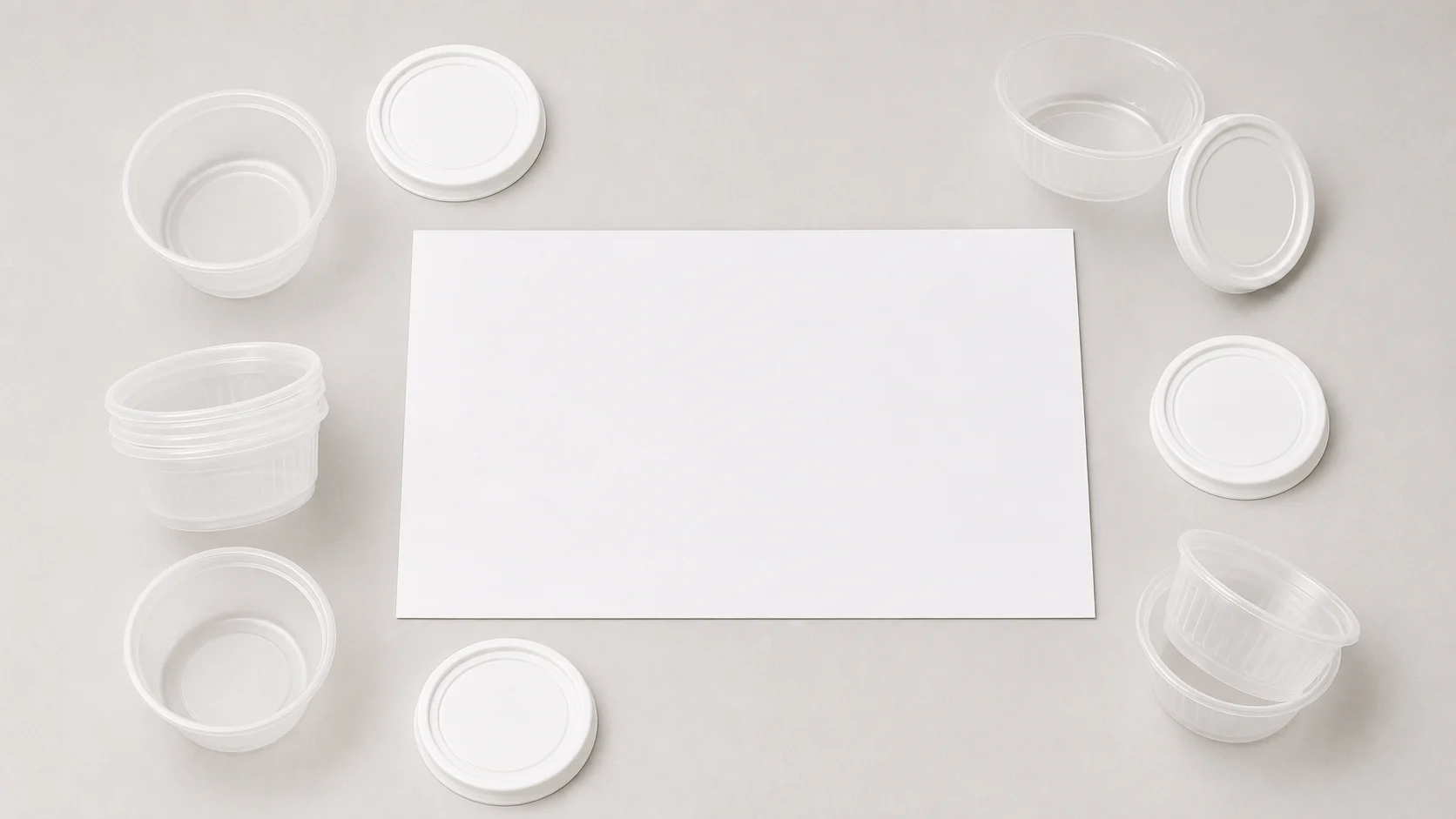
A portion-cup brief documents specific operational requirements before any SKU is selected. It records the condiment type, the intended portion, the service format, the lid requirement, the dispenser format, and order volume. A written brief enables a supplier to recommend specific SKUs rather than broad category options, which shortens the review cycle and reduces the chance of ordering a format that does not match operations.
Papacko works with foodservice buyers across portion-cup categories. Buyers can begin a brief by reviewing Food packaging category resources to understand the range of formats available before any supplier conversation begins. A brief submitted before a sample request allows the supplier to send formats matched to documented operational need rather than general samples, reducing the number of review rounds required and speeding the path to a confirmed SKU.
This guide is written for foodservice procurement and operations professionals evaluating condiment cup systems. It does not make performance guarantees, food-safety representations, or material compliance claims on behalf of any specific product. All format decisions described here require verification against the actual SKU, current supplier product data, and physical samples tested in the buyer’s own operational environment.
Portion guidance, material suitability, lid compatibility, and transit behavior depend on specific conditions that vary by operation. No statement in this guide substitutes for the buyer’s own review process. Regulatory documentation requirements should be confirmed with appropriate advisors for the relevant market.
Start with the recorded portion volume for each condiment item on the menu. The cup must hold that volume with enough headspace for the lid to seat correctly or for a dispensing tool to withdraw without dragging over the rim. Do not select a cup size first and then adjust the portion to match it.
Rim diameter and rim profile must correspond to the lid design. Compatibility is confirmed by physically fitting the lid to the cup under conditions that replicate service speed and fill level. Category-level assumptions about nominal size are not sufficient to confirm a working seal.
Material choice affects how the cup maintains its shape and how the condiment rests at the point of presentation. Review each combination using actual condiment samples and the specific cup SKU in the conditions of your service before confirming any order.
Carry the minimum number of SKUs that covers the actual portion volumes and lid requirements of the current menu. Every additional SKU adds storage, dispenser, and ordering complexity. Audit the menu first and then set the SKU count from those documented needs.
Fill cups to the intended portion level, apply lids using the motion that mirrors line service, place the assembly into the actual delivery bag or container, and subject it to movement that represents realistic transit handling. Document which combinations allow lid separation or spillage and adjust SKU selection accordingly.
Write the brief before the first supplier contact. A brief that records condiment type, portion volume, service format, lid requirement, dispenser format, and order volume enables the supplier to recommend specific SKUs rather than general ranges, reducing the number of sample rounds needed to reach a confirmed selection.