Ready to create your own branded paper cups or packaging?
Tell us your requirements — size, coating, printing, and destination — and our team will prepare a detailed quotation within 24 hours.

Last Updated: June 2026
Reading Time: 9-11 minutes
Author: Papacko Content Team
Every kilogram matters at 35,000 feet—a single gram of packaging weight multiplied across 50 million annual passengers costs airlines $800,000+ in fuel consumption. Airline food packaging faces extreme requirements: IATA weight restrictions, cabin pressure tolerance (8,000-10,000 ft equivalent altitude), temperature cycling from -20°C cargo holds to 75°C galley ovens, and increasingly stringent environmental regulations from aviation authorities worldwide.
This guide covers the critical specifications for airline-compliant food packaging: material selection for weight optimization, pressure-resistant design, regulatory certification (EASA, FAA, IATA), and sustainable alternatives that meet aviation safety standards, eco-friendly airline food packaging matter.You’ll learn how to source containers that pass altitude testing, comply with waste reduction mandates, and deliver cost savings through weight reduction.
💡 Quick Takeaway: Effective airline food packaging requires ≤35g weight per meal container (vs 45-60g for standard foodservice), cabin pressure testing to 0.75 atm (8,000 ft altitude equivalent), IATA-compliant materials (flame spread index ≤25), and certifications including ISEGA for food contact and EASA CS-25 for cabin safety.
The key to choosing quality airline food packaging depends on:
### Critical Compliance Areas
Understanding quality airline food packaging requires attention to these factors:
1. Flammability and Fire Safety
Airlines must demonstrate that all cabin materials—including food packaging—meet strict fire resistance standards:
•Vertical burn rate: ≤4 inches/minute (FAA) or self-extinguishing within 15 seconds (EASA)
•Smoke generation: Optical density ≤200 (NBS smoke chamber test)
•Heat release: Peak heat release ≤65 kW/m² (OSU calorimeter)
Practical impact: Standard petroleum-based plastics (PP, PET) require flame retardant additives. Paper-based packaging naturally performs better but needs testing verification.
2. Weight Restrictions and Fuel Cost Optimization
IATA benchmark: Every 1kg weight reduction per aircraft saves 0.03-0.05 liters fuel per flight hour
For a Boeing 777-300ER flying 4,000 hours annually:
•1kg weight saving = 120-200 liters fuel saved/year
•At $0.80/liter jet fuel = $96-160 annual savings per aircraft
•Across 500-aircraft fleet = $48,000-80,000/year per kilogram
Packaging weight targets:
Fleet-level impact: For 150-seat aircraft serving 2 meals on long-haul (300 meal sets):
•Weight reduction: 300 × 40g = 12kg per flight
•Annual savings (300 flights/year): 3,600kg × $0.12/kg = $432/aircraft/year
•500-aircraft fleet: $216,000 annual fuel savings
3. Cabin Pressure and Altitude Effects
Commercial aircraft cabins maintain 0.75-0.8 atm pressure (equivalent to 8,000-10,000 ft altitude). Understanding eco-friendly airline food packaging helps.This creates challenges for sealed packaging:
Pressure differential effects:
•Ground level: 1.0 atm (14.7 psi)
•Cruise altitude cabin: 0.75 atm (11 psi)
•Pressure difference: 3.7 psi acting outward on sealed containers
Container failure modes:
•Lid pop-off (inadequate seal strength)
•Container bulging/deformation (thin walls)
•Seal leakage (grease/liquid seepage at pressure points)
Testing requirements:
✅ Pressure chamber testing to 0.70 atm (10,000 ft equivalent) for 2 hours
✅ Thermal cycling: -20°C to +75°C while under pressure (simulates cargo hold to galley oven)
✅ Leak testing with colored water or oil under pressure differential
🎯 Industry Insight: Emirates Airline testing found that 12% of standard paper-based containers experienced lid failures during altitude pressure tests—reduced to <2% by increasing rim curl depth from 3mm to 5mm and using 350+ GSM paperboard.
When evaluating quality airline food packaging, consider the following:
Advantages for airline use:
✅ Naturally flame-resistant (cellulose burns slower than petroleum plastics)
✅ 30-45% lighter than equivalent rigid plastic containers
✅ Positive passenger perception (sustainability messaging)
✅ Easier waste disposal and recycling onboard
Required specifications:
Recommended paper types:
•Virgin kraft pulp: Best strength-to-weight, clean white appearance, consistent quality
•Bamboo fiber blend (30-40%): Renewable, strong, marketing advantage (“bamboo fiber bowls”)
•Bagasse/sugarcane (50%+): Excellent sustainability story, adequate strength, slight color variation
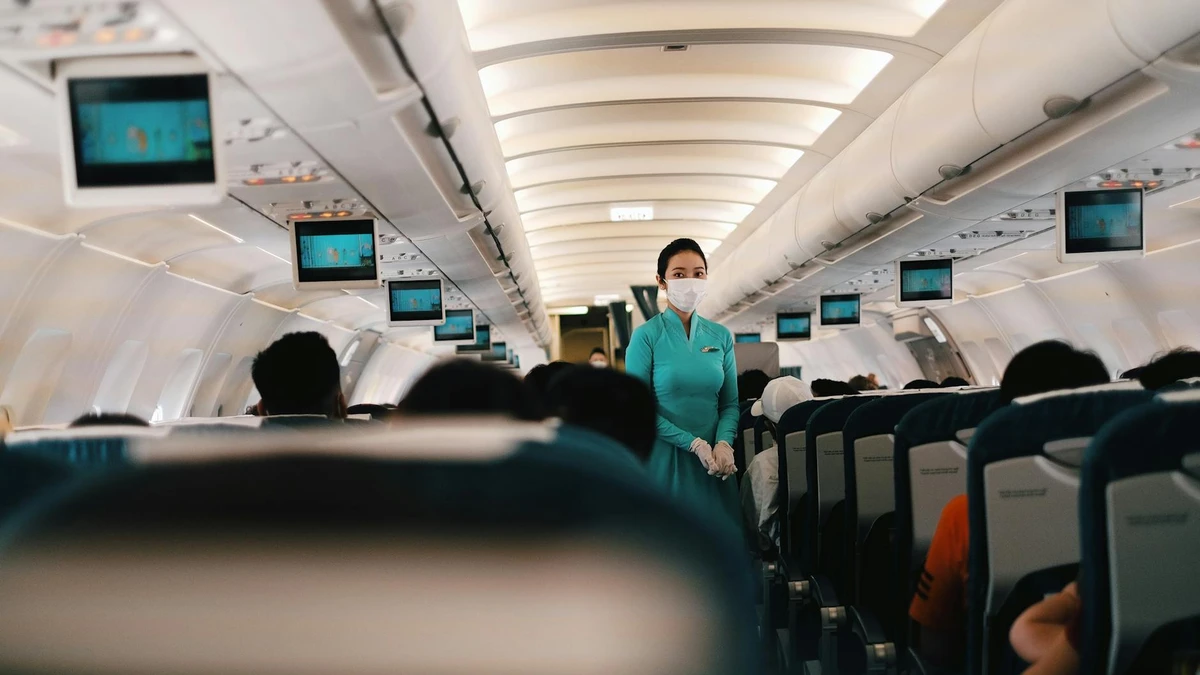
Material: Sugarcane bagasse, wheat straw, or recycled paper pulp molded into food containers
Airline suitability assessment:
Best applications:
✅ Premium cabin classes (first/business)—sustainability premium positioning
✅ Short-haul routes (1-3 hours)—lower pressure cycle exposure
✅ Airlines with strong eco-branding (Lufthansa, KLM, Virgin Atlantic)
❌ Not ideal for:
•Budget carriers focused on cost minimization
•Very long-haul (12+ hours) with multiple pressure cycles
•Extremely saucy meals (Indian curries, pasta with heavy sauces)
Still used by ~40% of airlines despite environmental concerns
Advantages:
✅ Unlimited cabin pressure cycling (no structural fatigue)
✅ Excellent heat conductivity (even oven reheating)
✅ Total grease/moisture barrier (zero permeation)
✅ Recyclable (if separated from waste stream)
Disadvantages:
❌ Heavy: 55-75g per container (50-120% heavier than paper alternatives)
❌ High embodied energy: 8-12 kg CO₂e per kg aluminum (vs 0.9 kg CO₂e for paper)
❌ Negative passenger perception (“wasteful”, “outdated”)
❌ Waste separation challenges (mixed waste contamination)
When aluminum makes sense:
•Ultra-long-haul routes (14+ hours) with multiple reheating cycles
•Meals requiring oven temps >95°C
•Carriers with established aluminum recycling programs
•Routes where weight impact is minimal (short-haul, low frequency)
IATA Atlas standard meal tray: 270mm × 205mm × 40mm (10.6″ × 8″ × 1.6″)
### Critical Design Features for Airline Use
1. Stackability and Nesting
✅ Tapered side walls (3-5° angle):
•Enables nesting during storage (reduces volume by 60-75%)
•1,000 nested containers fit in 1.2m³ vs 4.8m³ un-nested
•Critical for aircraft galley space constraints
✅ Rim flange width: 8-12mm:
•Provides stacking stability during turbulence
•Prevents containers from sliding laterally
•Supports lid seal integrity under pressure
2. Compartmentalization
Single compartment (70% of airline meals):
•Lowest weight (baseline)
•Simplest loading in catering facilities
•Best for one-component meals (pasta — rice dishes)
2-compartment divided:
•Separates entree from sides/vegetables
•+15-20% weight vs single compartment
•Improved presentation, reduces flavor mixing
•Popular in premium cabins
3-compartment:
•Full meal separation (protein, starch, vegetable)
•+25-35% weight vs single compartment
•Best presentation quality
•Used in first class, long-haul business
Weight optimization tip: Use partial dividers (50-75% height) instead of full dividers to save 3-5g per container while maintaining separation.
### Altitude Testing Protocol
Standard procedure for airline approval:
1.Understanding quality airline food packaging helps.Preparation: Fill containers with representative meal (proteins, sauces, liquids) to 80-90% capacity
2.Seal: Apply lids using standard catering equipment (not hand-pressed)
3.Pressure chamber: Place sealed containers in altitude chamber
4.Pressure cycle:
– Reduce pressure from 1.0 atm to 0.75 atm over 15 minutes (simulates climb to cruise)
– Hold at 0.75 atm for 2 hours (typical cruise duration)
– Increase pressure to 1.0 atm over 10 minutes (descent)
5.Inspection: Check for:
– Lid displacement or pop-off
– Container deformation/bulging
– Leakage at seams or lid interface
– Structural cracks or failures
Pass criteria: Zero failures across 50 sample units (99.5% confidence level for batch production)
IATA Resolution 779 (amended 2023): Airlines commit to:
•50% reduction in single-use plastics by 2030 (baseline 2018)
•75% of food packaging recyclable or compostable by 2030
•100% sustainable packaging by 2035
Regional regulations:
### Sustainable Material Options Comparison
Practical reality: Despite compostability certifications, 85-95% of airline waste is landfilled due to:
•Lack of composting facilities at airports
•Waste stream contamination (food residue mixed with packaging)
•International routes (waste sometimes incinerated per biosecurity regulations)
•Cost of waste separation vs landfilling
Most impactful approach: Focus on weight reduction (fuel savings) and designing for mechanical recycling (paper-based materials that can re-enter paper streams).
Container nesting and palletization:
Shipping optimization:
•20ft container: 10-12 pallets = 55,000-78,000 meal containers
•40ft container: 20-24 pallets = 110,000-156,000 meal containers
Critical for airline contracts: Just-in-time delivery to catering facilities
•Lead time requirements: 2-4 weeks for reorders
•Safety stock: 3-6 weeks inventory at catering facility
•Demand variability: ±20-30% based on flight schedules, seasonality
Required certifications for international airline catering:
✅ Food contact safety:
•FDA 21 CFR 176.170 (USA)
•EU Regulation 10/2011 (Europe)
•ISEGA certification (preferred by European airlines)
•GB 4806 standards (China)
✅ Aviation safety:
•EASA CS-25 flammability test reports
•FAA 14 CFR Part 25 compliance (if serving US carriers)
•OSU calorimeter heat release data
✅ Quality management:
•ISO 22000 (food safety management)
•ISO 9001 (quality management system)
•BRC or IFS certification (retailer/airline requirements)
✅ Environmental claims:
•BPI or TÜV compostability certification (if claiming compostable)
•FSC or PEFC chain-of-custody (if claiming sustainable forestry)
•Carbon footprint verification (increasingly requested by airlines)
Documentation format: Provide test reports in English, German, and French (most common airline procurement languages). Include Material Safety Data Sheets (MSDS) for all coatings and inks.
Scenario: 500-aircraft fleet, 150 seats, 2 meals per long-haul flight, 300 flights/year/aircraft
Break-even analysis for molded bagasse:
•Premium cost: +$9M/year over paper
•Weight savings vs aluminum: 1,395 tonnes × $0.12/kg = $167,400 fuel savings
•Net cost increase: $8.8M/year
•Would require passenger willingness to pay $0.65 more per ticket to offset (marketing/brand premium)
Winner for cost-focused airlines: Paper + PE coating (24% lower total cost than aluminum baseline)
Winner for premium sustainability positioning: Molded bagasse (if brand premium supports cost differential)
❌ Mistake #1: Using standard foodservice containers without cabin pressure testing
✅ Correct Approach: All airline food packaging must pass 0.75 atm pressure chamber testing. Standard containers fail 10-15% of the time due to inadequate seal strength. Request altitude test reports from suppliers before trials.
❌ Mistake #2: Prioritizing cost over weight savings
✅ Correct Approach: Calculate total cost of ownership including fuel consumption. Understanding quality airline food packaging helps.A container $0.05 cheaper but 15g heavier costs more over its lifecycle. Every gram matters—use suppliers who optimize weight while maintaining strength.
❌ Mistake #3: Assuming “compostable” certifications translate to real-world waste reduction
✅ Correct Approach: 90%+ of airline waste is landfilled or incinerated regardless of compostability. Understanding quality airline food packaging helps.Focus on weight reduction (fuel savings) and recyclability in standard paper streams for genuine environmental impact. Use compostability as marketing benefit, not primary decision criterion.
❌ Mistake #4: Failing to account for galley oven reheating requirements
✅ Correct Approach: Many eco-materials (PLA, some molded fibers) deform above 85-90°C. Understanding eco-friendly airline food packaging helps.Verify your supplier’s containers are tested for galley oven use (95-110°C for 10-15 minutes). Request oven stability test reports.
Airline food packaging refers to containers, trays, bowls, and lids specifically designed for inflight meal service. These must meet strict aviation safety requirements including flammability standards (EASA CS-25, FAA Part 25), cabin pressure tolerance (0.75 atm at 8,000 ft altitude equivalent), weight restrictions for fuel efficiency, and food safety certifications (ISEGA, FDA, EU 10/2011).
Every kilogram of aircraft weight costs airlines $96-160 annually in additional fuel consumption per aircraft. Understanding the airline food packaging helps.For a 500-aircraft fleet, 1kg weight reduction across all meal packaging saves $48,000-80,000/year. Paper-based containers weigh 30-45% less than plastic or aluminum alternatives, delivering substantial fuel cost savings over millions of annual meals served.
Place sealed containers in an altitude chamber and reduce pressure from 1.0 atm (sea level) to 0.75 atm (8,000 ft equivalent) for 2+ hours. Understanding airline food packaging helps.Containers must show zero lid failures, leakage, or structural deformation. Airlines most times require pass rates of 99.5%+ across 50-sample batches before approving suppliers.
Essential certifications include: EASA CS-25 or FAA Part 25 (flammability), ISEGA or FDA 21 CFR 176.170 (food contact safety), ISO 22000 (food safety management), and material-specific environmental certifications (BPI for compostability, FSC for sustainable forestry), airline food containers matter.European airliften require EN 1186 migration testing as well.
Paper containers offer 30-40% weight savings (fuel cost reduction) and better sustainability perception, but aluminum provides superior heat conductivity, unlimited pressure cycling, and total moisture barriers. Understanding the airline food packaging helps.Paper is optimal for most standard meals; aluminum remains best for ultra-long-haul routes requiring multiple reheating cycles or extremely saucy dishes.
Rarely. Understanding airline food containers helps.Despite compostability certifications (BPI, TÜV), 85-95% of airline waste is landfilled or incinerated due to lack of airport composting infrastructure, waste stream contamination, and biosecurity regulations for international routes. Compostable packaging provides marketing benefits but rarely achieves end-of-life composting in practice.
Stock standard sizes (9″ main meal, 5″ salad): 50,000-100,000 units. Understanding airline food packaging helps.Custom sizes or compartmentalization: 200,000-500,000 units due to tooling costs. Custom printing with airline branding: 500,000-1,000,000 units. Some suppliers offer semi-custom options (stock sizes with printed labels) at 100,000-200,000 MOQ for airline trials.
Selecting airline food packaging requires balancing aviation safety compliance, weight optimization, environmental sustainability, and cost efficiency. Prioritize paper-based containers with 350+ GSM weight, cabin pressure testing to 0.75 atm, proper certifications (EASA CS-25, ISEGA), and weight targets ≤35g per main meal container.
Key Takeaways:
1.Understanding airline food packaging helps.Weight reduction drives ROI—30-40% lighter packaging saves $50,000-80,000 annually per aircraft in fuel costs
2.Understanding airline food packaging helps.Cabin pressure testing is mandatory—containers must pass 0.75 atm testing; request supplier test reports
3.Understanding airline food packaging helps.Paper-based materials outperform plastics—better flammability ratings, lower weight, positive sustainability perception
4.Understanding airline food packaging helps.Certifications are non-negotiable—EASA CS-25, FAA Part 25, and ISEGA required for airline approval
5.Understanding sustainable airline food packaging helps.Total cost of ownership matters more than unit price—factor fuel costs into procurement decisions
•Sustainable Food Packaging Solutions
Papacko supplies aviation catering operations and airlines with EASA CS-25 and FAA-certified food packaging in paper-based and molded fiber materials, airline food packaging matter.Our range includes main meal containers, salad bowls, and compartmentalized designs—all tested to 0.75 atm cabin pressure with full documentation (ISEGA, ISO 22000, flammability test reports) and MOQs starting from 50,000 units for stock sizes.
Get in touch: