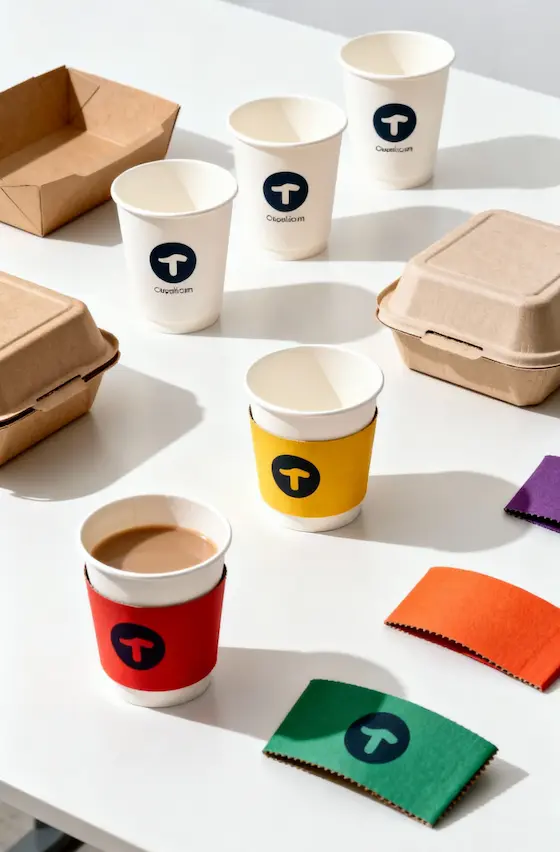
Ready to create your own branded paper cups or packaging?
Tell us your requirements — size, coating, printing, and destination — and our team will prepare a detailed quotation within 24 hours.
Last Updated: December 2025
Reading Time: 13 minutes
Author: Papacko Content Team
You’ve switched to biodegradable paper cups to reduce your environmental footprint. Three months later, a customer shows you an Instagram post calling out your “greenwashing”—claiming your “eco-friendly” cups still contain plastic coating and won’t break down in landfills. Your supplier said “biodegradable,” but they didn’t specify that PLA coating requires commercial composting facilities (not available in 85% of US municipalities). Now you’re facing reputation damage, confused about what “biodegradable” actually means, and questioning whether your $2,800 investment in “eco-cups” delivered any real environmental benefit.
Biodegradable paper cups aren’t all created equal. True biodegradability depends on coating material (PLA vs PE), disposal infrastructure availability (home compost vs commercial vs landfill), certification verification (BPI, CMA, OK Compost), and decomposition timeframes (90-180 days under optimal conditions vs 5-20 years in landfills). The difference between genuine sustainability and greenwashing: understanding material science, asking the right supplier questions, and matching cup specifications to your actual waste management infrastructure.
In this guide, you’ll learn:
•Biodegradable vs compostable vs recyclable: Critical definitions
•Material comparison: PLA, PE, water-based coatings, uncoated cups
•Certification verification: BPI, CMA, EN 13432, OK Compost
•Environmental impact analysis: Carbon footprint, decomposition rates
•Cost-benefit analysis: Premium pricing vs environmental ROI
•Supplier vetting: Red flags and verification methods
•Best practices: Disposal infrastructure, customer education
Quick Takeaway: Biodegradable paper cups use plant-based coatings (PLA/CPLA) instead of traditional polyethylene. True biodegradability requires BPI or CMA certification (verifies 90-180 day commercial composting). Critical distinction: “biodegradable” ≠ automatic breakdown—PLA cups require 140-180°F commercial composting (not backyard compost or landfills where they persist 5-10 years). Cost premium: 25-60% vs PE-coated cups ($0.075-0.095 vs $0.055 per 12oz cup, 50K MOQ). Environmental ROI depends on disposal infrastructure: composting facilities available in only 15-20% of US municipalities. Supplier red flags: Claims “biodegradable” without BPI/CMA certification, vague coating specs, no decomposition timeline stated. Best practice: Verify certification, assess local composting infrastructure, educate customers on proper disposal, consider uncoated cups for cold beverages (truly recyclable alternative).
Understanding standard biodegradable paper cups requires attention to these factors:
Biodegradable:
Technical definition: Material breaks down into natural elements (CO2, water, biomass) through biological processes within a reasonable timeframe
Reality check:
•No standardized timeframe: “Biodegradable” can mean 6 months or 500 years (petroleum-based plastics are technically biodegradable over centuries)
•Conditions matter: Most “biodegradable” materials require specific conditions (temperature, moisture, microorganisms) not present in landfills
•Marketing trap: Legally, any company can claim “biodegradable” without certification in many jurisdictions
Example: PE-coated paper cups are “biodegradable” (eventually decompose over 20-30 years in ideal conditions), but practically non-degrading in landfills (anaerobic environment prevents breakdown)
Compostable (Stricter Standard):
Technical definition: Material breaks down into nutrient-rich compost within specific timeframe (90-180 days) under controlled composting conditions, leaving no toxic residue
Certification requirements:
•ASTM D6400 (US standard): 90% biodegradation within 180 days at commercial composting conditions (140-180°F, controlled moisture)
•EN 13432 (European standard): 90% disintegration within 12 weeks, complete biodegradation within 180 days
•Verification: BPI (Biodegradable Products Institute) or CMA (Compost Manufacturing Alliance) certification
Critical limitations:
•Commercial composting required: 140-180°F sustained temperature (not achievable in backyard compost piles which reach 90-130°F)
•Infrastructure scarcity: Commercial composting facilities available in only ~185 US municipalities (15-20% population coverage)
•Contamination risk: If mixed with regular recycling, compostable cups contaminate recycling stream
Example: BPI-certified PLA-coated cups compost in 90-120 days at commercial facilities but persist 5-10 years in landfills (anaerobic conditions prevent decomposition)
Recyclable:
Technical definition: Material can be collected, sorted, reprocessed into new products
Paper cup recycling challenges:
•PE coating: Traditional PE-coated cups are technically recyclable but rejected by most facilities (coating separation requires specialized equipment)
•Contamination: Food/liquid residue contaminates paper recycling batches
•Infrastructure: Only 5-10% of US recycling facilities accept PE-coated paper cups
•Reality: <1% of PE-coated cups actually recycled (rest go to landfills)
Truly recyclable option:
•Uncoated or water-based coated cups: Can enter standard paper recycling stream (no coating separation needed)
•Limitation: Uncoated cups unsuitable for hot beverages (no liquid barrier), water-based coatings have limited heat resistance (max 160-180°F, fail with boiling liquids)
Which Standard Matters Most?
Key Insight: “Compostable” with third-party certification (BPI, CMA, EN 13432) is the only reliable environmental claim. “Biodegradable” without certification is meaningless.
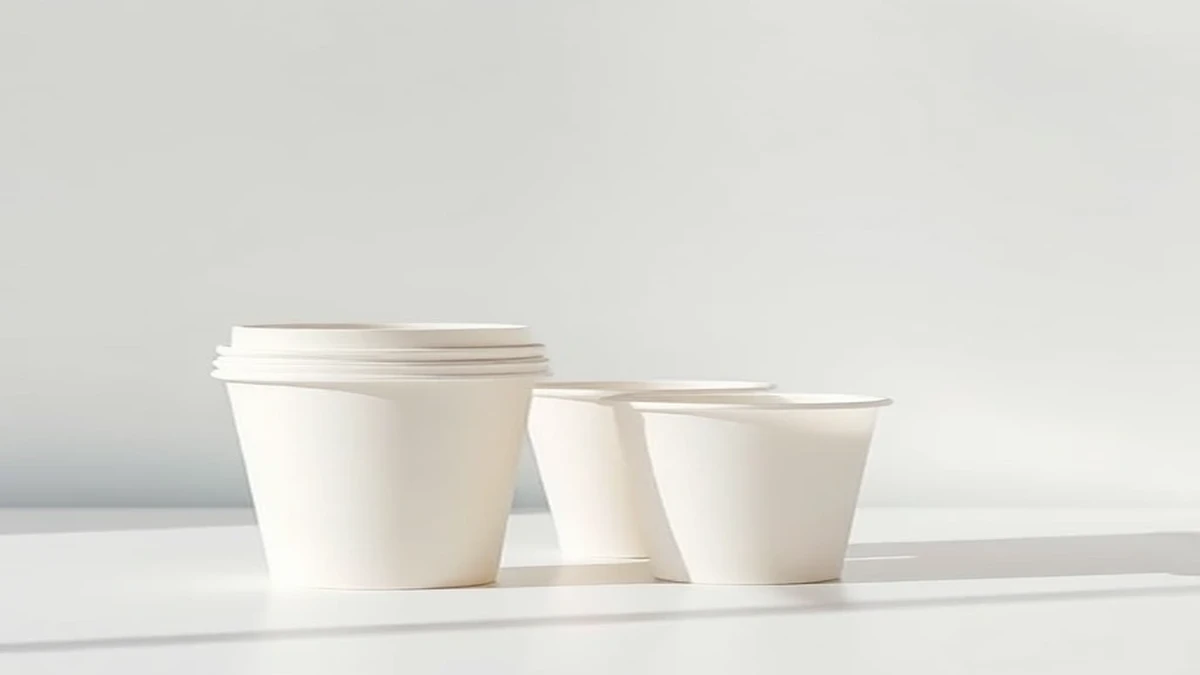
The key to choosing available biodegradable paper cups depends on:
What it is:
•Plant-based bioplastic derived from corn starch, sugarcane, or cassava
•Molecular structure similar to traditional plastic (polyethylene) but from renewable sources
•Most common “biodegradable” coating for paper cups
Performance Characteristics:
Environmental Profile:
•✅ Renewable source (corn vs petroleum)
•✅ 75% lower carbon footprint vs PE production (per kg material)
•✅ Compostable in commercial facilities (90-180 days)
•❌ Requires commercial composting (not home compostable)
•❌ Contaminates plastic recycling if mixed
•❌ 5-10 year landfill persistence (anaerobic conditions prevent breakdown)
Cost:
•PLA coating material: 25-35% more expensive than PE coating
•Finished cup: $0.075-0.095 per 12oz cup (vs $0.055 PE-coated, 50K MOQ)
•Premium: 36-73% price increase
Best for:
•Businesses with access to commercial composting collection
•Brands prioritizing sustainability messaging
•Hot beverages (coffee, tea) where heat tolerance sufficient
For various biodegradable paper cups, focus on:
What it is:
•Enhanced PLA with crystalline structure (modified manufacturing process)
•Higher heat resistance than standard PLA
•Premium biodegradable option
Performance Improvements vs PLA:
•Heat resistance: Up to 200-210°F (matches PE performance)
•Structural integrity: Maintains rigidity at high temperatures (no softening)
•Durability: Better resistance to deformation when filled with hot liquid
Environmental Profile:
•Same composting timeline as PLA (90-180 days commercial facilities)
•Slightly higher production energy vs PLA (crystallization process)
•Still requires commercial composting infrastructure
Cost:
•10-15% premium vs standard PLA
•$0.085-0.105 per 12oz cup (50K MOQ)
•55-91% premium vs PE-coated cups
Best for:
•High-temperature beverages (180-200°F soups, boiling water)
•Premium brands where cup performance critical
•Situations where cup must not soften (catering, events)
Understanding common biodegradable paper cups requires attention to these factors:
What it is:
•Water-based polymer dispersion applied to paperboard interior
•No plastic film (unlike PE or PLA extrusion coating)
•Thinner barrier than extrusion coatings
Performance Characteristics:
•Heat resistance: Limited to 160-180°F (fails with boiling water)
•Liquid hold time: 30-60 minutes maximum (coating gradually absorbs moisture)
•Best use: Cold beverages, short-duration hot drinks (under 160°F)
Environmental Profile:
•✅ Recyclable with standard paper recycling (coating compatible with pulping process)
•✅ No plastic involved (truly plastic-free)
•✅ Biodegrades rapidly in landfills (coating breaks down within 1-2 years)
•⚠️ Lower performance trade-off (limited to cold or lukewarm beverages)
Cost:
•Similar or slightly lower than PE-coated cups
•$0.050-0.065 per 12oz cup (50K MOQ)
•Economically competitive
Best for:
•Cold beverages exclusively (juice, soda, iced coffee)
•Brands seeking recyclable + biodegradable (best of both worlds)
•Short-duration service (under 30 minutes)
Understanding different biodegradable paper cups requires attention to these factors:
What it is:
•No interior coating (pure paperboard)
•Requires higher GSM paperboard (300-350 GSM vs 230-260 coated cups) for structure
Performance Characteristics:
•Heat: Not suitable for hot liquids (liquid absorbs into paper immediately)
•Cold: Limited use (30 minutes max before paper saturates and weakens)
•Best use: Dry snacks, samples, very short-duration cold beverages
Environmental Profile:
•✅ 100% recyclable (standard paper recycling stream)
•✅ Compostable (home and commercial)
•✅ Fastest biodegradation (1-3 months in any environment)
•✅ Lowest carbon footprint (no coating production)
Cost:
•Cheapest option: $0.035-0.045 per cup (12oz, 50K MOQ)
•20-35% cheaper than PE-coated cups
Best for:
•Sampling cups (trade shows, food demos)
•Dry products (popcorn, candy, nuts)
•Very short service time (<5 minutes cold drinks)
Understanding the biodegradable paper cups requires attention to these factors:
What it certifies:
•Product meets ASTM D6400 or D6868 standards for commercial compostability
•90% biodegradation within 180 days at commercial composting conditions
•No toxic residue in finished compost
•Third-party lab testing verified
How to verify:
1.Request BPI certification certificate from supplier
2.Visit bpiworld.org → “Certified Products” search
3.Enter company name or product ID
4.Verify certification current (not expired)
BPI logo: Products can display BPI Compostable logo if certified
Red flags:
•❌ Supplier claims BPI certified but can’t provide cert number
•❌ Certificate image doesn’t match bpiworld.org database
•❌ Certification expired (check date—certificates renew annually)
Understanding various biodegradable paper cups requires attention to these factors:
What it certifies:
•Field-tested compostability (tested at actual composting facilities vs lab-only)
•Performs similarly to yard waste in composting process
•Accepted at CMA member composting facilities (300+ facilities in US)
How to verify:
1.Request CMA certification certificate
2.Contact CMA directly to verify cert number
3.Check CMA Approved Products list
Advantage over BPI:
•Field testing vs lab-only (more real-world validation)
•Growing acceptance at municipal composting facilities
When evaluating the biodegradable paper cups, consider the following:
What it certifies:
•90% disintegration within 12 weeks
•90% biodegradation within 180 days
•Heavy metal content limits (safety)
•No ecotoxicity in finished compost
Recognition: Required for “compostable” claims in European Union
US relevance: Some US facilities accept EN 13432 certified products, but BPI/CMA more widely recognized domestically
Understanding standard biodegradable paper cups requires attention to these factors:
What it certifies (Stricter than commercial compostable):
•Biodegrades at lower temperatures (77-86°F vs 140-180°F commercial)
•Suitable for backyard compost piles
•180-360 day decomposition timeline
Issued by: TÜV Austria (European certification body)
Critical distinction:
•HOME certification rare (more difficult to achieve than commercial compostable)
•Most “compostable” cups only commercial compostable, not home compostable
•If supplier claims “home compostable,” verify OK Compost HOME cert specifically
Certification Hierarchy (Most to Least Rigorous):
1.OK Compost HOME: Home compostable (rare, highest standard)
2.BPI/CMA: Commercial compostable (most common for paper cups)
3.EN 13432: European commercial compostable (EU market)
4.ASTM D6400: Base US standard (certification bodies verify this)
5.“Biodegradable” (no cert): Unverified claim (avoid)

When evaluating available biodegradable paper cups, consider the following:
Lifecycle carbon emissions (12oz cup, per 1,000 cups):
Key insights:
•PLA cups only environmentally superior if commercially composted (66% reduction vs landfilled PLA)
•Landfilled PLA cups ≈ same impact as PE-coated cups (no benefit without composting infrastructure)
•Uncoated recyclable cups competitive if actually recycled (depends on local infrastructure)
Understanding common biodegradable paper cups requires attention to these factors:
Commercial composting facility (140-180°F, controlled moisture, aerobic):
Backyard compost (90-130°F, variable moisture, aerobic):
Landfill (anaerobic, cool, dry):
Critical insight: PLA environmental benefit exists ONLY with commercial composting. In landfills, PLA ≈ PE (both persist for years, both emit methane).
When evaluating common biodegradable paper cups, consider the following:
Manufacturing resource use (per 1,000 12oz cups):
Analysis:
•PLA requires 15% more water vs PE (crop irrigation for corn/sugarcane feedstock)
•PLA uses 11% less energy vs PE (renewable feedstock vs petroleum extraction/refining)
•PLA has land use footprint (agricultural land for corn, potential food crop displacement concerns)
•Uncoated cups lowest resource impact (no coating production)
Understanding biodegradable cups requires attention to these factors:
12oz cup pricing (FOB Asia, 50,000 MOQ):
Annual cost comparison (500,000 cups per year):
### ROI Analysis: Is Biodegradable Worth the Premium?
When evaluating different biodegradable paper cups, consider the following:
Scenario 1: Coffee shop switching PE to PLA (no composting infrastructure):
Investment:
•500,000 cups/year × $0.020 premium = $10,000 annual extra cost
Environmental benefit:
•Cups go to landfill (no composting collection in area)
•PLA landfill impact ≈ PE landfill impact (see decomposition data)
•Net environmental benefit: ~0%
Marketing benefit:
•Can claim “compostable cups” (technically true, but misleading without infrastructure)
•Risk: Customer backlash if they discover cups aren’t being composted
•Customer perception ROI: Negative if perceived as greenwashing
Verdict: Not recommended without composting infrastructure. Premium cost without environmental benefit.
Scenario 2: Coffee shop switching PE to PLA (commercial composting available):
Investment:
•$10,000 annual extra cost (cups)
•+$2,400 annual composting collection fees (vs standard waste)
•Total investment: $12,400
Environmental benefit:
•34% carbon reduction (23 kg vs 35 kg CO2e per 1,000 cups)
•500,000 cups = 6 metric tons CO2 reduction annually
•Carbon offset market value: $60-150 per ton = $360-900 equivalent value
Marketing benefit:
•Credible sustainability claim (certified compostable + actually composted)
•Attracts eco-conscious customers (10-15% willing to pay premium for sustainability)
•Estimated revenue increase: 3-5% from sustainability-focused segment = $3,000-5,000 annually (assumes $100K beverage revenue)
ROI calculation:
•Investment: $12,400
•Benefits: $360-900 (carbon offset value) + $3,000-5,000 (revenue increase) = $3,360-5,900
•Net ROI: -$6,500 to -$9,000 (investment exceeds direct financial return)
•Intangible benefits: Brand reputation, alignment with values, customer loyalty
Verdict: Financial break-even unlikely, but strategic value for sustainability-focused brands.
Scenario 3: Cold beverage business switching PE to water-based coating:
Investment:
•500,000 cups/year × -$0.003 savings = -$1,500 (cost savings)
Environmental benefit:
•Cups recyclable in standard paper recycling (vs PE rejection)
•Assuming 20% recycling rate: 31% carbon reduction on recycled portion
•Total impact: 6% overall carbon reduction
•Environmental benefit: Modest (better than PE, less than PLA-composted)
Marketing benefit:
•“Recyclable paper cups” messaging (credible, infrastructure widely available)
•Avoids greenwashing risk (claim verifiable by customers)
ROI calculation:
•Cost savings: $1,500
•Environmental benefit: Moderate (recyclability accessible to more customers)
•Marketing benefit: Positive brand perception without premium cost
•Net ROI: Positive ($1,500 savings + environmental benefit + marketing value)
Verdict: Highly recommended for cold beverage applications. Lower cost, better environmental profile than PE, no infrastructure barriers.

Understanding the biodegradable paper cups requires attention to these factors:
Question 1: “Is your biodegradable cup BPI or CMA certified? Can you provide the certification number?”
Good answer: “Yes, BPI certified. Certification number CPC-12345. Here’s the certificate PDF, you can verify on bpiworld.org.”
Red flag answer: “It’s biodegradable material, certified quality.” (No specific certification mentioned = likely no third-party verification)
Question 2: “What coating material do you use? PLA, CPLA, PE, or water-based?”
Good answer: “We use PLA coating, 18-20 gsm weight, from NatureWorks LLC (major PLA supplier). Can provide material spec sheet.”
Red flag answer: “Eco-friendly coating, 100% biodegradable.” (Vague, no material specifics = can’t verify)
Question 3: “What is the decomposition timeline and under what conditions?”
Good answer: “90-180 days in commercial composting facilities at 140-180°F, ASTM D6400 tested. Not suitable for home composting or landfills where it persists 5-10 years.”
Red flag answer: “Breaks down naturally in the environment in 6 months.” (No conditions specified, timeframe suspiciously fast for any environment = misleading claim)
Question 4: “Can you provide third-party lab test reports for composability?”
Good answer: “Yes, here are test reports from [accredited lab name] showing ASTM D6400 compliance, biodegradation rate 92% in 180 days.”
Red flag answer: “We have internal quality testing.” (No third-party verification = not credible)
Question 5: “Do you offer sample cups so I can verify coating performance and inspect certification markings?”
Good answer: “Yes, we’ll send 10 sample cups, you pay shipping. Samples include BPI logo printed on cup and certification documents.”
Red flag answer: “Samples available after order placed.” (Prevents pre-purchase verification = hiding something?)
The key to choosing common biodegradable paper cups depends on:
Step 1: Certificate verification (30 minutes)
•Request BPI/CMA/EN 13432 certificate PDF
•Visit certification body website (bpiworld.org for BPI)
•Search certification database using cert number
•Verify company name matches, cert not expired, product type matches (paper cups)
Step 2: Sample physical testing (1-2 days)
•Order samples, perform leak tests (fill with hot liquid 30 min, check seam/bottom)
•Inspect for certification logos printed on cup (BPI logo, certification number)
•Feel coating texture (PLA feels slightly different from PE—stickier when hot)
•Compare to PE-coated cup side-by-side (note any softening at high temperatures)
Step 3: Material spec sheet review (15 minutes)
•Request material specification sheet for coating (should specify PLA, gsm weight, supplier)
•Verify paperboard specs (FSC certified paperboard preferred for full sustainability)
•Check for heavy metal content limits (EN 13432 requirement, safety verification)
Step 4: Reference check (1 hour)
•Request 2-3 customer references who purchased biodegradable cups
•Contact references: Ask about certification validity, performance issues, composting compatibility
•Check online reviews on B2B platforms (Alibaba, etc.)
Step 5: Small trial order (before 100K+ commitment)
•Order 5,000-10,000 cups (small enough to minimize risk)
•Test in actual use environment (cafe, catering, events)
•Verify customer satisfaction, no performance issues (leaking, softening)
•Confirm certification logos printed correctly (some suppliers only on samples, not production)
Total vetting time: 2-3 days (worth investment to avoid $5,000-15,000 loss from uncertified/defective cups)
The key to choosing biodegradable cups depends on:
Before switching to compostable cups, verify disposal infrastructure:
Step 1: Check local composting availability
•Contact waste management provider: “Do you collect commercial compostable materials?”
•Visit findacomposter.com (US Composting Council directory) to find facilities near you
•Call facility directly: “Do you accept BPI-certified compostable paper cups?”
Results interpretation:
•✅ Composting available: Proceed with PLA-coated cups, environmental benefit realized
•❌ No composting: PLA offers minimal benefit, consider water-based coating or uncoated cups instead
Step 2: Assess composting collection logistics
For businesses:
•Separate bin required: Compostable materials must be kept separate from trash and recycling
•Collection frequency: Weekly or biweekly (verify provider offers this)
•Contamination prevention: Train staff to prevent mixing (non-compostable items contaminate batch)
•Cost: Composting collection costs 20-40% more than standard waste (verify pricing)
For customer-facing businesses (cafes, quick-service restaurants):
•Customer education critical: Signage, labels on cups explaining proper disposal
•Bin placement: Separate clearly-labeled composting bins near exits
•Monitoring: Staff must monitor bins, remove contaminants (plastic lids mixed in by mistake)
Step 3: Measure diversion success
Track metrics:
•Diversion rate: % of cups diverted from landfill to composting
•Contamination rate: % of compost bins contaminated with non-compostables
•Cost per cup disposed: Compare composting cost to previous landfill cost
Benchmarks:
•Good diversion rate: >70% of cups reaching composting (not landfill)
•Acceptable contamination: <5% (composters reject batches >10% contamination)
•Payback period: 3-5 years typical for environmental investment (not immediate ROI)
The key to choosing common biodegradable paper cups depends on:
Challenge: Customers don’t know how to dispose of compostable cups (confusion leads to contamination of recycling or composting bins)
Solution 1: Clear cup labeling
•Print on cup: “COMPOSTABLE – Commercial composting facilities only”
•Include QR code: Links to disposal instructions specific to your location
•Icon: BPI Compostable logo + composting bin graphic
Solution 2: Prominent signage at disposal stations
•Visual guide: Photos showing “YES” items (compostable cups) and “NO” items (plastic cups, lids)
•Step-by-step: “1. Remove plastic lid (trash). 2. Place compostable cup in green bin.”
•Multilingual: English + local languages (Spanish in US Southwest — Chinese in certain metro areas)
Solution 3: Staff training and engagement
•Train employees: Explain compostable cups, proper disposal, answer customer questions
•Staff as ambassadors: Proactively educate customers at point of service
•Incentivize participation: Staff recognition for high diversion rates, low contamination
Solution 4: Digital communication
•Website: Sustainability page explaining compostable cup program, disposal instructions
•Social media: Posts showcasing composting efforts, educate followers
•Receipts: Print message on receipts reminding proper cup disposal
Effectiveness: Businesses with comprehensive customer education achieve 60-80% proper disposal rates vs <30% without education.
When evaluating common biodegradable paper cups, consider the following:
What is greenwashing: Making misleading environmental claims to appear more sustainable than reality
Common greenwashing mistakes with biodegradable cups:
Mistake 1: Claiming “biodegradable” without specifying conditions or timeframe
•Fix: Be specific: “Compostable in 90-180 days at commercial composting facilities. Not suitable for home composting or landfills.”
Mistake 2: Using compostable cups but disposing in landfill
•Fix: Only claim “compostable” if cups are actually being composted (infrastructure in place)
Mistake 3: Overstating environmental benefit
•Fix: Honest messaging: “Our compostable cups reduce carbon footprint by 34% when properly composted compared to traditional cups.”
Mistake 4: Using “eco-friendly” or “green” without specifics
•Fix: Use concrete, verifiable claims: “BPI-certified compostable cups made from plant-based materials with FSC-certified paperboard.”
Mistake 5: Not educating customers on limitations
•Fix: Transparent communication: “Our cups require commercial composting facilities. If composting is not available in your area, please use standard waste bin.”
Result: Honest, specific communication builds customer trust and protects brand reputation from greenwashing backlash.

Understanding the biodegradable paper cups requires attention to these factors:
Profile:
•Large public university campus (30,000 students)
•Campus coffee shop serving 2,000 beverages daily
•700,000 cups annually
Program implementation:
Initial situation (2022):
•Used PE-coated cups, 95% went to landfill
•Students demanded sustainable options
•Campus already had composting infrastructure (food waste program)
Switch to biodegradable:
•Partnered with BPI-certified PLA cup supplier
•Cost increase: $0.020 per cup = $14,000 annually
•Implemented campus-wide composting bins (15 locations)
•Launched education campaign (signage, social media, classroom presentations)
Results after 18 months:
•72% diversion rate (504,000 cups composted annually)
•196,000 cups still landfilled (28% due to off-campus use, improper disposal)
•Carbon reduction: 4.2 metric tons CO2e annually
•Student satisfaction: 88% positive feedback on sustainability survey
•Contamination rate: 6% (acceptable, below 10% rejection threshold)
Financial outcome:
•Extra cost: $14,000 annually (cups + expanded composting service)
•University sustainability fund: $10,000 annual grant (reduced net cost to $4,000)
•Marketing value: Featured in university sustainability report, improved campus reputation
Lessons learned:
•Infrastructure critical (campus composting collection made program viable)
•Education ongoing (required continuous signage, staff reminders to maintain high diversion)
•Not 100% perfect (28% still landfilled, realistic outcome for campus setting)
Verdict: Successful program due to existing composting infrastructure and commitment to education. Cost justified by environmental impact and student satisfaction.
When evaluating biodegradable paper cups, consider the following:
Profile:
•Regional fast-casual restaurant chain (12 locations)
•1.5 million cups annually
•Target demographic: eco-conscious millennials
Program implementation (and failure):
Switch to “biodegradable”:
•Switched to cups labeled “biodegradable, eco-friendly”
•Marketing campaign: “Going green! 100% biodegradable cups”
•No composting collection arranged (cups disposed in standard trash)
Customer investigation:
•Environmentally-aware customer noticed cups lacked BPI certification
•Contacted supplier, discovered cups were PLA-coated but no composting infrastructure
•PLA cups going to landfill = similar environmental impact to PE cups
•Posted findings on social media: “Greenwashing alert! [Restaurant] fake eco-friendly claims”
Backlash:
•Social media post went viral locally (5,000+ shares, 800+ comments)
•Negative press: Local newspaper article “Restaurant faces greenwashing accusations”
•Customer complaints flooded corporate (180+ emails in 2 weeks)
•Sales impact: Estimated 5-8% decline at affected locations (2 months duration)
Damage control:
•Public apology acknowledging lack of composting infrastructure
•Reverted to PE-coated cups (honest about limitations)
•Implemented paper straw replacement (simpler sustainability win)
•Donated $10,000 to local environmental nonprofit (reputation repair)
Financial outcome:
•Lost revenue: $45,000-70,000 (sales decline over 2 months)
•PR damage control costs: $15,000 (apology campaign, donation)
•Total loss: $60,000-85,000
Lessons learned:
•Don’t claim biodegradable without infrastructure to support it (backfires spectacularly)
•Customers verify environmental claims (eco-conscious demographics research claims)
•Greenwashing risk worse than no claim (honest PE cups better than fake biodegradable)
Verdict: Catastrophic failure from greenwashing. Honesty about limitations is always better than misleading claims.
Understanding different biodegradable paper cups requires attention to these factors:
Profile:
•Corporate catering company (serving 50+ office buildings)
•800,000 cold beverage cups annually (iced coffee, juice, water)
•No hot beverages (catering cold drinks only)
Program implementation:
Switch to water-based coating:
•Replaced PE-coated cups with water-based coated cups
•Cost savings: $0.003 per cup = $2,400 annually
•Recyclable with standard paper recycling (offices already have paper recycling bins)
•No behavior change required from customers (dispose in existing recycling)
Results after 12 months:
•Cost savings: $2,400 (cups cheaper than PE)
•Environmental benefit: Estimated 15-20% of cups actually recycled (vs 0% with PE)
•Carbon reduction: 1.2 metric tons CO2e (from recycled portion)
•Zero customer complaints (performance equivalent to PE for cold beverages)
•Marketing: Updated website “100% recyclable cups” (credible, simple claim)
Financial outcome:
•Savings: $2,400 annually
•Environmental benefit: Modest but real (better than PE with no cost increase)
•Risk: Zero (no infrastructure required, recyclability broadly available)
Lessons learned:
•Match cup type to use case (water-based perfect for cold beverages)
•Simplicity wins (recyclability easier than composting—existing infrastructure)
•Cost savings possible with environmental benefit (rare but achievable)
Verdict: Ideal scenario. Lower cost, better environmental profile, leverages existing recycling infrastructure. Highly replicable for cold beverage applications.
Q1: Can I put BPI-certified compostable cups in my backyard compost pile?
Short answer: No, not recommended. Most BPI-certified cups require commercial composting conditions (140-180°F sustained temperature).
Detailed explanation:
Commercial composting (140-180°F):
•Industrial facilities use large-scale aeration, turning, and heat generation (from decomposing organic matter at scale)
•PLA coating breaks down in 90-180 days at these temperatures
•Temperature sustained 24/7 for weeks
Backyard composting (90-130°F):
•Home compost piles reach lower peak temperatures (depends on pile size, turning frequency)
•PLA remains largely intact (insufficient heat to break molecular bonds)
•3-5 years estimated for partial breakdown (not the intended 90-180 days)
Home compostable option:
•Look for OK Compost HOME certified cups (rare, premium product)
•Certified to break down at 77-86°F (achievable in backyard compost)
•180-360 days decomposition timeline
•Cost: 15-25% premium vs standard PLA cups
Alternative for home composters:
•Uncoated paper cups: Home compost in 90-180 days reliably
•Limitation: Only suitable for dry products or very short-duration cold beverages
Bottom line: Standard BPI compostable cups require commercial facilities. Don’t claim “compostable” to customers unless you have infrastructure to collect and deliver cups to commercial composters.
Q2: Are biodegradable cups actually better for the environment if they end up in a landfill?
Short answer: No. In landfills, PLA-coated cups have similar (or worse) environmental impact compared to PE-coated cups.
Why PLA doesn’t biodegrade in landfills:
Landfill conditions:
•Anaerobic (no oxygen): Trash compacted, covered with soil, oxygen excluded
•Cool (50-70°F deep in landfill): Far below 140-180°F needed for PLA breakdown
•Dry: Limited moisture circulation prevents microbial activity
PLA landfill behavior:
•Remains intact for 5-10 years (molecular structure stable in cool, dry, anaerobic conditions)
•Eventual degradation produces methane (potent greenhouse gas, 28-36× worse than CO2 over 100 years)
•Net environmental impact: Similar or worse than PE landfilling
PE landfill behavior:
•Remains intact for 20-30 years
•Eventually produces methane (similar to PLA)
•Slightly longer persistence but functionally similar outcome
Environmental benefit ONLY if composted:
•Commercial composting: PLA breaks down aerobically (produces CO2, not methane)
•34% lower carbon footprint vs landfilled PE cups
•But this requires composting infrastructure actually being used
Conclusion: Biodegradable cups provide zero environmental advantage in landfills. Environmental benefit only realized with composting. If no composting infrastructure, save money and use standard PE-coated cups (honest about limitations) or switch to recyclable water-based coating (better option).
Q3: How do I verify a supplier’s biodegradability claims aren’t greenwashing?
Verification steps (30-60 minutes, prevents $5,000-15,000 losses from false claims):
Step 1: Request certification (5 minutes)
•Ask: “Is this cup BPI, CMA, or EN 13432 certified? Please provide certification number.”
•Red flag: Supplier says “biodegradable material” without specific certification = no third-party verification
Step 2: Verify certification online (10 minutes)
•BPI: Visit bpiworld.org → “Certified Products” → Search company name or cert number
•CMA: Contact CMA to verify (info@compostmanufacturingalliance.com)
•EN 13432: Request certificate from accredited body (TÜV, Vinçotte, DIN CERTCO)
•Verify: Certification current (not expired), product type matches (paper cups), company name matches supplier
Step 3: Request material specifications (15 minutes)
•Ask: “What coating material? PLA, PE, water-based? What is the coating weight (gsm)?”
•Ask: “Who is your PLA supplier?” (Major suppliers: NatureWorks, TotalEnergies Corbion, legitimate sources)
•Red flag: Vague answers like “eco-friendly coating” without material specifics
Step 4: Sample testing (1 day)
•Order 5-10 sample cups
•Check for certification logos printed on cup (BPI logo should be visible)
•Perform heat test: Fill with 180°F water, wait 10 minutes—PLA cups soften slightly at rim (characteristic behavior), PE cups remain rigid
•Tactile test: PLA coating feels slightly sticky/tacky when hot, PE coating stays smooth
Step 5: Request lab test reports (10 minutes)
•Ask: “Can you provide ASTM D6400 test reports showing biodegradation rate?”
•Legitimate report shows: 90%+ biodegradation in 180 days, from accredited lab (name of lab visible)
•Red flag: “Internal testing shows biodegradable” (no third-party lab = not credible)
Step 6: Check online reputation (20 minutes)
•Search supplier name + “biodegradable cups” + “review” on Google
•Check Alibaba reviews (if applicable): Look for verified reviews mentioning certifications
•Search for complaints: “[Supplier name] greenwashing” or “fake compostable”
Total time investment: 60 minutes (worthwhile to avoid fake certifications and wasted money on non-biodegradable cups marketed as “eco-friendly”)
Red flags summary:
•❌ No certification number provided
•❌ Certification not verifiable online
•❌ Vague material descriptions (“biodegradable coating”)
•❌ No test reports from third-party labs
•❌ No certification logos on cups themselves
•❌ Unrealistic claims (“biodegrades in 30 days in any environment”)
Q4: What’s the difference between “biodegradable,” “compostable,” and “degradable”?
Critical definitions (oftenused, legally distinct):
Biodegradable:
•Meaning: Breaks down into natural elements (CO2, water, biomass) through biological processes
•Timeframe: Unspecified (can be 6 months or 500 years)
•Conditions: Unspecified (can require industrial conditions or occur naturally)
•Certification: Often no tparty verification required (self-declared)
•Example: Technically, all organic materials are “biodegradable” eventually—including petroleum-based plastics over centuries
Compostable (stricter standard):
•Meaning: Breaks down into nutrient-rich compost within specific timeframe, leaving no toxic residue
•Timeframe: 90-180 days (specified in ASTM D6400, EN 13432 standards)
•Conditions: Commercial composting facilities (140-180°F, aerobic, controlled moisture)
•Certification: Requires third-party testing and verification (BPI, CMA, OK Compost)
•Example: BPI-certified PLA-coated cups compost in 90-180 days at commercial facilities
Degradable (often misleadinsometimes Meaning: Breaks apart into smaller pieces (not necessarily biodegrades)
•Reality: Often referfrequentlyphoto-degradable or oxo-degradable plastics (fragment into microplastics, don’t truly biodegrade)
•Environmental concern: Creates microplastic pollution (small plastic pieces persist indefinitely in environment)
•Certification: No legitimate certification for “degradable” (red flag term)
•Example: Oxo-degradable plastic bags break into fragments but plastic molecules remain (not truly biodegradable)
Priority ranking (most to least environmentally credible):
1.Understanding different biodegradable paper cups helps.Compostable + certified (BPI/CMA/EN 13432): Verifiable environmental benefit with infrastructure
2.Understanding common biodegradable paper cups helps.Biodegradable + certified (OK Compost HOME): Rare, high standard if certified
3.Understanding available biodegradable paper cups helps.Biodegradable (uncertified): Vague, unverified claim (likely greenwashing)
4.Understanding common biodegradable paper cups helps.Degradable: Red flag (often sometimes than standard plastics due to microplastic concerns)
What to trust: Only “compostable” with third-party certification (BPI, CMA, EN 13432). All other claims should be questioned and verified.
Q5: Can I recycle compostable PLA-coated cups?
Short answer: No, don’t put PLA-coated cups in recycling bins. They contaminate plastic recycling streams.
Why PLA contaminates recycling:
Plastic recycling (PET — HDPE, PP):
•Recycling facilities sort plastics by resin type (PET bottles, HDPE containers, etc.)
•Each resin type recycled separately (different melting points, properties)
•Mixed resins create weak, unusable recycled plastic
PLA contamination problem:
•PLA looks like clear plastic (similar appearance to PET bottles)
•Sorting equipment can’t reliably distinguish PLA from PET (near-infrared scanners sometimes misidentify)
•PLA mixed into PET recycling batch = contamination (degrades quality of recycled PET)
•Result: Recyclers reject batches with PLA contamination or downgrade to lower-value applications
Paper recycling (paperboard):
•PLA coating prevents paper fiber liberation (coating doesn’t separate during pulping like uncoated paper)
•Contamination similar to PE-coated cups (rejected by most facilities)
•Exception: Water-based coatings compatible with paper recycling (coating breaks down during pulping)
Proper disposal:
•Commercial composting: Correct disposal for BPI-certified PLA cups (green compost bins)
•Trash: If no composting available, landfill disposal (prevents recycling contamination)
•Never recycling: Do not put in blue recycling bins (contaminates both plastic and paper streams)
Customer confusion risk:
•Many customers see “plant-based” or “eco-friendly” and assume recyclable (incorrect)
•Clear labeling essential: “COMPOSTABLE – Do not recycle” (prevent well-intentioned contamination)
Alternative for recyclability:
•Water-based coated cups: Actually recyclable with paper (best of both worlds for cold beverages)
•Uncoated cups: 100% recyclable with paper (limited use cases)
Q6: How much does composting collection cost compared to regular trash service?
Typical cost structure (commercial/business composting service):
Regular trash service (baseline):
•Cost: $0.08-0.15 per gallon of waste (varies by region, frequency)
•Example: 4-yard dumpster, weekly pickup = $150-300/month
Composting service (added service):
•Cost: $0.10-0.20 per gallon of compostable material
•Premium: 25-50% more expensive than trash disposal
•Example: 2-yard compost bin, weekly pickup = $100-180/month (in addition to trash service)
Combined waste system (trash + composting):
•Total cost: $250-480/month (both services)
•vs trash-only: $150-300/month
•Extra cost: $100-180/month for composting service
Cost-benefit for 1,000 cups/week business:
Composting costs (annual):
•Composting collection: $1,200-2,160/year (extra service fees)
•PLA cup premium: $0.020 per cup × 52,000 cups/year = $1,040/year
•Total extra cost: $2,240-3,200/year
Benefits:
•Carbon reduction: ~600 kg CO2e/year
•Waste diversion: 85-90% of cup waste diverted from landfill (reduced landfill fees if charged by weight)
•Marketing value: Credible sustainability messaging
•Customer satisfaction: Eco-conscious customers value composting
Break-even scenarios:
•If waste charged by weight: Diverting 85% of cup waste reduces landfill tonnage by ~0.3 tons/year = $50-80 savings (minimal offset)
•If sustainability attracts customers: 2-3% revenue increase offsets composting costs for businesses with $100K+ annual revenue
•If no financial impact: Pure environmental investment (~$2,500/year for sustainability goals)
Regional variation:
•West Coast (CA, OR, WA): More composting infrastructure, lower costs ($80-120/month typical)
•Northeast (NY, MA): Moderate infrastructure, medium costs ($120-180/month)
•Southeast/Midwest: Limited infrastructure, higher costs ($150-250/month if available)
Conclusion: Composting adds 30-50% to waste disposal costs. Financially justified only if waste charged by weight (savings from diversion) or sustainability drives revenue increase. For pure environmental goals, expect $2,000-3,000 annual investment.
Q7: Are there any truly home-compostable paper cup options?
Short answer: Yes, but rare and expensive. OK Compost HOME certified cups exist but uncommon.
OK Compost HOME certification:
•Standard: Issued by TÜV Austria (European certification body)
•Requirements: Biodegrades at 77-86°F (achievable in backyard compost piles)
•Timeframe: 180-360 days (slower than commercial composting due to lower temperatures)
•Testing: Verified to break down in home compost conditions
Cup options:
Option 1: OK Compost HOME certified PLA cups (rare):
•Availability: Very limited suppliers (mostly European manufacturers)
•Performance: Similar heat resistance to standard PLA (suitable for coffee/tea)
•Cost: 30-50% premium vs standard PLA cups
•Example pricing: $0.10-0.13 per 12oz cup (vs $0.075 standard PLA)
Option 2: Uncoated paper cups (reliable home compostable):
•Availability: Widely available (standard product)
•Performance: Unsuitable for hot liquids, limited use for cold (30 minutes max before saturation)
•Cost: Cheapest option ($0.035-0.045 per cup)
•Composting: Reliably composts in 90-180 days in home or commercial systems (no coating barrier)
•Best use: Sampling cups, dry snacks, very short-duration cold beverages
Option 3: Wax-coated cups (vintage technology, rare):
•Availability: Niche suppliers (mostly for specialty applications)
•Performance: Wax melts at low temps (not suitable for hot beverages), suitable for cold drinks
•Composting: Wax biodegradable in home compost (6-12 months)
•Cost: Similar to PE-coated cups
•Note: Wax coatings largely replaced by PE/PLA in modern production (performance limitations)
Why home-compostable cups rare:
Technical challenges:
•Lower temp breakdown (77-86°F) requires specialized coating formulations (R&D investment)
•Performance trade-offs: Coatings that break down easily offrequentlyave inferior liquid barrier properties
•Certification costs: OK Compost HOME certification expensive (smaller market, higher per-unit certification cost)
Market factors:
•Small demand: Most consumers don’t home compost (only 5-10% of households)
•Commercial composting focus: Industry prioritizes BPI certification (larger market of businesses)
•Economics: Premium pricing limits adoption (30-50% more than already-expensive PLA cups)
Best current option for home composters:
•Uncoated paper cups for cold beverages/dry products (reliably home compostable, widely available, cheap)
•Reusable cups for hot beverages (best environmental option—avoid disposables entirely)
Future outlook: As home composting grows (20% of US households by 2030 projected), home-compostable cups may become more available and affordable. Currently, limited options and high cost limit adoption.
Papacko offers BPI-certified compostable paper cups with transparent material specifications, third-party lab testing verification, and honest guidance on environmental impact and disposal requirements.
Our Biodegradable Cup Options:
•PLA-coated compostable: BPI-certified, 18-20 gsm PLA coating, 90-180 day commercial composting
•CPLA-coated high-heat: Enhanced heat resistance (200°F+), BPI-certified, premium option
•Water-based coated recyclable: Cold beverage applications, recyclable with paper, cost-competitive
•Uncoated 100% recyclable: Dry products and sampling, home and commercial compostable
Certification Transparency:
•BPI certification number provided with every order (verify on bpiworld.org)
•ASTM D6400 lab test reports available on request (from accredited labs)
•FSC-certified paperboard option (full sustainability from forest to disposal)
•Material spec sheets provided (coating type, gsm weight, supplier source)
Honest Environmental Guidance:
•Infrastructure assessment: We help you determine if composting available in your area
•Disposal best practices: Signage templates, customer education resources
•No greenwashing: We clearly state limitations (commercial composting required, not suitable for landfills)
•ROI analysis: Transparent cost-benefit breakdown for your specific use case
Quality Guarantee:
•Leak rate <0.5% (seam strength and coating integrity testing)
•Heat resistance verified (185°F for PLA, 200°F+ for CPLA)
•GSM accuracy ±5% (paperboard weight verification)
•Sample packs available (test before committing to bulk order)
Get Started:
•Request BPI certification documents (verify before ordering)
•Receive sample pack (10-15 cups for leak testing, heat testing)
•Infrastructure consultation (assess local composting availability)
•Pricing quote with environmental impact data