Ready to create your own branded paper cups or packaging?
Tell us your requirements — size, coating, printing, and destination — and our team will prepare a detailed quotation within 24 hours.

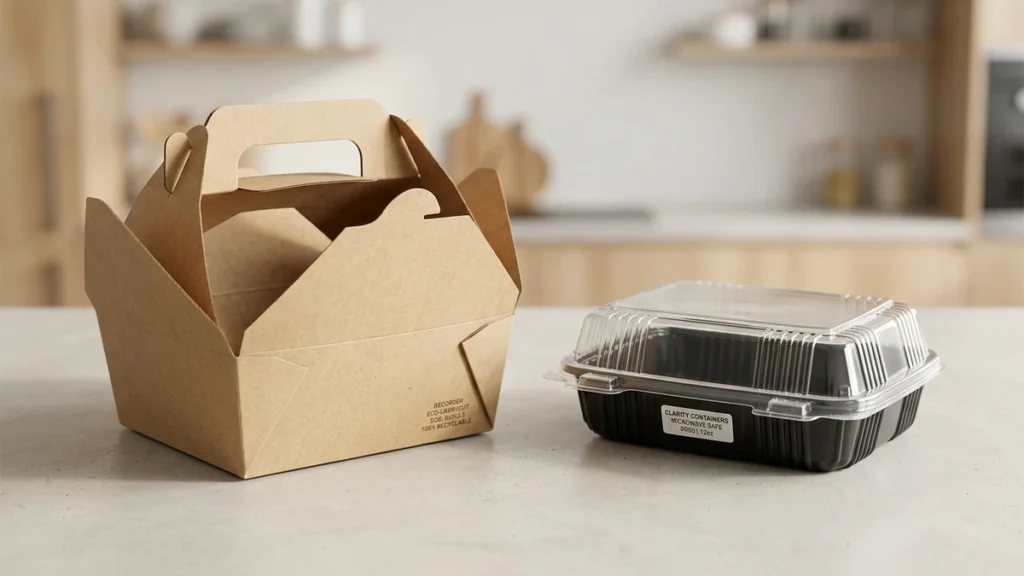
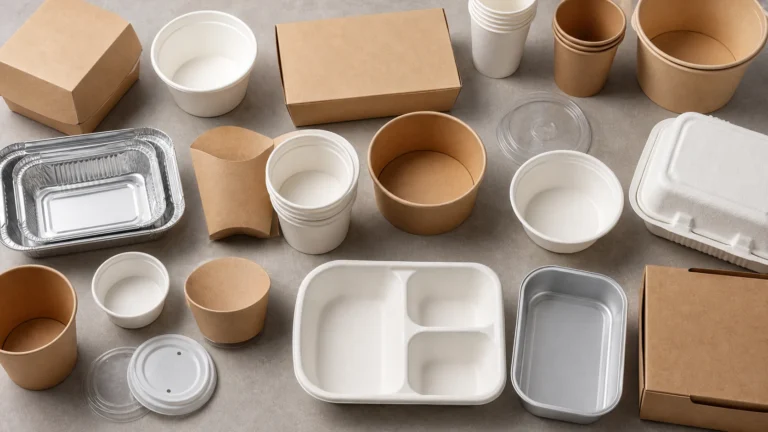
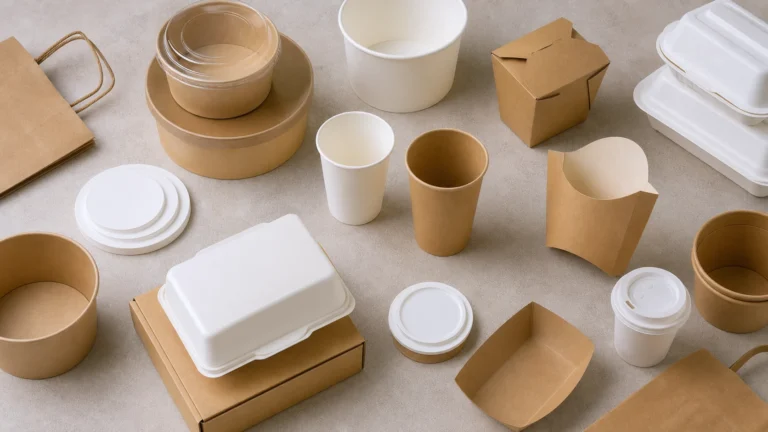
Carryout boxes and takeout containers are not the same thing, even if buyers and operators often use the terms interchangeably. Carryout boxes are folded paper-based structures — typically 18 pt to 24 pt paperboard or corrugated board — designed around rigidity and stackability, while takeout containers are base-and-lid or hinged formats built for sealing, leak control, and moisture resistance during transport. That structural difference changes the failure mode: a carryout box usually fails when moisture or grease weakens the board; a takeout container usually fails at the lid interface if the seal or snap-fit is not matched to fill weight and transit conditions.
| Attribute | Carryout Box | Takeout Container |
|---|---|---|
| Primary material | Folded paperboard, kraft board, corrugated | PP, PET, CPET, molded fiber, EPS where permitted |
| Closure mechanism | Tuck-in or interlocking fold | Hinged lid, snap lid, separate lid, or film seal |
| Typical wall thickness | 18-24 pt board | 2-6 mm depending on material |
| Liquid/grease resistance | Coating-dependent | Usually driven by base material and lid design |
| Heat retention window | 15-30 min standard paperboard; longer for corrugated | 20-45 min typical; longer for insulated formats |
| Stack strength | High when kept dry | Variable by resin, wall design, and nesting geometry |
| Custom print surface | Broad exterior print area | Limited on many molded formats; better on paper or clear-lid combinations |
| Common use case | Pizza, fried items, bakery, sandwiches | Sauced meals, soups, salads, sushi, meal prep |
The better decision sequence is: food profile, then transit window, then material spec, then commercial fit.
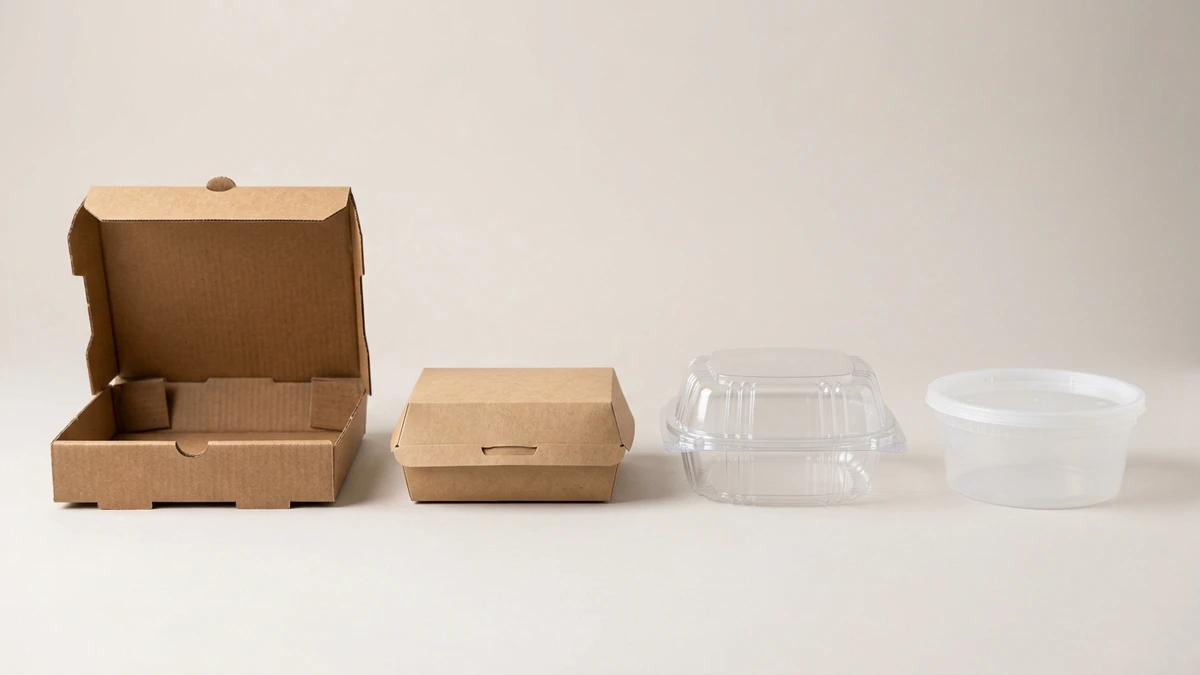
Material choice controls performance, machine handling, storage life, and claim risk. Substrate and barrier system determine how the pack handles heat, moisture, grease, and stacking.
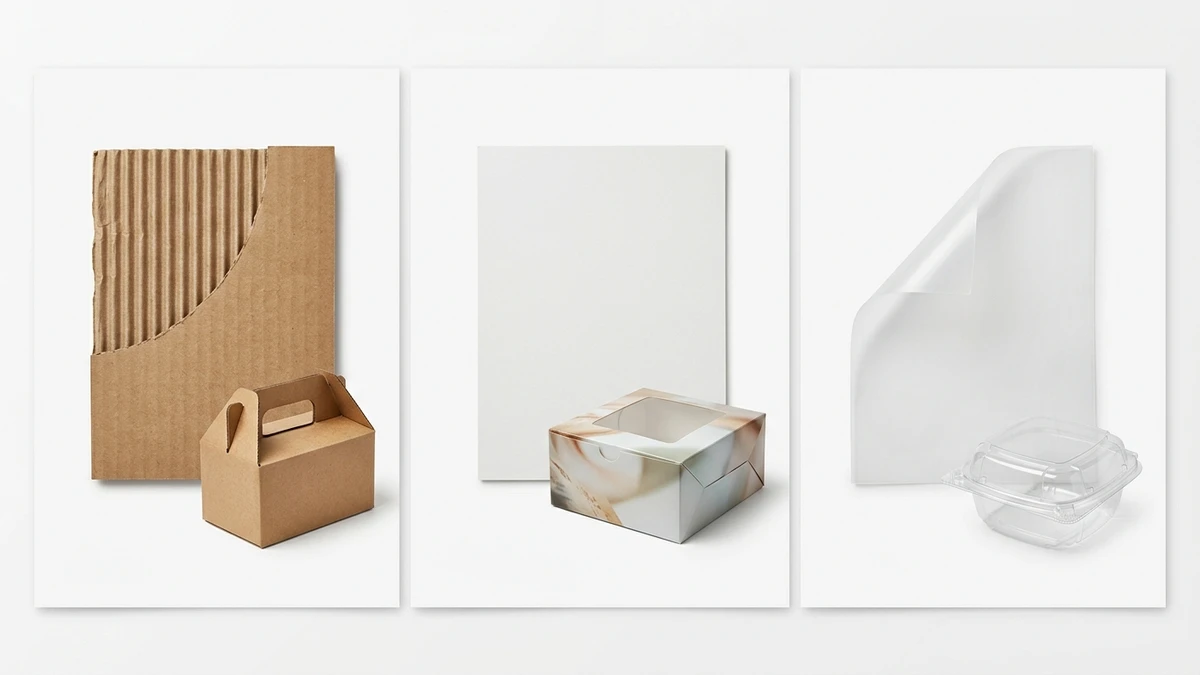
Corrugated paperboard uses a fluted medium between linerboards, trapping air that improves crush resistance and slows heat loss. Dense hot foods typically hold acceptably for 20 to 30 minutes in a properly vented corrugated box; once steam saturates the board, compression strength and stack performance drop quickly.
Solid bleached sulfate (SBS) paperboard offers a smooth print surface and clean color reproduction, making it a strong choice for branded bakery and deli packs. It provides less insulation than corrugated, so it functions better as a carrier than as a thermal package.
Kraft board and molded fiber suit buyers who want a natural appearance or a fiber-based alternative to plastic, though higher unit weight affects freight and case-pack efficiency at scale.
Polypropylene (PP) is the workhorse for hot-food clamshells and deli-style containers, handling elevated fill temperatures and offering good leak resistance when lid geometry is correct. Longer delivery windows often still require a secondary thermal bag.
PET is primarily a cold-food material; its clarity supports merchandising, but heat distorts lids and compromises fit, making it a poor choice for sustained hot-fill use.
CPET tolerates far higher temperatures than standard PET or PP and is used where freezer-to-oven performance is required. The cost premium only makes sense when reheating capability is genuinely part of the product specification.
EPS still performs well on heat retention and cost where permitted, but regulatory exposure can outlast the pricing advantage.
| Property | Corrugated / SBS Carryout Box | PP Clamshell | PET Cold Container | CPET Tray |
|---|---|---|---|---|
| Heat retention | Moderate to low depending on board type | Moderate | Low for hot food | High |
| Moisture resistance | Low without coating | High | High for cold use | High |
| Leak resistance | Coating-dependent | High with correct lid fit | Moderate to high for cold items | High |
| Print quality | High | Moderate | Limited direct print utility | Low to moderate |
| Regulatory stability | Generally favorable | Generally favorable | Favorable in cold applications | Favorable |
| Cost at volume | Low to moderate | Moderate | Moderate | High |
Corrugated and paperboard formats win when print quality, stacking, and dry-food presentation matter; they lose when the menu produces sustained moisture or free liquid unless a barrier upgrade is added. PP wins when a menu spans both warm and chilled applications. PET wins when visibility sells the food. CPET wins in prepared retail and reheating channels, not routine delivery.
If the menu changes often, start with stocked PP or PET formats before committing to custom fiber structures. Ask for both material specs and assembled samples; a board grade or resin callout alone will not reveal closure weakness. For any coated paper format, confirm what the barrier is designed to resist: grease, short-term moisture, or full liquid contact.
The most useful comparison is which format controls the main risk in your service model: heat loss, leakage, or stack failure.
| Performance Factor | Carryout Box | Takeout Container |
|---|---|---|
| Heat retention, first 30 min | Good with corrugated; fair with standard paperboard | Fair with standard PP; better in insulated formats |
| Heat retention, 45+ min | Drops as steam softens board | Shape remains stable, but food may cool without secondary insulation |
| Leak resistance | Limited unless lined or specially coated | Strong if lid fit and closure depth are correct |
| Grease resistance | Dependent on barrier treatment | High from material itself |
| Stacking | Strong when dry | Variable; some clamshells deform under uneven load |
| Moisture exposure | Main weakness | Generally stable |
| Ventilation control | Easy to build in through die-cut vents | Possible, but venting often reduces leak security |
For fried or dry foods carried within 10 to 20 minutes, vented board formats usually preserve texture better than sealed plastic. For liquid-heavy meals over 30 minutes, leakage control matters more than crispness, making lidded containers the safer specification.
A corrugated box can pass a sample test, then fail in live delivery because steam is trapped inside a bag during a 45-minute multi-stop route, softening the board before the food loses heat. This typically surfaces in larger programs where one sauce-heavy item drives complaints across a standardized box used for multiple menu lines.
For food-contact suitability, coatings, resins, and additives should be evaluated under recognized food-contact frameworks such as the FDA’s guidance on food contact substances.
The right package depends on the food’s moisture load, the transit window, and how much operational variation the line can tolerate.
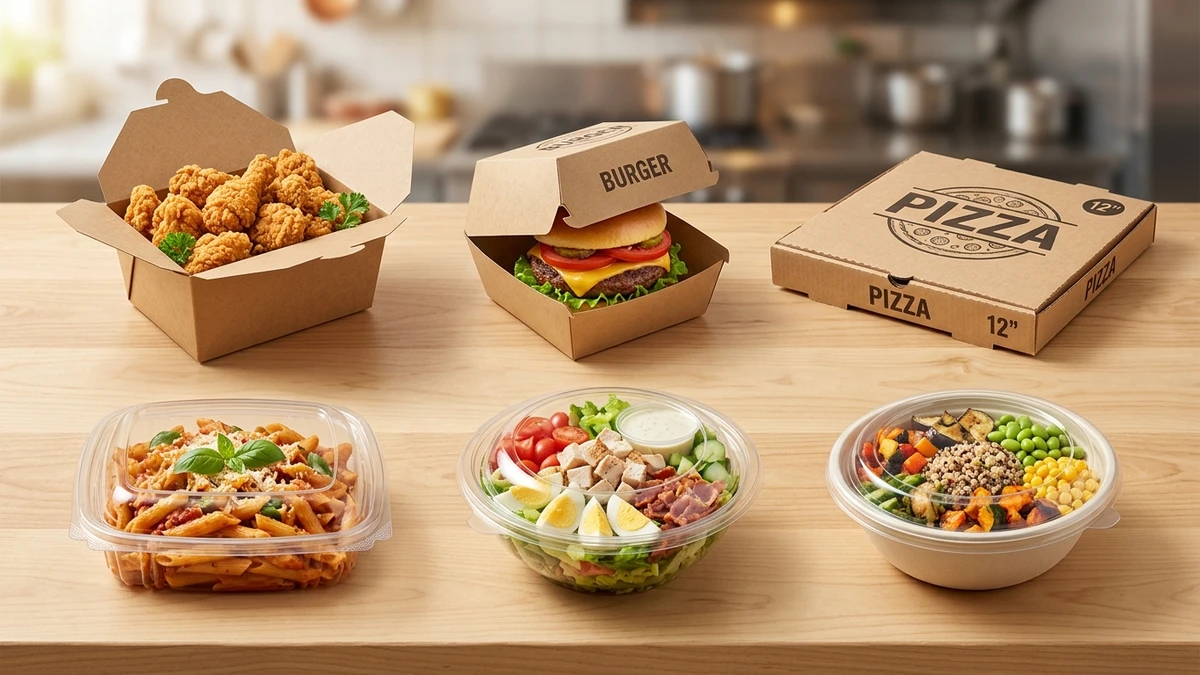
| Food / Service Need | Better Choice | Why It Wins | Main Trade-Off |
|---|---|---|---|
| Fried foods, short carry | Carryout box | Venting releases steam and helps preserve texture | Lower leak tolerance |
| Sauced pasta, curry, stew | Takeout container | Lid-and-base system manages free liquid and oil | More condensation if not vented |
| Burgers, sandwiches | Carryout box | Good shape retention and cleaner brand presentation | Limited for wet toppings over longer trips |
| Sushi, salads, chilled deli | Takeout container | PET-style clarity and condensation resistance support cold presentation | Less branding surface |
| Pizza, bakery, dry pastry | Carryout box | Geometry and stack strength fit the product | Minimal liquid tolerance |
| Grain bowls, mixed meals | Takeout container | Compartments and secure lids reduce migration | Larger storage footprint in some formats |
| Broth-heavy dishes | Takeout container | Container geometry and closure are built for liquid column load | Added cost relative to simple paperboard |
Choose carryout boxes when the food is dry to semi-dry, the carry window is short, branding matters, and orders are stacked in volume. Choose takeout containers when free liquid or sauce is non-negotiable, the package may shift or tip in transit, or cold visibility and compartment control matter. Standardize both when the menu spans fried, liquid, chilled, and combo meals, or when different dayparts create different moisture and hold conditions.
One commercial reality buyers encounter during rollout: flat-packed boxes look space-efficient on paper, but extra assembly seconds per order become visible during peak hours. Nested containers speed packing but consume more shelf cube and require more frequent replenishment at the station.
If delivery radius expands beyond the original launch plan, revalidate packaging before customer complaints appear. Ask how the case pack behaves in back-of-house handling; crushed corners and warped lids usually start as warehouse or prep-line issues. For distributor programs, align one backup SKU per menu family so substitutions do not break bag fit or portion presentation.
Branding value should be weighed like any other packaging variable: mechanism first, then print specification. A large print area only matters if the format still performs in service.
Carryout boxes have the clearest branding advantage. Flat paperboard blanks can be printed before die-cutting and folding, giving buyers broad panel coverage, strong color control, and flexibility across offset, flexographic, or digital short runs. Seasonal graphics or regional promotions are easier to revise without changing core tooling. Takeout containers are more constrained: direct print on molded PP or PET is limited by curved walls and ribbing, so branding often shifts to labels, sleeves, or outer bags, adding a handling step and another consumable.
For mid-volume branded programs, carryout boxes usually deliver better visual impact per dollar. For commodity high-speed operations, standard takeout containers are often rational because branding adds less value than secure closure and fast pack-out. For long-term molded programs, custom labeling or in-mold approaches can work, but only if the SKU will stay stable long enough to justify setup cost.
Sustainability and compliance claims need careful handling because end-of-life outcome depends on material, coating, contamination, and local collection systems. A fiber package may look preferable on paper, but coating choice and food residue can change the actual disposal path. Carryout boxes generally align better with markets moving away from expanded polystyrene toward fiber-based formats. If a fiber pack needs grease resistance, buyers should confirm whether the coating is fluorine-free and what conditions apply to any compostability or recyclability claim. Takeout containers in PP, PET, or CPET usually offer better in-use performance for wet foods, but they can carry a tougher commercial outlook where producer fees or customer expectations are shifting toward lower-plastic formats.
Before committing to any format, confirm food-contact suitability for the specific use condition: hot fill, cold fill, microwave reheating, or short-term hold. For fiber packs, ask what barrier system is applied and whether any compostability claim depends on industrial rather than home composting facilities. Match sustainability statements to the market; “recyclable” or “compostable” may only be accurate where suitable collection or processing exists. Uncoated or appropriately qualified fiber formats are often easier to position in regulated markets, while PP or CPET remain more dependable for hot, wet meals where leakage or collapse would cost more than the environmental upside of switching materials. For design and procurement alignment on these questions, Papacko’s guidance on minimal packaging design and sustainable paper packaging covers both technical specs and sourcing considerations.
Most packaging mistakes appear after the format has been approved. MOQ, lead time, case-pack logic, storage conditions, and replenishment cadence determine whether a packaging decision scales cleanly.
Carryout boxes favor buyers who can forecast with confidence. Custom printed paperboard programs commonly make sense once 60- to 90-day consumption is stable, because setup costs and freight spread more efficiently across volume. Lead times for custom printed board formats typically run longer than for stocked items, so buyers should build buffer into launch timelines. Takeout containers are easier to buy as stocked items in smaller reorder increments, making them attractive for growing operations and ghost kitchens, though usually at a higher commodity unit price and with less design control.
Flat-packed boxes store efficiently but need dry conditions to avoid warp; nested rigid containers consume more cubic space. Snap-close containers reduce assembly time at the line; box folding adds handling steps at peak. Commodity clamshells and bowls are usually easier to cross-source than custom boxes, which matters when a distributor substitution is needed mid-program. Heavier fiber formats or bulkier nested packs can change carton efficiency and landed cost on export or long-haul freight lanes.
Lid-fit complaints often do not appear in pilot orders. They appear after the second or third replenishment cycle, once tooling wear, alternate plants, or distributor substitutions enter the program. Buyers should validate both first-article samples and ongoing supply consistency. Request material and coating specifications in writing, confirm case-pack dimensions against your storage and delivery setup, and ask for food-contact documentation — such as migration test results or resin compliance letters — before placing a volume order.
If you are building or revising a packaging line, compare actual menu needs against available formats across paper cups, food packaging containers, and packaging accessories. The most reliable next step is a technical sample review using your intended board weight or resin, coating specification, lid type, and case-pack format, followed by a live-line test on the foods and transit windows you actually run.
Not universally. Carryout boxes are usually better for dry foods, stacking, and branding, while takeout containers are usually better for liquid-heavy or sauce-heavy meals.
It depends on the food and route time. For short delivery of fried or dry foods, vented boxes often perform well; for longer or liquid-heavy delivery, sealed containers are usually safer.
Corrugated boxes can hold heat well for short periods because the structure traps air, but performance drops as moisture builds. Standard plastic containers often keep their shape better over time, though they may not retain temperature as effectively without added insulation.
Usually yes. The separate or hinged lid system gives takeout containers a stronger liquid-control mechanism, provided lid fit is validated under real fill and transport conditions.
No. Sustainability depends on coating type, food contamination, disposal infrastructure, and local acceptance. A fiber package may be preferable in some markets, but claims should be matched to actual end-of-life conditions.
Often not. Mixed menus usually perform better with at least two format families: one for dry or vented applications and one for secure liquid or moist-food containment.
Ask for assembled samples, material and coating specifications, lid details, case-pack information, and food-contact documentation relevant to the intended use. Then test those samples with your actual menu items, hold times, and delivery conditions.