Ready to create your own branded paper cups or packaging?
Tell us your requirements — size, coating, printing, and destination — and our team will prepare a detailed quotation within 24 hours.

Choosing the right disposable cups is not only about price per unit. For cafes, event caterers, and food trucks, the better buying decision usually comes from matching cup type to beverage temperature, hold time, lid fit, storage space, branding needs, and local disposal options. A hot coffee served for immediate pickup needs a different cup system than a cold lemonade carried around a festival for 20 minutes. Buyers who compare the full system early tend to avoid reorders, leaks, and service complaints later.

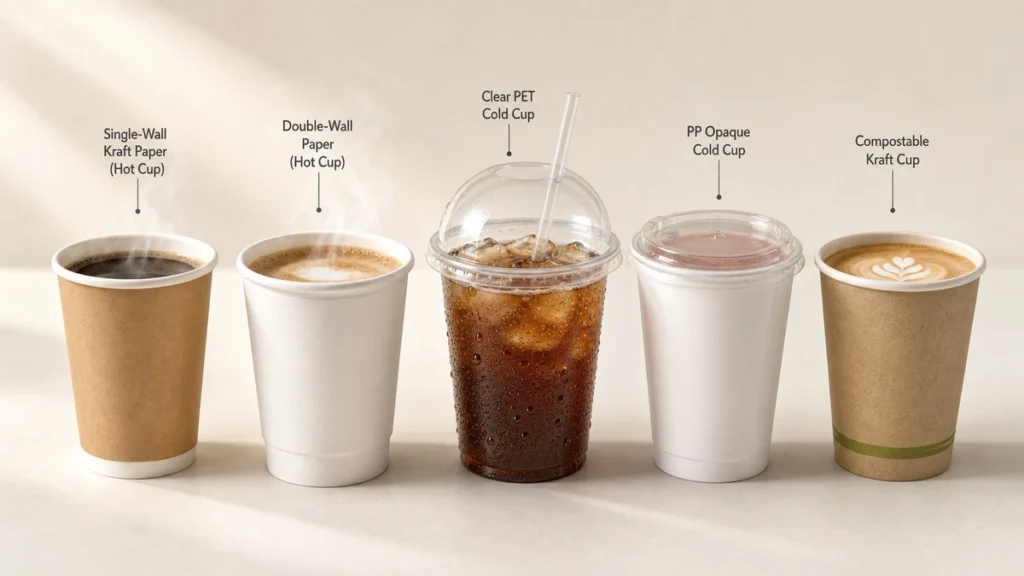
The main families of disposable cups are paper hot cups, clear plastic cold cups, heat-tolerant plastic cups, and compostable formats. Each has a clear use case, but each also comes with trade-offs in insulation, printability, storage, and compliance.
Single-wall paper cups are widely used for hot drinks in the 8 oz to 20 oz range. They are cost-effective and easy to source, but they usually need a sleeve when drinks are served very hot or carried for more than a short distance. They work well for quick-service counters where customers take the drink and go.
Double-wall paper cups add a second layer of paper and an insulating air gap. That improves hand comfort and often removes the need for a separate sleeve. For many takeaway coffee programs, this is the most balanced option because it simplifies assembly and gives a more premium feel. Buyers exploring a broader range of paper cups should compare wall construction, rim diameter, and lid compatibility together rather than reviewing cup bodies alone.
Ripple-wall paper cups offer strong grip and insulation through a textured outer layer. They can perform very well for hot drinks, but the exterior texture can limit detailed print quality compared with smooth double-wall cups.
For cold beverages, PET cups remain a common choice because they are clear, rigid, and well suited to merchandising. Iced coffee, smoothies, juice, and soft drinks all benefit from visibility. PET is not suitable for hot fill, so it should stay in cold applications only.
PP cups are useful where extra heat tolerance is needed. They are less visually premium than PET, but they can handle warm fills better. They are often chosen for soup, hot dessert applications, or situations where plastic is preferred but paper is not the best fit.
Compostable and fiber-based options can be valuable when the waste stream is already set up to handle them. However, the disposal route matters as much as the cup material. A compostable cup only delivers its intended benefit if the local collection and processing system accepts it.
A simple buyer comparison looks like this:
| Cup type | Best fit | Main limitation |
|---|---|---|
| Single-wall paper | Fast hot drink service | Often needs sleeve |
| Double-wall paper | Takeaway hot drinks | Higher unit cost |
| Ripple-wall paper | Hot drinks with grip | Less precise print surface |
| PET cold cup | Iced and display-driven drinks | Not for hot fill |
| PP cup | Warm fill or soup | Lower clarity |
| Compostable cup | Composting-led venues | Disposal depends on facility acceptance |
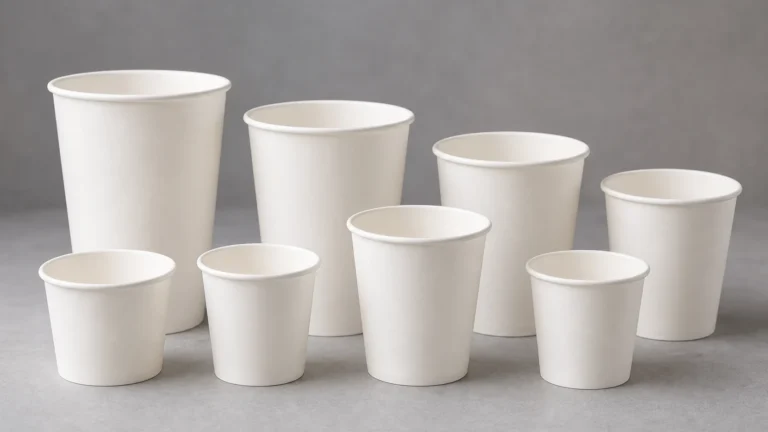
Size planning affects much more than portion control. It also determines how many lids you need, how much shelf space the program uses, and how complex daily service becomes. A well-designed disposable cups program covers the menu with as few sizes as practical.
Many cafes work efficiently with three core sizes, such as 8 oz, 12 oz, and 16 oz. This keeps ordering simpler and reduces the number of lid SKUs in storage. Food trucks often narrow the range even further when menu speed matters more than full customization. Event operators may standardize around one hot cup size and one cold cup size to simplify volunteer or temporary staff training.
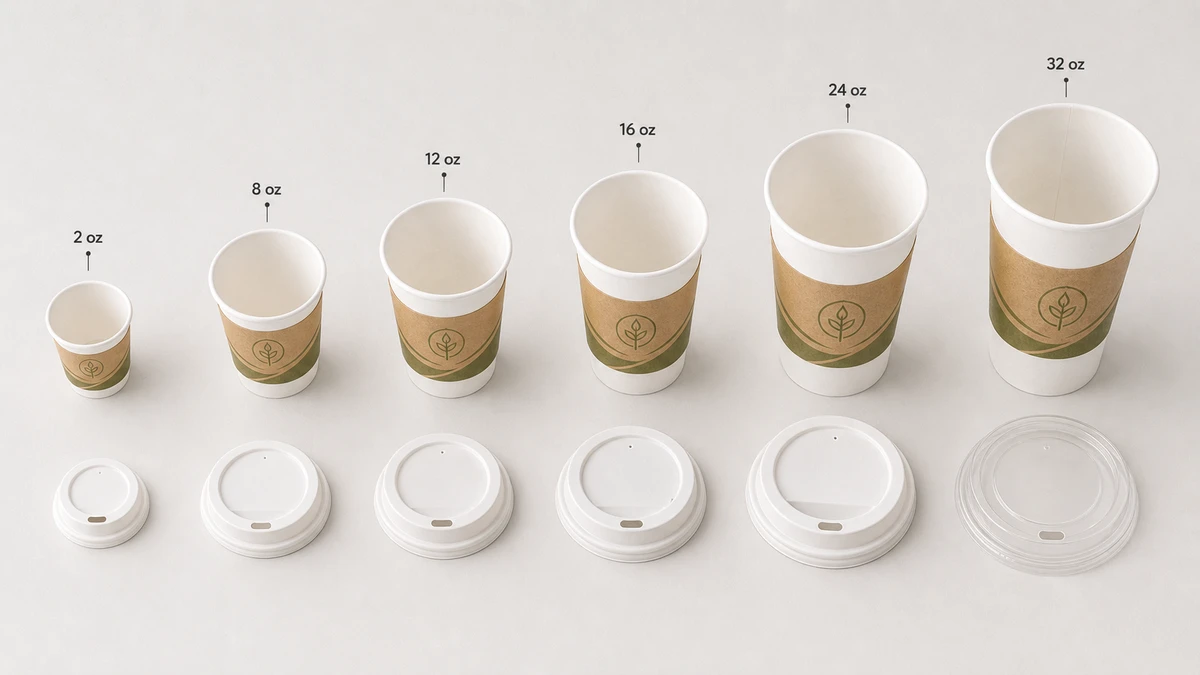
Typical use by volume looks like this:
| Volume | Typical use | Buyer check point |
|---|---|---|
| 2-4 oz | Espresso, samples | Stack count and small lid fit |
| 6-8 oz | Small coffee, tea | Hand comfort and sleeve need |
| 10-12 oz | Standard coffee | Core cafe size |
| 16 oz | Large coffee, iced tea | Lid fit and carrying comfort |
| 20-24 oz | Large cold drinks | Wall rigidity and dome lid fit |
| 32 oz | Catering or large cold service | Storage bulk and stability |
The biggest mistake is assuming ounce size guarantees interchangeable lids. It does not. A 16 oz cup from one supplier may use a different rim profile or actual diameter than another. That is why sample testing matters before switching production.
If you are narrowing a service program, review standard paper cup sizes first and then map those sizes against your actual menu, not just your ideal menu. In practice, fewer sizes usually mean fewer ordering errors and less dead stock.
For events, also think about guest behavior. If people will walk around with drinks, hand comfort and spill resistance matter more. If service is from a fixed counter with rapid consumption, a simpler single-wall option may be enough. For food trucks, cup size should support menu speed, vehicle storage limits, and realistic daily usage.
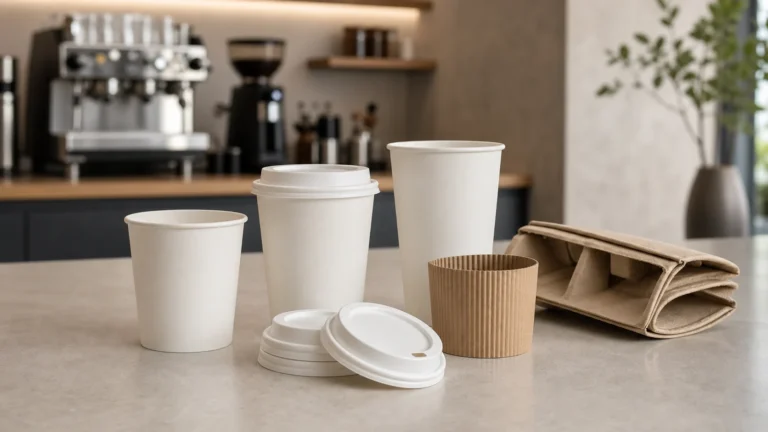
Disposable cups perform as a system. Cup body, rim geometry, lid material, sleeve choice, and cup carrier all affect real-world results. Many product complaints that look like cup failures are actually lid mismatch issues.
The most important technical check is actual rim size in millimeters. Buyers often focus on volume, but lid fit depends on rim diameter and bead profile. Two cups labeled 12 oz may not accept the same lid securely. This becomes a problem during emergency replenishment when one component is swapped without testing the other.
Common opening diameters include:
| Diameter | Typical use |
|---|---|
| 62 mm | Small hot cups |
| 80 mm | Many 8-16 oz hot cups |
| 90 mm | Larger hot cups |
| 98 mm | Many cold cups |
Leak resistance usually comes from three areas: seam quality, lid snap fit, and dimensional stability during use. A practical buyer test is to fill the cup to service level, apply the intended lid, invert it briefly, then carry it at an angle. This simple check catches many sealing issues before launch.
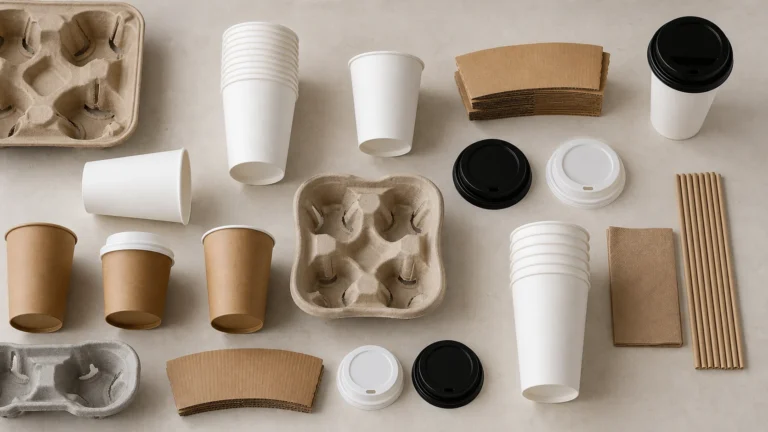
Sleeves remain useful for single-wall hot cups, especially when beverage temperature is high. Corrugated kraft sleeves are common because they improve grip and insulation without much complexity. Double-wall cups often remove that extra assembly step, which can matter at peak service times.
When sourcing accessories, review the full system, including sleeves, carriers, and stirrers, through packaging accessories. If hot beverage takeaway is a major sales channel, compare cup specification with matching coffee cup lids before approving production.
Branding can turn disposable cups into a visible marketing asset, but only if the print method fits your volume and timeline. Buyers should decide early whether they need plain stock, custom cups, or branded sleeves.
Flexographic printing is usually the standard for larger recurring programs. It is best when artwork is stable and demand is predictable. MOQs often start around 10,000 to 50,000 units per SKU, depending on cup type, print coverage, and factory setup. Lead time commonly runs 4 to 8 weeks after artwork approval, and may be longer during peak seasonal periods or for export orders.
Digital printing works better for shorter runs, event trials, or seasonal promotions. MOQs can begin around 250 to 500 units, with shorter turnaround in some cases. The trade-off is a higher unit cost and sometimes less exact color repeatability than flexographic printing.
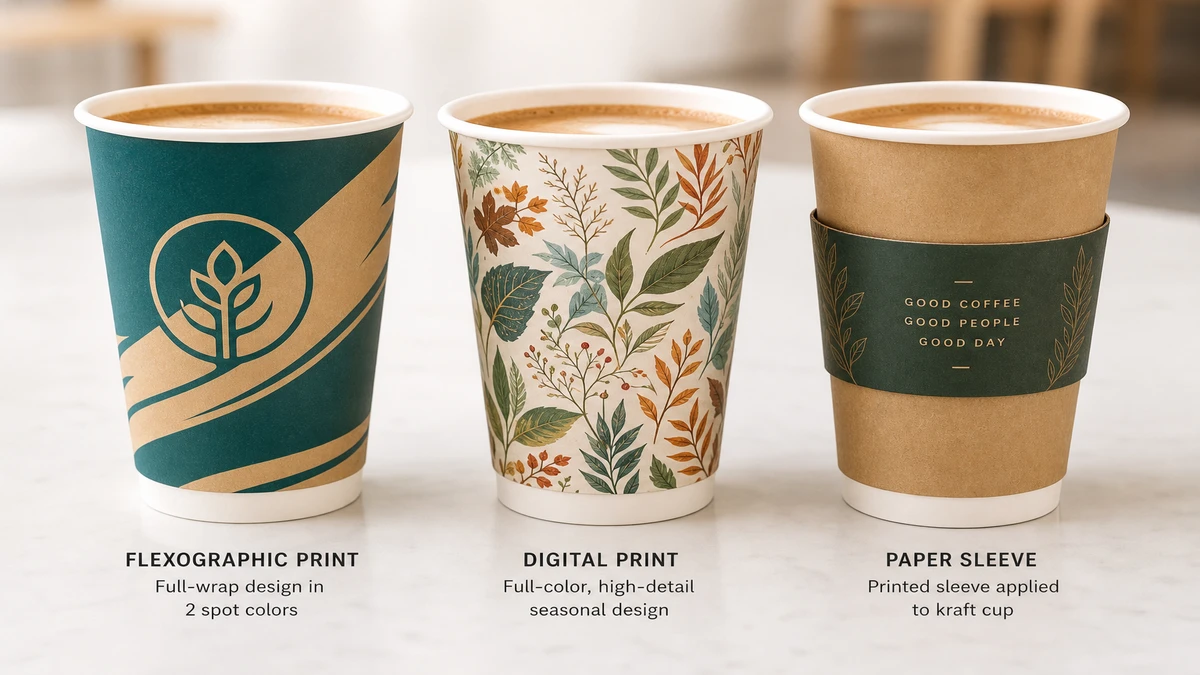
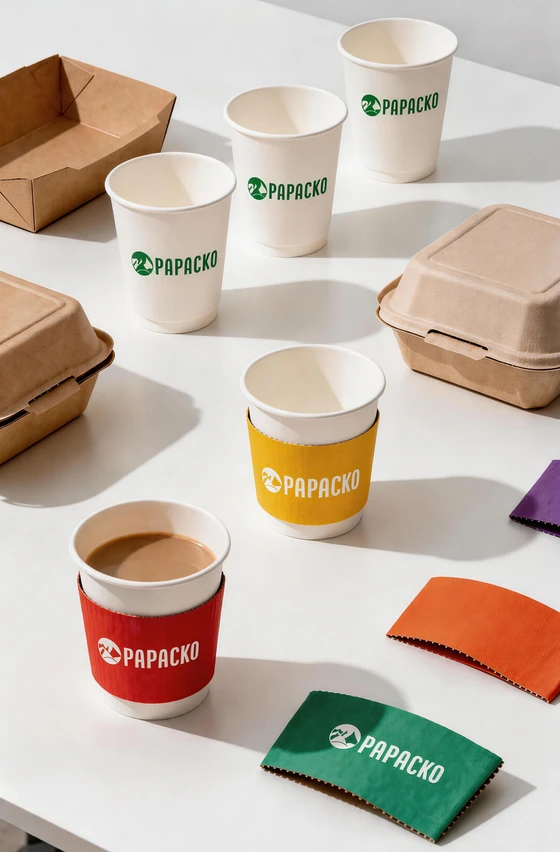
Printed sleeves are often the most practical starting point for smaller operators. They allow a buyer to hold plain cup inventory while changing branding by season, venue, or client. This is especially useful for event companies and food trucks with variable graphics but modest annual volume.
Before approving any custom run, request samples. At minimum, buyers should test:
– Cup body rigidity at intended fill temperature
– Lid fit on every selected size
– Sleeve fit if using single-wall cups
– Print registration and seam appearance
– Carton labeling and case count
A digital mockup is not enough for final approval. A physical sample or production proof gives a better view of color on the actual substrate, especially on kraft or textured materials.
Supplier documentation should also confirm MOQ by SKU, repeat-order MOQ, sample policy, artwork format requirements, and realistic lead time from approval to shipment. These details often matter more operationally than a small unit-price difference.
Food-contact packaging should be specified by use condition, not by marketing language alone. A cup intended for hot coffee, iced tea, and soup may require different material choices or declarations depending on the market and service conditions.
For paper cups, the barrier layer is a key specification. Common options include PE and PLA-type coatings. The right choice depends on intended use, disposal route, and market requirements. Buyers should ask for the material structure, paperboard weight, coating type, and intended temperature range in writing.
For regulatory reference in the U.S., review the FDA guidance on food-contact substances. More importantly, ask the supplier to provide documentation that matches your intended use, such as hot fill, cold fill, acidic beverages, or short-term contact.
Useful supplier documents typically include:
– Food-contact declaration or conformity statement
– Coating or barrier specification
– Temperature suitability statement
– Product specification sheet with rim diameter
– Carton dimensions and case pack
– Pallet configuration
– Fiber sourcing or sustainability claims where relevant
– Test reports or migration support where required by market
Do not accept vague statements like “food grade” without supporting paperwork. Documentation should be current and tied to the actual SKU being purchased. If compostability or recyclability claims are important, confirm that the claim matches the local disposal route rather than relying only on generic product language.
A clear specification makes quote comparison more useful. Without one, two suppliers may price very different products under the same simple name, and the cheaper option may not actually be equivalent.
A practical disposable cups specification should include:
– Cup type and wall construction
– Nominal size and brim-full volume
– Intended beverage use
– Fill temperature range
– Coating or lining requirement
– Rim diameter
– Matching lid style and material
– Print method or plain stock requirement
– Case pack target
– Monthly or seasonal forecast
– Sample requirement before approval
– Required compliance documents
Storage and ordering should be part of the evaluation too. Double-wall cups usually take more space than single-wall cups, and large cold cups can reduce shelf efficiency. Case-pack density can affect landed cost, especially for smaller back-of-house areas or mobile operations.
Lead time planning is also important. If your peak season starts in six weeks, a custom flexographic run may already be too late unless artwork is approved and raw materials are available. In that case, plain stock plus custom sleeves may be the safer route.
When building a full takeaway or foodservice range, it helps to review cups alongside broader food packaging containers so lid systems, storage planning, and branding stay consistent across the line.
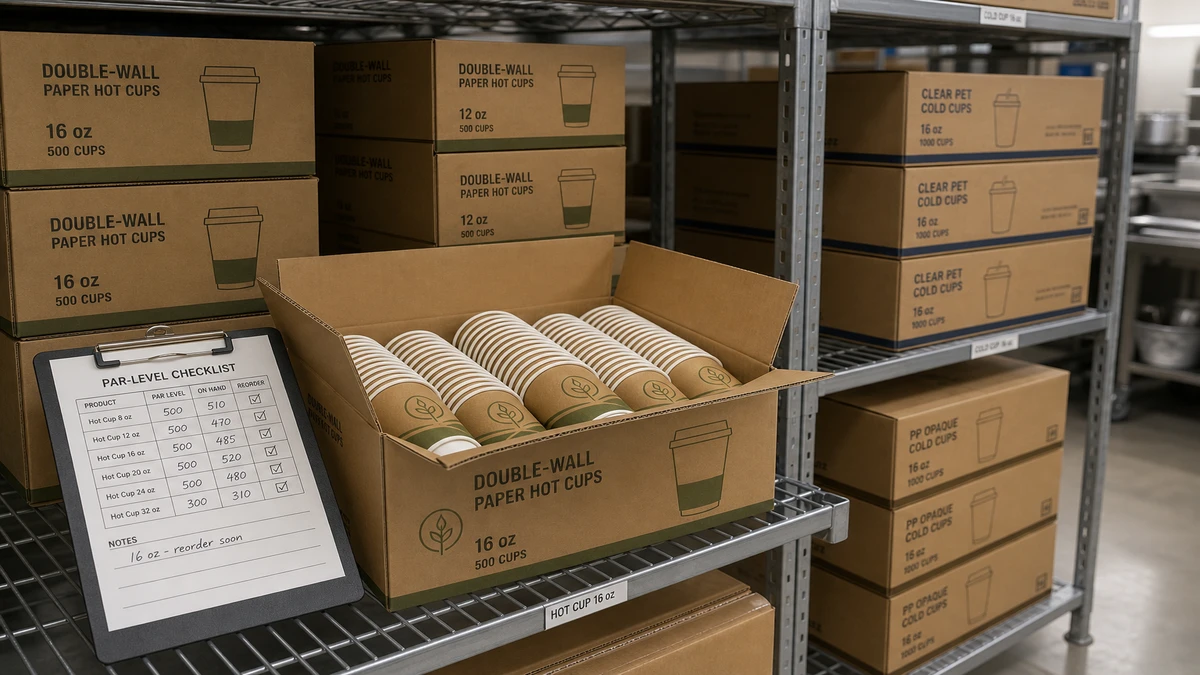
For many takeaway coffee programs, double-wall paper cups are the most balanced option because they improve hand comfort and often remove the need for a separate sleeve. Single-wall cups can still work well when service is fast and sleeves are already part of the system.
No. PET cups are mainly intended for cold applications. If you need a plastic cup for warm fill or hot service, PP is usually the more suitable option.
Many cafes operate efficiently with three core sizes, such as 8 oz, 12 oz, and 16 oz. Fewer sizes reduce lid complexity, free up storage space, and lower ordering mistakes.
Because ounce size does not guarantee the same rim diameter or bead profile between suppliers. Small dimensional differences can create poor snap fit, loose sealing, or sidewall distortion during use.
Not necessarily. They are most useful when there is a real collection and industrial composting route. Without that system in place, the practical benefit may be limited.
If order volume is low or your graphics may change, printed sleeves are often the safer starting point. Custom-printed cups make more sense when demand is stable enough to justify higher MOQs and longer lead times.