Ready to create your own branded paper cups or packaging?
Tell us your requirements — size, coating, printing, and destination — and our team will prepare a detailed quotation within 24 hours.

Last Updated: November 2025
Reading Time: 12 minutes
Author: Papacko Content Team
You’re burning through coffee sleeves at $0.02 each, customers still complain cups are too hot to hold, and your to-go coffee orders get delayed by 15-20 seconds per cup while baristas fumble with sleeves. Meanwhile, the cafe across the street switched to double wall cups—no sleeves needed, faster service, and their Instagram is filled with customer photos of cups held comfortably in bare hands.
Insulated paper cups eliminate the need for corrugated sleeves while improving customer experience and brand perception. Double wall construction provides superior heat protection, but comes at 60-80% cost premium over single wall + sleeve combinations. The decision impacts more than just material costs—it affects labor efficiency — customer comfort, sustainability messaging, and even social media visibility (customers photograph high-quality packaging).
In this guide, you’ll learn:
•Double wall vs single wall cup construction: technical comparison
•Heat retention performance testing and thermal protection metrics
•True cost analysis: double wall vs single wall + sleeves
•Material specifications: GSM, coating options, insulation layers
•When double wall cups make financial sense vs alternatives
•Supplier selection criteria for insulated cup quality
•Common purchasing mistakes and how to avoid them
Quick Takeaway: Double wall insulated cups cost $0.09-0.16 (12-16oz) vs $0.045-0.065 for single wall + $0.02 sleeve. Break-even requires 12-15 second labor savings per cup (sleeve elimination) or 2-4% sales increase from premium positioning. Heat retention: Double wall keeps coffee 15-20°F warmer after 20 minutes vs single wall. Best applications: High-volume cafes (200+ cups/day), premium positioning, takeaway-focused operations. Material: 250-300 GSM inner + 250-300 GSM outer wall with air gap. Alternative: Ripple wall cups offer 70% of double wall performance at 40% premium. Critical spec: Exterior temperature <115°F when filled with 185°F liquid (comfortable to hold).
For standard insulated paper cups, focus on:
Structure: One layer of paperboard with interior waterproof coating
Material Specifications:
•Paperboard weight: 200-280 GSM (grams per square meter)
•Typical thickness: 0.30-0.35mm
•Interior coating: PE (polyethylene) or PLA (polylactic acid) 15-20gsm
•Exterior: Uncoated or printed surface
Thermal Performance:
•Heat transfer rate: High (poor insulation)
•Exterior surface temperature: 145-165°F when filled with 185°F coffee
•Hold time without discomfort: 8-12 seconds (too hot for bare hands)
•Heat retention: Coffee drops to 140°F (drinking temp) in 18-22 minutes
Requires Accessory: Corrugated sleeve or double cupping (using two cups)
Cost: $0.045-0.065 per cup (12oz standard quality)
Understanding the insulated paper cups requires attention to these factors:
Structure: Two layers of paperboard with air gap insulation
Material Specifications:
•Outer wall: 250-300 GSM paperboard
•Inner wall: 250-300 GSM paperboard
•Air gap: 2-4mm (critical insulation layer)
•Total thickness: 0.65-0.85mm
•Interior coating: PE or PLA 15-20gsm (inner wall only)
Thermal Performance:
•Heat transfer rate: Low (excellent insulation)
•Exterior surface temperature: 100-115°F when filled with 185°F coffee
•Hold time without discomfort: Indefinite (comfortable for entire drinking experience)
•Heat retention: Coffee remains above 140°F for 25-30 minutes
Requires Accessory: None (eliminates sleeve need)
Cost: $0.09-0.16 per cup (12oz standard quality)
For various insulated paper cups, focus on:
Structure: Outer corrugated layer with single inner wall
Material Specifications:
•Inner wall: 250-280 GSM paperboard with PE/PLA coating
•Outer corrugated layer: 150-200 GSM paperboard with ripple pattern
•Air pockets: Trapped in corrugation ridges (insulation)
•Total thickness: 0.50-0.65mm
Thermal Performance:
•Heat transfer rate: Medium-low (good insulation)
•Exterior surface temperature: 115-130°F when filled with 185°F coffee
•Hold time without discomfort: 60-90 seconds (comfortable for most customers)
•Heat retention: Coffee stays above 140°F for 22-26 minutes
Requires Accessory: Optional sleeve for very hot liquids or sensitive customers
Cost: $0.06-0.09 per cup (12oz standard quality)
For standard insulated paper cups, focus on:
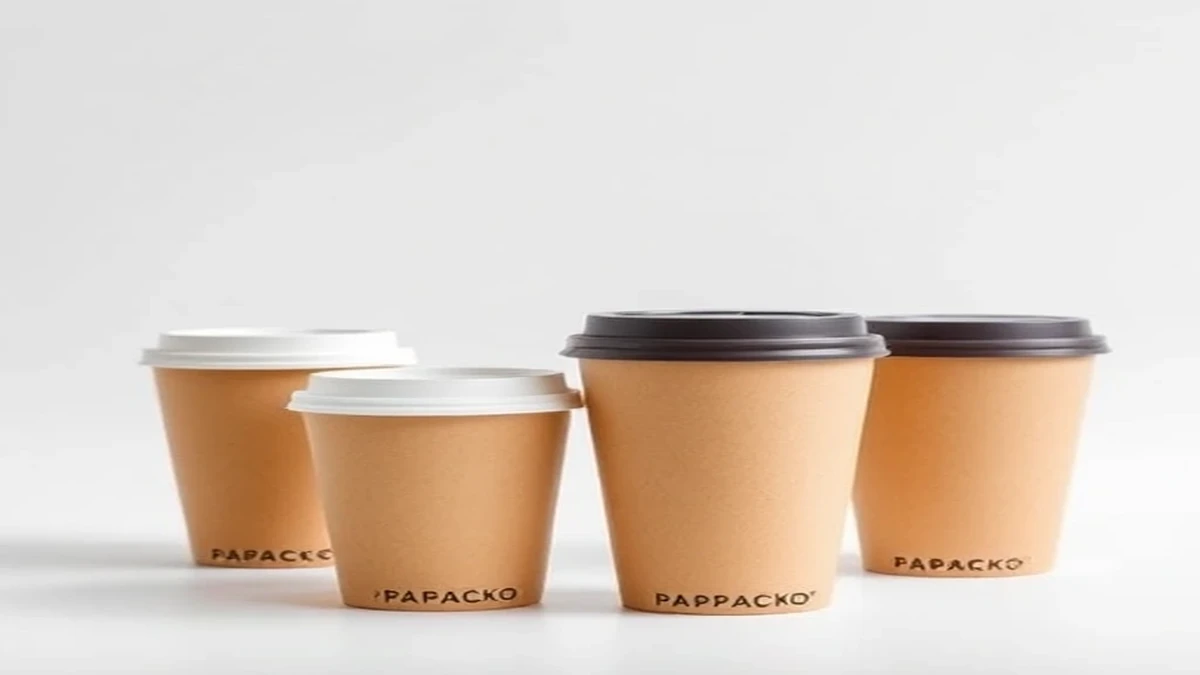
Key Insight: Double wall provides best insulation but costs 80-120% more than single wall. Ripple wall offers 70% of performance at 40% premium—best value for many operations.
The key to choosing standard insulated paper cups depends on:
ASTM D3985 Modified Test (industry standard for thermal performance):
Test Setup:
1. Fill cup with water heated to 185°F (85°C) – typical coffee brewing temperature
2.Seal cup with standard lid (8oz lid for 12oz cup)
3. Place in controlled environment: 72°F (22°C) ambient temperature, 45-55% humidity
4.Measure liquid temperature at 5-minute intervals for 60 minutes
5.Record exterior cup surface temperature at center point
6.Test minimum 5 samples per cup type for statistical validity
Critical Metrics:
•Exterior surface temperature (comfort): Must be <115°F for comfortable holding
•Heat retention rate (quality): Percent of initial heat retained over time
•Cooling rate (beverage quality): Degrees Fahrenheit lost per minute
For different insulated paper cups, focus on:
Test Results (12oz cups, 185°F initial temperature, 72°F ambient):
Cooling Rate Analysis:
•Single wall: -1.62°F per minute (fast cooling)
•Ripple wall: -1.38°F per minute (moderate)
•Double wall: -1.12°F per minute (slow cooling)
Quality Window (coffee at ideal drinking temperature 140-165°F):
•Single wall + sleeve: 10-20 minutes
•Ripple wall: 12-24 minutes
•Double wall: 15-28 minutes
Key Insight: Double wall extends quality window by 5-8 minutes—critical for takeaway orders with 10-20 minute commutes.
When evaluating available insulated paper cups, consider the following:
Holding Comfort Test (185°F liquid, measured 2 minutes after pour):
ASTM C1055 Burn Threshold:
•140°F: Pain threshold for prolonged contact (>5 seconds)
•130°F: Discomfort for most people after 15-20 seconds
•115°F: Safe for prolonged holding
•<110°F: No thermal discomfort for any user
Design Goal: Exterior surface temperature <115°F for comfortable holding during entire consumption experience (20-30 minutes).
When evaluating insulated cups, consider the following:
12oz Cup Cost Breakdown (10,000 unit order, standard quality):
16oz Cup Cost Comparison:
Key Insight: Double wall costs 45-50% more than single wall + sleeve, not 80% (when comparing complete serving package).
For insulated cups, focus on:
Labor Impact of Sleeve Application:
Time Study (barista workflow, 100 cups measured):
•Single wall: Pour coffee (8 sec) + apply lid (3 sec) + apply sleeve (5 sec) + hand to customer (2 sec) = 18 seconds total
•Double wall: Pour coffee (8 sec) + apply lid (3 sec) + hand to customer (2 sec) = 13 seconds total
•Time saved per cup: 5 seconds (sleeve elimination)
Annual Labor Value (cafe serving 200 cups/day):
•Cups per year: 73,000
•Time saved: 5 seconds × 73,000 = 365,000 seconds = 101 hours
•Labor cost @ $15/hour: $1,520 annual savings
•Labor cost @ $20/hour: $2,025 annual savings
Additional Labor Benefits:
•Reduced inventory management: One SKU (double wall cup) vs two SKUs (single wall cup + sleeves)
•Faster service speed: 28% reduction in per-cup handling time
•Less counter clutter: No sleeve dispensers occupying counter space
•Reduced training: New employees master one-step lid application vs two-step sleeve + lid
Understanding the insulated paper cups requires attention to these factors:
Scenario: Coffee shop serving 200 cups/day, $4.50 average beverage price, $18/hour loaded labor cost
Annual Costs (73,000 cups/year):
Per-Cup Cost: Single wall + sleeve: $0.152 | Double wall: $0.172 | Difference: $0.02 per cup
Revenue Impact Analysis:
•Additional cost: $1,400/year
•Current annual revenue: $328,500 (73K cups × $4.50)
•Required revenue increase to break even: 0.43%
•Achievable through: 1-2 new daily customers or 2% price increase ($4.50 → $4.60 barely noticeable)
Conclusion: Double wall cups cost $1,400 more annually but improve customer experience and brand perception. Marginal cost increase (<0.5% of revenue) is justified if premium packaging attracts even 1 additional customer per day.
For common insulated paper cups, focus on:
When Double Wall Makes Most Financial Sense:
Low Volume (<50 cups/day):
•Annual material premium: $365-550
•Labor savings: $250-380
•Net cost: $100-200/year
•Verdict: Marginal benefit unless premium brand positioning critical
Medium Volume (100-200 cups/day):
•Annual material premium: $1,100-1,400
•Labor savings: $750-1,520
•Net cost: $350-650/year
•Verdict: Justifiable for customer experience focus, especially takeaway-heavy
High Volume (300+ cups/day):
•Annual material premium: $2,200-2,800
•Labor savings: $2,300-3,000
•Net cost: Break-even or slightly positive
•Verdict: Strong case—labor savings offset material premium, plus customer experience gains
Understanding different insulated paper cups requires attention to these factors:
GSM (Grams per Square Meter) Standards:
Single Wall Cups:
•Budget: 200-220 GSM (flimsy, poor heat protection)
•Standard: 230-260 GSM (adequate for cold drinks, requires sleeve for hot)
•Premium: 270-290 GSM (better structure, still needs sleeve for hot beverages)
Double Wall Cups:
•Each layer: 250-300 GSM (both inner and outer walls)
•Combined weight: 500-600 GSM total
•Critical: Both walls must be similar weight for structural integrity
Why GSM Matters for Insulation:
•Thicker paperboard = more thermal mass (slows heat transfer)
•Structural rigidity maintains air gap (prevents wall collapse)
•Heavier stock resists deformation when hot liquid added
•280+ GSM recommended for outer wall (printable surface stays smooth)
When evaluating standard insulated paper cups, consider the following:
The Critical Insulation Factor:
Optimal Air Gap Dimensions:
•Width: 2-4mm (0.08-0.16 inches)
•Too narrow (<2mm): Insufficient insulation, walls conduct heat across gap
•Too wide (>5mm): Wall instability, cup feels flimsy, prone to crushing
•Industry standard: 3mm air gap (best performance/structure balance)
Manufacturing Quality Check:
•Air gap should be uniform around circumference (± 0.5mm tolerance)
•Check by cutting cup vertically—gap visible and consistent
•Poor quality: Gaps collapse partially, reducing insulation 30-50%
Air Gap Physics:
•Still air is excellent insulator (R-value: 1.0 per inch)
•Convection currents minimal in narrow gaps (2-4mm ideal)
•Heat transfer primarily by radiation across gap (minimal with low-emissivity surfaces)
Understanding available insulated paper cups requires attention to these factors:
Interior Coatings (liquid barrier):
Critical Spec: Coating must withstand 185-200°F without softening or releasing compounds into beverage.
Exterior Surface (printability):
Uncoated Exterior (most common):
•Natural matte finish
•Best for flexographic printing (ink absorption)
•Premium tactile feel
•Standard cost
Coated Exterior (premium):
•Glossy or semi-gloss finish
•Brighter print colors (ink sits on surface)
•Moisture resistant (branding stays crisp in humid conditions)
•+5-10% cost premium
Understanding different insulated paper cups requires attention to these factors:
Ideal Candidates for Double Wall:
1. Takeaway-Focused Cafes (>70% to-go orders):
•Customers carry cups 10-30 minutes before drinking
•Heat retention critical for customer satisfaction
•No sleeve fumbling during rush periods (faster service)
•Premium packaging enhances takeaway experience
•ROI: High (labor savings + customer experience)
2. Premium/Specialty Coffee Shops:
•$5-7 drinks justify premium packaging
•Brand positioning emphasizes quality details
•Customers value comfort and heat retention
•Instagram-worthy packaging (marketing value)
•ROI: Medium-high (brand alignment + customer expectations)
3. Corporate/Office Coffee Services:
•Meetings and commutes require heat retention
•Professional appearance important for B2B image
•No on-site barista to apply sleeves consistently
•Bulk dispensing (customers self-serve)
•ROI: High (labor elimination + professional image)
4. High-Volume Locations (300+ cups/day):
•Labor savings significant ($2,500-3,500/year)
•Material cost premium offset by efficiency gains
•Inventory simplification (one SKU vs two)
•ROI: Very high ( break-even on costs, positive on customer experience)
Less Suitable Candidates:
1. Dine-In Focused Cafes (<30% takeaway):
•Customers drink on premises (heat retention less critical)
•Can provide ceramic cups for dine-in
•Lower volume of disposable cup usage
•Alternative: Use single wall + sleeve for rare to-go orders
2. Budget Coffee Operations (Sub-$3 price point):
•Customers price-sensitive (may not value premium packaging)
•Thin margins cannot absorb 40-50% packaging premium
•Volume may not justify labor savings
•Alternative: Ripple wall (better value proposition)
3. Cold Beverage Focused (Juice bars, smoothie shops):
•Insulation not needed for cold drinks
•Single wall + condensation sleeve sufficient
•Double wall offers no functional benefit
•Alternative: Single wall cold cup + branded sleeve
When evaluating various insulated paper cups, consider the following:
Break-Even Volume Calculation:
Assumptions:
•Material cost difference: $0.045 per serving (double wall vs single wall + sleeve)
•Labor savings: 5 seconds per cup @ $18/hour loaded cost = $0.025 per cup
•Net cost difference: $0.02 per cup (double wall premium after labor savings)
Annual Volume Required for Different ROI Targets:
Critical Threshold: 150-200 cups/day where labor savings begin to significantly offset material premium.
For the insulated paper cups, focus on:
When to Consider Alternatives:
Ripple Wall Cups (Best middle-ground option):
•Cost: 40% premium over single wall (vs 80% for double wall)
•Performance: 70-80% of double wall insulation
•Still eliminates or reduces sleeve need
•Best for: Medium volume (100-200 cups/day), value-conscious premium brands
Reusable Cup Incentive Programs:
•Offer $0.25-0.50 discount for bringing own cup
•Reduces disposable cup usage 15-30%
•Marketing benefit (sustainability positioning)
•Best for: Dine-in/regular customer focused cafes with environmental mission
Premium Sleeve Design:
•Custom printed corrugated sleeves (brand visibility)
•Cost: $0.03-0.05 vs $0.02 for generic
•Maintains single wall economics while upgrading experience
•Best for: Budget conscious operations wanting brand enhancement
Double Cupping (Using two single wall cups):
•Emergency solution only (2× material cost)
•Better insulation than single + sleeve
•Wasteful and expensive ($0.11-0.13 per serving)
•Best for: Never (always choose proper insulated cup instead)

Understanding various insulated paper cups requires attention to these factors:
Physical Sample Evaluation:
Request These Samples Before Ordering:
1.Filled cup test: Fill with 185°F water, check exterior temperature after 2 minutes
2.Air gap consistency: Cut cup vertically, measure gap at 4 points around circumference
3.Structural integrity: Squeeze cup gently—should resist deformation without collapsing
4.Coating quality: Fill and let sit 30 minutes—check for leaking, softening, or delamination
5.Print quality (if custom): Sharp edges, accurate colors, no smudging or rubbing off
Red Flags in Samples:
•❌ Exterior surface >125°F when filled with 185°F liquid (inadequate insulation)
•❌ Air gap variation >1mm between measurements (poor manufacturing consistency)
•❌ Cup feels flimsy or crushes easily (too-light paperboard, <250 GSM)
•❌ Liquid seeps through seams after 20 minutes (coating defect)
•❌ Inner wall visible through outer wall (misalignment, poor bonding)
When evaluating the insulated paper cups, consider the following:
Critical Questions for Suppliers:
Factory Certifications:
•✅ ISO 9001 (quality management systems)
•✅ FDA compliance (21 CFR 176.170 for food contact paper)
•✅ FSC or PEFC (sustainable paper sourcing)
•✅ BPI certified (if claiming compostable coating)
•✅ HACCP compliance (food safety practices)
The key to choosing standard insulated paper cups depends on:
Market Price Benchmarks (Double wall cups, FOB China, 50,000 unit order):
Price Too Low Warning:
•If quote 40%+ below market range: Likely cutting corners on GSM, air gap, or QC
•Request detailed material specifications and test samples before ordering
•Check: Is the “double wall” actually just thicker single wall without air gap?
Price Too High Warning:
•If quote 50%+ above market range: May include shipping, duties, or middleman markup in per-unit price
•Request FOB pricing breakdown separate from logistics costs
•Compare 3-5 suppliers to establish realistic baseline
Understanding different insulated paper cups requires attention to these factors:
Typical MOQs by Cup Type:
Why Higher MOQs for Double Wall:
•More complex manufacturing (two-step process: inner + outer wall bonding)
•Setup time longer (calibrating air gap consistency)
•Quality control more intensive (testing insulation performance)
•Lower production speeds (6,000-8,000 cups/hour vs 10,000+ for single wall)
Negotiating Lower MOQs:
•New customer trial orders: Some suppliers accept 25,000-30,000 units with 15-20% premium
•Mixed size orders: Order 30,000 of 12oz + 20,000 of 16oz (combined 50,000 total)
•Plain stock cups: Can find suppliers with 10,000-20,000 MOQ for unprinted double wall
When evaluating various insulated paper cups, consider the following:
The Problem:
•Ordered cheapest double wall cups at $0.09 (12oz, seemed like great deal)
•Cups arrived: Air gap only 1.5mm, exterior surface 135°F when filled (uncomfortable to hold)
•Customers complained, had to buy corrugated sleeves anyway (negating double wall purpose)
•Wasted $4,500 on 50,000 unusable cups
The Solution:
•Request physical samples before large orders (2-5 cups sufficient for testing)
•Test with 185°F liquid, measure exterior temperature after 2 minutes (must be <115°F)
•Cut sample cup to verify air gap (should be 2.5-4mm)
•If price is 30%+ below market average, investigate specifications carefully
Cost to Avoid: $4,000-5,000 in unusable inventory
Understanding the insulated paper cups requires attention to these factors:
The Problem:
•Negotiated 100,000 unit MOQ to get best pricing ($0.10 vs $0.12)
•Cafe serves 150 cups/day = 54,750 per year
•100,000 units = 22-month supply
•Storage space insufficient (10 pallets), cups stored poorly, 8,000 damaged
•Product improvements released (better coatings), stuck with old spec for 2 years
The Solution:
•Start with 3-6 month supply on first order (test market acceptance)
•Calculate storage space before ordering: 50,000 cups (12oz) = ~5 pallets = 6-8 m²
•Accept slightly higher per-unit cost for flexibility on initial orders
•Negotiate volume pricing for future orders after proving demand
Cost to Avoid: $800-1,200 in damaged inventory + lost opportunity for product upgrades
Understanding available insulated paper cups requires attention to these factors:
The Problem:
•Ordered double wall 12oz cups from new supplier
•Existing lids don’t fit properly (too loose, leaks during transport)
•Supplier’s lids cost $0.04 (vs $0.025 for current lids)
•Extra $0.015 per serving × 73,000 cups = $1,095 unexpected annual cost
The Solution:
•Verify rim diameter specification before ordering cups (standard: 80mm for 12oz, but varies)
•Request lid samples from supplier, test fit on sample cups
•Test with hot liquid and transport simulation (shake gently—should not leak)
•Consider buying cups + lids from same supplier for compatibility guarantee
Cost to Avoid: $1,000-1,500 annual cost increase or waste if lids incompatible
When evaluating standard insulated paper cups, consider the following:
The Problem:
•Supplier claimed “superior insulation, keeps drinks hot 50% longer”
•No actual testing data provided
•Cups arrived, real-world performance same as previous single wall + sleeve
•Paid 60% premium for no functional benefit
The Solution:
•Request thermal testing data (ASTM D3985 or similar standard)
•If not available, conduct own simple test:
– Fill cup with 185°F water, cover with lid
– Measure liquid temperature at 0, 10, 20, 30 minutes
– Compare to current cups and industry benchmarks (see Heat Retention section above)
•Reject suppliers who won’t provide testing data or samples for verification
Cost to Avoid: 30-60% wasted premium on cups with inadequate performance
The key to choosing various insulated paper cups depends on:
The Problem:
•Ordered “compostable double wall cups” for sustainability marketing
•Advertised as eco-friendly alternative
•Later discovered: PE coating not compostable (only paperboard is)
•False advertising complaint filed by customer, reputation damage
The Solution:
•Request certification documents for all sustainability claims:
– BPI certified (Biodegradable Products Institute) for compostable
– OK Compost (TÜV Austria) for European markets
– FDA approval for food-safe materials
– FSC certified for sustainable paper sourcing
•Verify: Coating type clearly specified (PLA = compostable, PE = not compostable)
•Never make marketing claims without verified certifications
Cost to Avoid: Reputation damage (priceless) + potential regulatory fines

The key to choosing the insulated paper cups depends on:
Business Profile:
•Location: Downtown business district
•Volume: 280 cups/day (heavily takeaway, 85% to-go orders)
•Price point: $4.50-6.00 per drink (specialty coffee, premium positioning)
•Previous packaging: Single wall + custom printed sleeve
Switch to Double Wall:
•Product: 12oz and 16oz double wall, plain white (added custom print after 6 months)
•Cost change: $0.100 → $0.145 per serving (45% increase)
•Annual volume: 102,200 cups
Cost Analysis:
•Additional material cost: $4,599/year (102,200 × $0.045)
•Labor savings (5 sec/cup @ $18/hr): $2,555/year
•Net cost increase: $2,044/year
•Percentage of revenue: 0.42% ($2,044 ÷ $485,000 annual revenue)
Customer Impact Results (measured over 12 months):
•Customer complaints about cup heat: -85% (from 12-15/month to 2/month)
•Social media posts featuring cups: +40% (customers photographed holding cups comfortably)
•Average transaction time: -8 seconds (sleeve elimination + customer satisfaction)
•Customer survey: 78% noticed packaging upgrade, 62% rated it “important” or “very important”
Revenue Impact:
•New customers citing “quality details” in surveys: 18 (estimated $3,600 first-year value)
•Lost customers (none attributed to packaging)
•Net ROI: $1,556 positive ($3,600 customer value – $2,044 net cost)
Key Insight: For high-volume takeaway operations, double wall cups pay for themselves through customer experience improvements and modest new customer acquisition.
Understanding standard insulated paper cups requires attention to these factors:
Business Profile:
•Locations: Suburban and small city locations (not major metro)
•Volume: 180 cups/day average per location = 1,440 total daily
•Price point: $3.50-5.00 per drink (mid-range positioning)
•Previous packaging: Single wall + generic unprinted sleeve
Switch to Ripple Wall (chose over double wall due to cost):
•Product: 12oz and 16oz ripple wall, custom 2-color print
•Cost change: $0.100 → $0.115 per serving (15% increase)
•Annual volume: 525,600 cups (all locations combined)
Cost Analysis:
•Additional material cost: $7,884/year (525,600 × $0.015)
•Labor savings: $6,570/year (ripple wall eliminated sleeves for 70% of customers)
•Net cost increase: $1,314/year
•Percentage of revenue: 0.07% ($1,314 ÷ $1,890,000 annual revenue)
Business Impact Results:
•Inventory management: -1 SKU (eliminated sleeve inventory at all locations)
•Customer complaints: -60% (ripple wall sufficient for most, not all customers)
•Brand consistency: Improved (custom printed ripple wall vs plain sleeve)
•Social media engagement: +15% (modest improvement, not as dramatic as double wall)
Strategic Outcome:
•Ripple wall offered 80% of double wall benefit at 40% of cost premium
•Better fit for mid-market positioning (not budget, not ultra-premium)
•Successful balance of cost control and customer experience
•ROI: Neutral to slightly positive (minimal net cost justified by brand consistency)
Key Insight: Ripple wall is ideal middle ground for multi-location operations balancing cost efficiency with quality experience.
Understanding insulated cups requires attention to these factors:
Business Profile:
•Service model: Provide coffee stations for corporate offices
•Volume: 2,500 cups/week across 12 client locations
•Price: Included in monthly service contract ($1,200-1,800/month per client)
•Previous packaging: Single wall cups, no sleeves (cost cutting measure)
Switch to Double Wall:
•Product: 12oz double wall, plain white with company logo sticker
•Cost change: $0.055 → $0.120 per cup (118% increase)
•Annual volume: 130,000 cups
Cost Analysis:
•Additional material cost: $8,450/year (130,000 × $0.065)
•Labor savings: $6,500/year (no sleeve inventory management, no complaints/returns)
•Net cost increase: $1,950/year
•Percentage of service revenue: 0.97% ($1,950 ÷ $201,600 annual revenue)
Client Impact Results:
•Client complaints: -100% (from 8-12/month about cups too hot → zero complaints)
•Contract renewals: 100% (up from 83% previous year)
•Client satisfaction scores: +18 points (72 → 90 average rating)
•New client wins: 3 (2 explicitly mentioned “better cup quality than competitor” in decision)
Revenue Impact:
•Retained clients (value of improved retention): 2 clients × $18,000/year = $36,000
•New clients influenced by packaging: 2 × $16,000/year = $32,000
•Net ROI: $66,050 value from $1,950 investment (3,300% return)
Key Insight: In B2B service environments, small details like cup quality disproportionately impact client perception and contract renewals.
Q1: What’s the difference between double wall and ripple wall paper cups?
Double wall cups feature two separate layers of paperboard with an air gap (2-4mm) between them. The air gap provides excellent insulation—exterior surface stays comfortable (100-115°F) even with 185°F liquid inside. Cost: $0.09-0.16 per cup (12oz).
Ripple wall cups have an outer corrugated layer bonded to inner smooth wall. The corrugation ridges trap small air pockets for insulation. Performance is 70-80% of double wall (exterior surface: 115-130°F). Cost: $0.06-0.09 per cup (12oz).
Which to choose: Double wall for premium operations with high takeaway volume (200+ cups/day). Ripple wall for mid-market positioning or moderate volume (50-150 cups/day) where value matters.
Q2: Do I still need sleeves with double wall cups?
No. Properly manufactured double wall cups eliminate sleeve need entirely. Exterior surface temperature should be 100-115°F when filled with 185°F coffee—comfortable for indefinite holding.
Warning: Budget double wall cups with narrow air gaps (<2mm) may still feel warm (120-130°F exterior). Test samples before bulk ordering—exterior should feel comfortable (not warm) when filled with coffee-temperature liquid. Ripple wall exception: Some customers with heat sensitivity may request sleeves for very hot liquids (180°F+), but 85-90% of users find ripple wall comfortable without sleeves.
Q3: How much longer do double wall cups keep drinks hot compared to single wall?
Comparative heat retention (12oz cups, 185°F initial temp, 72°F room):
•Single wall + sleeve: Coffee drops to 140°F (minimum acceptable) in 18-20 minutes
•Ripple wall: Coffee stays at 140°F+ for 22-24 minutes
•Double wall: Coffee maintains 140°F+ for 25-28 minutes
Practical impact: Double wall extends quality window by 5-8 minutes vs single wall—critical for customers with 15-20 minute commutes. For quick consumption (<10 minutes), all cup types perform adequately. Q4: What’s a fair price for double wall cups in bulk?
Market pricing (FOB Asia, 50,000+ unit order, plain white):
•8oz: $0.08-0.11
•12oz: $0.10-0.14
•16oz: $0.13-0.17
•20oz: $0.16-0.21
Add $0.02-0.04 for custom 1-2 color printing. Add $0.04-0.06 for full-color printing.
Landed cost (after shipping + duties to US): Add 25-35% to FOB price.
Red flags: Beware quotes <$0.07 for 12oz (likely poor quality with thin paperboard or narrow air gap). Quotes >$0.18 may include middleman markup—request direct manufacturer pricing.
Q5: Can double wall cups be composted or recycled?
Depends on coating:
PE-coated cups (most common):
•❌ Not compostable (polyethylene is plastic)
•⚠️ Not recyclable in most facilities (coating contaminates paper recycling)
•Disposal: Landfill (unless special recycling program available)
PLA-coated cups (eco option):
•✅ Compostable in commercial facilities (BPI certified)
•❌ Not compostable in home composting (requires high heat: 140°F+)
•⚠️ Not recyclable (PLA contaminates recycling stream)
•Disposal: Commercial composting only
Water-based barrier cups (rare, premium):
•✅ Fully compostable (home and commercial)
•✅ Recyclable in paper streams (barrier breaks down in pulping)
•Cost: 20-30% premium over PE/PLA
Critical: Never claim “eco-friendly” or “compostable” without BPI or OK Compost certification. Verify coating type before making marketing claims.
Q6: What minimum order quantity should I expect for custom printed double wall cups?
Typical MOQs:
•Plain/stock double wall cups: 10,000-30,000 units
•Custom 1-2 color print: 50,000-100,000 units
•Custom full-color print: 100,000-200,000 units
Why higher MOQs: Double wall manufacturing is more complex (two-layer bonding), with slower production speeds (6,000-8,000 units/hour vs 10,000+ for single wall). Setup time longer, so suppliers require larger runs to achieve efficiency.
Negotiating lower MOQs:
•Trial order premium: Some suppliers accept 25,000-30,000 units with 15-20% price increase
•Mixed sizes: Order 30,000 × 12oz + 20,000 × 16oz (50,000 combined total)
•Plain cups + stickers: Order plain double wall (lower MOQ) and add custom logo stickers
Q7: How do I verify double wall cup quality before placing large order?
Physical testing protocol:
1. Heat test (most critical):
•Fill sample cup with 185°F water (coffee brewing temperature)
•Apply lid and wait 2 minutes
•Hold cup with bare hand—should feel warm but comfortable (<115°F exterior)
•If too hot to hold comfortably — reject supplier
2. Visual inspection:
•Cut cup vertically with sharp knife
•Measure air gap at 4 points around circumference
•Gap should be 2.5-4mm and consistent (±0.5mm tolerance)
•Both inner and outer walls should be similar thickness
3. Structural test:
•Squeeze cup gently—should resist deformation without collapsing
•Walls should feel rigid, not flimsy
•No visible separation or delamination between layers
4. Leak test:
•Fill cup — let sit for 30 minutes
•Check seams for moisture or leaking
•No softening or coating deterioration
Always request 3-5 physical samples before committing to 50,000+ unit orders. Sample cost ($5-15 including shipping) prevents $5,000-8,000 mistakes.
Papacko offers premium double wall and ripple wall paper cups with verified thermal performance, competitive pricing, and flexible MOQ options for coffee shops and cafes.
Our Insulated Cup Options:
•Double wall: 8-20oz sizes, 250-300 GSM per layer, 3mm air gap
•Ripple wall: 8-16oz sizes, premium corrugation pattern
•Thermal testing: All products tested to <115°F exterior temperature standard
•Coating options: PE (standard) or PLA (compostable) available
•Custom printing: 1-4 color flexographic, Pantone matching
•MOQ: 30,000 units (lower than typical 50,000+ requirements)
•Lead time: 30-35 days from order to delivery
•Quality guarantee: <2% defect rate or replacement at our cost
Get Started:
•Request free sample pack (2-3 cups each size/type)
•Receive pricing quote within 24 hours
•Test thermal performance before committing to bulk order
Insulated cups sit at the intersection of temperature control, cup size, lid fit, and cost. If you are comparing sleeve-free options, these guides will help you decide where insulation matters most and where simpler cup structures still work.