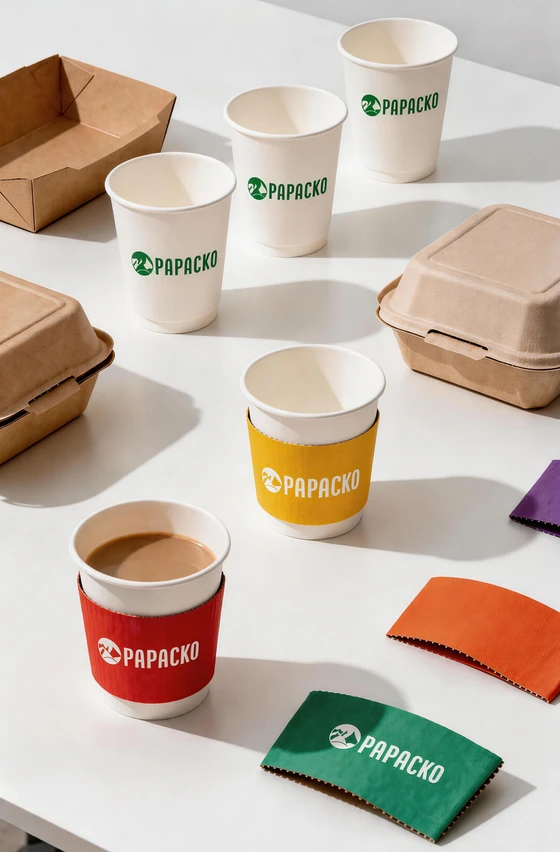
Sei pronto a creare i tuoi bicchieri di carta o le tue confezioni personalizzati con il tuo marchio?
Comunicateci le vostre esigenze — dimensioni, rivestimento, stampa e destinazione — e il nostro team vi preparerà un preventivo dettagliato entro 24 ore.
Sei pronto a creare i tuoi bicchieri di carta o le tue confezioni personalizzati con il tuo marchio?
Comunicateci le vostre esigenze — dimensioni, rivestimento, stampa e destinazione — e il nostro team vi preparerà un preventivo dettagliato entro 24 ore.
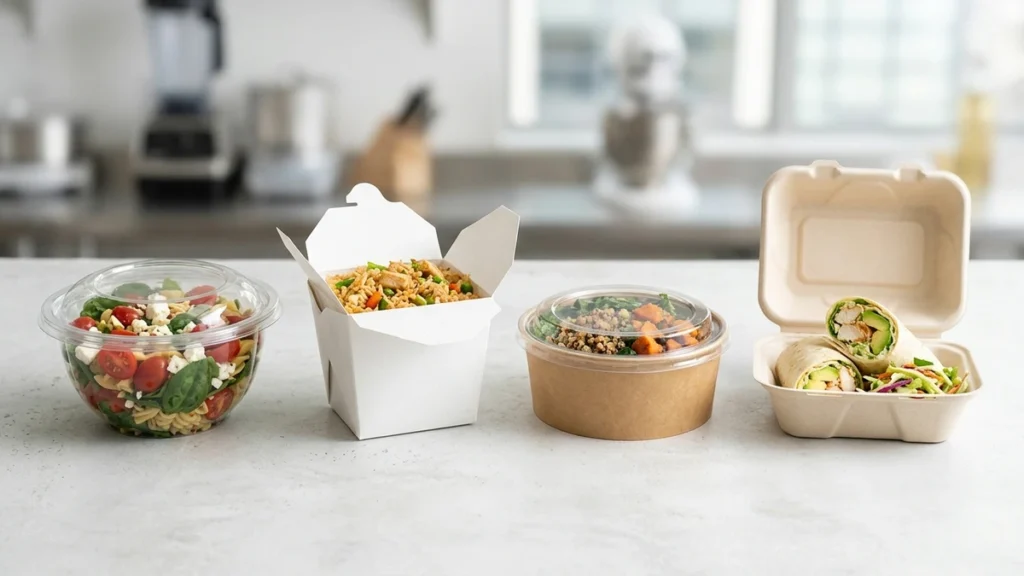
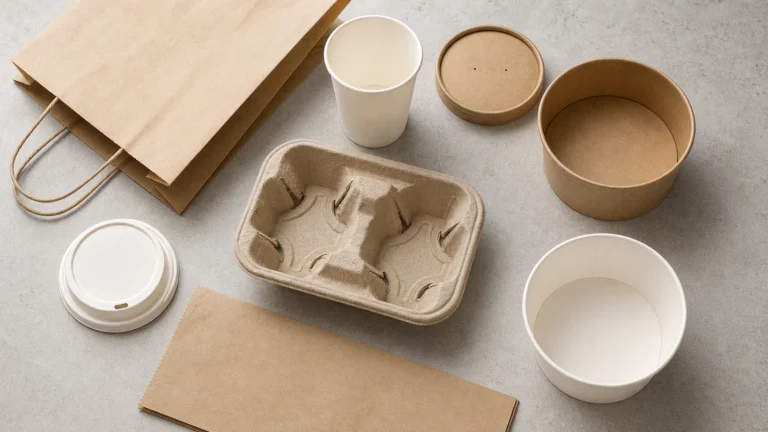
Una panoramica incentrata sulle esigenze degli acquirenti sui materiali utilizzati per i contenitori da asporto, tra cui plastica, carta, carta kraft e formati compostabili.
Il miglior contenitore per cibo da asporto: guida alla scelta tra plastica, carta e carta kraft
Qual è il contenitore da asporto più adatto per la plastica, la carta, la carta kraft o i prodotti compostabili?
Se hai bisogno di una risposta rapida riguardo all'acquisto: La plastica è solitamente la scelta migliore in termini di visibilità, alimenti freddi e resistenza alle perdite; la carta è spesso la soluzione più indicata per alimenti caldi da conservare per brevi periodi, con un costo inferiore; il cartoncino kraft è l’ideale quando si desidera un look naturale per il marchio con prestazioni simili a quelle della carta; i formati compostabili sono la scelta migliore quando le politiche di smaltimento o il posizionamento del marchio hanno maggiore importanza rispetto al costo unitario più basso.
In pratica, la scelta del contenitore giusto per il cibo da asporto dipende da cinque fattori:
Tipo di alimento: asciutto, in salsa, unto, caldo o freddo
Tempo di mantenimento: da consumare entro 10 minuti, da consegnare entro 45 minuti oppure da conservare più a lungo
Rischio di perdite e di presenza di grasso: basso, medio o alto
Requisiti relativi alla fine del ciclo di vita: riciclabile laddove consentito, compostabile laddove consentito, oppure nessuna indicazione specifica
Obiettivo della presentazione: visibilità del prodotto, sensazione di alta qualità o immagine naturale del marchio
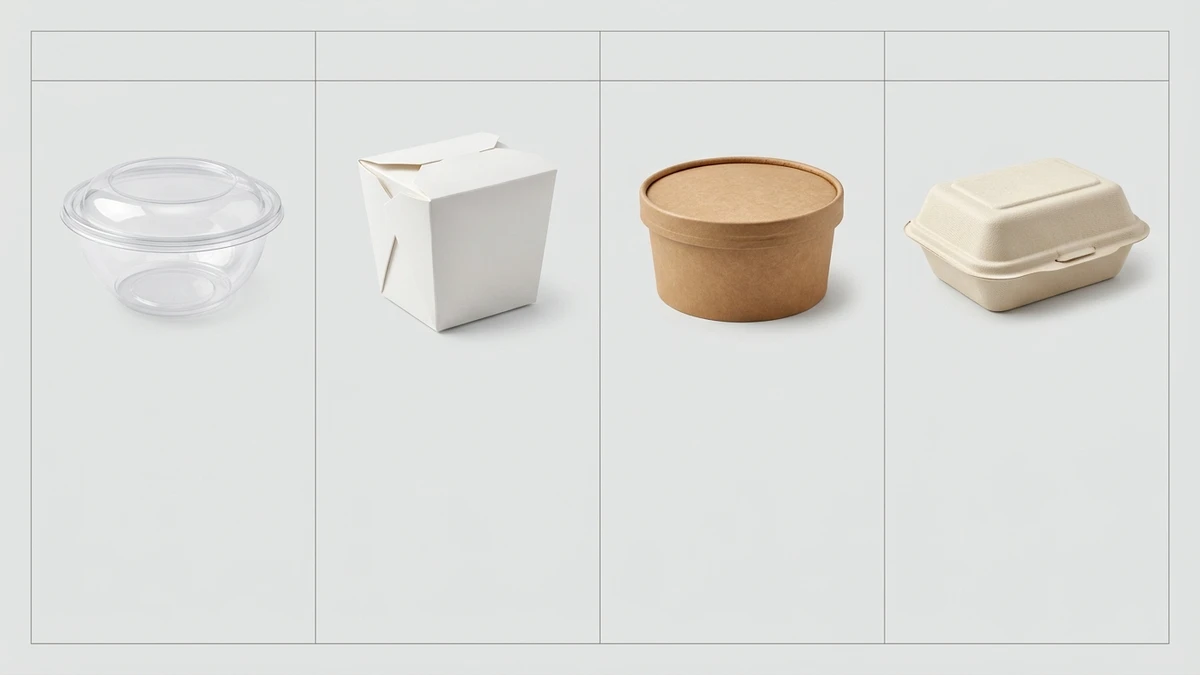
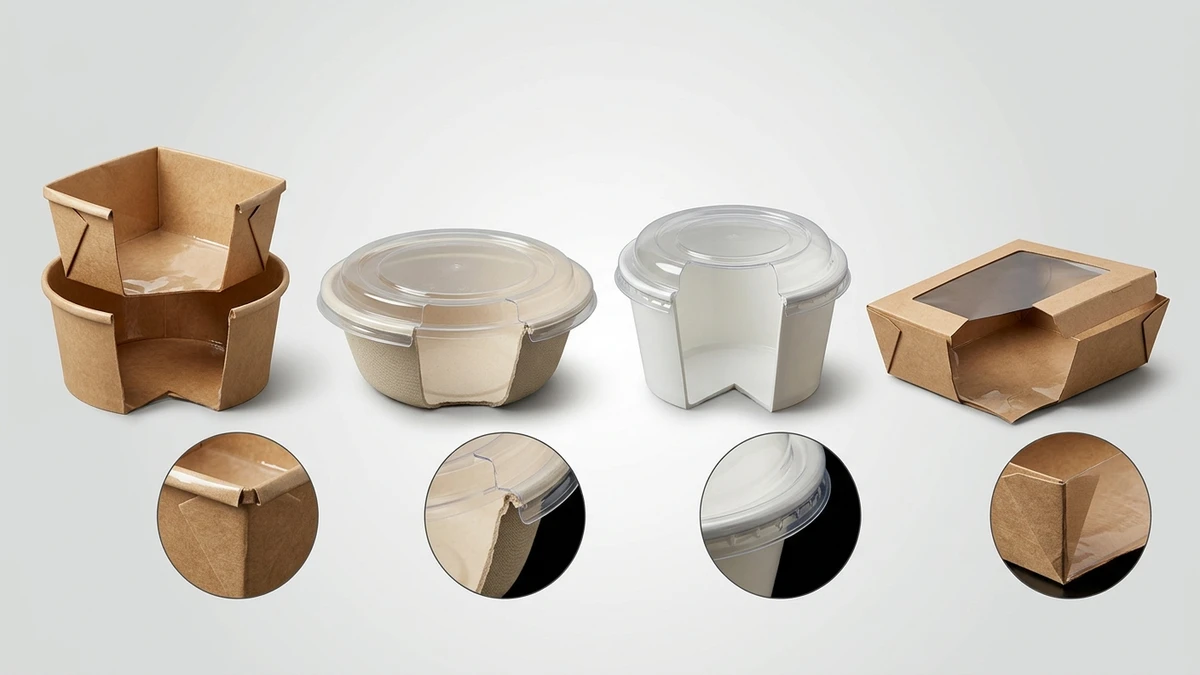
Il confronto affiancato dei contenitori da asporto aiuta gli acquirenti a valutare la visibilità, la struttura e la disposizione dei materiali.
Struttura di selezione rapida
Se la tua priorità è…
La scelta migliore
Perché vince
Non calza bene quando…
Mostrare chiaramente il cibo
Plastica
L'elevata trasparenza facilita il merchandising e la verifica degli ordini
Il cibo è molto caldo o emana molto vapore e la condensa è un problema
Confezionamento di cibi caldi al minor costo
Carta
Buona struttura, ampia gamma di misure, efficiente per il confezionamento rapido
Il prodotto è molto umido, untuoso o è rimasto in posa troppo a lungo
Un aspetto naturale senza allontanarsi troppo dalle prestazioni della carta standard
Kraft
Funzionalità simile a quella della carta, con un aspetto più elegante sugli scaffali
È necessaria una superficie di stampa di un bianco brillante o un'elevata visibilità del prodotto
Requisiti di compostabilità
Fibra compostabile o bioplastica
Supporta i siti o gli acquirenti che hanno obiettivi di compostaggio
L'accesso al compostaggio locale è limitato oppure la sensibilità ai costi è elevata
Il miglior sistema di controllo delle perdite per le salse
Plastica o fibra rivestita con coperchio a chiusura sicura
Migliore tenuta della barriera contro i liquidi e del coperchio durante il trasporto
La ventilazione è necessaria per i cibi fritti che perdono consistenza a causa del vapore intrappolato
Mantenimento del calore per i piatti caldi
Carta, carta kraft o fibra modellata con coperchio su misura
La struttura a parete e la minore dispersione d'aria nella parte inferiore consentono di trattenere il calore meglio rispetto alle confezioni trasparenti in stile "deli"
La condensa rovinerà i cibi croccanti
Come si confrontano i contenitori da asporto in plastica, carta, carta kraft e compostabili?
Non esiste un materiale universalmente migliore. Gli acquirenti dovrebbero effettuare un confronto in base al tipo di alimento, al tempo di conservazione e al tipo di guasto più probabile durante l'utilizzo.
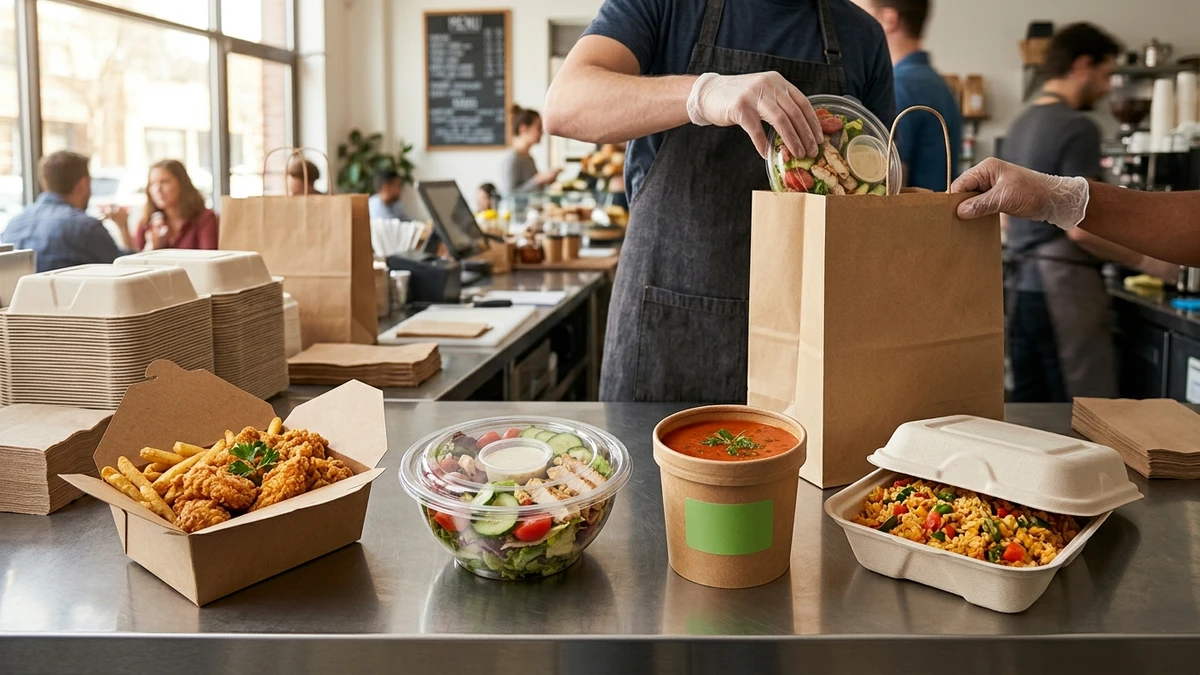
I diversi materiali dei contenitori da asporto si adattano a diversi tipi di alimenti, dalle insalate fredde in bella vista ai piatti caldi da asporto.
Materiale
Meccanismo
Intervallo o formato tipico delle specifiche
Potenziale di crescita commerciale
Principali compromessi
Best use cases
Plastica
Non-absorbent polymer walls resist water and oil; molded rims usually improve lid retention
Commonly PP, PET, OPS, or similar rigid tubs, deli containers, hinged packs
Fewer leaks, strong product visibility, reliable shape under stacking
Resin choice affects heat tolerance; conventional plastic may conflict with brand or policy targets
A buyer-side comparison: choose by failure risk first
Start with the problem you need to prevent: leaks, sogginess, cost, appearance, compostability, or chilled display. In most operations, lid fit, steam pressure, and coating mismatch cause more failures than the material name itself.
Main buying concern
Usually strongest option
Perché gli acquirenti lo scelgono
What to validate before rollout
Leaks during delivery
PP plastic or high-barrier lined fiber
Better sidewall stability and lid retention under movement
Hot-fill tolerance, lid lock under stacking, courier-bag tilt test
Soggy fried foods
Vented paper or kraft formats
Steam release protects texture better than sealed packs
Grease resistance and whether venting weakens heat retention too much
Meets procurement requirements when composting is real, not theoretical
Certification scope, local collection access, and lid disposal path
Chilled display and grab-and-go visibility
PET or clear plastic
Product visibility supports impulse purchase and order checking
Condensation appearance, crack resistance, and shelf-space efficiency
Where each material succeeds or fails in real operations
Plastica is strongest for wet, oily, and delivery foods because it resists liquids and keeps shape under stacking. Its main drawbacks are condensation with hot foods and weaker sustainability positioning.
Carta is efficient for hot, short-hold takeaway, but the barrier matters more than the board. Kraft performs similarly to paper when coating and weight are similar, while compostable packs work best only when disposal and hold-time conditions are controlled.
The specification that often matters most: coating and lid design
For paper, kraft, and many compostable packs, coating and lid design usually matter more than the base board. Grease resistance, venting, seam protection, and filled hold-time testing are the key checks.
Many leaks start at folds, rim channels, and steam-loosened lids rather than the sidewall. That is why menu-based testing is more useful than comparing catalog labels alone.
Compliance relevance: buy the claim you can actually support
Food-contact suitability should match temperature, contact time, and food type. The U.S. FDA explains how sostanze a contatto con gli alimenti are regulated here: https://www.fda.gov/food/food-ingredients-packaging/food-contact-substances-fcs
For fiber-based products, supplier documentation should identify board grade, coating, print system, and any chain-of-custody claim being made.
The practical rule is simple: buy the claim you can support operationally. Compostable only helps where compost collection exists, and recyclable claims may depend on contamination, lining type, and local acceptance. If you are comparing broader ranges, Papacko’s contenitori per alimenti e imballaggi alimentari monouso pages are useful starting points.
What Should Buyers Check Before Choosing a Take Out Container?
Buyers usually make better choices when they start with food behavior, service model, and disposal reality instead of “paper vs plastic.” The right pack must protect the product, fit operations, and stay economical after freight, storage, and complaint cost are counted.
Lid retention, seam design, and barrier layers often affect take out container performance more than base material alone.
1. Match the container to heat, moisture, and fat load
Food physics matters more than the menu label. Wet, oily, or hot-filled items need stronger barriers, better seams, and more secure lids than dry foods.
2. Check the coating or lining, not just the base material
Two packs sold as “paper” may perform very differently depending on whether they are uncoated, PE-lined, PLA-lined, or otherwise treated. A low-cost board without the right barrier often creates soak-through, rework, or double-bagging.
3. Verify leak-control logic: seams, corners, and lid fit
Leak resistance is a structural issue as much as a material issue. For delivery use, bottom folds, corner design, and lid retention usually matter more than the headline material.
4. Review insulation and venting based on food quality goals
The best pack is not always the one that keeps the most heat. Sealed formats retain heat better, while vented formats usually protect crispness better.
5. Confirm microwave, chill, and freezer needs
A food-contact-safe container may still be wrong for reheating or cold storage. Buyers should confirm that both base and lid perform correctly under hot fill, microwave use, refrigeration, or freezing.
6. Check stackability, nesting, and case-pack efficiency
Per-piece price is only one part of cost. Nesting height, denesting speed, pallet efficiency, and how well filled packs stack can change labor and freight significantly.
7. Test actual portion fit and headspace
Nominal volume is not enough. Buyers should confirm usable fill capacity, topping clearance, and whether the shape allows eating or handling without crushing the food.
8. Review environmental claims carefully
Before using “compostable” or “recyclable” claims, confirm what part of the pack the claim covers and whether local collection actually supports it. Ask whether the claim applies to the base, lid, coating, ink, and finished SKU.
9. Ask for hold-time and soak-time data
Short service and long delivery need different packaging. A practical test is to fill the pack with the real menu item, hold it for 15, 30, and 60 minutes, then inspect seepage, softening, condensation, and lid security.
10. Compare total landed cost, not unit price alone
A sound sourcing decision includes unit price, freight, pallet density, storage, labor, damage rate, MOQ, and lead time. A cheaper pack can cost more overall if it needs extra liners, labels, or re-bagging.
Which Take Out Container Material Fits Specific Foodservice Scenarios?
The same food can need different packaging in different channels. Counter pickup, 30-minute delivery, and chilled meal prep should not be sourced with the same logic.
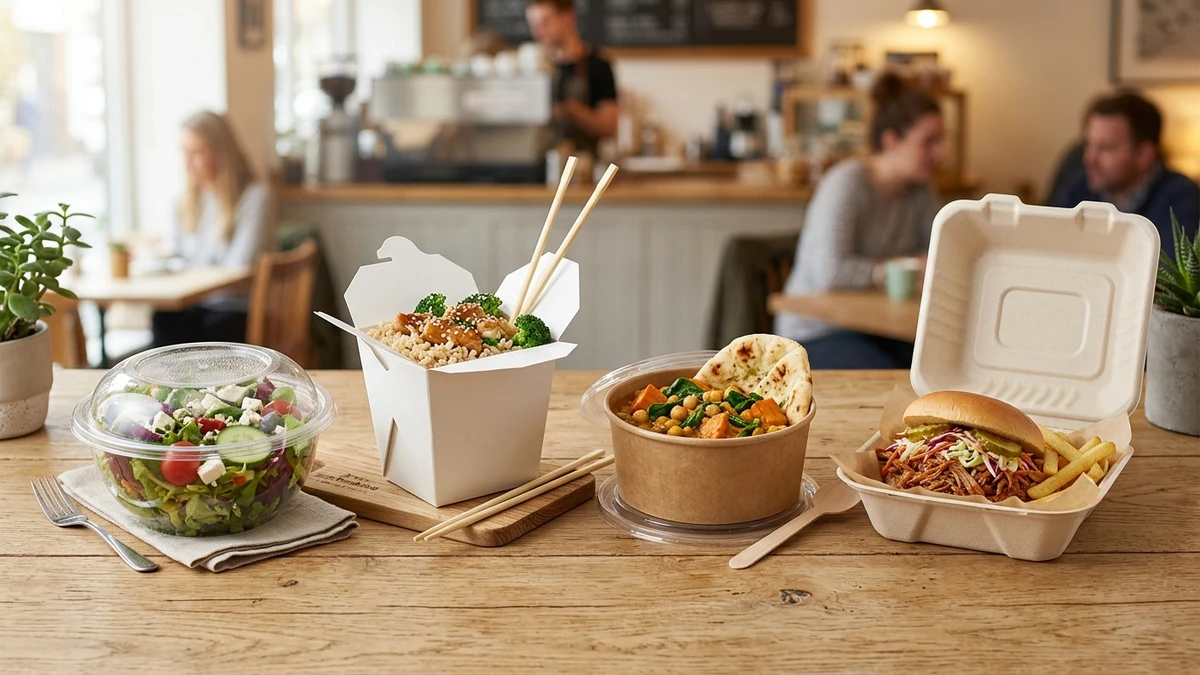
Foodservice channel and menu type change which take out container material performs best.
Quick scenario-to-material guide
Foodservice scenario
Best-fit materials
Why they work
Weak-fit materials
Main caution
Hot, greasy takeaway meals
PP plastic, molded fiber with strong lining
Better tolerance to oil, steam, and sauce
Unlined paper, light kraft paperboard
Grease breakthrough and softening
Cold salads, fruit, deli items
PET plastic, clear rPET, coated paper bowls with lids
Visibility and condensation tolerance
Opaque fiber where display drives sales
Lower visual appeal can hurt impulse purchase
Soup, curry, noodle dishes
PP tubs, heavy paper soup containers with secure lids
Better leak resistance and lid retention
Shallow clamshells, low-wall trays
Sidewall flex in transport
Cibi fritti
Vented paperboard, kraft clamshells, hybrid paper containers
Steam release helps preserve texture
Fully sealed plastic with no venting
Condensation softens crust
Café bakery and light lunch
Kraft paperboard, paper wedges, PET for desserts
Presentation and efficient right-sizing
Heavy rigid plastic for low-ticket items
Overpackaging raises cost
Meal prep / refrigerated storage
PP plastic, higher-heat trays where reheating is needed
Supports natural appearance and sustainability messaging
Standard black plastic in visible service settings
Disposal claims must match local reality
Long-distance delivery
PP plastic, secure-lid paper tubs, dual-seal systems
Better leak resistance under motion
Light clamshells, low-lock lids
Failure rates rise sharply with ride time
For restaurants: match the material to menu physics
Restaurants usually need more than one container family. PP plastic is often the safest option for sauced entrées and mixed-temperature meals, while paper or kraft usually works better for sandwiches, wraps, pastries, and drier sides.
For cafes: prioritize presentation and speed
Cafes often benefit from clear plastic for salads, desserts, and fruit where visibility helps sales, and kraft paperboard for dry hand-held items. For hot bakery and sandwiches, vented paperboard or kraft clamshells usually outperform sealed plastic because they release steam. Papacko’s accessori per l'imballaggio page is useful if you need to solve venting, sleeves, or lid compatibility without changing the full container program.
For meal prep and delivery-first operations: standardize on stability
Meal prep and delivery-heavy operations are less forgiving because lid-fit and wall-stiffness issues multiply over storage and transport. Plastic remains common because it handles refrigeration, stacking, portion control, and sealing more consistently than most paper-based options.
What Compliance, Compostability, and Printing Details Matter When Buying?
For many buyers, the challenge is making sure claim language, printing, and documentation hold up across locations and channels.
Start with the document set, not the sales claim
Before approving a SKU, ask for food-contact documentation, material specs, claim support, and ink or adhesive details if branding is involved. This is especially important for hot fill, oily foods, or reheating use cases.
Match “compostable” to the disposal pathway
“Compostable” is only useful when the disposal path is real. Buyers should confirm certification type, whether the claim is industrial or home compostable, and whether the end user can actually access that waste stream.
Printing affects lead time, defect risk, and usable branding area
Custom print changes MOQ, setup cost, repeat lead time, and QC risk. Paper and kraft usually suit simple branding well, while clear plastic often relies on labels or sleeves, and artwork should always be checked on the erected pack, not only on a flat proof.
How Do You Finalize the Right Supplier and Specification for Take Out Containers?
Finalizing a container program usually means locking a repeatable specification, a realistic test process, and a supplier that can maintain quality across reorders.
Start with a locked use-case specification
Define the container by application, not generic category. The spec should cover food type, fill temperature, hold time, venting, usable volume, case pack, print needs, and disposal target.
Compare suppliers on capability, not just price
Evaluate suppliers on production fit, consistency, documentation, and supply reliability, not piece price alone. A structured RFQ plus bench, kitchen, and delivery simulation testing usually reveals the real differences.
Validate the container as a system
Test the base, lid, packing method, and transport profile together. Many failures appear only after hot hold, stacking, vibration, or cold storage, so the pack should be approved as a full operating system.
Compare total operating fit before PO release
Before releasing a PO, confirm the approved sample, exact material and barrier structure, dimensions, matching lid, application scope, print proof, carton pack, pallet configuration, lead time, and complaint process in writing.
Domande frequenti
What is the best take out container for hot food?
Paper, kraft, and PP plastic can all work for hot food. The best choice depends on grease level, hold time, venting, and lid security.
Are kraft take out containers better than white paper containers?
Kraft mainly changes appearance and brand feel. Grease resistance depends more on coating, board weight, seams, and lid design.
When should I choose compostable take out containers?
Choose compostable formats when certified products match your food type and the customer or venue has access to a real composting pathway.
How do I know if a container is leak resistant?
Test it with the actual menu item at service temperature, then stack, tilt, bag, and inspect it after 15, 30, and 60 minutes.
What documents should suppliers provide?
Ask for food-contact documentation, material specs, coating details, print information, and any claim support for compostable or recyclable wording.
How does custom printing affect the container choice?
Printing can change MOQ, lead time, surface finish, artwork limits, and the documentation needed for the finished food-contact SKU.
krad lin
Papacko Content Team — Realizziamo guide pratiche e basate sull’esperienza di fabbrica per il packaging B2B nel settore alimentare e delle bevande. Gli argomenti trattati includono la scelta di bicchieri e ciotole di carta, rivestimenti in PE/PLA/a base acquosa, conformità alle normative sul contatto con gli alimenti, stampa, controllo qualità e flussi di lavoro pronti per l’esportazione, affinché caffetterie, ristoranti, distributori e partner OEM possano crescere con una fornitura affidabile.