Sei pronto a creare i tuoi bicchieri di carta o le tue confezioni personalizzati con il tuo marchio?
Comunicateci le vostre esigenze — dimensioni, rivestimento, stampa e destinazione — e il nostro team vi preparerà un preventivo dettagliato entro 24 ore.
Sei pronto a creare i tuoi bicchieri di carta o le tue confezioni personalizzati con il tuo marchio?
Comunicateci le vostre esigenze — dimensioni, rivestimento, stampa e destinazione — e il nostro team vi preparerà un preventivo dettagliato entro 24 ore.
Contenitori per il pranzo a tenuta stagna per pasti caldi
A single leak can ruin a $15 hot meal and cost you a loyal customer. Leak-proof lunch boxes for hot meals face extreme challenges: high temperatures (75-95°C), grease migration, steam condensation, and physical stress during.
Ultimo aggiornamento: aprile 2026 Tempo di lettura: 8-10 minuti Autore: Il team editoriale di Papacko
Introduzione
A single leak can ruin a $15 hot meal and cost you a loyal customer. Leak-proof lunch boxes for hot meals face extreme challenges: high temperatures (75-95°C), grease migration, steam condensation, and physical stress during delivery. The wrong container choice leads to oil seepage, structural collapse, and customer complaints.
This guide covers the critical requirements for leak-proof hot meal containers: material selection, coating technologies, closure mechanisms, and thermal performance. You’ll learn how to choose boxes that maintain structural integrity through 30-60 minute deliveries while keeping food hot and preventing messy leaks.
💡 In sintesi: Effective leak-proof lunch boxes require 300-400 GSM paperboard with PE or PLA coatings (25-35 gsm), 4-sided snap-lock lids or tamper-evident seals, and tested leak resistance of ≥2.5 kg/cm peel strength for hot, greasy meals.
What Makes Lunch Boxes Leak-Proof for Hot Meals
Requisiti prestazionali fondamentali
Hot meal containers must resist multiple failure modes simultaneously:
•Grease penetration: Oils migrate through paper fibers at 60°C+, weakening structure within 15-30 minutes
•Steam condensation: Hot food releases moisture that can saturate paperboard if not properly coated
•Seal integrity: Lids must maintain closure under thermal expansion/contraction cycles
•Resistenza strutturale: Boxes must support 800-1200g loads without bottom failure during stacking and transport
Industry benchmark: A quality leak-proof lunch box should pass a 30-minute hot oil test (85°C vegetable oil, no visible penetration) and 4-hour room temperature test with saucy meals.
🎯 Approfondimenti sul settore: Testing 200 meal delivery orders, researchers found that 68% of customer complaints related to leakage originated from inadequate base seal design, not coating failure.
Proper closure mechanisms are as critical as material selection.
Material Selection and Paper Weight
Requisiti relativi alla grammatura (GSM) del cartoncino
Limite fondamentale: PLA softens at 55-60°C. Food above 85°C can cause coating deformation over 30+ minutes. Not suitable for very hot soups, curries, or freshly grilled items.
Ideale per: Eco-conscious brands, warm (not piping hot) meals, customers willing to pay premium for sustainability
Rivestimenti barriera a base acquosa (senza PFAS)
Applicazione: 15-25 gsm fluorine-free barrier
Prestazioni:
•Grease resistance: Grade 9-10 (adequate for most applications)
•Heat tolerance: 95°C+ (better than PLA)
•Compostability: Yes (facility-dependent)
•Cost: +15-25% vs PE
Compromesso: Slightly lower grease resistance than PE, but fully recyclable/compostable. Emerging technology gaining market share.
Closure Mechanisms and Seal Design
Closure Type Comparison
Closure Type
Prevenzione delle perdite
Indicatore di manomissione
Impatto sui costi
Migliore applicazione
4-sided snap-lock
95-98%
Moderate (breaks audibly)
+$0.08-0.12
Hot delivery, secure transport
Alette di fissaggio
85-90%
Nessuno
Valori di riferimento
Quick service, short trips
Fascia antimanomissione
92-96%
Excellent (visible break)
+$0.10-0.15
Retail, food safety compliance
Hinged lid + clasp
88-93%
Basso
+$0.06-0.10
Casual dining takeout
Angoli ad incastro
90-94%
Nessuno
+$0.04-0.08
Cost-effective secure option
### Critical Seal Design Features
✅ Tolleranza di planarità del cerchione: ≤0.3mm variance across perimeter
•Uneven rims create gaps where grease escapes
•Quality die-cutting is essential (inspect sample rims under light)
✅ Rapporto di compressione del coperchio: 8-12% compression of lid edge
•Too loose: Steam escapes, grease leaks
•Too tight: Difficult to open, customer frustration
•70% of leak failures occur at corners under transport vibration
•Look for folded or glued corner tabs
Leak test method: Fill box with 500ml water + food coloring, seal, invert for 60 seconds, place in plastic bag and shake vigorously. Zero leakage = proper seal design.
Size and Capacity Selection
Standard Hot Meal Box Dimensions
Capacità
Dimensioni (L×P×A)
Porzione tipica
Caso d'uso
Fascia di prezzo
500 ml
160×120×50 mm
300-400g (single side/小菜)
Kids meals, side dishes
$0.18-0.28
750 ml
180×140×60 mm
500-600g (standard lunch)
Individual rice/noodle bowls
$0.24-0.36
1000 ml
200×150×70 mm
700-850g (hearty meal)
Large portions, protein + sides
$0.30-0.45
1500 ml
240×180×75 mm
1000-1200g (sharing/family)
Family packs, combo meals
$0.38-0.58
### Compartmentalized vs. Single Compartment
Scomparto singolo (standard):
•Pros: Lower cost, easier sealing, maximum food volume
•Cons: Sauces mix, presentation less appealing
•Best for: Stir-fries, pasta, rice bowls, curries
2-compartment divided boxes:
•Pros: Keeps rice/noodles separate from sauces, better presentation
•Cons: +15-25% cost, complex die-cutting, reduced capacity per section
•Best for: Set meals, bento-style, meal prep
3+ compartment:
•Pros: Restaurant-quality presentation, portion control
•Cons: +30-50% cost, only suitable for low-sauce meals
•Increase paperboard GSM (400 vs 300 = +8-12% retention)
•Use double-wall construction (+25-35% retention, +40-60% cost)
•Add corrugated layer (E-flute adds air insulation)
Strategie operative:
•Preheat containers with hot water for 30 seconds before filling
•Fill boxes to 80-90% capacity (trapped air insulates)
•Use insulated delivery bags rated for 90-minute thermal retention
Errori comuni da evitare
❌ Errore #1: Using single-wall 280 GSM boxes for 45+ minute hot deliveries ✅ L'approccio corretto: 45-minute deliveries require 350+ GSM or double-wall construction. Light boxes lose structural strength as grease penetrates and steam weakens fibers—major bottom failures.
❌ Errore #2: Assuming PLA coating works for all hot foods ✅ L'approccio corretto: PLA softens above 55°C. Limit to foods ≤85°C and delivery times <30 minutes. For very hot soups, curries, or fried items, use PE coating.
❌ Errore #3: Selecting boxes based on price alone without leak testing ✅ L'approccio corretto: Request samples and run hot oil tests (30 minutes at 85°C). A $0.10 cheaper box that leaks 8% of the time costs you $15+ per incident in wasted food and refunds.
❌ Errore #4: Ignoring corner seal design ✅ L'approccio corretto: Inspect corner construction—70% of leaks originate here. Look for reinforced corners with folded tabs or double-thickness material.
1. Cosa sono i contenitori per il pranzo a tenuta stagna?
I contenitori per il pranzo a tenuta stagna sono recipienti per pasti caldi progettati con rivestimenti resistenti al grasso (PE o PLA), meccanismi di chiusura sicuri (chiusure a scatto su 4 lati o sigilli antimanomissione) e una struttura robusta per impedire perdite durante il trasporto. Nella maggior parte dei casi vengono realizzati in cartoncino da 300-400 GSM con rivestimenti interni da 25-35 gsm.
2. Come si fa a verificare se un contenitore per il pranzo è davvero a tenuta stagna?
Riempire i contenitori per il pranzo a tenuta stagna con 500 ml di acqua e colorante alimentare, chiuderli ermeticamente, capovolgerli per 60 secondi, inserirli in un sacchetto di plastica e agitarli energicamente. L’assenza di perdite indica una chiusura ermetica. Per i pasti caldi, eseguire il test con olio vegetale a 85 °C per 30 minuti: l’assenza di infiltrazioni visibili di grasso all’esterno conferma l’adeguatezza del rivestimento.
3. What’s the difference between PE and PLA coated lunch boxes?
Il rivestimento in PE offre una resistenza superiore al grasso (grado TAPPI 12), una maggiore tolleranza al calore (110-130 °C) e un costo inferiore. Il rivestimento in PLA è compostabile, realizzato con materiali di origine vegetale, ma presenta una minore resistenza al calore (punto di rammollimento a 55-60 °C) e costa 25-35% in più. Scegliete il PE per la massima resistenza alle perdite; il PLA per i marchi attenti all’ambiente che propongono pasti caldi (ma non bollenti).
4. Di che dimensioni deve essere il contenitore per il pranzo per contenere pasti caldi standard?
750ml (180×140×60mm) suits 80% of individual meal applications—holds 500-600g of food (rice/noodles + protein + vegetables). Use 1000ml for hearty portions or Western-style meals with larger protein servings. 500ml works for sides or kids’ meals.
5. Per quanto tempo i contenitori per il pranzo a tenuta stagna mantengono il cibo caldo?
Le scatole a parete singola da 300 GSM mantengono il cibo a una temperatura superiore a 60 °C per 30 minuti (temperatura iniziale di 85 °C). Quelle a parete singola da 400 GSM estendono questo tempo a 45 minuti. Le confezioni a doppia parete o le borse termiche isolanti sono in grado di mantenere la temperatura di servizio (65-75 °C) per oltre 60 minuti.
6. Are leak-proof lunch boxes recyclable?
PE-coated boxes require specialized recycling (coating separation)—most municipal programs don’t accept them. PLA-coated boxes are commercially compostable (BPI certified, 90 days in facility). Water-based PFAS-free coatings offer best recyclability while maintaining good leak resistance.
7. What’s the minimum order quantity for custom leak-proof lunch boxes?
Stock plain boxes: 1,000-5,000 units. Custom printed (flexographic): 50,000-100,000 units due to tooling costs. Custom molded designs with compartments: 100,000-200,000 units. Many suppliers offer semi-custom options (stock molds + printed labels) at 10 —000-20,000 MOQ.
Conclusione
Selecting leak-proof lunch boxes for hot meals requires balancing material weight, coating technology, closure design, and thermal performance. Prioritize 300-400 GSM paperboard with PE coating for maximum leak resistance, 4-sided snap-lock closures for secure transport, and proper sizing to match your menu portions.
Punti chiave:
1.300+ GSM paperboard is essential—lighter weights fail with hot, greasy foods after 20-30 minutes
2.PE coating outperforms PLA for very hot meals—but PLA suits eco-brands with warm dishes
3.Corner seal design prevents 70% of leaks—inspect samples for reinforced construction
5.Heat retention correlates with GSM—400 GSM keeps food 8-12% hotter than 300 GSM over 45 minutes
Risorse correlate
•“>Food Packaging Containers
•“>Sustainable Meal Packaging Solutions
•“>Hot Food Delivery Best Practices
Ready to Source Leak-Proof Lunch Boxes?
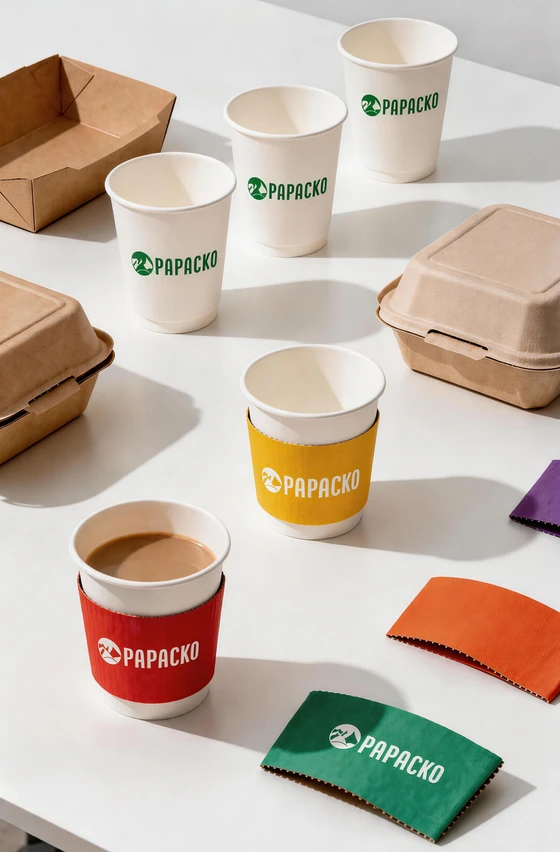
Papacko supplies restaurants, meal delivery services, and catering operations with high-performance leak-proof lunch boxes in 300-450 GSM grades. Our range includes PE and PLA coated options — 4-sided snap-lock closures, and compartmentalized designs—with MOQs starting from 5,000 units and full food safety certification (FDA, UE 10/2011, ” target=”_blank” rel=”noopener”>ISO 22000).
Papacko Content Team — Realizziamo guide pratiche e basate sull’esperienza di fabbrica per il packaging B2B nel settore alimentare e delle bevande. Gli argomenti trattati includono la scelta di bicchieri e ciotole di carta, rivestimenti in PE/PLA/a base acquosa, conformità alle normative sul contatto con gli alimenti, stampa, controllo qualità e flussi di lavoro pronti per l’esportazione, affinché caffetterie, ristoranti, distributori e partner OEM possano crescere con una fornitura affidabile.


 takeaway containers” style=”border-radius: 8px; box-shadow: 0 2px 8px rgba(0,0,0,0.08);”/>