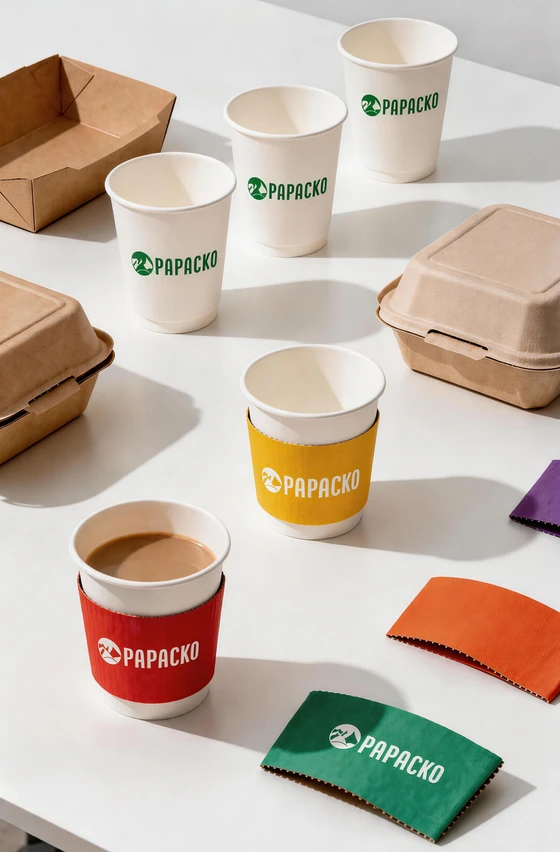
Sei pronto a creare i tuoi bicchieri di carta o le tue confezioni personalizzati con il tuo marchio?
Comunicateci le vostre esigenze — dimensioni, rivestimento, stampa e destinazione — e il nostro team vi preparerà un preventivo dettagliato entro 24 ore.
Sei pronto a creare i tuoi bicchieri di carta o le tue confezioni personalizzati con il tuo marchio?
Comunicateci le vostre esigenze — dimensioni, rivestimento, stampa e destinazione — e il nostro team vi preparerà un preventivo dettagliato entro 24 ore.
Ultimo aggiornamento: maggio 2026
Tempo di lettura: 8-10 minuti
Autore: Il team editoriale di Papacko
Introduzione
Custom-designed “>paper salad bowls have evolved from functional takeaway containers into powerful brand marketing assets for restaurants, meal prep services, salad bars, and health food chains. The global market for branded food packaging grows 12% annually, driven by Instagram-driven visual marketing, food delivery expansion, and consumer preference for eco-friendly packaging that communicates brand values. A well-designed salad bowl transforms every takeaway order into a mobile advertisement, generating 40-120 customer impressions as recipients carry bowls through offices, parks, and public spaces.
Paper salad bowls offer unique customization opportunities compared to flat surfaces: cylindrical wraparound designs, interior vs exterior printing zones, vibrant full-color graphics showcasing fresh ingredients, and eco-friendly material choices (kraft paper, bamboo fiber, sugarcane bagasse) that align with health-conscious brand positioning. Though effective customization requires understanding material properties, printing technique trade-offs, food safety compliance, structural design constraints, and cost dynamics across order volumes.
This comprehensive guide details paper salad bowl custom design principles, printing method comparisons (flexographic, digital, offset), material selection for different food types, branding strategy frameworks, regulatory compliance requirements, and cost-ROI analysis for businesses investing in custom packaging. You’ll learn design best practices, printing specifications, supplier selection criteria, and real-world case studies demonstrating how custom bowls drive brand recognition, customer loyalty, and competitive differentiation.
💡 In sintesi: Custom paper salad bowls cost $0.22-0.45 per unit (500-10,000 volumes) depending on material (kraft, bamboo, PLA-coated), printing method (flexo for 10k+, digital for 1-5k), and design complexity (1-4 colors).
Effective designs prioritize high-contrast logos (40mm+ size), food photography showcasing freshness, wraparound branding for 360° visibility, and eco-certifications (BPI, FSC) building trust.
ROI achieved via 8-15% brand recall increase, 12-25% social media engagement boost, and 3-8% premium pricing enabled by perceived quality.
Why Custom Design Matters for Salad Bowls
Brand Differentiation in Crowded Markets
Market context: The healthy fast-casual segment grows 18% annually, with 12,000+ salad-focused concepts in North America alone (Sweetgreen, Chopt, Just Salad, local independents). Generic white bowls communicate commodity positioning; custom designs signal quality, professionalism, and brand identity.Visual impact metrics:
Composizione del materiale: Kraft or white paperboard with 10-20% PLA (” target=”_blank” rel=”noopener”>polylactic acid, plant-based plastic) lining interior.Vantaggi:
•Eccellente resistenza all'umidità: PLA coating blocks dressings, oils, liquids (no sogginess for 4-6 hours)
•Compostabilità: Entire bowl composts in industrial facilities (90-180 days)
•Superficie di stampa: Exterior remains standard paperboard (excellent print quality)
•Conformità alle norme della FDA: PLA approved for direct food contact
Limiti:
•Costo: 25-45% more expensive than standard kraft ($0.22-0.32 per bowl at 500 units)
•Composting infrastructure: Requires industrial composting (62% of consumers lack access)
•Heat sensitivity: PLA softens above 45°C (not suitable for hot grain bowls, warm proteins)
Ideale per:
•Salads with heavy dressings, wet ingredients (quinoa, couscous, roasted vegetables)
•Brands targeting zero-waste goals with compost programs
•Food delivery (bowls must survive 30-60 min transit without leaking)
Principi di progettazione per ottenere il massimo impatto
Cylindrical Surface Design Challenges
Understanding bowl geometry:
•Angoli di visione: Customers view bowls from above (lid angle) and sides (cylindrical wrap)
•Primary zone: Upper 40% of bowl height (most visible when held, sitting on table)
•Zona secondaria: Middle 30% (visible from side angles)
•Zona terziaria: Bottom 30% (rarely seen unless bowl lifted)
Design allocation:
Zona
Visibilità
Recommended Content
Ripartizione delle taglie
Lid (top surface)
100% (first impression)
Logo, tagline, QR code
60-80% of lid area
Upper rim (exterior)
85%
Primary logo, brand name
25-35% dell'area di progettazione
Mid-section (wraparound)
60%
Food photography, pattern, values messaging
30-45%
Lower section
30%
Social handles, website, nutritional info
15-25%
Interni
100% (when consuming)
Brand message, sustainability story
Optional (10-15% cost increase)
### Color Psychology for Food PackagingColor strategies for salad bowls:
Tavolozza dei colori
Impatto psicologico
Posizionamento del marchio
Food Types
Green + white
Fresh, healthy, natural
Clean eating, organic, plant-based
Leafy greens, veggie-forward salads
Earthy tones (brown, tan, olive)
Wholesome, sustainable, artisanal
Farm-to-table, rustic, locally sourced
Grain bowls, roasted vegetables
Vibrant multi-color (red, orange, yellow, purple)
Energetic, fun, diverse
Customizable, build-your-own, international
Rainbow bowls, variety-focused menus
Black + gold
Premium, sophisticated, gourmet
Upscale, chef-driven, luxury ingredients
High-end salads, protein-heavy bowls
Pastelli (mint, peach, lavender)
Modern, Instagram-friendly, gentle
Trendy, wellness-focused, lifestyle brand
Aesthetic-focused, influencer appeal
Contrast requirements:
•Minimum contrast ratio: 4.5:1 (WCAG AA standard for legibility)
•Ideal contrast: 7:1+ (WCAG AAA, readable from 5+ meters)
•Testing method: Convert design to grayscale; if elements blur together, contrast insufficient
Typography and Readability
Font selection criteria:
Font Category
Casi d'uso
Legibility
Brand Personality
Examples
Sans-serif
Logos, headlines, modern brands
Excellent (clean, high-contrast)
Contemporary, approachable, minimalist
Helvetica, Futura, Avenir, Gotham
Serif
Traditional brands, gourmet positioning
Good (requires larger sizes)
Classic, sophisticated, premium
Garamond, Baskerville, Playfair
Sceneggiatura
Accent text, taglines, artisanal brands
Moderate (use sparingly, large sizes)
Elegant, hand-crafted, personal
Pacifico, Lobster, Dancing Script
Display
Bold statements, brand names
High (attention-grabbing)
Unique, playful, memorable
Impact, Bebas Neue, Oswald
Size specifications:
•Logo/brand name: 30-50mm width (readable from 3-5 meters)
•Headlines/taglines: 18-28pt (5-7mm height)
•Testo del corpo (ingredient lists, info): 10-14pt (2.5-3.5mm height)
•Dimensione minima: 8pt (2mm) for legal text, nutritional info
Spacing and hierarchy:
•Line height: 1.3-1.5× font size (prevents cramped appearance)
•Letter spacing: +2-5% for all-caps headlines (improves readability)
1. Cosa sono le insalatiera di carta e perché personalizzarle?
Paper salad bowls are eco-friendly disposable “>food containers made from paperboard (kraft, white, bamboo fiber) or PLA-coated materials designed for salads, grain bowls, and cold meals. Customization involves printing logos, food photography, branding elements, and sustainability messaging on bowl exteriors and lids. Businesses customize bowls to differentiate from competitors (42% higher brand recall), generate mobile advertising (50-120 impressions per bowl), enable social media marketing (35% of customers photograph aesthetically designed bowls), and justify premium pricing (3-8% higher). Custom designs transform functional packaging into marketing assets delivering $2-6 CPM vs $10-20 for digital ads.
2. Quanto costano le insalatierine di carta personalizzate?
I costi delle insalatiere di carta personalizzate variano da $0,22 a 0,68 per pezzo, a seconda della quantità, del materiale e del metodo di stampa. Per 2.000 unità: la stampa digitale (a colori) costa da $0,45 a 0,68; la stampa flessografica (a 2 colori) non è conveniente a causa degli elevati costi di avviamento. Per 10.000 unità: la stampa flessografica costa da $0,35 a 0,42, mentre quella digitale da $0,28 a 0,36. A 50.000 unità: la stampa flessografica costa $0,22-0,28 (la più economica), quella digitale $0,24-0,30. I materiali incidono sui prezzi: carta kraft ($0,12-0,18 in bianco), cartoncino bianco ($0,18-0,25), fibra di bambù ($0,28-0,42), rivestito in PLA ($0,22-0,32). Costi di avviamento: flessografia $1.200-3.500 (cliché una tantum), digitale $150-400 per ordine. Il punto di pareggio tra flessografia e digitale si raggiunge a circa 7.500-10.000 unità.
3. Quali sono i metodi di stampa più indicati per la personalizzazione delle insalatiere?
Tre metodi di stampa principali: (1) Flessografia: ideale per oltre 10.000 unità, 2-4 colori, loghi/motivi semplici; costo $0,22-0,42 per ciotola, richiede un costo di avviamento di $1.200-3.500, tempi di consegna di 4-6 settimane; (2) Digitale: ideale per 500-5.000 pezzi, fotografia alimentare a colori, bozze di prova; costo $0,28-0,68 per ciotola, costi di avviamento minimi ($150-400), tempi di consegna di 1-3 settimane; (3) Offset: ideale per 15.000-30.000 unità, qualità fotografica premium, superfici piatte; costo: $0,10-0,20 per ciotola, costi di avviamento pari a $2.500-5.000. Scegliete la stampa digitale per le startup o i design stagionali (quantità minima d’ordine ridotta), la flessografia per i marchi affermati (efficienza in termini di costi su larga scala) e l’offset per una qualità fotografica di alto livello.
4. Quali materiali sono disponibili per le insalatiera personalizzate?
Materiali principali: (1) Cartoncino Kraft — marrone non sbiancato, aspetto ecologico, $0.12-0.18/ciotola, richiede un rivestimento interno per i condimenti, ideale per marchi economici/rustici; (2) Cartoncino bianco — sbiancato/patinato, superficie di stampa dai colori vivaci, $0,18-0,25/ciotola, aspetto di alta qualità, ideale per la fotografia gastronomica; (3) Fibra di bambù — erba sostenibile a crescita rapida, $0,28-0,42/ciotola, consistenza unica, 12-18 volte più resistente, compostabile in 45-90 giorni; (4) Cartoncino rivestito in PLA — barriera contro l’umidità di origine vegetale, $0,22-0,32/ciotola, resistenza superiore alle perdite, compostabile industrialmente, ideale per insalate umide e consegne a domicilio. Tutti i materiali sono stampabili; il bianco e il kraft offrono la migliore qualità di stampa; la superficie ruvida del bambù limita la resa dei dettagli più fini.
5. Quali elementi di design dovrei includere nelle insalatiera personalizzate?
Dare priorità a 3-5 elementi chiave: (1) Logo — dimensioni 40-50 mm sul bordo superiore e sul coperchio per garantire la visibilità da 3-5 metri; (2) Colori del marchio — 1-3 colori distintivi (rapporto di contrasto elevato 7:1 per garantire la leggibilità); (3) Fotografie di cibo o motivi: mettere in risalto gli ingredienti freschi, avvolgendo la sezione centrale (30-45% dell’area di design); (4) Slogan o proposta di valore: messaggi sulla sostenibilità, approvvigionamento locale, benefici per la salute (carattere da 18-28 pt); (5) Profili social e codici QR: da inserire nel terzo inferiore o sul coperchio, per stimolare il coinvolgimento. Evitare l’eccesso di elementi: le ciotole con 3-5 elementi ottengono un ricordo del 42% superiore rispetto a quelle con 7 o più componenti. Applicare i principi del design cilindrico (ripetere gli elementi 2-3 volte per garantire una visibilità a 360°).
6. How do I ensure custom salad bowls are food-safe and compliant?
Verify FDA compliance (USA): bowls must meet 21 CFR 176.170 (paper components) and 21 CFR 178 (coatings, inks, adhesives approved for food contact). Request FDA compliance certificates from manufacturers. Ensure interior coatings are PFAS-free (PLA, bio-wax, water-based only—no banned per- and polyfluoroalkyl substances). For EU markets, confirm EU Regulation 1935/2004 and 10/2011 compliance (Declaration of Compliance, <10 mg/dm² migration). For compostability claims, require BPI (ASTM D6400 USA), EN 13432 (Europe), or BNQ 0017-088 (Canada) certifications—avoid vague "biodegradable" claims without third-party verification. Test samples via accredited labs (SGS, Intertek) if serving acidic or hot foods.
7. What’s the typical ROI for investing in custom salad bowl design?
Custom bowl ROI ranges 67-158% first year for businesses serving 5,000 bowls/month (60,000 annually). Incremental investment: $13,900 (design $1,500 + flexo setup $2,200 + bowls $0.35 × 60,000 = $21,000, minus $10,800 for generic bowls). Annual benefits: $9,300-22,000 from brand recall increase (8-15%, saving $2,400-4,500 in paid ads), social media engagement (12-25% more UGC, $1,800-4,200 organic reach), premium pricing (3-8%, $3,600-9,600 additional revenue), and reduced customer acquisition costs (5-12%, $1,500-3,600). Payback period: 6-15 months. ROI drivers strongest for Instagram-focused brands, premium meal prep, and fast-casual chains.
Conclusione
Custom-designed paper salad bowls represent a strategic investment in brand building, customer engagement, and market differentiation for food service businesses. The evidence demonstrates clear ROI: 42% higher brand recall, 12-25% increased social media engagement, 3-8% premium pricing capability, and $2-6 CPM advertising value—all while communicating sustainability values through eco-friendly materials (kraft, bamboo, PLA-coated paperboard) certified compostable or recyclable.
Punti chiave:
1.Material selection drives positioning—kraft for rustic/sustainable, white for premium/photography, bamboo for eco-luxury, PLA-coated for leak-resistant delivery
2.Printing method matches volume—digital for 500-5,000 units (flexibility), flexo for 10,000+ units (cost efficiency), break-even at ~7,500 units
Ready to Design Custom Paper Salad Bowls for Your Brand?
Papacko supplies custom-designed paper salad bowls (kraft, white, bamboo, PLA-coated) for restaurants, meal prep services, catering companies, and food delivery platforms. Our design team provides free templates, mockup services, print-ready file preparation, and material recommendations tailored to your menu and brand positioning. We offer both digital printing (MOQ 500 units) and flexographic printing (MOQ 10,000 units) with FDA/” target=”_blank” rel=”noopener”>BPI certifications.
Papacko Content Team — Realizziamo guide pratiche e basate sull’esperienza di fabbrica per il packaging B2B nel settore alimentare e delle bevande. Gli argomenti trattati includono la scelta di bicchieri e ciotole di carta, rivestimenti in PE/PLA/a base acquosa, conformità alle normative sul contatto con gli alimenti, stampa, controllo qualità e flussi di lavoro pronti per l’esportazione, affinché caffetterie, ristoranti, distributori e partner OEM possano crescere con una fornitura affidabile.