Ready to create your own branded paper cups or packaging?
Tell us your requirements — size, coating, printing, and destination — and our team will prepare a detailed quotation within 24 hours.


Last Updated: December 2025
Reading Time: 12 minutes
Author: Papacko Content Team
You’ve ordered 50,000 paper cups and 50,000 lids—only to discover lids don’t fit. Understanding available paper cup lids types helps.Cup rim diameter is 90mm, lids are 85mm (wrong size). Now you’re stuck with $1,800 in unusable lids, scrambling to source emergency replacement lids at 40% premium pricing, and dealing with frustrated baristas using mismatched lids that leak and pop off. Three days of operations disrupted, customer complaints mounting, and your cost-per-cup just increased 15% due to rushed reordering.
Lid selection isn’t just about aesthetics—it’s about compatibility, functionality, and cost management. Understanding available paper cup lids types helps.Wrong lid type means spills, customer dissatisfaction, and wasted inventory. Right lid type optimizes for beverage temperature (hot vs cold), drinking method (sip slot vs straw hole), material sustainability (PS vs PP vs PLA), and precise dimensional matching (80mm vs 90mm rim diameter, critical millimeter-level accuracy).
In this guide, you’ll learn:
•Lid type classification: Dome, flat, sip, straw slot, sippy lids
•Material comparison: PS, PP, PET, PLA (performance and cost)
•Compatibility sizing: How to match lids to cup rim diameter
•Hot vs cold beverage lid selection criteria
•Venting requirements and pressure release mechanisms
•Supplier vetting and quality verification
•Cost analysis and bulk ordering strategies
Quick Takeaway: Paper cup lids come in 5 main types: dome lids (cold drinks, visibility), flat lids (hot drinks, sip slot), reclosable lids (sippy-style, spill prevention), straw slot lids (iced drinks), and tear-tab lids (hot beverages, pre-opening). Critical compatibility: Measure cup rim diameter precisely (80mm, 85mm, 90mm, 95mm standard sizes, ±0.5mm tolerance) before ordering lids. Material choice: PS (polystyrene) cheapest ($0.015-0.025), PP (polypropylene) heat-resistant ($0.020-0.030), PLA plant-based compostable ($0.030-0.045). Common mistake: Ordering lids based on cup volume (12oz, 16oz) instead of rim diameter—same volume cups can have different rim sizes (manufacturer variation). Verify: Order sample cups + sample lids, test fit before bulk order (prevents $1,500-3,000 compatibility losses). Venting essential for hot beverages: Look for lids with vent holes or pressure release (prevents vacuum seal, spills when customer opens).
For various paper cup lids types, focus on:
Design characteristics:
•Raised dome shape: 15-25mm height above cup rim (creates headspace)
•Clear material: Transparent PS or Polyethylene_terephthalate” target=”_blank” rel=”noopener”>PET plastic (product visibility)
•Opening styles: X-cut straw slot, circular straw hole, or tear-back tab
•Best for: Cold beverages with toppings (whipped cream, foam, fruit pieces)
Functional advantages:
•✅ Accommodates beverage volume expansion (whipped cream doesn’t compress)
•✅ Visual appeal (customers see drink contents, toppings visible)
•✅ Straw-friendly (X-cut or hole allows straw insertion without removing lid)
•✅ Ice-proof (dome prevents ice from blocking sip opening)
Limitations:
•❌ Not insulated (no heat retention, unsuitable for hot beverages)
•❌ Fragile (dome can crack if cup crushed or dropped)
•❌ Stacking challenge (domed shape makes stacking cups difficult)
Typical applications:
•Iced coffee with cold foam
•Milkshakes and smoothies
•Bubble tea (wide straw compatibility)
•Frozen/blended beverages
Cost: $0.020-0.035 per lid (50K MOQ, PS material)
Material options:
•PS (polystyrene): Cheapest, clear, rigid
•PET (polyethylene terephthalate): Recyclable (Type 1), slightly more expensive, better clarity
•PLA (plant-based): Compostable option, 40-60% premium
When evaluating standard paper cup lids types, consider the following:
Design characteristics:
•Low profile: Flat or slightly raised (3-5mm above rim)
•Sip slot: Small opening (3-8mm) for drinking without straw
•Opaque material: White or black PS/PP (hides beverage, maintains temperature)
•Insulated variants: Some have air gap layer (double-wall construction)
Functional advantages:
•✅ Heat retention (flat design reduces surface area, minimizes heat loss)
•✅ Spill prevention (small sip slot limits liquid flow if cup tipped)
•✅ Stackable (flat profile allows cup stacking with lids on)
•✅ Comfortable drinking (smooth sip slot edge, no straw needed)
Sip slot variations:
•Tear-tab: Customer pulls tab to open sip slot (keeps beverage hot until ready to drink)
•Pre-opened: Sip slot already open (convenience, faster service)
•Slider closure: Plastic slider covers/uncovers sip slot (reclosable during transport)
Limitations:
•❌ No straw compatibility (sip slot too small for standard straws)
•❌ Limited topping accommodation (flat design can’t handle whipped cream volume)
Typical applications:
•Hot coffee and tea
•Hot chocolate
•Espresso beverages (lattes, cappuccinos)
•Soup cups (some designs)
Cost: $0.015-0.025 per lid (50K MOQ, PS material), +$0.005-0.010 for tear-tab feature
For available paper cup lids types, focus on:
Design characteristics:
•Flip-top closure: Hinged tab covers sip opening (opens/closes easily)
•Secure seal: Snap-lock mechanism prevents accidental opening
•Angled spout: Ergonomic drinking angle (comfortable sipping)
•Vent hole: Small hole allows air intake (prevents vacuum, smooth liquid flow)
Functional advantages:
•✅ Maximum spill prevention (closed when not actively drinking)
•✅ One-handed operation (flip open with thumb, drink, flip closed)
•✅ Travel-friendly (secure in car cup holders, bags)
•✅ Reusable during day (customer can close and reopen multiple times)
Limitations:
•❌ Higher cost (complex mechanism = more expensive manufacturing)
•❌ Cleaning difficulty (hinges trap residue if customer wants to clean lid)
•❌ Bulkier profile (doesn’t stack as efficiently as flat lids)
Typical applications:
•Commuter coffee (high spill risk in vehicles)
•Travel beverages (airports, train stations)
•Children’s beverages (spill prevention)
•High-value drinks (specialty coffees, premium teas)
Cost: $0.030-0.050 per lid (50K MOQ, PP material with hinge mechanism)
When evaluating the paper cup lids types, consider the following:
Design characteristics:
•Flat or slightly domed: Low profile (5-10mm)
•X-cut or cross-cut slot: Pre-cut opening expands when straw inserted
•Tight seal: Slot grips straw (prevents straw pop-out, reduces spills)
•Clear or opaque: Material varies by application
Functional advantages:
•✅ Straw security (X-cut grips straw firmly, doesn’t slip out)
•✅ Self-sealing (slot closes around straw, minimizes spills if cup tipped)
•✅ No pre-piercing needed (customer inserts straw directly, convenient)
•✅ Works with various straw diameters (6-10mm straws fit most X-cuts)
Slot variations:
•Standard X-cut (6-8mm): Fits regular straws (paper, plastic, 6-8mm diameter)
•Wide X-cut (10-12mm): Fits bubble tea straws (large tapioca pearls)
•Circular hole (pre-cut): Fixed diameter (works with one straw size only, less flexible)
Limitations:
•❌ Requires straw (not convenient for sipping without straw)
•❌ Straw must be inserted straight (angled insertion can tear slot, cause leaks)
Typical applications:
•Iced coffee and iced tea
•Smoothies (standard straws)
•Bubble tea (wide slot for large straws)
•Soft drinks and fountain beverages
Cost: $0.018-0.028 per lid (50K MOQ, PS or PP material)
For various paper cup lids types, focus on:
Design characteristics:
•Sealed sip opening: Customer pulls tear tab to open sip slot
•Vent hole: Small hole (1-2mm) releases steam and pressure
•Flat profile: Low-profile design for stacking and heat retention
•Tamper-evident: Tear tab shows if lid has been opened
Functional advantages:
•✅ Maximum heat retention (sip slot sealed until drinking = minimal heat loss)
•✅ Pressure regulation (vent hole prevents vacuum seal, allows smooth pouring)
•✅ Tamper evidence (untorn tab indicates beverage hasn’t been accessed)
•✅ Cleanliness (sealed opening prevents contamination during transport)
Venting importance:
•Without vent: Hot liquid cools, creates vacuum seal in cup (difficult to open without splashing)
•With vent: Air enters via vent as liquid pours, smooth controlled flow
Limitations:
•❌ Single-use opening (once torn, can’t reseal)
•❌ Slightly higher cost (tear tab mechanism adds manufacturing complexity)
Typical applications:
•Premium hot coffee (specialty coffee shops)
•Delivery beverages (tamper evidence valued)
•Hospital/healthcare food service (hygiene priority)
•Airline/catering (sealed transport important)
Cost: $0.022-0.035 per lid (50K MOQ, PP material with tear tab and vent)
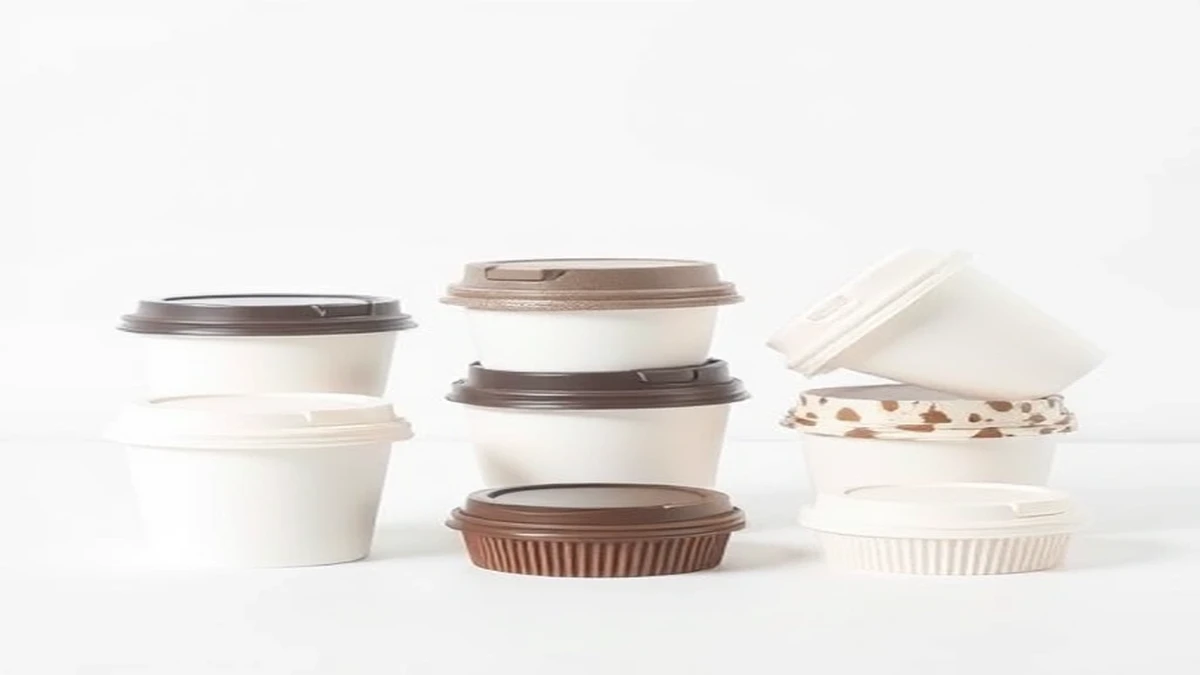
The key to choosing various paper cup lids types depends on:
Properties:
•Clarity: Crystal clear (good for dome lids, product visibility)
•Rigidity: Stiff, brittle (holds shape but cracks if bent)
•Heat resistance: Up to 180°F (82°C)—suitable for hot beverages but not extreme heat
•Weight: Lightweight (reduces shipping costs)
Environmental profile:
•❌ Not frequently recycled (most facilities don’t accept PS, Recycling Code #6)
•❌ Non-biodegradable (persists 500+ years in environment)
•⚠️ Foam PS (Styrofoam) being banned in many jurisdictions (solid PS lids still permitted but scrutinized)
Cost: $0.015-0.025 per lid (cheapest option, 50K MOQ)
Best for:
•Budget-conscious operations (lowest upfront cost)
•Cold beverage dome lids (clarity advantage)
•Short-term use (events, festivals where recyclability less critical)
Avoid if: Sustainability is brand priority (PS has poor environmental reputation, customer backlash risk)
For different paper cup lids types, focus on:
Properties:
•Heat resistance: Up to 200-210°F (93-99°C)—suitable for very hot beverages
•Durability: Flexible, impact-resistant (won’t shatter if dropped)
•Clarity: Translucent to opaque (less clear than PS, but acceptable)
•Chemical resistance: Resists oils and acids (suitable for all beverage types)
Environmental profile:
•✅ Widely recyclable (Recycling Code #5, accepted at most facilities)
•⚠️ Still non-biodegradable (petroleum-based plastic)
•✅ Better perception than PS (customers view PP as more recyclable)
Cost: $0.020-0.030 per lid (10-35% more than PS, 50K MOQ)
Best for:
•Hot beverage lids (superior heat resistance vs PS)
•Reclosable lids (flexibility allows hinges without breaking)
•Sustainability-conscious brands prioritizing recyclability
•Heavy-use applications (PP durability reduces lid failures)
Industry standard: PP becoming default for hot beverage lids (replacing PS due to performance and recyclability)
For secure paper cup lids types, focus on:
Properties:
•Clarity: Excellent (crystal clear, better than PS)
•Strength: Impact-resistant, doesn’t crack easily
•Heat resistance: Up to 160-170°F (71-77°C)—suitable for cold drinks, lukewarm beverages only
•Lightweight: Similar to PS, lighter than PP
Environmental profile:
•✅ Highly recyclable (Recycling Code #1, most widely recycled plastic worldwide)
•✅ Existing recycling infrastructure (PET bottles = massive recycling stream, lids compatible)
•⚠️ Still petroleum-based (non-renewable resource)
Cost: $0.022-0.032 per lid (similar to PP, 50K MOQ)
Best for:
•Cold beverage dome lids (clarity + recyclability)
•Brands emphasizing recyclability (PET = credible recycling claim)
•Markets with robust PET recycling infrastructure
Limitation: Not suitable for hot beverages (low heat resistance vs PP)
For proper paper cup lids types, focus on:
Properties:
•Clarity: Good (clear for dome lids, slightly less brilliant than PS)
•Heat resistance: Up to 180-185°F (82-85°C)—suitable for hot beverages but softer than PP at high temps
•Renewable source: Made from corn starch, sugarcane (plant-based, not petroleum)
•Compostability: Breaks down in commercial composting facilities (90-180 days)
Environmental profile:
•✅ Plant-based renewable resource (reduces fossil fuel dependence)
•✅ Compostable (BPI-certified options available)
•⚠️ Requires commercial composting (not home compostable, doesn’t break down in landfills)
•❌ Contaminates plastic recycling (must be kept separate from PET/PP streams)
Cost: $0.030-0.045 per lid (40-80% more than PS, 50K MOQ)
Best for:
•Businesses with composting infrastructure (collection service to commercial composters)
•Sustainability-focused brands (plant-based messaging resonates with eco-conscious customers)
•Cold beverage dome lids (PLA clarity advantage)
Avoid if: No composting infrastructure available (landfilled PLA has minimal benefit over PS, premium cost not justified)
Material Selection Summary:
## Lid-to-Cup Compatibility: Sizing Critical
The key to choosing common paper cup lids types depends on:
Standard rim diameters (US market):
Critical insight: Cup volume (12oz, 16oz) doesn’t determine rim diameter. Two different manufacturers’ 12oz cups can have 85mm or 90mm rims. Always measure rim diameter, never assume based on volume.
For secure paper cup lids types, focus on:
Tools needed: Digital caliper (±0.1mm accuracy, $15-30) or rigid ruler
Measurement steps:
Step 1: Place empty cup upside-down on flat surface
Step 2: Measure outer rim diameter (widest point of rim’s outer edge)
•Digital caliper: Open jaws, place on rim edges, read display
•Ruler: Measure from outer edge to outer edge through center
Step 3: Measure at multiple points (4 points, 90° apart)
•Cups not always perfectly circular (manufacturing variance)
•Record all measurements, use average
Step 4: Check rim curl width
•Rim curl is rolled edge (typimm)
•Lid seals on top of curl, not inside cup (outer diameter critical)
Acceptable variance: ±0.5mm (e.g., 90mm cup can measure 89.5-90.5mm and work with 90mm lids)
Red flag: Variance >1mm (poor quality cup, compatibility issues likely)
Understanding the paper cup lids types requires attention to these factors:
Tight fit (friction seal):
•Lid diameter matches cup rim diameter exactly (90mm lid on 90mm cup)
•Lid grips rim via friction (snaps on with moderate pressure)
•Secure seal (spill-resistant, lid won’t pop off if cup squeezed gently)
•Fit tolerance: Lid must be within ±0.5mm of cup rim (89.5-90.5mm lid fits 90mm cup)
Loose fit (undersized lid):
•Lid diameter 1-2mm smaller than rim (89mm lid on 90mm cup)
•Lid sits on rim but doesn’t seal (falls off if cup tipped or squeezed)
•Result: Spills, customer complaints, unusable
Over-tight fit (oversized lid):
•Lid diameter 1-2mm larger than rim (91mm lid on 90mm cup)
•Lid won’t snap onto rim (customer must forcesometimesoften cracks lid)
•Result: Damaged lids, frustrated customers, barista slowdown
Universal fit lids (adjustable rim):
•Some lids designed to fit 88-92mm range (flexible rim with compression ridges)
•More forgiving of rim diameter variance
•Typically slimost timesher cost ($0.005-0.010 more per lid)
•Best for: Businesses using multiple cup suppliers (reduces SKU complexity)
Understanding available paper cup lids types requires attention to these factors:
Step 1: Sample procurement (1 week, $50-100 cost)
•Order sample cups from cup supplier (10-20 cups)
•Order sample lids from lid supplier (10-20 lids)
•Total investment: $50-100 (shipping costs)
Step 2: Fit testing (30 minutes)
•Snap lids onto cups (should require moderate pressure, audible snap)
•Check seal: No visible gaps between lid and rim
•Pressure test: Gently squeeze cup with lid on—lid shouldn’t pop off
•Tilt test: Tilt cup 45° with liquid—no leaking around rim seal
Step 3: Functionality testing (varies by lid type)
•Sip lid: Drink hot beverage through sip slot, check for smooth flow, no spills
•Dome lid: Insert straw through X-cut, check straw grip (shouldn’t slide out easily)
•Reclosable lid: Open/close flip-top 10-20 times, verify mechanism doesn’t weaken
Step 4: Measurement verification (15 minutes)
•Measure both cup rim and lid diameter with caliper
•Confirm measurements match supplier specifications
•Document for future orders (keep records of compatible sizes)
Step 5: Staff feedback (1-2 days)
•Give samples to baristas/service staff
•Ask: Easy to apply? Customers satisfied? Any complaints?
•Frontline staff identify issues you might miss (application speed, customer confusion)
Total testing time: 1 week (sample procurement) + 1 hour (testing) = minimal investment to prevent $1,500-3,000 bulk order mistakes
When evaluating different paper cup lids types, consider the following:
Critical features for hot drinks (180-200°F):
1. Heat resistance:
•Material: PP preferred (200-210°F tolerance)
•PS acceptable (180°F tolerance, suitable for coffee 160-185°F)
•PLA caution (softens at 185°F, may deform if beverage too hot)
2. Venting:
•Why essential: Hot liquid cools, creates vacuum seal (customer struggles to open lid or drink)
•Vent hole size: 1-2mm (allows air intake without significant heat loss)
•Placement: Opposite side from sip slot (air enters while drinking, prevents vacuum)
3. Insulation consideration:
•Flat lid design (minimizes surface area exposed to air, reduces heat loss)
•Some lids have air gap (double-wall construction, adds insulation)
•Trade-off: Insulated lids cost 30-50% more, provide 5-10% better heat retention
4. Spill prevention:
•Small sip slot (3-6mm opening, limits liquid flow if cup tipped)
•Tear-tab option (keeps sip slot sealed until customer ready to drink)
•Reclosable option (flip-top closure, maximum spill prevention for commuters)
Recommended lid types:
1.Understanding the paper cup lids types helps.Flat tear-tab lid (PP, vented): Best all-around for hot coffee/tea ($0.022-0.030)
2.Understanding standard paper cup lids types helps.Reclosable sippy lid (PP, vented): Premium option for travel/commuter ($0.030-0.045)
3.Understanding proper paper cup lids types helps.Standard flat sip lid (PP, vented): Budget option without tear-tab ($0.018-0.025)
For secure paper cup lids types, focus on:
Critical features for cold drinks (32-60°F):
1. Straw compatibility:
•X-cut slot (most versatile, fits standard 6-8mm straws)
•Wide X-cut or circular hole (for bubble tea, 10-12mm straws)
•Slot must grip straw (prevents straw from popping out or falling in)
2. Topping accommodation:
•Dome height for whipped cream, foam, fruit (15-25mm headspace)
•Clear material (customers see toppings, visual appeal)
•Structural strength (dome won’t collapse if slight pressure applied)
3. Condensation management:
•Some lids have rim channels (drain condensation back into cup vs dripping on customer)
•Smooth exterior (condensation sheets off than pooling)
4. No venting needed:
•Cold beverages don’t create vacuum seal (venting unnecessary)
•Some dome lids have vent for temperature equalization (optional, not critical)
Recommended lid types:
1.Understanding the paper cup lids types helps.Clear dome lid with X-cut (PET or PS): Standard for iced coffee, smoothies ($0.020-0.028)
2.Understanding secure paper cup lids types helps.High-dome lid (PS or PLA): For drinks with large toppings, bubble tea ($0.025-0.035)
3.Understanding available paper cup lids types helps.Flat straw slot lid (PP or PS): Budget option, no topping accommodation ($0.018-0.025)
When evaluating paper cup lids types, consider the following:
Hybrid designs (suitable for both):
Flat straw slot lid with reclosable cover:
•Straw hole with sliding or flip cover
•Cover closed: Sip slot for hot beverages
•Cover open: Straw hole for cold beverages
•Cost: $0.030-0.045 (premium pricing for dual functionality)
•Best for: Businesses serving both hot and cold beverages, reduces SKU count
Limitation: Compromises on both ends (not ideal for either hot or cold, but acceptable for both)
For common paper cup lids types, focus on:
Question 1: “What rim diameter does this lid fit? What is the tolerance?”
Good answer: “This lid fits 90mm rim diameter cups with ±0.5mm tolerance (89.5-90.5mm).”
Red flag answer: “This lid fits 12oz and 16oz cups.” (Refers to volume, not rim diameter—ambiguous, compatibility uncertain)
Question 2: “What material is the lid? Can you provide material spec sheet and certifications?”
Good answer: “Polypropylene (PP, Recycling Code #5), FDA compliant for food contact. Here’s the material safety data sheet (MSDS) and FDA compliance letter.”
Red flag answer: “Food-safe plastic.” (No specific material type, can’t verify heat resistance or recyclability)
Question 3: “Can I order sample lids to test with my cups before bulk order?”
Good answer: “Yes, we’ll send 10-20 sample lids, you pay shipping ($15-30). Samples available in 3-5 business days.”
Red flag answer: “Samples available after order placed.” (Prevents pre-purchase testing, hides compatibility issues)
Question 4: “What is your defect rate and what constitutes a defect?”
Good answer: “Our defect rate is <1%. Defects include cracks, deformed rims, poor seal fit. Any batch >2% defect rate is replaced at our cost.”
Red flag answer: “We guarantee quality.” (Vague, no specific metrics, no replacement policy stated)
Question 5: “What is your lead time and minimum order quantity?”
Good answer: “MOQ 50,000 lids per size/type. Lead time 25-35 days from order to delivery (15 days production, 10-20 days shipping).”
Red flag answer: “Very fast, 10-15 days total.” (Unrealistic for overseas production + shipping, likely overpromising)
Understanding secure paper cup lids types requires attention to these factors:
Upon receiving sample lids (or first bulk order):
Visual inspection:
•✅ No cracks or deformities (rim edge should be perfectly circular)
•✅ Uniform thickness (no thin spots visible when held to light)
•✅ Clean edges (no sharp burrs or ragged edges from molding process)
•❌ Red flag: Visible defects in sample batch (production quality likely worse)
Dimensional verification:
•Measure lid diameter with caliper (verify matches stated spec ±0.5mm)
•Measure at 4 points (check circularity, some lids oval if molding imprecise)
•❌ Red flag: Diameter variance >1mm (quality control problem)
Material verification:
•Check recycling code stamped on lid (should match stated material: #5 for PP, #6 for PS, #1 for PET)
•Heat test: Pour 190°F water in cup with lid (PP should remain rigid, PS acceptable, PLA may soften slightly)
•❌ Red flag: No recycling code visible (material unknown, can’t verify specs)
Fit testing:
•Test on actual cups you’ll use (not generic cups)
•Snap-on force: Moderate pressure required (should hear/feel snap)
•Seal integrity: Fill cup with water, seal lid, invert for 10 seconds—no leaks
•❌ Red flag: Lid too loose (slips off with light pressure) or too tight (cracks when forcing on)
Functional testing:
•Sip lid: Drink hot liquid, verify smooth flow, no spills around sip slot
•Dome lid: Insert straw, verify X-cut grips straw, no leaks around straw
•Reclosable lid: Open/close 20 times, verify hinge doesn’t weaken or break
•❌ Red flag: Functional failures (leaking, hinge breaking, poor straw seal)
The key to choosing the paper cup lids types depends on:
12oz/16oz lid pricing (FOB Asia, 50,000 MOQ):
Quantity discounts:
•50,000 lids: Baseline pricing (above)
•100,000 lids: 8-12% discount ($0.001-0.003 per lid)
•250,000+ lids: 15-20% discount ($0.003-0.005 per lid)
For paper cup lids types, focus on:
Scenario: Coffee shop serving 100,000 hot beverages + 50,000 cold beverages annually
Strategy 1: Budget lids (PS flat sip + PS dome):
•Hot lids: 100K × $0.018 = $1,800
•Cold lids: 50K × $0.022 = $1,100
•Total: $2,900
•Pros: Lowest cost
•Cons: Poor environmental reputation (PS not recycled), lower quality perception
Strategy 2: Standard sustainable (PP tear-tab + PET dome):
•Hot lids: 100K × $0.025 = $2,500
•Cold lids: 50K × $0.027 = $1,350
•Total: $3,850 (+$950 vs budget)
•Pros: Recyclable materials (PP and PET), better heat resistance
•Cons: 33% more expensive
Strategy 3: Premium compostable (PLA lids for both):
•Hot lids: 100K × $0.038 = $3,800
•Cold lids: 50K × $0.040 = $2,000
•Total: $5,800 (+$2,900 vs budget, +$1,950 vs sustainable)
•Pros: Plant-based, compostable (with infrastructure)
•Cons: 100% premium vs budget, requires composting collection (extra $1,500-2,500/year)
Strategy 4: Mixed approach (PP hot, PET cold):
•Hot lids: 100K × $0.025 = $2,500 (PP tear-tab, heat resistance priority)
•Cold lids: 50K × $0.024 = $1,200 (PET dome, recyclability + clarity)
•Total: $3,700 (+$800 vs budget)
•Pros: Optimized for use case (best material for each beverage type), recyclable
•Cons: Managing 2 lid types (SKU complexity)
Recommendation: Strategy 4 (mixed approach) balances cost, performance, and sustainability. Optimize lid selection by beverage type rather ing same lid for everything.
The key to choosing the paper cup lids types depends on:
1. Compatibility errors:
•Wrong lid size ordered: $1,500-3,000 wasted inventory (lids don’t fit cups)
•Prevention: Sample testing before bulk order ($50-100 investment)
2. Defect rates:
•Budget ssometimesers often have 3-5% defect rates (cracked lids, poor seal)
•50,000 lids × 4% defect = 2,000 unusable lids = $40-60 loss
•Premium suppliers: <1% defect rate (extra $0.003-0.005 per lid justified by lower waste)
3. Storage and inventory:
•Lids are bulky (large boxes, significant warehouse space)
•Ordering 6 months supply (250K lids) requires 40-60 cubic feet storage
•Frequent smaller orders: Higher per-unit cost but lower inventory holding cost
4. Customer satisfaction:
•Poor-fitting lids: Spills, complaints, negative reviews (difficult to quantify but real cost)
•Leaking incidents: Customer refunds, reputation damage
•Premium lids reduce incidents: 0.5-1% of customers experience issues with budget lids vs 0.1% with premium
Total cost of ownership: Cheapest er unit often not cheapest overall when factoring defects, compatibility errors, and customer satisfaction.

For paper cup lids types, focus on:
Profile:
•Regional coffee chain (8 locations)
•150,000 hot beverages monthly
•Switched cup supplier (cost savings: $0.008 per cup)
What went wrong:
Assumption error:
•Old cups: 90mm rim diameter
•New cups: Listed as “12oz and 16oz” (volume stated, rim diameter not verified)
•Actual new cup rim: 85mm (different manufacturer, smaller rim standard)
•Existing lid inventory: 200,000 lids × 90mm = $4,000 worth
Discovery:
•First day with new cups: Lids too large (slip off, don’t seal)
•Baristas improvise: Double-cupping to create tighter fit (wasted cups, slow service)
•Customer complaints: 47 complaints in first 3 days (spills, leaking)
Emergency response:
•Rush order 85mm lids: $6,000 (40% premium for expedited air freight)
•Discarded 90mm lid inventory: $4,000 sunk cost (lids unusable with new cups)
•Total loss: $10,000 + reputation damage
Root cause: Assumed rim diameter based on cup volume (12oz/16oz) rather than me actual rim diameter before switching suppliers.
Prevention: Measure rim diameter of new cups with caliper before bulk order. Sample test new cups with existing lids before committing.
Lesson learned: Rim diameter compatibility non-negotiable. 5mm difference = total incompatibility.
The key to choosing different paper cup lids types depends on:
Profile:
•Smoothie and juice bar (3 locations)
•80,000 cold beverages monthly
•Customer complaints about previous lids: Whipped cream compressed, poor presentation
Lid upgrade project:
Problem identification:
•Old lids: Flat straw slot lids (0mm dome height)
•Whipped cream toppings compressed when lid applied (unappealing presentation)
•Customer feedback: “Looks smashed when I get it”
Solution research:
•Tested 3 dome lid options: 15mm, 20mm, 25mm dome height
•Customer preference survey: 87% preferred 20mm or 25mm (better topping visibility)
•Cost comparison: 20mm dome = $0.026, 25mm dome = $0.032 (23% more expensive)
Implementation:
•Selected 20mm clear PET dome lids (balance of height and cost)
•Instagram marketing: “New premium lids! See your beautiful toppings ✨”
•Staff training: Consistent whipped cream portioning (5cm height standard)
Results after 3 months:
•Customer satisfaction: +12% (post-purchase survey feedback)
•Social media: 38% increase in tagged photos (customers showing off drinks)
•Cost increase: $0.006 per lid × 80K/month × 3 months = $1,440 extra cost
•Revenue impact: Estimated 3-4% sales increase from improved presentation = $7,200 additional revenue over 3 months
ROI: +$5,760 ($7,200 revenue – $1,440 extra lid cost)
Lesson learned: Lid selection impacts product presentation. Investing in appropriate lid type (dome for toppings) creates marketing value beyond functional sealing.
For available paper cup lids types, focus on:
Profile:
•Hospital foodservice (1,200 bed facility)
•12,000 hot beverages weekly (patient trays, cafeteria)
•Hygiene and tamper evidence critical
Implementation:
Challenge:
•Open sip slot lids: Risk of contamination during tray transport (dust, particles)
•Patient safety priority: Visible evidence beverage hasn’t been tampered with
•Long transport time: Beverages prepared in central kitchen, transported 5-10 minutes to patient floors (heat retention important)
Solution selection:
•PP tear-tab vented lids (sealed sip slot, tamper-evident)
•Cost: $0.028 per lid (vs $0.018 standard flat sip lids, 56% premium)
•Annual cost increase: 12K/week × 52 weeks × $0.010 premium = $6,240
Benefits realized:
Hygiene improvement:
•Zero contamination incidents (sealed lid protects beverage during transport)
•Infection control audit: Improved rating (sealed beverages meet higher hygiene standard)
Temperature retention:
•Sealed sip slot retains heat better: Beverages 8-10°F hotter on delivery (measured)
•Patient satisfaction: Fewer complaints about lukewarm coffee/tea
Tamper evidence:
•Visible intact tear tab: Patients confident beverage not accessed during transport
•Risk management: Reduces liability (demonstrates tamper-proof measures)
Cost justification:
•Infection prevention value: Difficult to quantify but critical for hospital accreditation
•Patient satisfaction: 6% improvement in beverage temperature satisfaction scores
•Regulatory compliance: Exceeds health code requirements (potential audit advantage)
Verdict: Premium lid cost justified in healthcare setting where hygiene, tamper evidence, and regulatory compliance paramount. Not all businesses need tear-tab lids, but context dictates when premium features worth investment.
Q1: Can I use the same lid for 12oz and 16oz cups?
Answer depends on rim diameter:
If both cups have same rim diameter (e.g., both 90mm):
•✅ Yes, same lid fits both
•Example: Many suppliers use 90mm rim for 12oz, 16oz, and even 20oz cups (cup height differs, rim diameter consistent)
•Advantage: Simplified inventory (one lid SKU for multiple cup sizes)
If cups have different rim diameters (e.g., 12oz = 85mm, 16oz = 90mm):
•❌ No, you need different lids for each cup
•Critical: Always verify rim diameter, don’t assume based on volume
How to verify:
•Measure both cup rim diameters with caliper
•If measurements match within ±0.5mm: Same lid works
•If difference >1mm: Need separate lid types
Pro tip: When ordering cups, ask supplier: “What rim diameter for 12oz and 16oz?” If same diameter (e.g., both 90mm), simplifies lid ordering significantly.
Q2: Are dome lids suitable for hot beverages?
Short answer: Not recommended. Dome lids designed for cold beverages.
Why dome lids problematic for hot drinks:
Heat loss:
•Dome shape increases surface area exposed to air (faster heat dissipation)
•Flat lids have 30-40% less surface area (better heat retention)
Material concerns:
•Dosometimesds often PS or PET (heat resistance 160-180°F, marginal for hot coffee 175-185°F)
•Risk: Lid softens, deforms, or cracks when exposed to hot liquid steam
Functionality mismatch:
•Dome lids designed for straw use (X-cut or hole)
•Hot beverages typically simost timesctly from lid (small sip slot needed, not straw hole)
Exception: CPLA dome lids (high-heat PLA, 200°F tolerance) can technically handle hot beverages, but still have heat loss problem (dome shape inefficient) and higher cost (40-60% premium). Not common or recommended.
Best practice:
•Hot beverages: Flat sip lids (PP preferred, heat-resistant and efficient)
•Cold beverages: Dome lids (accommodate toppings, straw-friendly)
Q3: What does “vented” lid mean and why do I need it?
Venting definition: Small hole (1-2mm) in lid that allows air to enter cup
Purpose of vent hole:
Prevents vacuum seal:
•Hot liquid cools → air inside cup contracts → creates negative pressure (vacuum)
•Without vent: Customer struggles to drink (suction prevents liquid flow, splashes when finally releases)
•With vent: Air enters through vent as liquid flows out (smooth controlled pour)
Steam release:
•Hot beverages produce steam (pressure builds up inside sealed cup)
•Without vent: Pressure can pop lid off when customer opens (scalding risk)
•With vent: Steam escapes gradually (safe pressure equalization)
When venting essential:
•✅ Hot beverages (coffee, tea, hot chocolate): Always use vented lids
•⚠️ Lukewarm beverages (160-170°F): Beneficial but not critical
•❌ Cold beverages: Venting unnecessary (no vacuum seal or steam issue)
Vent hole placement:
•Opposite side from sip slot (air enters via vent while customer drinks from sip slot)
•180° from opening (optimal airflow dynamics)
Common mistake: Using non-vented lids on hot beverages (causes customer frustration, spillage when vacuum seal breaks)
Verification: Check lid specs—should state “vented” or show vent hole in product photos. If unclear, ask supplier: “Is this lid vented?”
Q4: How do I prevent lids from popping off during transport?
Common causes of lid pop-off:
Cause 1: Improper lid-cup compatibility
•Lid diameter too large (loose fit, no friction seal)
•Solution: Verify lid diameter matches cup rim (±0.5mm tolerance)
Cause 2: Improper lid application
•Barista doesn’t press lid down fully (lid sits on rim but not snapped)
•Solution: Train staff—press lid firmly around entire circumference until audible/tactile snap
Cause 3: Overfilling cups
•Liquid level too high (creates hydraulic pressure against lid when cup moves)
•Solution: Maintain 1cm (0.4 inch) headspace between liquid and rim (allows expansion, reduces pressure)
Cause 4: Temperature expansion
•Hot liquid → steam → pressure buildup (especially if non-vented lid)
•Solution: Use vented lids for hot beverages (vent releases pressure)
Cause 5: Cup deformation
•Paper cup walls softened by heat (rim loses circular shape, lid doesn’t seal properly)
•Solution: Use adequate GSM paperboard (260 GSM minimum for hot 12oz cups, 280 GSM for 16oz+)
Transportation best practices:
For delivery/takeout:
•Cup carriers or trays (prevent tipping in transit)
•Reclosable lids (maximum spill prevention during vehicle movement)
•Remind customers: Place cup in level surface (cup holders, flat floor)
For in-house service:
•Hand directly to customer (no bag/tray if customer staying)
•Flat sip lids adequate (less transport risk)
Testing recommendation: Before bulk order, simulate transport—place cup with lid in car cup holder, drive over bumpy road 5-10 minutes. Lid should remain sealed with zero leaks.
Q5: Can compostable PLA lids be recycled like regular plastic lids?
Short answer: No, do not put PLA lids in plastic recycling bins.
Why PLA contaminates recycling:
Plastic recycling streams:
•Separated by resin type: PET (#1), HDPE (#2), PP (#5), etc.
•Each resin recycled independently (different melting points, properties)
PLA contamination problem:
•PLA looks like clear plastic (visually similar to PET)
•Sorting equipment can misidentify PLA as PET (optical scanners not always accurate)
•PLA mixed into PET recycling = contamination (degrades quality of recycled PET resin)
•Result: Recyclers must reject batches with PLA contamination or downgrade to lower-value products
Proper disposal:
•✅ Commercial composting (if BPI/CMA certified, requires composting facility)
•✅ Trash (if no composting available, prevents recycling contamination)
•❌ Plastic recycling (contaminates PET/PP streams)
•❌ Paper recycling (PLA doesn’t break down in paper pulping process)
Customer education critical:
•Clear labeling: “COMPOSTABLE—Do not recycle” printed on lid
•Disposal signage: Separate compost bins clearly marked (prevent well-intentioned customers from recycling)
•Staff training: Explain to customers proper disposal (many assume “plant-based” = recyclable, incorrect)
Truly recyclable alternatives:
•PP lids (Recycling Code #5): Widely recyclable, accepted at most facilities
•PET lids (Recycling Code #1): Highly recyclable, existing infrastructure (PET bottles)
Bottom line: If recyclability priority, choose PP or PET lids. If composting priority and infrastructure available, choose PLA lids. Don’t try to recycle PLA lids—contaminates recycling streams.
Q6: What’s the difference between a sip lid and a straw lid?
Sip lid:
•Opening: Small slot (3-8mm) designed for drinking directly from lid (no straw)
•Function: Customer places lips on sip slot, tilts cup, sips beverage
•Best for: Hot beverages (coffee, tea—straws not typical for hot drinks)
•Flow control: Small opening limits liquid flow (spill prevention when cup tipped)
•Cost: $0.015-0.025 per lid (simpler design, lower cost)
Straw lid:
•Opening: X-cut slot or circular hole (6-12mm) designed for straw insertion
•Function: Customer inserts straw through opening (straw extends into beverage)
•Best for: Cold beverages (iced coffee, smoothies, bubble tea—straw standard for cold drinks)
•Grip feature: X-cut grips straw (prevents straw from falling into cup or popping out)
•Cost: $0.018-0.028 per lid (similar to sip lids, varies by material)
Key differences summary:
Can you use wrong lid type?
•Sip lid for cold drink: Works, but inconvenient (can’t use straw, must sip from slot)
•Straw lid for hot drink: Problematic (opening too large, spills if sipped without straw, also straws not heat-resistant for hot beverages)
Best practice: Match lid type to beverage service style—hot = sip lids, cold = straw lids (maximizes functionality and customer satisfaction).
Q7: How many lids should I order relative to my cup quantity?
Standard recommendation: 1:1 ratio (one lid per cup)
Reasoning:
•Most beverages use one lid per cup (standard serving)
•Ordering equal quantities ensures you don’t run out of one component
Exceptions to 1:1 ratio:
Order fewer lids:
•Dine-in service (50-70% customers don’t need lids, consuming in-house)
•Lid usage rate tracking: Count lids used vs cups sold for 2 weeks → calculate actual ratio
•Example: 1,000 cups sold, 650 lids used = 0.65:1 ratio (order 650 lids per 1,000 cups)
•Savings: 30-50% on lid costs for dine-in heavy operations
Order more lids:
•Lid defects: Budget suppliers 3-5% defect rate (order 5% extra lids to cover defective ones)
•Customer mistakes: Some customers drop lids, need replacement (1-2% extra usage)
•Example: 10,000 cups = order 10,500 lids (5% buffer)
Order different lid types (hot vs cold):
•Separate SKUs: Track hot beverage % vs cold beverage %
•Example: 60% hot (sip lids), 40% cold (dome/straw lids)
•Order quantity: 60,000 sip lids + 40,000 dome lids for 100,000 cups
Inventory management best practices:
First order (no usage data):
•Order 1:1 ratio (equal cups and lids)
•Track usage for 30-60 days
•Adjust future orders based on actual usage patterns
Ongoing orders:
•Calculate actual lid-to-cup ratio from previous period
•Order quantity based on real data (reduces waste or stockouts)
•Maintain 10-15% safety stock (buffer for usage spikes or supply delays)
Example calculation:
•Monthly cup sales: 20,000
•Tracked lid usage: 16,000 (80% of cups = 0.8:1 ratio)
•Order quantity: 20,000 cups × 0.8 = 16,000 lids + 10% buffer (1,600) = 17,600 lids
•Savings: 2,400 lids vs 1:1 ratio = $36-60 savings per month
Don’t under-order: Running out of lids mid-service = emergency orders (40-60% premium), customer dissatisfaction (can’t take beverages to-go). Better to have 5-10% excess lids than 5% shortage.

Papacko offers comprehensive lid selection with precise compatibility matching — material transparency, and quality guarantees for beverage service operations.
Our Lid Selection:
•Hot beverage lids: Flat sip lids (PP vented, tear-tab options)
•Cold beverage lids: Dome lids (PS, PET, PLA options, various heights)
•Straw slot lids: X-cut designs for standard and wide straws
•Reclosable lids: Premium sippy-style for maximum spill prevention
•Custom rim sizes: 80mm, 85mm, 90mm, 95mm available (precise fit guaranteed)
Compatibility Guarantee:
•Free sample lids (test with your cups before bulk order)
•Dimensional verification (±0.5mm tolerance guarantee)
•Material spec sheets provided (PP, PS, PET, PLA—know exactly what you’re buying)
•Compatibility testing guide (step-by-step instructions for fit verification)
Quality Standards:
•Defect rate <1% (cracked lids, deformed rims rejected during QC)
•Material certifications (FDA food contact compliance, recycling codes verified)
•Seal integrity testing (leak testing on samples before shipment)
•Dimensional consistency (every lid measures within spec ±0.5mm)
Ordering Flexibility:
•MOQ 50,000 lids per type/size (reasonable for small-medium operations)
•Mixed orders accepted (multiple lid types to reach MOQ)
•Lead time 25-35 days (realistic timeline, no overpromising)
•Quantity discounts (100K+ orders receive 8-15% discount)
Get Started:
•Measure your cup rim diameter (we’ll provide measurement guide)
•Request sample lid pack (10-15 lids, multiple types for testing)
•Test fit and functionality (verify before bulk order)
•Receive detailed quote with specifications