Ready to create your own branded paper cups or packaging?
Tell us your requirements — size, coating, printing, and destination — and our team will prepare a detailed quotation within 24 hours.
Last Updated: June 2026
Reading Time: 8-10 minutes
Author: Papacko Content Team
Exporting paper cups to the EU in 2026 means navigating a complex web of recycling regulations that vary by country and continue to evolve. Understanding common paper cup recycling laws helps.The EU’s Single-Use Plastics (SUP) Directive, Extended Producer Responsibility (EPR) schemes, and the upcoming Packaging and Packaging Waste Regulation (PPWR) create legal requirements that affect product design, labeling, and documentation.
Non-compliance can result in customs rejections, fines up to €50,000 per violation in some member states, and loss of market access. Understanding common paper cup recycling laws helps.Yet many exporters struggle to understand which regulations apply to their specific products and markets.
This guide breaks down the critical EU recycling laws for paper cups: current directives, country-specific EPR requirements, labeling standards, and certification processes, common paper cup recycling laws matter.You’ll learn how to ensure your products meet legal requirements and avoid costly compliance failures.
💡 Quick Takeaway: EU paper cup exports require compliance with SUP Directive (PE lining restrictions), country-specific EPR registration (fees €0.05-0.25/unit), FSC/PEFC certification, and proper recycling labels per ISO 14021.
New PPWR rules (2026-2030) will mandate recyclability testing and minimum recycled content.
The key to choosing paper cup recycling laws depends on:
The EU paper cup recycling landscape operates under multiple overlapping regulations:
1. Single-Use Plastics (SUP) Directive (2019/904)
•Applies to cups with plastic components (PE/PLA linings)
•Requires member states to achieve separate collection targets (77% by 2025, 90% by 2029)
•Mandates clear labeling about plastic content and disposal
•Some countries (France, Belgium) impose consumption reduction targets
2. Extended Producer Responsibility (EPR) Framework
•Requires manufacturers/importers to register and pay fees for end-of-life management
•Fee structure varies: €0.05-0.25 per cup depending on country and recyclability
•Financial responsibility covers collection, sorting, and recycling infrastructure
3. Packaging and Packaging Waste Regulation (PPWR) – Rolling Implementation 2026-2030
•Phase 1 (2026): Recyclability testing requirements
•Phase 2 (2028): Minimum 30% recycled content for paper cups
•Phase 3 (2030): Design-for-recycling mandates (removal barriers, material compatibility)
4. Country-Specific Legislation
•Germany: VerpackG (packaging law with strict take-back requirements)
•France: AGEC Law (anti-waste circular economy law)
•Italy: Environmental Contribution (CONAI system)
🎯 Industry Insight: As of January 2026, only 42% of paper cups placed on EU market are successfully recycled.
The gap between collection targets and actual recycling stems from PE coating separation challenges and contamination.
Cups with water-based coatings achieve 65-75% recycling rates.
The key to choosing different paper cup recycling laws depends on:
### Labeling Requirements (Article 7)
The key to choosing available paper cup recycling laws depends on:
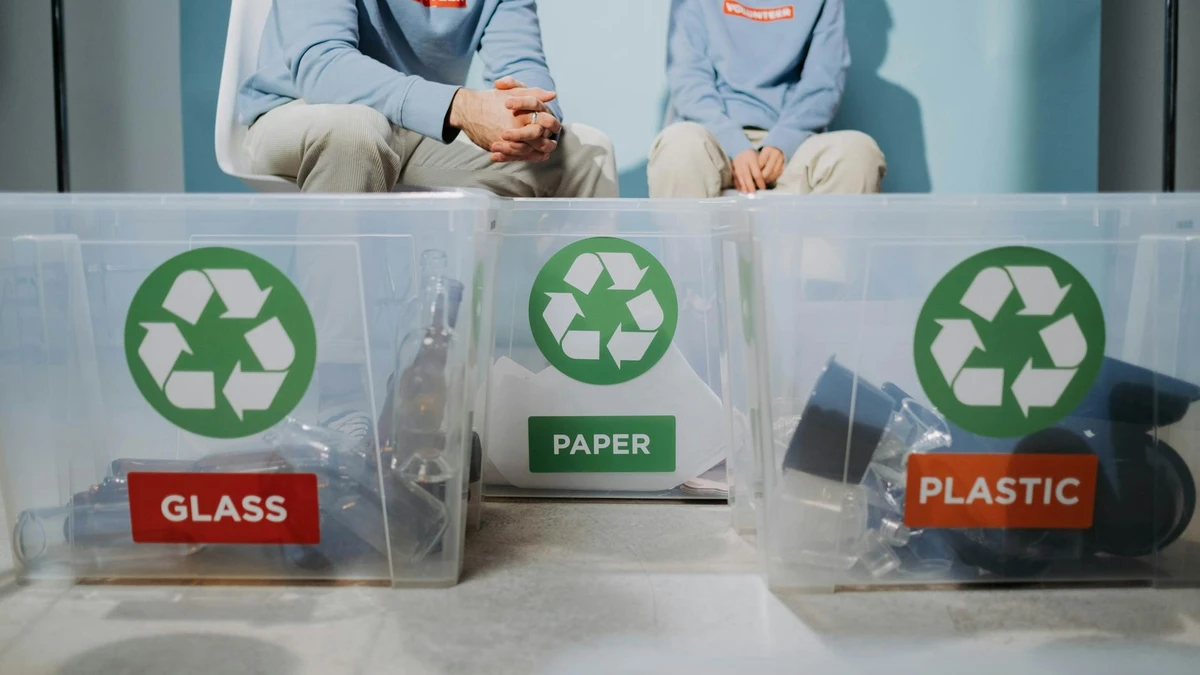
All plastic-containing cups must display:
✅ Logo indicating plastic content
•Standardized pictogram showing cup with plastic lining
•Minimum size: 15mm height
•Location: Visible on exterior surface
✅ Disposal instructions
•Text or symbol indicating proper waste stream
•Language: Local language(s) of destination market
•Example: “Dispose in paper recycling where facilities exist” (if recyclable)
✅ Environmental impact statement (France, Belgium)
•Required text: “Contains plastic coating – environmental impact from littering”
•Must be in 6-point minimum font
Penalty for non-compliance: €500-5,000 per batch (varies by member state)
The key to choosing cup recycling laws depends on:
### Germany VerpackG – Detailed Requirements
Germany has the EU’s strictest packaging law:
Registration Process:
1.Register with LUCID packaging register (online portal)
2.Join a dual system (Interseroh, Der Grüne Punkt, etc.)
3.Report quarterly volumes
4.Pay fees based on material type and weight
Documentation:
•Material composition breakdown (paper %, plastic %, other)
•Weight per unit (measured to 0.1g accuracy)
•Annual volume projections
•Evidence of dual system participation
Penalty for non-registration: €10,000-200,000 + sales ban
Special rule for exporters: If selling B2B to German distributors, distributor may handle EPR registration. Confirm in writing before shipping.
Beyond standard EPR, France requires:
Repairability/Recyclability Index (2027 implementation):
•Score A-E rating based on ease of recycling
•Consider: Coating separability, material compatibility, contamination risk
•Must display on product or POS materials for B2C sales
Plastic reduction targets:
•20% reduction in single-use plastic cups by 2025 (vs 2019 baseline)
•Importers must report contribution to reduction goal
•Alternatives: Offer reusable options, water-based coatings, uncoated cups
Requirement: All paper cups must undergo standardized recyclability testing per EN 13430:2004
Test criteria:
•Material compatibility: Can coating be separated in standard pulping process?
•Contamination level: Max 5% residual plastic in recycled fiber
•Yield rate: Minimum 75% fiber recovery
•Quality: Recycled output suitable for newsprint or corrugated (minimum grade)
Documentation:
•Laboratory test report from accredited facility (EN 17025)
•Process description showing industrial scalability
•Valid for 3 years, must renew
Cost: €800-1,500 per cup design tested
Mandate: Minimum 30% post-consumer recycled (PCR) fiber in paper layer
Compliance pathways:
1.Direct: Source paperboard with verified 30%+ PCR content
2.Understanding various paper cup recycling laws helps.Mass balance: Calculate across full product portfolio (allows <30% in some SKUs if offset)
Verification:
•Chain-of-custody certification (FSC Recycled, PEFC Recycled)
•Supplier declarations with third-party audit trail
•Annual compliance reporting to national authorities
Exemptions: Food contact surface layers exempt (interior coating side) due to safety requirements
Restricted materials:
•❌ PFAS coatings (already banned under separate regulation)
•❌ Aluminum linings (interfere with paper recycling)
•❌ Multi-layer plastics (PE + PLA combination)
Encouraged designs:
•✅ Water-based dispersions (PVOH, starch-based)
•✅ Single polymer coatings (PE or PLA, not mixed)
•✅ Mechanical separation-friendly (easy lid removal, single material rims)
### Recyclability Testing Process
Step 1: Laboratory pulping test (simulates recycling facility)
•Sample cups pulped at 90°C for 20 minutes
•Measure fiber recovery rate and contamination
•Test recycled pulp quality parameters
Step 2: Industrial trial (required for PPWR Phase 1)
•Minimum 100kg cup samples processed at commercial facility
•Verify separation efficiency at scale
•Document equipment modifications needed (if any)
Step 3: Certification report
•Compile lab + industrial results
•Third-party validation (e.g., Adelphe, PRN in UK)
•Submit to EPR schemes for eco-modulation consideration
Timeline: 4-8 weeks for full testing cycle
✅ Recycling symbol (ISO 14021):
•Mobius loop with material code “PAP 21” (if primarily paper)
•Or “C/PAP 84” for composite paper/plastic cups
✅ Material composition (PPWR requirement from 2026):
•Example: “Paper 92%, PE coating 8%”
•Percentage by weight, accurate to ±2%
✅ Disposal instruction:
•“Recyclable where facilities exist” (if >75% recycling rate proven)
•“Check local recycling” (if 50-75% rate)
•“Not currently recyclable” (if <50% rate)
✅ Producer identification:
•Company name and address (or EU authorized representative)
•Batch/lot code for traceability
✅ Plastic content warning (SUP Directive):
•Pictogram or text: “Contains plastic lining”
Germany: Requires “Der Grüne Punkt” logo if using that dual system (or equivalent logo for other systems)
France: Must include Triman logo (sorting indicator) + sorting instruction in French
Italy: CONAI consortium codes (e.g., “C/PAP 84 → Raccolta Carta” for paper collection)
Spain: Optional but recommended: Ecoembes “Punto Verde” symbol
VerpackG Compliance Checklist:
•[ ] LUCID registration number obtained (format: DE123456789012345678)
•[ ] Dual system contract signed (minimum 1-year term)
•[ ] Material data sheet prepared (weight, composition, recyclability class)
•[ ] Quarterly reporting calendar established
•[ ] German-language recycling instructions on packaging
Common pitfall: Assuming B2B sales exempt you. Even B2B requires registration unless distributor provides written confirmation they’re handling EPR.
Cost example (10,000 cups/year, 12oz size):
•LUCID registration: €0
•Dual system fees: €1,200-1,800 annually
•Legal/consultant support: €500-1,500 (first year)
AGEC Law Compliance:
•Register with approved eco-organization (Citeo or Adelphe)
•Report annual volumes by January 31
•Contribute to reuse/reduction targets (document alternative options offered)
•Triman logo + sorting instructions mandatory
Reuse requirement: If selling >10,000 cups annually to on-site consumption venues, must offer reusable cup option or pay additional contribution (+€0.10/unit)
Current status: Voluntary deposit return schemes exist; mandatory scheme under consideration for 2027
Preparation: Design cups compatible with reverse vending machines (barcode placement, size standardization)
### Customs Classification
HS Code: 4823.69 (other paper articles for food/drink contact)
Tariff considerations:
•Standard rate: 0-6.5% depending on origin
•Preferential trade agreement rates may apply (check FTA status)
•Anti-dumping duties: None currently on paper cups (as of 2026)
VAT: 19-25% depending on destination country (import VAT, recoverable for businesses)
❌ Mistake #1: Registering only in one EU country for sales across multiple markets
✅ Correct Approach: EPR registration is country-specific, various paper cup recycling laws matter.If selling in Germany, France, and Netherlands, you need three separate registrations. Use a pan-EU compliance service provider (€2,000-5,000/year) to manage multiple countries efficiently.
❌ Mistake #2: Assuming PLA-coated cups avoid SUP Directive because they’re “bio-based”
✅ Correct Approach: The SUP Directive defines plastic to include bio-based polymers like PLA. Understanding common paper cup recycling laws helps.PLA cups face same labeling, collection, and EPR requirements as PE-coated cups in most member states.
❌ Mistake #3: Using “recyclable” claims without supporting test data
✅ Correct Approach: EU Green Claims Directive (2026) prohibits environmental claims without third-party verification, available paper cup recycling laws matter.If stating “recyclable,” you must have EN 13430 testing showing >75% recovery rate in industrial conditions.
❌ Mistake #4: Ignoring language requirements for disposal instructions
✅ Correct Approach: All consumer-facing text (recycling instructions, disposal guidance) must appear in official language(s) of destination country. Understanding various paper cup recycling laws helps.Use multilingual labels for multi-country distribution.
EU paper cup recycling laws include the Single-Use Plastics Directive (requiring labeling and collection targets for plastic-coated cups), country-specific Extended Producer Responsibility schemes (mandatory registration and fees €0.05-0.25/cup), and the upcoming Packaging and Packaging Waste Regulation requiring recyclability testing (2026), 30% recycled content (2028), and design restrictions (2030).
Yes. Understanding common paper cup recycling laws helps.EPR registration is country-specific, not EU-wide. If you export to Germany, France, and Spain, you need three separate registrations with each country’s packaging scheme. Costs range €40-180 per 1,000 cups depending on country and product recyclability. Consult with pan-EU compliance providers to manage multiple registrations efficiently.
No. Understanding common paper cup recycling laws helps.The SUP Directive includes bio-based plastics like PLA in its definition of “plastic.” PLA-coated cups face the same labeling requirements, separate collection obligations, and EPR fees as PE-coated cups in most EU member states. Only uncoated or water-based barrier cups may avoid some SUP requirements (country-dependent).
Essential certifications: FSC or PEFC chain-of-custody (sustainable forestry), EU 10/2011 or national food contact compliance, and recyclability testing per EN 13430 (required from 2026 under PPWR), the paper cup recycling laws matter.Optional but advantageous: ISO 14021 environmental claims verification, OK Compost certification (if claiming compostability), and eco-modulation testing for EPR fee reductions.
Conduct standardized testing per EN 13430:2004 at an accredited laboratory (€800-1,500 per design). Understanding the paper cup recycling laws helps.Tests measure fiber recovery rate (minimum 75% required), contamination levels (max 5% residual plastic), and recycled output quality. For PPWR Phase 1 (2026), you also need industrial-scale trial documentation showing commercial recycling facility compatibility.
Consequences include: customs rejection at EU border (no EPR number = no clearance in Germany, France), fines €500-50,000 depending on country and violation severity, sales bans on non-compliant products, and potential blacklisting from public procurement contracts. Understanding standard paper cup recycling laws helps.Retroactive registration is possible but may include penalty fees.
Partially. Understanding different paper cup recycling laws helps.Core symbols (Mobius loop, material codes) are standardized. That said, disposal instructions must be in local language(s), and some countries require specific logos (France: Triman, Germany: Dual System logo, Italy: CONAI codes). Most exporters use multilingual labels or country-specific label versions for compliance.
Navigating EU paper cup recycling laws requires understanding multi-layered regulations: the SUP Directive for plastic-containing cups, country-specific EPR registration and fees, and upcoming PPWR requirements for recyclability testing and recycled content. Success depends on proactive compliance planning, proper documentation, and product design aligned with circular economy principles.
Key Takeaways:
1.Understanding paper cup recycling laws helps.EPR registration is mandatory and country-specific—budget €40-180 per 1,000 cups and register before first shipment
2.Understanding various paper cup recycling laws helps.PLA cups face same regulations as PE cups—bio-based doesn’t exempt from SUP Directive requirements
3.Understanding various paper cup recycling laws helps.2026 PPWR Phase 1 requires recyclability testing—obtain EN 13430 certification (€800-1,500 per design)
4.Understanding available paper cup recycling laws helps.Labeling must include plastic content warnings and disposal instructions—in local languages
5.Understanding paper cup recycling laws helps.Germany has strictest enforcement—LUCID registration + dual system participation non-negotiable
•Sustainable Packaging Compliance Guide
•FSC and PEFC Certification Overview
Papacko supplies EU-compliant paper cups with full documentation support: FSC/PEFC certification, recyclability test reports, EPR registration guidance, and multilingual labeling, various paper cup recycling laws matter.Our export team handles compliance for 15+ EU countries, ensuring smooth customs clearance and regulatory adherence.
Get in touch:
Last Updated: June 2026