Ready to create your own branded paper cups or packaging?
Tell us your requirements — size, coating, printing, and destination — and our team will prepare a detailed quotation within 24 hours.

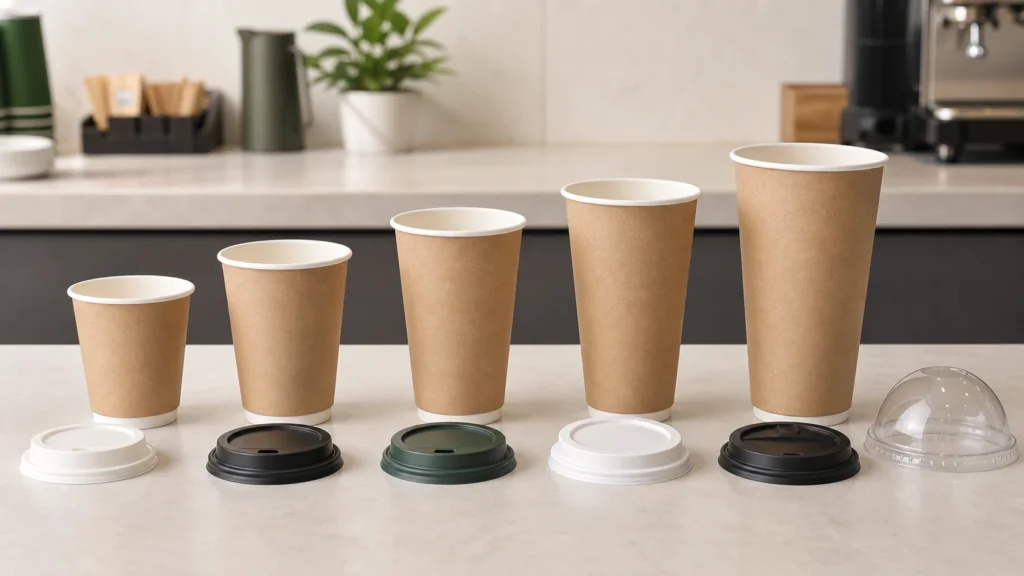
Choosing a paper cup for a foodservice operation looks straightforward until the first lid shipment arrives and nothing seats correctly. The root cause is almost always the same: the buyer selected a cup based on capacity and assumed the lid would follow. Capacity tells you how much liquid a cup can hold. It tells you nothing about which lid will fit it. This guide explains why those two decisions are separate, how rim geometry and lid families govern physical compatibility, and what a practical validation process looks like before any volume order is placed.
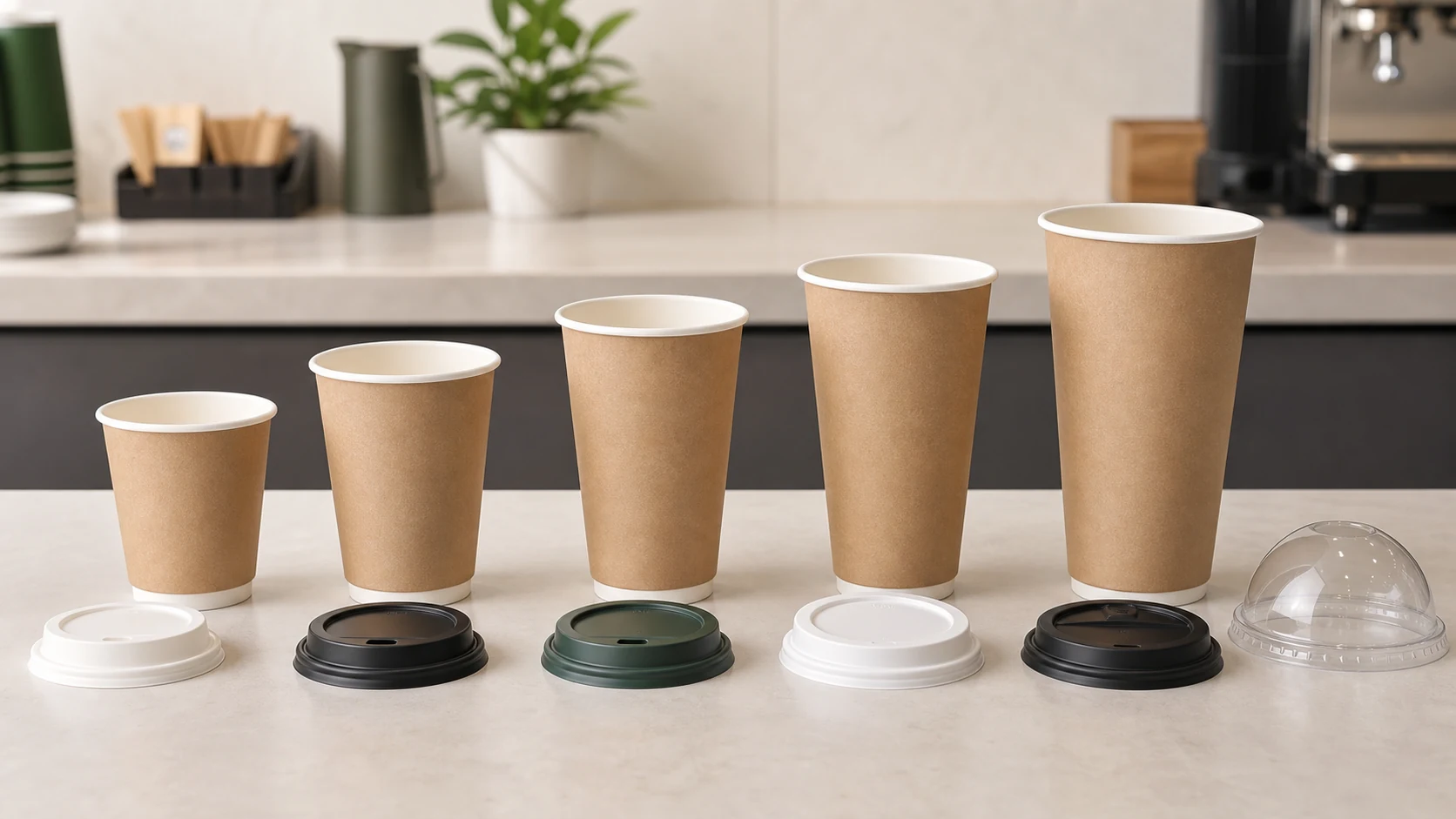
These are two distinct specifications that happen to live on the same product. Conflating them is the single most common source of lid-compatibility problems in foodservice procurement.
Capacity answers the question: how much beverage does this service format require? A 12 oz hot coffee, a 16 oz iced latte over ice, a 20 oz cold brew — each of those is a service-volume decision driven by your menu, your price points, and your customer expectations. Capacity is also influenced by fill level: a cup nominally rated at 16 oz is rarely filled to the absolute brim, so the usable serving volume and the printed cup size are not identical figures.
Rim fit answers a different question entirely: will a specific lid seat securely on a specific cup without leaking, popping off under handling pressure, or requiring so much force to apply that it slows down the service line? Rim fit is determined by the physical geometry of the cup’s top edge — its outer diameter, the shape of the curl or bead, and the depth and profile of the channel that the lid snaps or rolls onto. Two cups from two different manufacturers, both labeled “16 oz,” can have meaningfully different rim profiles and will not necessarily accept the same lid.
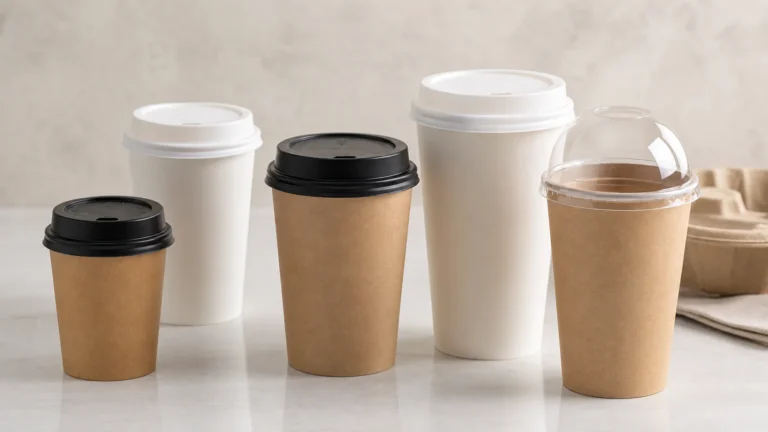
Papacko’s paper cup range runs from 4 oz to 22 oz across hot, cold, and specialty constructions. Within that range, matching lids and accessories are available — but the correct pairing is always determined by confirming the rim profile and lid family for the exact cup SKU, not by matching ounce numbers alone.
This distinction matters operationally. A lid that fits loosely can detach during transit or when a customer picks up a drink. A lid that fits too tightly creates application resistance that slows throughput on a busy counter and risks deforming the cup. Neither failure is acceptable in a professional foodservice environment.
Before specifying a cup size or a lid style, define the service scenario with precision. The beverage type, temperature, service format, and downstream handling all influence which cup construction is appropriate — and cup construction, in turn, affects which rim profiles and lid families are available to you.
Hot drinks — espresso, drip coffee, tea, hot chocolate — require cups constructed to handle elevated temperatures without compromising structural integrity or transferring heat uncomfortably to the hand. Single-wall cups are the baseline; double-wall and ripple-wall constructions add insulation. The construction affects wall thickness and, in some designs, the overall cup geometry, which can influence rim dimensions. A procurement team specifying hot cups should confirm whether the cup is intended for use with a flat sip-through lid, a domed lid, or a traveler lid, and whether the chosen lid family is available in the same rim profile as the selected cup.
Cold cups — typically made from PE-lined paperboard or, for clear visibility, PET or other materials — are designed for iced beverages, cold brew, smoothies, and similar formats. Cold cups frequently use dome lids to accommodate whipped cream or layered drinks, and flat lids with straw slots for standard cold service. The rim profile on cold cups often differs from hot-cup profiles even at identical nominal capacities, which is another reason capacity-based lid selection fails.
Smaller formats — 4 oz, 6 oz, 8 oz — serve espresso, juice portions, condiment cups, and tasting portions. These formats have their own rim families, and lids for them are not interchangeable with mid-range hot or cold cup lids. If your operation uses multiple cup sizes across different service stations, you may be working with two or three distinct lid families simultaneously. Mapping that clearly at the specification stage prevents costly mismatches.
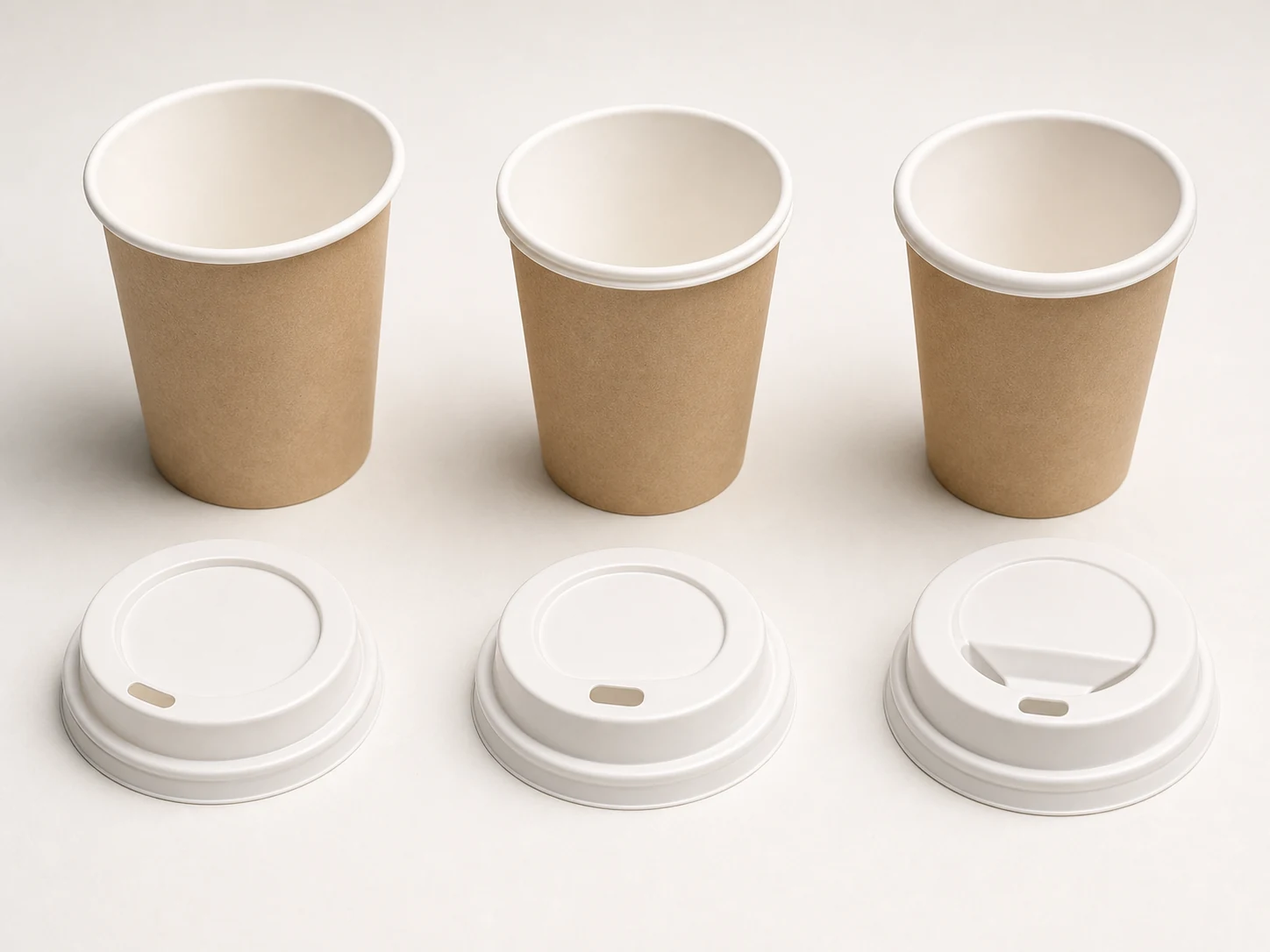
Rim compatibility is not a single measurement. It is a combination of variables that must all align between a specific cup and a specific lid. Buyers who understand these variables can ask the right questions of their supplier and structure their sample-testing process correctly.
The outer diameter of the cup’s top edge is the primary dimension that determines whether a lid will physically engage with the cup. However, diameter alone is insufficient. The shape of the rim — whether it has a rolled curl, a flat bead, or a specific channel geometry — determines how the lid locks on and how much retention force it provides. A lid designed for one rim profile may sit on a cup with a similar diameter but a different profile without seating securely.
Lids are manufactured in families — groups of sizes and styles that share a common rim-engagement geometry. Within a lid family, a single lid design may fit multiple cup sizes because those cups share a rim profile. Across lid families, even cups of similar capacity may be incompatible. When sourcing lids, always confirm the lid family designation for both the cup and the lid, and verify that they are matched. Papacko’s paper cup lids are available in configurations matched to the cup range — confirm the pairing for your specific SKU combination.
Single-wall, double-wall, and ripple-wall cups behave differently under the lateral pressure applied when seating a lid. A thicker-walled cup may be more resistant to deformation during lid application; a thinner-wall cup may flex. This affects both the application experience on the service line and the security of the lid seal during handling. Test lid application under realistic conditions, not just in a static bench test.
The distance between the surface of the beverage and the underside of the seated lid — headspace — affects whether liquid contacts the lid during normal handling. Insufficient headspace increases the risk of spillage when the cup is tilted or jostled. Confirm that your standard fill volume, not the cup’s maximum capacity, leaves adequate headspace for the lid style you are using.
A lid that seats adequately on a counter may perform differently in a delivery bag, in a cup carrier, or when a customer removes it from a holder. If your operation includes delivery, catering, or drive-through service, test lid retention under those specific conditions. Thermal expansion and contraction during transit can also affect lid fit on hot beverages.
The table below maps common service formats to typical cup capacity ranges and notes the key specification questions for each. It does not assert universal rim dimensions or lid compatibility — those must be confirmed for the specific cup and lid SKUs being evaluated.
| Service Format | Typical Capacity Range | Construction Consideration | Key Lid Question |
|---|---|---|---|
| Espresso / short black | 2 oz – 4 oz | Single-wall sufficient for short service | Flat or domed lid available in this rim family? |
| Hot drip coffee / Americano | 8 oz – 12 oz | Single- or double-wall; insulation for carry | Sip-through or traveler lid; confirm rim profile |
| Standard hot latte / cappuccino | 12 oz – 16 oz | Double-wall preferred for hand comfort | Domed or flat lid; confirm lid family match |
| Large hot beverage | 16 oz – 20 oz | Double-wall; check lid retention under weight | Lid retention under full-cup weight and handling |
| Standard cold / iced drink | 16 oz – 22 oz | Cold-cup construction; confirm material suitability | Dome or flat straw-slot lid; cold-cup rim family |
| Juice / portion cold | 4 oz – 8 oz | Cold-cup or portion cup | Flat lid or film seal; confirm rim engagement |
| Specialty / smoothie | 16 oz – 22 oz | Cold-cup; consider opacity vs. visibility needs | Dome lid clearance for toppings; straw slot size |
Browse Papacko’s full paper cup category to identify the constructions available within each capacity range, then use the rim-profile and lid-family information for each SKU to begin the matching process.

No specification sheet replaces a physical sample test. Before committing to a volume order of cups and lids, run a structured validation process that covers fit, function, workflow, and delivery performance.
Request samples of the specific cup SKU and the specific lid SKU that your supplier recommends as a matched pair. Do not test a cup sample with a lid from a different source unless that is your intended production configuration. The test must replicate your actual supply chain.
Seat the lid on the cup by hand using the same motion your staff will use on the service line. The lid should engage fully around the entire rim without requiring excessive force. Check for gaps, uneven seating, or any point where the lid does not contact the rim. A lid that seats correctly on three-quarters of the rim but lifts at one point is not a passing result.
For hot cups with sip-through lids, test the sip opening for flow rate and the experience of drinking through it. For cold cups with straw slots, confirm that your standard straw diameter fits without excessive resistance or looseness. For dome lids, confirm that the dome height is appropriate for your toppings or whipped cream standard.
Confirm that lidded cups stack or nest as required for your service format. If cups are pre-lidded and held in a rack or carrier, test that configuration. If cups are stacked empty for storage, confirm that the stack is stable and that cups separate cleanly without sticking.
If your operation includes delivery, place lidded cups in your standard delivery packaging — bag, carrier, or box — and simulate a delivery journey. Check lid retention after the simulation. This step is frequently skipped and is frequently the source of post-launch complaints.
Time your staff applying lids under realistic service conditions. A lid that requires two attempts to seat correctly, or that requires a tool to apply, will create a throughput problem at volume. The application motion should be fast, consistent, and achievable by any team member.

A complete specification for a cup-and-lid combination should include the following documents and data points. Use this checklist when evaluating any supplier, including when working with Papacko.
For the cup:
– SKU and product name
– Nominal capacity (oz or ml)
– Usable fill capacity at standard fill line
– Construction type (single-wall, double-wall, ripple-wall, cold-cup)
– Rim outer diameter and rim profile designation
– Lid family compatibility statement from the manufacturer
– Base material and liner material
– Food-contact compliance documentation relevant to your market
For the lid:
– SKU and product name
– Lid family designation
– Compatible cup rim profile(s)
– Lid style (flat sip-through, dome, traveler, straw-slot)
– Material
– Food-contact compliance documentation relevant to your market
On food-contact documentation: Material compliance for food-contact packaging is market-specific and material-specific. In the United States, food-contact substances are regulated under the framework described by the FDA’s food-contact substances program. In the European Union, food-contact materials are governed under the framework maintained by the European Commission. Request the relevant compliance documentation for your specific market from your supplier and review it with your regulatory or quality team. Do not assume that a product compliant in one market is automatically compliant in another.
For packaging accessories — carriers, sleeves, trays, and similar items — confirm that they are dimensionally matched to your cup-and-lid combination. Papacko’s packaging accessories range is available to complement cup and lid selections; confirm fit for your specific SKU combination.

Sourcing cups and lids from different suppliers without coordinating rim-profile compatibility is one of the most avoidable procurement problems in foodservice. When the cup supplier and the lid supplier are not aligned on rim family, the buyer carries the burden of compatibility testing — and absorbs the cost of mismatches.
Papacko supplies paper cups from 4 oz to 22 oz alongside matched lids and accessories, allowing procurement teams to specify and validate complete cup-and-lid combinations from a single source. For operations running both hot and cold formats, Papacko’s coffee cup lids and cold-cup lid options can be evaluated alongside the corresponding cup SKUs.
To begin the specification process:
Procurement teams managing multiple sites or high-volume operations should consider requesting a specification review with Papacko’s team to map cup, lid, and accessory SKUs across service formats before finalizing orders. Catching a rim-profile mismatch at the sample stage costs time. Catching it after a volume order has been placed and delivered costs significantly more.
Experience and sourcing context. This guide addresses the recurring foodservice sourcing problem behind cup-and-lid mismatches: capacity is often chosen from the menu, while rim profile and lid family are left until later. It brings together the practical selection questions faced by cafés, restaurants, distributors and multi-site operators when they compare beverage formats, handling conditions, sample sets and accessory requirements.
Technical and authority basis. The selection logic combines Papacko’s paper-cup, lid and accessory context with publicly available foodservice sourcing experience and the official food-contact resources cited above. The point is not to treat a nominal ounce size as a universal fit standard, but to connect capacity, rim geometry, lid engagement, service conditions and destination-market documentation in one purchasing decision.
How to apply this guide. Use the table and validation steps to prepare a cup-and-lid brief for each service format, then request matched samples and the relevant supplier documents before approving a volume order. This approach gives purchasing, operations and quality teams a shared way to compare options and record the final SKU pairing.
No. Capacity is a volume specification, not a rim specification. Two cups both labeled 16 oz can have different rim diameters and different rim profiles, making them incompatible with the same lid. Always confirm the rim profile and lid family for the specific cup SKU you are using, and test a physical sample before ordering at volume.
A lid family is a group of lid sizes and styles that share a common rim-engagement geometry. Within a lid family, a single lid design may fit multiple cup sizes because those cups share a compatible rim profile. Across different lid families, cups of similar capacity may be incompatible. Knowing the lid family for both your cup and your lid is the starting point for confirming compatibility.
Food-contact compliance is market-specific and material-specific. Request compliance documentation from your supplier for the specific materials used in both the cup and the lid, and review that documentation against the regulatory requirements in your operating market. In the US, refer to the FDA’s food-contact substances framework; in the EU, refer to the European Commission’s food-contact materials framework. Do not assume compliance in one market transfers automatically to another.
Not reliably. Hot cups and cold cups are often manufactured to different rim profiles, even at the same nominal capacity. A dome lid designed for a cold cup may not seat correctly on a hot cup of the same size, and vice versa. Confirm the rim profile and lid family for each cup construction type separately.
Beyond confirming that the lid seats fully and evenly, test sip or straw behavior, lid retention under handling and transport conditions that reflect your actual service environment, application speed on your service line, and stacking or storage behavior. If your operation includes delivery, simulate a delivery journey with the lidded cup in your standard packaging before approving the combination.
Map each cup SKU to its confirmed lid SKU and lid family before ordering. Where possible, select cup sizes within the same lid family to reduce the number of distinct lid SKUs your operation needs to stock. Confirm with your supplier which cup SKUs share a lid family and which require a separate lid. Reducing lid SKU count simplifies storage, reduces the risk of staff applying the wrong lid, and can improve purchasing efficiency.