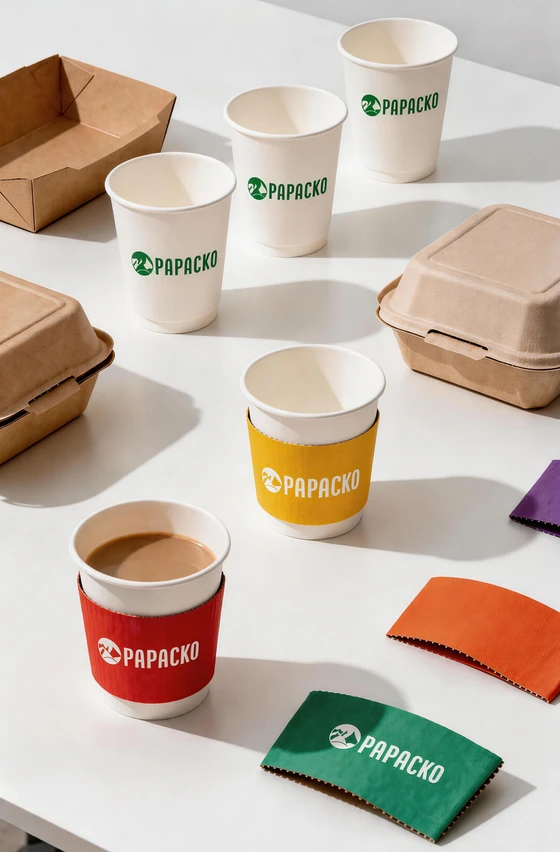
Ready to create your own branded paper cups or packaging?
Tell us your requirements — size, coating, printing, and destination — and our team will prepare a detailed quotation within 24 hours.

Last Updated: August 2026
Reading Time: 8-10 minutes
Author: Papacko Content Team
Winter months bring a 35-45% surge in hot food delivery orders, with soup and comfort meal categories experiencing the highest growth. Yet many food businesses struggle with packaging that fails to maintain temperature, leaks during transport, or creates condensation that compromises food quality.
This comprehensive guide examines winter food packaging solutions specifically designed for hot soups, stews, and heated meals. You’ll learn material selection strategies for optimal insulation, sealing techniques that prevent spills, container designs that minimize heat loss, and cost-effective approaches to maintaining food safety standards during cold-weather delivery.
💡 Quick Takeaway: Effective winter food packaging requires multi-layer insulation (double-wall or foam containers), secure lid sealing systems, moisture-resistant materials, and proper venting to prevent condensation—while maintaining temperatures above 60°C (140°F) for 30-45 minutes during delivery.
Winter delivery conditions create unique challenges:
•Ambient temperature differential: Indoor food (70-80°C) vs outdoor air (-5°C to 10°C) creates 60-85°C temperature gradient
•Accelerated heat loss: Cold environments extract heat 2-3x faster than summer conditions
•Condensation risk: Temperature differentials cause moisture buildup inside containers, making food soggy
•Material brittleness: Some plastics become brittle below 0°C, increasing breakage risk
Industry data: A 2025 food delivery study found that 42% of customer complaints during winter months related to cold food upon arrival, compared to just 18% in summer—highlighting the critical importance of thermal packaging solutions.
🎯 Industry Insight: Restaurants using standard single-wall containers experience average temperature drops of 25-30°C during 20-minute winter deliveries, bringing food below safe serving temperatures (60°C).
Upgraded insulated packaging reduces temperature loss to 8-12°C over the same period.
Key selection factors:
1.Delivery time: <15 minutes = single-wall acceptable; 15-30 minutes = double-wall recommended; 30+ minutes = foam or premium insulated required
2.Food type: Liquid-heavy (soups) require leak-proof seals; chunky stews need less precise sealing
3.Sustainability goals: Foam performs best but has environmental concerns; molded fiber offers eco-friendly alternative with 85-90% of foam’s performance
4.Reheating needs: Aluminum and certain plastics (CPET) allow oven/microwave reheating
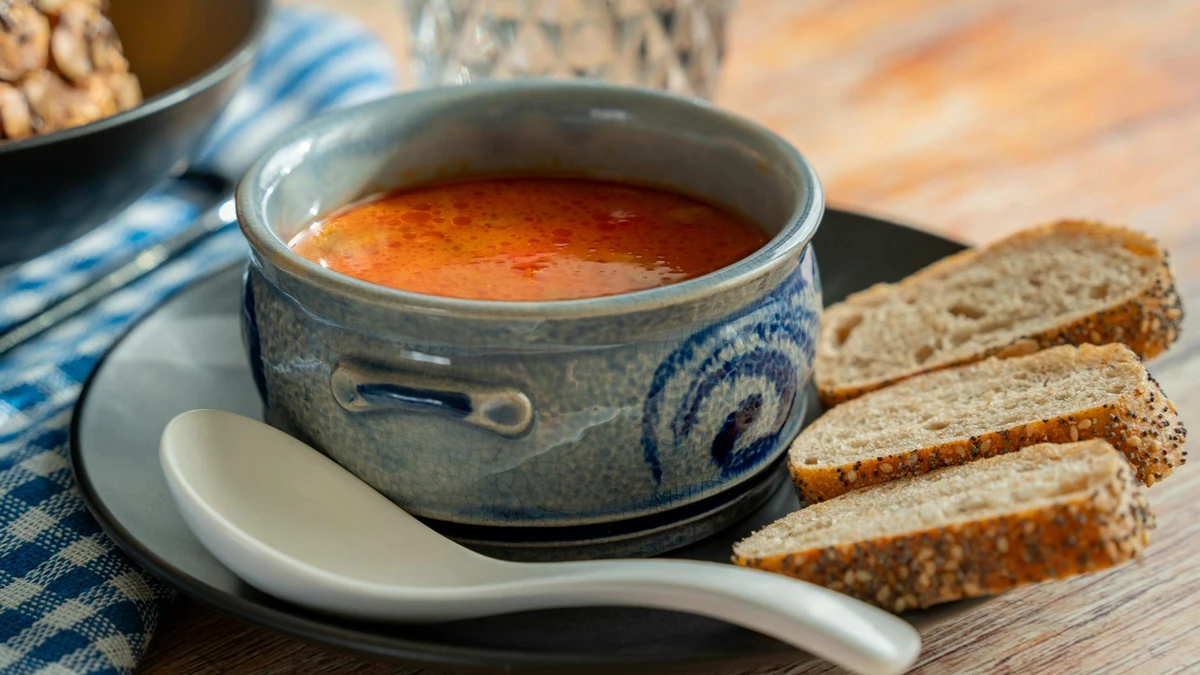
Construction: Two paperboard layers with air gap (3-5mm) for insulation
Performance specifications:
•Heat retention: 75-82% after 30 minutes
•Temperature drop: 12-18°C over 30-minute delivery
•Moisture resistance: PE or PLA coating prevents soggy bottoms
•Cost: $0.35-0.65 per container (12-24 oz)
Advantages:
•Balanced cost-performance ratio for most operations
•Compostable options available (PLA-lined versions)
•Stackable design saves storage space
•Accepts custom printing for branding
Limitations:
•Requires proper lid sealing to prevent heat escape
•Not suitable for very long delivery times (45+ minutes)
•Air gap can compress if stacked too heavily
Best for: Soup shops, Asian noodle restaurants, comfort food delivery services with 15-30 minute delivery windows.
Construction: Closed-cell foam structure traps air for superior insulation
Performance specifications:
•Heat retention: 85-92% after 30 minutes
•Temperature drop: 6-10°C over 30-minute delivery
•Moisture resistance: Inherently water-resistant
•Cost: $0.45-0.85 per container (12-24 oz)
Advantages:
•Best-in-class thermal performance
•Excellent leak resistance with snap-fit lids
•Lightweight reduces delivery costs
•Cushions food during transport
Limitations:
•Environmental concerns (not easily recyclable in many areas)
•Banned in some cities/regions (check local regulations)
•Takes up more storage space than nested paperboard
•Limited custom printing capability
Best for: Premium delivery services, catering operations, hospitals/healthcare meal delivery, long-distance transport (30-60+ minutes).
Selection criteria:
For liquid soups: Heat-sealed film or screw-top lids provide best leak prevention. Prioritize seal integrity over venting.
For stews/chunky meals: Tab-lock or snap-fit lids balance leak prevention with ease of opening. Some venting acceptable.
For noodle dishes: Vent-compatible lids essential to prevent soggy noodles from steam condensation.
The condensation dilemma: Sealed containers retain heat but trap steam, making food soggy. Vented containers prevent sogginess but lose heat faster.
Solutions:
1.Moisture-absorbing inserts: Place absorbent paper strips inside lid to capture condensation (adds $0.02-0.04 per container)
2.Dual-vent design: Small vents (2-3mm) release excess steam while retaining most heat (reduces temperature loss by only 3-5°C vs fully sealed)
3.Delayed venting: Ship sealed, include instructions for customer to vent upon arrival
4.Compartmented design: Separate sauce/broth from solids to prevent sogginess
Test data: Containers with dual-vent lids retained 78% of heat after 30 minutes while reducing sogginess complaints by 65% compared to fully sealed containers.
Volume-to-surface-area ratio: Smaller surface area relative to volume reduces heat loss.
Design principles:
•Deeper containers (height > diameter) lose heat slower than shallow wide containers
•Rounded shapes have less surface area than sharp corners for same volume
•Smaller individual portions retain heat better than large shared containers (divide 32 oz order into 2×16 oz than 1×32 oz)
Lid contact area: Ensure lid overlaps container rim by 8-12mm minimum to create effective seal. Insufficient overlap (4-6mm) increases heat loss by 15-20%.
Purpose: Separate hot and cold components, prevent mixing of textures
Configuration options:
1.2-compartment (70/30 split): Main hot meal + side salad or cold condiments
2.3-compartment (50/25/25): Entrée + two sides (keeps sauces separate)
3.Bowl + lid compartment: Soup below, crackers/garnish in lid cavity
Thermal benefits:
•Isolates heat-sensitive items (lettuce, garnishes) from hot foods
•Prevents sauce cross-contamination that dilutes flavors
•Allows different reheating strategies (heat main, keep sides cold)
Cost consideration: Multi-compartment containers cost 25-40% more than single-chamber equivalents but reduce need for separate packaging (net cost impact: +10-15% for 2-compartment vs buying two separate containers).
Safe food holding temperatures:
•Hot foods: Must stay above 60°C (140°F) to prevent bacterial growth
•Danger zone: 5-60°C (41-140°F) allows rapid bacterial multiplication
•Delivery target: Maintain >65°C at customer door to account for serving delay
Time-temperature relationship:
Regulatory compliance: Many health departments require foods be held above 60°C or below 5°C. Delivery times exceeding safe temperature windows may require hot/cold bags, heated delivery boxes, or service time limitations.
Temperature retention test protocol:
1.Fill container with food at serving temperature (75-80°C)
2.Seal with lid as customers would receive
3.Place in ambient winter conditions (0-10°C)
4.Measure internal temperature at 10, 20, 30, 40 minutes
5.Repeat test 5 times, average results
Acceptance criteria:
•30-minute retention: ≥65°C (minimum acceptable)
•30-minute retention: ≥70°C (good performance)
•30-minute retention: ≥72°C (excellent performance)
Field testing: Conduct actual delivery tests during coldest weather. Lab conditions don’t account for repeated door openings, vehicle heating, customer handling delays.
ROI considerations:
Reduced complaints: Upgrading from single-wall to double-wall packaging reduced “cold food” complaints by 58% in pilot study, decreasing refund costs by $180/month for 500-order operation.
Repeat orders: Customers receiving properly temperature-maintained food showed 23% higher reorder rates within 30 days compared to those experiencing temperature issues.
Labor savings: Better packaging reduces time spent handling complaint calls and processing refunds (estimated 2-4 hours/week for 500-order operation = $120-240/month at $15/hour).
Winter-specific approach:
•Upgrade to insulated containers only during cold months (November-March in temperate climates)
•Order 4-6 month supply before winter to lock pricing
•Communicate upgrade to customers (“Now using winter-grade insulated packaging”)
Summer transition:
•Revert to lighter single-wall containers (May-September)
•Reduces packaging costs by 30-40% during warm months
•Allocate savings to other operational needs or price competitiveness
Hybrid inventory:
•Stock 60% winter-grade, 40% standard containers during shoulder seasons (Oct, April)
•Use premium packaging for high-value orders, standard for budget-conscious customers
•Monitor weather forecasts to adjust usage ratios
Performance trade-offs:
•Eco-friendly options most times retain 5-15% less heat than foam
•Compensate by:
– Starting with higher food temperatures (+5°C)
– Reducing delivery radius to shorten transit time
– Using insulated delivery bags as secondary protection
– Educating customers on slight temperature differences
Customer perception: 68% of surveyed customers willing to accept minor temperature reduction in exchange for sustainable packaging, but only if communicated clearly (“eco-friendly packaging, slight temperature variance possible”).
❌ Mistake #1: Using same packaging year-round without adjusting for winter conditions
✅ Correct Approach: Upgrade to insulated containers during cold months (November-March). Temperature testing shows single-wall containers lose 25-30°C in 20 minutes during winter vs 12-15°C in summer. Switch to double-wall or foam to maintain food safety and quality.
❌ Mistake #2: Prioritizing lowest container cost without considering complaint/refund costs
✅ Correct Approach: Calculate total cost including refunds and lost customers. Example: Saving $0.20/container with cheaper packaging but experiencing 15% complaint rate costs more than spending extra $0.40 for quality packaging with 3% complaint rate. Factor customer lifetime value into packaging decisions.
❌ Mistake #3: Fully sealing containers to maximize heat retention, causing soggy food from condensation
✅ Correct Approach: Use dual-vent lids that release excess steam while retaining heat, or include moisture-absorbing inserts. Testing shows vented lids reduce sogginess complaints by 65% while only decreasing temperature retention by 3-5°C—an acceptable trade-off for better food quality.
❌ Mistake #4: Ordering single large container for family orders instead of multiple smaller portions
✅ Correct Approach: Divide large orders into 2-3 smaller containers. Physics shows smaller volumes retain heat better (higher volume-to-surface-area ratio), and individual portions reheat more evenly if needed. 2×16 oz containers retain heat 12-18% better than 1×32 oz container over 30 minutes.
Winter food packaging refers to specialized insulated containers designed to maintain hot food temperatures during cold-weather delivery and takeout service. It uses materials like double-wall paperboard, expanded polystyrene foam, or molded fiber with air-gap insulation to slow heat loss in low ambient temperatures. Effective winter packaging maintains foods above 60°C (140°F) for 30-45 minutes, preventing bacterial growth while ensuring customer satisfaction with properly heated meals upon arrival.
Expanded polystyrene (EPS) foam offers best performance with 85-92% heat retention after 30 minutes, keeping food 6-10°C warmer than other options. Double-wall paperboard provides cost-effective alternative at 75-82% retention. Molded fiber (bagasse) delivers eco-friendly solution at 78-85% retention. For very long deliveries (45+ minutes), foam containers with external insulated bags maintain temperatures best. Material choice depends on delivery time, budget, and sustainability priorities.
Use containers with proper sealing mechanisms: heat-sealed film lids provide 98-99% leak prevention (best for liquid soups), screw-top lids offer 95-98% effectiveness, and tab-lock lids deliver 90-95% protection. Ensure lid overlaps container rim by 8-12mm minimum. Fill containers to 80-85% capacity leaving headspace for expansion. Test packaging with actual soup products before full deployment—conduct shake and tilt tests to verify seal integrity under transport conditions.
Winter-grade insulated packaging costs 40-120% more than standard single-wall containers. Single-wall costs $0.15-0.25 per unit; double-wall runs $0.35-0.65; foam costs $0.45-0.85. Then again, upgraded packaging reduces cold-food complaints by 58% and refund costs by approximately $180/month for operations handling 500 orders. Higher packaging costs areusuallyy offset by reduced complaints, fewer refunds, and increased customer retention—achieving positive ROI within 3-4 months.
Use double-wall paperboard or molded fiber containers (78-85% heat retention), start with higher food temperatures (80-85°C instead of 75°C), reduce delivery radius to shorten transit time below 25 minutes, employ insulated delivery bags as secondary protection, and optimize container shape (deeper containers with smaller surface area lose heat slower). Combining these strategies can match foam performance while using more sustainable materials.
Yes. Liquid soups require superior leak prevention (heat-sealed or screw-top lids, 98%+ seal effectiveness) and can use fully sealed containers since sogginess isn’t a concern. Solid meals and noodle dishes need ventilation to prevent condensation-caused sogginess—use dual-vent lids or moisture-absorbing inserts. Soups benefit from cylindrical deep containers (better volume-to-surface ratio), while chunky meals work well in compartmented containers separating components with different moisture levels.
Food safety regulations require hot foods stay above 60°C (140°F). Target maintaining 65°C at customer door to account for serving delays. For 15-25 minute deliveries, double-wall packaging maintaining 75-82% heat retention suffices. 25-40 minute deliveries require foam or premium insulation (85-92% retention). Beyond 40 minutes, use foam containers plus external insulated bags. Conduct temperature testing with your specific menu items and delivery routes to verify packaging meets safety thresholds.
Winter food packaging requires strategic material selection, proper sealing systems, and thermal design optimization to maintain food safety and customer satisfaction during cold-weather delivery. The performance gap between standard and winter-grade packaging directly impacts complaint rates, refund costs, and customer retention.
Key Takeaways:
1.Upgrade packaging seasonally—double-wall or foam containers during winter months (November-March) reduce temperature loss by 40-60% vs single-wall
2.Match insulation to delivery time—15-25 minute routes need double-wall (75-82% retention); 25-40 minutes require foam (85-92% retention)
3.Balance sealing and venting—liquid soups need leak-proof seals; solid meals benefit from vented lids to prevent sogginess
4.Calculate total cost—include complaint/refund costs in packaging decisions; premium containers deliver positive ROI within 3-4 months
5.Test before deploying—conduct temperature retention tests with actual menu items in real delivery conditions
Papacko supplies restaurants and food delivery services with winter-grade insulated containers, including double-wall paperboard, molded fiber, and foam options. Our packaging specialists provide temperature testing support, custom sizing, and seasonal inventory planning—ensuring your hot food arrives at proper temperatures throughout cold-weather months.
Get in touch:
Last Updated: August 2026