Ready to create your own branded paper cups or packaging?
Tell us your requirements — size, coating, printing, and destination — and our team will prepare a detailed quotation within 24 hours.

Last Updated: July 2026
Reading Time: 8-10 minutes
Author: Papacko Content Team
Foodservice chains face unique packaging challenges that independent restaurants avoid: maintaining brand consistency across 10-500 locations, coordinating deliveries to multiple addresses, negotiating MOQs that balance volume pricing with inventory management, and ensuring identical customer experience whether dining in Tokyo, Toronto, or Texas. Understanding paper cups for chains helps.A mismatched cup design at one franchise location can undermine months of corporate brand development.
This comprehensive guide addresses paper cup sourcing strategies specifically for multi-location foodservice operations, available paper cups for chains matter.You’ll learn bulk ordering optimization (from 50,000 to 5,000,000+ units), MOQ navigation for chains of various sizes, multi-location logistics solutions, specification standardization processes ensuring consistency, volume pricing tiers, and centralized vs distributed procurement models.
💡 Quick Takeaway: Foodservice chains achieve 35-50% cost savings through centralized bulk ordering (500,000-2,000,000 units annually), master specification documents ensuring 100% consistency, hub-and-spoke distribution to multiple locations, and tiered MOQs starting at 50,000 units (small chains) scaling to 500,000+ (regional/national chains).
Understanding paper cups for chains requires attention to these factors:
Critical consistency points:
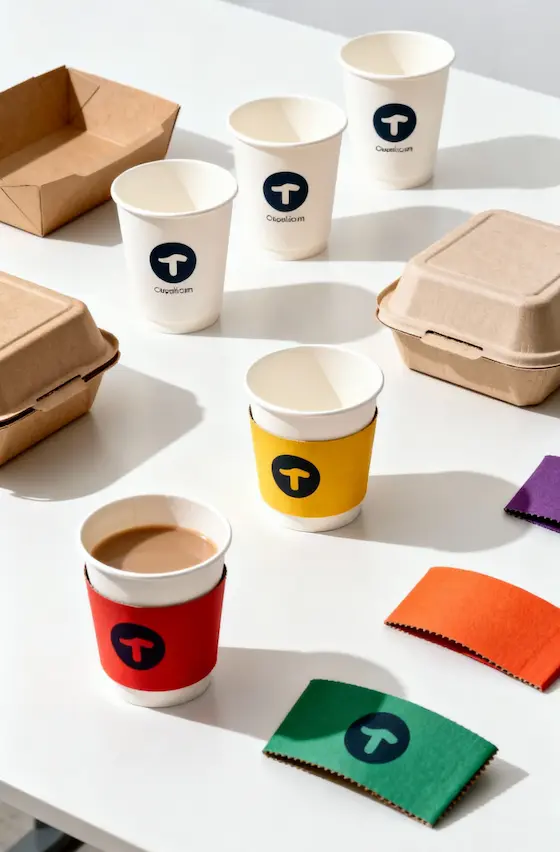
•Color matching: PMS color specifications (not “close enough”—exact matches required)
•Print registration: Logo placement ±2mm tolerance maximum
•Material specifications: Identical GSM, coating thickness across all production runs
•Size uniformity: Cup diameter/height within 1-2mm variance (affects lid fit across locations)
Cost of inconsistency:
•Customer confusion: “Cup looked different at the downtown location vs suburban branch”
•Training complications: Staff procedures assume uniform packaging across system
•Lid compatibility issues: 2mm cup diameter variance = ill-fitting lids = spills/complaints
•Brand dilution: Inconsistent packaging signals poor quality control
🎯 Industry Insight: A 2025 multi-unit operations study found that 68% of chain customers notice packaging inconsistencies between locations, with 34% questioning overall brand quality when cups/containers differ—even if the product itself is identical.
Standardized specifications prevent this perception problem.

For common paper cups for chains, focus on:
Distribution challenges:
•Geographic spread: 10 locations within 50km vs 100 locations across 5 states/provinces
•Storage capacity variation: Flagship locations with 50 sq m storage vs kiosks with 3 sq m
•Consumption rates: High-traffic urban locations use 20,000 cups/month vs suburban 3,000/month
•Delivery coordination: Single supplier delivering to 25+ addresses vs each location self-ordering
Failure modes:
•Stock-outs at high-volume locations (emergency local purchases break brand consistency)
•Overstocking at low-volume locations (capital tied up in inventory, storage issues)
•Uncoordinated deliveries (supplier makes 15 separate shipments = 3x logistics cost)
•Specification drift (locations independently reorder “similar” cups over time)
When evaluating standard paper cups for chains, consider the following:
Typical consumption:
•Average per location: 5,000-8,000 cups/month
•System-wide total: 25,000-120,000 cups/month (300,000-1,440,000 annually)
Optimal ordering strategy:
Recommended approach: Quarterly ordering (90-day supply)
•Balances volume pricing (20-30% savings vs monthly) with flexibility
•Manageable storage requirements (15-35 cubic meters distributed across locations)
•Allows seasonal design changes (summer vs winter promotional cups)
MOQ considerations:
•Small chain MOQs: 50,000-100,000 units (achievable quarterly)
•Multi-size strategy: 60% 12 oz, 30% 16 oz, 10% 8 oz = 3 SKUs × 30,000 avg = 90,000 total units
When evaluating paper cups for chains, consider the following:
Typical consumption:
•System-wide: 120,000-400,000 cups/month (1,440,000-4,800,000 annually)
Centralized hub distribution model:
Setup:
1.Master order: 360,000-1,200,000 cups quarterly to single warehouse/hub
2.Understanding different paper cups for chains helps.Hub storage: Centralized facility (80-150 sq m dedicated packaging storage)
3.Understanding paper cups for chains helps.Branch distribution: Weekly/bi-weekly shipments from hub to locations based on consumption rates
4.Understanding various paper cups for chains helps.Inventory management: Centralized tracking prevents stock-outs and overstock
Cost analysis:
Net savings: 28-35% total cost reduction through centralized bulk ordering.
When evaluating standard paper cups for chains, consider the following:
Typical consumption:
•System-wide: 400,000-1,600,000 cups/month (4,800,000-19,200,000 annually)
Multi-hub strategy:
Regional hub allocation:
•East region hub: Serves 60 locations, 480,000 cups/month
•West region hub: Serves 55 locations, 440,000 cups/month
•Central region hub: Serves 50 locations, 420,000 cups/month
•South region hub: Serves 35 locations, 260,000 cups/month
•Total: 200 locations, 1,600,000 cups/month
Ordering structure:
•Annual contract: 19,000,000 cups (with quarterly true-ups for growth)
•Quarterly production runs: 4,750,000 cups (consistent quality across year)
•Regional shipments: Direct from manufacturer to 4 regional hubs
•Volume pricing: $0.09-0.13 per cup (40-48% savings vs small-batch pricing)
Supplier relationship:
•Dedicated account manager
•Guaranteed production slots (priority during peak seasons)
•Custom specification documentation (master cup spec sheet, color standards)
•Quality control protocols (pre-production samples every quarter)
Understanding different paper cups for chains requires attention to these factors:
### Volume Pricing Breakdown
Understanding different paper cups for chains requires attention to these factors:
Example pricing structure (custom printed 12 oz single-wall cup):
Economies of scale drivers:
•Setup amortization: Printing plates/setup ($1,500-3,000) spread across more units
•Production efficiency: Long runs reduce changeover time/waste (3-5% vs 8-12% for short runs)
•Material bulk pricing: Paperboard, coatings purchased in larger quantities (8-12% savings)
•Logistics optimization: Full container loads (cheaper per-unit shipping)
Understanding standard paper cups for chains requires attention to these factors:
Contract components for chains:
Volume commitment:
•Annual minimum: 1,200,000 cups (with ±10% flexibility for growth/contraction)
•Quarterly order schedule: 300,000 per quarter (predictable production planning)
•Price lock: Fixed pricing for 12 months (protects against material cost fluctuations)
Performance guarantees:
•Quality standards: ≤1% defect rate (measured by random sampling)
•Delivery reliability: 95% on-time delivery to hubs
•Color consistency: ΔE ≤2.0 (color difference threshold, undetectable to human eye)
•Specification adherence: ±5% tolerance on GSM, coating thickness, dimensions
Flexibility provisions:
•Design updates: 1-2 design changes per year without additional setup fees
•Seasonal variations: 20% of annual volume can be seasonal designs (holiday cups, limited editions)
•Size mix adjustments: Quarterly adjustments to 8/12/16/20 oz ratio based on actual consumption
Cost savings from contracts: 5-12% additional savings beyond volume pricing through:
•Waived setup fees for design updates
•Priority production scheduling (no rush fees during peak seasons)
•Predictable budgeting (locked pricing vs market fluctuations)
When evaluating the paper cups for chains, consider the following:
Essential spec components:
Cup specifications:
•Material: 250 GSM PE-coated paperboard (or specify PLA/sustainable coating)
•Dimensions: 12 oz = 90mm diameter (top), 60mm diameter (bottom), 110mm height (±2mm tolerance)
•Coating: 18-20 gsm polyethylene interior (or PLA equivalent)
•Print method: Flexographic, water-based inks
•Color standards: PMS 485 (red), PMS 2925 (blue)—specific Pantone codes, not CMYK approximations
Quality control parameters:
•Seam strength: No leakage when filled with water for 60 minutes
•Heat tolerance: No softening/warping with 90°C liquid for 30 minutes
•Lid fit: Compatible with specified lid SKU (exact diameter critical)
•Print registration: Logo centered ±2mm, no color bleed beyond 0.5mm
Photography/samples:
•Master sample cups (approved color/print) stored at HQ and supplier facility
•Spectrophotometer color readings (objective measurement, not subjective “looks right”)
•Side-by-side comparison photos (approved standard vs potential variations)
When evaluating the paper cups for chains, consider the following:
Pre-production approval process:
1.Understanding cups for chains helps.Pre-production samples: Supplier produces 100-500 samples from production setup
2.Understanding paper cups for chains helps.Side-by-side comparison: Samples compared to master standard (color, print, dimensions)
3.Understanding cups for chains helps.Approval sign-off: Chain procurement manager approves or requests adjustments
4.Understanding the paper cups for chains helps.Production proceeds: Only after written approval, full production run begins
In-production monitoring:
•First-article inspection: First 100 units from production run inspected
•In-line sampling: Random samples every 10,000 units during production
•Color consistency: Spectrophotometer readings every production hour (ΔE <2.0 maintained)
Receiving inspection (at hubs/locations):
•Visual inspection: Random carton opened, 10-20 cups inspected for print quality, damage
•Dimensional check: Verify cup diameter (affects lid fit)—sample 5 cups with calipers
•Seam integrity test: Fill 3-5 cups with hot water, observe for 30+ minutes (leakage check)
•Rejection protocol: If >3% defects found, entire shipment held for supplier review/replacement
When evaluating different paper cups for chains, consider the following:
Centralized procurement (HQ orders for all locations):
Advantages:
•Maximum volume pricing leverage
•Brand consistency ensured (single specification, single supplier)
•Reduced administrative overhead (1 procurement team vs 50 location managers)
•Strategic supplier relationships (dedicated support, priority scheduling)
Challenges:
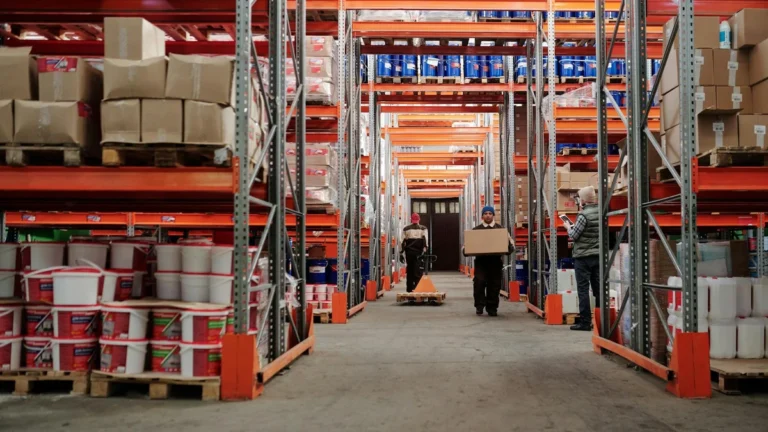
•Complex distribution logistics (must reach 50+ addresses)
•Storage requirements at centralized hub(s)
•Less location-level flexibility (all locations use same spec)
Best for: Chains with 15+ locations, standardized operations, centralized support infrastructure.
Distributed procurement (each location orders independently):
Advantages:
•Location-specific flexibility (adapt to local market preferences)
•No centralized storage needed
•Simpler logistics (direct supplier-to-location delivery)
Challenges:
•Loss of volume pricing (locations order 5,000-15,000 units vs chain ordering 500,000)
•Brand consistency risks (locations may order “similar but not identical” cups)
•Administrative multiplication (50 locations × procurement effort)
•Supplier relationship fragmentation (no strategic partnership)
Best for: Franchises with independent ownership, highly diverse location formats (airport kiosks, mall locations, standalone restaurants requiring different specs).
The key to choosing cups for chains depends on:
Implementation:
Tier 1: Supplier to Regional Hubs
•Supplier delivers bulk shipments to 2-5 regional hubs (depending on chain geography)
•Hub shipments: Full pallets, 50,000-200,000 cups per hub per delivery
•Delivery frequency: Monthly or bi-monthly (predictable schedule)
Tier 2: Regional Hub to Locations
•Hub distributes to 15-50 locations within region
•Location shipments: Based on consumption rate + storage capacity
– High-volume location: 8,000 cups every 2 weeks
– Medium-volume: 5,000 cups monthly
– Low-volume: 3,000 cups every 6 weeks
•Delivery vehicles: Chain-operated trucks (combine with food deliveries) or third-party logistics
Cost optimization:
•Supplier delivery cost: $500-800 per hub (vs $80-120 per individual location × 50 = $4,000-6,000)
•Hub-to-location: Consolidated with existing food distribution (marginal cost $15-30 per location)
•Total logistics: ~$1,200-1,800 vs $4,000-6,000 decentralized = 60-70% savings
For standard paper cups for chains, focus on:
Centralized inventory tracking:
•Cloud-based inventory system (each location reports current stock levels weekly)
•Consumption rate tracking (identifies trends, seasonal variations)
•Automated reorder triggers (when location drops below 2-week supply, hub ships replenishment)
•Forecasting algorithms (predict next quarter’s needs based on historical data + growth trends)
Implementation example:
•POS integration: POS systems report beverage sales (proxy for cup consumption)
•Automatic calculation: 1,200 beverages sold this week = 1,200 cups used
•Reorder trigger: Current stock 3,500 cups, consumption rate 1,200/week = 2.9 weeks supply → trigger reorder
•Hub fulfillment: Hub ships 5,000 cups (brings location to 6+ weeks supply)
ROI: Inventory management systems cost $2,000-8,000 implementation + $100-300/month per location, but prevent stock-outs (eliminate emergency purchases at 30-50% premium) and reduce excess inventory (free up $10,000-50,000 in working capital chain-wide).
The key to choosing cups for chains depends on:
Production capacity:
•Can supplier handle 500,000-2,000,000+ cup orders quarterly?
•Do they have backup production lines (risk mitigation if primary line fails)?
•Geographic production locations (domestic vs import affects lead times, tariffs, logistics complexity)
Quality management systems:
•ISO 9001 certification (quality management)
•FSSC 22000 or SQF (food safety certification)
•Third-party audits (BRC, FDA registration for US chains)
Supply chain reliability:
•Financial stability (credit check—ensures supplier won’t fail mid-contract)
•Material sourcing (multiple paperboard suppliers prevents material shortage issues)
•Contingency planning (backup facilities, disaster recovery protocols)
Account support:
•Dedicated account manager (single point of contact for 50-200 locations)
•Customer service responsiveness (24-48 hour response to inquiries)
•Problem resolution (warranty, defect replacement protocols)
Understanding available paper cups for chains requires attention to these factors:
Multi-supplier approach (large chains):
Primary supplier (70-80% of volume):
•Best pricing, dedicated capacity, long-term partnership
•Handles standard cups (12 oz, 16 oz workhorse sizes)
Secondary supplier (15-20% of volume):
•Competitive pricing pressure on primary supplier
•Handles specialty sizes (8 oz, 20 oz lower-volume SKUs)
•Backup capacity if primary supplier has production issues
Tertiary/regional suppliers (5-10% of volume):
•Quick-turn orders for new locations, seasonal designs
•Higher cost but faster turnaround (2-3 weeks vs 6-8 primary supplier)
•Geographic diversity (reduces shipping costs for remote locations)
Risk mitigation: If primary supplier faces production disruption (fire, equipment failure, material shortage), secondary suppliers can scale up to cover 40-60% of volume within 30-45 days.
❌ Mistake #1: Allowing individual locations to independently order “similar” cups, major to brand inconsistency
✅ Correct Approach: Implement master specification document with exact PMS colors, dimensions (±2mm tolerance), GSM, coating specs, standard paper cups for chains matter.All locations must use centralized procurement or approved supplier list with locked specifications. Color drift across locations confuses customers and signals poor quality control.
❌ Mistake #2: Ordering 6-12 months of inventory to maximize per-unit pricing, then changing brand design
✅ Correct Approach: Balance volume pricing with design flexibility—order 3-4 months supply (quarterly). Understanding cups for chains helps.This captures 35-45% of maximum volume discount while allowing seasonal design updates. Lock-in to 12-month supply prevents promotional cups, limited editions, or brand refreshes.
❌ Mistake #3: Decentralized procurement where 50 locations each order 10,000 cups at $0.22 each
✅ Correct Approach: Centralized bulk ordering—50 locations × 10,000 = 500,000 cups at $0.13 each saves $45,000 annually (41% reduction). Understanding different paper cups for chains helps.Implement hub-and-spoke distribution to reach all locations while maintaining bulk pricing advantage.
❌ Mistake #4: No quality control at receiving—locations accept shipments without inspection
✅ Correct Approach: Establish receiving inspection protocol—open random carton, inspect 10-20 cups for print quality, measure diameter with calipers (lid fit critical), test seam integrity with hot water. Understanding paper cups for chains helps.3%+ defect rate = reject shipment. Defects discovered after distribution to customers cost 10-20x more than catching at receiving.
MOQs for chains vary by size: Small chains (5-15 locations) face 50,000-100,000 unit MOQs through digital or flexographic printing ($0.18-0.24/cup). Understanding the paper cups for chains helps.Medium chains (16-50 locations) order 100,000-250,000 units ($0.14-0.20/cup). Large chains (51-200 locations) order 250,000-2,500,000 units ($0.09-0.16/cup). National chains negotiate annual contracts for 2,500,000+ units with quarterly production runs at $0.08-0.12 per cup. Volume pricing delivers 40-59% savings vs small-batch orders.
Consistency requires master specification documents detailing exact PMS color codes (not CMYK approximations), dimensional tolerances (±2mm), GSM (250 GSM typical), coating thickness (18-20 gsm), and approved supplier list, cups for chains matter.Pre-production sample approval compares new runs against master standards using spectrophotometer (ΔE <2.0 color variance). Centralized procurement from single supplier prevents specification drift. Receiving inspections at hubs/locations verify print quality, dimensions, and seam integrity before distribution.
Hub-and-spoke distribution is optimal for chains with 15+ locations: Supplier delivers bulk shipments (50,000-200,000 cups) to 2-5 regional hubs monthly/bi-monthly. Understanding cups for chains helps.Hubs distribute to 15-50 nearby locations based on consumption rates (high-volume locations receive 8,000 cups bi-weekly, low-volume receive 3,000 monthly). This model saves 60-70% on logistics vs direct-to-location delivery and enables volume pricing while accommodating varied location storage capacities.
Bulk ordering saves 35-59% depending on volume: 50,000 units cost $0.22/cup ($11,000), 500,000 units cost $0.13/cup ($65,000—41% savings), and 2,500,000+ units cost $0.09-0.10/cup ($225,000-250,000—55-59% savings). Understanding available paper cups for chains helps.Additional savings from long-term contracts include waived setup fees for design changes (save $1,500-3,000), priority production scheduling (no rush fees), and locked pricing protecting against material cost fluctuations (5-12% additional savings).
Centralized procurement is best for chains with 15+ locations, standardized operations, and centralized support—delivering maximum volume pricing (35-50% savings), brand consistency (single specification/supplier), reduced admin overhead, and strategic supplier relationships, available paper cups for chains matter.Distributed procurement suits franchises with independent ownership or highly diverse formats (airport kiosks, mall locations requiring different specs)—offering location flexibility but sacrificing volume pricing and risking brand inconsistency.
Implement cloud-based inventory tracking integrated with POS systems: Track consumption rates per location (1,200 beverages/week = 1,200 cups used), set reorder triggers (when stock drops below 2-week supply), and automate hub fulfillment (ships location-specific quantities), different paper cups for chains matter.High-volume urban locations receive 8,000 cups bi-weekly, medium locations 5,000 monthly, low-volume 3,000 every 6 weeks. This prevents stock-outs (eliminate 30-50% emergency purchase premiums) while avoiding overstock (frees $10,000-50,000 working capital chain-wide).
Chains require suppliers with: (1) Production capacity for 500,000-2,000,000+ quarterly orders with backup lines, (2) Quality certifications (ISO 9001, FSSC 22000/SQF food safety, BRC), (3) Supply chain reliability (financial stability, multiple material sources, contingency planning), (4) Dedicated account support (single contact for 50-200 locations, 24-48 hour response times), and (5) Geographic production locations balancing cost (import) vs lead time (domestic), different paper cups for chains matter.Large chains use multi-supplier strategies: primary supplier (70-80% volume), secondary (15-20% backup), tertiary regional suppliers (5-10% quick-turn).
Foodservice chains achieve significant competitive advantages through strategic paper cup procurement—centralized bulk ordering delivers 35-59% cost savings, master specifications ensure brand consistency across all locations, and hub-and-spoke distribution optimizes logistics while accommodating varied consumption rates.
Key Takeaways:
1.Understanding standard paper cups for chains helps.Centralize procurement for 15+ locations—achieve 35-50% volume pricing savings vs decentralized ordering
2.Understanding various paper cups for chains helps.Implement master specification documents—exact PMS colors, dimensions (±2mm), GSM ensure 100% brand consistency
3.Understanding various paper cups for chains helps.Use hub-and-spoke distribution—saves 60-70% on logistics vs direct-to-location delivery
4.Understanding the paper cups for chains helps.Order 3-4 month supply quarterly—balances volume pricing (35-45% of max savings) with design flexibility
5.Understanding various paper cups for chains helps.Establish quality control protocols—pre-production samples, receiving inspections prevent costly defects
Papacko partners with foodservice chains from 5 to 500+ locations, providing centralized procurement solutions with MOQs from 50,000 units, master specification management, hub-and-spoke distribution coordination, and dedicated account support, available paper cups for chains matter.Our systems ensure brand consistency, competitive volume pricing, and reliable quality across all your locations.
Chain buyers usually need supplier-scale validation, market context, export support, and branded packaging options that can stay consistent across locations.
Get in touch: