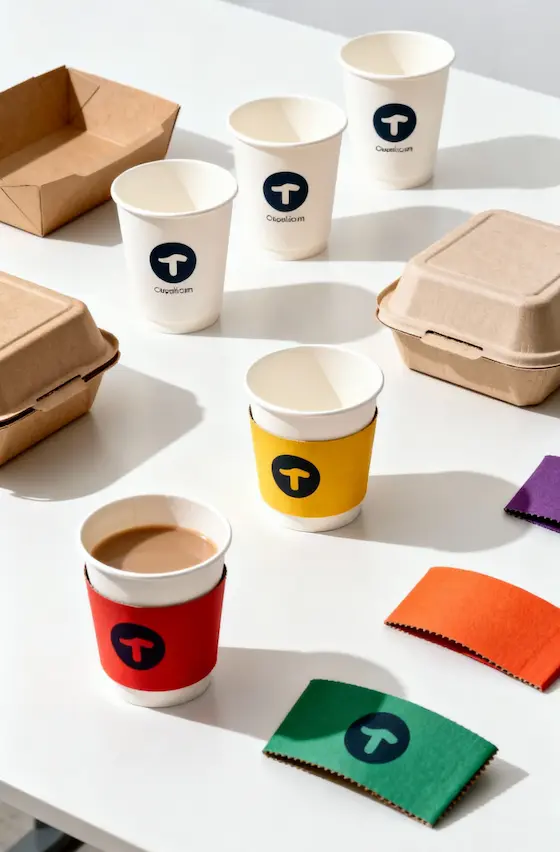
Ready to create your own branded paper cups or packaging?
Tell us your requirements — size, coating, printing, and destination — and our team will prepare a detailed quotation within 24 hours.

Last Updated: November 2025
Reading Time: 10 minutes
Author: Papacko Content Team
Your smoothie bar serves 200+ drinks daily, but you’re losing $50-80 per week to leaking cups, condensation rings on tables, and customer complaints about soggy sleeves. Meanwhile, the juice shop down the street uses cups that stay dry to the touch, never leak, and customers actually post photos of their colorful drinks on Instagram.
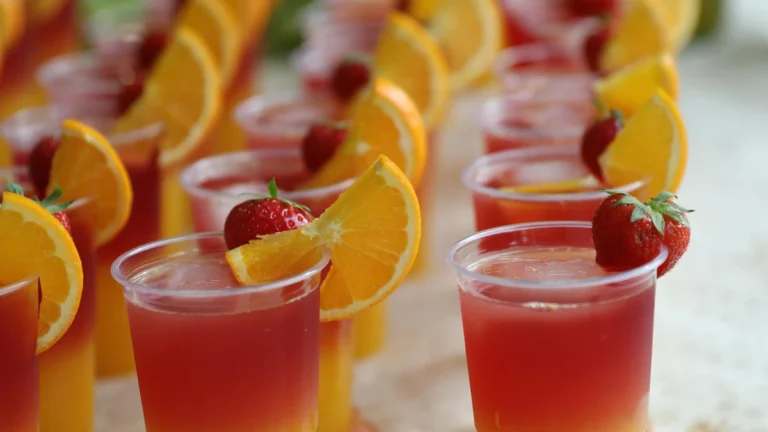
The right paper cups for smoothies aren’t just containers—they directly impact customer satisfaction, operational efficiency, and brand perception. Cold beverages present unique challenges: condensation buildup, structural weakening from moisture, straw puncture integrity, and temperature maintenance for 15-20 minutes of consumption time.
In this guide, you’ll learn:
•Optimal cup sizes for different smoothie and cold drink types
•Coating technologies that prevent condensation and leaking
•Straw compatibility and lid sealing requirements
•Material specifications for cold beverage durability
•Cost analysis: premium vs standard cold drink cups
•Common purchasing mistakes and how to avoid them
💡 Quick Takeaway: Smoothie cups require 12-24oz capacity (most popular: 16oz and 20oz), PLA or PE coating for moisture barrier, 250-300 GSM paperboard for structural integrity, and compatible dome lids for visibility.
Expect $0.08-0.14 per cup for quality cold drink cups vs $0.04-0.06 for hot drink cups.
Critical specs: exterior stays dry (no condensation transfer), withstands 30+ minutes without structural failure, straw puncture doesn’t cause leaking.
Best applications: Smoothie bars, juice shops, bubble tea cafes, frozen drink venues.
Smoothie and cold beverage cups face fundamentally different challenges than hot drink cups. The physics of cold liquids, ice content, and extended consumption time require specialized design considerations.
Condensation Formation: When cold liquid (35-45°F) meets room temperature air (70°F), moisture condenses on the cup exterior. Without proper barriers, this creates:
•Wet, slippery surfaces customers can’t hold comfortably
•Water rings damaging tables, counters, and paperwork
•Sleeve saturation (rendering them useless within 5-10 minutes)
•Structural weakening as moisture penetrates paperboard
Ice and Dilution: Smoothies and cold drinks contain 30-50% ice volume. As ice melts:
•Liquid volume increases by 15-25%
•Cup must maintain structural integrity despite moisture absorption
•Extended consumption time (20-30 minutes vs 10-15 for hot drinks)
Straw Penetration: Unlike hot drinks with sip lids, smoothies require straws that:
•Puncture through lid without tearing or creating leak points
•Maintain seal despite cup flexing and handling
•Accommodate thick smoothie consistency (requires 8-10mm diameter straws)
> 🎯 Industry Insight: Premium smoothie chains spend 65-85% more on cold drink cups than basic hot cups, but this investment reduces napkin usage by 40%, eliminates condensation complaints, and increases social media sharing (customers photograph colorful drinks in quality cups).
Selecting the right size range directly impacts inventory efficiency, customer satisfaction, and perceived value.
#### 12oz (Small)
•Best For: Kids’ smoothies, small juice portions, sample sizes
•Dimensions: 90mm top diameter × 115mm height
•Typical Use: Health food stores, gym post-workout drinks, café small sizes
•Ice + Liquid: 4oz ice + 8oz liquid
•Cost Range: $0.06-0.09 per cup
#### 16oz (Medium) ⭐ Most Popular
•Best For: Standard smoothie serving, bubble tea, iced coffee
•Dimensions: 90mm top diameter × 135mm height
•Typical Use: Mainstream smoothie size, satisfies 60% of customers
•Ice + Liquid: 6oz ice + 10oz liquid
•Cost Range: $0.08-0.12 per cup
•Why Popular: Balances portion size, cup cost, and customer expectations
#### 20oz (Large)
•Best For: Premium smoothies, meal replacement drinks, sharing portions
•Dimensions: 95mm top diameter × 155mm height
•Typical Use: Fitness chains, premium juice bars, “large” menu option
•Ice + Liquid: 8oz ice + 12oz liquid
•Cost Range: $0.10-0.14 per cup
#### 24oz (Extra Large)
•Best For: Jumbo smoothies, multiple fruit blends, high-protein shakes
•Dimensions: 95mm top diameter × 175mm height
•Typical Use: Bodybuilding supplement stores, premium pricing tiers
•Ice + Liquid: 10oz ice + 14oz liquid
•Cost Range: $0.12-0.16 per cup
Single-Size Operation (Simplified Inventory):
•Choose 16oz for most smoothie bars
•Reduces inventory complexity, speeds service
•Use pricing to manage portion perception ($6 vs $8 for same size)
Two-Size System (Most Common):
•16oz (Medium/Regular) + 20oz (Large)
•Covers 85% of customer preferences
•Clear upsell opportunity ($1.50-2 difference)
Three-Size System (Maximum Flexibility):
•12oz (Small) + 16oz (Medium) + 20oz (Large)
•Accommodates kids, health-conscious, and high-volume consumers
•Higher inventory cost but maximum market coverage
#### Cup Size Comparison Table
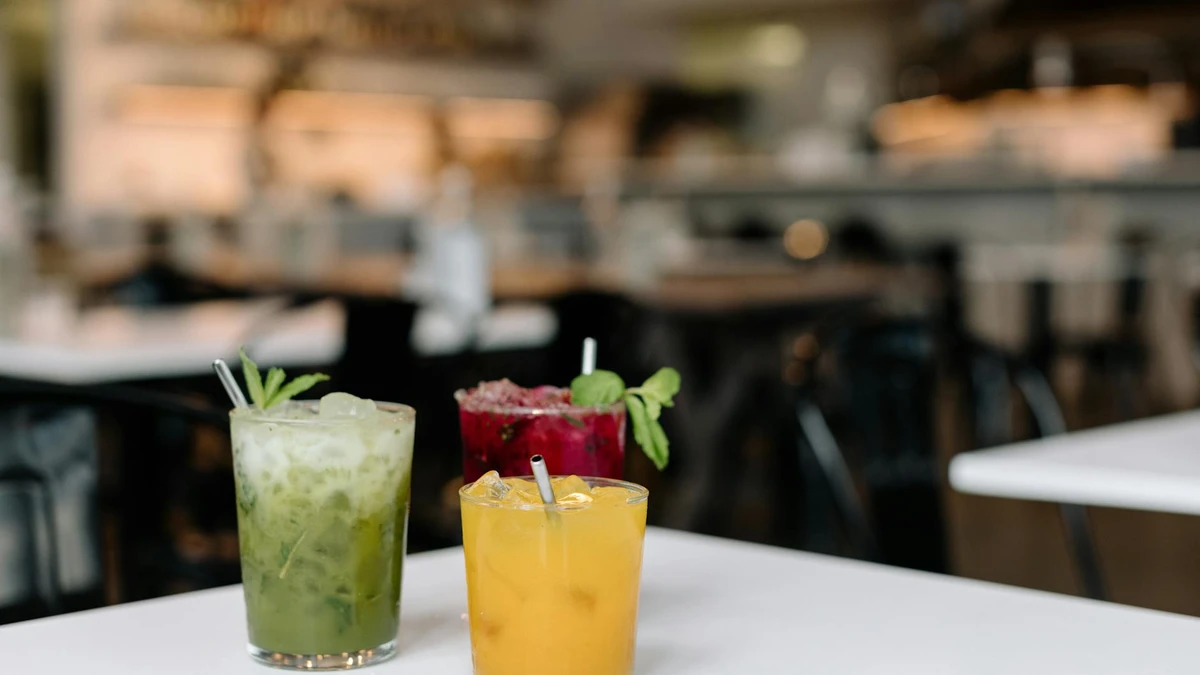
The coating determines whether your cup stays dry or creates a condensation mess. Understanding coating options is critical for smoothie operations.
What It Is: Plant-based bioplastic derived from corn starch or sugarcane, applied as 15-25gsm coating on both interior and exterior surfaces.
Performance Characteristics:
•Excellent moisture barrier on both sides
•Prevents exterior condensation transfer
•Interior prevents liquid seepage into paperboard
•Compostable in commercial facilities (not home composting)
•Temperature limit: 110°F maximum (perfect for cold drinks, fails for hot)
Cost Premium: 35-50% more than PE-coated cups
✅ Advantages:
•Premium eco-positioning for marketing
•Dry-to-touch exterior even after 30+ minutes
•Superior condensation resistance
•Commercial compostability certifications (BPI, EN 13432)
•Customer perception: “eco-friendly” brand alignment
❌ Limitations:
•Cannot be recycled in standard paper streams
•Requires commercial composting infrastructure (not available everywhere)
•More expensive than petroleum-based alternatives
•Cold-only (can’t use same cup for hot drinks)
Best For: Premium smoothie chains, health-focused brands, markets with composting access
What It Is: Petroleum-based plastic coating, 18-22gsm on interior surface, optional 12-15gsm on exterior.
Performance Characteristics:
•Industry standard for decades
•Reliable moisture barrier when properly applied
•Handles both hot and cold beverages
•Lower cost than PLA alternatives
Cost: Baseline pricing (PE cups = standard market rate)
✅ Advantages:
•Proven reliability across millions of units
•Works for both hot and cold drinks (inventory flexibility)
•Lower cost enables competitive pricing
•Available from all suppliers with no sourcing issues
❌ Limitations:
•Not recyclable in standard paper streams
•Petroleum-based (negative eco perception for some customers)
•Exterior condensation without double coating
•Environmental concerns limiting brand positioning
Best For: Budget-conscious operations, mixed hot/cold menus, markets without composting
What It Is: Newer coating technology using water-based polymers instead of plastic films.
Performance Characteristics:
•Theoretically recyclable with paper (infrastructure-dependent)
•Reduces plastic content by 60-80% vs traditional coatings
•Moisture resistance approaching PLA/PE performance
Cost Premium: 15-25% more than PE-coated
✅ Advantages:
•Recyclability potential (major eco advantage)
•Reduced plastic content
•Acceptable condensation resistance for most applications
•Better environmental story than PE
❌ Limitations:
•Newer technology with less track record
•Performance variability between suppliers
•Recycling infrastructure still limited in most regions
•Slightly less moisture resistance than PLA in extended testing
Best For: Brands prioritizing recyclability, markets with advanced recycling programs
#### Coating Performance Comparison
## Straw Compatibility and Lid Sealing
Smoothies require larger straws and dome lids for toppings, creating unique compatibility requirements.
Standard Cold Drink Straw: 6mm diameter
•Works for: Iced coffee, soda, juice
•Problem: Too narrow for thick smoothies
Smoothie Straw: 8-10mm diameter
•Required for: Blended drinks with fruit pieces, thick consistency
•Cup rim must support larger puncture without tearing
•Lid must have compatible hole size or cross-slit
Bubble Tea Straw: 12mm diameter
•Required for: Tapioca pearls, popping boba, jelly toppings
•Requires reinforced cup rim and specialized lids
•Not all smoothie cups support this diameter
Dome Lid (Most Common):
•Clear PET plastic showing drink color/toppings
•15-25mm dome height for whipped cream, fruit garnish
•Cross-slit or pre-cut hole for straw insertion
•Snap-fit or friction-fit sealing
•Cost: $0.03-0.06 per lid
Flat Lid with Straw Slot:
•Lower profile, less packaging volume
•No topping accommodation
•Slightly better seal integrity
•Cost: $0.02-0.04 per lid
Sip Hole Lid:
•Not recommended for smoothies (too thick to sip)
•Only works for very thin cold drinks
Friction Fit vs Snap Fit:
•Friction: Lid pressed onto cup rim, held by compression
– Lower cost, faster application
– More prone to loosening during transport
•Snap Fit: Lid has rim feature that clicks onto cup shoulder
– Superior seal reliability
– Slight cost premium, requires precise cup/lid sizing
Testing Seal Quality:
1.Fill cup 90% with liquid + ice
2.Apply lid firmly
3.Invert cup for 5 seconds
4.No leakage = acceptable seal
5.Shake vigorously for 10 seconds
6.Minimal leakage (<5 drops) = good seal
Cold beverage cups need specific material characteristics to maintain integrity throughout use.
250-280 GSM (Light Weight):
•Suitable for: Small sizes (12oz), short consumption time (<15 min)
•Cost advantage: 15-20% cheaper than heavier options
•Risk: May weaken with extended cold exposure
•Use when: Budget priority, fast turnover operations
280-300 GSM ⭐ Recommended Standard:
•Suitable for: 16-20oz sizes, 20-30 minute consumption
•Balanced: Durability + cost efficiency
•Industry standard: Most commercial smoothie cups use this range
•Structural integrity: Maintains rigidity despite condensation
300-320 GSM (Heavy Weight):
•Suitable for: 24oz+ sizes, thick smoothies, maximum fill
•Premium feel: Thicker walls perceived as higher quality
•Cost premium: 20-25% more than 280 GSM
•Use when: Premium positioning, customer experience priority
Seam Strength:
•Test: Squeeze cup firmly; seam should not split
•Poor quality: Visible glue line, can be separated with fingernail
•Good quality: Seamless appearance, ultrasonic or heat-sealed
Rim Curl:
•Purpose: Structural reinforcement, comfortable lip contact
•Standard: 3-4mm rolled rim
•Reinforced: 4-5mm for straw puncture resistance
Base Stability:
•Flat base required for stability (no wobbling)
•Base diameter ratio: 60-70% of top diameter
•Heat-sealed base prevents bottom leaking
#### Material Specification Comparison
## Cost Analysis: Premium vs Standard
Understanding total cost of ownership helps determine the right quality tier for your operation.
Budget Cold Drink Cups ($0.04-0.06 per cup):
•250 GSM paperboard
•PE coating (interior only)
•Basic white exterior
•No custom printing
•Requires separate sleeve for condensation
Standard Smoothie Cups ($0.08-0.12 per cup):
•280 GSM paperboard
•PLA or double PE coating
•Optional 1-2 color printing
•Dry exterior, no sleeve needed
•Compatible with standard dome lids
Premium Smoothie Cups ($0.12-0.16 per cup):
•300+ GSM paperboard
•PLA coating (commercial compostable)
•Full-color custom printing
•Premium aesthetics for Instagram sharing
•Reinforced construction
Sleeve Costs (If Required):
•Corrugated sleeve: $0.02-0.03 per unit
•Budget cup + sleeve = $0.06-0.09 total
•Premium cup (no sleeve needed) = $0.12-0.16
•Savings: $0.03-0.07 in sleeve cost, but premium cup still more expensive
Leakage and Remake Costs:
•Failed cup requiring drink remake: $3.50-6.00 loss (ingredients + labor)
•Failure rate comparison:
– Budget cups: 2-3% failure rate = $0.07-0.18 cost per cup sold
– Premium cups: 0.3-0.5% failure rate = $0.01-0.03 cost per cup sold
•Net savings: $0.06-0.15 per cup from reduced failures
Brand Perception Value:
•Customers photograph drinks in premium cups (free marketing)
•Estimated value: $0.15-0.25 per social media share
•Premium cup increases photo rate by 40-60%
•Effective marketing value: $0.10-0.20 per cup
Learn from these frequent errors to save time and money.
❌ Mistake #1: Choosing Hot Drink Cups for Cold Beverages
Problem: Hot cups prioritize heat resistance, not condensation prevention. Result: Wet, slippery exterior, customer complaints, table damage.
Correct Approach: Always specify “cold drink cups” or “smoothie cups” with exterior moisture barrier. Confirm coating is on both sides (interior + exterior).
❌ Mistake #2: Ignoring Lid Compatibility
Problem: Ordering cups from one supplier, lids from another, discovering they don’t fit properly. Result: Leaking, spills, wasted inventory.
Correct Approach: Purchase cups and lids from same supplier as matched set, or request samples for fit testing before bulk ordering. Verify dome height accommodates your topping style.
❌ Mistake #3: Underestimating MOQ Requirements
Problem: Finding perfect cup but minimum order is 50,000 units (3-4 months inventory for small operation). Result: Cash flow strain, storage issues.
Correct Approach: Calculate 6-8 weeks inventory as maximum comfortable order. For small operations (<500 cups/day), seek suppliers with 10,000-20,000 MOQ for custom printing, or use stock white cups initially.
❌ Mistake #4: Sacrificing Quality for Price
Problem: Choosing $0.05 cups over $0.10 cups to save money. Reality: Remake costs from failures ($4-6 each) eliminate all savings within first 100 cups.
Correct Approach: Calculate total cost including failure rate, not just unit price. Mid-tier quality ($0.08-0.12) typically offers best value for most operations.
❌ Mistake #5: Not Testing with Actual Smoothie
Problem: Cups perform well with water but fail with thick, acidic smoothies. Result: Discovering quality issues after receiving 30,000 units.
Correct Approach: Request samples (most suppliers provide 20-50 cups free). Test with your actual recipes, including fruit acids, dairy, ice ratios. Fill cup, wait 30 minutes, check for structural integrity and condensation.
Choosing the right supplier impacts quality consistency, delivery reliability, and long-term costs.
Quality Consistency:
•Request production run samples (not just prototype samples)
•Check batch-to-batch consistency (order 3 separate samples)
•Verify GSM weight matches specification (±5% tolerance acceptable)
•Test seam strength across multiple units
MOQ Flexibility:
•Small operations: Seek 10,000-20,000 cup minimum
•Medium: 30,000-50,000 acceptable with 60-90 day lead time
•Large: 100,000+ for best pricing, requires storage planning
Lead Time Reliability:
•Standard stock cups: 2-3 weeks delivery
•Custom printed: 4-6 weeks (add 2 weeks for first order due to printing setup)
•Rush capability: Confirm if available and cost premium
Certification Documentation:
•Food contact safety: FDA compliance, EU 10/2011 for exports
•Compostability: BPI certification (North America), EN 13432 (Europe)
•FSC or PEFC for sustainable forestry claims
Pricing Structure:
•Volume breaks: Expect 8-12% savings per 50,000 unit increase
•Payment terms: Net 30-60 for established relationships
•Shipping: Confirm if included or separate (can add 15-25% to unit cost)
🚩 Supplier won’t provide samples: Professional suppliers always offer samples. Refusal suggests quality issues.
🚩 No certification documentation: Food safety requires certifications. “Trust me” isn’t acceptable.
🚩 Pricing far below market (30%+ cheaper): Usually indicates substandard materials, incorrect GSM, or coating defects.
🚩 No MOQ stated upfront: Lack of transparency on minimums suggests unclear business practices.
🚩 Generic product photos: Professional suppliers have factory photos, process documentation. Stock images suggest trading company, not manufacturer.
Paper cups for smoothies are specialized cold beverage containers designed with moisture barriers on both interior and exterior surfaces to prevent condensation transfer, maintain structural integrity with ice and thick liquids, and accommodate dome lids and wide straws. They typically use 280-300 GSM paperboard with PLA or PE coating, sized from 12-24oz, optimized for 20-30 minute consumption duration and cold temperatures.
Smoothie cups use exterior coating (PLA or double-layer PE) that creates a moisture barrier preventing condensation from forming on the outside surface. Regular hot drink cups only coat the interior, so cold beverages cause moisture to condense on the uncoated exterior, creating wet, slippery surfaces. Premium smoothie cups stay dry to touch even after 30+ minutes of use, eliminating the need for sleeves.
16oz (473ml) is the most popular smoothie cup size, satisfying 60% of customers and accommodating a standard smoothie recipe with ice. 20oz (591ml) works for large or meal-replacement smoothies. 12oz (355ml) suits kids’ portions. Most smoothie operations use a two-size system (16oz + 20oz) to balance inventory simplicity with customer choice, covering 85% of preferences.
PLA-coated cups are commercially compostable, meaning they break down in industrial composting facilities within 90-180 days. However, they require access to commercial composting (not widely available) and cannot be home composted or recycled in standard paper streams. They’re more eco-friendly than PE-coated cups but not as simple as “just throw it away anywhere.” Best for markets with commercial composting infrastructure and brands prioritizing sustainability messaging.
Most manufacturers require 30,000-50,000 cups minimum for custom printing, though some suppliers offer 10,000-20,000 MOQ for small businesses at slightly higher unit pricing. Stock white cups with generic designs are available in smaller quantities (5,000-10,000 units). Custom printing adds 4-6 weeks to lead time for first orders due to printing plate setup.
PE-coated cups can technically handle both hot and cold, but it’s not optimal. Hot cups lack exterior moisture barrier needed for cold drinks (creating condensation problems), while cold cups may use PLA coating that can’t handle hot temperatures above 110°F. If you need versatility, choose PE-coated cups with double coating (interior + exterior), but expect compromises in both applications. Dedicated cups for each temperature perform better.
Quality smoothie cups (280-300 GSM with proper coating) maintain structural integrity for 30-45 minutes of normal use, even with full ice content. Budget cups (250 GSM, single coating) may weaken after 15-20 minutes as condensation penetrates the paperboard. Testing method: Fill cup with ice and liquid, wait 30 minutes—cup should still be rigid without buckling or softening when squeezed firmly.
Selecting the right paper cups for smoothies requires balancing condensation prevention, structural durability, cost efficiency, and brand positioning. The difference between a $0.06 budget cup and a $0.12 premium cup isn’t just price—it’s customer experience, operational efficiency, and brand perception.
Key Takeaways:
1.Paper cups for smoothies require exterior moisture barriers (PLA or double PE coating) to prevent condensation—regular hot drink cups will fail
2.16oz is the optimal size for most operations, with 20oz as large option; two-size system covers 85% of customer needs
3.280-300 GSM paperboard provides the best balance of durability and cost for standard smoothie service
4.Total cost of ownership (including failure rates and marketing value) matters more than unit price alone
5.Always test samples with your actual smoothie recipes before committing to bulk orders—30-minute structural integrity test is critical
For smoothie bars serving 200+ drinks daily, investing in quality cups ($0.10-0.14 range) pays for itself through reduced failures, eliminated sleeve costs, and enhanced customer satisfaction. Budget cups may save $0.04-0.06 per unit but typically cost more in remakes, complaints, and lost social media opportunities.
Explore more food packaging solutions:
•Paper Cups & Coffee Packaging
Papacko supplies export-ready smoothie cups to juice bars, cafes, and smoothie chains worldwide. Whether you need small trial orders or container-load shipments, we ensure consistent quality, proper condensation barriers, and on-time delivery.
Get in touch:
Last Updated: November 2025
Content Team: Papacko
Reviewed by: Supply Chain & Quality Department