Ready to create your own branded paper cups or packaging?
Tell us your requirements — size, coating, printing, and destination — and our team will prepare a detailed quotation within 24 hours.

Last Updated: November 2025
Reading Time: 9 minutes
Author: Papacko Content Team
Your paper food box order is ready to ship. Then customs holds it at the port because your supplier forgot one document. Delivery delayed 3 weeks. Clients furious.
Exporting food packaging involves navigating FDA regulations, FSC certifications, customs codes, and food safety standards across different countries. One missing certificate or incorrect HS code means your shipment sits in a warehouse while you scramble to fix paperwork.
In this guide, you’ll learn:
•Required certifications (FDA, FSC, BRC, ISO) for food contact packaging
•HS codes and customs documentation requirements
•Country-specific regulations (US, EU, Australia, Middle East)
•Shipping logistics and inspection procedures
•How to verify supplier compliance before ordering
💡 Quick Takeaway: FDA requires food contact notification for US imports. EU needs Declaration of Compliance (DoC). FSC certification is voluntary but often required by major buyers. Always request full documentation package from supplier before shipping.
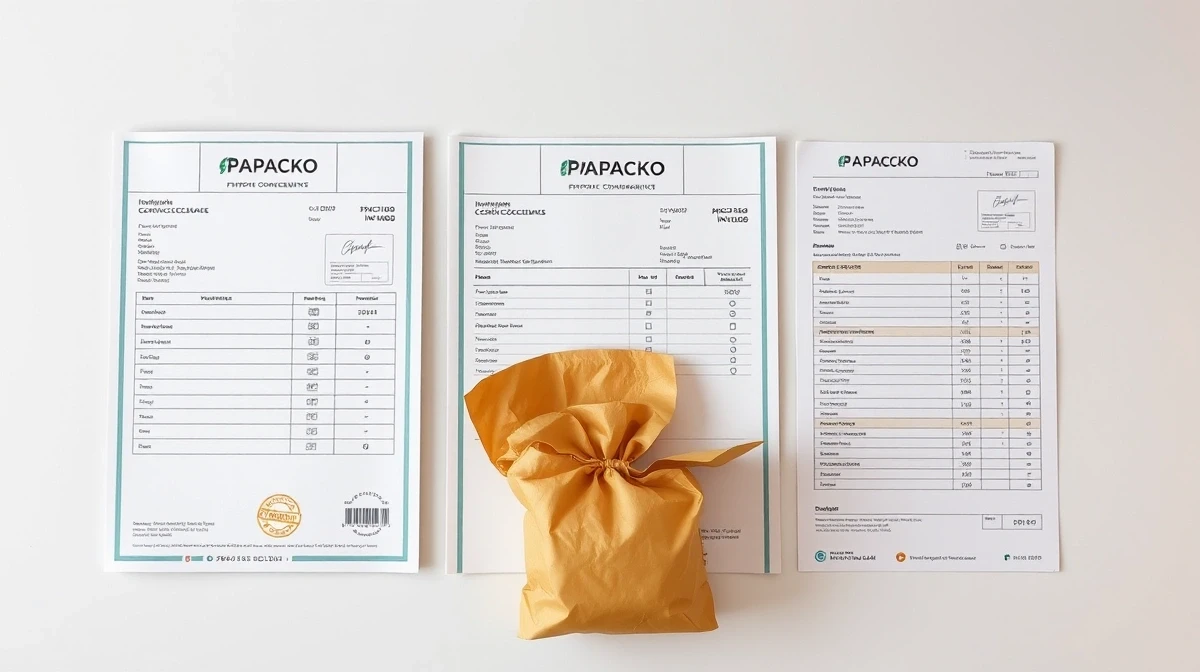
What It Is: FDA approval for materials that contact food, confirming safety for intended use.
When Required:
•All paper food boxes exported to United States
•Direct food contact packaging (boxes, bowls, cups, plates)
•Both coated and uncoated paper products
Documentation Required:
Food Contact Notification (FCN):
•Submitted by material manufacturer (paper mill, coating supplier)
•Confirms materials meet FDA Title 21 CFR regulations
•FCN number provided (e.g., “FCN 1234”)
Certificate of Compliance:
•Issued by packaging manufacturer
•States: “Product complies with FDA 21 CFR 176.170 (paper and paperboard in contact with aqueous and fatty foods)”
•Signed by authorized company representative
•Dated within 1 year
Migration Testing Reports:
•Lab analysis showing no harmful substance migration to food
•Testing per FDA guidelines (aqueous, acidic, fatty food simulants)
•Includes specific temperature and contact time parameters
How to Verify:
1.Request FDA compliance letter from supplier
2.Check FCN database at fda.gov/food (search by FCN number)
3.Verify manufacturer name matches supplier documentation
4.Ensure migration testing covers your intended food type
Cost: No cost for importer (supplier responsibility). Testing: $500-2,000 per product line if not already done.
Consequence of Non-Compliance: Shipment detained at US customs, potential rejection and return ($3,000-10,000+ in fees and losses).
What It Is: Forest Stewardship Council certification ensuring paper from responsibly managed forests.
When Required:
•Mandatory: Corporate buyers (Walmart, Starbucks, McDonald’s), government contracts
•Voluntary but recommended: Most export markets value FSC
•Marketing value: “Eco-friendly” positioning requires FSC (or equivalent PEFC)
Types of FSC Certification:
FSC 100%: All paper from FSC-certified forests (premium)
FSC Mix: Combination of certified and controlled sources (most common)
FSC Recycled: From recycled paper (limited for food contact due to contamination risk)
Documentation Required:
FSC Certificate:
•Certificate number (verify at info.fsc.org)
•Supplier’s FSC license number
•Valid dates (typically 5-year validity, annual audits)
•Scope (specific products covered)
Chain-of-Custody Documentation:
•Tracks paper from forest to finished product
•Invoice must state: “FSC Mix” or “FSC 100%” with license code (e.g., “FSC-C123456”)
•All intermediaries (paper mill, converter, printer) must have FSC certification
Transaction Certificate:
•Issued per shipment
•Links your order to FSC-certified materials
•Required for audit trail if you resell with FSC claims
How to Verify:
1.Check certificate number at info.fsc.org/certificate
2.Verify supplier name matches certificate
3.Confirm product type is within certification scope
4.Check expiration date
Cost: Supplier responsibility. FSC certification: $2,000-10,000 annually for supplier depending on size. No direct cost to buyer, but 15-25% premium on FSC products.
What It Is: Global food safety standard for packaging manufacturers, ensures hygiene and quality management.
When Required:
•Mandatory: EU market, UK retailers
•Highly valued: Australia, New Zealand, Canada
•Optional but recommended: US market (adds credibility)
BRC Standards for Packaging:
•BRC Global Standard for Packaging: Covers food safety, quality, operational criteria
•Grades: AA (highest), A, B, C, D (ungraded)
•Grade A or AA required by most major retailers
Documentation Required:
BRC Certificate:
•Certificate number and issue date
•Audit grade (AA preferred, A acceptable)
•Scope (specific product categories covered)
•Valid for 12 months (re-audited annually)
Audit Report (summary):
•Number of non-conformities
•Critical vs minor issues
•Corrective actions taken
How to Verify:
1.Request certificate copy from supplier
2.Check BRC directory (requires membership, or ask supplier for audit details)
3.Verify certificate date (must be current, within 12 months)
4.Confirm grade (A or AA for major buyers)
Cost: Supplier responsibility. BRC certification: $5,000-15,000 annually including audit fees. Premium passed to buyer: 5-10% higher unit cost.
ISO 9001 (Quality Management):
•Standard for quality management systems
•Ensures consistent production quality
•Required by many corporate buyers
•Voluntary but widely recognized
ISO 22000 (Food Safety Management):
•Food safety standard integrating HACCP principles
•Covers entire food supply chain including packaging
•Increasingly required for EU, Middle East exports
•Complements BRC certification
Documentation Required:
•ISO certificate with scope and validity
•Issued by accredited certification body
•Valid for 3 years with annual surveillance audits
Additional Documents (Market-Specific):
FDA Prior Notice (US):
•Required for all food contact materials entering US
•Submitted electronically via FDA Prior Notice System
•4 hours before arrival (truck), 24 hours (ocean), 4 hours (air)
•Includes: product description, manufacturer, shipper, intended use
Declaration of Compliance (DoC) (EU):
•Written statement that packaging meets EU Regulation 1935/2004
•Confirms migration testing, safety assessment
•Signed by manufacturer
•Template: “This product complies with EU Regulation 1935/2004 on materials intended to come into contact with food.”
Phytosanitary Certificate (Some Markets):
•Required for paper products in some countries (to prevent pest/disease)
•Not common for food packaging but check destination requirements
•Issued by agriculture department
Insurance Certificate:
•Proof of cargo insurance
•Required if “CIF” incoterm (Cost, Insurance, Freight)
Key Regulations:
•FDA Food Contact Notification (FCN) required
•FDA Prior Notice 4-24 hours before arrival
•FDA registration for facilities manufacturing food contact materials (supplier responsibility)
Import Duties: 0-5% for most paper food packaging (verify HTS code)
Documentation Package:
1.Commercial invoice with HS code 4823.69.0040
2.Packing list
3.Certificate of Origin
4.FDA compliance letter/FCN
5.FDA Prior Notice confirmation
6.Bill of Lading
Inspection Rate: FDA inspects 1-5% of food packaging shipments (risk-based)
Clearance Time: 1-3 days if documentation complete
Common Issues:
•Missing FDA Prior Notice = automatic hold
•Incorrect HS code = duty miscalculation, delay
•No FDA compliance letter = request for samples, testing ($2,000-5,000 delay cost)
Key Regulations:
•EU Regulation 1935/2004 (framework for food contact materials)
•EU Regulation 2023/2006 (good manufacturing practices)
•Declaration of Compliance (DoC) mandatory
•BRC certification highly recommended
Import Duties: 0-6% for paper packaging (verify TARIC code)
Documentation Package:
1.Commercial invoice with CN code
2.Packing list
3.Certificate of Origin (preferential if applicable)
4.Declaration of Compliance (DoC)
5.BRC certificate
6.Migration testing reports
7.Bill of Lading
Inspection Rate: Varies by EU country (2-10%)
Clearance Time: 2-5 days with complete documentation
Common Issues:
•Missing DoC = automatic hold
•Non-BRC suppliers face higher scrutiny
•Incorrect TARIC code = duty miscalculation
Key Regulations:
•Food Standards Australia New Zealand (FSANZ) Code
•Standard 1.4.3 (Articles and Materials in Contact with Food)
•BRC certification highly valued
Import Duties: 0-5% (most paper packaging duty-free under various FTAs)
Documentation Package:
1.Commercial invoice
2.Packing list
3.Certificate of Origin
4.Declaration of Compliance (similar to EU format)
5.BRC certificate (strongly recommended)
6.Bill of Lading
Biosecurity Screening: Australia has strict biosecurity (pest/disease prevention). Wood pallets must be ISPM-15 compliant (heat-treated, stamped).
Clearance Time: 2-4 days
Key Regulations:
•ISO 22000 increasingly required
•Halal certification if applicable (packaging not typically required, but some markets request)
•Gulf Cooperation Council (GCC) Standards
Import Duties: 5% standard for most countries
Documentation Package:
1.Commercial invoice (Arabic translation may be required)
2.Packing list
3.Certificate of Origin (attested by Chamber of Commerce and Embassy/Consulate)
4.ISO 22000 certificate
5.Declaration of Compliance
6.Bill of Lading
Attestation Requirement: Certificates must be legalized by exporting country’s Ministry of Foreign Affairs and destination country’s embassy/consulate (process: 1-3 weeks, $50-200 per document).
Clearance Time: 3-7 days (longer if attestation missing)
Common Incoterms for Packaging Exports:
EXW (Ex Works):
•Buyer arranges everything from supplier’s factory
•Lowest cost for seller, highest responsibility for buyer
•Buyer handles: export customs, freight, insurance, import customs
FOB (Free on Board):
•Seller delivers to port, loads on ship
•Buyer pays: ocean freight, insurance, import customs
•Most common for container shipments
CIF (Cost, Insurance, Freight):
•Seller pays ocean freight and insurance to destination port
•Buyer pays: import customs, local delivery
•Popular for buyers wanting less logistics management
DDP (Delivered Duty Paid):
•Seller handles everything to buyer’s door (including import customs, duties)
•Highest cost for seller, easiest for buyer
•Rare for large packaging orders due to complexity
Why It Matters: Incoterm determines who handles customs, who pays duties, who bears risk during transit. Specify clearly in purchase order.
Container Types:
•20ft Container: 28-30 cubic meters, 18-20 tons capacity
•40ft Container: 56-58 cubic meters, 26-28 tons capacity
•40ft High Cube: 66-68 cubic meters (most common for paper boxes, maximizes volume)
Loading Optimization:
•Paper boxes are volume-heavy, not weight-heavy (rarely hit weight limit)
•Proper stacking prevents crushing (heavier cartons on bottom)
•Dunnage bags between pallets prevent shifting
•Corner protectors prevent edge damage
Typical Loading (1000ml paper food boxes):
•Boxes per carton: 300-500 units
•Cartons per pallet: 20-30 cartons
•Pallets per 40ft HC: 20-24 pallets
•Total capacity: 120,000-360,000 boxes per container
Pallet Requirements:
•Heat-treated (ISPM-15 compliant) for most countries
•Plastic pallets alternative (no treatment needed, more expensive)
•Fumigation certificate if wood pallets not heat-treated
Pre-Shipment Inspection (PSI) (Optional but Recommended):
What It Is: Third-party inspection before shipment leaves factory
Inspection Scope:
•Product quality (dimensions, material, printing accuracy)
•Quantity verification (count cartons)
•Packaging condition (no damage)
•Documentation review (certificates present)
Inspection Companies: SGS, Intertek, Bureau Veritas
Cost: $300-500 per inspection day
Value: Catches issues before shipment (easier to resolve with supplier than after arrival)
When to Use: First orders, large orders (50,000+ units), new suppliers
Customs Inspection at Destination:
Inspection Types:
Documentary Inspection: Customs reviews paperwork (80-90% of shipments)
•Verifies: Invoice, packing list, certificates match declaration
•Time: 1-2 days if documents complete
Physical Inspection: Customs opens container (10-20% of shipments, risk-based)
•Checks: Product matches description, quantity accurate
•Time: 3-7 days (includes unpacking, repacking)
Laboratory Testing: Sample sent for testing (1-5% of shipments)
•Tests: Migration testing, material composition
•Time: 2-4 weeks (costly delay)
•Cost: $500-2,000 (importer pays)
Risk Factors Increasing Inspection Likelihood:
•First-time importer
•New supplier/country
•Discrepancies in documents
•High-value shipment
•Random selection
How to Reduce Inspection Risk:
•Complete, accurate documentation
•Established supplier with good track record
•Trusted importer status (if eligible)
•Pre-cleared certifications (FDA FCN, BRC on file)
Before placing export order, verify supplier can provide:
Certifications (Request copies):
•[ ] FDA Food Contact Notification (if exporting to US)
•[ ] FSC Certificate (number verified at info.fsc.org)
•[ ] BRC Certificate (Grade A or AA, current within 12 months)
•[ ] ISO 9001 certificate
•[ ] ISO 22000 certificate (if exporting to EU, Middle East)
Testing Reports:
•[ ] Migration testing (FDA-compliant or EU-compliant)
•[ ] Food safety testing (no harmful substances)
•[ ] Material composition report
Export Experience:
•[ ] References from clients in your target market
•[ ] Track record of successful customs clearances
•[ ] English-speaking export department (communication critical)
Documentation Capabilities:
•[ ] Can provide all required customs documents
•[ ] Familiar with attestation requirements (for Middle East)
•[ ] Can issue transaction certificates (for FSC)
Logistics:
•[ ] Freight forwarder partnerships (or you arrange your own)
•[ ] Experience with ISPM-15 pallet requirements
•[ ] Container loading optimization knowledge
Red Flags:
•Refusal to provide certificates for verification
•Vague answers about compliance (“We’re certified” without specifics)
•No previous export experience to your target market
•Poor communication (slow responses, unclear English)
•Unwillingness to arrange pre-shipment inspection
United States: 0-5% (most paper packaging under HS 4823.69 is duty-free or low duty)
European Union: 0-6% (verify TARIC code for specific product)
Australia/New Zealand: 0-5% (many items duty-free under FTA)
Middle East: 5% standard VAT
Example: $10,000 shipment to US
•Duty: $0-500 (depending on exact HS code)
•Customs brokerage fee: $150-300
•Port fees: $200-400
•Total import costs: $350-1,200
Always verify exact HS code for your product with customs broker to get accurate duty calculation.
Common Rejection Reasons:
•Missing FDA Prior Notice (US)
•No FDA compliance documentation
•Failed migration testing (if inspected and tested)
•Incorrect HS code with significant duty difference
Options:
Provide Missing Documents (most common resolution):
•Supplier sends corrected/missing certificates
•Customs releases shipment after review
•Delay: 1-3 weeks
Re-export:
•Shipment returned to origin country
•Cost: $2,000-5,000 (freight, storage, handling)
•Total loss if defect unfixable
Destruction:
•Destroyed at port (if unsafe or non-compliant)
•Cost: $500-2,000 (disposal fees)
•Total product loss
Prevention: Complete documentation review before shipping. Request supplier’s export documentation package 2 weeks before shipment.
For Importing: No, you don’t need personal FSC certification to import FSC-certified products.
For Reselling with FSC Claims: Yes, if you process, repackage, or label products with FSC logo/claims, you need FSC Chain-of-Custody certification.
Simple Resale (buying and reselling without processing): FSC not required, but you must:
•Keep transaction certificates from supplier
•Provide accurate FSC claims to customers (FSC Mix, FSC 100%, etc.)
•Not print FSC logo without trademark license
Cost to Get FSC Certification (if needed):
•Small businesses (under $1M): $2,000-5,000 initially, $1,000-2,000 annual
•Application and audit process: 3-6 months
Ocean Freight (most common):
•Asia to US West Coast: 14-21 days
•Asia to US East Coast: 28-35 days
•Asia to Europe: 25-35 days
•Asia to Australia: 12-18 days
•China to Middle East: 20-28 days
Air Freight (urgent orders):
•3-7 days to most destinations
•Cost: 5-8× ocean freight (use for samples or urgent small orders)
Total Timeline Including Customs:
•Ocean freight: Add 3-7 days for customs clearance and local delivery
•Total: 17-42 days door-to-door depending on route
Pro Tip: Order with 60-day lead time to avoid rush fees (production 30-40 days + shipping 20-30 days + buffer).
Yes, but with considerations:
Documentation: Each destination requires separate customs documents
•Separate commercial invoices
•Country-specific certificates (FDA for US portion, BRC for EU portion)
•Separate Bills of Lading per destination
Cost: Less efficient than single destination
•Multiple container loads (if volume splits don’t fill containers)
•Higher freight per unit (consolidated shipments cheaper)
•Multiple customs brokerage fees
MOQ Impact: Supplier may require higher total MOQ if splitting (e.g., 50k minimum becomes 100k total if split 50/50 to two countries)
When It Makes Sense:
•Testing multiple markets simultaneously
•Existing customers in multiple regions
•Volume justifies full containers to each destination
Better Approach for Most: Choose one primary market, establish volume, then expand to additional markets once first is successful.
What They Do: Licensed professionals who handle customs clearance on your behalf
•Submit import declarations to customs
•Calculate duties and taxes
•Coordinate inspections
•Handle documentation discrepancies
•Release shipment from customs
Do You Need One?:
•Recommended for first imports: Avoid costly mistakes
•Required by law in some countries: US technically allows self-clearance but impractical for most
•Cost-effective: Mistakes cost more than broker fees
Cost: $150-400 per shipment (small shipments), $300-800 for complex/high-value
How to Find: Freight forwarders typically include customs brokerage, or hire separately (search “licensed customs broker [city]”)
Request These Documents:
1.FDA compliance letter: Supplier’s statement that product meets FDA 21 CFR
2.FCN number: Food Contact Notification number from material supplier (paper mill/coating supplier)
3.Migration testing reports: Lab test results showing no harmful migration
Verification Steps:
Check FCN Database:
•Visit fda.gov/food/food-ingredients-packaging/food-contact-notifications
•Search FCN number
•Verify it covers paper/paperboard and intended use
Review Testing Reports:
•Tests should include aqueous, acidic, and fatty food simulants
•Testing temperature should match or exceed your intended use (e.g., 100°C for hot food)
•Contact time should match or exceed (e.g., 2 hours for hot food service)
•Lab should be accredited (ISO 17025)
Verify Manufacturer:
•FCN holder should be material manufacturer (paper mill or coating supplier), not just packaging converter
•Supplier should have documentation trail from FCN holder to finished product
Red Flags:
•“FDA approved” (FDA doesn’t “approve” packaging, they accept notifications)
•Refusal to provide FCN number or testing reports
•FCN for unrelated material (e.g., plastic film when you’re buying paper)
•Testing reports from non-accredited labs or internal testing only
Successful paper food box exports require thorough documentation and certification preparation before shipping.
Key Takeaways:
1.Certifications vary by market: FDA FCN (US), BRC + DoC (EU), ISO 22000 (Middle East), FSC (major buyers globally)
2.HS code accuracy is critical: Wrong code causes delays and incorrect duties (use 4823.69 for most food boxes)
3.Documentation completeness: Commercial invoice, packing list, certificates, Certificate of Origin required minimum
4.Supplier verification essential: Request all certificates before ordering, verify online (FSC, FDA FCN)
5.Pre-shipment inspection recommended: $300-500 prevents costly issues after arrival
6.Lead time planning: 60 days total (40 production + 20 shipping/customs) for first orders
7.Customs broker recommended: $150-400 fee prevents expensive mistakes
Work with suppliers who have proven export experience to your target market.
•Food Packaging Containers – Complete product range
•Sustainable Paper Packaging – FSC certification details
•Custom Printed Paper Bags – Export branding considerations
Papacko provides complete export documentation and compliance support for international food packaging shipments.
Why choose Papacko:
•Full certification suite: FDA, FSC, BRC, ISO 9001, ISO 22000 provided
•Export documentation service: Complete customs package prepared for your market
•Customs broker network: Partnerships in US, EU, Australia, Middle East
•Pre-shipment inspection: Third-party inspection arranged before shipping
•Attestation services: Consulate legalization for Middle East markets
•Incoterm flexibility: FOB, CIF, DDP available based on your preference
•Export experience: 15+ years shipping to 50+ countries
Food-box sourcing usually extends beyond compliance into structure, recyclability, takeaway performance, and the broader export-ready packaging mix suppliers can offer.
Get in touch:
•Request a Quote – Export pricing with full documentation
•Compliance Consultation – Verify requirements for your market
•Sample Shipment – Test import process before bulk order