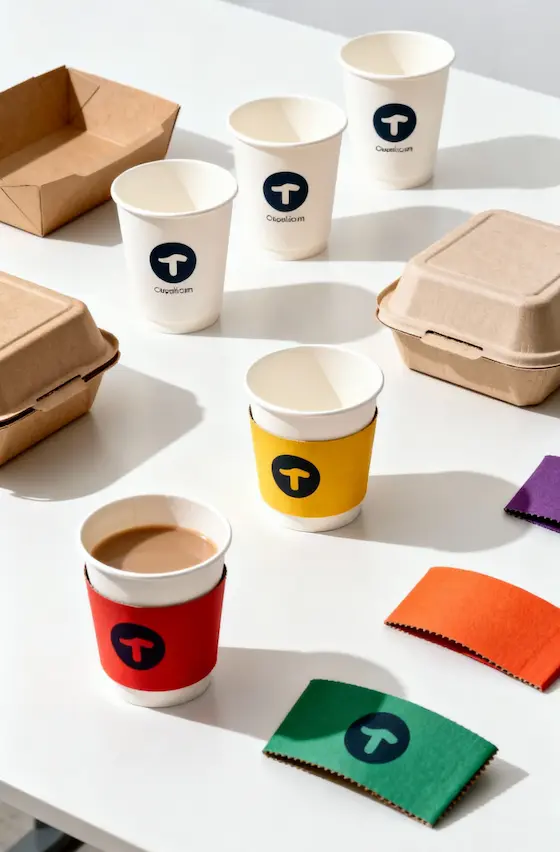
Ready to create your own branded paper cups or packaging?
Tell us your requirements — size, coating, printing, and destination — and our team will prepare a detailed quotation within 24 hours.


Last Updated: November 2025
Reading Time: 9 minutes
Author: Papacko Content Team
“Eco-friendly” packaging claims are everywhere. But most of them are greenwashing.
A cup labeled “biodegradable” still sits in landfills for decades. “Compostable” containers need industrial facilities that 95% of customers don’t have access to. And that “plant-based” coating? It’s still plastic, just made from corn instead of petroleum.
If you’re a café owner trying to make genuinely sustainable packaging choices, you’re drowning in misleading marketing and contradictory certifications.
In this guide, you’ll learn:
•Which sustainability claims are real (and which are marketing BS)
•Recyclable vs compostable vs biodegradable — what actually matters
•How to build a sustainable packaging strategy that works with your local infrastructure
•Cost-effective ways to reduce plastic without tripling your packaging budget
💡 Quick Takeaway: True sustainability depends on your local disposal infrastructure, not just packaging materials. A “compostable” cup that goes to landfill is worse than a recyclable paper cup that actually gets recycled.
Your customers care. Your community cares. And soon, regulations will force you to care too.
Customer Expectations:
•73% of consumers say they’d switch brands for better environmental practices
•Millennials and Gen Z actively avoid businesses with excessive plastic packaging
•Instagram-worthy sustainable packaging = free marketing
•Premium positioning: eco-conscious brands justify 10-15% higher prices
Regulatory Pressure:
•Single-use plastic bans: Active in 100+ cities (NYC, SF, Seattle, entire states like California)
•Extended Producer Responsibility laws: Businesses pay for packaging disposal
•Plastic bag taxes and fees: $0.05-0.25 per bag in many jurisdictions
•Future-proofing: More restrictions coming every year
Cost Reality Check:
Sustainable packaging costs 15-40% more upfront, but:
•Reduces waste disposal fees (especially in cities charging by volume)
•Qualifies for green business incentives and certifications
•Builds brand loyalty that increases customer lifetime value
•Prevents costly last-minute switches when regulations hit
Operational Benefits:
•Simplified supplier management (one sustainable source vs multiple plastic suppliers)
•Staff pride and retention (employees prefer working for eco-conscious brands)
•Community partnerships (local composting programs, sustainability initiatives)
🎯 Industry Benchmark: Cafés switching to FSC-certified paper packaging see average 8% sales increase from eco-conscious customers, offsetting the 20-25% packaging cost increase within 6-9 months.
Stop falling for vague claims. Here’s what matters:
Real Sustainability Criteria:
1.Material sourcing: Renewable resources, responsibly managed forests (FSC certification)
2.Manufacturing impact: Energy use, water consumption, chemical treatments
3.End-of-life options: Recyclable in existing infrastructure, compostable with access, or truly biodegradable
4.Local infrastructure: Your city can actually process the packaging as intended
Greenwashing Red Flags:
•“Biodegradable” without timeframe (100 years still counts as “biodegradable”)
•“Plant-based” coating (PLA is still plastic-like, needs industrial composting)
•“Eco-friendly” with no certifications
•“Recyclable” when local programs don’t accept it

What It Is: Paper from forests certified by Forest Stewardship Council, ensuring responsible forestry practices (replanting, biodiversity protection, community rights).
Best For:
•Cafés wanting credible sustainability claims
•Businesses targeting eco-conscious demographics
•Markets with strict sourcing requirements (EU, West Coast US)
✅ Real Sustainability Benefits:
•Forests are managed sustainably (trees replanted faster than harvested)
•Protects wildlife habitats and water sources
•Supports indigenous and local community rights
•Third-party verified (not self-certified)
•Widely recognized and trusted by consumers
❌ Limitations:
•15-25% more expensive than non-certified paper
•Still requires coating for waterproofing (FSC doesn’t address coatings)
•Doesn’t guarantee recyclability (depends on coating type)
•Requires ongoing chain-of-custody documentation for businesses
Cost Premium: +$0.02-0.05 per cup compared to standard paper
Certifications to Look For:
•FSC 100% (100% from FSC-certified forests)
•FSC Mix (mix of FSC and controlled sources)
•Avoid FSC Recycled if you want virgin fiber (recycled can have quality issues for food contact)
What It Is: Paper packaging with aqueous dispersion coating instead of plastic film (PE/PLA), allowing recycling in standard paper streams.
Best For:
•Markets with good paper recycling infrastructure
•Businesses wanting maximum recyclability
•Cold and lukewarm beverages (limited heat resistance)
✅ Real Sustainability Benefits:
•Truly recyclable with regular paper (no coating separation needed)
•No plastic in waste stream
•Lower carbon footprint than plastic-coated alternatives
•Works with existing municipal recycling programs
❌ Limitations:
•Limited heat resistance ( 140-160°F max, not suitable for boiling water)
•Higher cost (25-40% premium over PE-coated)
•Less grease resistance than plastic coatings
•Not suitable for long liquid contact times (packaging softens after 30-45 min)
•Limited supplier availability (newer technology)
Cost Premium: +$0.04-0.08 per container compared to PE-coated
Best Applications:
•Iced coffee, cold brew, smoothies
•Lukewarm tea (not boiling)
•Food containers with short service times
•Salad bowls, sandwich boxes
Testing Requirement: Always test with your actual beverages at actual temperatures before committing to bulk orders.
What It Is: Paper with polylactic acid (plant-based bioplastic from corn/sugarcane) coating, certified compostable under industrial conditions.
Best For:
•Businesses with access to commercial composting pickup
•Markets where composting infrastructure exists (San Francisco, Portland, Seattle, Toronto)
•Cold beverages and food (limited heat tolerance)
✅ Real Sustainability Benefits:
•Renewable resource (plants vs petroleum)
•Breaks down in industrial composting (90-180 days at 140-160°F)
•Reduces fossil fuel dependence
•BPI-certified options meet ASTM D6400 standards
❌ Serious Limitations:
•Will NOT compost in home bins (insufficient heat/time)
•Will NOT compost in landfills (no oxygen, wrong conditions)
•Cannot be recycled with paper or plastic (contaminates streams)
•Heat sensitive (softens above 140°F, unsuitable for hot coffee)
•30-50% more expensive than PE-coated
•Requires customer education (many throw in regular trash)
•Only 5% of US has access to commercial composting
Cost Premium: +$0.05-0.10 per container compared to PE-coated
Critical Question Before Choosing PLA:
“Does my city have commercial composting pickup that accepts BPI-certified packaging?”
If the answer is NO, PLA packaging will end up in landfills where it doesn’t decompose. In that case, recyclable paper is more sustainable.
What It Is: Paper packaging with minimal or no waterproof coating, designed for dry or semi-dry foods only.
Best For:
•Bakery items, pastries, cookies
•Dry sandwiches and wraps
•Pizza (boxes traditionally uncoated for breathability)
•French fries and fried foods (with brief service times)
✅ Real Sustainability Benefits:
•100% recyclable and biodegradable (no coating to separate)
•Lowest environmental impact
•Oftenpest option
•Composts easily (even in home bins)
❌ Limitations:
•Zero liquid resistance
•Limited grease resistance (absorbs oil)
•Softens quickly with moisture
•Not suitable for most beverages
•Short service time only
Best Practice: Use for items consumed immediately or dry goods, not for drinks or wet foods.
Calculate Your Baseline:
•Monthly packaging volume (cups, bowls, boxes, bags, napkins)
•Percentage that’s plastic vs paper vs other
•Current disposal method (trash, recycling, composting)
•Total monthly packaging cost
Example Audit Template:
| Item | Monthly Volume | Current Material | Disposal Method | Monthly Cost |
|---|---|---|---|---|
| Coffee cups (12oz) | 8,000 | PE-coated paper | Trash | $320 |
| Lids | 8,000 | PS plastic | Trash | $280 |
| Food boxes | 2,500 | PE-coated kraft | Trash | $175 |
| Plastic bags | 3,000 | HDPE plastic | Trash | $90 |
Identify Quick Wins:
•Items easiest to replace (bags → paper bags)
•Items with sustainable alternatives at similar cost
•Items you use least (start here for testing)
Call these three places:
1. Local waste management: “Do you accept paper cups with PE coating in recycling?”
2. Composting facilities: “Do you accept BPI-certified compostable packaging? What’s your pickup availability?”
3. Plastic recycling: “Which plastic types do you accept? (PS #6, PP #5, PET #1?)”
Key Questions:
•Is commercial composting available in our area?
•What paper products are recyclable in our stream?
•Are there fees or requirements for businesses?
•What volume minimums for pickup?
Infrastructure Reality Check:
•If NO composting → PLA is greenwashing, choose recyclable paper
•If NO PE-coated cup recycling → consider water-based coating
•If plastics ARE recycled → PP lids better than “compostable” that goes to trash
Don’t try to change everything overnight. Sustainable transitions work best in phases.
Phase 1 (Month 1-3): Low-Hanging Fruit
•Replace plastic bags with paper bags (easiest swap)
•Switch to FSC-certified paper cups (same functionality — minimal training)
•Add clear signage explaining sustainability efforts
Phase 2 (Month 4-6): Core Products
•Transition food containers to recyclable/compostable options
•Test water-based coating cups for cold drinks
•Implement reusable cup discount program
Phase 3 (Month 7-12): Advanced Optimization
•Eliminate remaining single-use plastics
•Partner with local composting services
•Achieve certification (Green Business, B Corp, etc.)
Budget Planning:
•Year 1: Expect 20-30% packaging cost increase
•Year 2: Optimizations and volume bring premium down to 10-15%
•Year 3+: Increased sales offset remaining premium
In-Store Signage:
•“Our cups are FSC-certified from responsibly managed forests”
•“Recyclable with paper” (only if verified with local program!)
•“Compostable in commercial facilities” (only if accessible!)
•“We’ve eliminated X lbs of plastic since [date]”
Digital Marketing:
•Instagram posts showing packaging arrival
•Stories highlighting sustainability partners
•Website page explaining your choices (builds trust)
•Email newsletter updates on progress
Staff Training:
•Why you’re making the switch (values alignment)
•How to explain to customers
•Proper disposal instructions
•Handling customer questions
Transparency Matters:
Don’t claim “100% sustainable” if you’re still using some plastic. Customers respect honesty about ongoing improvement more than perfection.
| Packaging Type | Standard Cost | Sustainable Alternative | Premium | Annual Impact (10k units/month) |
|---|---|---|---|---|
| 12oz Coffee Cup | $0.04 | FSC + Water-based: $0.06 | +50% | +$2,400/year |
| Plastic Cup Lid | $0.03 | PLA Lid: $0.05 | +67% | +$2,400/year |
| Food Container | $0.15 | FSC Kraft Box: $0.22 | +47% | +$8,400/year |
| Plastic Bag | $0.03 | Paper Bag: $0.08 | +167% | +$6,000/year |
| Total Annual | $30,000 | $49,200 | +64% | +$19,200/year |
Reality Check: For a café serving 300 drinks/day, switching to fully sustainable packaging adds about $1,600/month. If this represents 2% of revenue, you need 2% price increase or 2% sales volume growth to break even.
Offsetting Strategies:
•Price increase: Add $0.10-0.15 to drinks, communicate as “sustainability fee”
•Reusable discount: Offer $0.25 off for customers with reusable cups (15-25% opt in rate)
•Volume growth: Eco-conscious marketing attracts new customers
•Operational savings: Reduced waste fees, simplified supplier management
Problem: Business switches to expensive PLA packaging but local area has no commercial composting. All packaging still goes to landfill.
Result: Spent 40% more on packaging with zero environmental benefit. Customers feel misled when they discover the truth.
Solution: Before ordering ANY compostable packaging:
1.Call local waste management: “Do you have commercial composting pickup?”
2.Ask restaurants nearby: “Do you compost? With which service?”
3.Check BPI website for certified facilities in your area
4.Only proceed if you can access pickup within reasonable cost
Problem: Supplier says cups are “recyclable” but local recycling program doesn’t accept PE-coated paper cups.
Result: Customers put cups in recycling bins (contaminating stream), or feel deceived when they learn cups aren’t actually recycled.
Solution:
•Call your specific waste hauler with exact product specs
•Get written confirmation of what they accept
•Only market as “recyclable” if locally verified
•If uncertain, use accurate language: “Check with local recycling for acceptance”
Problem: Replace all packaging overnight without testing, staff training, or customer communication.
Result: Operational chaos, quality issues, customer complaints, financial strain.
Solution: Phased approach
•Month 1-2: Test samples with real use
•Month 3: Switch one product category (e.g., cups only)
•Month 4-5: Monitor feedback, adjust
•Month 6+: Expand to remaining categories
Problem: Focus only on material (PLA vs PE) without considering manufacturing, transport, disposal.
Example: Importing PLA cups from Asia vs sourcing recyclable paper locally.
•PLA: Plant-based but 8,000-mile shipping + no local composting = landfill
•Paper: PE-coated but locally made + actually recycled = better outcome
Solution: Consider full lifecycle:
•Material sourcing (renewable?)
•Manufacturing impact (energy, water, chemicals)
•Transportation distance (local vs imported)
•Actual end-of-life (not theoretical)
Compostable: Breaks down into nutrient-rich compost in specific conditions (usndustrial facilities at 140-160°F for 90-180 days). Requires BPI or TUV certification to verify.
Biodegradable: Eventually breaks down into natural elements — but no standard timeframe. Could mean 6 months or 500 years. Often meanfrequentlyss marketing term.
Recyclable: Can be reprocessed into new products through existing recycling infrastructure. Only true if your local program actually accepts and processes it.
Which is best? Depends on local infrastructure. Recyclable paper is better than compostable packaging if you don’t have composting access.
Yes, if you want credible sustainability claims and customer trust.
Benefits:
•Third-party verified (not self-certified)
•Widely recognized and trusted by consumers
•Ensures responsible forestry (biodiversity, replanting, community rights)
•Required by many corporate purchasing policies
•Protects against greenwashing accusations
Cost: 15-25% premium ($0.02-0.05 per cup)
ROI: Studies show eco-conscious customers spend 10-15% more and have higher loyalty. For most cafés, this offsets the premium within 6-12 months.
Not necessary if: You’re competing purely on price and customers don’t prioritize sustainability.
Depends on material:
Safe to microwave:
•Uncoated paper (plain kraft boxes, pizza boxes)
•Water-based coated containers (verify with supplier)
•Some PLA containers (check certification)
NOT safe to microwave:
•PE-coated paper (coating melts)
•Any packaging with metal elements
•Most PLA (softens above 140°F)
Always include microwave warnings on packaging or signage. Recommend customers transfer food to microwave-safe dish.
Don’t lead with sustainability for everyone. Different messaging for different customers:
Eco-conscious customers: Lead with FSC, compostable, plastic-free messaging
Price-sensitive customers: Focus on quality, functionality, taste
Convenience-focused customers: Emphasize leak-proof, sturdy, reliable
Subtle Integration:
•Use sustainable packaging without making it a big deal
•Small logo or certification mark (visible but not pushy)
•Let interested customers ask questions
Business framing: “We choose quality suppliers who happen to also prioritize sustainability.”
FSC-certified paper cups/boxes: Same as regular paper (50,000-100,000 units)
Water-based coating: Oftensometimeser MOQ (100,000+) due to specialized equipment
PLA compostable: Similar to regular (50,000-100,000)
Custom printed sustainable: Add 7-10 days to lead time for certification documentation
Cost tip: Many suppliers now offer sustainable options as standard (not custom), reducing or eliminating MOQ premiums.
Three approaches:
1. Absorb the cost (most common for small premium)
•Sustainable packaging = brand value
•Attract eco-conscious customers
•Justify slightly higher menu prices overall
2. Explicit sustainability fee ($0.10-0.25 per order)
•Transparent about costs
•Customers can opt out by bringing reusable
•Works in eco-conscious markets
3. Discount for reusable cups (recommended)
•Offer $0.25-0.50 off for customer’s own cup
•Reduces disposable use 15-30%
•Feels positive (reward) vs negative (fee)
Data: Cafés offering reusable discounts see 20-35% participation and overall positive sentiment.
Red flags:
•Vague terms (“eco-friendly”) with no specifics
•Self-certified (no third-party verification)
•No documentation available
•Refusal to answer specific questions
Verification checklist:
✅ Request FSC/BPI/TUV certificate numbers (verify on organization websites)
✅ Ask for material composition breakdown (percentage of recycled content, coating type)
✅ Request third-party lab test reports (migration testing, composting timeline)
✅ Check for chain-of-custody documentation (for FSC)
✅ Ask about manufacturing location and processes
Trustworthy suppliers:
•Provide certificates immediately
•Have detailed technical spec sheets
•Can explain why their product is sustainable (not just that it is)
•Connect you with other customers for references
Sustainable packaging isn’t about perfection. It’s about making the best choice with the infrastructure you actually have access to.
Key Takeaways:
1.Verify local disposal infrastructure before choosing packaging type — compostable only makes sense if commercial composting exists in your area
2.FSC-certified paper with recyclable coatings osometimesbeats “compostable” PLA if recycling works locally
3.Expect 20-40% cost premium initially, offset through price adjustment, volume growth, or operational savings
4.Transition gradually: test, train staff, communicate clearly, then expand
5.Transparency builds trust more than perfection — be honest about ongoing improvements
Your packaging choices matter. Make them based on facts, not marketing.
Explore more sustainable solutions:
•Food Packaging Containers – Complete range including sustainable options
•Paper Cups & Coffee Packaging – FSC-certified and recyclable cups
•Packaging Accessories – Eco-friendly lids, bags, and more
Papacko supplies FSC-certified and recyclable paper packaging to cafés and restaurants worldwide.
We help you navigate certifications, verify local recyclability, and implement sustainable packaging that actually works with your infrastructure.
Why choose Papacko:
•FSC-certified options: Verified sustainable forestry
•Local infrastructure matching: We help verify what’s recyclable in your area
•Flexible MOQ: Test sustainable options before full commitment (from 50,000 units)
•Transparent documentation: Full certificates and chain-of-custody paperwork
•Cost guidance: Realistic budgeting for sustainable transitions
•Expert consultation: Which option makes sense for your location and goals
Sustainable paper packaging only works as a strategy when materials, certifications, and disposal claims line up. These related guides help connect broad sustainability positioning with concrete cup and container decisions.
Get in touch:
•Request a Quote – Sustainable packaging pricing
•Free Sustainability Consultation – We help assess your options
•Sample Kit – Test FSC and water-based coating products