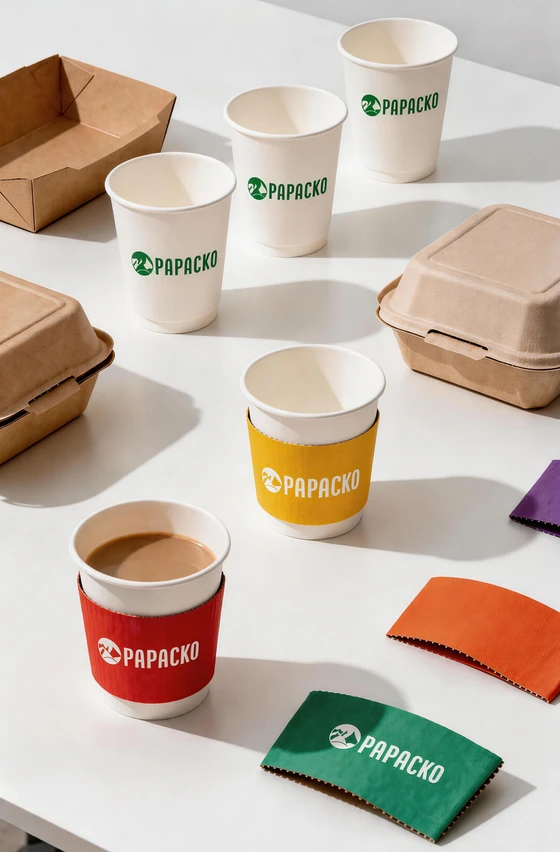
Ready to create your own branded paper cups or packaging?
Tell us your requirements — size, coating, printing, and destination — and our team will prepare a detailed quotation within 24 hours.


Last Updated: November 2025
Reading Time: 8 minutes
Author: Papacko Content Team
Every café wants to be “eco-friendly.” But slapping a green leaf logo on standard PE-coated cups doesn’t make them sustainable.
Real eco paper cups require FSC-certified paper, compostable or recyclable coatings, and certifications that prove environmental claims. If you’re considering custom-branded eco cups for your café, you need to know which certifications matter, which coatings actually work, and how much sustainable branding really costs.
In this guide, you’ll learn:
•FSC certification vs self-proclaimed “eco” cups
•PLA vs water-based coatings for different beverages
•Custom printing options and MOQ requirements
•True cost comparison: eco cups vs standard cups
•How to verify supplier sustainability claims
💡 Quick Takeaway: FSC certification proves responsible forestry. PLA coating needs commercial composting access. Water-based coating is recyclable but has heat limits. Match your eco cup choice to local disposal infrastructure, not marketing claims.
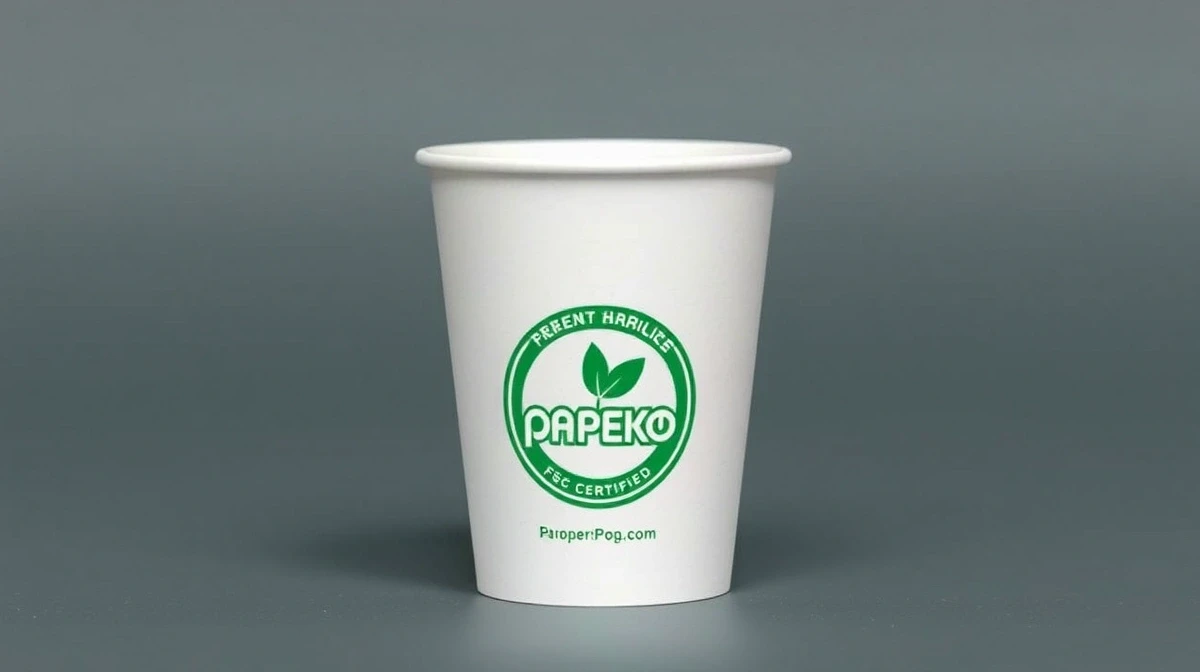
Not all “eco” claims are equal. Here’s what actually matters.
When evaluating eco cups, consider the following:
What It Is: Forest Stewardship Council certification ensures paper comes from responsibly managed forests with third-party verification.
Why It Matters:
•Forests replanted faster than harvested
•Protects wildlife habitats and water sources
•Supports indigenous and local community rights
•Chain-of-custody documentation tracks paper from forest to cup
•Globally recognized by consumers and corporate buyers
FSC Types:
•FSC 100%: All paper from FSC-certified forests (premium option)
•FSC Mix: Combination of FSC-certified and controlled sources (most common)
•FSC Recycled: From recycled paper (lower quality for food contact)
Cost Premium: 15-25% more than non-certified paper (+$0.02-0.05 per cup)
Red Flag: Suppliers claiming “sustainable” without FSC or equivalent certification (PEFC accepted in some markets).
For different eco paper cups, focus on:
The coating determines recyclability and compostability more than the paper itself.
PE Coating (Polyethylene) – Standard, Not Eco:
•Plastic film bonded to paper
•Not recyclable in most programs (coating can’t be separated)
•Not compostable
•Best heat resistance (up to 212°F)
•Lowest cost
•❌ Not eco-friendly despite supplier claims
PLA Coating (Polylactic Acid) – Compostable:
•Plant-based bioplastic from corn/sugarcane
•Industrially compostable (BPI/TUV certified)
•Requires commercial composting facility (140-160°F for 90-180 days)
•Heat limit: 140-160°F (not for boiling coffee)
•30-50% cost premium
•✅ Eco-friendly IF commercial composting available locally
Water-Based Coating – Recyclable:
•Aqueous dispersion coating
•Recyclable with regular paper
•No plastic in waste stream
•Heat limit: 140-160°F
•25-40% cost premium
•✅ Eco-friendly IF recycling program accepts it
Double-Wall or Uncoated – Specialized:
•Double-wall: Two paper layers, air gap insulation, may still have inner coating
•Uncoated: Rare for beverages, only for very short service times
•not suitable for liquids
⚠️ Critical: Call your local waste management and ask: “Do you accept PLA-coated cups in composting?” and “Do you recycle water-based coated paper cups?” Only choose coatings your local infrastructure can actually process.
Sustainable cups deserve sustainable branding methods.
When evaluating different eco paper cups, consider the following:
Flexographic Printing (Most Common):
•Water-based or UV-cured inks
•1-6 colors (full color possible but expensive)
•Good for solid colors and simple designs
•MOQ: 50,000-100,000 cups
•Setup cost: $400-800 per design
•Lead time: 35-45 days (first order), 25-30 days (reorders)
•Cost: +$0.02-0.04 per cup for 2-color printing
Digital Printing (Lower MOQ):
•Full color, photo-quality possible
•More design flexibility
•MOQ: 10,000-25,000 cups (much lower than flexo)
•Setup cost: $200-400
•Lead time: 20-30 days
•Cost: +$0.04-0.08 per cup (more expensive per unit)
•Best for: Testing designs before committing to large flexo orders
Screen Printing:
•High-quality, vibrant colors
•Limited colors (1-3 most times)
•MOQ: Similar to flexographic
•Best for: Premium branding, metallic inks
•Cost: +$0.03-0.06 per cup
Sleeve Labels (No Cup Printing):
•Printed paper sleeves on plain eco cups
•MOQ: 5,000-10,000 sleeves (much lower)
•Full color, easy to change designs
•Cost: $0.03-0.06 per sleeve
•Lead time: 10-15 days
•Best for: Frequent design changes, testing, small cafés
For eco cups, focus on:
Effective Eco Messaging:
•Include FSC logo (must be licensed from FSC)
•State coating type: “PLA Compostable” or “Recyclable”
•Disposal instructions: “Compost commercially” or “Recycle with paper”
•Avoid greenwashing terms: “biodegradable,” “earth-friendly” without specifics
Visual Design Tips:
•Earth tones (greens, browns, natural colors) signal eco positioning
•Minimize ink coverage to reduce environmental impact (ironic but true)
•Use negative space (unprinted paper shows natural brown kraft)
•Simple, clean designs print better and cost less
Regulatory Requirements:
•FSC logo requires FSC trademark license ($500-1000/year for small businesses)
•BPI logo requires product certification
•“Compostable” claims require certification (BPI, TUV, OK Compost)
•Misleading environmental claims = legal liability (FTC Green Guides in US)
Eco cups usoftenave higher MOQs than standard cups due to specialized materials.
When evaluating different eco paper cups, consider the following:
Standard MOQ by Cup Size:
•8oz: 50,000-100,000 units
•12oz: 50,000-100,000 units (most popular, easiest to source)
•16oz: 50,000-100,000 units
•Mixed sizes: Some suppliers allow mixing (e.g., 30k of 12oz + 20k of 16oz = 50k total)
Custom Printed:
•Flexographic: 50,000-100,000 per design per size
•Digital: 10,000-25,000 per design per size
•Additional designs: Usuaoftene MOQ per design
Stock (Unprinted) Eco Cups:
•MOQ: 10,000-25,000 (lower because no printing setup)
•Add branded sleeves separately
Lead Times:
•Stock eco cups: 15-20 days
•Custom printed (first order): 40-50 days (includes FSC documentation processing)
•Reorders: 28-35 days
•Rush orders: +20-30% cost, 20-25 days minimum
For eco cups, focus on:
| Cup Type (12oz) | Unit Cost | Annual Cost (10k/month) | Premium vs Standard |
|---|---|---|---|
| Standard PE-coated | $0.04 | $4,800 | Baseline |
| FSC + PE coating | $0.045 | $5,400 | +13% |
| FSC + PLA (compostable) | $0.055 | $6,600 | +38% |
| FSC + Water-based (recyclable) | $0.06 | $7,200 | +50% |
Custom Printing Adds:
•2-color flexographic: +$0.02-0.04 per cup
•Full-color digital: +$0.04-0.08 per cup
•Setup fee: $400-800 (one-time per design)
Total Example (12oz FSC + PLA + 2-color print):
•Base cup: $0.055
•Printing: $0.03
•Total: $0.085 per cup
•For 10,000 cups/month: $10,200/year vs $4,800 for standard = +$5,400 annual increase
Offsetting the Cost:
•Menu price increase: +$0.10-0.15 per drink (customers accept for “eco” positioning)
•Reusable cup discount: $0.25-0.50 off (15-30% take rate reduces disposable use)
•Marketing value: Eco positioning attracts higher-spending customers
•Regulatory compliance: Avoids future costs from plastic bans
Many suppliers claim “eco-friendly” without proof. Here’s how to verify.
When evaluating standard eco paper cups, consider the following:
For FSC Certification:
✅ FSC certificate number (verify at info.fsc.org)
✅ Chain-of-custody documentation
✅ Supplier’s FSC trademark license (if they print FSC logo)
✅ Recent audit report (annual or semi-annual)
For Compostability (PLA):
✅ BPI certification number (verify at bpiworld.org)
✅ TUV OK Compost certification (European standard)
✅ ASTM D6400 compliance test results
✅ Migration testing (food safety)
For Recyclability (Water-Based):
✅ Material composition breakdown (percentage of coating)
✅ Third-party recyclability testing
✅ Confirmation from local recycling programs (supplier should help with this)
When evaluating various eco paper cups, consider the following:
❌ “Eco-friendly” with no certifications: Marketing only
❌ “Biodegradable” without timeframe: Meaningless (everything biodegrades eventually)
❌ Self-certified: No third-party verification
❌ Refusal to share documentation: Probably lying
❌ “Compostable” without BPI/TUV: Won’t actually compost in facilities
❌ FSC logo without license: Trademark violation, supplier not authorized
The key to choosing standard eco paper cups depends on:
1.“Can you provide your FSC certificate number for verification?”
2.“What’s the coating type and weight (gsm)?”
3.“Do you’ve BPI certification for compostability claims?”
4.“Can you connect me with other customers in [my city] for references?”
5.“What’s your policy if cups don’t perform as specified?”
6.“Do you provide disposal guidance for our customers?”
Depends on coating:
PLA-coated: Only up to 140-160°F (warm coffee okay, not boiling)
Water-based: Up to 140-160°F (same limit)
PE-coated FSC: Up to 212°F (but not truly eco due to plastic coating)
For boiling-hot coffee (185-205°F), you need:
•Double-wall FSC cups with inner PE coating (more eco than single-wall PE)
•Heavier water-based coating (limited availability, ask suppliers)
•PLA with higher heat tolerance (emerging technology, limited)
Most eco-conscious cafés serve coffee at 160-170°F (still hot, safe for PLA/water-based).
For different eco paper cups, focus on:
If buying FSC-certified cups: No certification needed for your business. Supplier handles it.
If printing FSC logo on cups: You need FSC trademark license
•Small cafés (under $1M revenue): ~$500-750/year
•Medium businesses: $1,000-2,000/year
•Application process: 4-6 weeks
Worth it?: Yes if customers value sustainability and you want to highlight FSC. No if using eco cups without printing FSC logo (supplier can still provide FSC cups, you just can’t market it prominently).
The key to choosing standard eco paper cups depends on:
Flexographic printing: 50,000 minimum (standard)
Digital printing: 10,000-25,000 (lower MOQ but higher per-unit cost)
Workaround for smaller cafés:
•Order 10,000 plain FSC eco cups (lower MOQ)
•Order 5,000-10,000 custom-printed sleeves (separate, lower MOQ)
•Total investment: $600-900 vs $2,500+ for custom printed cups
Break-even: Custom printing makes sense at 5,000+ cups/month. Below that, sleeves are more cost-effective.
NO for beverages:
PLA-coated: Softens above 140°F (microwave = 180-200°F)
Water-based: Limited heat resistance, may soften
Any cup with metal inks: Never microwave
Recommendation: Advise customers to transfer beverages to microwave-safe containers. Eco paper cups are for serving, not reheating.
PLA-coated cups:
•Commercial composting ONLY (not home compost, not trash, not recycling)
•Provide clear signage: “Compost in green bin” (if available)
•If no commercial composting: Goes to trash (unfortunately)
Water-based coated cups:
•Recycle with paper/cardboard
•Rinse if heavily soiled (coffee residue okay)
•Provide signage: “Recycle with paper”
FSC + PE coating:
•Usuallmost times (most recycling programs reject PE-coated)
•Some specialized facilities accept (very rare)
Customer communication is critical: Put disposal instructions ON the cup if possible (during design phase).
Yes, IF:
•FSC-certified (ensures responsible forestry)
•Disposed correctly (PLA composted, water-based recycled)
•Local infrastructure exists to process them
•Replaces plastic cups or non-certified paper
No, IF:
•PLA cups go to landfill (no better than PE)
•FSC cups use PE coating and go to trash (only marginally better)
•Used to greenwash while still using plastic lids/straws
Biggest impact: Combine eco cups with:
•Eco lids (fiber lids or PLA)
•Reusable cup program (25% reduction in disposables)
•Staff training on disposal
•Customer education
Eco cups alone aren’t enough. Holistic approach matters more.
The key to choosing available eco paper cups depends on:
UsuS with conditions:
Same coating, same certification, same print design: Most suppliers allow
•Example: 30k of 12oz + 20k of 16oz = 50k total MOQ met
•Saves costs vs ordering separately
Different designs: Usually NO design requires separate MOQ
•Printing setup cost per design
Different coatings: Usually NO
•PLA most timeser-based are different production runs
•Order separately
Best practice: Order 2-3 core sizes (8oz, 12oz, 16oz) in same design to maximize efficiency and meet MOQ.
Eco paper cups are worth the investment for cafés serious about sustainability and brand positioning.
Key Takeaways:
1.FSC certification is non-negotiable for credible eco claims
2. Choose coating (PLA vs water-based) based on local disposal infrastructure, not marketing
3.Custom printing requires 50k+ MOQ for flexographic, 10k+ for digital
4. Expect 30-50% cost premium, offset with higher menu prices and reusable cup programs
5.Verify supplier claims with FSC certificate numbers and BPI certification
6.Educate customers on proper disposal (on-cup instructions work best)
Start with FSC certification and add compostable/recyclable coating based on what your city can actually process.
•Paper Cups – Complete range including eco-certified options
•Sustainable Paper Packaging – Full eco packaging solutions
•Coffee Cup Lids – Eco-friendly lid options
Papacko supplies FSC-certified eco paper cups with PLA and water-based coating options for sustainable cafés.
Why choose Papacko:
•FSC-certified: Chain-of-custody documentation provided
•Multiple coating options: PLA compostable and water-based recyclable
•Custom printing: Flexographic and digital, MOQ from 10,000 units
•Free disposal guidance: We help you communicate proper disposal to customers
•Local infrastructure matching: We verify what works in your area
•Sample program: Test different coatings before bulk ordering
Eco paper cup decisions usually combine certification, disposal claims, and branding. The pages below move from broad eco-cup positioning into recycling law, hot-drink performance, and compostable alternatives.
Get in touch:
•Request a Quote – Eco cup pricing with custom printing
•Free Sample Kit – Test PLA vs water-based coatings
•FSC Documentation Support – We help with trademark licensing