Ready to create your own branded paper cups or packaging?
Tell us your requirements — size, coating, printing, and destination — and our team will prepare a detailed quotation within 24 hours.

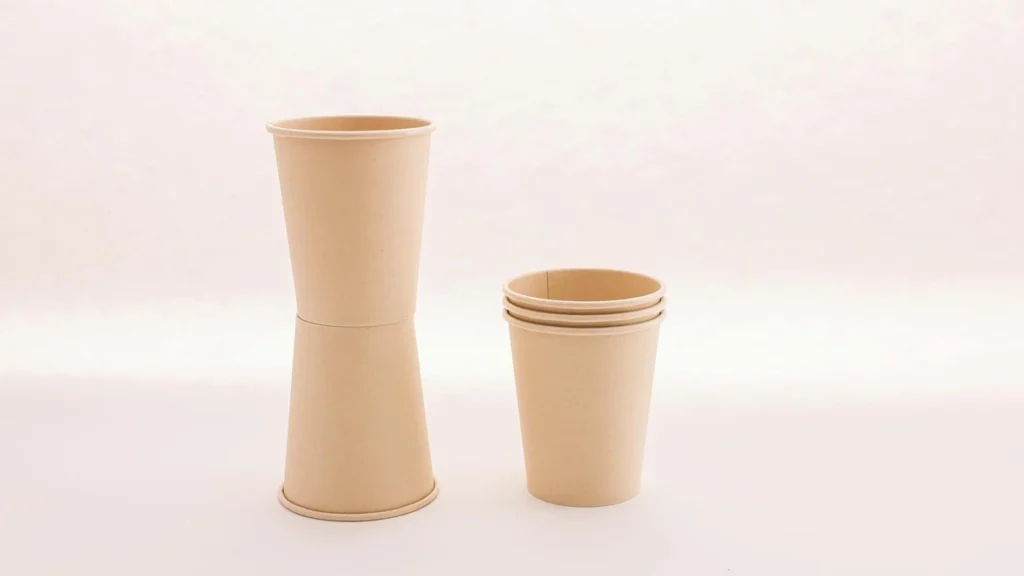
Compare PLA cups and PE cups by compostability, recycling limits, heat performance, cost, certifications, and best uses for cold drinks, cafes, and foodservice.
Last Updated: April 2026
Reading Time: 8 minutes
Author: Papacko Content Team
“Our cups are compostable!” But when you check the specs, they need commercial composting at 140-160°F for 90 days. Your city doesn’t have that facility.
This is the PLA vs PE dilemma every café and restaurant faces. PLA cups promise sustainability but need specific disposal infrastructure. PE cups work everywhere but contribute to plastic waste. Both have paper exteriors. Both hold coffee. But they’re radically different in environmental impact, performance, and cost.
In this guide, you’ll learn:
•Material composition: what PLA and PE actually are
•Heat resistance limits for hot beverages (critical differences)
•True compostability vs recyclability
•Cost comparison (30-50% difference)
•When to choose each coating based on local infrastructure
PE = Polyethylene: A petroleum-based plastic film laminated to paperboard.
Construction:
•Outer layer: Paper (180-280gsm depending on cup size)
•Inner coating: PE plastic film (15-25gsm, food-grade LDPE or HDPE)
•Bonding: Heat-laminated to paper at manufacturing
How It Works:
•PE coating creates waterproof barrier
•Prevents liquid from soaking through paper
•Heat-sealed seams make cup leak-proof
•Plastic prevents paper from breaking down when wet
Food Safety: Verify the finished cup’s food-contact compliance for the intended beverage, temperature and contact time.
Heat Resistance:
•Maximum temperature: 212°F (100°C) – can handle boiling water
•Ideal for: Hot coffee (185-205°F), tea, hot chocolate, soups
•No softening or melting at typical serving temperatures
•Structural integrity maintained throughout service time
Durability:
•Strong liquid barrier, no leaking
•Won’t soften or degrade during use
•Can sit for hours without performance loss
•Excellent for delivery and takeout (maintains quality during transport)
Shelf Life:
•2-3 years if stored properly (cool, dry, out of direct sunlight)
•No degradation in storage
•Doesn’t absorb moisture from air
Cost: Baseline reference ($0.04-0.05 per 12oz cup)
The Problem with PE:
❌ Not Recyclable: Paper recycling facilities can’t separate PE coating from paper fiber. Cups contaminate paper recycling streams.
❌ Not Compostable: PE is petroleum plastic – takes 20-30 years to break down in landfills, leaves microplastics.
❌ Fossil Fuel-Based: Production uses crude oil, contributes to carbon emissions.
❌ Waste Stream: 99% of PE cups end up in landfills or incinerators.
The Reality: Despite paper exterior, PE cups behave like plastic waste environmentally.
Where PE Makes Sense:
•Areas with no composting infrastructure
•Very hot beverages (over 170°F consistently)
•Long service times (soup containers, meal delivery)
•Budget-constrained operations where sustainability isn’t priority
•When customers dispose in mixed waste anyway
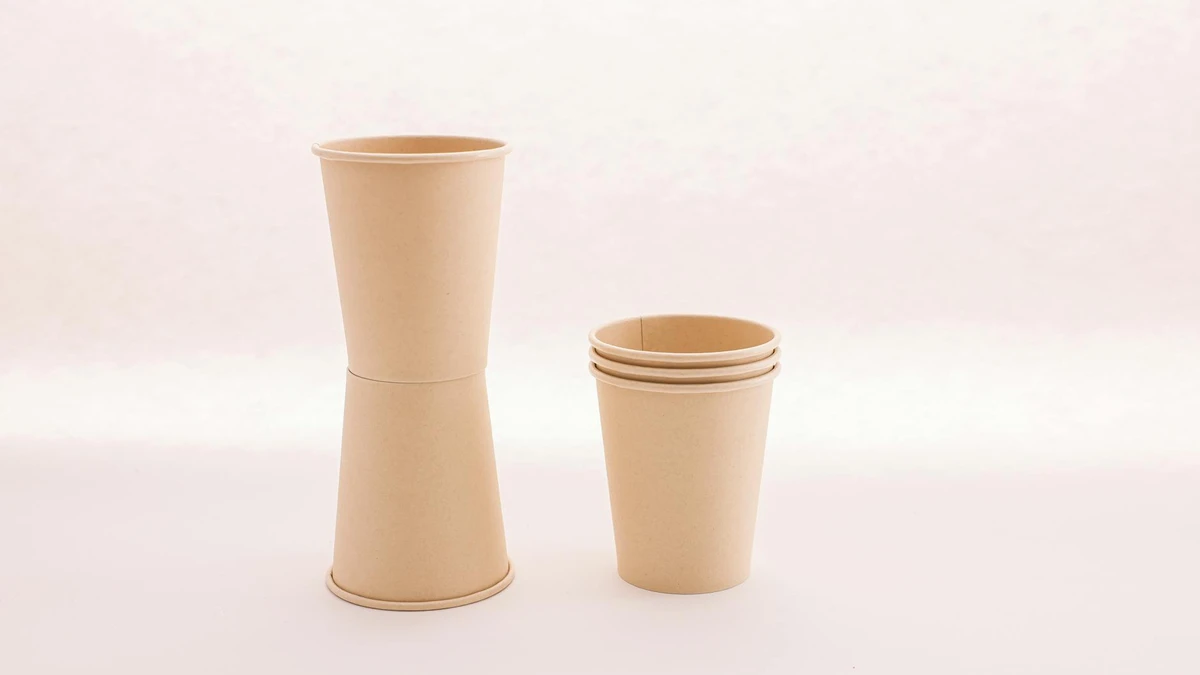
PLA = Polylactic Acid: A bioplastic derived from renewable plant resources (corn starch, sugarcane, cassava).
Construction:
•Outer layer: Paper (180-280gsm, FSC-certified)
•Inner coating: PLA bioplastic (15-25gsm)
•Bonding: Heat-laminated similar to PE, but lower melting point
•Plant-based: Made from fermented plant sugars, not petroleum
How It Works:
•PLA creates waterproof barrier like PE
•Prevents liquid absorption by paper
•Biodegradable under specific conditions (high heat, moisture, microbes)
•Breaks down into lactic acid, then water and CO2
Food Safety: Verify the finished cup’s food-contact compliance for the intended beverage, temperature and contact time; compostability is a separate assessment.
Heat Resistance ⚠️ Critical Limitation:
•Maximum temperature: 140-160°F (60-70°C)
•Safe for: Warm coffee, tea, cold drinks
•NOT suitable for: Boiling water, very hot coffee (185°F+), hot soup
•Softening risk: PLA begins to soften above 140°F, may lose structural integrity
•Glass transition temperature: 140-158°F (material becomes pliable)
Durability:
•Excellent for cold/warm beverages (under 140°F)
•Adequate for warm coffee (165-170°F) if consumed quickly
•Risk of warping/softening if held for extended time when hot
•Not recommended for long service times with hot liquids
Shelf Life:
•12-18 months (shorter than PE)
•May begin slow degradation in humid environments
•Store in cool, dry conditions to prevent premature breakdown
•Don’t overstock – order quantities you’ll use within a year
Cost: Premium pricing ($0.055-0.07 per 12oz cup, 30-50% more than PE)
The Promise of PLA:
✅ Compostable: Breaks down in 90-180 days in commercial composting facilities
✅ Plant-Based: Made from renewable resources (corn, sugarcane), not fossil fuels
✅ Lower Carbon Footprint: Production generates 68% less greenhouse gas than PE
✅ No Microplastics: Degrades to natural compounds (lactic acid, water, CO2)
The Reality – Critical Conditions Required:
⚠️ Commercial Composting ONLY: Requires sustained 140-160°F temperature + high moisture + oxygen + specific microbes. This does NOT happen in:
•Home compost bins (too cold, 90-110°F)
•Landfills (anaerobic, too dry, wrong temperature)
•Regular trash (no composting happens)
•Recycling (PLA contaminates paper recycling)
⚠️ Infrastructure Dependent: Only works if your city has commercial composting facility that accepts PLA. In the US, only 185 facilities nationwide accept compostable packaging (as of 2024).
Certification Check: Verify the exact finished cup in the certifier’s product directory and confirm whether its certification covers industrial or home composting.
Where PLA Makes Sense:
•Cities with commercial composting programs (San Francisco, Portland, Seattle)
•Venues with on-site commercial composting
•Events with managed composting services
•Businesses committed to sustainability with disposal infrastructure
•Cold beverage service (100% effective)
•Warm beverages under 160°F with quick service time
| Feature | PE Cups | PLA Cups |
|---|---|---|
| Material Source | Petroleum (fossil fuel) | Corn/sugarcane (renewable) |
| Max Heat | 212°F (100°C) | 140-160°F (60-70°C) |
| Hot Coffee Suitability | ✅ Excellent (185-205°F) | ⚠️ Limited (serve at 160-170°F) |
| Cold Drinks | ✅ Excellent | ✅ Excellent |
| Compostability | ❌ No (20-30 years in landfill) | ✅ Yes (90-180 days commercial) |
| Recyclability | ❌ No (coating contaminates) | ❌ No (contaminates paper) |
| Home Compostable | ❌ No | ❌ No (needs commercial facility) |
| Cost (12oz cup) | $0.04-0.05 (baseline) | $0.055-0.07 (+30-50%) |
| Shelf Life | 2-3 years | 12-18 months |
| Carbon Footprint (production) | Higher (fossil fuel-based) | 68% lower (plant-based) |
| Infrastructure Required | None (standard trash) | Commercial composting facility |
| Customer Perception | Standard, not eco-friendly | Eco-conscious, sustainable |
PE Cups:
•Unit cost: $0.04-0.05
•Annual cost (10,000 cups/month): $4,800-6,000
•Baseline reference
PLA Cups:
•Unit cost: $0.055-0.07
•Annual cost (10,000 cups/month): $6,600-8,400
•Premium: +$1,800-2,400 annually (+38-40%)
PE Cups:
•Product cost: $0.04-0.05 per cup
•Disposal: Free (goes to regular trash)
•Environmental compliance: May face future regulations (plastic bans)
•Brand value: Neutral to negative in eco-conscious markets
•Total: $0.04-0.05 per cup
PLA Cups:
•Product cost: $0.055-0.07 per cup
•Disposal: $0.005-0.01 per cup if composting service required
•Certifications: BPI certification built into supplier cost
•Brand value: Positive differentiation, attracts eco-conscious customers
•Total: $0.06-0.08 per cup
Price Increase Strategy:
•Increase menu prices by $0.10-0.15 per drink
•Most customers accept premium for sustainability
•Position as “eco fee” or include in base pricing
•Net impact: +$0.05-0.10 margin even after PLA cost
Volume Impact:
•Eco-conscious customers willing to pay 5-10% more
•Attract clientele who prioritize sustainability
•Higher customer retention (alignment with values)
•Positive reviews mentioning sustainability practices
Marketing Value:
•“100% Compostable Cups” on menu, signage, social media
•Certification logos (BPI, FSC) increase credibility
•Differentiator from competitors still using PE
Example Break-Even:
•PLA cup cost: $0.07 (vs $0.05 for PE = +$0.02 premium)
•Menu price increase: +$0.15 per drink
•Net gain: $0.13 per transaction
•For 10,000 drinks/month: +$1,300/month profit after covering PLA cost
Reality: 99% go to landfill or incinerator.
What Happens:
1.Customer finishes drink
2.Throws cup in trash (standard waste bin)
3.Collected with municipal solid waste
4.Sent to landfill (most common) or incinerator
5.In landfill: Sits for 20-30 years, eventually breaks into microplastics
6.In incinerator: Burns, releases CO2
Recycling:
•Technically possible at specialized facilities (less than 1% of recycling programs)
•Most recycling programs explicitly reject PE-coated cups
•Contamination risk to paper recycling stream
•Not practical for business operations
Requirements for Your Business:
•Standard trash bins (no special disposal)
•No staff training needed
•No customer education required
•No compliance reporting
•✅ Simple, but not sustainable
Critical: Commercial Composting Required
What Happens:
1.Customer finishes drink
2.Throws cup in composting bin (green bin — organics)
3.Collected separately from trash and recycling
4.Sent to commercial composting facility
5.Processed at 140-160°F with moisture and oxygen for 90-180 days
6.Breaks down into compost (used for landscaping, agriculture)
Requirements for Your Business:
✅ If Commercial Composting Available:
•Separate compost bins clearly labeled (green, “Compost”)
•Staff training on sorting (cups go in compost, not trash)
•Customer signage (instructions at point of disposal)
•Commercial composting service contract ($50-200/month depending on volume)
•Compliance: Track diversion rate for reporting (some cities require)
❌ If NO Commercial Composting:
•PLA cups must go to trash (no benefit over PE)
•Cannot recycle (contaminates paper stream)
•Cannot home compost (insufficient heat)
•Result: PLA offers no environmental benefit without composting access
Before Ordering PLA:
1.Call local waste management: “Do you accept PLA-certified compostable packaging?”
2.Verify BPI certification is recognized
3.Confirm pickup schedule and fees
4.Plan bin placement and signage
5.Train staff on sorting
✅ Your city has no commercial composting program
✅ You serve very hot beverages (185°F+, boiling soups)
✅ Budget is primary concern (cost-sensitive operation)
✅ Customers dispose in mixed trash anyway (no sorting)
✅ Long service times required (delivery, catering)
✅ High volume with thin margins (fast food, quick service)
Rationale: If PLA can’t be composted locally, it offers no environmental benefit over PE while costing more and having heat limitations. PE is the practical choice.
✅ Your city has commercial composting facility accepting BPI-certified products
✅ You serve warm coffee (160-170°F) or cold drinks primarily
✅ Sustainability is brand priority (eco-conscious positioning)
✅ Customers are eco-aware and value compostable packaging
✅ You can implement composting bins and educate customers
✅ Higher price point allows for packaging cost premium
✅ Venue has controlled disposal (on-site composting, managed waste)
Rationale: With proper infrastructure, PLA delivers genuine environmental benefit, supports brand positioning, and attracts sustainability-minded customers willing to pay premium.
Step 1: Check Infrastructure
•Call waste management: Commercial composting available?
•Visit facilities: Do they accept PLA/BPI certified?
•Fees: Can you afford composting service?
Step 2: Assess Beverage Temperature
•Hot coffee temp: Above 170°F regularly → PE safer
•Warm coffee/tea: 160-170°F → PLA works
•Cold drinks only: PLA perfect
Step 3: Calculate Costs
•Can you absorb 30-50% cup cost increase?
•Can you pass costs to customers (+$0.10-0.15 per drink)?
•Does eco positioning justify premium?
Step 4: Evaluate Brand
•Are customers eco-conscious?
•Is sustainability core to your brand?
•Do competitors use compostable packaging?
Decision Matrix:
•Infrastructure YES + Hot drinks NO + Budget allows = PLA
•Infrastructure NO = PE (PLA offers no benefit)
•Infrastructure YES + Hot drinks YES = PE for hot, PLA for cold (separate inventory)
•Budget constrained + No composting = PE (no choice)
No. Home compost bins reach 90-110°F maximum, far below the 140-160°F required for PLA breakdown. Home composting also lacks the oxygen levels, moisture control, and specific microbes needed.
What happens if you try: PLA sits unchanged for months/years, doesn’t break down, creates contamination in your home compost.
Proper disposal: Commercial composting facility only.
Yes, IF composted properly:
•68% lower carbon footprint in production
•Breaks down to natural compounds in 90-180 days
•Renewable plant-based materials
•No microplastics
No, IF sent to landfill:
•Anaerobic landfill conditions prevent breakdown
•Sits as long as PE cups (20-30 years)
•No environmental advantage
•Costs more for same result
Bottom line: PLA is only better with access to commercial composting.
Paper recycling process incompatibility:
•Recycling pulps paper into fiber slurry
•PE and PLA coatings don’t break down in pulping
•Coating contaminates entire batch of recycled paper
•Facilities reject coated cups to protect quality
Specialized recycling: Some facilities can process coated cups, but less than 1% of programs offer this. Not practical for most businesses.
Disposal: PE = trash, PLA = commercial compost only.
Not recommended. PLA’s glass transition temperature is 140-158°F. At 185°F:
•Cup may soften and lose shape
•Structural integrity compromised
•Risk of leaking or bottom failure
•Potential customer burns from cup failure
Safe options for very hot coffee:
•Use PE cups (tolerates 212°F)
•Serve coffee at 160-170°F (still hot, safe for PLA)
•Use double-wall PLA (better insulation, slower heat transfer)
•Provide cup sleeves to reduce direct heat contact with PLA
Most cafés lowering serving temperature to 165-170°F for safety anyway (reduces burn risk).
Required Certifications:
1.BPI Certification (US): Check bpiworld.org for product number
2.TUV OK Compost (Europe): Verify at tuv.com
3.ASTM D6400 compliance: Lab test results for compostability
Ask Supplier:
•“What’s your BPI certification number?” (verify online)
•“Can I see ASTM D6400 test results?”
•“Do you have third-party compostability verification?”
Red Flags:
•“Compostable” claims without certification
•Self-certified or internal testing only
•Refusal to provide documentation
•Vague terms like “eco-friendly” without specifics
Don’t rely on: “Biodegradable” claims (everything biodegrades eventually, meaningless without timeframe and conditions).
Production Phase:
•PE cups: 45-60g CO2 per cup (fossil fuel extraction, refining, manufacturing)
•PLA cups: 15-20g CO2 per cup (plant growth absorbs CO2, offsets production)
•Difference: PLA produces 68% less greenhouse gas in manufacturing
End-of-Life Phase:
•PE in landfill: Minimal additional emissions (sits inert), produces methane over decades
•PLA composted: Releases CO2 quickly but from recently absorbed atmospheric carbon (carbon-neutral cycle)
•PLA in landfill: Similar to PE (no advantage if not composted)
Total lifecycle: PLA composted = 70% lower carbon footprint than PE landfilled.
Caveat: Transportation, composting facility energy use add to both. Advantage remains with PLA if properly composted.
Yes, common strategy:
Hot Drinks (185°F+): PE cups
•Drip coffee, Americano, hot tea, soup
•Staff trained: “Hot drinks = white cups” (PE)
Cold/Warm Drinks (under 160°F): PLA cups
•Iced coffee, cold brew, smoothies, warm lattes (165°F)
•Staff trained: “Cold/warm drinks = green/marked cups” (PLA)
Implementation:
•Different cup designs (color-coded: white=PE, kraft/green=PLA)
•Clear staff training and labeling at stations
•Separate storage areas
•Different disposal bins (trash for PE, compost for PLA)
Complexity: Adds training burden, potential for mixing errors. Only do this if temperature range requires it and budget allows.
Simpler: Choose one type based on beverage temperature profile. Most cafés can serve slightly cooler coffee (165-170°F) and use PLA exclusively.
PLA and PE cups look similar but have fundamentally different environmental profiles and performance limits.
Key Takeaways:
1.PE cups are petroleum plastic-coated paper: cheap, heat-resistant (212°F), but end up in landfills for 20-30 years
2.PLA cups are plant-based bioplastic: compostable in 90-180 days, but only with commercial composting access and temperature limits (160°F max)
3.PLA is only better if your city has commercial composting infrastructure – without it, PLA offers no advantage
4.Heat matters: Very hot coffee (185°F+) requires PE; warm coffee (160-170°F) works with PLA
5.Cost: PLA costs 30-50% more, offset by menu price increases and eco-conscious customer attraction
6.Verify certifications: BPI or TUV OK Compost required for legitimate compostability claims
Choose based on local infrastructure and beverage temperature, not marketing promises.
•Paper Cups – Full range of PE and PLA options
•Eco Paper Cups – Sustainable certification guide
•Coffee Cup Lids – Matching eco-friendly lids
Papacko supplies both PE and BPI-certified PLA cups with transparent specifications and disposal guidance.
Why choose Papacko:
•Transparent specs: Exact heat limits and certifications provided
•BPI-certified PLA: Verified compostable with documentation
•Infrastructure matching: We help verify local composting availability
•Sample program: Test both coatings before bulk ordering
PLA versus PE usually leads buyers into a broader decision path: which cup formats should stay in the cold-drink line, which hot-drink programs still require PE, and how disposal claims should be explained without overselling compostability. The pages below cover those next questions.
Get in touch:
•Request a Quote – PE and PLA cup pricing comparison
•Free Sample Kit – Test heat resistance with your beverages
•Infrastructure consultation – We verify composting access in your area