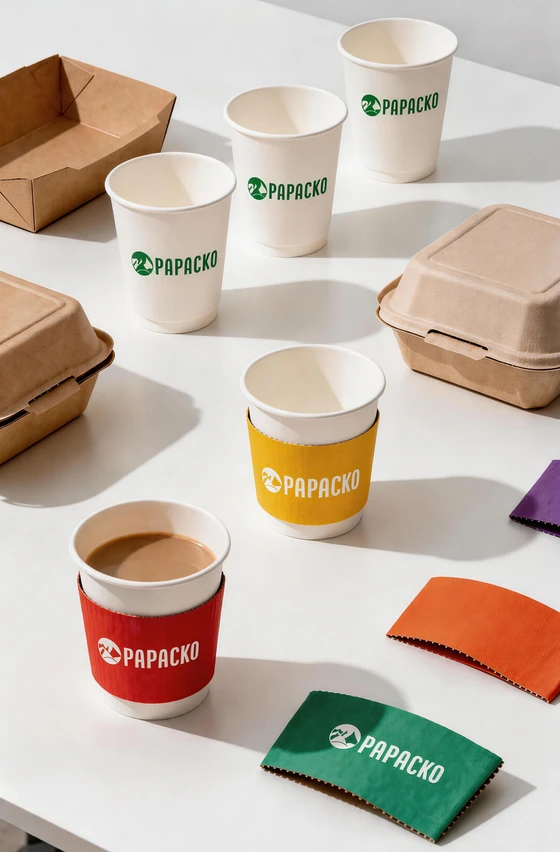
Ready to create your own branded paper cups or packaging?
Tell us your requirements — size, coating, printing, and destination — and our team will prepare a detailed quotation within 24 hours.

Last Updated: December 2025
Reading Time: 14 minutes
Author: Papacko Content Team
Your distributor quoted $0.085 per 12oz paper cup with 200,000 MOQ, another factory offered $0.055 with “same quality” at 500,000 MOQ, and a trading company promised $0.065 with “flexible terms.” You’re sitting on three wildly different quotes, unsure which represents genuine value versus hidden costs in quality defects, shipping delays, or documentation headaches that surface 60 days after payment clears.
Wholesale paper cup procurement isn’t just about finding the lowest per-unit price—it’s about calculating true landed cost (FOB + shipping + duties + defect rate), managing 6-8 week lead times without stockouts, verifying factory capabilities before wiring $15,000-45,000 deposits, and building supplier relationships that survive quality issues and order changes, standard wholesale paper cups matter.The difference between experienced and novice importers: $8,000-15,000 in avoidable costs per 500,000-unit order through better supplier selection, smarter MOQ negotiation, and proper quality control.
In this guide, you’ll learn:
•Wholesale pricing structures and true cost calculation methodology
•MOQ negotiation tactics for 50,000-1,000,000+ unit orders
•Supplier vetting criteria: factory vs trading company vs agent
•Export documentation requirements and customs compliance
•Quality control checkpoints for bulk container shipments
•International shipping cost optimization and lead time management
•Payment terms negotiation and risk mitigation strategies
Quick Takeaway: Wholesale paper cups: $0.045-0.095 per unit (12oz, FOB Asia, 100K+ MOQ) vs $0.15-0.25 retail. True landed cost formula: (FOB price + shipping/unit + duty %) × (1 + defect rate). Typical breakdown: FOB 55-65%, shipping 20-25%, duties 10-15%. MOQ negotiation: Start 100K, negotiate to 50K with 8-12% premium. Quality control: Pre-production samples + during-production inspection + pre-shipment inspection (3% random sampling minimum). Lead time: 30-45 days production + 25-35 days ocean freight = 55-80 days total. Payment terms: 30% deposit + 70% before shipment (avoid 100% upfront). Supplier red flags: No factory visit allowed, pricing 40%+ below market, unwilling to provide references. Best strategy: Test order 50-100K units before committing to 500K+ partnership.
For different wholesale paper cups, focus on:
Complete Landed Cost Formula:
“`
Landed Cost per Unit = [(FOB Price + Shipping Cost per Unit) × (1 + Import Duty %)] × (1 + Defect Rate %)
“`
Example Calculation (100,000 units, 12oz cups, importing to US):
Key Insight: FOB price represents only 60-65% of true cost. Importers who compare FOB prices alone systematically underestimate total investment by 35-40%.
When evaluating different wholesale paper cups, consider the following:
Market Pricing by Order Volume (12oz single wall, plain white, PE-coated, FOB China):
Setup Cost Impact:
•Mold setup: $400-800 per size (one-time for standard sizes, recurring for custom)
•Printing plates: $200-400 per design (for custom printing)
•Quality testing: $150-250 per production run
•Total setup: $750-1,450 spread across order volume
Volume Calculation Example:
•50,000 units @ $0.078 + $800 setup = $0.094 effective cost
•100,000 units @ $0.065 + $800 setup = $0.073 effective cost
•200,000 units @ $0.062 + $800 setup = $0.066 effective cost
For the wholesale paper cups, focus on:
Pricing Structure Comparison (100,000 unit order):
When to Use Each Source:
Factory Direct (Best for):
•Experienced importers with in-country QC resources
•Large volume orders (500K+ units) where markup savings substantial
•Established relationships with factories (2-3+ years)
•Buyers with Mandarin-speaking staff or local representatives
•Savings: $800-1,500 per 100K units vs trading company
Trading Company (Best for):
•First-time importers lacking export experience
•Multi-product orders (cups + lids + bowls from different factories)
•Buyers needing consolidated shipping (combine multiple suppliers)
•Orders requiring complex customization with English communication
•Value: Risk mitigation + convenience worth 15-20% premium for new importers
Sourcing Agent (Best for):
•Importers ordering 100K-500K units (not large enough for direct factory benefits)
•Buyers needing supplier vetting across multiple factories
•Quality-focused operations requiring independent inspection oversight
•Companies lacking in-house import/export expertise
•Value: Agent fee 10-12% offset by better pricing negotiation + QC + reduced defect risk
For wholesale cups, focus on:
Why MOQs Exist (from factory perspective):
Economic Batch Size Calculation:
•Machine setup time: 2-4 hours (cleaning, calibration, test runs)
•Setup labor cost: $120-180 (operator + technician)
•Setup material waste: 500-1,200 cups (testing, calibration)
•Hourly production rate: 8,000-12,000 cups
•Break-even production: 16,000-25,000 cups minimum for setup cost recovery
Profitable Production:
•Target: Setup costs <8-10% of order value
•At 50,000 units: Setup $800 / Revenue $3,900 = 20.5% (marginal profit)
•At 100,000 units: Setup $800 / Revenue $7,800 = 10.3% (acceptable profit)
•At 200,000 units: Setup $800 / Revenue $15,600 = 5.1% (good profit margin)
Factory’s Perspective: MOQs aren’t arbitrary—they protect against unprofitable small orders where setup costs exceed profit margin.
When evaluating available wholesale paper cups, consider the following:
Tactic 1: Mixed Size Orders (Combine SKUs to reach MOQ)
Example:
•Factory requirement: 100,000 MOQ per order
•Your need: 40,000 × 12oz + 30,000 × 16oz + 30,000 × 8oz = 100,000 total
•Benefit: Meet MOQ while diversifying inventory
•Setup cost: $800 × 3 sizes = $2,400 (vs $800 for single size)
•Effective cost: $0.069 blended average (acceptable 6% premium vs single SKU)
Negotiation Script:
“We’re ordering 100,000 total units across three sizes. Can you accommodate this as a combined order to meet your MOQ, with setup costs for each size?”
Tactic 2: Trial Order Premium (Pay more for smaller initial order)
Approach:
•Request: 50,000 units (half standard MOQ)
•Offer: Accept 12-15% price premium for first order
•Commit: If quality acceptable, future orders 150,000+ units at standard pricing
•Reasoning: Factory gets higher margin trial order + potential long-term customer
Example Pricing:
•Standard 100K MOQ: $0.065/unit
•Proposed 50K trial: $0.073/unit (+12.3%)
•Factory margin: Same ($6,500 revenue vs $3,650 revenue at higher margin)
•Your benefit: Test supplier with 50% less capital at risk ($3,650 vs $6,500)
Negotiation Script:
“We’d like to start with a 50,000 unit trial order to validate quality for our market. We’re willing to pay $0.073 per unit (your standard cost + 12%) for this initial order. If quality meets standards, our next order will be 150,000-200,000 units at your standard $0.065 pricing. This gives you profitable trial order plus long-term partnership potential.”
Tactic 3: Scheduled Orders (Commit to volume over time)
Approach:
•Commit: 300,000 units total over 12 months
•Delivery: Three shipments of 100,000 units (months 1, 5, 9)
•Pricing: Lock in 300K volume pricing ($0.055/unit) applied to all shipments
•Factory benefit: Guaranteed revenue, production planning visibility
•Your benefit: 300K pricing without 300K upfront inventory investment
Example Structure:
•Month 1: 100,000 units @ $0.055 (vs $0.065 at 100K pricing) = Save $1,000
•Month 5: 100,000 units @ $0.055 = Save $1,000
•Month 9: 100,000 units @ $0.055 = Save $1,000
•Total savings: $3,000 (14% reduction in FOB costs)
•Reduced working capital: $6,500 per shipment vs $19,500 all at once
Negotiation Script:
“We’re projecting 300,000 unit consumption over the next 12 months. than a single shipment, we’d prefer three 100K shipments in months 1, 5, and 9. Can you offer your 300K volume pricing ($0.055) on each shipment with this committed schedule? We’ll sign a 12-month agreement guaranteeing the volumes.”
Tactic 4: Flexibility Trade-Offs (Give up customization for lower MOQ)
Approach:
•Standard product: Accept plain white stock cups (no custom printing)
•Simplified specs: Use factory’s standard PE coating (not PLA)
•Flexible delivery: Allow factory to produce during low-demand periods
•Benefit to factory: Lower costs, production flexibility = Can accept smaller MOQ
Example Negotiation:
•Custom printed 12oz: 100,000 MOQ @ $0.068
•Plain white 12oz: 50,000 MOQ @ $0.058 (factory’s stock product)
•Your approach: Order 50K plain white, apply custom stickers domestically
•Sticker cost: $0.015 per cup (printed in US)
•Total cost: $0.073 (vs $0.068 + 100% higher MOQ)
•Capital efficiency: 50% less inventory investment for 7% higher per-unit cost
The key to choosing standard wholesale paper cups depends on:
Risk Management Through Supplier Portfolio:
Single Supplier Risk (ordering 500,000 units from one factory):
•❌ Production delays affect entire inventory (no backup)
•❌ Quality issues require rework/replacement (no alternative source)
•❌ Limited pricing negotiation leverage (factory knows you’re dependent)
•❌ Business disruption if factory closes or relationships sour
Multi-Supplier Strategy (split 500,000 across 2-3 factories):
Approach 1: Primary + Backup Split (70/30)
•Primary supplier: 350,000 units (70%)
•Backup supplier: 150,000 units (30%)
•Benefit: If primary has issues, backup can scale up in next order
•Cost: 5-8% premium on backup supplier (smaller volume, higher per-unit cost)
•Value: Insurance policy worth $2,500-4,000 against $35,000 primary order risk
Approach 2: Competitive Split (50/50)
•Supplier A: 250,000 units
•Supplier B: 250,000 units
•Benefit: Pit suppliers against each other for pricing/terms in future orders
•Performance tracking: Monitor quality, delivery, communication—shift volume to better performer
•Value: Pricing competition can drive 6-10% cost reductions in years 2-3
Approach 3: Geographic Diversification
•China supplier: 300,000 units (lowest cost)
•Vietnam/Thailand supplier: 200,000 units (trade war hedge)
•Benefit: Tariff/political risk mitigation
•Cost: 10-15% premium on secondary geography
•Value: Protection against sudden duty changes (China tariffs increased 10-25% in 2018-2019)
Understanding various wholesale paper cups requires attention to these factors:
Phase 1: Desktop Research (Before contacting supplier)
Critical Question: Factory or Trading Company?
How to Verify:
1. Request factory photos (ask for specific proof: “Send photo of production floor with today’s date written on paper in frame”)
2. Google Maps: Search company address—should show industrial zone, not office building
3. Ask for utility bills: Manufacturing facilities have 10-50× higher electricity costs than offices
4. Video call factory tour: Request live walk-through of production area (not pre-recorded)
Why It Matters:
•Factory direct: 15-25% lower pricing than trading company
•Trading companies add value (QC, communication) but transparently
•Problem: Trading companies misrepresenting as factories to justify markup without providing value
For common wholesale paper cups, focus on:
When Factory Visits Make Sense:
•Initial order value >$25,000 (audit cost $1,500-2,500 justifiable)
•Planning ongoing partnership (500K+ annual volume)
•Custom manufacturing requirements (specialized coating, unique sizes)
•Previous supplier issues (want to derisk next partner)
Factory Audit Checklist (45-60 minute site visit):
Production Capacity Verification:
•Count production lines: 1 line = 8,000-12,000 cups/hour
•Check machine age: Equipment >15 years = higher defect rates
•Observe shift patterns: 2-3 shifts = full capacity, 1 shift = underutilized
•Calculate capacity: Lines × hours × production rate = daily capacity
– Example: 4 lines × 16 hours (2 shifts) × 10,000 cups/hour = 640,000 cups/day capacity
Quality Control Infrastructure:
•✅ QC lab on-site (not outsourced)
•✅ Testing equipment: Leak testers, weight scales, GSM measurement tools
•✅ Incoming material inspection (check raw paperboard before production)
•✅ In-process QC checks (samples taken every 1,000-2,000 cups)
•✅ Final inspection before packing
•❌ Red flag: No dedicated QC area or “we inspect everything at end”
Inventory and Raw Materials:
•Check paperboard storage: Should be climate controlled (humidity affects quality)
•PE coating materials: Fresh stock (not expired or degraded)
•Inks and printing supplies: Brand-name materials (not generic/unknown brands)
•Finished goods inventory: Organized, labeled, not exposed to moisture/sun
Labor and Management:
•Worker training: Do operators follow SOPs? Are procedures documented?
•Turnover: High employee turnover = inconsistent quality
•Management responsiveness: How quickly do they answer technical questions?
•Language capabilities: English-speaking QC manager critical for international customers
Red Flags to Walk Away:
•❌ Refuse factory visit or delay indefinitely (“not convenient” for months)
•❌ Production floor disorganized, materials stored improperly
•❌ No QC documentation (test records, defect tracking)
•❌ Equipment visibly outdated or poorly maintained
•❌ Workers unable to explain processes or quality standards
•❌ Factory claimed 10 production lines, actually has 3 (capacity misrepresentation)
When evaluating standard wholesale paper cups, consider the following:
Three-Stage Sampling Approach:
Stage 1: Initial Samples (Pre-order, free or $20-50 shipped)
•Purpose: Verify basic quality and specifications
•Quantity: 5-10 cups of each size/type
•Testing:
– Physical inspection: Print quality, seam integrity, rim consistency
– Basic leak test: Fill with water, observe for 30 minutes
– Dimensional check: Measure capacity, height, rim diameter
•Decision: Proceed to pre-production samples or reject supplier
Stage 2: Pre-Production Samples (After order placed, before production starts)
•Purpose: Approve exact specs before mass production
•Quantity: 20-50 cups using actual production materials
•Testing:
– Confirm custom printing colors/alignment (if applicable)
– Verify paperboard GSM matches specification (use GSM meter)
– Heat resistance: Fill with 185°F water, check for deformation/leaking
– Coating quality: Liquid contact for 2+ hours, inspect for delamination
•Decision: Approve production start or request modifications
Stage 3: Pre-Shipment Samples (Before final payment, before container loaded)
•Purpose: Verify production batch matches approved samples
•Quantity: 100-200 cups randomly selected from finished production
•Testing:
– Statistical sampling: Check 2-3% of total order quantity
– Compare to approved pre-production sample side-by-side
– Defect rate calculation: Count defects per 100 cups, extrapolate to total order
– Acceptable: <1.5% defect rate; Warning: 1.5-3%; Reject: >3%
•Decision: Approve shipment, request rework, or reject order
Testing Equipment Recommendations (For importers ordering 200K+ units quarterly):
## Export Documentation and Customs Compliance
The key to choosing wholesale paper cups depends on:
Complete Document Package (Required for international shipment):
Commercial Documents:
1.Commercial Invoice (Factory issues to you)
– Detailed: Product description, HS code, quantity, unit price, total value
– Purpose: Customs declaration, payment proof
– Critical elements: Must match Bill of Lading exactly (any discrepancy = customs delays)
2.Packing List
– Contents: Number of cartons, gross/net weight per carton, carton dimensions
– Purpose: Freight calculation, customs inspection
– Detail level: Should list contents of each carton (e.g., Carton 1-50: 12oz cups, 2,000 pcs/carton)
3.Bill of Lading (B/L) (Shipping line issues)
– Types: Original B/L (required for ownership transfer) vs Sea Waybill (faster but less secure)
– Key terms: “Freight Prepaid” vs “Freight Collect” (who pays shipping)
– Critical: Consignee name must match import documents exactly
Regulatory Documents:
4.Certificate of Origin (Chamber of Commerce issues)
– Purpose: Determine duty rates (free trade agreements = lower duties)
– Example: China COO = 6.5% duty; Thailand COO with GSP = 0% duty
– Cost: $50-150 ( worth thousands in duty savings)
5.FDA Prior Notice (US imports only)
– Requirement: Must file 24 hours before US arrival for food-contact products
– Information needed: Product details, manufacturer name, intended use
– Failure to file: Container held at port, $500-1,000 demurrage per day
– Critical: Use licensed customs broker to file (DIY errors costly)
6.Phytosanitary Certificate (If paper from wood pulp)
– Purpose: Certify product free from pests/diseases
– Required by: US, Canada, Australia, EU for wood-based products
– Cost: $80-200
– Processing: 3-5 business days (request before shipment)
7.Test Reports (Product safety compliance)
– FDA compliance: Migration testing for food contact materials
– Heavy metals: Lead, cadmium testing for printed inks
– Prop 65 (California): Additional testing for US shipments
– One-time cost: $800-1,500 for complete testing suite (valid for same product spec)
For wholesale cups, focus on:
Paper Cup HS Codes (Harmonized System for customs):
Why HS Codes Matter:
•Duty calculation: 3.5% difference = $700 on $20,000 shipment (cups vs lids)
•Import restrictions: Wrong HS code can trigger additional inspections
•Statistics: Governments track trade volumes by HS code
Classification Mistakes:
•❌ Listing double wall cups as “paper + plastic products” (wrong HS, higher duty)
•❌ Combining cups + lids under single HS code (must separate by material composition)
•✅ Correct: Declare each product type separately with accurate HS code
When evaluating different wholesale paper cups, consider the following:
Strategy 1: Free Trade Agreements
Example: Importing to US from ASEAN Countries
Requirement: Minimum 35% value-added in origin country (raw materials + manufacturing)
Verification: Supplier must provide cost breakdown proving 35%+ local content
Savings: $650 per $10,000 FOB = 6.5% immediate reduction in landed cost
Strategy 2: Duty Drawback Programs
Scenario: You import cups, use them for your product, then export final product
Benefit: Recover 99% of paid import duties on re-exported goods
Example:
•Import 500,000 cups, pay $3,250 in duties (6.5% on $50,000)
•Use cups for coffee you export to Canada
•File duty drawback claim: Recover $3,218 (99% of $3,250)
•Net duty: $32 (vs $3,250 without drawback)
Requirements:
•Maintain import/export records linking imported materials to exported products
•File claim within 5 years of importation
•Use licensed customs broker for filing ($300-500 fee)
Strategy 3: De Minimis Entry
De Minimis Threshold (duty-free if shipment value below threshold):
•United States: $800 per shipment
•European Union: €150 per shipment
•Canada: CAD $20 per shipment (very low)
•Australia: AUD $1,000 per shipment
Application for Wholesale:
•❌ Not viable for large orders (100K cups = $6,500 FOB, far exceeds thresholds)
•✅ Viable for sample orders: 1,000 cups @ $70 FOB (below $800 threshold)
•Benefit: Avoid $5-10 in duties + $50-80 customs broker fee on sample orders
When evaluating standard wholesale paper cups, consider the following:
20ft vs 40ft Container Comparison (China to US West Coast):
Container Utilization Optimization:
Problem: Ordering 280,000 cups but container holds 450,000
Poor solution: Ship 280K in 40ft container = 62% utilization, waste $1,200 in unused space
Better solutions:
1. Increase order to 380,000 (84% utilization) = $0.0075 shipping cost vs $0.0107
2.Consolidate: Add 120,000 lids or 80,000 bowls to same container
3.Share container: Partner with another importer, split freight cost
Freight Rate Negotiation Tips:
•Request quotes from 3-5 freight forwarders (rates vary 15-25%)
•Lock rates during low-demand seasons (post-Chinese New Year: Feb-Mar)
•Commit to 4-6 shipments annually for volume discounts (save 10-15%)
•Ask for “all-in” quotes (include port fees, documentation, customs clearance)
When evaluating various wholesale paper cups, consider the following:
Common Incoterms for Paper Cup Imports:
Cost Comparison (100,000 cups, China to US):
Recommendation:
•FOB: Best value for experienced importers (save 4-6% vs CIF/DDP)
•CIF: Good for first-time importers (simplified coordination)
•Avoid EXW: Complicated export procedures, higher risk
•Avoid DDP: 5-8% premium, less control over shipping timeline
For the wholesale paper cups, focus on:
Complete Timeline Breakdown (China to US, 100,000 cup order):
Delay Prevention Strategies:
Chinese Holidays (Factory closures):
•Chinese New Year: 15-20 days (late Jan/early Feb) + 2-3 weeks ramp-up
•National Day: 7 days (early October)
•Planning: Add 3-4 weeks to lead time if order overlaps these periods
Peak Shipping Seasons (Longer transit, higher costs):
•Aug-Oct: Back-to-school + holiday inventory (rates increase 20-40%, delays common)
•Strategy: Ship in Apr-Jul or Nov-Jan for best rates and reliability
Port Congestion (US West Coast delays 2021-2023):
•LA/Long Beach: Experienced 20-40 day backups during peak congestion
•Mitigation: Consider alternate ports (Seattle, Oakland) or East Coast (longer transit but less congestion)
•Rail delays: Additional 7-14 days if rail backlog from West Coast ports
Buffer Planning:
•Normal lead time: 60-70 days
•Add 10-day buffer: 80 days (covers minor delays)
•Add 20-day buffer: 90 days (covers holiday/peak season)
•Recommendation: Plan 90 days for critical inventory, 75 days for replenishment orders
For common wholesale paper cups, focus on:
Common Payment Terms in Paper Cup Industry:
Recommendation by Order Value:
### Letter of Credit Process
The key to choosing standard wholesale paper cups depends on:
When to Use L/C:
•First-time orders with new supplier >$30,000
•Suppliers in high-risk countries
•Orders where you’re prepaying significant amounts (>40% deposit)
•When supplier’s credit terms require protection
L/C Cost Structure:
•Bank opening fee: 0.5-1.5% of order value (negotiable)
•Amendment fee: $50-150 per change
•Discrepancy fee: $50-100 if documents don’t match exactly
•Example: $50,000 order L/C costs $500-750 (1-1.5%)
How L/C Works:
1.Buyer applies to bank for L/C issuance (provides purchase order, commercial invoice)
2.Bank issues L/C to supplier’s bank (guarantees payment if documents compliant)
3.Supplier manufactures and prepares goods per L/C terms
4.Supplier ships goods and presents documents to their bank (B/L, invoice, packing list, certificates)
5.Banks review documents: If compliant, supplier’s bank pays supplier
6.Buyer’s bank debits buyer account and releases documents for import clearance
7.Buyer receives goods using original Bill of Lading
Critical L/C Terms:
•Latest shipment date: Set 45-60 days from L/C issuance (allows production + shipping prep)
•Document presentation: Require inspection certificate (gives you QC checkpoint)
•Partial shipments: “Allowed” (flexibility if supplier splits shipment)
•Transshipment: “Allowed” (ships may transfer cargo at intermediate port)
Common L/C Mistakes:
•❌ Overly strict terms (supplier can’t comply, causes delays)
•❌ Typos in product description (documents don’t match = discrepancy fee + delay)
•❌ Unrealistic shipment dates (factory can’t meet, requires amendment)
•✅ Work with supplier to draft realistic, clear L/C terms both parties can meet
For various wholesale paper cups, focus on:
Common Scams in Wholesale Paper Cup Industry:
Scam 1: Fake Factory (Trading company pretends to be manufacturer)
•Tactic: Claims direct factory pricing but sources from actual factory + adds markup
•Detection: Request video call of production floor with specific proof (hold paper with your company name + date)
•Impact: 15-25% inflated pricing vs actual factory direct
Scam 2: Bait-and-Switch Quality
•Tactic: Send high-quality samples, produce low-quality bulk order
•Detection: Pre-shipment inspection by third-party (mandatory for orders >$15K)
•Impact: 5-15% defect rates, potential rejection of entire shipment
Scam 3: Payment Fraud (Request for unusual payment method)
•Tactic: “Our company bank account changed, send payment to this new account”
•Detection: Always verify bank details via phone call to known contact (not email-provided number)
•Impact: Total loss if you wire to fraudulent account (unrecoverable)
Scam 4: Deposit Disappearance
•Tactic: Collect 30-50% deposit, then ghost (stop responding, never produce goods)
•Detection: Verify business registration, check references, use payment terms that release deposit only after pre-production samples approved
•Impact: Loss of deposit ($3,000-15,000 )
Red Flags Checklist:
•❌ Prices 30-40% below market average (too good to be true)
•❌ Pressure to pay 100% upfront or use unusual payment method (Western Union, Bitcoin, personal account)
•❌ Refuses factory visit or video call of production facility
•❌ Cannot provide current customer references or provides fake references
•❌ Email domain doesn’t match company name (e.g., supplierABC@gmail.com instead of contact@supplierabc.com)
•❌ Inconsistent communication quality (professional initially, then poor English/errors = different person responding)
•❌ Newly registered company (<2 years) claiming "20 years experience"
Protection Measures:
•✅ Use Alibaba Trade Assurance (protects orders up to $100K with refund guarantee)
•✅ Pay via Letter of Credit for large orders (bank oversight)
•✅ Third-party inspection before final payment release
•✅ Start with small test order (50-100K units) before committing to large volumes
•✅ Check supplier on public databases (China National Enterprise Credit, Alibaba verification)
For common wholesale paper cups, focus on:
Why QC Matters at Scale:
•2% defect rate on 100,000 units = 2,000 unusable cups
•Cost of defects: $130 in wasted product + $500-800 rework/replacement + customer complaints
•Prevention cost: $300 third-party inspection (ROI: 2-3×)
Inspection Point 1: Pre-Production Inspection (PPI)
Timing: After order placed, before production starts
Purpose: Verify raw materials and first-article samples match specifications
What to check:
•Raw paperboard: GSM weight (use GSM meter)
•PE/PLA coating: Type and weight
•Printing inks: Color matching to Pantone specs (if custom)
•First-article sample: Test 10-20 cups from initial production run
Cost: $200-300 (oftensometimesuded in production cost by supplier)
Outcome: Approve production start or request material changes
Inspection Point 2: During Production Inspection (DPI)
Timing: Mid-production (when 40-60% complete)
Purpose: Catch quality issues early before entire batch affected
What to check:
•Sample 100-200 cups from completed batches
•Measure key dimensions (height, rim diameter, capacity)
•Leak test: Fill 20 cups, observe for 30 minutes
•Visual: Print quality, seam alignment, rim consistency
•Defect rate: Count defects per 100 cups (acceptable: <1.5%)
Cost: $250-350
Outcome: Confirm quality on track or request immediate corrections (cheaper than post-production rework)
Inspection Point 3: Pre-Shipment Inspection (PSI)
Timing: After production complete, before loading container
Purpose: Final verification before payment release and shipment
What to check (AQL 2.5 standard sampling):
•Random selection: 2-3% of total order quantity
•For 100,000 cups: Test 2,000-3,000 cups (20-30 cartons)
•Physical tests: Leak, weight, dimensions, printing
•Packaging: Carton integrity, labeling accuracy, count verification
•Documentation: Packing list matches actual contents
Cost: $300-400
Outcome:
•Pass (<1.5% defects): Release final payment, authorize shipment
•Conditional (1.5-3% defects): Negotiate discount or partial replacement
•Fail (>3% defects): Reject shipment, demand full rework or refund
Total QC Investment: $750-1,050 per order
Value: Prevents $2,000-5,000 in defect losses, ensures customer satisfaction
For available wholesale paper cups, focus on:
AQL (Acceptable Quality Limit): Statistical sampling method to determine batch acceptance
Common AQL Levels for Paper Cups:
Recommended: AQL 2.5 for standard wholesale orders, AQL 1.5 for premium/custom orders
Sampling Table (Based on ISO 2859-1, AQL 2.5):
Example Application (100,000 cup order, AQL 2.5):
•Lot size: 100,000
•Sample: 315 cups randomly selected
•Acceptable: ≤14 defects (4.4% defect rate in sample)
•Reject: ≥15 defects
•Interpretation: If 15+ defects found in 315-cup sample, entire 100,000-unit batch statistically likely exceeds 2.5% defect rate = rejection justified
For the wholesale paper cups, focus on:
Critical Defects (Zero tolerance):
•Leaking cups (water penetration through seams/body)
•Structural failure (cups collapse under normal hot liquid)
•Contamination (foreign materials, mold, chemical residue)
•Safety hazards (sharp edges, toxic ink migration)
•Action: Reject entire batch, demand full refund/replacement
Major Defects (Significant impact on function):
•Deformed rim (lid doesn’t seal properly)
•Significant print misalignment (>5mm off-center)
•Capacity variation >5% (12oz cup holds only 10oz)
•Coating defects affecting large surface area (>20% of cup)
•Acceptable rate: <1.5% (per AQL 1.5)
•Action if exceeded: Negotiate discount (20-40%) or partial replacement
Minor Defects (Cosmetic, doesn’t affect function):
•Slight print variation (color shade variation within tolerance)
•Small coating imperfections (<5% surface area)
•Minor dimensional variation (±2-3mm height)
•Packaging damage (carton dents, not product damage)
•Acceptable rate: <4% (per AQL 4.0)
•Action if exceeded: Negotiate minor discount (5-10%) or accept with no adjustment
Defect Resolution Process:
1.Document defects: Photos, detailed description, count/percentage
2.Notify supplier immediately: Within 7 days of delivery
3.Negotiate resolution:
– Option 1: Full replacement (if critical defects or >5% major defects)
– Option 2: Partial replacement (good units remain, defects replaced in next order)
– Option 3: Price adjustment (discount 15-40% based on defect severity/rate)
– Option 4: Credit toward next order (if defects marginal, ongoing relationship)
4.Agree on prevention: Identify root cause, implement corrective action for future orders
The key to choosing various wholesale paper cups depends on:
Goal: Transition from transactional buyer to strategic partner (unlocks better pricing, priority service, flexible terms)
Order 1: Test Order (50-100K units)
•Objective: Validate quality, reliability, communication
•Payment: Standard 30/70 (risk mitigation)
•QC: Full three-point inspection (PPI + DPI + PSI)
•Performance review: Rate on quality, timeline, communication (1-10 scale)
Order 2: Confidence Order (100-200K units, 3-4 months after Order 1)
•Objective: Confirm consistency (quality matches first order)
•Payment: 30/70 or negotiate 30/60/10 if Order 1 excellent
•QC: Pre-production + pre-shipment (skip DPI if Order 1 defect-free)
•Feedback: Provide detailed review (what went well, areas for improvement)
Order 3: Scale Order (200-500K units, 6-8 months after Order 2)
•Objective: Achieve volume pricing, demonstrate commitment
•Payment: Negotiate 30/60/10 or request Net 30 terms
•QC: Pre-shipment only (if Orders 1-2 were defect-free)
•Relationship building: Invite supplier to visit your facility (if feasible), discuss annual forecasting
Year 1 Total: 350-800K units = $22,750-52,000 revenue for supplier
Year 2 Negotiation Position: “We did 500K units last year, planning 1M this year. Can you offer 1M pricing ($0.048) on our quarterly 250K shipments?”
The key to choosing standard wholesale paper cups depends on:
What Suppliers Value (Beyond just price):
1.Predictable orders: Scheduled shipments every 3-4 months (easier production planning)
2.Volume commitment: “We’ll order 800K-1M units over next 12 months” (revenue visibility)
3.Payment reliability: Always pay on time or early (builds trust)
4.Reasonable expectations: Don’t demand impossible timelines or unrealistic QC (reduce supplier stress)
5.Communication: Respond promptly, provide clear specs, minimal change requests (efficient orders)
Benefits You Unlock:
Example Progression:
•Month 0: First order 100K @ $0.065 = $6,500
•Month 6: Third order 150K @ $0.061 = $9,150 (6% discount earned)
•Month 12: Sixth order 250K @ $0.056 = $14,000 (14% discount, strategic partner status)
•Total Year 1: 750K units, $48,750 revenue for supplier
•Year 2 terms: Net 60 payment, $0.052/unit on 1M annual commitment = $52,000, $8,450 savings vs transactional pricing
When evaluating wholesale cups, consider the following:
Leverage Cup Relationship for Complete Packaging Portfolio:
Phase 1: Core Products (Months 0-6)
•Focus: Paper cups (8oz, 12oz, 16oz)
•Volume: 100-300K units per order
•Relationship: Build trust, establish quality standards
Phase 2: Adjacent Products (Months 6-12)
•Add: Lids for existing cups (same supplier osometimesmakes matching lids)
•Add: Cup sleeves (if supplier has capability)
•Benefit: Consolidated shipping (combine cups + lids in same container = lower per-unit freight)
•Volume: Cups 200-400K + lids 150-300K (shared container)
Phase 3: Category Expansion (Months 12-18)
•Add: Paper bowls, food boxes (if food service customer)
•Add: Double wall or ripple cups (expand product line)
•Benefit: Multi-product discounts (supplier wants full basket of your business)
•Volume: 3-5 product types, 500-800K total units per order
Phase 4: Strategic Partnership (18+ months)
•Collaboration: Co-develop custom products for your specific applications
•Exclusivity: Negotiate exclusive designs or territory rights
•Investment: Supplier invests in molds/equipment specific to your needs
•Volume: 1-2M units annually across full product portfolio
Case Study Example:
•Coffee chain starts with 200K paper cups/quarter ($13,000/order)
•Year 1: Adds lids and sleeves (total $18,000/order, 8% combined discount)
•Year 2: Adds food packaging boxes and bowls ($28,000/order, 12% discount)
•Year 3: Co-develops custom double wall cup with chain logo embossed ($65,000/annual contract, 18% discount vs market)
•Result: $260,000 annual volume = strategic partner status, significant cost savings, dedicated support
Understanding wholesale paper cups requires attention to these factors:
Business Profile:
•Company: Regional coffee roaster expanding to branded retail cups
•Experience: Zero import experience
•Goal: Source 150,000 custom-printed 12oz cups
•Budget: $15,000-18,000 total landed cost
Approach Taken:
1.Supplier selection: Contacted 8 suppliers, narrowed to 3, requested samples from all
2.Sample testing: Tested for leak, print quality, dimensional accuracy
3.Decision criteria: Chose mid-priced supplier ($0.068 FOB) with best communication and sample quality (not cheapest at $0.059 or most expensive at $0.078)
4.First order terms: 100,000 units (below 150K goal to test supplier)
5.Payment: 30/70 via Letter of Credit (security for first order)
6.QC: Hired third-party inspection company ($350 pre-shipment inspection)
7.Incoterm: FOB Shanghai
Results:
•FOB cost: $6,800 (100,000 × $0.068)
•Ocean freight: $1,100 (20ft container, shared with another importer)
•Duties + clearance: $560
•Inspection: $350
•Total landed: $8,810 ($0.088 per unit)
•Quality: 0.8% defect rate (80 defective cups out of 100,000)
•Timeline: 62 days from order to warehouse delivery (within planned 70 days)
Second Order (6 months later):
•Volume: 200,000 units (confidence built)
•Price: $0.065 per unit (supplier offered discount after successful first order)
•Terms: 30/70, bank wire (skipped L/C, saved $600 in bank fees)
•QC: Pre-shipment inspection only (skipped mid-production based on first order success)
•Total landed: $0.084 per unit (4.5% improvement)
Key Success Factors:
•Started with test order (100K vs desired 150K) to validate supplier
•Used inspection despite adding cost (prevented potential issues)
•Built relationship for better second-order terms
•Total savings by Year 2: $8,000 through volume pricing and relationship
For different wholesale paper cups, focus on:
Business Profile:
•Company: Food packaging distributor serving 200+ cafes/restaurants
•Experience: 3 years importing, existing paper cup supplier
•Goal: Expand capacity from 500K to 1.5M cups/year, reduce costs
•Challenge: Current supplier at capacity, inflexible on pricing
Approach Taken:
1.Multi-supplier strategy: Add second supplier for 500-700K annual volume (keep existing supplier for other 500K)
2.Supplier vetting: Factory visits to 3 potential suppliers in China (2-day trip, $2,500 total cost)
3.Competitive bidding: Leverage multi-supplier model to negotiate both suppliers against each other
4.Structured rollout:
– Trial: 100K units from new supplier (compare quality to existing)
– Ramp: 250K units if trial successful
– Scale: 500K+ units annually once proven
Results:
•Existing Supplier (before competition): $0.062/unit
•Existing Supplier (after new supplier added): $0.058/unit (6.5% reduction to keep business)
•New Supplier: $0.056/unit (offered aggressive pricing to win new customer)
•Blended cost: $0.057/unit weighted average
•Volume: Scaled from 500K to 1.2M units Year 1 with new supplier
Financial Impact:
•Old cost structure: 500K × $0.062 = $31,000
•New cost structure: 1.2M × $0.057 = $68,400
•Per-unit savings: $0.005 (8% reduction)
•Savings on equivalent volume: 500K × $0.005 = $2,500/year
•Total volume growth enabled: 700K additional units (capacity no longer constraint)
Key Success Factors:
•Factory visits justified ($2,500 cost to secure $50K+ supplier relationship)
•Multi-supplier model created competition (reduced costs on both suppliers)
•Staged rollout minimized risk (didn’t commit 700K units immediately to unproven supplier)
For standard wholesale paper cups, focus on:
Business Profile:
•Company: Hotel chain bulk-ordering for 12 properties
•Order: 500,000 cups (12oz and 16oz mixed)
•Supplier: New factory offering 25% below market price
What Went Wrong:
1.Red flags ignored: Price $0.048/unit when market average $0.065 (too good to be true)
2.No inspection: Skipped QC to save $400 (“factory has ISO 9001 certification”)
3.100% advance payment: Supplier requested full payment before production (desperate for cash flow)
4.No samples: Supplier sent “stock samples” but couldn’t provide pre-production samples of actual order
Disaster:
•Production completed — supplier shipped without approval
•Cups arrived: 22% defect rate (110,000 cups unusable)
– Leaking seams (8% of cups)
– Deformed rims (lids didn’t seal) (10% of cups)
– Print misalignment (4% of cups)
•Supplier response: “Acceptable within industry standards” (refused rework/refund)
•Total loss: $24,000 (FOB) + $3,200 (shipping) + $1,800 (duties) = $29,000
•390,000 usable cups cost = $0.074 per cup (vs $0.059 promised)
Recovery Actions:
1.Documented evidence: Photos of defects, detailed defect log (counted 200 sample cups)
2.Negotiation attempt: Requested 50% refund ($12,000) or replacement order
3.Legal assessment: Consulted trade attorney ($500)—recovery unlikely (no contract terms specifying AQL — no inspection clause, supplier in China with limited recourse)
4.Alibaba claim: Not used (payment via direct wire, no Alibaba Trade Assurance protection)
5.Partial recovery: Negotiated $5,000 credit toward future order (supplier offered this to avoid negative reviews)
Final Outcome:
•Net loss: $24,000 ($29,000 total – $5,000 credit, unusable 110K cups)
•Found replacement supplier: 150,000 cups emergency order at $0.072/unit ($10,800) to fulfill hotel needs
•Total disaster cost: $34,800 extra vs planned $32,500 for 500K cups
Lessons Learned (Expensive mistakes):
•❌ Don’t ignore price red flags (25% below market = quality compromise)
•❌ Always inspect (saved $400, lost $24,000)
•❌ Never pay 100% advance (standard 30/70 would have protected 70% = $17,000 saved)
•❌ Use payment protection (Alibaba Trade Assurance, Letter of Credit)
Q1: What’s a realistic minimum order quantity for first-time importers?
Typical MOQs by supplier type:
•Factory direct: 100,000-200,000 units (standard sizes, plain white)
•Trading company: 50,000-100,000 units (more flexible)
•Domestic distributor: 10,000-20,000 units (highest cost per unit)
Negotiation for lower MOQ:
•Accept 12-15% price premium for 50,000-unit trial order (many factories negotiate this)
•Mix multiple sizes to reach combined MOQ (e.g., 30K × 12oz + 20K × 16oz = 50K total)
•Partner with another buyer to share container cost and reach MOQ
Recommendation: Start with 50,000-100,000 units to test supplier quality before committing to larger volumes. Budget $5,000-8,000 total landed cost for this initial order.
Q2: How do I calculate true landed cost per unit?
Complete formula:
“`
Landed Cost = [(FOB Price × Quantity) + Ocean Freight + Insurance + Import Duties + Customs Fees + Inspection Costs] ÷ Quantity
“`
Real example (100,000 cups, 12oz, China to US):
•FOB: $6,500 (100K × $0.065)
•Ocean freight: $2,200 (20ft container)
•Insurance: $85 (1% of FOB value)
•Import duty: $565 (6.5% on paper cups)
•Customs clearance: $450
•Inspection: $350
•Total: $10,150 ÷ 100,000 = $0.102 per unit
Key insight: Landed cost is 35-50% higher than FOB quote. Always calculate full landed cost when comparing suppliers—don’t compare FOB prices alone.
Q3: What payment terms should I negotiate, and how do I avoid scams?
Safest payment structures:
•30/70 (30% deposit, 70% before shipment): Standard for most orders $10K-50K
•Letter of Credit: Best for first order >$30K or unfamiliar suppliers (bank guarantees payment)
•Alibaba Trade Assurance: Up to $100K protection for orders through Alibaba platform
Never agree to:
•❌ 100% payment before production starts (high scam risk)
•❌ Payment to personal accounts or via Western Union/crypto (untraceable)
•❌ Payment to “new bank account” sent via email (verify via phone call first)
Scam prevention:
1. Verify supplier: Check business registration, request references, Google Maps factory address
2.Use escrow or L/C: Bank involvement reduces fraud risk
3.Third-party inspection: Don’t release final payment until inspection passes
4.Start small: Test with 50-100K units before committing to 500K+ relationship
Q4: How long does the complete import process take?
Typical timeline (China to US):
•Supplier selection + negotiation: 15-20 days
•Production: 25-35 days
•Export preparation + documentation: 3-5 days
•Ocean freight (Asia to US West Coast): 14-22 days
•Customs clearance: 3-7 days
•Final delivery to warehouse: 1-3 days
•Total: 61-92 days (recommend planning 90 days with buffer)
Delays to anticipate:
•Chinese New Year: +15-25 days if order overlaps (late Jan/early Feb)
•Peak shipping season: +7-14 days (Aug-Oct)
•Customs inspections: +3-10 days if randomly selected
•Port congestion: Variable (LA/Long Beach had 20-40 day delays 2021-2023)
Expedited options:
•Air freight: 5-7 days transit (vs 14-22 ocean), but 5-8× more expensive (only viable for small urgent orders <10,000 units)
Q5: What quality control inspections should I pay for?
Three-point inspection strategy:
1.Pre-production inspection ($200-300): Verify raw materials and first samples before mass production starts
2.During production inspection ($250-350): Check quality midway (when 40-60% complete) to catch issues early
3.Pre-shipment inspection ($300-400): Final QC before container loads (test 2-3% of total order via AQL 2.5 sampling)
Recommended approach by order value:
•$5K-15K: Pre-shipment only (minimum protection, $300-400 investment)
•$15K-40K: Pre-production + pre-shipment ($500-700 total)
•$40K+: All three inspections ($750-1,050 total)
ROI: $750 inspection investment prevents $2,000-8,000 in defect losses. For orders >$15K, inspection pays for itself if it catches even a 3-5% defect rate.
Q6: Can I use multiple suppliers to reduce risk?
Yes, and it’s recommended for volumes >500K annually. Multi-supplier strategy:
Primary/backup split (70/30):
•Primary supplier: 70% of volume (best pricing due to volume)
•Backup supplier: 30% of volume (insurance if primary has issues)
•Benefit: If primary delays/quality issues, backup can scale up in next order
Competitive split (50/50):
•Two suppliers with equal volume
•Benefit: Pit against each other for pricing (can drive 6-10% cost reduction over time)
•Performance-based: Shift volume toward better performer
Cost: Backup/secondary supplier 5-10% higher per-unit cost (smaller volume = less discount)
Value: Risk mitigation worth premium—protects against single supplier dependency
When single supplier acceptable:
•Small volumes <200K annually (not enough to split efficiently)
•After 2+ years with reliable supplier (established trust)
•If supplier has multiple factories (built-in redundancy)
Q7: What are common hidden costs I should budget for?
Beyond FOB price, budget for these:
Example: $6,500 FOB order becomes $10,235 landed ($0.102/unit) after all costs.
Hidden cosometimesten forgotten: Tariff changes (China tariffs increased 10-25% in 2018-2019). Build 5-10% buffer for potential duty changes.
Papacko offers competitive wholesale pricing, flexible MOQs, and reliable export service for international buyers and distributors.
Our Wholesale Advantages:
•Competitive pricing: $0.048-0.078 per unit (12oz, plain white, 100K+ MOQ)
•Flexible MOQs: 50,000 units minimum (lower than industry standard 100K)
•Quality assurance: <1.5% defect rate guarantee (AQL 2.5 standard)
•Export experience: 500+ international shipments, documentation support included
•Custom printing: 1-4 color flexographic, Pantone matching available
•Product range: Single wall, double wall, ripple wall in 8-24oz sizes
•Lead time: 30-35 days production (faster than industry average 35-45 days)
•Payment terms: 30/70 standard, Letter of Credit accepted, Net 30-60 for established customers
•Certifications: ISO 9001, FDA compliant, FSC certified paper
Get Started:
•Request wholesale price quote (provide volume, sizes, timeline)
•Receive samples for testing (2-5 cups per size, $15-30 shipped)
•Free export documentation guidance for first-time importers
Wholesale cup orders are usually evaluated against supplier reliability, export readiness, and whether the product line can support both chain accounts and standard distributor demand.