Ready to create your own branded paper cups or packaging?
Tell us your requirements — size, coating, printing, and destination — and our team will prepare a detailed quotation within 24 hours.
Last Updated: November 2025
Reading Time: 10 minutes
Author: Papacko Content Team
Your café spent $3,500 on custom printed eco paper bags only to receive 10,000 units where your logo is misaligned by 3mm, the green color prints as olive instead of forest green, and the handles tear after 8 lbs of weight instead of the promised 15 lbs. Your supplier blames “design file issues” and refuses refunds, leaving you with unusable inventory and angry customers posting photos of ripped bags on social media.
Custom eco paper bag printing isn’t just uploading a logo—it requires understanding print area limitations, color space conversions (RGB to CMYK), material compatibility with different printing methods, structural design that balances aesthetics with load-bearing capacity, and quality control checkpoints that prevent costly mistakes. The difference between amateur and professional custom bag printing can mean $2,000-5,000 in wasted inventory or bags that become walking billboards generating $10,000+ in brand exposure value.
In this guide, you’ll learn:
•Design file requirements and common preparation mistakes
•Printing methods: flexo, offset, screen printing comparison
•Material selection for eco paper bags and print compatibility
•MOQ (Minimum Order Quantity) expectations and pricing
•Quality control checkpoints to verify before accepting delivery
•Cost analysis: setup fees, unit costs, and total investment
•How to choose reliable suppliers and avoid printing disasters
💡 Quick Takeaway: Custom eco paper bag printing requires 20,000-50,000 unit MOQs, $200-800 setup fees for printing plates, and vector format files (AI, EPS, PDF) with CMYK colors.
Expect 4-6 weeks lead time, +$0.15-0.40 per bag vs blank bags depending on colors (1-color cheapest, full-color most expensive).
Critical specs: 2-5mm bleed area, 300 DPI minimum resolution, Pantone color matching for brand consistency.
Best printing: flexographic (1-3 colors, lowest cost), offset (4+ colors, photo quality).
Kraft paper most eco-friendly but limited to darker ink colors; white paper best for vibrant full-color printing.
Proper design file preparation prevents 80% of printing problems and ensures your logo appears exactly as intended.
Vector Formats (Required):
•AI (Adobe Illustrator): Industry standard, preferred by all printers
•EPS (Encapsulated PostScript): Universal compatibility
•PDF (High-Resolution): Acceptable if created from vector source with fonts embedded
Why Vector Required:
•Scalable without quality loss (bags come in multiple sizes)
•Clean edges and crisp text at any size
•Printer can adjust dimensions without pixelation
Unacceptable Formats:
•❌ PNG, JPG, GIF (raster/bitmap = pixelated when enlarged)
•❌ Word documents, PowerPoint files
•❌ Low-resolution PDFs from screen captures
Resolution Requirement:
•Vector files: No resolution limit (infinite scalability)
•If raster elements embedded: 300 DPI minimum at actual print size
•Test: Zoom to 300% in design software—edges should remain sharp
RGB vs CMYK Problem:
•Computer screens display RGB (Red, Green, Blue light)
•Printers use CMYK (Cyan, Magenta, Yellow, Black ink)
•RGB has wider color gamut—some RGB colors impossible to print
Conversion Impact:
•Bright greens shift to duller shades
•Vibrant blues become darker
•Neon colors impossible in CMYK
Solution: Always Design in CMYK:
•Set design software to CMYK mode from start
•What you see ≈ what prints (monitor calibration affects accuracy)
Pantone Color Matching (Recommended for Brand Consistency):
•Pantone = standardized color system with physical ink swatches
•Example: Pantone 348 C = specific Starbucks green
•Printer mixes exact ink formula matching Pantone swatch
•Cost: +$50-150 per Pantone color (custom ink mixing fee)
•Worth it for: Brand colors that must match exactly across all materials
Color Matching on Kraft vs White Paper:
•Kraft (brown) paper: Darker inks work best (black, navy, forest green, burgundy)
•Light colors (yellow, pink, light blue) barely visible on kraft
•White paper: All colors print vibrantly, no restrictions
Bleed Area (2-5mm):
•Design extends beyond final cut line
•Prevents white edges if cutting slightly misaligned
•Industry standard: 3mm bleed on all sides
•Example: 200mm wide bag → design file 206mm wide (3mm bleed each side)
Safe Zone (5mm):
•Keep important text/logos 5mm inside cut line
•Prevents critical elements being cut off
•Handles, fold lines, bag edges = high-risk zones
Print Area Limitations:
•Front panel: Usually full print area available
•Side gussets: May have reduced print area (check with supplier)
•Bottom: Rarely printed (not visible in use)
•Handles: Cannot print (structural stress causes ink cracking)
#### Design Specification Checklist
## Printing Methods Comparison
Different printing techniques suit different design complexity levels, quantities, and budgets.
Process: Rubber or polymer plates with raised image areas transfer ink to paper via roller
Best For:
•1-3 spot colors (solid color areas, no gradients)
•Simple logos, text, basic graphics
•Large quantities (50,000+ for best economics)
•Kraft paper bags (where vibrant color less critical)
Advantages:
•Lowest cost per unit at scale
•Fast production (20,000+ bags/hour)
•Excellent for solid color blocks
•Durable plates (reusable for reprints)
Limitations:
•Poor gradient reproduction
•Limited fine detail (<1mm lines may break)
•Color matching less precise than offset
•Setup cost: $200-500 per color (plate creation)
Cost Structure:
•1-color print: +$0.08-0.15 per bag
•2-color print: +$0.12-0.22 per bag
•3-color print: +$0.15-0.30 per bag
Process: Ink transferred from printing plate to rubber blanket to paper (indirect printing)
Best For:
•4+ colors, full-color printing
•Photo-quality images, complex graphics
•Fine details, gradients, shading
•White or light-colored paper (color vibrancy critical)
Advantages:
•Excellent color accuracy and consistency
•Superior gradient reproduction
•Fine detail capability (<0.5mm lines)
•Best for photo-realistic prints
Limitations:
•Higher cost per unit than flexo
•Slower production speeds
•Higher MOQ typically required (30,000-50,000)
•Setup cost: $400-800 (multiple plate system)
Cost Structure:
•Full-color (4-color process): +$0.25-0.45 per bag
•Additional Pantone spot colors: +$0.05-0.10 per color
Process: Ink forced through mesh screen stencil onto bag surface
Best For:
•Small to medium quantities (5,000-20,000)
•Thick ink coverage (premium feel)
•Specialty inks (metallic, fluorescent, white on dark bags)
•Simplified designs (1-2 colors)
Advantages:
•Lower MOQ than flexo/offset
•Thick ink deposit (tactile, premium appearance)
•Specialty ink options (metallic gold, silver)
•Works well on textured kraft paper
Limitations:
•Labor-intensive (slower production)
•Higher per-unit cost
•Not suitable for fine details
•Setup cost: $100-300 per color (screen creation)
Cost Structure:
•1-color screen: +$0.20-0.35 per bag
•2-color screen: +$0.30-0.50 per bag
•Metallic/specialty inks: +$0.10-0.15 additional
#### Printing Method Comparison

Paper type dramatically affects print quality, eco credentials, and structural performance.
Composition: 100% virgin or recycled wood pulp, unbleached (natural brown)
Print Characteristics:
•Natural brown base limits color vibrancy
•Dark inks (black, navy, brown, forest green) print best
•Light inks (yellow, pink, orange) barely visible
•Texture affects print smoothness (slight roughness vs coated white)
Eco Credentials:
•Fully recyclable and biodegradable
•Lower environmental impact (no bleaching process)
•FSC/PEFC certified options widely available
Structural Properties:
•Strong (long wood fibers, high tear resistance)
•Suitable for heavy loads (10-15 lbs standard)
•Thickness: 70-120 GSM typical
Cost: Baseline pricing for eco paper bags
Best For: Natural/organic brands, grocery stores, eco-conscious positioning
Composition: Bleached wood pulp, smooth finish
Print Characteristics:
•Excellent color vibrancy (all colors print bright)
•Smooth surface = sharp details, clean gradients
•Ideal for full-color printing and photo reproduction
Eco Credentials:
•Recyclable if printed with eco-friendly inks
•Bleaching process less eco than kraft (but widely used)
•Look for FSC certification and chlorine-free bleaching
Structural Properties:
•Strong but slightly less tear-resistant than kraft
•Thickness: 80-140 GSM typical
•Better puncture resistance than kraft
Cost: +10-20% vs kraft paper bags (same size/handle)
Best For: Fashion retail, premium brands, full-color artwork
Composition: 80-100% post-consumer recycled fiber
Print Characteristics:
•Slightly grayish tone (not pure white or kraft brown)
•Good print quality but less vibrant than virgin white
•Texture variability between batches
Eco Credentials:
•Highest recycled content available
•Reduces virgin fiber consumption
•Strong marketing value (“made from 100% recycled paper”)
Structural Properties:
•Slightly weaker than virgin fiber bags
•Suitable for 5-10 lb loads
•Thickness: 80-120 GSM typical
Cost: Similar to white paper (+10-20% vs kraft)
Best For: Maximum eco positioning, corporate sustainability reporting
Understanding cost structure and minimum requirements helps budget accurately and avoid surprises.
Flexographic Printing:
•1-color: 20,000-30,000 bags
•2-color: 30,000-50,000 bags
•3-color: 50,000+ bags
•Rationale: Plate setup cost must spread across large quantity
Offset Printing:
•Full-color: 30,000-50,000 bags
•Complex designs: 50,000+ for economical pricing
Screen Printing:
•1-color: 5,000-10,000 bags
•2-color: 10,000-20,000 bags
•Advantage: Lower MOQ for testing market
Why MOQ Matters:
•Lower quantities available but at premium pricing (+30-50% per unit)
•Small operations: Start with screen printing (lower MOQ)
•Scale up to flexo/offset as volume grows
Cost Components:
1.Blank Bag Cost: $0.15-0.35 per bag (size/material dependent)
2.Setup Fees: $200-800 one-time (plate/screen creation)
3.Printing Cost: $0.08-0.45 per bag (method/colors dependent)
4.Shipping: $500-2,000 (domestic), $2,000-5,000 (international)
Example: 30,000 Kraft Bags, 2-Color Flexo Print:
•Blank bags: 30,000 × $0.22 = $6,600
•Setup fees: $400 (2 plates @ $200 each)
•Printing: 30,000 × $0.15 = $4,500
•Shipping: $800 (domestic freight)
•Total: $12,300 ($0.41/bag total cost)
Reorder Economics:
•First order: High (includes setup fees)
•Reorders: Lower (plates already exist, only printing cost)
•Reorder 30,000 bags: $11,100 ($0.37/bag, save $1,200)
Design Approval Phase: 3-5 business days
•Submit design → supplier creates proof → review → approval
•Revisions add 1-2 days each iteration
Production Phase:
•Screen printing: 2-3 weeks
•Flexographic: 3-4 weeks
•Offset: 4-5 weeks
Shipping:
•Domestic: 3-7 days
•International ocean freight: 4-6 weeks
•International air freight: 7-10 days (expensive, 3-5x cost)
Total Timeline: 4-8 weeks from design approval to delivery
Preventing printing disasters requires verification at multiple stages before accepting full delivery.
Digital Proof Review:
•Supplier sends PDF/image of final design layout
•Check: Logo positioning, sizing, color codes (Pantone PMS)
•Verify: Bleed area, safe zone compliance, text readability
•Approve IN WRITING (email confirmation creates accountability)
Physical Sample (Highly Recommended):
•Request 1-5 printed samples before full production run
•Cost: $50-200 (refundable against order for some suppliers)
•Check: Actual print quality, color accuracy, structural integrity
•Test: Fill with typical load, carry by handles for 5 minutes
First Article Inspection:
•First 50-100 bags from production run inspected
•Catches issues before full run completed
•Corrects problems: Misalignment, color drift, structural defects
Random Sampling:
•Inspect 2-5% of total quantity throughout production
•Ensures consistency batch to batch
•Acceptable defect rate: <2%
Before Accepting Shipment:
1.Visual Inspection (10% sample):
– Print quality: Sharp edges, no smudging, color consistency
– Alignment: Logo/text properly centered (±2mm acceptable)
– Color matching: Pantone colors match approved swatch
2.Structural Testing (20-bag sample):
– Handle strength: Load with 15 lbs, carry 50 meters
– No tearing, handle detachment, or bag ripping
– Bottom integrity: No seam splitting under weight
3.Measurement Verification:
– Dimensions match spec sheet (±5mm tolerance)
– Paper thickness (GSM) as specified
– Handle type and placement correct
Rejection Criteria:
•>5% defect rate = reject entire shipment
•Color mismatch >20% from approved proof = reject
•Handle strength <80% of specification = reject
Documentation:
•Take photos of defects for supplier dispute
•Create rejection report with defect count and types
•Negotiate: Replacement, partial refund, or discount on next order
Learn from these frequent errors that cost businesses thousands.
❌ Mistake #1: Designing in RGB Instead of CMYK
Problem: Logo looks vibrant bright blue on screen, prints as dull navy. Client rejects 20,000 bags, $8,000 loss.
Correct Approach: Design in CMYK from start. Request Pantone PMS code from brand guidelines. Order physical printed sample before full production.
❌ Mistake #2: Using Low-Resolution Logo Files
Problem: Submitting PNG logo from website (72 DPI), prints pixelated and blurry on bags.
Correct Approach: Use vector files (AI, EPS) or minimum 300 DPI raster at actual print size. If only low-res available, pay designer $100-300 to recreate in vector format.
❌ Mistake #3: Ignoring Kraft Paper Color Limitations
Problem: Printing yellow logo on kraft paper—barely visible, looks washed out.
Correct Approach: Choose white paper for light/bright colors. On kraft, stick to dark inks (black, navy, forest green, burgundy). Request color mockup showing logo on kraft background.
❌ Mistake #4: Not Ordering Physical Samples Before Bulk Production
Problem: Approving only digital proof, discovering print quality issues on 50,000-unit delivery.
Correct Approach: Always request 5-10 printed samples ($50-150) before approving full production. Test with actual product weight. Worth the upfront cost to prevent $5,000-10,000 disasters.
❌ Mistake #5: Choosing Cheapest Supplier Without Verification
Problem: Supplier quotes 30% below market rate. Delivers bags with misaligned printing, weak handles, refuses refunds. Alibaba/overseas supplier with no recourse.
Correct Approach: Check supplier reviews, request references from similar businesses. Medium-priced suppliers ($0.35-0.45/bag) usually offer best quality/reliability balance. Cheapest option ($0.25-0.30) often = quality compromises. For first order, use domestic supplier with easier dispute resolution.
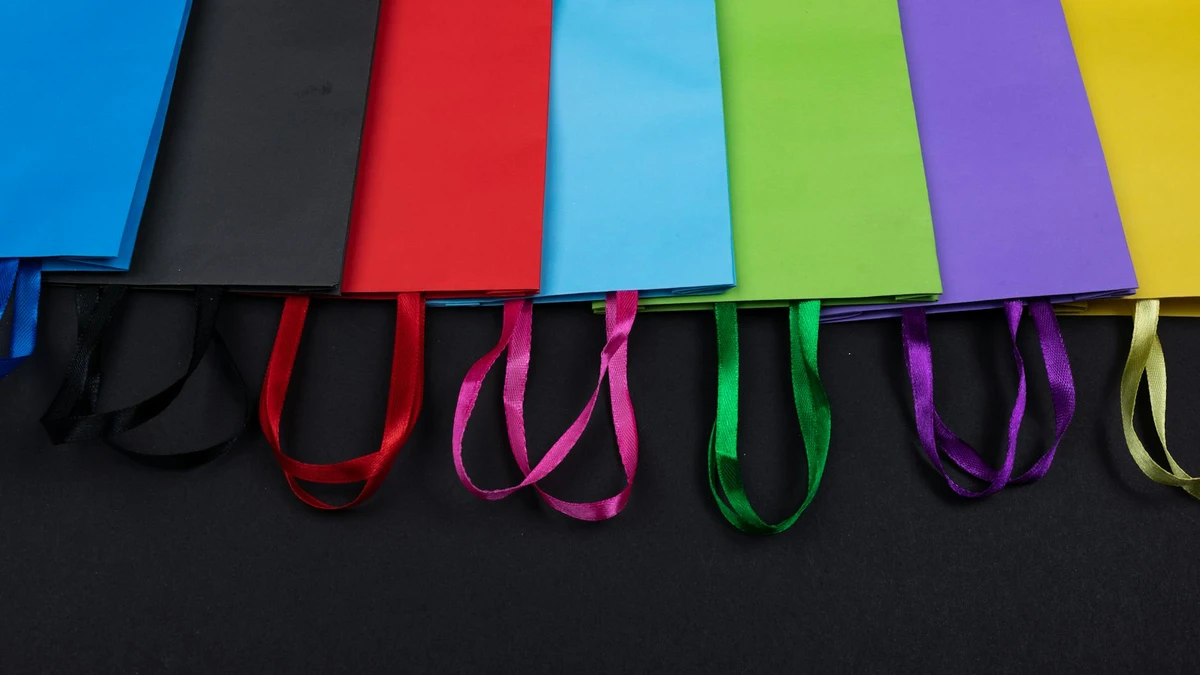
Custom eco paper bags are recyclable or biodegradable paper bags printed with company logos, branding, or designs using flexographic, offset, or screen printing methods. They typically use kraft (brown), white, or recycled paper (70-140 GSM), reinforced handles, and eco-friendly inks. MOQ ranges from 5,000-50,000 units depending on printing method, with costs of $0.30-0.60 per bag including printing.
MOQ varies by printing method: flexographic (20,000-50,000 bags for 1-3 colors), offset (30,000-50,000 for full-color), screen printing (5,000-20,000 for 1-2 colors). Lower quantities available at 30-50% premium pricing. First-time orders often require higher MOQ due to setup costs ($200-800 for plates/screens). Screen printing offers lowest MOQ for testing market before scaling.
Total cost: $0.30-0.60 per bag depending on: bag size ($0.15-0.35 blank), printing method (flexo +$0.08-0.30, offset +$0.25-0.45, screen +$0.20-0.50), number of colors (more colors = higher cost), setup fees ($200-800 one-time), and MOQ (higher quantities reduce per-unit cost). Example: 30,000 kraft bags, 2-color flexo = $0.41/bag including all costs.
Vector formats required: AI (Adobe Illustrator preferred), EPS, or high-resolution vector PDF. Files must be CMYK color space (not RGB), 300 DPI minimum if raster elements included, with text outlined/converted to paths. Include 3mm bleed on all sides, keep important elements 5mm inside cut line. Unacceptable: PNG, JPG, Word docs, or low-resolution PDFs.
Yes, using offset printing on white paper bags. Offset delivers photo-quality reproduction, handles gradients and complex artwork well. Cost: +$0.25-0.45 per bag, MOQ 30,000-50,000 units. Not recommended on kraft paper (natural brown base dulls colors) or with flexographic printing (poor gradient reproduction). For best results: design in CMYK, use 300 DPI images, order physical samples before bulk production.
Total timeline: 4-8 weeks. Breakdown: design approval (3-5 days + revisions), production (screen 2-3 weeks, flexo 3-4 weeks, offset 4-5 weeks), domestic shipping (3-7 days) or international (4-6 weeks ocean, 7-10 days air). Rush production possible (+30-50% cost) for 1-2 week reduction. Plan ahead for seasonal campaigns—order 8-10 weeks before needed.
Use Pantone PMS color codes from brand guidelines, not RGB/CMYK approximations. Supplier mixes exact ink formula matching Pantone swatch (+$50-150 per color). Always order physical printed samples before bulk production to verify color accuracy. Account for paper color: kraft (brown) darkens inks; white paper shows true colors. Request color matching certificate documenting Pantone codes used.
Custom eco paper bag printing transforms functional packaging into powerful marketing assets—bags become mobile billboards generating brand exposure, customer loyalty, and perceived value far exceeding the $0.15-0.40 printing cost premium. Success requires professional design preparation (vector files, CMYK colors, proper bleed), appropriate printing method selection (flexo for simple logos, offset for complex art, screen for small runs), and rigorous quality control (physical samples, pre-delivery inspection) to prevent costly mistakes.
Key Takeaways:
1.Always design in CMYK with vector files (AI, EPS), use Pantone codes for brand colors, include 3mm bleed and 5mm safe zones to prevent printing disasters
2.Printing method selection depends on design complexity—flexo ($0.08-0.30/bag) for 1-3 colors, offset ($0.25-0.45/bag) for full-color photos, screen ($0.20-0.50/bag) for small runs under 20,000
3.Kraft paper limits color vibrancy (dark inks only), white paper enables full-color printing, recycled paper maximizes sustainability claims
4.MOQ ranges 5,000-50,000 units depending on method; first order includes $200-800 setup fees, reorders save 20-30% by reusing plates
5.Physical sample approval before bulk production ($50-150) prevents $5,000-10,000 disasters from color mismatches, structural failures, or print quality issues
For retail stores, restaurants, and brands seeking memorable packaging that drives customer loyalty and social media sharing, investing in professionally designed and printed custom eco paper bags delivers measurable ROI through increased brand recognition, perceived quality premium, and customer acquisition cost reduction from organic word-of-mouth marketing.
Explore more packaging solutions:
Papacko supplies custom printed eco paper bags to retail stores, restaurants, and brands worldwide. We provide design consultation, color matching services, and quality assurance to ensure your branded bags meet exact specifications.
Eco bag printing decisions are usually part of a wider branding system that includes sustainable materials, print execution, and matching takeaway packaging elements.
Get in touch:
Last Updated: November 2025
Content Team: Papacko
Reviewed by: Print Production & Design Department