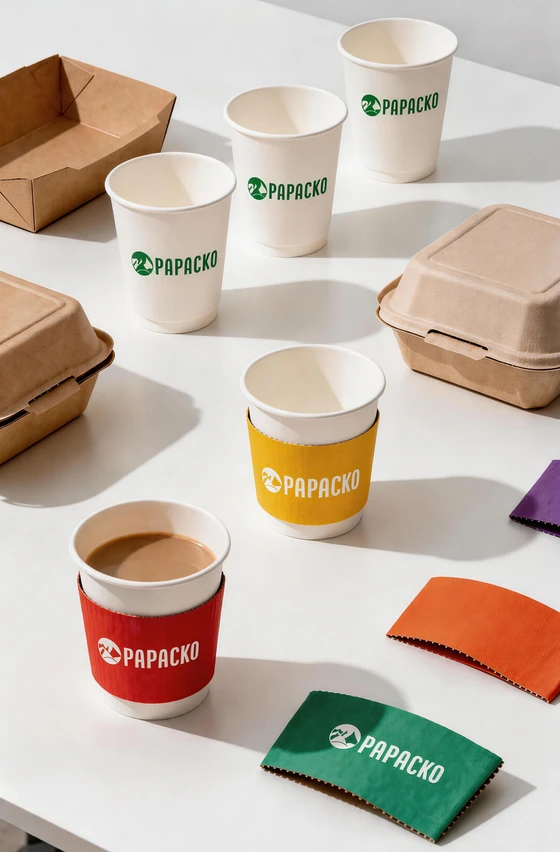
Ready to create your own branded paper cups or packaging?
Tell us your requirements — size, coating, printing, and destination — and our team will prepare a detailed quotation within 24 hours.

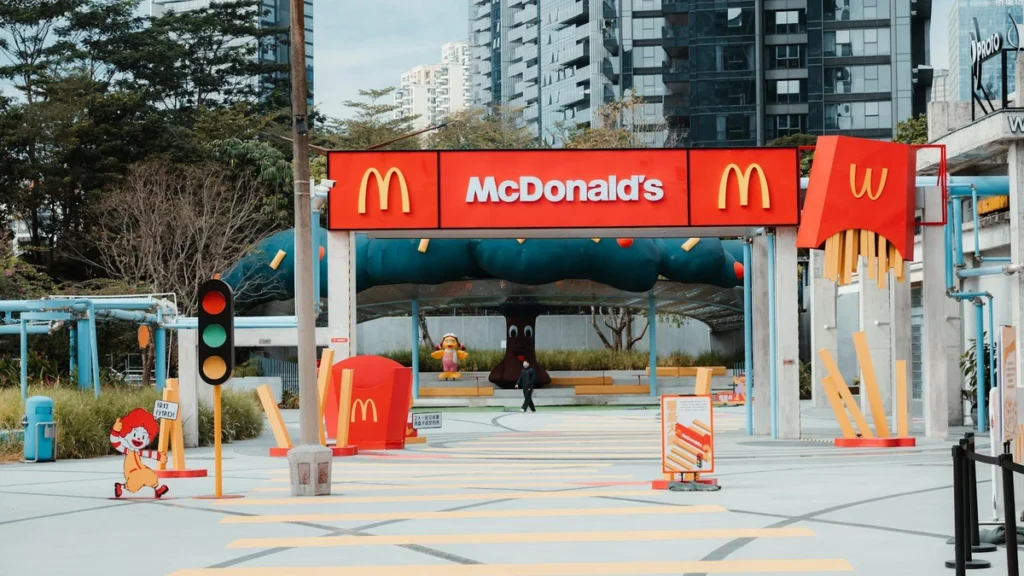
Franchise brands distribute 2.5-8 million food containers annually across their networks, yet 45-60% struggle with packaging inconsistencies - mismatched logo colors between locations, varying box sizes that confuse customers.
Franchise brands distribute 2.5-8 million food containers annually across their networks, yet 45-60% struggle with packaging inconsistencies—mismatched logo colors between locations, varying box sizes that confuse customers, and quality fluctuations that damage brand perception. A single franchise location using off-brand packaging can generate 200-400 negative brand impressions daily as customers associate inconsistent packaging with quality control failures.
This comprehensive customization guide addresses the unique challenges franchise brands face when implementing custom paper food boxes across multiple locations: establishing design standards that maintain brand integrity at scale, coordinating printing specifications across regional suppliers to ensure color consistency, creating centralized ordering systems that prevent location-specific variations, implementing quality control protocols that detect defects before customer-facing use, and optimizing costs through consolidated purchasing while accommodating local operational needs.
💡 Quick Takeaway: Successful franchise packaging customization requires centralized design governance (Pantone-matched color standards, locked template files), multi-supplier coordination (max 2-3 approved vendors, quarterly quality audits), tiered ordering systems (corporate bulk purchasing with local distribution), strict specifications (±5% dimensional tolerance, ±10% color variance limits), and consolidated MOQs of 50,000-500,000 units achieving $0.12-0.28 per box costs across 5-500+ locations.
The key to choosing custom paper boxes depends on:
Franchise packaging faces unique pressures absent from single-location restaurants:
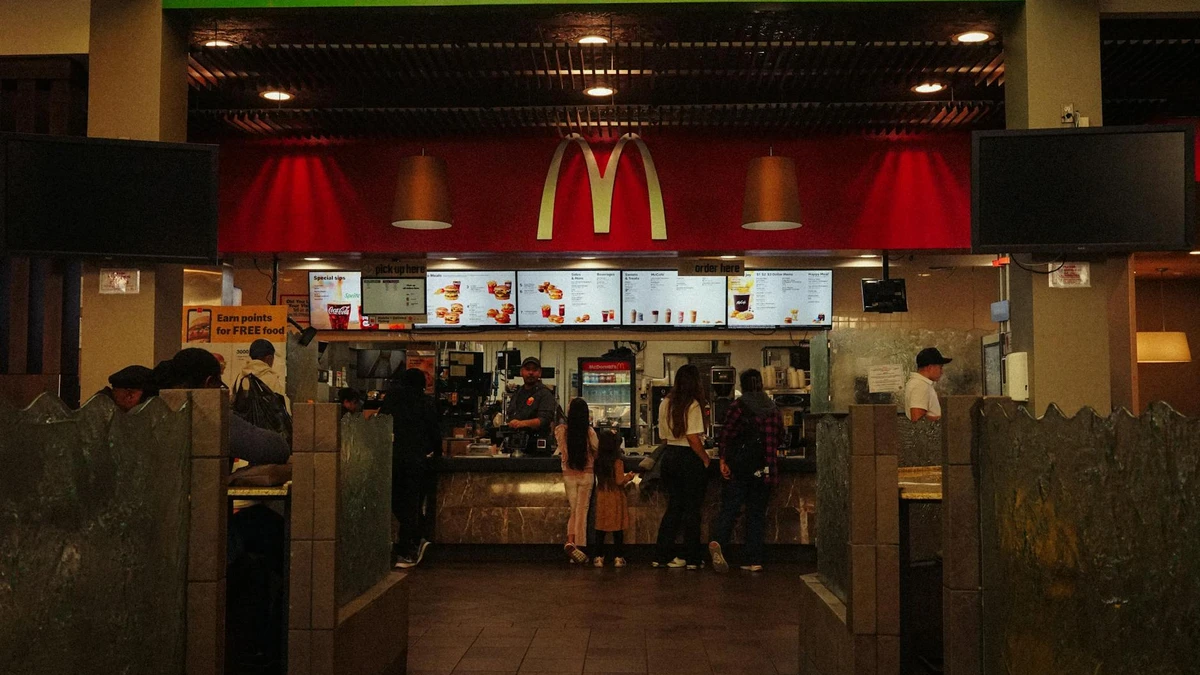
•Brand dilution risk: Each location acting as independent buyer creates 15-40% packaging variation
•Customer confusion: Inconsistent boxes across locations reduce brand recognition by 25-35%
•Quality perception: Mismatched packaging signals operational disorganization, reducing trust scores 18-28%
•Cost inefficiency: Decentralized purchasing increases per-unit costs 30-60% vs consolidated orders
Market research: A 2025 franchise industry study found that brands with standardized packaging across all locations achieved 22-31% higher customer brand recall scores and 15-20% higher repeat visit rates compared to franchises allowing location-specific packaging choices.🎯 Industry Insight: Fast-casual chains report that packaging consistency ranks as the #3 factor in brand perception (after food quality and service speed), with 68% of customers citing “professional packaging” as indicator of franchise quality standards.
Understanding custom paper boxes requires attention to these factors:
Essential design elements for franchise consistency:•Master template: Held by corporate, never distributed to franchisees
•Location templates: Pre-populated variable fields, locked design elements
•File formats: Vector source (AI/EPS) + print-ready PDF with embedded fonts
•Version control: Sequential numbering (v1.0, v1.1, v2.0) with change logs
Understanding the custom paper boxes requires attention to these factors:
The Pantone imperative:1.Corporate approves printed color samples from each supplier
2.Samples become reference standards for future production runs
3.Each print batch includes color control strips for QC verification
4.Franchisees report color deviations within 7 days of delivery
5.Suppliers replace batches exceeding ΔE 2.0 variance at no cost
The key to choosing custom paper boxes depends on:
Franchisee-specific customization zones:•Corporate orders all boxes with location-specific printing
•Each franchisee receives shipment with their info pre-printed
•Eliminates local design modifications
•Requires accurate location database maintenance
Decentralized approach (viable for 3-5 locations):•Franchisees order from approved template with their info
•Corporate reviews proofs before production approval
•Higher risk of template violations
•Allows faster local reordering
When evaluating the custom paper boxes, consider the following:
Supplier qualification criteria:•5-20 locations: 1-2 suppliers (consolidate volume for pricing)
•20-100 locations: 2-3 suppliers (regional coverage, redundancy)
•100-500 locations: 3-4 suppliers (geographic distribution, competitive pricing)
•500+ locations: 4-6 suppliers (risk mitigation, capacity assurance)
Key considerations:
Universal specification document (provided to all approved vendors):BOX STYLE: Fold-top takeout container DIMENSIONS: 200mm × 150mm × 75mm (L×W×H) TOLERANCE: ±3mm on all dimensions
MATERIAL:
•Paperboard: 300-320 GSM SBS (solid bleached sulfate)
•Coating: Aqueous (water-based, FDA compliant)
•Grease resistance: Kit rating 8 minimum
PRINTING:
•Method: Offset or flexographic
•Colors: Pantone 185 C + Pantone 432 C + Black
•Registration: ±0.5mm maximum misalignment
•Coverage: Single exterior panel (front face)
CONSTRUCTION:
•Glue: EVA (ethylene-vinyl acetate), food-safe
•Fold lines: Scored (not perforated)
•Closure: Interlocking tabs, 1.2-1.5 kg hold strength
QUALITY STANDARDS:
•Leak test: Hold 16 oz liquid 10 minutes, zero leakage
•Drop test: Loaded box survives 1-meter drop
•Color variance: ΔE < 2.0 from approved sample
•Defect rate: <0.5% of batch (tears, misprints, glue failures)
Ensuring cross-supplier consistency:1.All suppliers receive identical specification PDF with technical drawings
2.Each supplier produces 500-unit sample batch for corporate approval
3.Approved samples archived as reference standards
4. Production batches include first-article inspection (sample from each print run)
5.Quarterly comparative audits test boxes from each supplier side-by-side
The key to choosing custom paper boxes depends on:
Corporate bulk ordering with local distribution:•Centralized purchasing justifies dedicated staff at 500,000+ annual units
•Regional hub model requires 3,000-5,000 sq ft warehouse space per region
•Minimum 6-month demand forecasting for bulk ordering
•Franchisee compliance agreement (no off-brand purchasing)
Understanding custom paper boxes requires attention to these factors:
Online ordering system features:1.Franchisee logs in with location ID credentials
2.Selects box type from pre-approved catalog (sizes, styles)
3.System auto-populates location-specific info (address, phone)
4.Reviews proof with locked branding, editable contact fields only
5.Selects quantity (system suggests based on historical usage)
6. Approves order—routes to supplier without corporate review (unless first order)
7.Tracks shipment status, delivery ETA
Technology platforms:•Custom-built: $15,000-50,000 development (50+ locations)
•Third-party packaging portals: $500-2,000/month SaaS (10-100 locations)
•Supplier-hosted: free/included (5-20 locations, single vendor)
When evaluating the custom paper boxes, consider the following:
Pre-production approval (before print run):•Color control strips on every print sheet (spectrophotometer readings)
•Dimensional checks every 500 units (calipers, tolerance ±3mm)
•Leak testing: 1 box per 1,000 units (fill with water, 10-minute hold)
•Drop testing: 1 box per 5,000 units (1-meter loaded drop)
Post-delivery verification (franchisee level):•Franchisees inspect first delivery batch (5% sample or 50 boxes minimum)
•Report defects within 7 days via standardized form
•Supplier replaces defective batches (>2% defect rate threshold)
Key considerations:
1.Franchisee reports defect via portal/email with photos
2.Corporate brand team reviews within 24-48 hours
3.If validated, supplier notified and required to respond within 72 hours
4.Supplier provides replacement timeline (rush if critical defect)
5.Supplier investigates root cause, implements corrective action
6. Repeated defects (3+ incidents in 6 months) trigger supplier review/replacement
Key considerations:
Franchise size classification:•Corporate negotiates tier pricing based on total network volume
•Small locations access Medium pricing by ordering through corporate pool
•Example: 50 locations each using 20,000 boxes = 1,000,000 total volume
•Individual small location pricing: $0.38/box × 20,000 = $7,600
•Consolidated network pricing: $0.16/box × 20,000 = $3,200
•Savings per location: $4,400/year × 50 locations = $220,000 total network savings
The key to choosing the custom paper boxes depends on:
Cost drivers in custom printing:•2 Pantone colors (brand primary + black)
•Single exterior panel printing (front face only, 35-45% coverage)
•Standard size (align to common food portion: 16 oz, 26 oz, 32 oz)
•Aqueous coating (water-based, food-safe, low cost)
•Minimal variable data (store number only, printed during run)
ROI calculation:•Complex design: 4-color process + gloss finish + full coverage = $0.42/box
•Simplified design: 2 Pantone colors + aqueous + front panel = $0.24/box
•Savings per box: $0.18
•Network usage: 1,000,000 boxes/year
•Annual savings: $180,000 while maintaining brand consistency
When evaluating the custom paper boxes, consider the following:
Corporate dashboard metrics:•System learns location-specific usage patterns over 6-12 months
•Auto-generates reorder recommendations 4-6 weeks before stock-out risk
•Accounts for seasonal spikes (Q4 holidays: 25-45% usage increase)
•Alerts franchisees and corporate when inventory drops below 3-week supply
Understanding custom paper boxes requires attention to these factors:
Preventing off-brand packaging:•Compliance bonuses: 5% rebate on packaging costs for locations with 100% brand adherence
•Non-compliance penalties: $500-2,000 per incident (escalating)
•Preferred supplier discounts: 8-12% savings vs open-market purchasing
•Quality awards: Annual recognition + marketing support for best brand presentation
When evaluating the custom paper boxes, consider the following:
New franchisee packaging startup:•Small location (10,000 boxes, 3-month supply): $3,200-4,200
•Medium location (25,000 boxes, 4-month supply): $6,000-8,000
•Large location (50,000 boxes, 5-month supply): $9,000-12,000
When evaluating the custom paper boxes, consider the following:
Cross-border packaging considerations:•Challenge: EU requires recyclability logos, allergen text in local language
•Solution: Design “international base” template (logo, colors) + country-specific regulatory panel (modular 15% of design)
•Cost: +$0.04-0.08/box for variable compliance printing vs standardized domestic design
•Suppliers: Qualified 2 EU-based vendors meeting same Pantone, dimensional specs as US suppliers
❌ Mistake #1: Allowing franchisees to “customize” templates with local design preferences (different fonts, colors, layouts) ✅ Correct Approach: Lock all brand elements (logo, colors, typography, layout) in master template files. Only franchisee-specific data (address, phone, store number) should be variable. Brand consistency across 100 locations is more valuable than local “creative input” that dilutes recognition.
❌ Mistake #2: Using CMYK color specifications instead of Pantone — well-known to 20-40% color variation between suppliers and print runs ✅ Correct Approach: Specify Pantone PMS codes for all brand colors. Invest $0.02-0.05 more per box for spot color printing. Require suppliers to use spectrophotometers for color QC (ΔE < 2.0 tolerance). Inconsistent brand colors communicate poor quality control.
❌ Mistake #3: Decentralized purchasing—each franchisee orders independently, losing 35-55% volume discounts and quality control ✅ Correct Approach: Implement centralized or regional hub purchasing for 10+ locations. Corporate negotiates master pricing, approves suppliers, and coordinates orders. A franchise network using 1 million boxes annually saves $180,000-300,000 through consolidated purchasing vs decentralized model.
❌ Mistake #4: No formal quality control—franchisees discover defective boxes only when customers complain ✅ Correct Approach: Implement three-stage QC: (1) pre-production proof approval, (2) first-article inspection from each print run, (3) franchisee incoming inspection of 5% sample. Require suppliers to replace batches exceeding 0.5% defect rates. QC prevents customer-facing brand damage.
❌ Mistake #5: Over-designing boxes with 4-6 colors — full coverage, specialty finishes—paying $0.38-0.52/box for complexity that doesn’t improve brand recognition ✅ Correct Approach: Simplify to 2 Pantone colors, front-panel-only printing (40-60% coverage), standard sizes. Achieve same brand impact at $0.18-0.28/box. The $0.20/box savings across 1 million annual units = $200,000 redeployed to food quality or marketing.
Implementing custom paper boxes across franchise networks transforms packaging from operational necessity to strategic brand asset—but only when executed with rigorous standardization, centralized governance, and multi-supplier quality control. Success requires balancing corporate brand consistency with franchisee operational flexibility, consolidating purchasing power while maintaining local service levels, and enforcing specifications without stifling growth.
Key Takeaways:1. Lock brand elements—Pantone colors, logo placement, typography non-negotiable; only franchisee contact info variable
2. Centralize purchasing at scale—20+ locations justify regional hubs or corporate ordering, saving 30-55% ($90,000-440,000 annually for mid-size networks)
3. Qualify 2-4 suppliers maximum—more vendors = consistency challenges, fewer = supply risk; sweet spot is regional coverage with competitive redundancy
4. Implement three-stage QC—pre-production proofs, in-production monitoring, post-delivery franchisee inspection catches defects before customer exposure
5. Simplify design for cost efficiency—2 Pantone colors on single panel achieves brand impact at $0.18-0.28/box vs complex designs at $0.38-0.52/box
•“>Food Packaging Containers
•“>Franchise Brand Guidelines
•“>Multi-Location Quality Control
Papacko partners with franchise brands operating 5-500+ locations to design, produce, and distribute custom paper food boxes with guaranteed consistency across all markets. Our franchise packaging program includes centralized design management, multi-supplier coordination, online ordering portals, quality control protocols, and consolidated pricing—ensuring brand integrity while optimizing costs.
Get in touch: