Ready to create your own branded paper cups or packaging?

Tell us your requirements — size, coating, printing, and destination — and our team will prepare a detailed quotation within 24 hours.

Contact Form Demo

Ready to create your own branded paper cups or packaging?

Tell us your requirements — size, coating, printing, and destination — and our team will prepare a detailed quotation within 24 hours.
Contact Form Demo

Kraft Paper Bags for Retail Takeaway

Retail businesses distribute over 180 billion paper bags annually, with kraft paper bags accounting for 68% of this market due to their strength, sustainability credentials, and natural aesthetic appeal. Yet 40-55% of retailers.

Last Updated: April 2026 Reading Time: 9-11 minutes Author: Papacko Content Team

Introduction

Retail businesses distribute over 180 billion “>paper bags annually, with kraft paper bags accounting for 68% of this market due to their strength, sustainability credentials, and natural aesthetic appeal. Yet 40-55% of retailers select inappropriate bag specifications—choosing handles that break under product weight, sizes that waste material costs, or printing methods that fail durability tests during transport.

This comprehensive selection guide covers everything retail and takeaway businesses need to specify kraft paper bags correctly: handle type comparison (twisted vs flat vs rope), weight capacity calculations matched to product types, size optimization formulas that reduce material waste by 20-35%, printing technique durability testing, cost-per-bag analysis across order volumes, and common specification mistakes that lead to customer complaints and brand damage.

💡 Quick Takeaway: Effective kraft bag selection requires matching handle tensile strength to product weight (twisted handles: 3-5 kg, flat handles: 5-8 kg, rope handles: 8-12 kg), choosing bag dimensions 15-20% larger than product volume, selecting 80-120 GSM paper weight based on contents, and ordering quantities of 1,000-5,000 units for customization viability at $0.15-0.45 per bag.

Why Kraft Paper Bags Lead Retail Takeaway Packaging

The Market Shift from Plastic to Paper

Key considerations:

Regulatory and consumer demand drives paper bag adoption:

Plastic bag bans: 127 countries and 8 US states have implemented restrictions (2023-2026)

Consumer preference: 73% of shoppers view brands using paper bags as more environmentally responsible

Durability perception: Quality kraft bags communicate premium positioning vs thin plastic alternatives

Reusability factor: 62% of customers reuse branded kraft bags for storage, gifts, or secondary shopping—extending brand exposure

Market data: Retail industry analysis shows that businesses transitioning from plastic to kraft paper bags experience 15-22% increase in positive customer feedback scores, with sustainability cited as primary driver. The global kraft paper bag market grew 18% annually from 2023-2026, reaching $4.8 billion.

🎯 Industry Insight: Premium retailers report that upgrading from generic plastic to custom-branded kraft bags increases perceived product value by 12-18%, justifying 8-15% price premiums without customer resistance.

Handle Types and Weight Capacity Matching

Twisted Paper Handles — Economy Option

Key considerations:

Construction: Two or three paper strands twisted together, glued at attachment points
SpecificationDetails
Weight capacity3-5 kg (6.6-11 lbs)
Comfortable carry time5-10 minutes before hand strain
Cost$0.12-0.22 per bag (most economical)
Best applicationsClothing, lightweight retail, bakery items
Attachment methodInternal glue patches (4 points)
Failure modeHandle detachment at glue points under excessive weight
Advantages:

Lowest cost per bag (40-60% cheaper than rope handles)

Quick production (no additional components required)

Sufficient for 70% of retail applications

Limitations:

Limited weight capacity (unsuitable for books, bottles, canned goods)

Less comfortable for extended carrying (thin profile cuts into hands)

Perceived as lower quality vs flat or rope handles

Ideal for: Fashion boutiques, gift shops, bakeries, light grocery items, cosmetics retail

Flat Paper Handles — Mid-Range Strength

Understanding kraft paper bags requires attention to these factors:

Construction: Wide paper strips (25-35mm) folded and reinforced, glued or stitched
SpecificationDetails
Weight capacity5-8 kg (11-17.6 lbs)
Comfortable carry time10-20 minutes
Cost$0.18-0.32 per bag
Best applicationsBooks, shoes, moderate groceries, takeout containers
Attachment methodInternal glue + reinforcement patches, or eyelet stitching
Failure modeHandle tearing at fold points with excessive weight
Advantages:

Wider surface area reduces hand pressure (more comfortable)

Stronger than twisted handles (60-80% greater tensile strength)

Better brand presentation (more space for printed logos)

Limitations:

30-50% more expensive than twisted handles

Slightly longer production time (reinforcement step)

Still insufficient for heavy items (wine bottles, canned goods)

Ideal for: Bookstores, shoe retailers, prepared food takeaway, general retail with moderate weight products
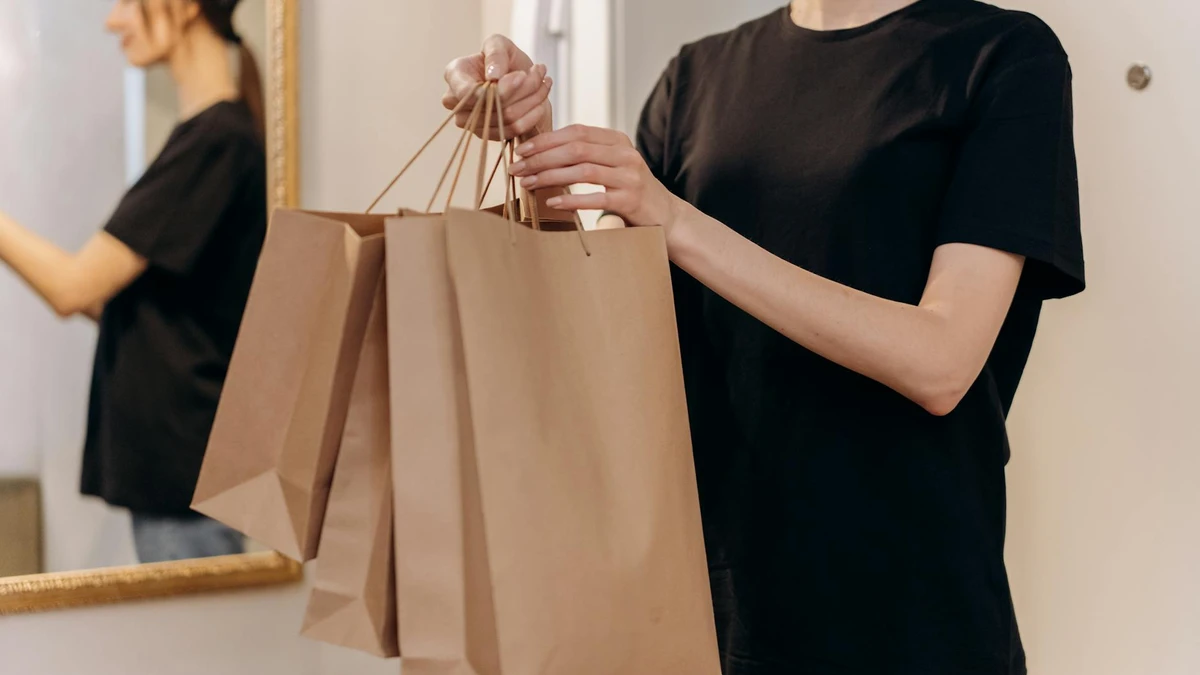
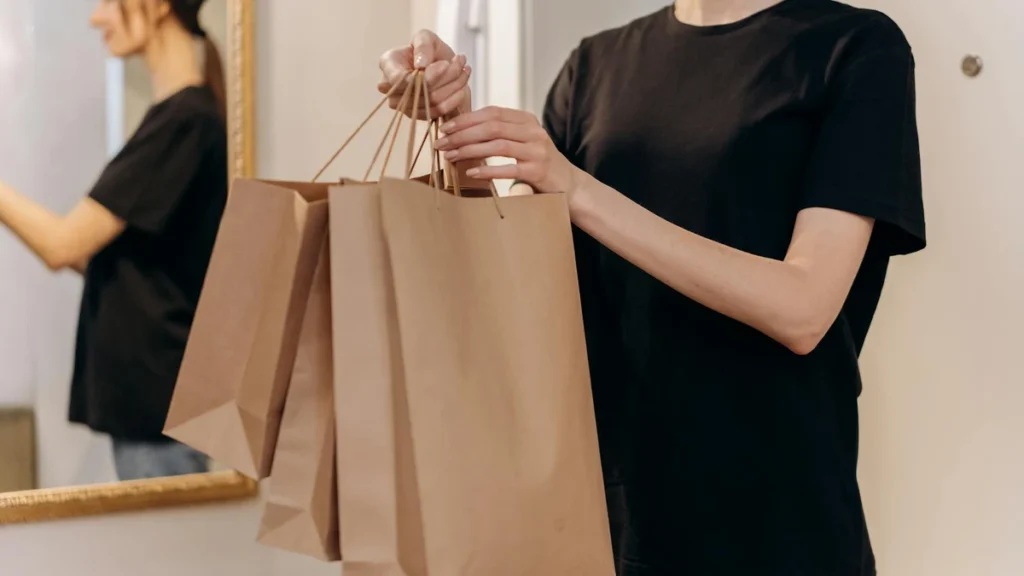
Papacko retail store counter showing kraft paper bags with different handle types being packed with purchase

Rope Handles — Premium Strength

Understanding kraft paper bags requires attention to these factors:

Construction: Cotton, jute, or paper rope threaded through punched holes, knotted internally
SpecificationDetails
Weight capacity8-12 kg (17.6-26.4 lbs) for cotton rope
Comfortable carry time30+ minutes (soft, ergonomic grip)
Cost$0.28-0.48 per bag
Best applicationsWine bottles, gourmet food, luxury retail, heavy items
Attachment methodPunched eyelets with internal knots or metal grommets
Failure modeBag tear at eyelet points (rare with proper reinforcement)
Advantages:

Highest weight capacity (suitable for bottles, books, heavy products)

Most comfortable carry experience (soft rope, even weight distribution)

Premium perception (associated with high-end brands)

Durable for reuse (customers repurpose for years)

Limitations:

Most expensive option (2-4x cost of twisted handles)

Longer production time (manual rope threading in some processes)

May seem over-engineered for lightweight products

Ideal for: Wine shops, gourmet food stores, luxury fashion, gift packaging, jewelry, premium cosmetics

Kraft Paper Weight and Durability Selection

GSM (Grams per Square Meter) Specifications

Understanding the kraft paper bags requires attention to these factors:

Understanding paper weight:
GSM RangeThickness FeelStrength LevelApplicationsCost Impact
70-90 GSMThin, flexibleLight dutyNewspapers, promotional materialsBaseline
100-120 GSMStandard, moderate stiffnessMedium dutyStandard retail, clothing, bakery+15-25%
130-150 GSMThick, rigidHeavy dutyBooks, bottles, groceries+30-45%
160-200 GSMVery thick, board-likeExtra heavyWine, canned goods, premium retail+50-70%
Selection formula:

Product weight < 2 kg → 100-110 GSM

Product weight 2-5 kg → 120-130 GSM

Product weight 5-8 kg → 140-160 GSM

Product weight > 8 kg → 170+ GSM with reinforced handles

Virgin vs Recycled Kraft Paper

The key to choosing the kraft paper bags depends on:

Paper TypeCharacteristicsCostSustainabilityBest Use
Virgin kraftStronger fibers, uniform color (natural brown)$0.18-0.28/bagLower (new pulp)Premium retail, maximum strength
Recycled kraftSlightly weaker, color variation possible$0.15-0.24/bagHigher (reused materials)Eco-conscious brands, standard retail
Bleached kraftWhite/colored, treated fibers$0.22-0.35/bagModerate (chemical processing)Brand-specific aesthetics
Strength comparison: Virgin kraft paper has 15-25% higher tensile strength than recycled kraft at equivalent GSM. For weight-critical applications (bottles, books), virgin kraft at 120 GSM sometimes outperforms recycled kraft at 140 GSM.Environmental certifications:

FSC (” target=”_blank” rel=”noopener”>Forest Stewardship Council): Verifies sustainable forestry practices

Recycled content percentage: 30%, 50%, 80%, or 100% post-consumer waste

Biodegradability: Both virgin and recycled kraft are compostable (60-90 days in commercial facilities)

Size Selection and Optimization

Standard Retail Bag Dimensions

When evaluating the kraft paper bags, consider the following:

Size NameDimensions (W×D×G)VolumeTypical ProductsCost Range
Extra Small18×8×22 cm3LJewelry, cosmetics, small gifts$0.12-0.18
Small22×10×28 cm6LClothing items, books, bakery$0.15-0.24
Medium26×12×35 cm11LShoes, multiple clothing, takeout$0.18-0.30
Large32×15×42 cm20LBulk shopping, large items$0.24-0.38
Extra Large40×18×48 cm35LMultiple purchases, wholesale$0.30-0.48
Dimension notation:

W = Width (bag opening)

D = Depth (gusset, side expansion)

G = Height (from bottom to top)

Sizing Optimization Formula

Calculate ideal bag size:

1.Measure product dimensions (length × width × height)

2.Add 15-20% clearance for easy packing and handle space

3.Round up to nearest standard size (custom sizes cost 25-40% more)

Example calculation (shoe box):

Shoe box: 30 cm × 20 cm × 12 cm

With 20% clearance: 36 cm × 24 cm × 14.4 cm

Recommended bag: Large size (32×15×42 cm) — width slightly smaller but height compensates

Common mistakes:

Oversizing: Using Large bags for Small products wastes 30-40% material cost

Undersizing: Cramming products into tight bags causes tears, poor customer experience

Right-sizing: Product fills 60-75% of bag volume (professional presentation, cost-efficient)
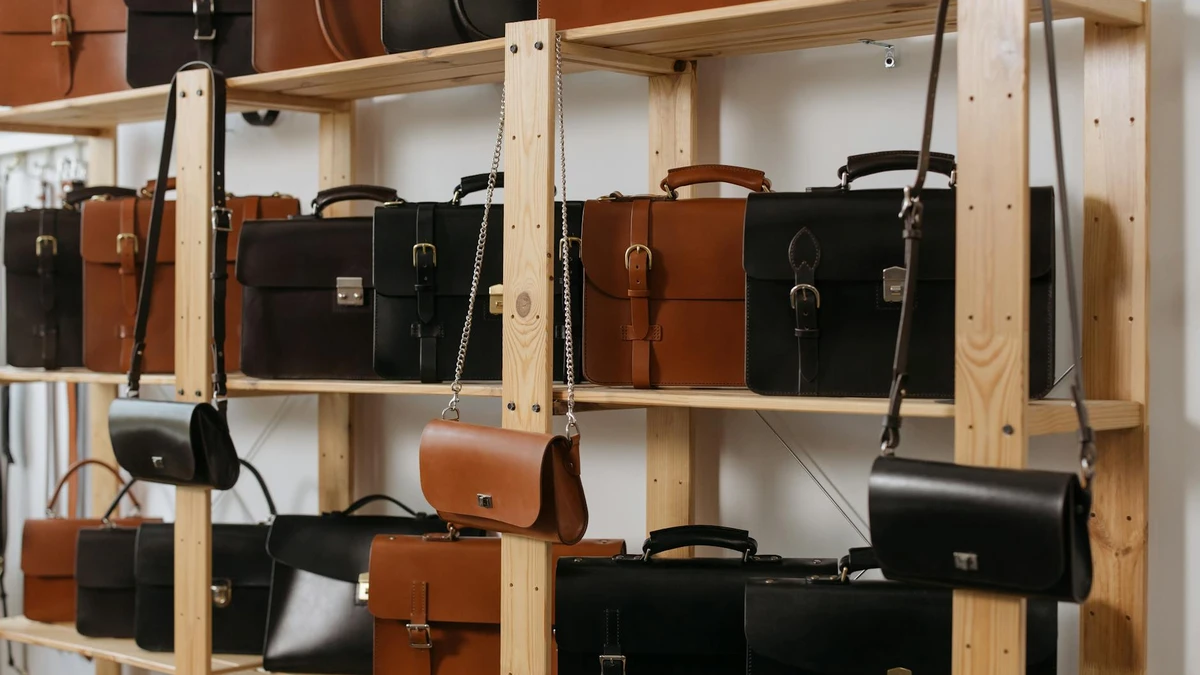
Papacko variety of kraft paper bags in different sizes arranged with retail products showing proper size mat

Printing Options and Branding Considerations

Printing Techniques for Kraft Bags

MethodPrint QualityColor OptionsSetup CostUnit CostMOQBest For
FlexographicGood (100-150 DPI)1-4 colors$600-1,800$0.03-0.085,000-10,000Simple logos, high volume
DigitalExcellent (300+ DPI)Full color$100-300$0.08-0.15500-2,000Complex designs, photos
Screen printingVery good (150-200 DPI)1-6 colors$400-1,200$0.05-0.103,000-7,000Bold graphics, medium volume
Hot stampingMetallic finishGold/silver foil$500-1,500$0.10-0.182,000-5,000Premium brands, luxury
### Design Considerations for Kraft PaperColor visibility on kraft:

High contrast colors: Black, dark blue, dark green, white (print well)

Medium contrast: Red, orange, purple (require ink density adjustment)

Poor contrast: Yellow, light pastels, beige (nearly invisible on brown kraft)

Design best practices:

1.Logo size: Minimum 60mm width for visibility at 2-3 meters

2.Font weight: Medium to Bold (Light fonts disappear on textured kraft)

3. Ink coverage: Solid fills work better than gradients (kraft absorbs ink unevenly)

4. White base layer: For colored designs, print white undercoat first (increases vibrancy 40-60%)

Positioning and Coverage Options

Print CoverageDescriptionCost ImpactVisual Impact
Single-sidedLogo on one face onlyBaselineModerate visibility
Double-sidedLogo on front and back+30-50%High visibility from all angles
All-over patternRepeating design wrapping bag+60-90%Maximum brand presence
Bottom printLogo on bag base+20-30%Visible when bag displayed flat
ROI recommendation: For most retailers, double-sided printing offers best value—50% more cost for 150-200% increased brand impressions compared to single-sided.

Cost Analysis and Order Volume Optimization

Price Structure by Order Quantity

Plain kraft bags (no printing):
QuantitySmall (22×10×28)Medium (26×12×35)Large (32×15×42)Per-Unit Cost Reduction
500 units$0.22$0.30$0.38
1,000 units$0.18$0.24$0.3218-20% vs 500
3,000 units$0.14$0.19$0.2622-25% vs 500
5,000 units$0.12$0.16$0.2235-42% vs 500
10,000 units$0.10$0.14$0.1845-53% vs 500
Custom printed bags (1-color flexographic):
QuantitySmallMediumLargeNotes
1,000 units$0.28$0.36$0.46Setup fee amortized
3,000 units$0.21$0.28$0.36Sweet spot for small retailers
5,000 units$0.18$0.24$0.31Recommended for established stores
10,000 units$0.15$0.20$0.26Lowest per-unit cost
### Storage and Inventory PlanningSpace requirements:

1,000 small bags (flat-packed) = 0.4 cubic meters

1,000 medium bags = 0.6 cubic meters

1,000 large bags = 0.9 cubic meters

Order frequency optimization:
Monthly UsageRecommended OrderFrequencyStorage Space
100-300 bags1,000-1,500 unitsEvery 4-6 months0.5-0.8 m³
300-800 bags3,000-4,000 unitsEvery 4-5 months1.5-2.5 m³
800-2,000 bags5,000-8,000 unitsEvery 3-4 months3-5 m³
2,000+ bags10,000-15,000 unitsEvery 3-5 months6-10 m³
Cost-benefit calculation:

Ordering 5,000 units vs 1,000 units saves 35-45% per bag

For 300 monthly usage, annual savings: (($0.28 – $0.18) × 3,600 bags = $360 saved)

Storage cost for 5,000 bags: ~$50-100/month for 3m³ warehouse space

Net savings: $260-310 annually by ordering larger quantities
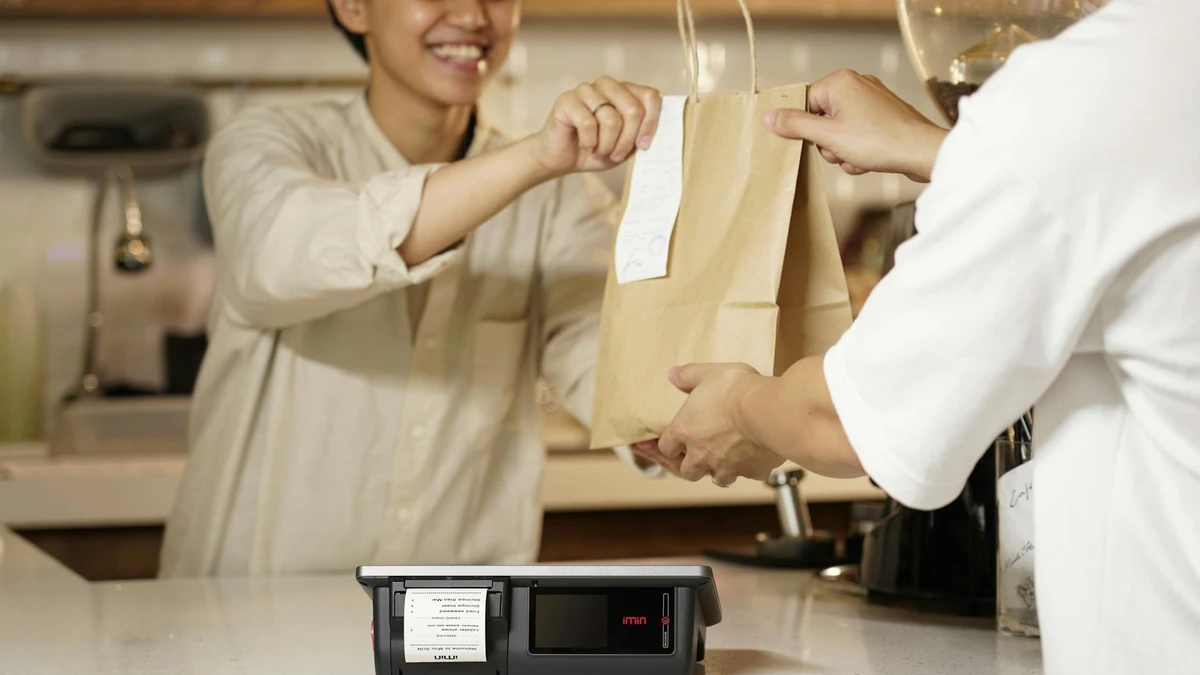
Papacko retail checkout counter with branded kraft paper bags being used for customer purchases, showing pro

Customization and Branding ROI

Branded vs Plain Bag Cost Comparison

Annual cost analysis (1,000 bags/month usage):
Bag TypeUnit CostMonthly CostAnnual CostBrand Impressions/Year
Plain kraft$0.16$160$1,9200 (no branding)
1-color printed$0.24$240$2,880240,000 (avg 20/bag)
2-color printed$0.30$300$3,600240,000+
Full-color digital$0.38$380$4,560300,000+ (higher sharing)
Incremental investment:

Basic branding (1-color): +$960/year (+$80/month)

Premium branding (full-color): +$2,640/year (+$220/month)

Marketing value:

Each branded bag seen by 15-25 people (carried in public, reused at home)

12,000 annual bags × 20 impressions = 240,000 brand exposures

Cost per impression: $2,880 ÷ 240,000 = $0.012 CPM ($12 per 1,000 impressions)

Comparison: Facebook ads CPM = $8-15, Google Display = $3-10

ROI drivers:

1.Brand recall: Customers 28-35% more likely to remember branded packaging

2. Repeat business: 12-18% increase in return visits when packaging reinforces brand

3. Social proof: Customers carrying branded bags in public = free advertising

4.Premium perception: Quality bags justify 5-10% higher product pricing

Special Features and Add-Ons

Reinforcement Options

FeaturePurposeCost ImpactApplications
Bottom cardboard insertPrevents sagging, adds rigidity+$0.05-0.08/bagHeavy items, bottles
Side gusset reinforcementIncreases weight capacity 20-30%+$0.03-0.06/bagBooks, bulk shopping
Handle reinforcement patchesPrevents tearing at attachment points+$0.02-0.04/bagMedium-heavy products
Top edge foldingCleaner finish, adds strength+$0.01-0.02/bagPremium presentation
### Window and Display Features
FeatureDescriptionCostBest For
PLA windowClear biodegradable panel+$0.08-0.15Bakery (show pastries)
Die-cut handlePunched handle hole (no separate handle)-$0.03-0.05 (savings)Lightweight clothing
Expandable gussetAccordion sides expand for larger items+$0.04-0.07Variable product sizes
Self-sealing stripAdhesive closure+$0.02-0.04Gift packaging, security
## Sustainability Certifications and Marketing

Key Environmental Credentials

CertificationWhat It VerifiesMarketing ValueCost Impact
FSC CertifiedSustainable forestry practicesHigh (recognized globally)+5-12%
Recycled Content% post-consumer wasteMedium-High+3-8% (varies by %)
Compostable (BPI)Breaks down in 60-90 daysMedium+8-15%
Carbon NeutralOffset manufacturing emissionsMedium+10-18%
Consumer perception study (2025): 68% of consumers willing to pay 5-15% premium for certified sustainable packaging, with FSC and recycled content certifications having highest recognition rates (73% and 61% respectively).Marketing messaging:

✅ “Made from 80% recycled kraft paper”

✅ “FSC-certified sustainable forestry”

✅ “Fully biodegradable and compostable”

❌ “Eco-friendly” (too vague, lacks credibility)

❌ “100% natural” (meaningless without context)

Common Selection Mistakes to Avoid

Mistake #1: Choosing twisted handles for products weighing 5+ kg (bottles, books, multiple items) ✅ Correct Approach: Match handle type to weight—twisted for <3 kg, flat for 3-7 kg, rope for 7+ kg. Test bags with actual products before ordering 5,000+ units. Handle failure causes customer frustration and brand damage.

Mistake #2: Ordering custom sizes thinking it saves money for odd-shaped products ✅ Correct Approach: Custom sizes cost 25-40% more than standard dimensions. Use next-size-up standard bag with tissue paper filler. Only specify custom sizes for ultra-high volumes (50,000+ units) where savings offset tooling costs.

Mistake #3: Selecting 70-80 GSM kraft to minimize cost, then experiencing bag failures ✅ Correct Approach: Don’t skimp on paper weight. 100-120 GSM is industry standard for retail. The $0.02-0.04 per bag savings becomes expensive when bags tear and customers complain. Right-spec bags the first time.

Mistake #4: Printing light colors (yellow, pastels) on natural kraft expecting good visibility ✅ Correct Approach: Choose high-contrast colors (black, navy, dark green) or print white base layer first (+$0.04-0.06/bag). Test print samples under store lighting before committing to 3,000+ units. Invisible logos waste entire branding investment.

Mistake #5: Ordering 10,000 units to get lowest price without testing design or calculating storage needs ✅ Correct Approach: Start with 1,000-2,000 units to validate design, test durability with actual products, and gauge customer response. Scale to 5,000-10,000 once proven. Storage costs for 10,000 bags can offset per-unit savings.

Related Papacko Resources

Authority References

Frequently Asked Questions

1. What are kraft paper bags and why are they popular for retail takeaway?

Kraft paper bags are packaging made from kraft pulp—a strong, minimally processed paper created through the kraft chemical pulping process. They’re popular for retail takeaway because they offer superior strength compared to other paper types (15-25% stronger tensile fibers), natural brown aesthetic perceived as eco-friendly, and excellent printability for branding. With plastic bag bans in 127 countries, kraft bags have become the standard retail packaging, growing 18% annually to a $4.8 billion global market by 2026.

2. How do I choose the right handle type for kraft paper bags?

Choose handle type based on product weight and carry duration: twisted paper handles ($0.12-0.22/bag) support 3-5 kg for 5-10 minute carries, ideal for clothing and bakery items; flat paper handles ($0.18-0.32/bag) support 5-8 kg for 10-20 minutes, suitable for books and moderate groceries; rope handles ($0.28-0.48/bag) support 8-12 kg for 30+ minutes with comfortable grip, best for wine bottles and heavy products. Test bags with actual products before large orders—handle failure is the #1 cause of customer complaints.

3. What GSM kraft paper weight should I select for different products?

GSM (grams per square meter) determines kraft bag strength: 70-90 GSM is too thin for most retail (promotional use only); 100-120 GSM is standard for clothing, bakery, and light items under 2 kg; 130-150 GSM handles books, shoes, and groceries 2-5 kg; 160-200 GSM suits wine bottles, canned goods, and products over 5 kg. Virgin kraft paper is 15-25% stronger than recycled kraft at equivalent GSM. Don’t under-spec to save $0.02-0.04 per bag—bag failures cost more in customer goodwill.

4. What are standard kraft paper bag sizes and how do I select the right one?

Standard sizes: Extra Small (18×8×22 cm, $0.12-0.18) for jewelry/cosmetics; Small (22×10×28 cm, $0.15-0.24) for clothing/books; Medium (26×12×35 cm, $0.18-0.30) for shoes/takeout; Large (32×15×42 cm, $0.24-0.38) for bulk shopping; Extra Large (40×18×48 cm, $0.30-0.48) for multiple items. Calculate ideal size by adding 15-20% clearance to product dimensions, then round to nearest standard size. Custom sizes cost 25-40% more—only worthwhile at 50,000+ unit volumes.

5. How much do custom printed kraft bags cost compared to plain bags?

Plain kraft bags cost $0.10-0.38 depending on size and quantity (5,000+ units). Custom 1-color flexographic printing adds $0.03-0.08 per bag plus $600-1,800 setup fee, totaling $0.15-0.46 per bag for orders of 1,000-5,000 units. Full-color digital printing costs $0.08-0.15 more per bag with lower setup ($100-300). Annual cost for 1,000 bags/month: plain bags $1,920, 1-color branded $2,880 (+$960), full-color $4,560 (+$2,640). Branded bags deliver $12 CPM vs $8-15 for social media ads while generating 240,000+ annual brand impressions.

6. What printing method should I use for custom kraft paper bags?

Choose flexographic printing ($0.03-0.08/bag, MOQ 5,000-10,000) for simple 1-4 color logos and high-volume reorders—lowest cost at scale but requires $600-1,800 setup investment. Choose digital printing ($0.08-0.15/bag, MOQ 500-2,000) for complex full-color designs, photos, or testing new branding—higher per-unit cost but minimal setup ($100-300). Screen printing ($0.05-0.10/bag, MOQ 3,000-7,000) balances quality and cost for bold graphics. Hot stamping ($0.10-0.18/bag) adds metallic gold/silver for luxury brands. Print high-contrast colors (black, navy) on natural kraft—avoid yellows and pastels that disappear.

7. Are kraft paper bags truly environmentally sustainable and what certifications matter?

Kraft bags are biodegradable (60-90 days in commercial compost facilities) and recyclable, but sustainability depends on sourcing. Look for ” target=”_blank” rel=”noopener”>FSC certification (verifies sustainable forestry, recognized by 73% of consumers), recycled content percentage (30-100% post-consumer waste adds 3-8% cost), and compostability certifications (BPI, TUV). Virgin kraft is 15-25% stronger but uses new pulp; recycled kraft has lower environmental impact but slightly less strength. Both outperform plastic bags which take 400+ years to degrade. 68% of consumers pay 5-15% premiums for certified sustainable packaging—making certifications worthwhile marketing investments.

Conclusion

Selecting the right kraft paper bags for retail takeaway requires matching five critical specifications to your business needs: handle type and tensile strength aligned with product weight, GSM paper weight appropriate for contents, standardized dimensions that balance product fit with cost efficiency, printing methods suited to design complexity and order volume, and sustainability certifications that resonate with target customers.

Key Takeaways:

1. Match handles to weight—twisted for <3 kg ($0.12-0.22/bag), flat for 3-7 kg ($0.18-0.32/bag), rope for 7+ kg ($0.28-0.48/bag)

2. Don’t under-spec paper weight—100-120 GSM is retail standard, 130-150 GSM for heavier products, saving $0.02-0.04/bag isn’t worth bag failures

3. Use standard sizes—custom dimensions cost 25-40% premiums, choose next-size-up standard and add filler instead

4. Start small with printing—test 1,000-2,000 units before committing to 10,000+ flexo orders, branded bags deliver $12 CPM brand impressions

5. Certifications drive premiums—FSC and recycled content enable 5-15% price increases, 68% of consumers value sustainable packaging

Related Resources

“>Packaging Accessories

“>Custom Printing Services

“>Sustainable Packaging Solutions

Ready to Source Your Kraft Paper Bags?

Papacko supplies retail businesses with custom kraft paper bags in all handle types (twisted, flat, rope), standard and custom sizes, and printing options from 1-color flexo to full-color digital. Our packaging specialists provide free samples, weight capacity testing, and design optimization—ensuring your bags match products perfectly while maximizing branding ROI.

Get in touch:
krad lin
krad lin

Papacko Content Team — We create practical, factory-grounded guides for B2B food & beverage packaging. Topics include paper cup/bowl selection, PE/PLA/water-based coatings, food-contact compliance, printing, QC, and export-ready workflows—so cafés, restaurants, distributors, and OEM partners can scale with reliable supply.

Articles: 113