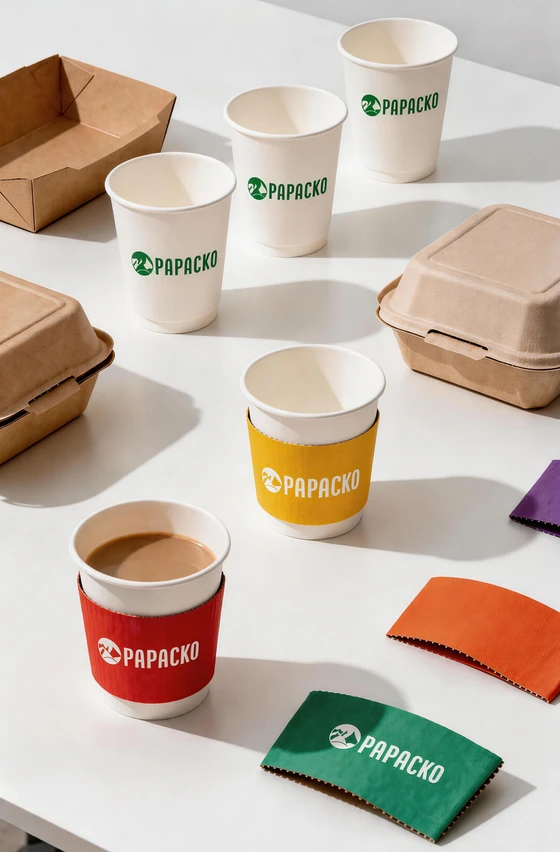
¿Está listo para crear sus propios vasos o envases de papel con su marca?
Díganos sus requisitos -tamaño, revestimiento, impresión y destino- y nuestro equipo le preparará un presupuesto detallado en 24 horas.
Última actualización: Noviembre de 2025
Tiempo de lectura: 10 minutos
Autor: Equipo de contenidos de Papacko
Tu cafetería gastó 1 435 000 en envases ecológicos personalizados bolsas de papel solo para recibir 10 000 unidades en las que tu logotipo está desalineado 3 mm, el color verde se imprime en tono oliva en lugar de verde bosque, y las asas se rompen con un peso de 3,6 kg en lugar de los 6,8 kg prometidos. Tu proveedor culpa a “problemas con el archivo de diseño” y se niega a reembolsarte, dejándote con un stock inservible y clientes enfadados que publican fotos de las bolsas rotas en las redes sociales.
La impresión personalizada de bolsas de papel ecológicas no consiste simplemente en subir un logotipo, sino que requiere comprender las limitaciones del área de impresión, las conversiones de espacio de color (de RGB a CMYK), la compatibilidad de los materiales con los distintos métodos de impresión, un diseño estructural que equilibre la estética con la capacidad de carga, y controles de calidad que eviten errores costosos. La diferencia entre la impresión de bolsas personalizadas por parte de aficionados y de profesionales puede suponer entre 1 000 y 5 000 euros en stock desperdiciado o bolsas que se convierten en vallas publicitarias andantes, generando más de 10 000 euros en valor de exposición de marca.
En esta guía, aprenderás:
-Requisitos de los archivos de diseño y errores habituales en la preparación
-Métodos de impresión: comparación entre flexografía, offset y serigrafía
-Selección de materiales para bolsas de papel ecológicas y compatibilidad con la impresión
-Expectativas y precios relativos al pedido mínimo (MOQ)
-Puntos de control de calidad que deben verificarse antes de aceptar la entrega
-Análisis de costes: gastos de puesta en marcha, costes unitarios e inversión total
-Cómo elegir proveedores fiables y evitar desastres en la impresión
💡 Comida rápida para llevar: La impresión personalizada de bolsas de papel ecológicas requiere un pedido mínimo de entre 20 000 y 50 000 unidades, unos gastos de preparación de entre 100 y 800 euros por las planchas de impresión, y archivos en formato vectorial (AI, EPS, PDF) con colores CMYK.
El plazo de entrega es de entre 4 y 6 semanas; el sobrecoste es de 1 TP4T0,15-0,40 por bolsa en comparación con las bolsas sin imprimir, dependiendo de los colores (el más barato es el de un solo color y el más caro, el a todo color).
Especificaciones clave: margen de sangrado de 2-5 mm, resolución mínima de 300 ppp, correspondencia de colores Pantone para garantizar la coherencia de la marca.
Mejores técnicas de impresión: flexografía (1-3 colores, el más económico), offset (4 o más colores, calidad fotográfica).
El papel kraft es el más ecológico, pero solo es adecuado para tintas de colores oscuros; el papel blanco es el mejor para impresiones a todo color con tonos vivos.
Una preparación adecuada del archivo de diseño evita el 80% de problemas de impresión y garantiza que tu logotipo se vea exactamente como se desea.
Formatos vectoriales (Obligatorio):
-AI (Adobe Illustrator): Estándar del sector, la opción preferida por todas las imprentas
-EPS (PostScript encapsulado): Compatibilidad universal
-PDF (alta resolución): Admisible si se ha creado a partir de un archivo vectorial con las fuentes incrustadas
¿Por qué es necesario Vector?:
-Adaptable sin pérdida de calidad (las bolsas están disponibles en varios tamaños)
-Bordes nítidos y texto definido en cualquier tamaño
-La impresora puede ajustar las dimensiones sin que se vea pixelada
Formatos no admitidos:
-❌ PNG, JPG, GIF (imágenes rasterizadas/mapas de bits = se ven pixeladas al ampliarlas)
-❌ Documentos de Word, archivos de PowerPoint
-❌ Archivos PDF de baja resolución a partir de capturas de pantalla
Requisitos de resolución:
-Archivos vectoriales: sin límite de resolución (escalabilidad infinita)
-Si se incluyen elementos rasterizados: 300 ppp como mínimo al tamaño real de impresión
-Prueba: amplía la imagen hasta 300% en el software de diseño; los bordes deben mantenerse nítidos
El problema del RGB frente al CMYK:
-Las pantallas de ordenador muestran luz RGB (rojo, verde y azul)
-Las impresoras utilizan CMYK (tintas cian, magenta, amarilla y negra)
-El RGB tiene una gama de colores más amplia; algunos colores RGB son imposibles de imprimir
Impacto en la conversión:
-Los verdes vivos dan paso a tonos más apagados
-Los azules vivos se vuelven más oscuros
-Los colores neón no se pueden reproducir en CMYK
Solución: Diseña siempre en CMYK:
-Configura el software de diseño en modo CMYK desde el principio
-Lo que ves ≈ lo que se imprime (la calibración del monitor afecta a la precisión)
Coincidencia de colores Pantone (Recomendado para mantener la coherencia de la marca):
-Pantone = sistema de colores estandarizado con muestras físicas de tinta
-Ejemplo: Pantone 348 C = el verde característico de Starbucks
-La impresora prepara la fórmula exacta de tinta que coincide con la muestra Pantone
-Coste: +$50-150 por color Pantone (tarifa por mezcla de tintas a medida)
-Merece la pena para: colores de marca que deben coincidir exactamente en todos los materiales
Coincidencia de colores entre el papel kraft y el papel blanco:
-Papel Kraft (marrón): Las tintas más oscuras son las que mejor quedan (negro, azul marino, verde bosque, burdeos)
-Los colores claros (amarillo, rosa, azul claro) apenas se ven sobre el papel kraft
-Informe técnico: Todos los colores se imprimen con gran intensidad, sin restricciones
Área de sangrado (2-5 mm):
-El diseño va más allá de la línea de corte final
-Evita que queden bordes blancos si el corte está ligeramente desalineado
-Norma del sector: sangrado de 3 mm por todos los lados
-Ejemplo: bolsa de 200 mm de ancho → archivo de diseño de 206 mm de ancho (3 mm de sangrado a cada lado)
Zona segura (5 mm):
-Mantén los textos y logotipos importantes a 5 mm por dentro de la línea de corte
-Evita que se omitan elementos fundamentales
-Asas, líneas de plegado, bordes de la bolsa = zonas de alto riesgo
Limitaciones del área de impresión:
-Panel frontal: normalmente se dispone de toda la superficie de impresión
-Refuerzos laterales: pueden tener un área de impresión reducida (consúltalo con el proveedor)
-Parte inferior: Rara vez se imprime (no se ve cuando se utiliza)
-Asas: No se pueden imprimir (la tensión estructural provoca que la tinta se agriete)
#### Lista de comprobación de especificaciones de diseño
Comparación de métodos de impresión ##
Las distintas técnicas de impresión se adaptan a diferentes niveles de complejidad de diseño, cantidades y presupuestos.
Proceso: Las planchas de caucho o polímero con zonas en relieve transfieren la tinta al papel mediante un rodillo
Lo mejor para:
-1-3 colores planos (áreas de color liso, sin degradados)
-Logotipos sencillos, texto y gráficos básicos
-Grandes cantidades (más de 50 000 para obtener la mejor rentabilidad)
-Bolsas de papel Kraft (en las que el color vivo no es tan importante)
Ventajas:
-El menor coste por unidad a gran escala
-Producción rápida (más de 20 000 bolsas por hora)
-Ideal para bloques de colores lisos
-Planchas duraderas (reutilizables para reimpresiones)
Limitaciones:
-Reproducción deficiente de los degradados
-Detalles muy finos limitados (las líneas de menos de 1 mm pueden romperse)
-La correspondencia de colores es menos precisa que en la impresión offset
-Coste de puesta en marcha: $200-500 por color (creación de planchas)
Estructura de costes:
-Impresión a un color: +$0,08-0,15 por bolsa
-Impresión a dos colores: +$0,12-0,22 por bolsa
-Impresión a tres colores: +$0,15-0,30 por bolsa
Proceso: La tinta se transfiere de la plancha de impresión a la mantilla de caucho y, de ahí, al papel (impresión indirecta)
Lo mejor para:
-4 o más colores, impresión a todo color
-Imágenes con calidad fotográfica, gráficos complejos
-Detalles sutiles, degradados, sombreados
-Papel blanco o de color claro (la intensidad del color es fundamental)
Ventajas:
-Excelente precisión y uniformidad del color
-Reproducción superior de los degradados
-Capacidad para reproducir detalles finos (líneas de menos de 0,5 mm)
-Ideal para impresiones fotorrealistas
Limitaciones:
-Coste unitario más elevado que el de la flexografía
-Velocidades de producción más lentas
-Normalmente se exige un pedido mínimo más elevado (entre 30 000 y 50 000)
-Coste de instalación: $400-800 (sistema de placas múltiples)
Estructura de costes:
-A todo color (cuatro colores): +$0,25-0,45 por bolsa
-Colores planos Pantone adicionales: +$0,05-0,10 por color
Proceso: Tinta que se aplica sobre la superficie de la bolsa a través de una plantilla de malla metálica
Lo mejor para:
-Cantidades pequeñas a medianas (5.000-20.000)
-Cobertura de tinta densa (tacto de alta calidad)
-Tintas especiales (metalizadas, fluorescentes, blanco sobre bolsas oscuras)
-Diseños sencillos (1-2 colores)
Ventajas:
-Cantidad mínima de pedido (MOQ) inferior a la de la flexografía y el offset
-Depósito de tinta espeso (táctil, aspecto de alta calidad)
-Opciones de tintas especiales (oro metalizado, plata)
-Funciona bien sobre papel kraft con textura
Limitaciones:
-Requiere mucha mano de obra (producción más lenta)
-Mayor coste unitario
-No es adecuado para detalles finos
-Coste de preparación: $100-300 por color (creación de la pantalla)
Estructura de costes:
-Serigrafía a un color: +$0,20-0,35 por bolsa
-Serigrafía a dos colores: +$0,30-0,50 por bolsa
-Tintas metálicas/especiales: +$0,10-0,15 adicional
Comparación de métodos de impresión: ####
El tipo de papel influye de manera significativa en la calidad de impresión, las características ecológicas y el comportamiento estructural.
Composición: 100%, pasta de madera virgen o reciclada, sin blanquear (marrón natural)
Características de impresión:
-La base marrón natural limita la intensidad del color
-Las tintas oscuras (negro, azul marino, marrón, verde bosque) son las que mejor se imprimen
-Las tintas claras (amarillo, rosa, naranja) apenas se ven
-La textura influye en la suavidad de la impresión (ligera rugosidad frente a blanco estucado)
Credenciales ecológicas:
-Totalmente reciclable y biodegradable.
-Menor impacto medioambiental (sin proceso de blanqueo)
-Amplia oferta de opciones con certificación FSC/PEFC
Propiedades estructurales:
-Resistente (fibras de madera largas, alta resistencia al desgarro)
-Apto para cargas pesadas (entre 10 y 15 libras, como norma general)
-Espesor: entre 70 y 120 GSM, por lo general
Coste: Precios de referencia para las bolsas de papel ecológicas
Lo mejor para: Marcas naturales/ecológicas, tiendas de alimentación, posicionamiento ecológico
Composición: Pasta de madera blanqueada, acabado liso
Características de impresión:
-Excelente intensidad del color (todos los colores se imprimen con gran viveza)
-Superficie lisa = detalles nítidos, degradados limpios
-Ideal para la impresión a todo color y la reproducción fotográfica
Credenciales ecológicas:
-Reciclable si se imprime con tintas ecológicas
-El proceso de blanqueo es menos ecológico que el de papel kraft (aunque se utiliza mucho)
-Buscar Certificación FSC y blanqueo sin cloro
Propiedades estructurales:
-Resistente, aunque ligeramente menos resistente al desgarro que el papel kraft
-Espesor: entre 80 y 140 GSM, por lo general
-Mayor resistencia a los pinchazos que el papel kraft
Coste: +10-20% frente a las bolsas de papel kraft (mismo tamaño y asas)
Lo mejor para: Tiendas de moda, marcas de lujo, ilustraciones a todo color
Composición: 80-100%, fibra reciclada postconsumo
Características de impresión:
-Tono ligeramente grisáceo (ni blanco puro ni marrón kraft)
-Buena calidad de impresión, aunque menos viva que el blanco puro
-Variabilidad de la textura entre lotes
Credenciales ecológicas:
-El mayor contenido de material reciclado disponible
-Reduce el consumo de fibra virgen
-Gran valor comercial (“fabricado con papel reciclado 100%”)
Propiedades estructurales:
-Ligeramente menos resistentes que las bolsas de fibra virgen
-Apto para cargas de entre 5 y 10 libras
-Espesor: entre 80 y 120 GSM, por lo general
Coste: Similar al papel blanco (+10-20% frente al papel kraft)
Lo mejor para: Posicionamiento ecológico óptimo, informes de sostenibilidad corporativa
Conocer la estructura de costes y los requisitos mínimos ayuda a elaborar un presupuesto preciso y a evitar sorpresas.
Impresión flexográfica:
-1 color: entre 20 000 y 30 000 bolsas
-2 colores: entre 30 000 y 50 000 bolsas
-3 colores: más de 50 000 bolsas
-Justificación: El coste de preparación de las planchas debe repartirse entre una gran cantidad de unidades.
Impresión offset:
-A todo color: entre 30 000 y 50 000 bolsas
-Diseños complejos: más de 50 000 a precios económicos
Serigrafía:
-1 color: entre 5.000 y 10.000 bolsas
-2 colores: entre 10 000 y 20 000 bolsas
-Ventaja: un pedido mínimo más bajo para probar el mercado
Por qué es importante el MOQ:
-Hay menos unidades disponibles, pero a un precio superior (+30-50% por unidad)
-Producciones pequeñas: Empieza con la serigrafía (cantidad mínima de pedido más baja)
-Ampliar la producción a flexografía u offset a medida que aumenta el volumen
Elementos de coste:
1.Coste de una bolsa sin imprimir: $0,15-0,35 por bolsa (dependiendo del tamaño y el material)
2.Tarifas de configuración: $200-800, pago único (creación de plancha/tama)
3.Coste de impresión: $0,08-0,45 por bolsa (dependiendo del método y los colores)
4.Envío: $500-2.000 (nacional), $2.000-5.000 (internacional)
Ejemplo: 30 000 bolsas Kraft, impresión flexográfica a dos colores:
-Bolsas sin imprimir: 30 000 × $0,22 = $6 600
-Gastos de instalación: $400 (2 placas a $200 cada una)
-Impresión: 30 000 × $0,15 = $4 500
-Envío: $800 (transporte nacional)
-Total: $12 300 (coste total de $0,41 por bolsa)
Economía de reordenación:
-Primer pedido: Alto (incluye gastos de instalación)
-Reposiciones: Menor (las planchas ya existen, solo hay que pagar el coste de impresión)
-Nuevo pedido de 30 000 bolsas: $11 100 ($0,37 por bolsa, ahorro de $1 200)
Fase de aprobación del diseño: 3-5 días laborables
-Enviar el diseño → el proveedor elabora una prueba → revisión → aprobación
-Las revisiones añaden entre 1 y 2 días en cada iteración
Fase de producción:
-Serigrafía: 2-3 semanas
-Flexografía: 3-4 semanas
-Plazo de entrega: 4-5 semanas
Envío:
-Envíos nacionales: de 3 a 7 días
-Transporte marítimo internacional: 4-6 semanas
-Transporte aéreo internacional: 7-10 días (caro, cuesta entre 3 y 5 veces más)
Cronología total: Entre 4 y 8 semanas desde la aprobación del diseño hasta la entrega
Para evitar problemas graves en la impresión, es necesario realizar comprobaciones en varias fases antes de aceptar la entrega completa.
Revisión de pruebas digitales:
-El proveedor envía un PDF o una imagen del diseño final.
-Comprobar: la ubicación del logotipo, el tamaño y los códigos de color (Pantone PMS)
-Comprobar: el margen de sangrado, el cumplimiento de las zonas de seguridad y la legibilidad del texto
-Aprobar POR ESCRITO (la confirmación por correo electrónico garantiza la responsabilidad)
Muestra física (muy recomendable):
-Solicita entre 1 y 5 muestras impresas antes de iniciar la producción en serie.
-Precio: $50-200 (reembolsable al realizar el pedido en el caso de algunos proveedores)
-Comprobar: calidad de impresión real, precisión del color e integridad estructural
-Prueba: Llenar con una carga habitual y transportarlo sujetándolo por las asas durante 5 minutos.
Inspección del primer artículo:
-Se han inspeccionado las primeras 50-100 bolsas de la tirada de producción
-Detecta problemas antes de que finalice la ejecución completa
-Corrige los siguientes problemas: desalineación, desviación del color y defectos estructurales
Muestreo aleatorio:
-Inspeccionar 2-5% del total de la producción
-Garantiza la uniformidad entre lotes
-Índice de defectos admisible: <2%
Antes de aceptar el envío:
1.Inspección visual (muestra 10%):
– Calidad de impresión: bordes nítidos, sin manchas, uniformidad del color
– Alineación: el logotipo y el texto deben estar correctamente centrados (se acepta una tolerancia de ±2 mm)
– Correspondencia de colores: los colores Pantone coinciden con la muestra aprobada
2.Ensayos estructurales (muestra de 20 bolsas):
– Resistencia de las asas: carga de 15 libras, recorrido de 50 metros
– No se desgarra, no se desprende el asa ni se rompe la bolsa
– Integridad de la base: las costuras no se rompen bajo el peso
3.Verificación de mediciones:
– Las dimensiones se ajustan a la ficha técnica (tolerancia de ±5 mm)
– Grosor del papel (GSM) según lo especificado
– El tipo y la ubicación de la empuñadura son correctos
Criterios de rechazo:
->Índice de defectos 5% = rechazar todo el envío
-Desviación de color >20% respecto a la prueba aprobada = rechazo
-Resistencia del asa <80% según las especificaciones = rechazar
Documentación:
-Haz fotos de los defectos para la reclamación al proveedor
-Crear un informe de rechazos con el recuento y los tipos de defectos
-Negociar: sustitución, reembolso parcial o descuento en el próximo pedido
Aprende de estos errores habituales que cuestan miles a las empresas.
❌ Error #1: Diseñar en RGB en lugar de CMYK
Problema: El logotipo se ve de un azul brillante y vivo en pantalla, pero al imprimirlo queda de un azul marino apagado. El cliente rechaza 20 000 bolsas, lo que supone una pérdida de $8 000.
Enfoque correcto: Diseña en CMYK desde el principio. Consulta el código Pantone PMS en las directrices de la marca. Solicita una muestra impresa antes de iniciar la producción a gran escala.
❌ Error #2: Utilizar archivos de logotipos de baja resolución
Problema: Al enviar el logotipo en formato PNG desde la página web (72 ppp), se imprime pixelado y borroso en las bolsas.
Enfoque correcto: Utiliza archivos vectoriales (AI, EPS) o imágenes rasterizadas con una resolución mínima de 300 ppp al tamaño real de impresión. Si solo dispones de imágenes de baja resolución, paga al diseñador $100-300 para que las recree en formato vectorial.
❌ Error #3: Ignorar las limitaciones de color del papel Kraft
Problema: Impresión del logotipo amarillo sobre papel kraft: apenas se ve, parece descolorido.
Enfoque correcto: Elige papel blanco para colores claros o brillantes. En papel kraft, utiliza solo tintas oscuras (negro, azul marino, verde bosque, burdeos). Solicita una maqueta en color en la que se vea el logotipo sobre fondo de papel kraft.
❌ Error #4: No solicitar muestras físicas antes de la producción en serie
Problema: Se aprobó únicamente la prueba digital y se detectaron problemas de calidad de impresión en un envío de 50 000 unidades.
Enfoque correcto: Solicita siempre entre 5 y 10 muestras impresas ($50-150) antes de dar el visto bueno a la producción completa. Realiza las pruebas con el peso real del producto. Merece la pena el coste inicial para evitar desastres de $5.000-10.000.
❌ Error #5: Elegir al proveedor más barato sin comprobarlo
Problema: El proveedor ofrece el modelo 30% a un precio inferior al del mercado. Entrega bolsas con la impresión desalineada y asas endebles, y se niega a realizar reembolsos. Se trata de un proveedor de Alibaba o extranjero sin posibilidad de reclamación.
Enfoque correcto: Consulta las opiniones sobre los proveedores y solicita referencias a empresas similares. Los proveedores de precio medio ($0,35-0,45/saco) suelen ofrecer el mejor equilibrio entre calidad y fiabilidad. La opción más barata ($0,25-0,30) suele implicar concesiones en cuanto a la calidad. Para el primer pedido, recurre a un proveedor nacional, ya que la resolución de litigios es más sencilla.
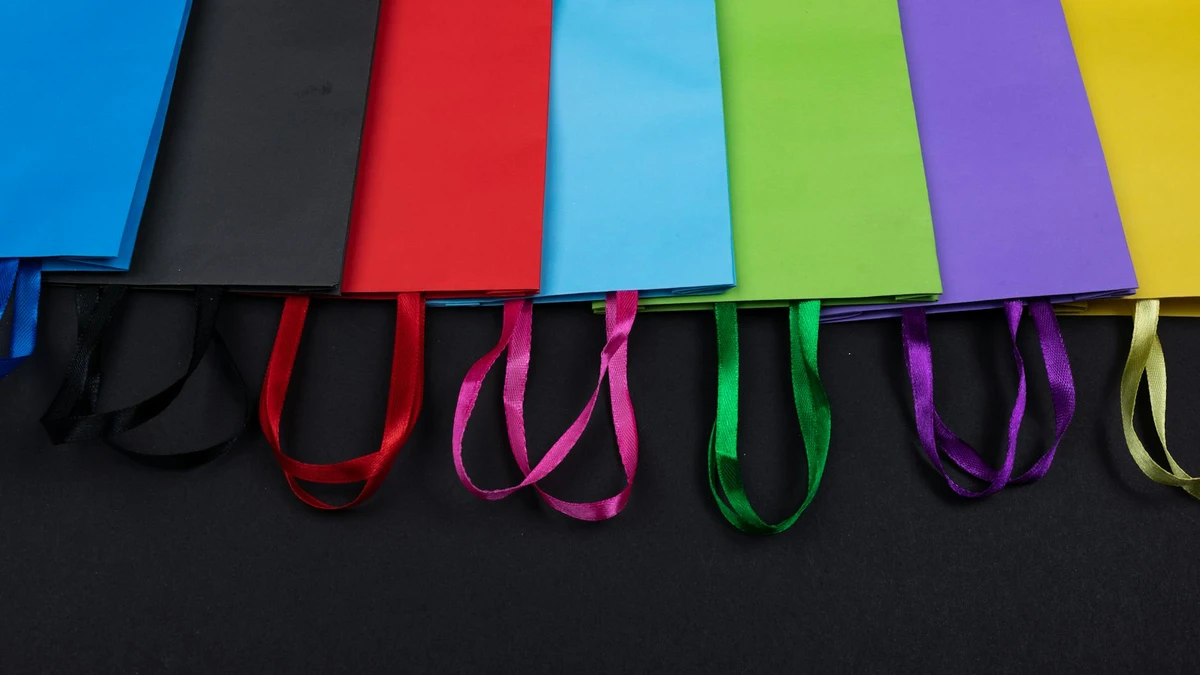
Las bolsas de papel ecológicas personalizadas son bolsas de papel reciclables o biodegradables impresas con logotipos de empresa, marcas o diseños mediante métodos de impresión flexográfica, offset o serigráfica. Suelen estar fabricadas con papel kraft (marrón), blanco o reciclado (70-140 GSM), asas reforzadas y tintas ecológicas. El pedido mínimo oscila entre 5.000 y 50.000 unidades, dependiendo del método de impresión, con un coste de $0,30-0,60 por bolsa, impresión incluida.
El pedido mínimo varía según el método de impresión: flexografía (entre 20 000 y 50 000 bolsas para 1-3 colores), offset (entre 30 000 y 50 000 para a todo color) y serigrafía (entre 5 000 y 20 000 para 1-2 colores). Se ofrecen cantidades inferiores a precios premium de 30-50%. Los primeros pedidos suelen requerir un MOQ más elevado debido a los costes de puesta a punto ($200-800 para planchas/tamas). La serigrafía ofrece el MOQ más bajo para probar el mercado antes de ampliar la producción.
Coste total: $0,30-0,60 por bolsa, dependiendo de: el tamaño de la bolsa ($0,15-0,35 sin imprimir), el método de impresión (flexografía +$0,08-0,30; offset +$0,25-0,45, serigrafía +$0,20-0,50), el número de colores (cuantos más colores, mayor es el coste), los gastos de puesta a punto ($200-800, pago único) y la cantidad mínima de pedido (cuanto mayor sea la cantidad, menor será el coste por unidad). Ejemplo: 30 000 bolsas de papel kraft, flexografía a dos colores = $0,41 por bolsa, incluidos todos los costes.
Formatos vectoriales requeridos: AI (se prefiere Adobe Illustrator), EPS o PDF vectorial de alta resolución. Los archivos deben estar en el espacio de color CMYK (no RGB), con una resolución mínima de 300 ppp si incluyen elementos rasterizados, y el texto debe estar contorneado o convertido a trazados. Incluye un sangrado de 3 mm por todos los lados y mantén los elementos importantes a 5 mm por dentro de la línea de corte. No se aceptan: archivos PNG, JPG, documentos de Word ni PDF de baja resolución.
Sí, mediante impresión offset sobre bolsas de papel blanco. La impresión offset ofrece una reproducción con calidad fotográfica y reproduce bien los degradados y los diseños complejos. Coste: +$0,25-0,45 por bolsa, pedido mínimo de 30 000 a 50 000 unidades. No se recomienda en papel kraft (el fondo marrón natural apaga los colores) ni con impresión flexográfica (reproducción deficiente de los degradados). Para obtener los mejores resultados: diseña en CMYK, utiliza imágenes a 300 ppp y solicita muestras físicas antes de la producción en serie.
Plazo total: 4-8 semanas. Desglose: aprobación del diseño (3-5 días + revisiones), producción (serigrafía: 2-3 semanas; flexografía: 3-4 semanas; offset: 4-5 semanas), envío nacional (3-7 días) o internacional (4-6 semanas por mar, 7-10 días por aire). Posibilidad de producción urgente (con un recargo de +30-50%) para reducir el plazo en 1-2 semanas. Planifica con antelación las campañas de temporada: haz el pedido entre 8 y 10 semanas antes de la fecha prevista.
Utiliza los códigos de color Pantone PMS que figuran en las directrices de la marca, no aproximaciones en RGB/CMYK. El proveedor prepara la fórmula exacta de tinta que coincide con la muestra Pantone (+$50-150 por color). Solicita siempre muestras impresas físicas antes de la producción en serie para verificar la precisión del color. Ten en cuenta el color del papel: el papel kraft (marrón) oscurece las tintas; el papel blanco muestra los colores reales. Solicita un certificado de correspondencia de colores que documente los códigos Pantone utilizados.
La impresión personalizada de bolsas de papel ecológicas transforma un embalaje funcional en un potente activo de marketing: las bolsas se convierten en vallas publicitarias móviles que generan visibilidad de marca, fidelidad de los clientes y un valor percibido que supera con creces el sobrecoste de impresión de $0.15-0.40. El éxito requiere una preparación profesional del diseño (archivos vectoriales, colores CMYK, sangrado adecuado), la selección del método de impresión adecuado (flexografía para logotipos sencillos, offset para diseños complejos, serigrafía para tiradas pequeñas) y un riguroso control de calidad (muestras físicas, inspección previa a la entrega) para evitar errores costosos.
Principales conclusiones:
1.Diseña siempre en CMYK con archivos vectoriales (AI, EPS), utiliza los códigos Pantone para los colores de la marca e incluye un sangrado de 3 mm y zonas de seguridad de 5 mm para evitar errores de impresión.
2.La elección del método de impresión depende de la complejidad del diseño: flexografía ($0,08-0,30/bolsa) para 1-3 colores, offset ($0,25-0,45/bolsa) para fotografías a todo color, serigrafía ($0,20-0,50/bolsa) para tiradas pequeñas de menos de 20 000
3.El papel Kraft limita la intensidad del color (solo tintas oscuras), el papel blanco permite la impresión a todo color y el papel reciclado potencia al máximo las afirmaciones sobre sostenibilidad.
4.El pedido mínimo oscila entre 5.000 y 50.000 unidades, dependiendo del método; el primer pedido incluye gastos de configuración de $200-800; en los pedidos posteriores se ahorra entre 20 y 30% al reutilizar las planchas.
5.La aprobación de una muestra física antes de la producción en serie ($50-150) evita entre $5.000 y 10.000 problemas derivados de discrepancias de color, fallos estructurales o problemas de calidad de impresión.
Para las tiendas minoristas, los restaurantes y las marcas que buscan un embalaje memorable que fomente la fidelidad de los clientes y el intercambio de contenido en las redes sociales, invertir en bolsas de papel ecológicas personalizadas, diseñadas e impresas por profesionales, ofrece un retorno de la inversión cuantificable gracias al aumento del reconocimiento de marca, la percepción de una calidad superior y la reducción del coste de captación de clientes gracias al marketing orgánico basado en el boca a boca.
Explore más soluciones de envasado:
Papacko suministra bolsas de papel ecológicas con impresión personalizada a tiendas minoristas, restaurantes y marcas de todo el mundo. Ofrecemos asesoramiento en diseño, servicios de combinación de colores y control de calidad para garantizar que sus bolsas con la marca cumplan con las especificaciones exactas.
Las decisiones relativas a la impresión de bolsas ecológicas suelen formar parte de un sistema de imagen de marca más amplio que incluye materiales sostenibles, la ejecución de la impresión y elementos de embalaje para llevar a juego.
Póngase en contacto:
Última actualización: Noviembre de 2025
Equipo de contenido: Papacko
Revisado por: Departamento de Diseño y Producción Gráfica