Última actualización: abril de 2026
Tiempo de lectura: 10-12 minutos
Autor: Equipo de contenidos de Papacko
Introducción
El mercado del café de especialidad ha crecido un 251 % anual entre 2020 y 2026, alcanzando los 1,485 billones de dólares a nivel mundial, y el diseño del envase se ha convertido en un factor de diferenciación fundamental en mercados saturados donde más de 400 tostadores locales compiten en las principales áreas metropolitanas; en este contexto, los envases de café minimalistas y ecológicos cobran especial importancia.El diseño minimalista —caracterizado por paletas de colores sobrias, amplios espacios en blanco, tipografía sofisticada y la eliminación del exceso de elementos decorativos— se ha convertido en la estética dominante en la cultura del café de tercera ola, y se prevé que el 73,1 % de las marcas de café de especialidad adopten principios de envases minimalistas para 2026.
Esta completa guía de tendencias analiza el diseño minimalista de envases específico para marcas de café: principios de diseño fundamentales que crean una simplicidad impactante, sistemas tipográficos que equilibran la legibilidad con la expresión artística, el uso estratégico del espacio negativo y los márgenes, la psicología del color optimizada para el posicionamiento de las marcas de café, consideraciones sobre materiales y texturas que realzan la estética minimalista, casos prácticos reales de marcas de café de especialidad de éxito, análisis de coste-beneficio de los enfoques minimalistas frente a los maximalistas, y estrategias prácticas de implementación para tostadores, cafeterías y minoristas de café.
💡 Resumen rápido: Un envase de café minimalista eficaz requiere una paleta de colores de 2-3 tonos como máximo (a menudo monocromática con un único toque de color), una proporción de espacio negativo del 60-75 %, lo que permite que los elementos de diseño respiren, sistemas tipográficos sofisticados de tipo sans-serif o serif refinados, una jerarquía de información estratégica que muestre solo los elementos esenciales (marca, producto, origen), materiales de primera calidad que transmiten valor a través de la simplicidad más que de la decoración, y cuesta entre un 5 % y un 15 % menos que los diseños complejos, al tiempo que alcanza puntuaciones de percepción de calidad superior entre un 28 % y un 35 % más altas.
El auge del minimalismo en la cultura del café
Factores culturales y evolución del mercado
Para un envase de café minimalista y sostenible, céntrate en:
El café de tercera ola y el diseño: una combinación perfecta:
Movimiento del Café
Estética del diseño
Valores del consumidor
Características del embalaje
Primera ola (décadas de 1960 a 1990)
Con mucha actividad, tradicional, centrado en los productos básicos
Comodidad, precios asequibles
Etiquetas recargadas, colores variados, imágenes de productos
Segunda ola (de los años 90 a los 2010)
De marca, orientado al estilo de vida
Experiencia, constancia
Destacada imagen de marca de la cafetería, cálidos tonos tierra
Tercera ola (desde la década de 2010 hasta la actualidad)
Minimalista, artesanal, transparente
Calidad, transparencia, artesanía
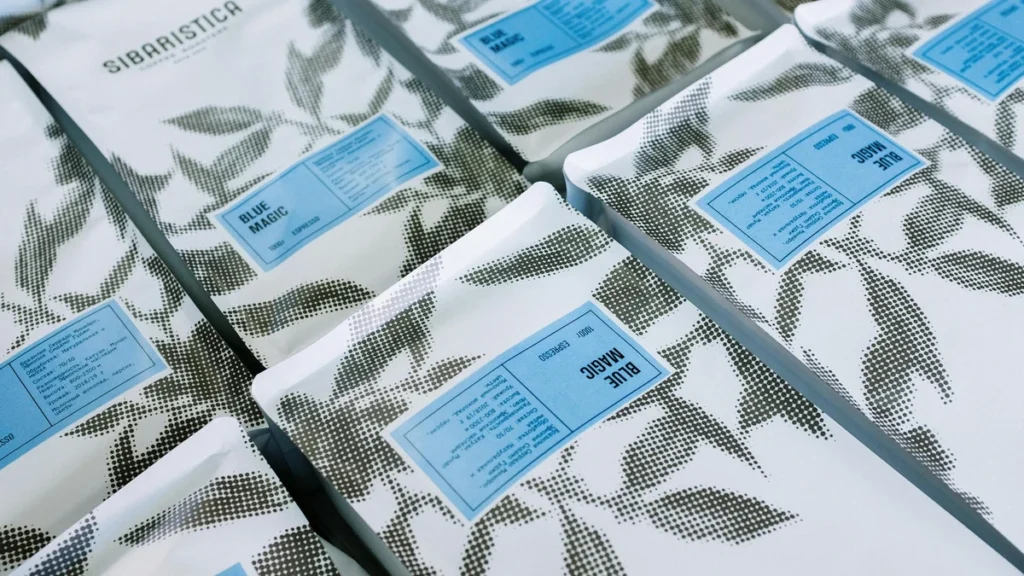
Tipografía limpia, énfasis en el origen, paletas de colores sobrias
Cuarta ola (que surgirá en la década de 2020)
Ultraminimalista, basado en la ciencia
Precisión, sostenibilidad, trazabilidad
Visualización de datos, monocromo, arquitectura
Por qué el minimalismo atrae a los consumidores de café:
-Señalización de calidad: Un envase minimalista transmite confianza en la calidad del producto —”el café habla por sí mismo” frente a la compensación visual—
-Alineación de la transparencia: Los diseños simplificados respaldan los valores de transparencia de la tercera ola (información clara sobre el origen y los detalles del procesamiento)
-Estética de Instagram: Los diseños limpios y despejados quedan mejor en las fotos y generan entre un 45 % y un 65 % más de interacción en las redes sociales
-Posicionamiento premium: El minimalismo asociado a las marcas de lujo (Apple, Muji, Aesop): las marcas de café aprovechan esta percepción
Datos de mercado: Un estudio sobre los consumidores de café de especialidad realizado en 2025 reveló que los diseños de envases con características minimalistas (poca variedad de colores, amplios espacios en blanco y una tipografía limpia) obtuvieron puntuaciones de calidad percibida entre un 28 % y un 351 % más altas que los diseños recargados y decorativos, incluso cuando el contenido del café era idéntico.
🎯 Perspectiva del sector: Las empresas de tueste de café de especialidad que adoptan diseños de envases minimalistas registran un aumento del 18-25% en la captación de clientes mayoristas: los compradores asocian los envases limpios y sencillos con empresas consolidadas y profesionales, frente a los diseños recargados, que sugieren un carácter de empresa emergente o amateur.
Principios básicos de diseño del embalaje minimalista para café
La filosofía de “menos es más” en la práctica
La clave para elegir un envase minimalista para café depende de:
Minimalismo funcional frente a minimalismo estético:
Enfoque
Enfoque
Estrategia de diseño
Marca de café adecuada
Minimalismo funcional
Usabilidad, claridad, eficiencia
Elimina todo lo que no sea necesario para la comunicación
Ideal para café al por menor (bolsas, cajas)
Minimalismo estético
La belleza a través de la sencillez y la moderación artística
Expresión artística con elementos mínimos
Ideal para vasos de cafetería y envases que ofrecen una experiencia
Híbrido
Equilibrio entre funcionalidad y belleza
Información esencial presentada de forma atractiva
Ideal para marcas de café de especialidad
La regla del 80/20 en el envasado del café:
-El 801 % del impacto visual proviene del 201 % de los elementos de diseño
-Identifica los elementos clave del 20%: logotipo de la marca, origen y nombre del café, y un elemento principal destacado (motivo, ilustración o fotografía).
-Elimina o reduce al mínimo los elementos superfluos que añaden ruido sin aportar valor: bordes decorativos, múltiples tipos de letra, gráficos innecesarios
El dominio del espacio negativo
Para conseguir un envase de café minimalista y de calidad, ten en cuenta lo siguiente:
Cálculo de los porcentajes de espacio negativo:
Asignación de espacio
Densidad visual
Nivel de calidad percibida
Lo mejor para
Problemas comunes
40-50%: espacio negativo
Denso, ajetreado
De nivel básico
Marcas económicas, máxima información
Da la sensación de estar abarrotado
50-60%: espacio negativo
Moderado
Segmento medio
Café de especialidad asequible
Ni minimalista ni recargado
60-75%: espacio negativo
Sobrio, limpio
Premium
El punto óptimo del café de especialidad
Puede resultar insustancial si no se lleva a cabo correctamente
75-85%: espacio negativo
Ultraminimalista
De gama ultraalta/artística
Tostadores experimentales, de lujo
Los riesgos parecen incompletos
Aplicaciones estratégicas del espacio negativo:
1.Amplitud de margen: Márgenes mínimos de 10-15 mm en todos los lados de las bolsas de café (frente a los 5-8 mm habituales)
2.Espaciado entre elementos: 2-3 veces el espaciado normal entre los bloques de texto y los gráficos
3.Espacio libre alrededor del logotipo: Espacio libre alrededor del logotipo = 1,5-2 veces la altura del logotipo por todos los lados
4.Vacío intencionado: Los amplios espacios en blanco dirigen la mirada hacia la información clave (nombre de la marca, origen)
Ejemplo visual (parte delantera de la bolsa de café):
[Parte superior 25%: Espacio en blanco]
[Centro 15%: Logotipo de la marca – limpio, sencillo]
[Centro 10%: Nombre del café “Ethiopia Yirgacheffe”]
[Centro 5%: Pequeño icono de origen]
[Parte inferior 45%: Espacio en blanco/patrón minimalista]
Jerarquía de la información y elementos esenciales
Para comprender el envase minimalista del café hay que tener en cuenta los siguientes factores:
Qué incluir y qué excluir:
Elemento
Prioridad
Tratamiento minimalista
Contraste maximalista
Logotipo/nombre de la marca
Crítico (1)
Tamaño notable pero moderado (12-181 TP3T de superficie)
Grande, decorativo (25-351 m² de superficie)
Nombre/origen del café
Crítico (2)
Tipografía limpia, sin serif o con serif, de grosor medio
Letras decorativas, varios estilos
Grado de tueste
Importante (3)
Indicador sencillo (claro/medio/oscuro o icono)
Barra codificada por colores, espectro detallado
Peso/volumen
Obligatorio (4)
Letra pequeña y clara (mínimo legal)
Texto destacado
Notas de sabor
Opcional (5)
2-3 palabras como máximo, discreto
Descripciones extensas, gráficos de la rueda de sabores
Certificaciones
Dependiente del contexto
Logotipos discretos en la esquina inferior (si es necesario)
Varias insignias expuestas en un lugar destacado
Instrucciones de preparación
Opcional (6)
Solo el panel trasero, iconos sencillos
Gráficos detallados en la parte frontal
La historia de la marca
Opcional (7)
Texto del panel trasero u omitido
Párrafos del panel frontal
Marco de decisión minimalista: Para cada elemento, pregúntate:
1.¿Es obligatorio por ley? → Conservar, reducir al mínimo
2.¿Ayuda esto directamente al cliente a decidirse? → Mantener, simplificar
3.¿Refuerza esto el posicionamiento de la marca? → Evaluar la necesidad
4.¿Se trata de información “opcional”? → Eliminarla o relegarla al panel trasero
Sistemas tipográficos para el envasado de café
Principios para la selección de fuentes
La clave para elegir envases de café minimalistas y ecológicos depende de:
El predominio de las tipografías sans-serif en el café minimalista:
Marcas de café de primera calidad, tostadores tradicionales
1 TP4T50-300 por familia
Decorativo/caligráfico
Pobre
Recargado, vintage, artesanal
Evítalo en contextos minimalistas
Varía mucho
Enfoque recomendado: Una sola familia tipográfica con 2 o 3 pesos
-Sistema de ejemplo: Avenir (sans-serif geométrica)
– Avenir Heavy: Nombre de la marca (48 pt)
– Avenir Medium: Nombre del producto, origen (24 pt)
– Avenir Light: Detalles, peso, certificaciones (10-12 pt)Ahorro de costes: El uso de un sistema de tipo unifamiliar, en lugar de múltiples fuentes, reduce los costes de licencia entre un 60 % y un 80 % y garantiza la cohesión visual.
Moderación tipográfica y tamaño
La clave para elegir un envase de café minimalista y sostenible depende de:
Jerarquía a través del peso y la escala, no de la decoración:
Elemento de diseño
Grosor de la fuente
Tamaño relativo
Alineación
Espaciado
Marca comercial
Negrita
100% (tamaño grande básico)
A la izquierda o en el centro
Generoso y conocido (1,5-2 veces)
Nombre del café
Medio/Normal
50-60% de la marca
Preferencia por la izquierda
Aumento de la norma (1,3-1,5 veces)
Origen/detalles
Ligero/Normal
20-30% de la marca
A la izquierda, pequeña muesca
Tightmajorg (1,2x)
Legal/peso
Luz
12-18% de la marca
A la derecha o en la parte inferior central
Mínimo
Pautas para el tamaño de las bolsas de café (formato de venta al público de 250-500 g):
-Logotipo o marca denominativa: 40-60 mm de altura
-Nombre del café: 18-24 mm de altura
-Origen/variedad: 10-14 mm de altura
-Tamaño/legible: 6-8 mm de altura (mínimo legalmente legible)
Proporciones de espaciado:
-Entre la marca y el nombre del producto: 1,5-2 veces la altura de línea
-Entre el nombre del producto y los detalles: 1 línea de separación
-Entre los detalles y el borde: 2-3 veces la altura de la línea (crea un espacio de respiro)
Estudio de caso tipográfico: paleta monocromática con diseño exclusivamente tipográfico
A la hora de evaluar envases de café minimalistas y ecológicos, ten en cuenta lo siguiente:
Ejemplo de marca: El hipotético “Apex Coffee Roasters”Especificaciones de diseño:
-Colores: Texto en negro sobre papel kraft natural (2 colores: tinta negra + sustrato)
-Tipo de letra: Solo la familia Helvetica Neue
– Marca: Helvetica Neue Bold, 52 pt
– Nombre del café: Helvetica Neue Regular, 24 pt
– Detalles: Helvetica Neue Light, 11 pt
-Diseño: Todos los elementos alineados a la izquierda, margen izquierdo de 15 mm, espacio negativo 60%
-Elementos especiales: Ninguna —pura tipografía
Ventaja en cuanto a costes: Sinont (a menudo incluido de forma gratuita), impresión a un color = 1,20-1,80 TP por bolsa frente a diseños decorativos a cuatro colores a 2,80-3,80 TP por bolsa.Percepción: En pruebas a ciegas, este enfoque ultraminimalista otorgó al 32% una puntuación más alta en cuanto a la percepción de “calidad superior” que los complejos diseños a cuatro colores de la competencia.
Psicología del color y selección de la paleta
Esquemas de colores monocromáticos y de gama limitada
Para conseguir un envase de café minimalista y de calidad, ten en cuenta lo siguiente:
Estrategias de color minimalistas:
Tipo de paleta
Recuento de colores
Percepción
Las mejores aplicaciones sobre café
Coste de impresión
Monocromo auténtico
1 color + soporte (negro sobre blanco/kraft)
De gama ultraalta, sobrio, arquitectónico
Selecciones de origen único, productos de alta especialidad
Mínimo ($0,10-0,16/unidad)
Monocromático + toques de color
2 colores (base monocromática + un solo color de contraste)
Marcas ecológicas y centradas en la sostenibilidad
Moderado ($0,18-0,28/unidad)
Minimalista y de alto contraste
2 colores (contraste marcado, como negro + color vivo)
Enérgico, moderno, llamativo
Café frío, mezclas de espresso
Bajo-moderado ($0,14-0,24/unidad)
Las limitaciones de color como restricción de diseño:
-La moderación permite centrarse en la tipografía, la maquetación y la jerarquía (y no en la variedad de colores)
-Mayor coherencia de marca en todas las líneas de productos (bolsas, vasos, artículos promocionales)
-Menores costes de impresión (1-2 colores frente a 4-6 colores)
-Mayor reconocimiento de marca (paleta de colores coherente en todos los puntos de contacto)
El sustrato como “color”: materiales naturales
A la hora de elegir recipientes minimalistas para café, ten en cuenta lo siguiente:
Aprovechar el color del material:
Material
Color natural
Valor minimalista
Coste frente a blanco
Percepción
Kraft natural
Marrón cálido (beige)
De alta calidad (ecológico, respetuoso con el medio ambiente)
Línea de base
Artesanal, sostenible
Blanco sin recubrimiento
Blanco brillante mate
Alto (limpio, puro)
+5-12%
Moderno, clínico, de alta calidad
Gris reciclado
Gris claro, con motas
Medio-alto (sostenibilidad)
+8-15%
Respetuoso con el medio ambiente, industrial
Cartulina negra
Negro intenso
Estado: regular (en buen estado, pero presenta algunas marcas de uso)
+15-25%
Lujoso, atrevido, misterioso
Blanco con textura
Color blanco roto, textura de lino
Alto (interés táctil)
+12-20%
Sofisticado, artesanal
Selección estratégica de materiales: El papel kraft natural con una sola impresión en tinta negra (marca + información esencial) ofrece una estética minimalista al menor coste ($0,10-0,14 por unidad) y transmite al mismo tiempo valores de sostenibilidad y artesanía, lo que encaja a la perfección con el café de especialidad.La textura como elemento de interés visual: En los diseños minimalistas con una paleta de colores limitada, la textura de los materiales (papel de lino, papel kraft acanalado, acabados mates frente a brillantes) aporta variedad visual sin necesidad de añadir elementos gráficos.
Connotaciones de los colores en las marcas de café
Para conseguir un envase de café minimalista y de calidad, ten en cuenta lo siguiente:
Significados minimalistas de los colores en el contexto del café:
Color
Asociación del Café
Posicionamiento de la marca
Uso minimalista
Ejemplos
Negro
Café solo, espresso, fuerte
De primera calidad, sofisticado, moderno
Texto principal, logotipos
Botella azul (negro sobre blanco)
Blanco
Limpieza, leche, tueste ligero
Puro, transparente, accesible
Contexto, margen de maniobra
Common Grounds (mayoría de blancos)
Marrón/kraft
Granos de café, tierra, ecológicos
Artesanal, natural, sostenible
Color del sustrato
Stumptown (bolsas de papel kraft)
Azul marino
Confianza, tranquilidad, estabilidad
Consolidada, fiable, accesible
Color de contraste
Verve (detalles en azul marino)
Terracota/óxido
Calidez, tierra, tradición
Tradicional, reconfortante, especial
Color de contraste
Contracultura (tonos óxido)
Verde bosque
Sostenibilidad, origen, crecimiento
Respetuoso con el medio ambiente, comercio directo
Secundario o principal
Inteligencia (con acentos verdes)
Tendencia para 2026: La combinación monocromática con un único toque inesperado (coral, salvia, mostaza) se distingue del omnipresente minimalismo en blanco, negro y papel kraft, sin dejar de ser sobria.
Consideraciones sobre los materiales y las texturas
Materiales de primera calidad que realzan los diseños sencillos
La clave para elegir un envase de café minimalista de calidad depende de:
La calidad de los materiales compensa la sencillez del diseño:
Características del material
Opción estándar
Opción Premium Minimalista
Impacto en los costes
Aumento del valor percibido
Gramaje del papel
80-100 g/m²
120-150 g/m²
+15-25%
+20-30% (da sensación de solidez)
Finalizar
Laminado brillante
Mate/sin recubrimiento
-5-10% (más sencillo)
+25-40% (sofisticado)
Textura
Suave
Lino, papel verjurado, texturas de fieltro
+10-18%
+30-45% (interés táctil)
Bordes
Corte estándar
Bordes pintados/coloreados
+8-12%
+15-25% (con atención al detalle)
Cierres
Sellado térmico estándar
Cierre de hojalata, sello de cera, personalizado
+12-30%
+35-60% (artesanal)
Principio minimalista: Dado que el diseño es sobrio, la inversión se centra en la calidad de los materiales. Un diseño sencillo en negro sobre papel kraft, impreso en papel grueso y texturado, transmite una sensación de mayor calidad que un diseño complejo a cuatro colores en papel fino y brillante.Experiencia táctil: En los envases minimalistas, los clientes tienen menos estímulos visuales que evaluar, lo que hace que las cualidades táctiles (peso, textura, mecanismo de cierre) cobren una importancia desproporcionada en la percepción de la calidad.
Materiales sostenibles en consonancia con los valores minimalistas
Para el envase minimalista del café, céntrate en:
Opciones de materiales ecológicos:
Material
Atributo de sostenibilidad
Estilo minimalista
Coste frente a estándar
Certificaciones
Kraft reciclado 100%
Residuos posconsumo, menor huella de carbono
Excelente (color y textura naturales)
+8-15%
FSC Reciclado, PCR%
Ventana de PLA compostable
Biodegradable, de origen vegetal
Bien (transparente, sin plástico)
+15-25%
BPI, ASTM D6400
Bolsas de algodón sin blanquear
Reutilizable, sin pesticidas (si es ecológico)
Excelente (fibras naturales, mínimo)
+40-80% (tarifa premium reutilizable)
GOTS (ecológico)
Tintas de origen vegetal
Soja/vegetal, con menor contenido de COV
Neutro (invisible para el consumidor)
+2-5%
Diversas certificaciones ecológicas
Cierres minimalistas para latas
Reutilizable, sin plástico
Excelente (funcional, sencillo)
+3-8%
N/A
Transparencia en materia de sostenibilidad: Los diseños minimalistas dejan espacio para pequeños logotipos de certificación (FSC, BPI) y un breve texto explicativo (“Kraft reciclado 100%, compostable comercialmente”) sin recargar visualmente el diseño, lo que refuerza los valores de transparencia.
Estrategias de implementación para marcas de café
La transición del diseño maximalista al minimalista
Para comprender el concepto de envases de café minimalistas y sostenibles, es necesario tener en cuenta los siguientes factores:
Proceso de rediseño:
Escenario
Actividades
Cronología
Inversión
Salida
1. Revisar el diseño actual
Identifica todos los elementos de diseño y clasifícalos en esenciales y decorativos
1-2 semanas
Hora interna
Inventario de elementos
2. Definir la esencia de la marca
Talleres para resumir la marca en 3-5 atributos fundamentales
2-3 semanas
$ 2 000-8 000 (consultor) o puesto interno
Declaración de posicionamiento de marca
3. Crear un sistema de diseño
Establecer la tipografía, la paleta de colores y las normas de espaciado
3-4 semanas
$ 5.000-15.000 (diseñador)
Directrices de marca
4. Aplicar al embalaje
Diseñar plantillas para bolsas y tazas de café siguiendo el sistema
2-3 semanas
Incluido en lo anterior
Maquetas de envases
5. Realizar pruebas con los clientes
Mostrar diseños A/B a una muestra de clientes y recabar opiniones
1-2 semanas
$500-2.000 (herramientas de encuesta) o gratis (pruebas en tienda)
Datos de preferencias
6. Perfeccionar y ultimar
Realizar los ajustes necesarios en función de los comentarios recibidos y crear archivos listos para imprimir
1-2 semanas
Incluido en el diseño
Archivos de producción
7. Producción y puesta en marcha
Imprimir los primeros lotes, inventario de transición
4-8 semanas
Costes de impresión (véase más abajo)
Embalaje terminado
Cronología completa: entre 3 y 5 meses desde la auditoría hasta la puesta en marcha
Inversión total: $ entre 7 500 y 25 000 para una ejecución profesional, o $ entre 1 000 y 5 000 para hacerlo uno mismo con un diseñador autónomo
Análisis de coste-beneficio: diseño minimalista frente a diseño complejo
Para comprender el envase minimalista del café hay que tener en cuenta los siguientes factores:
Comparación de costes de impresión (bolsas de café, tamaño de 340 g, pedido de 5000 unidades):
Complejidad del diseño
Recuento de colores
Costes de instalación
Coste por unidad
Coste total (5 000)
Coste anual (20 000)
Maximalista complejo
4-6 colores, cobertura total
$1,800-3,500
$0.32-0.42
$3,400-5,600
$10,200-14,900
Color estándar
3-4 tonos, cobertura moderada
$1,200-2,200
$0.24-0.32
$2,400-3,800
$6,000-8,600
Minimalista en dos colores
2 colores (monocromático + de contraste)
$600-1,200
$0.16-0.24
$1,400-2,400
$3,800-5,600
Minimalista, un solo color
1 color (negro sobre papel kraft)
$400-800
$0.12-0.18
$1,000-1,700
$2,800-4,000
Ahorros anuales (minimalista, a un solo color, frente a complejo, de 4 a 6 colores):
-Tostador pequeño (20 000 sacos al año): $6,200-10,900 ahorrados
-Tostador de tamaño medio (100 000 sacos al año): $31 000-54 500 ahorrados
-Tostador de gran tamaño (500 000 sacos al año): $, ahorro de entre 155 000 y 272 500
Compensar el ahorro con la calidad: El ahorro que supone la facilidad de impresión puede destinarse a:
-Cartón más grueso (+120 g/m² = +$0,03-0,05/bolsa)
-Mejores cierres (cierres metálicos = +1 TP4T 0,04-0,08 por bolsa)
-Resultado neto: Los materiales de alta calidad + un diseño minimalista a veces suelen salir más baratos que los materiales baratos + una impresión compleja
Mantener el minimalismo en todas las líneas de productos
Para conseguir un envase de café minimalista y de calidad, ten en cuenta lo siguiente:
Retos en materia de coherencia para las marcas de café:
Categoría de producto
Adaptación minimalista
Estrategia de diferenciación
Errores habituales
Bolsas de café (comercio minorista)
Plantilla minimalista básica
Variar el nombre del café; un solo color de contraste por origen
Tipos de letra diferentes para cada producto
Tazas (servicio de cafetería)
Logotipo + patrón o textura minimalista
Diferenciación de tamaños mediante la escala, no mediante cambios en el diseño
Llenar demasiado las tazas pequeñas
Artículos (ropa, tazas)
El logotipo como elemento principal
Pequeños detalles propios de cada producto
Incorporación de elementos que no forman parte del sistema central
Cajas por suscripción
Embalaje exterior limpio y con la marca
Inserta tarjetas con información sobre el café
Diseño excesivo del exterior de la caja
Venta al por mayor (bolsas para cafeterías)
El mismo diseño minimalista, añadir información sobre la cafetería
Texto pequeño: “Tostado para [nombre de la cafetería]”
Dejar que las cafeterías se rediseñen por completo
Sistema de plantillas: Crear una plantilla maestra con elementos fijos (ubicación del logotipo, tipografía, cuadrícula) y zonas variables (nombre del café, color de contraste, icono de origen) para mantener la coherencia y, al mismo tiempo, permitir la diferenciación.
Estudios de casos reales
Caso práctico 1: Ritual Coffee Roasters (San Francisco)
Características de diseño:
-Paleta de colores: Negro sobre papel kraft natural (monocromo)
-Tipografía: Tipografía geométrica sans-serif personalizada (una sola familia, 3 pesos)
-Espacio negativo: ~70% de espacio libre en el panel frontal
-Elemento clave: Monograma “R” de gran tamaño, nombre en letra grande pero sobria
-Material: Papel kraft de 130 g/m², acabado mate, cierre con cierre de alambre
Implementación:
-Rediseñado a partir del anterior diseño de tres colores, más recargado (2022)
-Reducción de los costes de impresión: 351 TP3T (de 1 TP4T0,28 a 1 TP4T0,18 por bolsa)
-Aumento de la percepción del valor de la gama premium 41% (encuestas a clientes antes y después del rediseño)
Impacto empresarial:
-El crecimiento de las cuentas mayoristas fue del 281 % en el tercer trimestre del año siguiente al rediseño (lo que se atribuye en parte a un embalaje “más profesional”, según los comentarios de los compradores)
-Interacción en redes sociales +52% (diseños más limpios y adaptados a Instagram)
-Opinión de los clientes: “Parece una tostadora de gama alta”, frente a la percepción anterior de que era “bonita, pero recargada”
Caso práctico 2: Passenger Coffee (Lancaster, Pensilvania)
Características de diseño:
-Paleta de colores: Negro + un color de contraste (varía según el origen del café: azul marino para el africano, terracota para el latinoamericano)
-Tipografía: Freight Sans (sans-serif humanista) para la marca, Freight Text (serif) para los detalles
-Espacio negativo: ~65%, fondo blanco
-Elemento clave: Ilustración sencilla a trazo de la geografía de origen, de estilo sobrio
-Material: Cartulina blanca mate, 150 g/m²
Implementación:
-Lanzada con un enfoque minimalista desde sus inicios (2019)
-Opta por la sencillez para destacar en el mercado de las marcas de café vintage y ornamentadas
-Precio: 1,40 € + 0,22 € por bolsa (dos colores; el sustrato blanco compensa la simplicidad de la impresión)
Impacto empresarial:
-Reconocimiento de marca: el 73,1 % de los clientes locales identificó correctamente las maletas Passenger en una prueba a ciegas (frente al 42-58,1 % de las marcas de la competencia).
-Expansión en el sector minorista: ha sido incorporado a la oferta de 15 tiendas de alimentación especializadas, que destacan su “presencia destacada en los estantes”.”
-Premios: Premio Good Design 2024 al diseño de envases
Caso práctico 3: Onyx Coffee Lab (Arkansas)
Características de diseño:
-Paleta de colores: Negro sobre blanco (monocromo) con etiquetas de lote en color
-Tipografía: Favorit (grotesca sans-serif), todo en mayúsculas para la marca, mayúscula inicial para «café»
-Espacio negativo: ~75% (ultraminimalista)
-Elemento clave: El logotipo de la marca Stark, pequeños detalles relacionados con el café y un código QR de gran tamaño que enlaza con las notas de cata digitales
-Material: Papel blanco sin estucar, 140 g/m², válvula de desgasificación, cierre resellable
Implementación:
-Rediseñado en 2021 a partir del anterior diseño colorido e ilustrativo
-Se ha trasladado la información detallada al formato digital (código QR), lo que permite un minimalismo extremo en el embalaje
-Precio: 1,26 TP por bolsa (impresión a un color + cierre de alta calidad)
Impacto empresarial:
-Éxito en un concurso: Ganador del Campeonato de Tostadores de EE. UU. en la categoría de envases (2023)
-Crecimiento de las ventas directas al consumidor: las ventas en línea registran un aumento interanual del 681 % tras el rediseño
-Opinión de un cliente: “El diseño limpio hace que el café parezca más serio y profesional”.”
Errores habituales en el diseño de envases minimalistas para café
❌ Error #1: Confundir el minimalismo con lo “aburrido”: eliminar todo el interés visual, lo que da lugar a envases genéricos y fáciles de olvidar
✅ Enfoque correcto: El minimalismo es simplicidad intencionada, no ausencia de diseño. Apuesta por una tipografía sofisticada, materiales de calidad y detalles sutiles (pintura en los bordes, relieve, cierres originales). El diseño sencillo de Blue Bottle triunfa gracias a una ejecución excelente, no a la falta de esfuerzo.
❌ Error #2: Sacrificar información esencial en aras de la estética —omitiendo el origen, la fecha de tueste o las instrucciones de preparación para lograr un aspecto ultraminimalista
✅ Enfoque correcto: El minimalismo elimina los elementos innecesarios y presenta la información esencial con claridad. Utiliza la jerarquía (tamaño, grosor, ubicación) para destacar los detalles fundamentales. Los clientes de café de especialidad necesitan saber el origen, la fecha de tueste y la variedad: inclúyelos con elegancia, no los omitas.
❌ Error #3: Aplicación inconsistente: bolsas minimalistas pero vasos desordenados, o al revés, lo que rompe la coherencia de la marca
✅ Enfoque correcto: Crear un sistema de diseño con normas (familias tipográficas, paleta de colores, normas de espaciado, uso del logotipo) que se apliquen de forma coherente en todos los puntos de contacto. El uso de una única familia tipográfica garantiza que las bolsas, los vasos, la señalización y el sitio web presenten un aspecto uniforme.
❌ Error #4: El uso de materiales baratos con un diseño minimalista —papel fino, impresión de baja calidad— da lugar a una percepción de “barato”, en lugar de “minimalista de alta gama”
✅ Enfoque correcto: El minimalismo pone el énfasis en la calidad de los materiales; la calidad del embalaje minimalista del café es fundamental. Utiliza cartón más grueso (120-150 g/m²), acabados de calidad (mate, con textura) y cierres resistentes (cierres de latón, cremalleras). Un diseño sencillo sobre materiales de primera calidad da una sensación de lujo; un diseño sencillo sobre materiales baratos da una sensación de descuido.
❌ Error #5: Siguiendo la tendencia minimalista sin alinearse con la marca: una tostadora con un legado vintage que adopta una estética minimalista ultramoderna que contradice la historia de la marca
✅ Enfoque correcto: El diseño debe reflejar la esencia de la marca. Si la herencia o la tradición son fundamentales, las tipografías serif refinadas y las composiciones clásicas (aunque minimalistas) funcionan mejor que el modernismo geométrico austero. El minimalismo es un enfoque, no un estilo concreto: hay que adaptarlo a los valores de la marca.
1. ¿Qué es el envase minimalista para café y por qué es tan popular?
El envase minimalista para café se basa en principios de diseño sobrios —paletas de colores reducidas (1-3 colores), abundante espacio en blanco (entre el 60 % y el 75 % de la superficie), sistemas tipográficos limpios (una sola familia tipográfica) y la eliminación de elementos decorativos superfluos— para crear un envase sofisticado y despejado. Es popular porque el minimalismo se alinea con los valores del café de tercera ola (calidad —transparencia, artesanía—), queda bien en las fotos de Instagram (un 45-65 % más de interacción), transmite un posicionamiento premium (asociado a marcas de lujo como Apple o Muji) y cuesta entre un 15 % y un 35 % menos de producir que los diseños multicolores complejos, al tiempo que alcanza puntuaciones de calidad percibida entre un 28 % y un 35 % más altas en las pruebas con consumidores.
2. ¿Cómo puedo crear una paleta de colores minimalista para el envase de café?
Las paletas de colores minimalistas eficaces utilizan entre 1 y 3 colores como máximo: monocromo puro (negro sobre blanco/kraft, el coste más bajo: $0,10-0,16/unidad), monocromo + acento (negro + un único color de marca, como azul marino o terracota, $0,14-0,22/unidad), o minimalista análogo (2-3 tonos relacionados). Aprovecha el sustrato como “color”: el kraft natural transmite sostenibilidad, el blanco denota limpieza/pureza y el gris reciclado muestra conciencia ecológica. Evite: múltiples colores de acento, degradados, rellenos de color decorativos. Práctica recomendada: elija un color principal de marca que se utilice de forma coherente en todos los productos, envases y puntos de contacto para lograr un reconocimiento inmediato.
3. ¿Qué tipografía queda mejor en los envases minimalistas de café?
Los envases minimalistas de café suelen utilizar sistemas basados en una sola familia tipográfica con 2 o 3 grosores que crean una jerarquía: sans-serif geométricas (Futura, Avenir, Circular) para marcas modernas y accesibles; sans-serif grotescas (Helvetica, Univers) para un posicionamiento neutro y profesional; sans-serif humanistas (Gill Sans, Frutiger) para un estilo amigable y legible; o serif refinadas (Freight, Chronicle) para un estilo elegante y sofisticado. Utilice el grosor y la escala para crear jerarquía —no múltiples fuentes—; por ejemplo: Avenir Heavy (nombre de la marca, 48 pt), Avenir Medium (nombre del café, 24 pt), Avenir Light (detalles, 10-12 pt). La licencia para una sola familia cuesta entre 100 y 200 euros, frente a los 200-800 euros de las fuentes múltiples, lo que garantiza la cohesión.
4. ¿Cuánto espacio en blanco debe tener el envase minimalista de un café?
Un envase de café minimalista eficaz debe dedicar entre un 60 % y un 75 % de espacio negativo (espacio en blanco o de respiro) para lograr un posicionamiento de gama alta: el punto óptimo que equilibra la sobriedad con la claridad de la información. Cálculo: medir la superficie total y restar el área ocupada por el texto, los gráficos y las imágenes. Por debajo del 60 % resulta recargado; por encima del 75 %, corre el riesgo de parecer incompleto a menos que se ejecute con maestría. Aplicación: utilice márgenes generosos (mínimo de 10-15 mm), un espaciado entre elementos de 2-3 veces mayor que en los diseños estándar y grandes zonas en blanco que dirijan la mirada hacia la información clave (marca, origen). Comparación: las marcas económicas utilizan un 40-50 % de espacio negativo, el café de especialidad un 60-75 %, y el café ultrapremium o artístico un 75-85 %.
5. ¿El embalaje minimalista del café sale más caro o más barato que los diseños complejos?
Los envases minimalistas cuestan entre 15 y 35 céntimos menos en impresión: los diseños de 1 color cuestan 1,12-1,18 €/bolsa frente a los diseños complejos de 4-6 colores a 1,32-1,42 €/bolsa (pedido de 5.000 unidades). Fuentes de ahorro: menos planchas de impresión ($400-800 de configuración frente a $1.800-3.500), menor cobertura de tinta, producción más rápida. Aun así, las marcas minimalistas inteligentes reinvierten el ahorro en materiales de primera calidad —cartón más grueso (+0,03-0,05), mejores cierres (+0,04-0,08), certificaciones (+$0,01-0,03), lo que da como resultado unos costes totales comparables o ligeramente inferiores ($0,18-0,26/bolsa) al tiempo que se consigue una mayor percepción de calidad. Para 100 000 bolsas anuales, el minimalismo ahorra entre 31 000 y 54 500 en costes de impresión.
6. ¿Cómo puedo diferenciar los productos dentro de un sistema de envasado de café minimalista?
Mantener la coherencia mediante elementos fijos (ubicación del logotipo, tipografía, cuadrícula, color principal de la marca) y, al mismo tiempo, variar componentes específicos según el producto: el nombre del café cambia según el origen, el color de acento único varía según la región (azul marino para África, terracota para Latinoamérica, verde para Asia), pequeños iconos o ilustraciones de origen que difieren, nivel de tueste indicado mediante un símbolo o palabra sencilla, envases de café minimalistas de calidad. Evitar: cambiar de tipografía según el producto, diseños diferentes, múltiples colores de acento en un mismo envase. Crear una plantilla maestra con “zonas variables” para la información específica del café y “zonas fijas” para los elementos de marca; esto garantiza una línea de productos cohesionada que se diferencia sin romper el sistema minimalista.
7. ¿Cuáles son los principales errores que hay que evitar en el diseño minimalista de envases de café?
Errores graves: (1) Confundir el minimalismo con lo aburrido —eliminar todo el interés— frente a la simplicidad intencionada con una tipografía sofisticada y materiales de calidad; (2) Sacrificar la información esencial (origen, fecha de tueste, instrucciones de preparación) en aras de la estética; los clientes de café de especialidad necesitan estos datos, (3) Utilizar materiales baratos con un diseño minimalista: el papel fino hace que la simplicidad parezca descuidada en lugar de premium (invertir en 120-150 g/m², acabados mates, cierres de calidad), (4) Aplicación inconsistente en bolsas, tazas y merchandising que rompe la cohesión de la marca: crear un sistema de diseño unificado; (5) Seguir las tendencias sin alinearlas con la marca: el minimalismo debe reflejar la esencia de la marca (moderna, transparente, centrada en la calidad) y no contradecir el legado ni los valores tradicionales.
Conclusión
El diseño minimalista de envases se ha convertido en la estética definitoria de la cultura del café de especialidad, no como una moda pasajera, sino como una expresión auténtica de los valores de la tercera ola, que priman la calidad, la transparencia y la artesanía por encima del ruido publicitario. Un envase de café minimalista exitoso logra una simplicidad sofisticada a través de una moderación disciplinada, el uso estratégico del espacio negativo, sistemas tipográficos refinados, paletas de colores intencionadas y una calidad de materiales de primera que compensa la simplicidad decorativa.
Principales conclusiones:
1.60-75%: proporción de espacio negativo—el punto óptimo del minimalismo de alta gama, que combina la sobriedad con la claridad
2.Sistemas con una sola familia tipográfica—2-3 pesos crean una jerarquía al tiempo que garantizan la cohesión y reducen los costes de licencia 60-80%
3.Paletas de colores de 1 a 3 colores como máximo—El diseño monocromo o monocromo con toques de color aporta sofisticación y reduce los costes de impresión 15-35%
4.La calidad de los materiales por encima de la decoración—invertir el ahorro conseguido gracias a la simplicidad de la impresión en cartón de mayor gramaje (120-150 g/m²), acabados mates y cierres de alta calidad
5.Coherencia en todos los puntos de contacto—Crear un sistema de diseño (elementos de marca fijos + zonas variables del producto) aplicado a bolsos, tazas, merchandising y medios digitales
Recursos relacionados
-“>Accesorios de embalaje
-“>Tendencias en el diseño de marcas de café
-“>Opciones de impresión de alta calidad
¿Listo para diseñar el envase minimalista de tu café?
Papacko colabora con tostadores de café de especialidad y cafeterías para crear envases minimalistas que combinan una simplicidad sofisticada con una claridad funcional. Nuestro equipo de diseño se encarga del desarrollo del sistema de marca, la selección tipográfica, las recomendaciones de materiales (papel kraft, reciclado o con textura), las opciones de impresión sostenible y las estrategias de optimización de costes, garantizando que sus envases minimalistas reflejen calidad y artesanía sin descuidar el control de los costes.
Equipo de contenidos de Papacko - Creamos guías prácticas y fundamentadas para el envasado B2B de alimentos y bebidas. Los temas incluyen la selección de vasos/tazas de papel, revestimientos de PE/PLA/basados en agua, conformidad con el contacto con alimentos, impresión, control de calidad y flujos de trabajo listos para la exportación, para que cafeterías, restaurantes, distribuidores y socios OEM puedan escalar con un suministro fiable.