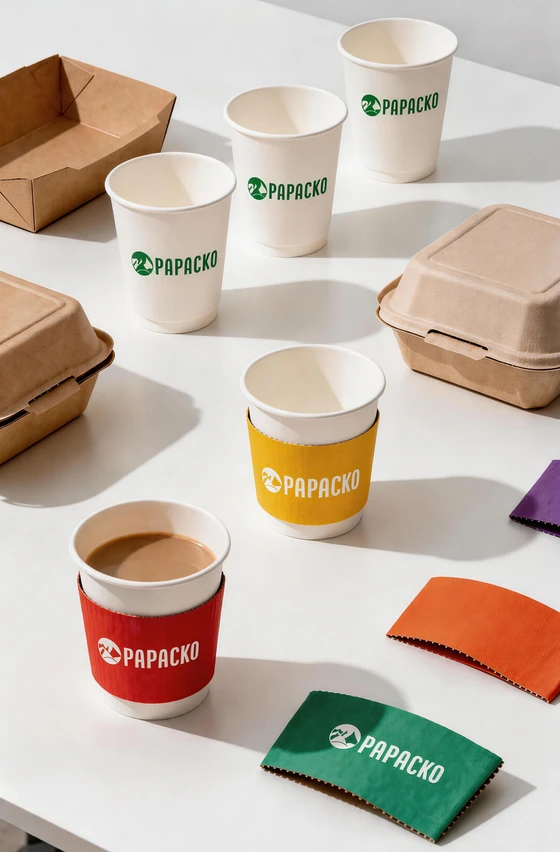
¿Está listo para crear sus propios vasos o envases de papel con su marca?
Díganos sus requisitos -tamaño, revestimiento, impresión y destino- y nuestro equipo le preparará un presupuesto detallado en 24 horas.

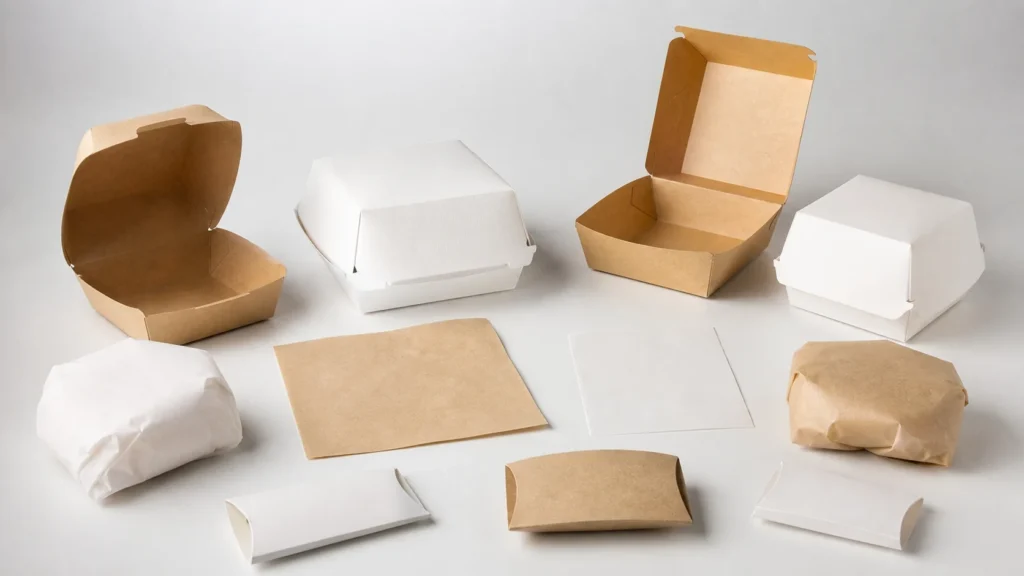
La elección del envase para las hamburguesas es una de las decisiones más importantes que debe tomar un operador de restauración o un responsable de compras. Un envase inadecuado puede convertir una hamburguesa «smash» de primera calidad en un plato empapado, aplastado y decepcionante antes incluso de que llegue a la mesa o a la puerta de casa. Por el contrario, el sistema de envasado adecuado refuerza el valor de la marca, favorece la rapidez operativa y ofrece a tu equipo de cocina un formato fácil de cerrar y apilar. Esta guía aborda las propiedades funcionales más importantes —gestión de la grasa, dinámica del vapor y la ventilación, integridad estructural y presentación en la entrega— y explica cómo evaluar las opciones en función de la composición específica de tus hamburguesas, tu modelo de servicio y tu ruta de distribución. Dado que ninguna referencia (SKU) ofrece un rendimiento idéntico para todos los tipos de hamburguesas, cantidades de salsa, tiempos de conservación y cadenas logísticas, esta guía constituye un marco para realizar una preselección informada, más que una fuente de garantías universales sobre los productos. Cada formato descrito aquí debe someterse a pruebas con muestras en tus condiciones reales de funcionamiento antes de comprometerte a un volumen de pedido.
La mayoría de los operadores del sector de la restauración eligen el envase para las hamburguesas una sola vez y luego tienen que lidiar con las consecuencias durante meses o años. Una caja que funciona bien para una hamburguesa seca de un cuarto de libra de ternera puede fallar por completo cuando se llena con una hamburguesa doble aplastada, queso, jalapeños en escabeche y alioli de ajo. El proceso de selección se complica aún más por el hecho de que un mismo envase puede comportarse de forma diferente en función de:
Estas variables implican que ni siquiera las especificaciones publicadas de los productos —gramaje, espesor, tipo de barrera— pueden sustituir a las pruebas prácticas con tu composición concreta de hamburguesa en tus condiciones específicas de servicio.
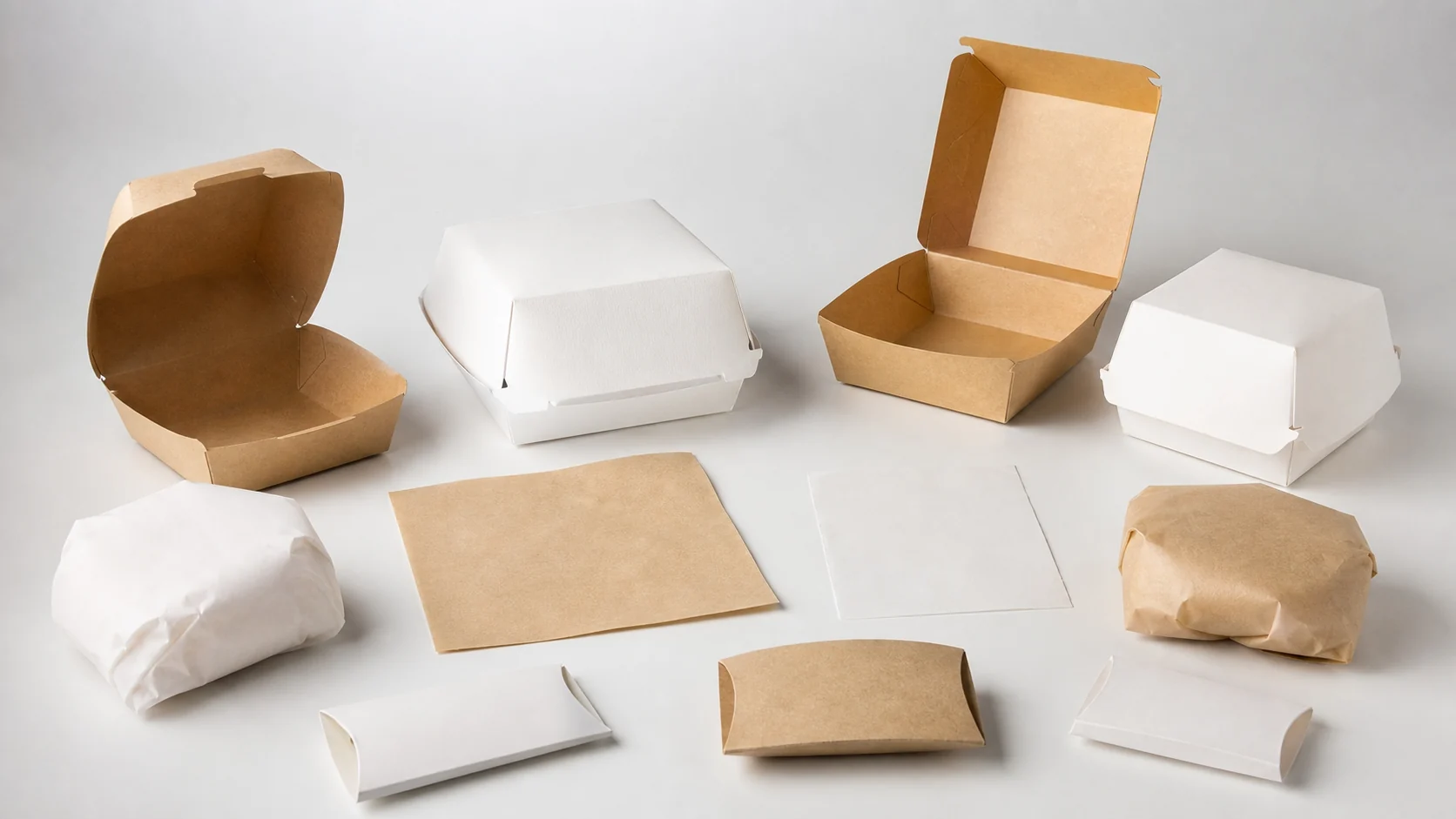
La migración de grasa es el tipo de fallo más habitual en los envases de hamburguesas. La grasa de la hamburguesa, que se desprende durante la cocción y sigue desprendiéndose tras el envasado, acabará penetrando en los sustratos de papel con el paso del tiempo si estos carecen de una capa barrera adecuada. Lo que se considera “adecuado” depende del contenido en grasa, del tiempo de contacto y de si el envase está en contacto directo o indirecto con la hamburguesa.
Advertencias importantes para los compradores:
Comprueba siempre la resistencia a la grasa empaquetando tu combinación más arriesgada —la hamburguesa con más grasa y más salsa— y dejándola reposar durante el tiempo máximo de reparto previsto antes de evaluar la base de la caja.
El vapor es a la vez necesario y problemático. El vapor que desprende una hamburguesa caliente mantiene el producto caliente, pero, si queda atrapado, se condensa en la parte inferior de la tapa y gotea sobre los panecillos y los ingredientes, ablandándolos. La relación entre la ventilación y la retención del calor supone un auténtico dilema de ingeniería:
No existe un enfoque que sea universalmente superior. Un operador de comida rápida con un radio de reparto de cinco minutos puede dar prioridad a la retención del calor; un operador de reparto a través de una plataforma con una ruta media de cuarenta y cinco minutos puede dar prioridad al control de la humedad, incluso a costa de una cierta pérdida de temperatura. Tu elección en materia de ventilación debe ajustarse al perfil específico de tu ruta, y ese ajuste debe validarse probando el producto real tras una simulación de retención durante el reparto.
Las hamburguesas son montones altos y, a menudo, inestables de ingredientes blandos. El envase debe:
Las estructuras de cartón ondulado, cartón de doble pared y cartón laminado ofrecen cada una un equilibrio diferente entre rigidez y peso. Las estructuras más finas de una sola pared son más ligeras y económicas, pero pueden ofrecer menos protección para envíos gourmet de gran altura o rutas de reparto más largas. Los compradores deben evaluar la integridad estructural en condiciones reales de apilamiento, y no limitarse a examinar una sola caja de forma aislada.
En las horas punta, el equipo de cocina puede llegar a cerrar cientos de cajas de hamburguesas por hora. Las cajas tipo «clamshell» con cierre por fricción, las lengüetas de encaje y las bases con cierre automático tienen, cada una, diferentes implicaciones operativas:
Pregunta a tu equipo qué tipo de cierre les parece más rápido y fiable en situaciones de presión y, a continuación, prueba ese formato en un turno de servicio real antes de darlo por definitivo.
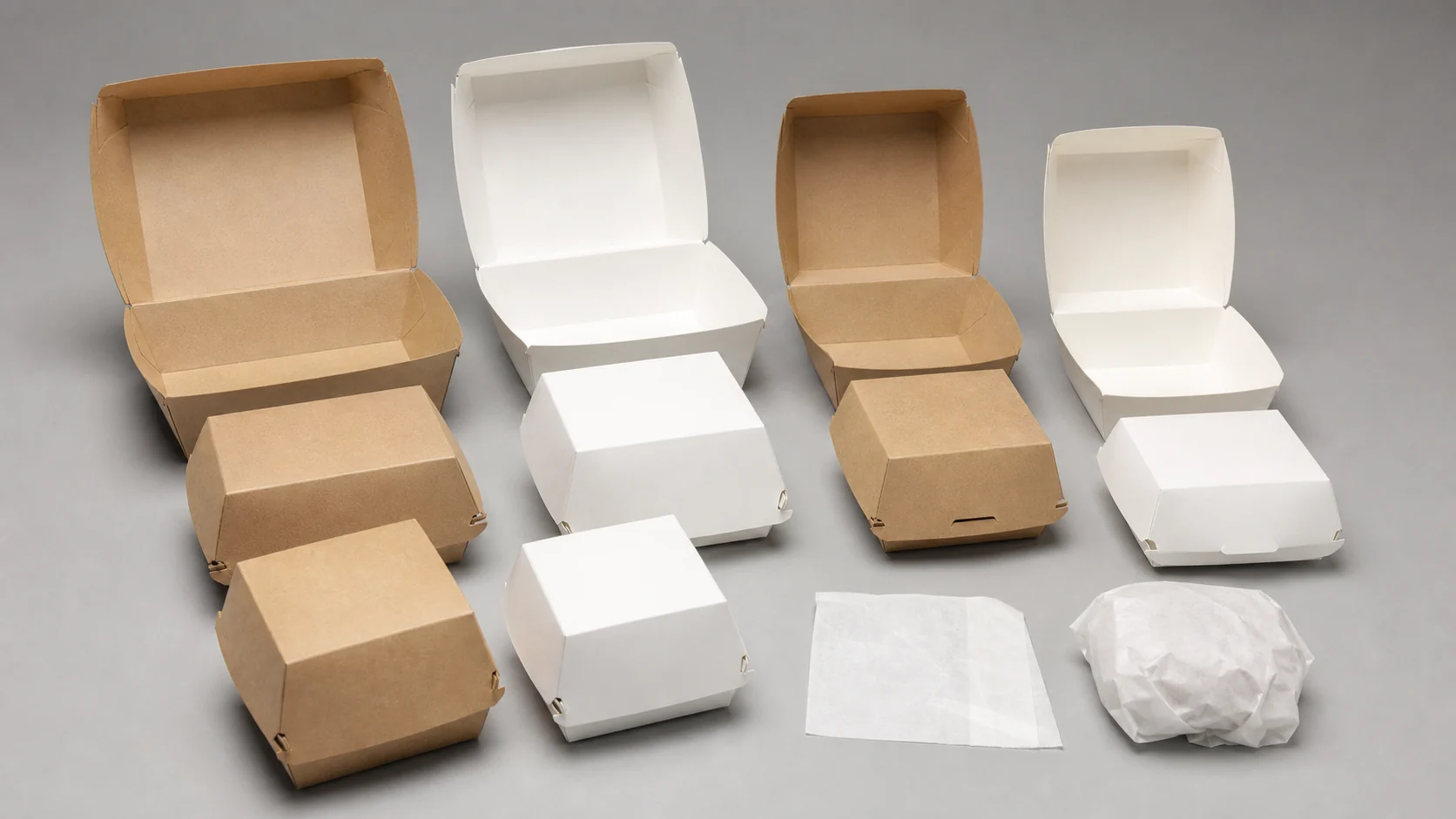
La tabla siguiente resume los formatos habituales de envasado de hamburguesas en función de los criterios clave de adquisición. Estas descripciones son generalizaciones; el rendimiento real varía en función de la referencia específica, el proveedor y las condiciones de funcionamiento. Todos los formatos requieren una evaluación de muestras con la composición exacta de su hamburguesa.
| Formato | Caso de uso típico | Opciones de barreras contra la grasa | Opciones de ventilación | Notas estructurales | Perspectiva de sostenibilidad |
|---|---|---|---|---|---|
| Caja de cartón plegable impresa (tipo clamshell) | QSR, cadena de restaurantes «fast casual» | Varía según el revestimiento | Algunas referencias cuentan con orificios de ventilación | Ideal para personas de estatura media; puede resultar un poco ajustado para personas altas | Se puede diseñar para que sea reciclable, pero consulta las instalaciones locales. |
| Caja tipo «clamshell» de cartón Kraft | Hamburguesería de calidad superior, restaurante de comida rápida artesanal | Varía según el recubrimiento | Opciones de ventilación disponibles en algunas referencias | Indica la posición de la embarcación; el grosor varía | La estética de Kraft suele asociarse con el abastecimiento sostenible; comprueba estas afirmaciones con el proveedor. |
| Caja de cartón ondulado para hamburguesas (con tapa separada) | Premium, con prioridad en la entrega | La capa ondulada aporta aislamiento | Menos habituales; algunas opciones perforadas | Alta rigidez; ideal para personas altas y de complexión robusta | El cartón ondulado se recicla ampliamente, pero la contaminación por grasa puede afectar al flujo |
| Envoltorio de papel con revestimiento de papel de aluminio | Formato secundario o solo de envoltura | El papel de aluminio actúa como barrera contra la grasa | Ventilación inherente mínima | La protección estructural limitada por sí sola | El laminado con papel de aluminio dificulta el reciclaje |
| Bolsa de papel (embalaje secundario) | Se suele utilizar junto con la caja principal | No hay barrera directa contra la grasa para la hamburguesa | Depende del envase primario | Soporte estructural mínimo; importante para la imagen de marca | Las bolsas de papel suelen ser reciclables si no están recubiertas. |
| Contenedor tipo clamshell para caña de azúcar / bagazo | Operadores orientados a la sostenibilidad | La barrera varía según el tratamiento | Microporosidad natural; cierto efecto de ventilación | Buena rigidez; más pesado que el cartón | Las declaraciones sobre la compostabilidad requieren que se compruebe la compatibilidad con las instalaciones locales |

En el caso de los establecimientos que dan prioridad al servicio a domicilio y de los híbridos, el momento en que un cliente abre la bolsa de la comida a domicilio es un momento de marca que rivaliza con la experiencia en el propio restaurante. El embalaje de las hamburguesas contribuye a este momento de varias maneras:
Superficie de impresión y de imagen de marca
Los formatos de cartón plegable y cartón kraft ofrecen una superficie imprimible considerable. Ten en cuenta cómo se ven tu logotipo, la lista de ingredientes y los mensajes sobre sostenibilidad bajo la iluminación habitual en el momento de la entrega —que suele ser la luz del techo de la cocina o del salón, en lugar de la cálida iluminación ambiental del comedor—.
Ergonomía al desembalar
Un cliente que come solo en una mesa quiere abrir la caja sin que se deslice de una pila de servilletas y sin que la tapa caiga sobre el bocadillo. Prueba la experiencia real de «abrir y comer» con tu envase en condiciones realistas.
Coordinación complementaria de contenedores
El embalaje de las hamburguesas casi nunca se envía solo. Las patatas fritas, los acompañamientos, las salsas y las bebidas siempre van juntos. Un sistema de embalaje en el que la caja de la hamburguesa, el vaso de patatas fritas y el envase de salsa compartan un mismo lenguaje de diseño visual refuerza la identidad de marca. Envases para alimentos que, al combinarse en todo tu menú, pueden crear una impresión de coherencia al abrir el paquete, en lugar de parecer una colección de formatos inconexos.
Evidencia de manipulación
En el caso de los envíos a través de terceros, los precintos de seguridad situados en la bolsa exterior o en la propia caja permiten proteger la integridad del producto y transmitir al cliente que se ha tratado con cuidado. Algunos operadores colocan una pegatina con la marca sobre el cierre de la caja; otros optan por formatos con lengüetas de cierre integradas.
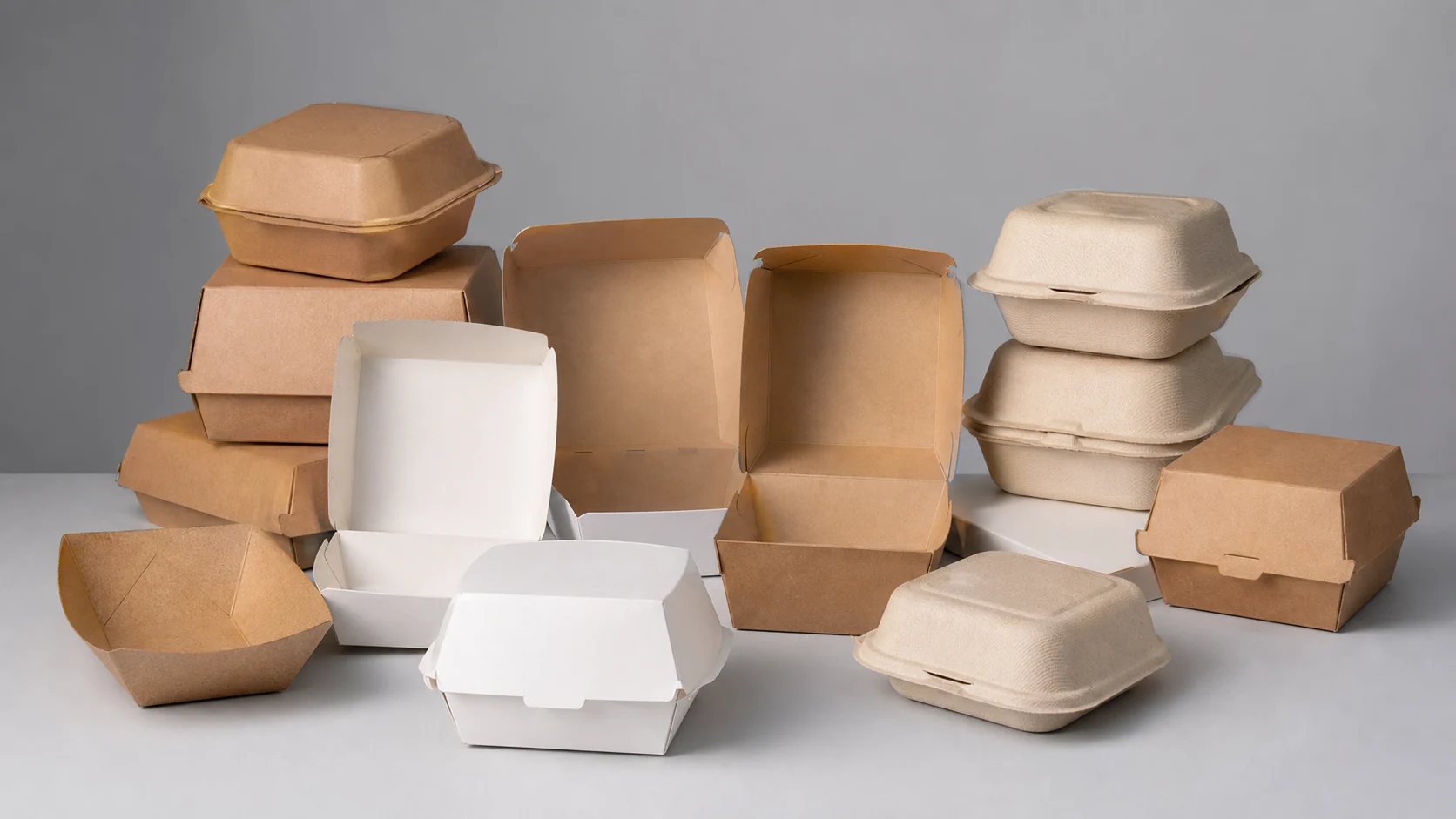
La sostenibilidad se está convirtiendo cada vez más en un requisito de las compras, ya sea por el posicionamiento de la marca, las expectativas de los clientes, los compromisos de los inversores o las nuevas obligaciones normativas. En el caso concreto de los envases de hamburguesas, el análisis de la sostenibilidad se complica debido a varias realidades:
Para los operadores que estén ampliando su gama de envases alimentarios desechables En el conjunto de su actividad, desarrollar una política de sostenibilidad a nivel de categoría —en lugar de evaluar cada referencia de forma aislada— suele dar lugar a resultados más coherentes y a conversaciones más claras con los proveedores.
La caja de la hamburguesa es solo uno de los componentes del sistema de reparto. El embalaje secundario —la bolsa en la que se transportan varios artículos— influye de manera significativa en el estado en que llega la hamburguesa. Aspectos clave a tener en cuenta en la integración:
Para los operadores que ofrecen tanto servicio a domicilio como servicio en el local, envases para comida para llevar Merece la pena evaluar los sistemas diseñados para gestionar ambos canales de forma eficiente —las bolsas de recogida en mostrador, las bolsas de entrega y los envases que se introducen en ellas— como un sistema coordinado, en lugar de como partidas independientes.
No todas las hamburguesas se sirven en una caja tipo concha. Algunos contextos operativos requieren formatos alternativos:
Hamburguesas en formato «bowl» y preparadas al estilo «smash»
Las presentaciones de hamburguesas «desmontadas» o en formato de cuenco —cada vez más populares en los establecimientos de comida rápida informal— pueden servirse mejor en cuencos de gran tamaño que en las cajas tradicionales con bisagra. Cuencos de papel kraft Puede ser una buena opción para la elaboración de hamburguesas en las que los ingredientes se presentan apilados en capas en un cuenco, en lugar de la configuración tradicional de pan y carne. Se aplican las mismas consideraciones en cuanto a la resistencia a la grasa y la ventilación; lo único que cambia es la forma.
Tapas para cuencos de hamburguesas abiertos por arriba
Cuando se utiliza un recipiente tipo cuenco, la elección de la tapa es fundamental para la entrega. Una tapa demasiado ajustada puede aplastar los ingredientes; una tapa demasiado holgada puede dejar entrar aire y acelerar la pérdida de temperatura. Las opciones que se ajustan bien, como tapas de papel para cuencos merece la pena evaluarlas para presentaciones de cuencos destinados al servicio a domicilio, con la misma salvedad de que hay que comprobar que la tapa encaja bien en el cuenco para cada combinación específica de referencia.
Menús infantiles y ofertas especiales
Es posible que los productos más pequeños y de menor coste no justifiquen la misma inversión en el embalaje que una hamburguesa exclusiva de gama alta. Los operadores suelen mantener una jerarquía de envases de dos o tres niveles: una caja de gama alta para los productos estrella, una caja estándar para los platos principales del menú y un formato más sencillo para los productos económicos o infantiles. Asegúrate de que cada nivel se haya probado adecuadamente para el uso previsto, y no se haya tomado por defecto de otro nivel.
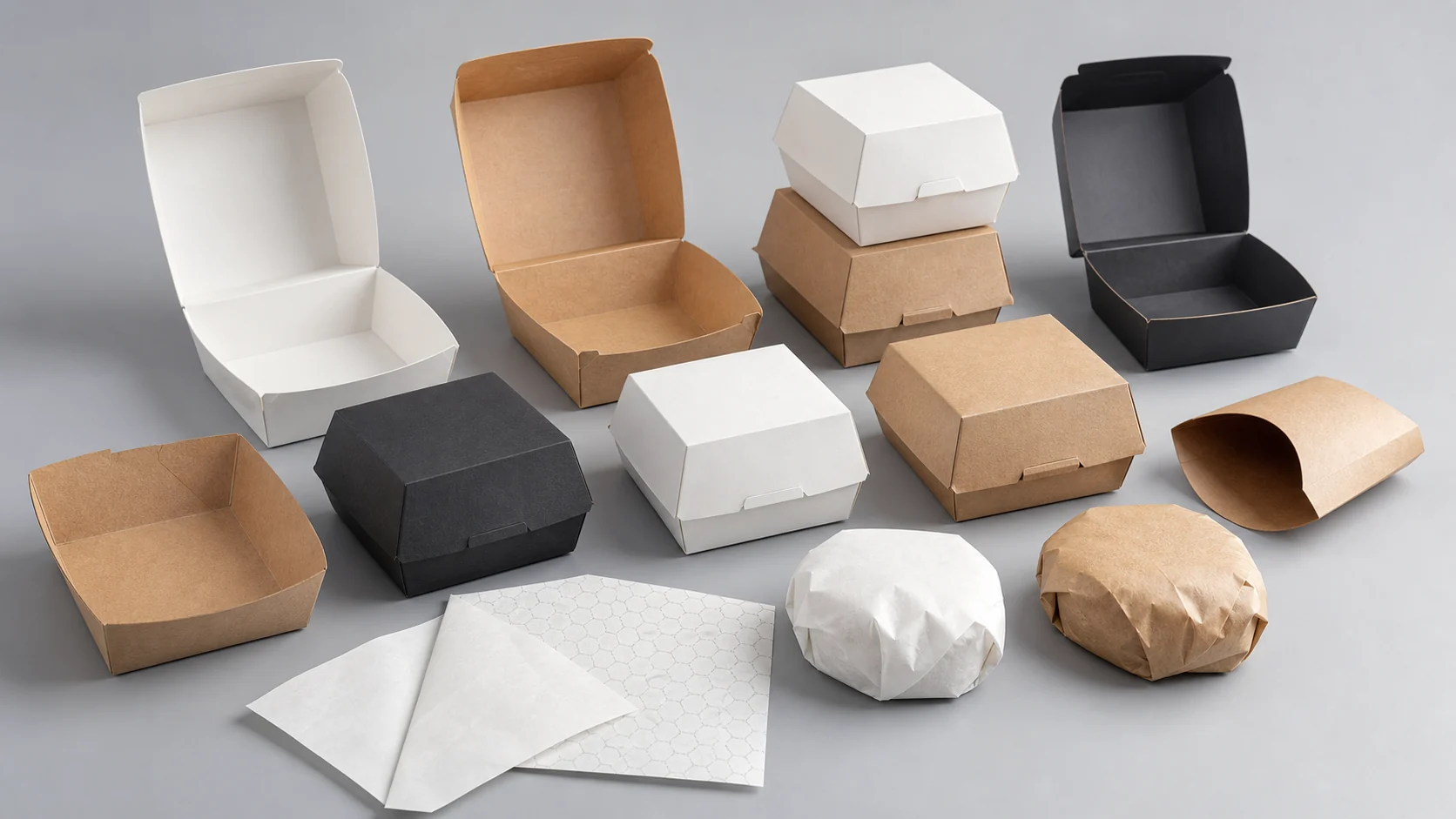
Antes de ponerte en contacto con los proveedores o solicitar muestras, define tus requisitos por escrito. Un pliego de condiciones práctico para el embalaje de hamburguesas debería incluir:
Los proveedores que reciben unas instrucciones detalladas pueden ofrecer recomendaciones de productos más precisas y una selección de muestras más adecuada. Las instrucciones imprecisas suelen dar lugar a muestras genéricas que quizá no reflejen tu caso de uso concreto.
Una adquisición eficaz de envases para hamburguesas se basa en la experiencia operativa —concretamente, en comprender cómo el equipo de cocina cierra los envases bajo presión, cómo gestiona las bolsas la flota de reparto y cómo interactúan los clientes con los envases en el punto de consumo—. Las decisiones de adquisición que parecen acertadas en una ficha técnica suelen revelar sus limitaciones en estos contextos del mundo real. Los compradores que han llevado a cabo pruebas de cata estructuradas —en las que las hamburguesas envasadas se mantienen durante tiempos de reparto simulados y luego se evalúan a ciegas según criterios definidos— toman sistemáticamente mejores decisiones a largo plazo sobre los envases que aquellos que se basan únicamente en las descripciones proporcionadas por los proveedores. A la hora de evaluar a los proveedores, solicita no solo las fichas técnicas de los productos, sino también referencias de negocios con composiciones de hamburguesas y modelos de servicio comparables.
Las propiedades funcionales descritas en esta guía —rendimiento como barrera contra la grasa, transmisión de vapor, resistencia a la compresión estructural y fuerza de cierre— son aspectos para los que existen métodos de ensayo publicados por el sector y respecto a los cuales los proveedores de envases de prestigio deberían poder facilitar datos de ensayo. Los compradores no deben aceptar garantías verbales sobre la resistencia a la grasa, el cumplimiento de la normativa sobre contacto con alimentos o las afirmaciones de sostenibilidad sin la documentación que las respalde. En el caso concreto de los envases en contacto con alimentos, la documentación del proveedor debe identificar los materiales y tratamientos utilizados, y los compradores que operen en Estados Unidos deben familiarizarse con el marco normativo de la FDA sobre sustancias en contacto con alimentos como referencia básica. Las declaraciones de sostenibilidad —incluidos el contenido reciclado, la reciclabilidad, la compostabilidad y la ausencia de PFAS— deben estar respaldadas, en cada caso, por documentación que especifique la norma, el organismo de ensayo y el alcance de la declaración.
Utiliza esta guía como una lista de verificación estructurada, en lugar de como un árbol de decisión con una respuesta predeterminada. Empieza por documentar con exactitud la composición de tus hamburguesas y tus canales de servicio; a continuación, elabora criterios de evaluación específicos para tu escenario de mayor riesgo: la hamburguesa con mayor contenido en grasa y más salsa en tu ruta de reparto más larga. Solicita muestras a varios proveedores que cumplan tus criterios iniciales y realiza pruebas estructuradas de conservación y cata antes de reducir tu selección. Involucra a tu equipo de cocina en la evaluación de la ergonomía de los cierres, y a tu equipo de operaciones de reparto en la evaluación de la integración de las bolsas. Una vez que tengas una lista reducida de dos o tres referencias que hayan superado las pruebas operativas, revisa la documentación de los proveedores sobre la composición química de la barrera contra la grasa, el cumplimiento de la normativa de contacto con alimentos y las declaraciones de sostenibilidad. Solo después de todos estos pasos deberías pasar al compromiso de volumen y, aun así, establecer un ciclo de revisión estructurado —trimestral o semestral— para evaluar si el rendimiento en la práctica sigue cumpliendo las expectativas a medida que evolucionan tu menú y tu modelo de servicio.
Cuando estés listo para pasar de la fase de investigación a la de especificación, elabora un pliego de condiciones con referencias exactas (SKU) que recoja en un único documento la composición de tus hamburguesas, la combinación de canales de distribución, los requisitos de tiempo de conservación, las necesidades de marca y los compromisos de sostenibilidad. Un pliego de condiciones bien elaborado permite a los proveedores proponer muestras que se adapten realmente a tu negocio, en lugar de propuestas genéricas, y crea una referencia documentada a la que puedes recurrir a la hora de evaluar el rendimiento o renegociar las condiciones.
La propiedad más importante depende de tu tipo de negocio concreto, pero en el caso de los negocios centrados en la entrega a domicilio o los híbridos, la interacción entre la resistencia a la grasa y la gestión de la humedad suele ser la más determinante. Un envase que permita que la grasa se filtre a través de su base o de sus paredes laterales provocará una experiencia desagradable para el cliente, independientemente de cómo se haya preparado la hamburguesa en sí. Al mismo tiempo, la humedad retenida procedente del vapor puede ablandar los panecillos y crear una textura empapada que eche por tierra la calidad de la hamburguesa y los ingredientes. Ambas propiedades deben evaluarse conjuntamente, en tus condiciones reales de tiempo de conservación, en lugar de valorarse por separado en una ficha técnica. No existe un producto universalmente superior; la elección adecuada depende del contenido en grasa de su hamburguesa, la cantidad de salsa y la duración de sus rutas de reparto.
No es posible determinar si un producto contiene PFAS mediante una inspección visual o a partir de la descripción estándar del mismo. Para garantizar que un producto no contiene PFAS, es necesario contar con documentación del proveedor en la que se especifique la composición química de la barrera utilizada y, a ser posible, con los resultados de ensayos de laboratorio realizados por terceros mediante métodos analíticos aceptados para las sustancias per- y polifluoroalquílicas. A la hora de adquirir envases para hamburguesas, pregunte directamente a los proveedores si el producto contiene PFAS añadidos intencionadamente y solicite documentación acreditativa, en lugar de conformarse con una garantía verbal. Tenga en cuenta que el marco normativo en torno a los PFAS en los envases en contacto con alimentos está evolucionando en múltiples jurisdicciones, y que sus asesores jurídicos y de cumplimiento normativo están en mejor posición que cualquier guía de envases para ofrecer orientación actualizada y específica para cada jurisdicción.
En muchos casos, sí, pero los requisitos de cada canal difieren lo suficiente como para que debas evaluar el envase en función de ambos casos de uso de forma explícita antes de dar por hecho que un único formato servirá bien para ambos. Para el consumo en el local, la prioridad suele ser la rapidez de cierre, la retención del calor durante el breve trayecto de la cocina a la mesa y la presentación sobre la superficie de la mesa. Para la entrega a domicilio, las prioridades se inclinan hacia la resistencia a la grasa durante un tiempo de espera más prolongado, la integridad estructural al apilar las cajas y la protección contra manipulaciones. Una caja que destaque por su presentación en el servicio en el local puede que no funcione adecuadamente en un recorrido de reparto de cuarenta y cinco minutos. Si tu volumen lo justifica, utilizar un formato específico para el reparto —posiblemente con un tratamiento de barrera o una configuración de ventilación diferentes— suele ofrecer mejores resultados para ambos canales que intentar que un único formato sirva para ambos.
La ventilación supone un equilibrio entre el control de la humedad y la retención del calor. Los orificios de ventilación o los paneles perforados de la tapa permiten que se escape el vapor, lo que reduce la condensación que se forma en la parte inferior de la tapa y gotea sobre los panecillos, ablandándolos. Sin embargo, la ventilación también permite que el calor se escape más rápidamente, lo que puede hacer que la hamburguesa llegue a una temperatura más baja de lo que lo haría en un envase sin ventilación. El equilibrio óptimo depende de la longitud de la ruta, de la temperatura de entrega deseada y de cómo reaccione a la humedad el tipo concreto de hamburguesa que prepares. Una hamburguesa con panecillo de brioche puede ser más sensible al ablandamiento por humedad que una con un panecillo de patata más consistente. Probar tanto los formatos con ventilación como los que no la tienen con tu composición real y una simulación del tiempo de espera durante la entrega —evaluada degustando el producto en el punto de entrega, no inmediatamente después del envasado— es la forma más fiable de determinar qué enfoque se adapta mejor a tu negocio.
Antes de comprometerse con un volumen de pedido, solicite lo siguiente a cualquier proveedor de envases para hamburguesas: una ficha técnica del producto en la que se especifiquen el sustrato, el gramaje y cualquier capa de barrera o recubrimiento; documentación que acredite el cumplimiento de la normativa sobre contacto con alimentos, incluidas las certificaciones de terceros o los registros reglamentarios pertinentes; documentación sobre la composición química de la barrera si necesita materiales libres de PFAS; cualquier dato disponible sobre pruebas de resistencia a la grasa, incluyendo el método de ensayo utilizado y las condiciones; y, si se realizan afirmaciones sobre sostenibilidad, documentación justificativa que especifique la norma aplicada, el organismo certificador y el alcance de la afirmación. En el caso concreto de las declaraciones de compostabilidad, compruebe qué vía de compostaje se cubre y si es relevante para la infraestructura disponible en su mercado. Esta documentación le protege desde el punto de vista operativo, le ayuda a responder a las consultas de los clientes y de las autoridades reguladoras, y establece una base clara para exigir a los proveedores que rindan cuentas sobre las características de rendimiento que han declarado.
Lo más seguro es definir tu combinación de mayor riesgo —la hamburguesa con más grasa, más salsa y el tiempo de reposo previsto más largo— y utilizarla como referencia para determinar el rendimiento mínimo del envase. Si un envase supera una prueba estructurada de conservación y evaluación con la combinación de mayor riesgo, es probable que ofrezca un rendimiento adecuado con combinaciones con menos grasa y menos salsa. Sin embargo, es posible que un único formato y unas únicas especificaciones de barrera resulten excesivas y, por lo tanto, innecesariamente costosas para tus combinaciones más sencillas y secas. Muchos operadores mantienen un sistema de envases por niveles: una caja de gama alta y con especificaciones más exigentes para sus combinaciones más complejas y sus productos estrella, y una caja con especificaciones estándar para combinaciones más ligeras o productos económicos. Si optas por un enfoque por niveles, asegúrate de que cada nivel se pruebe de forma independiente con las combinaciones que realmente va a contener, y de que tu equipo de cocina cuente con una norma clara y sencilla desde el punto de vista operativo para seleccionar el nivel adecuado para cada producto del menú.