¿Está listo para crear sus propios vasos o envases de papel con su marca?
Díganos sus requisitos -tamaño, revestimiento, impresión y destino- y nuestro equipo le preparará un presupuesto detallado en 24 horas.

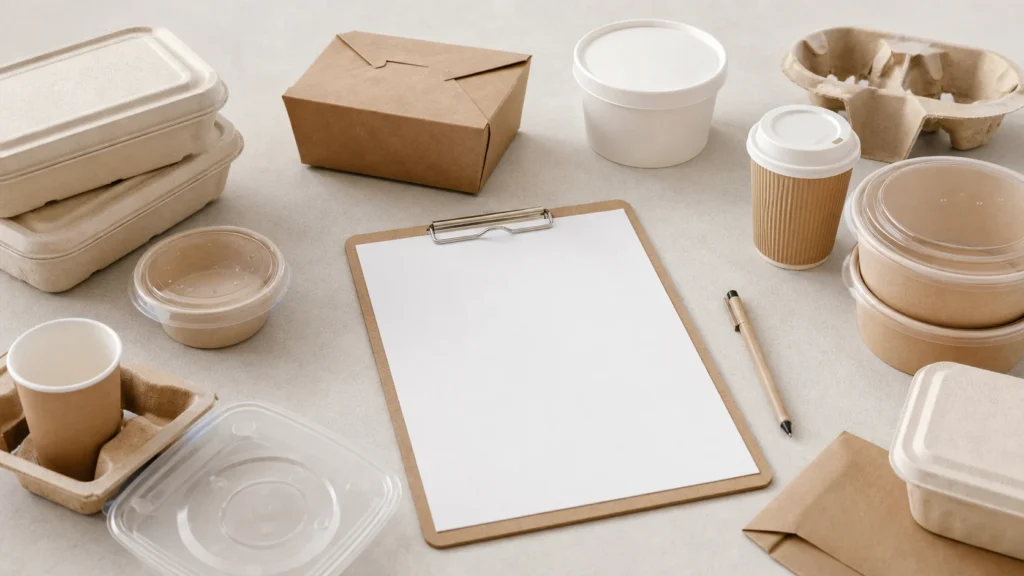
Selecting the right food packaging is one of the most operationally consequential decisions a restaurant makes. A container that performs flawlessly at the pass can fail before it reaches the guest — leaking through a delivery bag, softening under condensation, or arriving with a presentation that undermines the dish. This framework gives operators, purchasing managers, and kitchen teams a structured method for matching containers to menus, service routes, and compliance requirements, without relying on generic claims that may not hold under your specific conditions.
Every container decision begins with two questions: What is being packaged? y How does it travel to the guest? These two variables interact in ways that make it impossible to select packaging from a catalog without first mapping your menu against your service routes.
Start by categorizing every item on your menu by its dominant physical characteristic at the moment of packaging:
Each category places different demands on a container’s base, walls, lid, and closure mechanism. A container that works for a dry item may allow moisture migration when used for a semi-liquid dish. Mapping this before purchasing prevents the most common mismatch errors.
Service routes determine how long a container must maintain its structural and thermal performance, and under what physical stresses:
| Ruta | Typical Handling Events | Key Container Stresses |
|---|---|---|
| Dine-in plated service | Single transfer, immediate consumption | Presentation, heat retention at table |
| Counter pickup | Brief wait, customer carries | Stacking stability, closure security |
| Curbside / drive-through | Short vehicle transit | Bag compatibility, spill resistance |
| Entrega a cargo de terceros | Multiple handoffs, variable transit time | Structural integrity, condensation management |
| Catering and bulk transport | Stacking in transport trays, extended hold | Load-bearing strength, seal integrity |
| Ghost kitchen multi-brand | High volume, simultaneous orders | Speed of packing, labeling surface |
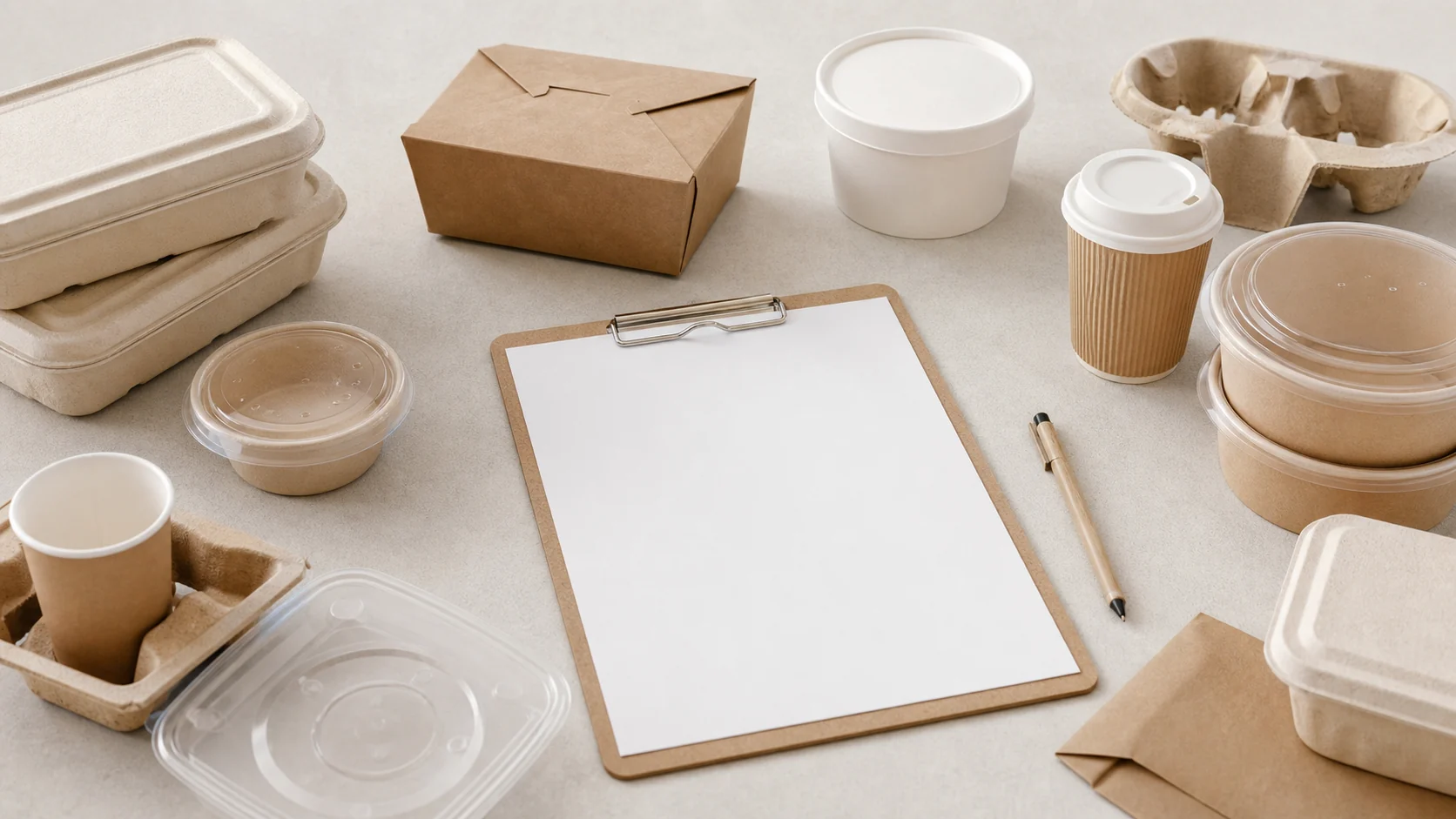
Operators running multiple service routes simultaneously — a common reality in modern restaurant operations — must either select containers that perform adequately across routes or maintain separate container inventories for each route. Neither approach is universally correct; the right answer depends on your volume, storage capacity, and labor model.
Understanding the major container families allows purchasing teams to evaluate options systematically rather than reacting to supplier samples. Each family has structural characteristics that make it better suited to certain menu states and service routes.
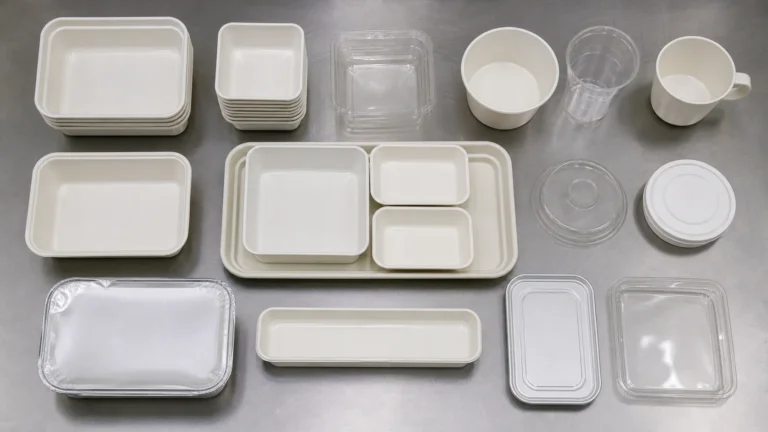
Clamshells are hinged single-piece containers that close over the contents without a separate lid. They are widely used for sandwiches, burgers, fried items, and plated meals. The hinge design means the lid and base are always matched, eliminating lid-loss errors during high-volume packing. However, the hinge also creates a potential weak point under lateral pressure, and the lid-to-base seal is typically a friction or tab closure rather than a pressure seal.
Clamshells are available in foam, molded fiber, and various plastic formats. Each material behaves differently under heat, moisture, and mechanical stress. Validate the specific material and construction under your filling conditions before committing to volume.
Multi-compartment containers allow a single package to carry proteins, sides, and sauces without mixing. They are particularly relevant for meal-prep concepts, school and workplace catering, and any menu where sauce migration would compromise a component’s texture or presentation.
The structural walls between compartments vary significantly by manufacturer and material. Some compartment walls are effective barriers under normal handling; others allow liquid to migrate between sections under the pressure of stacking or bag compression. Test under your actual filling and carrying conditions.
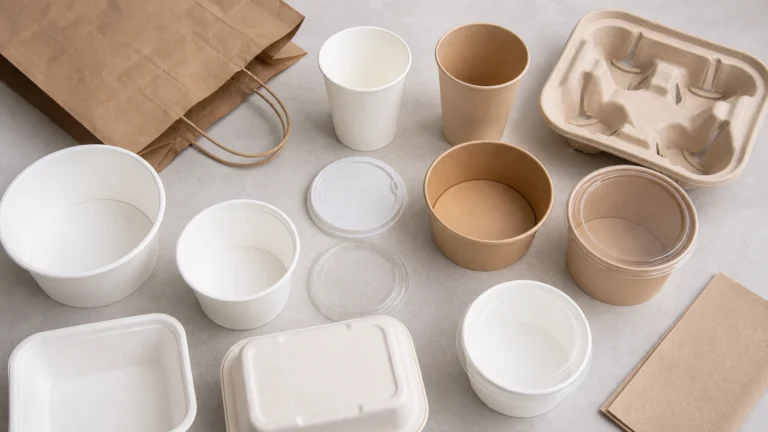
Round containers with separate lids are the standard format for soups, grain bowls, salads, and desserts. The lid-to-base interface is the critical performance variable. Snap-fit lids, dome lids, and flat lids each behave differently when the container is inverted, compressed, or subjected to temperature change during transit.
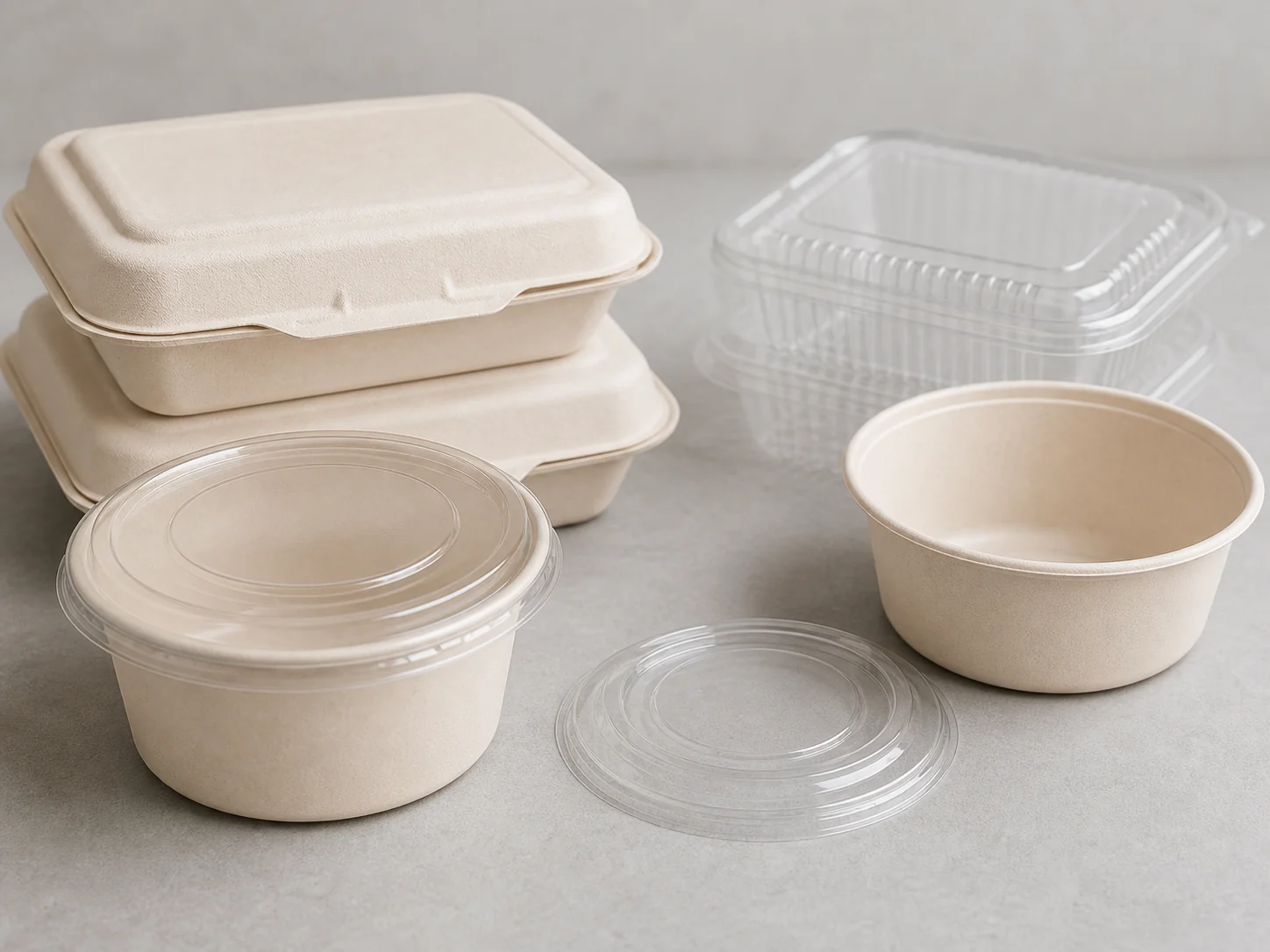
Open trays and shallow containers are used for items where presentation matters more than containment — sushi, pastries, charcuterie, and catered appetizers. They are often paired with a separate overwrap, dome lid, or film cover. The absence of an integrated closure means the operator must select and validate a compatible covering system.
Small-volume containers for condiments, dressings, and dipping sauces are a frequently overlooked category. A poorly sealed portion cup can contaminate the primary container during transit. Portion cups are available in a wide range of materials and closure styles; the appropriate choice depends on the viscosity of the sauce, the transit duration, and whether the cup will be placed inside the primary container or in a separate bag compartment.
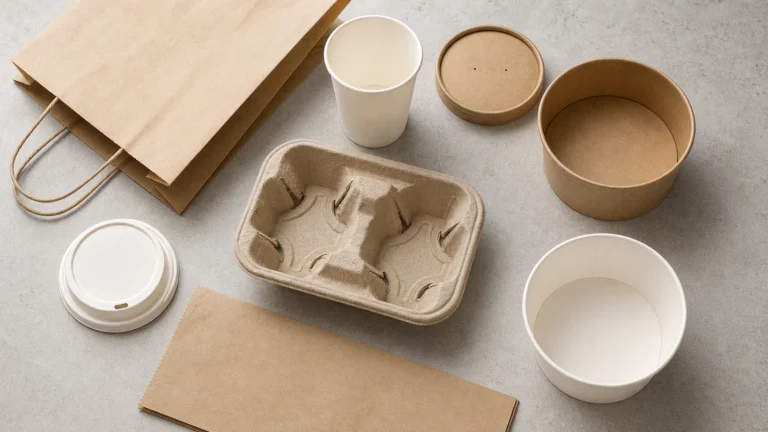
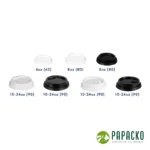
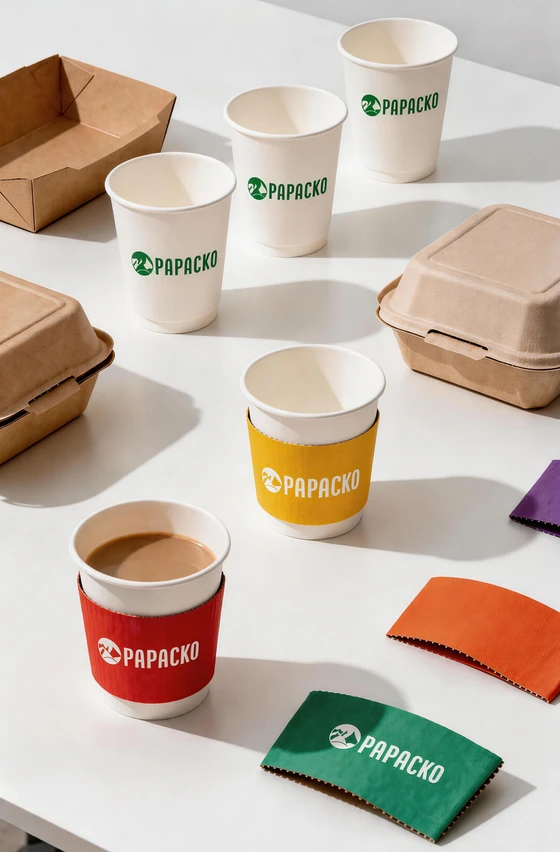
Hot cups, cold cups, and specialty beverage containers each have distinct construction requirements. The sleeve, lid, and cup must be evaluated as a system, not as individual components. Explore the full range of paper cups and beverage packaging options to understand the format families available before narrowing to specific SKUs.
A container’s closure is not a passive feature — it is an active structural element that must perform under the specific mechanical forces your service route generates. The carrying system (bag, tray, or box) amplifies or mitigates those forces.
Snap-fit closures require a defined engagement force to seat properly. In high-volume packing environments, staff may under-engage the closure, leaving it partially open. Training and container ergonomics both affect closure consistency.
Tab-and-slot closures on clamshells and folded paperboard containers rely on the tab material maintaining its stiffness. Moisture absorption, heat exposure, or rapid packing can reduce tab engagement reliability.
Tapas a presión depend on the dimensional consistency of both the lid and the container rim. Variations in manufacturing tolerances, or rim deformation from heat, can compromise the press-on seal.
Film seals applied by a heat sealer or adhesive provide a more consistent closure but require equipment investment and add a step to the packing workflow.
The carrying bag is the final containment layer in most delivery and takeout operations. A container that performs well in isolation may fail when placed in a bag that:
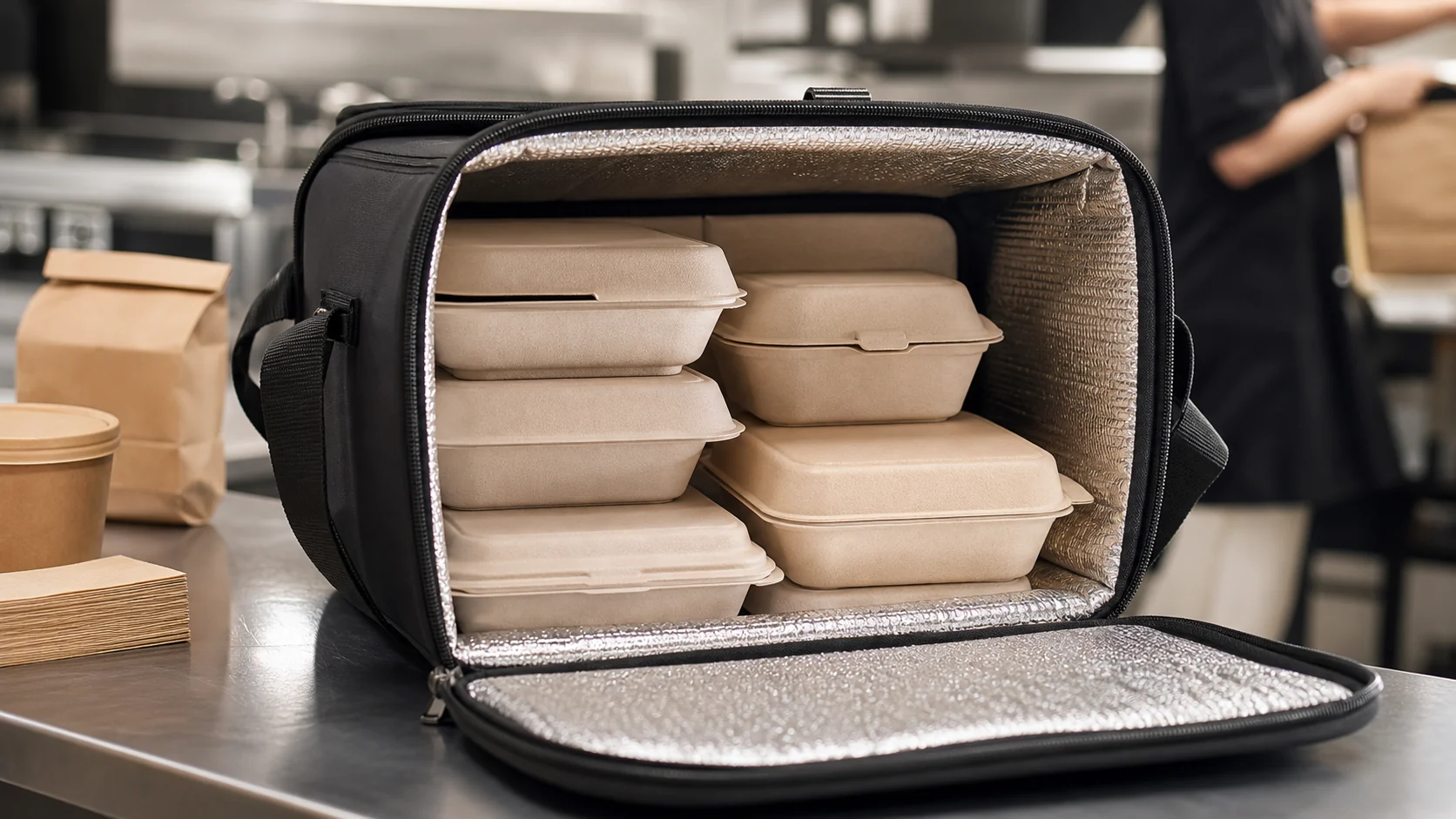
Operators should test their complete packing configuration — containers, lids, portion cups, bags, and any insulating inserts — as a system under realistic transit conditions before finalizing their packaging program.
One of the most persistent errors in restaurant packaging selection is treating container performance as a fixed property of the material rather than as a function of the interaction between the material, the food state, and the service conditions.
A container described as suitable for hot food is not automatically suitable for all hot food under all conditions. The relevant variables include:
Similarly, a container used for cold items must be evaluated for its behavior when moving from a refrigerated holding environment to ambient temperature during transit — condensation on the exterior, softening of the base material, and lid loosening are all possible outcomes depending on the container construction.
Fried foods, baked goods, and other items where texture is a primary quality indicator present a specific challenge: the container must allow enough vapor escape to prevent sogginess without allowing so much heat loss that the item arrives cold. Vented containers address this trade-off, but the vent design, size, and placement affect both vapor management and heat retention differently across different items and transit durations.
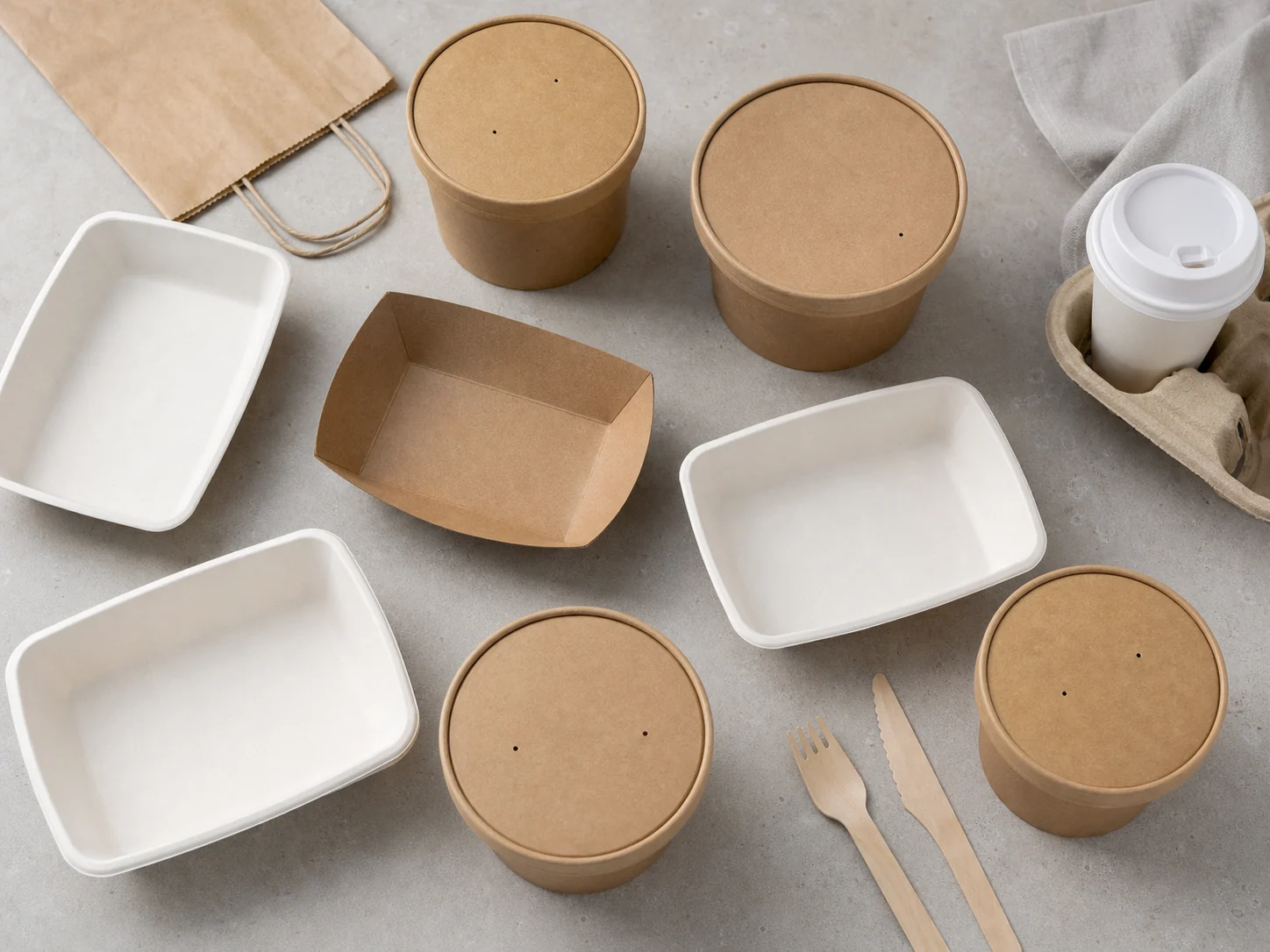
Burgers, wraps, and multi-component sandwiches present a layered moisture challenge: the hot protein releases steam upward into the bread, while sauces migrate laterally. Container geometry — height, internal volume, and lid clearance — affects how this moisture distributes. A container with insufficient headroom traps steam against the top of the bun; a container with excessive headroom allows the item to shift during transit.
There is no universal answer to these trade-offs. Validate your specific assembled items in your specific containers under your specific transit conditions.
Purchasing decisions made in an office or at a trade show do not reflect the conditions under which packaging actually performs. A formal validation process protects against costly failures after volume commitments have been made.
Step 1 — Define the test scenario. Specify the menu item, fill weight, fill temperature, packing procedure, bag configuration, and transit duration that represent your actual service conditions. If you have multiple service routes, define a scenario for each.
Step 2 — Pack under realistic conditions. Have the containers packed by the staff who will actually pack them during service, at the speed and volume of a real service period. Packaging that performs well when packed carefully by a manager may fail when packed quickly by a line worker under pressure.
Step 3 — Simulate the transit. Use your actual delivery bags, place containers in the order and orientation they would be packed, and transport them over a route that approximates your delivery zone — including stops, starts, and any vehicle type used by your delivery partners.
Step 4 — Evaluate on arrival. Assess structural integrity, closure engagement, moisture migration, condensation, presentation quality, and any evidence of leakage or deformation. Document findings with photographs.
Step 5 — Iterate. If failures occur, identify whether the failure point is the container, the closure, the packing procedure, or the carrying system, and adjust accordingly.

When your packaging enters a third-party delivery network, you lose direct control over handling quality, transit duration, and bag configuration. This argues for selecting packaging that performs adequately under worse-than-expected conditions, not just under ideal conditions. It also argues for tamper-evident features — not because they improve food quality, but because they protect your brand and your guests’ confidence.
Descubre toda la gama de disposable food packaging formats to identify options that align with your delivery validation requirements.
Every material that contacts food in your packaging program must be appropriate for food contact under the conditions of use. This is not a discretionary consideration — it is a baseline compliance requirement.
Food-contact materials are subject to regulatory frameworks that vary by jurisdiction. In the European Union, the foundational framework is established by the European Commission’s food contact materials program, which covers the safety assessment of substances that may migrate from packaging into food. Operators and purchasing managers sourcing packaging for EU markets, or sourcing from suppliers who manufacture for EU markets, should familiarize themselves with the requirements outlined at the European Commission’s food contact materials resource.
Key principles from this framework that apply to restaurant purchasing decisions:
When evaluating a container, the relevant question is not whether the material is generally considered food-safe, but whether it has been assessed for food contact under conditions that match your use case — including the food type, the fill temperature, the contact duration, and any subsequent reheating by the consumer.
Request documentation from your supplier that addresses food-contact compliance for the specific material, construction, and intended use. Do not assume that a container sold for food service has been assessed for your specific application.
Compostable packaging materials introduce additional compliance considerations. A material that is food-contact compliant in its virgin state may behave differently after the composting process, and the food-contact compliance of the packaging itself is separate from its end-of-life claims. Review compostable food packaging options with the same food-contact documentation standards you would apply to any other material.
Use this checklist as a structured framework for evaluating any container before adding it to your purchasing program. It is not a substitute for your own validation process, but it ensures that the most common failure points are addressed before volume commitments are made.
Papacko offers a broad catalog of food packaging formats designed for restaurant and foodservice operations, spanning container families, closure systems, beverage packaging, and sustainable material options. Their range supports operators working across multiple service routes and menu types.
To explore the full catalog and identify formats relevant to your operation, visit the Papacko food packaging containers overview for a structured entry point into their container families, or browse the complete food packaging category for the full range of available formats.
As with any packaging supplier, use the sourcing checklist above and conduct your own validation process before committing to volume. Papacko’s catalog provides the format options; your validation process determines which formats perform under your specific conditions.
This framework is intended as a structured decision-support resource for restaurant operators, purchasing managers, and kitchen teams evaluating food packaging options. It does not constitute regulatory advice, food safety certification guidance, or a warranty of performance for any specific product.
What this framework covers: A systematic method for mapping menu items and service routes to container families, evaluating closure and carrying interactions, and establishing a validation process before volume purchasing.
What this framework does not cover: Specific temperature performance thresholds, capacity specifications, leakproofness ratings, certification status, recycling or compostability infrastructure, pricing, minimum order quantities, or lead times for any product. These variables are product-specific, supplier-specific, and in some cases jurisdiction-specific.
Responsabilidad del comprador: All performance claims, food-contact compliance documentation, and suitability assessments must be verified directly with the supplier for the specific container, closure, and conditions of use in your operation. The interaction between a container, its contents, its closure, and its carrying system under your specific service conditions cannot be determined from general descriptions. Validate before you commit.
Authority sources: Food-contact regulatory context in this framework references the European Commission’s food contact materials program. Operators in other jurisdictions should consult the applicable regulatory authority for their market.
The answer depends on the range of your menu and the volume of each category. A single container that performs adequately across all your menu items simplifies purchasing, storage, and staff training — but “adequate” is the operative word. If your menu spans both liquid-dominant dishes and dry, crisp items, a single container format is unlikely to perform optimally for both. The moisture management requirements are in direct tension: a container that retains enough heat and moisture for a soup will trap steam against a fried item. Operators with high-volume, narrow menus often benefit from a single optimized container; operators with broad menus typically need two to four container families to cover their range. Map your menu matrix first, then evaluate whether the performance gaps between categories are acceptable under your service conditions.
Request documentation that is specific to the material, the construction of the container (not just the base material), and the intended conditions of use. Key questions include: Has this material been assessed for food contact with the food types I will be packaging (fatty foods, acidic foods, aqueous foods)? Has it been assessed at the fill temperatures I will be using? Has it been assessed for the contact duration that reflects my service route, including any consumer reheating? Is the documentation current and applicable to the jurisdiction where I operate? A supplier who can answer these questions with specific documentation is demonstrating a higher level of compliance rigor than one who provides only a general food-safe claim. For EU market context, the European Commission’s food contact materials framework provides the regulatory baseline against which documentation should be evaluated.
Diseña pensando en el peor de los casos. Si tu tránsito más largo representa una parte significativa de tus pedidos, la selección de contenedores debe validarse para esa duración, no para la media. Un envase que funcione bien en una recogida corta pero falle tras un transporte prolongado generará quejas y devoluciones por parte de tus clientes de reparto —que suelen ser los clientes con menor relación directa con tu marca y las mayores expectativas de una experiencia impecable—. Si la diferencia de rendimiento entre los trayectos cortos y largos es significativa, plantéate si las bolsas isotérmicas, los insertos térmicos o una configuración de embalaje adaptada para los pedidos a domicilio pueden ampliar el margen de rendimiento efectivo de tus envases. Algunos operadores también ajustan su menú para la entrega a domicilio —eliminando los platos que no pueden mantener su calidad durante un trayecto prolongado— en lugar de intentar diseñar una solución de embalaje para platos intrínsecamente frágiles.
Los envases compostables requieren una infraestructura adecuada para el final de su vida útil que permita cumplir con su premisa medioambiental. Antes de elegir envases compostables, comprueba que, en tu zona geográfica concreta, tanto tus clientes como tu empresa de recogida de residuos tengan acceso a instalaciones de compostaje industrial que acepten envases contaminados con alimentos. Un envase compostable que acaba en un vertedero no se descompone en un plazo de tiempo razonable. Más allá de la cuestión del fin de vida útil, evalúa los envases compostables con los mismos criterios de documentación sobre contacto con alimentos que aplicarías a cualquier otro material: la compostabilidad es una propiedad relacionada con el fin de vida útil, no con la seguridad alimentaria. Evalúa también el comportamiento estructural de los materiales compostables en tus condiciones específicas de llenado, especialmente en el caso de productos calientes o húmedos, ya que algunos materiales compostables se comportan de forma diferente a sus homólogos convencionales. Valídalos antes de comprometerte a un volumen determinado.
The most frequently reported failures in third-party delivery fall into four categories. First, closure failure — lids that disengage during transit, either because they were not fully engaged at packing or because bag compression or container deformation released the closure. Address this through closure design selection, staff training, and bag configuration testing. Second, moisture migration — liquid from one container contaminating another, or condensation pooling in the bag and softening container bases. Address this through container sequencing in the bag, insulating layers, and container material selection. Third, structural deformation — containers that collapse or deform under the weight of stacked orders, compromising both presentation and containment. Address this through stacking tests under realistic load conditions. Fourth, temperature loss — items arriving outside the acceptable temperature range for quality or safety. Address this through insulated bag selection and, where necessary, menu adjustments for items that cannot maintain quality over your delivery zone’s transit duration. Each of these failure modes requires a different intervention; diagnosing which failure is occurring before selecting a solution prevents misaligned fixes.
Ghost kitchen operations amplify every packaging failure because there is no staff member present at the moment of handoff to catch a loose lid, repack a tipped container, or explain a presentation issue to the guest. This argues for a higher standard of closure security, tamper-evidence, and structural robustness than you might apply to a counter-service operation. It also argues for a more rigorous validation process, since the packaging must perform without any human intervention between the kitchen and the guest. Additionally, ghost kitchen packaging is often the primary brand touchpoint — the guest’s entire physical experience of your brand is the container, the bag, and the food inside. Invest in packaging that communicates brand quality through material choice, print quality, and structural integrity. Finally, because ghost kitchens often operate multiple virtual brands from a single kitchen, standardizing on a small number of container formats that work across brands reduces storage complexity and staff training burden — but only if those formats have been validated for each brand’s menu.