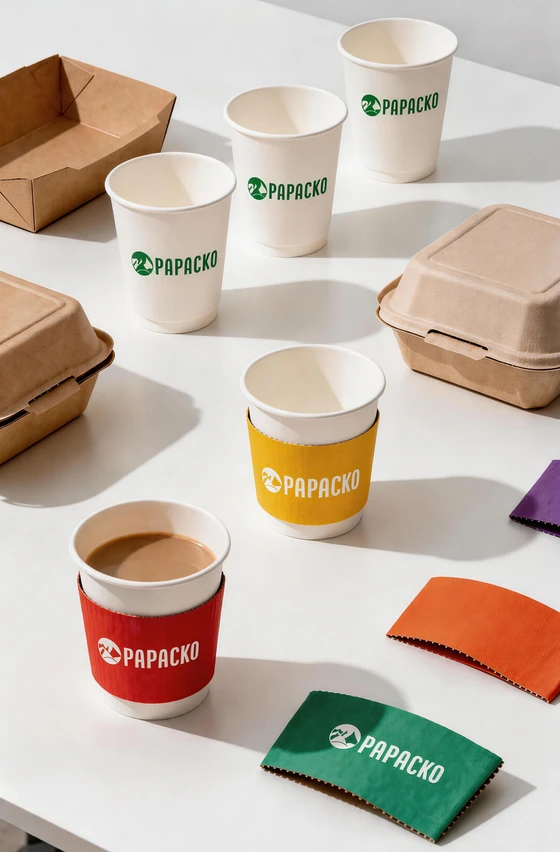
Prêt à créer vos propres gobelets ou emballages en papier ?
Faites-nous part de vos exigences - taille, revêtement, impression et destination - et notre équipe établira un devis détaillé dans les 24 heures.

Dernière mise à jour: novembre 2025
Temps de lecture: 9 minutes
Auteur: Équipe de contenu de Papacko
Votre café durable est passé aux boîtes à lunch en papier kraft pour attirer les clients soucieux de l'environnement, mais il a découvert que 25% des boîtes laissaient échapper de la graisse en 15 minutes, que 18% s'effondraient lorsqu'elles étaient empilées pendant la période de pointe, et que les clients se plaignaient de taches d'huile sur leurs mains et leurs sacs - ce qui a entraîné plus de 40 plaintes hebdomadaires et une baisse de l'évaluation Google de 4,6 à 4,1 étoiles. Pendant ce temps, le restaurant bio voisin utilise des boîtes en kraft qui traitent parfaitement les aliments gras tout en respectant l'environnement.
Les boîtes à lunch en papier kraft ne sont pas automatiquement éco-fonctionnelles - elles nécessitent des technologies spécifiques de barrière résistante à l'huile (atteindre la norme TAPPI T559 Grade 10-12 sans revêtement PE à base de pétrole), une ingénierie structurelle pour la résistance à l'empilement (carton 350-450 GSM avec coins renforcés), et des certifications FSC/contenu recyclé appropriées pour offrir à la fois une performance environnementale et une fiabilité pratique. Un mauvais choix de boîte kraft coûte $5-8 par commande ratée en reprises et remboursements, tout en nuisant au positionnement de votre marque en matière de développement durable.
Dans ce guide, vous apprendrez :
-Solutions de résistance à l'huile pour le papier kraft : technologies de barrière sans revêtement PE
-Exigences en matière de résistance structurelle : Poids du GSM et stratégies de renforcement
-Certification FSC Contenu recyclé ou contenu recyclé : qu'est-ce qui compte pour l'éco-positionnement ?
-Choix de la taille et planification de la capacité pour différents types de repas
-Analyse des coûts : kraft, blanc et couché
-Vérification des fournisseurs et points de contrôle de la qualité
-Erreurs courantes qui nuisent à la performance du papier kraft
💡 À retenir: Les boîtes à lunch en papier kraft doivent avoir un grammage minimum de 350-400 GSM pour assurer l'intégrité structurelle, des revêtements à base d'eau ou de PLA pour la résistance à l'huile (grade 10-11 TAPPI T559), et une certification FSC ou un contenu recyclé 80%+ pour des déclarations crédibles en matière de développement durable.
Coût : $0,25-0,45 par boîte en fonction du revêtement et de la certification.
Caractéristiques essentielles : le renforcement du fond empêche l'affaissement sous un poids de nourriture de 2 à 3 livres, des trous d'aération appropriés empêchent la formation de boue, biodégradable en 60 à 90 jours dans des conditions de compostage.
Idéal pour : les cafés axés sur la santé, les restaurants de la ferme à la table, les services de restauration qui accordent la priorité à l'écologie et aux performances fonctionnelles.
L'obtention d'une résistance aux graisses tout en conservant des références écologiques nécessite des technologies de barrière avancées allant au-delà des revêtements PE traditionnels.
Propriétés du papier kraft naturel:
-Structure poreuse de la fibre de cellulose (le papier absorbe naturellement les liquides)
-Pas de barrière inhérente à l'huile (la graisse sature les fibres, migre à travers l'épaisseur)
-Chronologie : Le kraft non enrobé montre une percée de l'huile en 5 à 15 minutes avec des aliments gras
Conséquences d'une fuite d'huile:
-Expérience du client : Mains grasses, sacs/sièges de voiture tachés d'huile, mauvaise qualité perçue
-Dégradation de la marque : L“”emballage écologique“ devient un ”emballage bon marché" dans la perception des clients
-Problèmes de santé : L'huile externe attire la saleté et est perçue comme insalubre.
-Coûts opérationnels : 15-25% taux de reprise = $750-1,250 perte mensuelle (50 commandes quotidiennes × $10 moyenne)
Composition: Dispersion de polymères à base d'acrylique ou d'amidon, poids de revêtement de 12 à 20 g/m².
Résistance à l'huile:
-Test TAPPI T559 : Grade 10-11 (adéquat pour la plupart des applications de déjeuner)
-Temps de pénétration : 30-45 minutes avec une graisse modérée (vinaigrettes, sauces)
-Plage de température : Efficace jusqu'à 80°C (convient aux aliments tièdes et non chauds)
Références en matière d'environnement:
-Application soluble dans l'eau (pas d'émissions de COV pendant la fabrication)
-Potentiellement recyclables (en fonction de l'infrastructure, certaines installations les acceptent)
-Biodégradable : Se décompose en 60 à 120 jours dans des conditions de compostage.
-Contenu renouvelable : Souvent dérivé de l'amidon (polymère d'origine végétale)
Coût: +$0,03-0,06 par rapport au kraft non couché ($0,28-0,35 par boîte)
Limites:
-Résistance modérée à l'huile (ne convient pas pour les aliments frits ou très gras)
-Sensibilité à l'eau (une exposition prolongée à l'humidité dégrade la barrière)
-Le recyclage varie selon les régions (vérifier l'acceptation du flux de papier au niveau local).
Usages conseillés: Salades, sandwiches, bols de céréales, protéines grillées - applications à teneur modérée en graisse
Composition: Bioplastique d'origine végétale à partir de maïs/sucre, revêtement de 15 à 25 g/m².
Résistance à l'huile:
-Test TAPPI T559 : Grade 11-12 (excellente barrière à la graisse)
-Temps de pénétration : 60-90 minutes, même avec des aliments à forte teneur en graisse
-Plage de température : Jusqu'à 85°C (convient à la plupart des applications de livraison)
Références en matière d'environnement:
-100% à base de plantes (sans pétrole)
-Compostable dans le commerce (90-180 jours dans les installations industrielles)
-Empreinte carbone inférieure à celle du revêtement PE (matière première renouvelable)
-Non recyclable (contamine le flux de recyclage du papier)
Coût: +$0,06-0,10 par rapport au kraft non couché (+25-35% par rapport au couchage à base d'eau)
Compromis:
-Nécessite une infrastructure de compostage commercial (pas de compostage domestique)
-Coût plus élevé (prix majoré pour un positionnement durable)
-Ne peut être recyclé dans les flux de papier standard (doit être composté ou mis en décharge)
Usages conseillés: Marques écologiques haut de gamme, marchés disposant d'un accès au compostage commercial, plats à forte teneur en graisse.
Barrières anti-graisse sans PFAS (norme émergente) :
-Contexte : Les traitements traditionnels anti-graisse utilisent des PFAS (substances per/polyfluoroalkyles).
-Problème : les PFAS sont liés à des problèmes de santé et sont interdits/éliminés dans l'UE et aux États-Unis.
-Solution : Nouveaux revêtements bio-sourcés sans fluorochimie atteignant le grade 10-12
-Performance : Comparable aux traitements contre les PFAS sans risques pour la santé et l'environnement
-Coût : +$0,04-0,08 par rapport au kraft non couché (prime modérée)
-Certification : Recherchez les mentions “sans PFAS” ou “sans fluor” dans la documentation du fournisseur.
#### Comparaison de la résistance à l'huile
La couleur brune naturelle du papier kraft et son attrait écologique ne signifient rien si les boîtes s'effondrent sous le poids des repas ou la pression d'empilage habituels.
300-330 GSM (commerce léger) :
-Capacité: Jusqu'à un poids de nourriture de 1,5 lb
-Empilage: 3-4 boîtes maximum avant risque de déformation
-Utilisation typique: Salades d'accompagnement, sandwichs légers, en-cas
-Coût: $0.22-0.30 par boîte
-Limitation: Ne convient pas aux repas complets ou à l'empilage en période de forte affluence.
350-400 GSM ⭐ Norme pour les boîtes à lunch :
-Capacité: 2 à 3 livres de poids de nourriture en toute fiabilité
-Empilage6-8 boîtes stables (scénario typique d'un poste de préparation ou d'un sac de livraison)
-Utilisation typique: Déjeuners à base de plats principaux, bols de riz, pâtes, protéines et accompagnements
-Coût: $0.28-0.38 par boîte
-Part de marché70-80% des applications de la boîte à lunch en kraft
400-450 g/m² (usage intensif) :
-Capacité: 3-4 lbs de poids de nourriture
-Empilage: 10+ boîtes (restauration, scénarios de préparation en vrac)
-Utilisation typique: Repas familiaux, portions traiteur, protéines lourdes
-Coût: $0.35-0.50 par boîte
-Cas d'utilisation: Restaurants haut de gamme, opérations de restauration privilégiant une fiabilité maximale
L'importance du GSM:
-GSM plus élevé = plus de fibres de cellulose = plus grande résistance à la traction
-Le papier kraft (non blanchi) a des fibres plus longues que le papier blanc → plus résistant par unité GSM
-La force d'empilage est cruciale : rush de midi = 20 à 30 boîtes empilées pendant la fenêtre de préparation.
Panneau inférieur à double paroi:
-Conception : Deux couches de carton kraft contrecollées au fond de la boîte
-Avantage : empêche l'affaissement du fond lorsque la boîte est remplie de 2 à 3 livres d'aliments et de liquides.
-Coût : +$0.04-0.06 par boîte
-Critique pour : Plats salés, bols de riz, tout ce qui contient des éléments liquides.
Renfort d'angle:
-Conception : Epaisseur de matériau supplémentaire ou plis dans les coins de la boîte
-Avantage : empêche les coins de se déchirer lorsque la boîte est saisie/transportée
-Défaillance fréquente : Les coins non renforcés se déchirent lorsque les clients les portent à la main.
-Coût : Minimal (caractéristique de la conception, pas d'augmentation du coût des matériaux)
Renforcement des jantes:
-Design : Bord plié ou double couche autour de l'ouverture de la boîte
-Avantage : empêche l'affaissement du bord lorsque le couvercle est pressé, maintient l'intégrité du joint.
-Impact de l'empilage : Empêche l'écrasement du bord supérieur sous le poids de l'empilement
-Coût : +$0.02-0.03 par boîte
Ventilation sans faiblesse:
-Problème : les boîtes en papier kraft doivent être ventilées pour éviter que la vapeur ne les détrempe, mais les trous affaiblissent la structure.
-Solution : Petites perforations (3-5 mm) découpées au laser et placées stratégiquement dans les parois latérales supérieures.
-Placement : Pas dans les coins ni sur le fond (points faibles de la structure)
-Fonction : Dégagement de vapeur sans compromettre la capacité de charge
Pour être crédibles, les déclarations environnementales doivent être accompagnées de certifications spécifiques et d'une documentation sur l'origine des matériaux.
Ce qu'il vérifie:
-Carton issu de forêts gérées de manière responsable
-Chaîne de contrôle de la forêt à la boîte finie
-Pas de déforestation, protection des droits des populations autochtones, récolte durable
Types de labels FSC:
-FSC 100%: Toutes les fibres vierges proviennent de forêts certifiées FSC (rare, premium)
-FSC Mix: Combinaison de sources certifiées FSC + recyclées + contrôlées (la plus courante)
-FSC Recyclé: 100% fibres recyclées post-consommation ou pré-consommation
Exigences du marché:
-L'UE : De plus en plus obligatoire pour les marchés publics
-ÉTATS-UNIS : Pas d'obligation légale, mais les consommateurs reconnaissent le logo (signal de confiance).
-Entreprises clientes : De nombreuses entreprises exigent le FSC pour l'établissement de rapports sur le développement durable
Impact sur les coûts: Papier kraft certifié FSC +3-8% vs non certifié
Vérification: Vérifier que le fournisseur fournit un certificat FSC avec le numéro de la chaîne de contrôle, vérifier dans la base de données du FSC.
Contenu recyclé après consommation (PCR):
-Définition : Déchets de papier collectés après utilisation par les consommateurs (journaux, boîtes en carton).
-Avantages pour l'environnement : Réduction de la demande de fibres vierges, détournement des déchets des décharges.
-Compromis de performance : fibres recyclées plus courtes → légèrement plus faibles que le kraft vierge (résistance à la traction inférieure de 10-15%)
-Contenu typique : 30-80% PCR (% plus élevé = allégation de durabilité plus forte mais matériau plus faible)
Contenu recyclé avant consommation:
-Définition : Déchets de fabrication recyclés dans la production
-Avantages pour l'environnement : Réduction des déchets de production
-Valeur marketing : Moins d'impact que la post-consommation (ne concerne pas les déchets des consommateurs)
Équilibre recommandé: 50-70% PCR maintient une bonne résistance structurelle tout en étant crédible sur le plan de la durabilité.
Exigences en matière d'étiquetage:
-Doit spécifier le contenu recyclé % (par exemple, “Fabriqué avec des matériaux recyclés 60%”).
-Certaines régions exigent une ventilation entre “post-consommation” et “pré-consommation”.
-Vérification par un tiers recommandée (pour éviter les accusations d'écoblanchiment)
#### Comparaison des certifications en matière de développement durable
## Sélection de la taille et adaptation du menu
Le choix d'une taille de boîte appropriée pour les produits du menu optimise la fonctionnalité, la rentabilité et la perception de la valeur par le client.
500ml (16oz) - Snack/Boîte d'accompagnement:
-Dimensions: 15×12×5 cm typique
-Usages conseillés: Salades d'accompagnement, repas pour enfants, portions snack, desserts
-Capacité: 1-1,5 tasse de volume de nourriture
-Coût: $0.22-0.30
-Taux de remplissage85-90% complète crée une perception de la portion appropriée
750ml (24oz) - Déjeuner standard ⭐ Les plus populaires :
-Dimensions: 18×13×6 cm typique
-Usages conseillés: Déjeuners à une entrée, bols de riz, pâtes, sandwichs + accompagnement
-Capacité2 à 3 tasses de volume de nourriture
-Coût: $0.28-0.38
-Part de marché60-70% des ventes de boîtes à lunch
-Taux de remplissageL'utilisation de l'appareil 80-85% complet permet d'obtenir un aspect satisfaisant sans débordement.
1000ml (32oz) - Grand repas:
-Dimensions: 20×15×7 cm typiques
-Usages conseillés: Portions copieuses, bols protéinés, préparation des repas, partage
-Capacité: 3,5-4 tasses de nourriture
-Coût: $0.32-0.45
-Cas d'utilisation: Entrées de dîner, repas post-entraînement, repas familial
1500ml (48oz) - Famille/Restauration:
-Dimensions: 24×18×8 cm typiques
-Usages conseillés: Repas familiaux, commandes de traiteur, portions en vrac
-Capacité: 5-6 tasses de nourriture
-Coût: $0.40-0.60
-Cas d'utilisation: portions de 2 à 3 personnes, événements spéciaux
Compartiment unique (Le plus courant) :
-Avantages: Coût moins élevé, emballage plus facile, convient aux plats mixtes
-Usages conseillés: Sautés, pâtes, bols de grains mélangés
-Limitation: Les aliments se mélangent (acceptable pour les saveurs complémentaires)
Conception à 2 compartiments:
-Mise en page: Typiquement 60/40 ou 70/30
-Avantages: Séparation de l'humide et du sec, des protéines et des glucides
-Coût: +$0,05-0,08 vs compartiment unique
-Usages conseillés: Protéines + riz, plat principal + accompagnement, en gardant les produits frits croustillants
Bento à 3 compartiments:
-Mise en page: 50/25/25 ou 40/30/30
-Avantages: Séparation maximale, esthétique de la préparation des repas, perception de la qualité
-Coût: +$0.10-0.15 vs compartiment unique
-Usages conseillés: Marques axées sur la santé, cuisine japonaise, services de préparation de repas
Comprendre la valeur totale au-delà du coût des matériaux révèle le positionnement concurrentiel du papier kraft.
Boîte en papier blanc non couché:
-Coût des matériaux: $0.24-0.32
-Titre de compétences en matière d'environnement: Recyclable (si non contaminé), fibre vierge
-Résistance à l'huile: Médiocre (nécessite un revêtement PE pour la graisse → non recyclable)
-Perception: Standard, fonctionnel, non éco-positionné
Boîte en papier blanc recouvert de PE:
-Coût des matériaux: $0.26-0.35
-Titre de compétences en matière d'environnement: Non recyclable, non compostable, à base de pétrole
-Résistance à l'huile: Excellent (Grade 12 TAPPI T559)
-Perception: Fonctionnel mais négatif pour l'environnement
Papier kraft avec revêtement à base d'eau ⭐ :
-Coût des matériaux: $0.28-0.38
-Titre de compétences en matière d'environnement: Potentiellement recyclable + compostable, renouvelable
-Résistance à l'huile: Bon (Grade 10-11 TAPPI T559)
-Perception: Écologique ET fonctionnel (positionnement premium)
Papier Kraft avec revêtement PLA:
-Coût des matériaux: $0.32-0.45
-Titre de compétences en matière d'environnement: Composable dans le commerce, à base de plantes
-Résistance à l'huile: Excellent (11e-12e année)
-Perception: Positionnement éco premium
Valeur marketing du positionnement Kraft/Eco:
-Enquêtes auprès des consommateurs : 62% prêts à payer 10-15% de plus pour des emballages durables
-Différenciation de la marque : “Nous utilisons des boîtes kraft compostables” = avantage concurrentiel
-Médias sociaux : Les emballages écologiques obtiennent 40-60% d'engagement en plus (Instagram/TikTok UGC).
-Restauration d'entreprise : De nombreuses entreprises exigent désormais des emballages écologiques pour les repas commandés par les employés.
Coût d'une mauvaise performance:
-Remise en état des fuites d'huile : $7-10 par commande échouée (nourriture + main d'œuvre + bonne volonté du client)
-Si les boîtes kraft fuient 15% de temps : 75 commandes quotidiennes × 15% × $8 = $90/jour = $2.700/mois de perte
-Une boîte kraft appropriée coûte +$0,05 de plus = $3,75/jour = $112/mois
-Avantage net du kraft de qualité: Économisez $2 588/mois en investissant $112 de plus dans l'emballage
#### Coût total de possession (pour 1000 boîtes)
Vue d'ensemble: Le kraft à base d'eau offre la meilleure valeur totale - coût modéré du matériau, faible taux de défaillance, avantages marketing importants. Le kraft PLA est justifié pour un positionnement écologique de premier ordre malgré un coût de matériau plus élevé.
Tirez les leçons de ces erreurs fréquentes qui sapent les performances des boîtes à lunch en papier kraft.
❌ Erreur #1 : Supposer que tout le papier kraft est écologique
Problème: Commande de boîtes en “papier kraft” sans vérification du type de revêtement. Le fournisseur utilise un revêtement PE (à base de pétrole, non recyclable/compostable), ce qui va à l'encontre de l'objectif écologique.
Approche correcte: Spécifier “papier kraft avec revêtement à base d'eau ou PLA, pas de revêtement PE”. Demander des fiches de données de sécurité (FDS) confirmant la composition du revêtement. Vérifier la compostabilité avec Certification BPI s'il est déclaré compostable.
❌ Erreur #2 : Choisir 300 GSM pour économiser $0.05/Boîte
Problème: Sélection du kraft le plus léger (300 GSM) pour minimiser les coûts. Résultat : Le fond s'affaisse avec un repas de 2 livres, les boîtes s'effondrent lorsqu'elles sont empilées, taux de défaillance structurelle de 25%.
Approche correcte: Minimum 350 GSM pour les applications de déjeuner standard. L'investissement de +$0.05 permet d'éviter les coûts de refonte de $7-10. Calculer : 1 000 boîtes × $0,05 = $50 coût supplémentaire ; évite 200 défaillances × $8 = $1 600 perte. RCI : 3 100%.
❌ Erreur #3 : Pas de vérification du FSC ou du contenu recyclé
Problème: Commercialisation de “boîtes kraft écologiques” sans certification FSC ni contenu recyclé vérifié. Les clients découvrent que l'allégation n'est pas fondée, la crédibilité de la marque est entamée (accusations d'écoblanchiment).
Approche correcte: Ne faites que des déclarations environnementales que vous pouvez vérifier à l'aide de certifications. Certificat FSC ou vérification du contenu recyclé par une tierce partie requis. Si le budget ne permet pas d'utiliser des matériaux certifiés, soyez honnête : “emballage en papier kraft” sans superlatifs de durabilité.
❌ Erreur #4 : ignorer les infrastructures régionales de compostage
Problème: Achat de boîtes en kraft recouvertes de PLA “compostable” sur un marché dépourvu d'installations commerciales de compostage. Les boîtes vont à la décharge (où elles ne se compostent pas), les clients se sentent trompés.
Approche correcte: Renseignez-vous sur les infrastructures locales de traitement des déchets avant de choisir l'emballage. S'il n'y a pas de compostage commercial : choisir un revêtement à base d'eau recyclable plutôt qu'un PLA compostable. Messages commerciaux : “papier kraft recyclable” ou “compostable” (tenir compte des options d'élimination réelles).
❌ Erreur #5 : Remplir les boîtes au-delà de leur capacité nominale
Problème: Utilisation de boîtes de 750 ml pour des portions de 4 tasses (conçues pour 2,5-3 tasses). Les boîtes se gonflent, les couvercles ne se ferment pas correctement, défaillance structurelle pendant le transport.
Approche correcte: Remplir jusqu'à 80-85% de la capacité maximale de la boîte. Si les portions du menu nécessitent un volume plus important, augmenter la taille de la boîte à 1000 ml. Un niveau de remplissage adéquat garantit que le couvercle se ferme correctement et que la boîte conserve son intégrité structurelle.
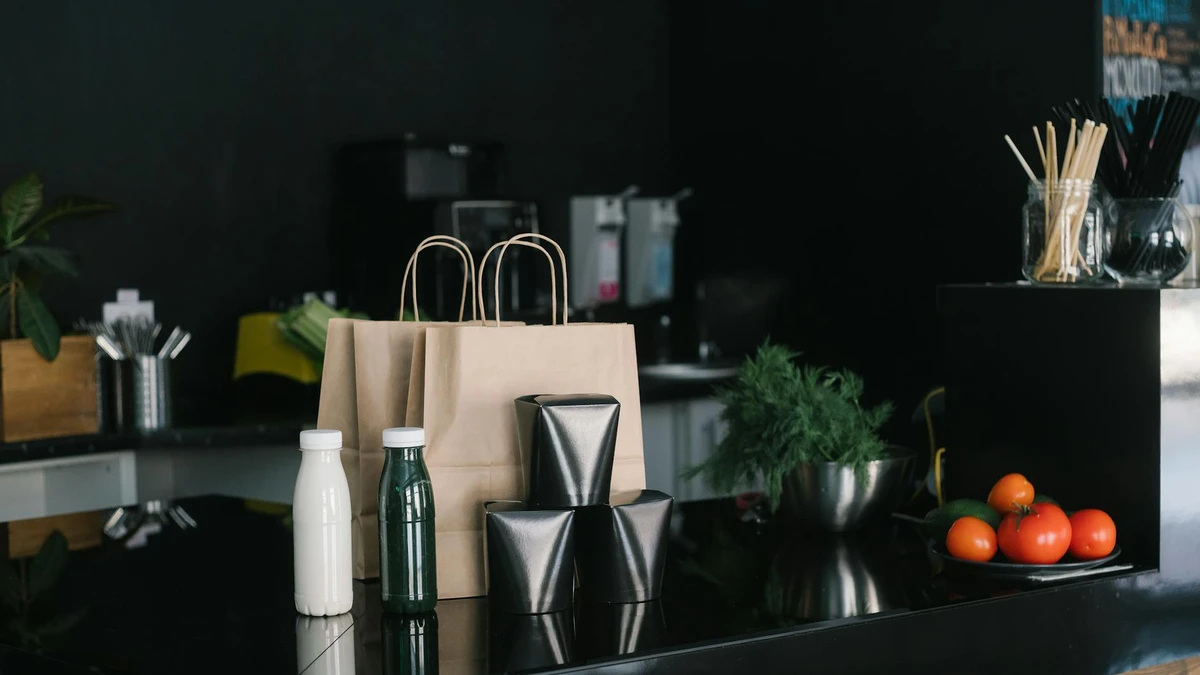
Les boîtes à lunch en papier kraft sont récipients alimentaires Fabriqués en carton non blanchi (couleur brun naturel) d'un grammage de 350 à 450 g/m², avec des revêtements à base d'eau ou de PLA résistants à l'huile (TAPPI T559 Grade 10-12), conçus pour les services de restauration soucieux de l'environnement. Coût : $0,25-0,45 par boîte en fonction du revêtement et de la certification. Références environnementales : Certifié FSC ou contenu recyclé 80%+, commercialement compostable ou recyclable. Idéal pour les cafés axés sur la santé, les restaurants de la ferme à la table, les opérations de restauration donnant la priorité à la durabilité et à la résistance fonctionnelle aux graisses.
Le papier kraft offre un positionnement écologique plus fort (l'aspect naturel non blanchi signale la durabilité), un contenu souvent certifié FSC ou recyclé (50-80%), et une résistance structurelle comparable (fibres plus longues par GSM). Le papier blanc doit être blanchi (impact environnemental plus élevé) mais offre un aspect plus net et une meilleure visibilité de l'impression pour un marquage coloré. Différence de coût : minime (+5-10% pour le kraft). Choisissez le kraft pour les marques soucieuses de l'environnement, et le blanc pour les marques traditionnelles où la couleur est importante. Les deux types de papier ont besoin d'un revêtement résistant à l'huile pour les aliments gras.
Trois solutions : (1) revêtement barrière à base d'eau (Grade 10-11 TAPPI T559, supporte les graisses modérées 30-45 min, +$0.03-0.06/boîte), (2) revêtement PLA (Grade 11-12, supporte les graisses élevées 60-90 min, +$0.06-0.10/boîte), (3) traitement fluorochimique sans PFAS (Grade 10-12, 40-60 min, +$0.04-0.08/boîte). Le kraft non couché fuit en 5 à 15 minutes avec les aliments gras - le couchage est essentiel. Éviter le revêtement PE si l'on veut conserver des références écologiques (à base de pétrole, non compostable/recyclable).
Cela dépend du revêtement : Kraft enduit de PLA = commercialement compostable (90-180 jours dans les installations industrielles, températures requises 55-60°C, PAS compostable à domicile). Revêtement à base d'eau = souvent compostable, mais vérifiez auprès du fournisseur (certaines formulations le sont, d'autres non). Kraft enduit de PE = NON compostable. Essentiel : Vérifier l'infrastructure locale - le compostage commercial est nécessaire et n'est pas très répandu. S'il n'existe pas d'installations locales, choisissez plutôt un revêtement recyclable à base d'eau. Un marketing honnête permet d'éviter les accusations d'écoblanchiment.
750 ml (24 oz) permettent de préparer 60-70% de repas - 2 à 3 tasses d'aliments (protéines + glucides + légumes, un déjeuner équilibré typique). 1000 ml (32 oz) conviennent aux repas riches en protéines ou post-entraînement (3,5-4 tasses). La conception à 2 compartiments permet de séparer les ingrédients humides des ingrédients secs (évite les détrempes et préserve les textures). Remplir jusqu'à la capacité maximale de 80-85% pour une bonne étanchéité du couvercle. Le papier kraft avec revêtement à base d'eau ($0,28-0,38) permet de concilier durabilité, fonctionnalité et coût pour les opérations de préparation des repas.
Standard 750ml avec revêtement à base d'eau : $0,28-0,38 par boîte. Revêtement PLA (premium eco) : $0,32-0,45. La certification FSC ajoute +3-8% par rapport à la non certification. Boîtes compartimentées : +$0,05-0,15 par rapport à un compartiment unique. Cependant, l'analyse du coût total montre qu'un kraft de qualité permet d'éviter un taux de reprise de 15-20%, soit un coût de $7-10 par échec - investir +$0,05 dans un revêtement adéquat permet d'économiser $1 400 pour 1 000 boîtes en reprises. Valeur marketing : 62% des consommateurs paient une prime de 10-15% pour un emballage durable.
Oui, le papier kraft est sensible à l'humidité : Stocker dans un environnement sec (<60% RH), loin des sources d'eau, hors du sol (les palettes empêchent l'absorption de l'humidité du sol). Une humidité élevée dégrade les revêtements résistants à l'huile et affaiblit la résistance de la structure. Durée de conservation : 12 à 18 mois si le produit est stocké correctement, 6 à 9 mois dans un environnement humide. Contrairement aux conteneurs en plastique (résistants à l'humidité), le kraft doit être stocké dans un environnement climatisé. Limite d'empilage : 8 à 10 cartons pour éviter la compression du carton inférieur. Un stockage adéquat permet de maintenir les performances des boîtes et d'éviter les défaillances avant utilisation.
Les boîtes-repas en papier kraft offrent des références authentiques en matière de développement durable, associées à des performances fonctionnelles lorsqu'elles sont conçues de manière appropriée - résistance à l'huile grâce à des revêtements à base d'eau ou de PLA (évitant le PE à base de pétrole), intégrité structurelle grâce à un grammage de 350-400 GSM avec renfort, et revendications environnementales crédibles soutenues par la certification FSC ou un contenu recyclé vérifié. La prime de matériau (+$0,03-0,10 par rapport à l'emballage standard) génère une valeur ajoutée grâce à la volonté des consommateurs de payer 10-15% de plus pour des options durables, à la réduction des coûts de refonte (4% contre un taux d'échec de 20%) et à la différenciation de la marque sur les marchés concurrentiels.
Principaux enseignements :
1.La résistance à l'huile est essentielle : Le revêtement à base d'eau (grade 10-11, +$0.03-0.06) permet de traiter les graisses modérées ; le revêtement PLA (grade 11-12, +$0.06-0.10) pour les aliments à forte teneur en graisse. Le kraft non couché s'abîme en 15 minutes - le couchage n'est pas négociable.
2.Exigences structurelles : Minimum 350 GSM pour les repas standard (capacité de 2 à 3 livres), 400+ GSM pour les repas lourds. Le renforcement du fond et une ventilation adéquate permettent d'éviter les modes de défaillance les plus courants.
3.La vérification environnementale est importante : La certification FSC ou le contenu recyclé vérifié par une tierce partie (50-80% PCR) sont requis pour des déclarations crédibles en matière de développement durable. Évitez l'écoblanchiment en faisant correspondre les déclarations aux références réelles des matériaux.
4.Le choix de la taille est essentiel : 750 ml permettent de servir 60 à 70% de repas (capacité de 80 à 85%). Les conceptions compartimentées (+$0.05-0.15) empêchent le mélange des aliments et préservent les textures.
5.La valeur totale dépasse le coût des matériaux : Les boîtes en kraft de qualité permettent d'éviter $1 400 coûts de refonte pour 1 000 boîtes tout en offrant une valeur commerciale (62% acceptation de la prime) qui justifie l'investissement.
Pour les cafés axés sur la santé, les restaurants de la ferme à la table et les opérations de restauration où le positionnement environnemental détermine l'identité de la marque, les boîtes à lunch en papier kraft dotées d'une ingénierie appropriée et de références vérifiées en matière de développement durable offrent des avantages concurrentiels mesurables - transformant l'emballage d'une nécessité opérationnelle en un différentiateur de marque valant des multiples de la prime sur le coût du matériau.
Découvrez d'autres solutions d'emballage alimentaire :
-Contenants pour emballages alimentaires
-Solutions d'emballage pour la vente à emporter
Papacko fournit des boîtes à lunch en papier kraft certifié FSC avec des options de revêtement à base d'eau et de PLA aux restaurants, traiteurs et services de préparation de repas soucieux de l'environnement dans le monde entier. Nous assurons la vérification des matériaux, les tests de résistance à l'huile et la documentation sur le développement durable afin de garantir que vos emballages répondent aux exigences environnementales et fonctionnelles.
Les acheteurs de boîtes-repas Kraft comparent généralement la capacité de conservation de la chaleur des aliments chauds, la résistance au transport, l'imprimabilité, ainsi que la capacité du même fournisseur à proposer des formats de boîtes-repas complémentaires.
Prenez contact avec nous :
Dernière mise à jour: novembre 2025
Équipe chargée du contenu: Papacko
Révisé par: Service de l'emballage durable et du respect de l'environnement