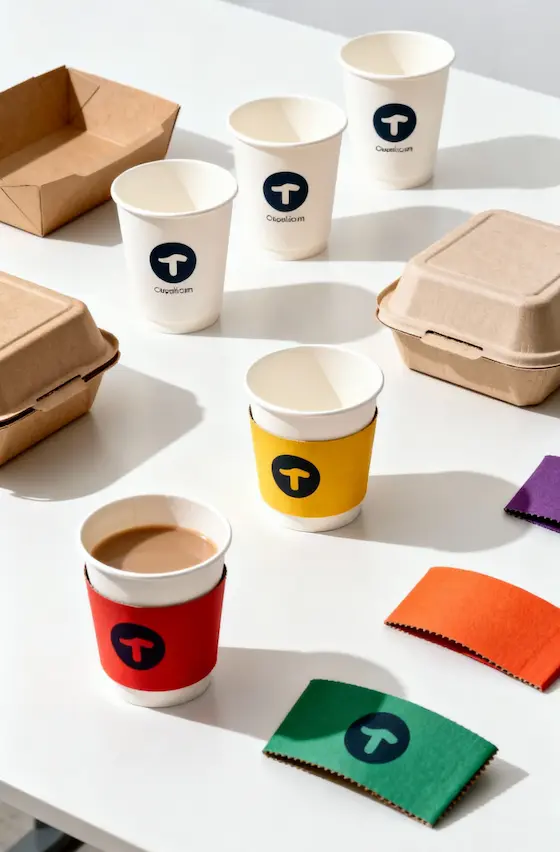
Prêt à créer vos propres gobelets ou emballages en papier ?
Faites-nous part de vos exigences - taille, revêtement, impression et destination - et notre équipe établira un devis détaillé dans les 24 heures.

Dernière mise à jour: novembre 2025
Temps de lecture: 8 à 10 minutes
Auteur: Équipe de contenu de Papacko
Le marché de l'éco-emballage connaît une croissance sans précédent. La demande mondiale de solutions d'emballage durables a atteint $267 milliards en 2024, et les projections montrent qu'elle atteindra $413 milliards d'ici 2030, soit un taux de croissance annuel composé (TCAC) de 7,5%. Mais derrière ces chiffres se cachent des changements fondamentaux dans la réglementation, le comportement des consommateurs et l'innovation des matériaux, qui sont en train de remodeler l'ensemble de l'industrie de l'emballage alimentaire.
Ce guide basé sur des données analyse les forces qui poussent à l'adoption de l'éco-emballage, décompose la dynamique des marchés régionaux et fournit des informations exploitables pour les entreprises qui naviguent dans cette transformation.
Dans cet article, vous découvrirez
-Taille du marché et projections de croissance dans l'ensemble des régions et des catégories de matériaux
-Facteurs réglementaires la mise en forme des exigences en matière d'emballage dans l'UE, en Amérique du Nord et en Asie
-Tendances du comportement des consommateurs influencer les décisions d'achat
-Innovation en matière de matériaux et les technologies émergentes
💡 À emporter rapidement: Le marché de l'éco-emballage ne se contente pas de croître, il s'accélère.
Les entreprises qui investissent dans l'emballage durable bénéficient désormais d'un avantage concurrentiel, d'une conformité réglementaire et d'un accès à des segments de consommateurs haut de gamme prêts à payer 10-15% plus cher pour des produits respectueux de l'environnement.
Le marché de l'éco-emballage englobe tous les matériaux et solutions d'emballage conçus pour minimiser l'impact sur l'environnement :
-Matériaux recyclables (papier, carton, certains plastiques)
-Options compostables/biodégradables (PLA, fibre moulée, bagasse)
-Systèmes réutilisables (systèmes de consigne, contenants réutilisables)
-Réduction de l'utilisation de matériaux (allègement, conception minimaliste)
Segments du marché :
Applications clés :
-Services alimentaires (tasses, bols, récipients à emporter) : 42% du marché de l'éco-emballage
-Emballage alimentaire pour le commerce de détail (produits frais, boulangerie) : 28%
-Expédition du commerce électronique: 15%
-Soins personnels/cosmétiques: 10%
-Autres: 5%
🎯 Aperçu de l'industrie: La restauration domine la demande d'éco-emballages parce que la pression réglementaire et la visibilité des consommateurs sont les plus fortes dans ce secteur.
Les restaurants à service rapide sont confrontés à un risque immédiat pour leur marque en raison d'emballages non durables.
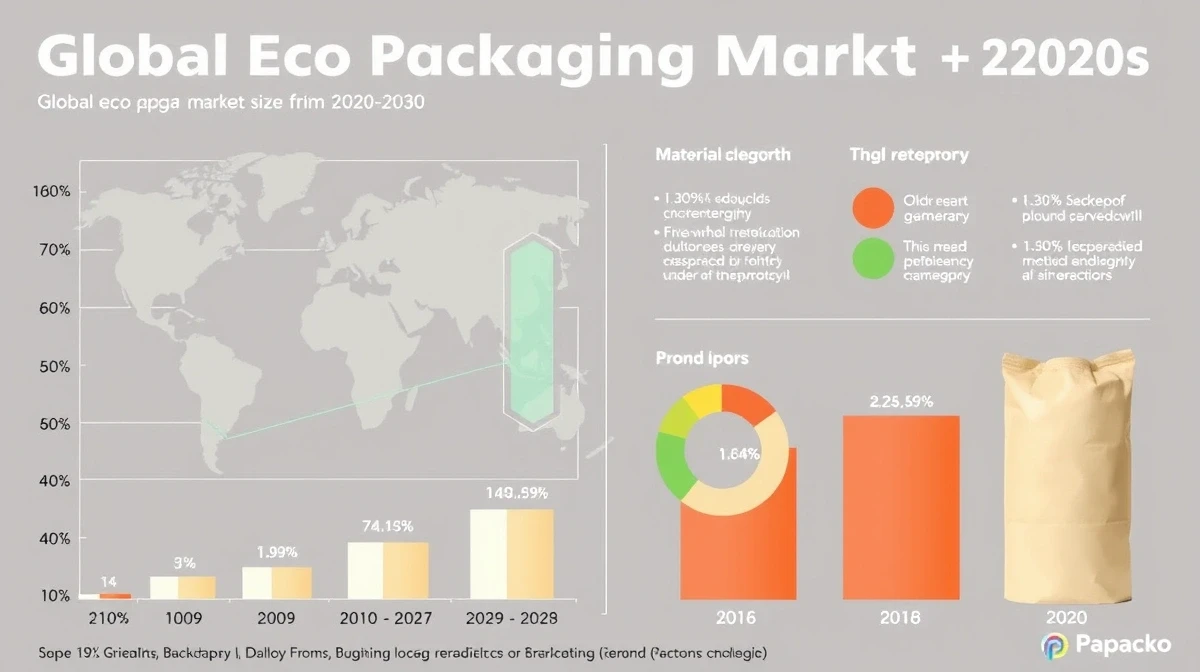
Principaux marchés en croissance (2024-2030) :
1.Inde: 11,2% CAGR (sous l'effet de l'interdiction des plastiques à usage unique en 2022)
2.Indonésie: 10,8% CAGR (engagements de l'ANASE en matière de développement durable)
3.Allemagne9,5% CAGR (conformité à la loi sur les emballages, systèmes de consigne)
4.Royaume-Uni9.1% CAGR (taxe sur les emballages plastiques)
5.États-Unis: 7,9% CAGR (divergence au niveau de l'État, la Californie en tête)
Croissance des emballages en papier :
-Taille du marché en 2024: $101 milliards
-Projection 2030: $148 milliards
-CAGR: 6.8%
-Produits clés: Gobelets en papier, boîtes alimentaires, sacs à provisions, récipients en fibre moulée
Pourquoi le papier mène: Infrastructure de recyclage établie, familiarité avec les consommateurs, compétitivité des coûts par rapport aux plastiques conventionnels dans de nombreuses applications.
Croissance des bioplastiques :
-Taille du marché en 2024: $32 milliards
-Projection 2030: $64 milliards
-CAGR: 12.3%
-Produits clés: gobelets enduits de PLA, couverts compostables, films biosourcés
Défi: Les installations de compostage industriel nécessaires ne sont pas encore disponibles sur de nombreux marchés. La contamination des flux de recyclage reste un problème.
Directive européenne sur les plastiques à usage unique (2021) :
-Interdiction des assiettes, couverts, pailles, agitateurs et bâtons de ballons en plastique
-Obligation de collecter 90% de bouteilles en PET d'ici à 2029
-Exige la responsabilité élargie du producteur (REP) pour tous les emballages
Impact sur le marché de l'éco-emballage :
Taxe sur les emballages plastiques au Royaume-Uni (2022) :
-Taxe de 200 £/tonne sur les emballages en plastique contenant <30% de matières recyclées
-Favorise l'adoption de produits de remplacement à base de papier ou d'une teneur plus élevée en plastique recyclé
-Résultat : augmentation de 24% de la demande de kraft recyclé récipients alimentaires
États-Unis (variation d'un État à l'autre) :
Canada :
-Interdiction fédérale des plastiques à usage unique (mise en œuvre progressive de 2022 à 2025)
-Concerne les sacs de caisse, les couverts, les pailles, les bâtonnets, les contenants pour les plats à emporter.
-Impact sur le marché : croissance annuelle de 19% pour les emballages compostables destinés aux services alimentaires
Chine :
-2020: Interdiction des sacs en plastique non dégradables dans les grandes villes
-2022: Extension à toutes les villes et à tous les comtés
-Objectif 2025: 40% réduction de la consommation de plastique à usage unique
-Impact sur le marché: $12 milliards d'euros d'investissement dans la capacité de production de papier et d'emballages biosourcés
Japon :
-Loi sur la circulation des ressources plastiques (2022)
-Taxes obligatoires sur les sacs en plastique et les couverts
-Objectif : taux de recyclage des emballages plastiques de 60% d'ici à 2030
-Résultat: 17% : augmentation des emballages en papier pour les plats à emporter
Inde :
-2022 : interdiction des objets en plastique à usage unique identifiés
-Exigences en matière d'épaisseur pour les sacs en plastique autorisés
-Réponse du marché: Augmentation de la demande de feuilles de bananier, de bagasse et de produits de remplacement du papier (+35% de croissance 2022-2024)
Question : “Choisiriez-vous, à prix égal, un produit dont l'emballage est respectueux de l'environnement plutôt qu'un produit dont l'emballage est conventionnel ?”
Volonté de payer des primes :
Vue d'ensemble: Le “sweet spot” se situe entre 5 et 10%. Au-delà de 15%, seuls les utilisateurs précoces soucieux de l'environnement sont prêts à payer.
Services alimentaires :
-78% des consommateurs attendent des cafés et des restaurants qu'ils utilisent des emballages compostables ou recyclables.
-62% éviterait activement que les entreprises utilisent des récipients en mousse de polystyrène
-54% photographier et partager des emballages durables et esthétiques sur les médias sociaux
Commerce électronique :
-71% préférer un emballage minimal avec des matériaux recyclés
-49% choisiraient un détaillant plutôt qu'un autre en fonction de l'emballage durable
-38% ont cessé d'acheter des produits d'une marque en raison d'une quantité excessive de déchets d'emballage
Domaines d'innovation du papier :
1.Revêtements barrière: Revêtements à base d'eau et de minéraux remplaçant le PLA/PE pour une meilleure recyclabilité
2.Fibre moulée: Formage 3D de formes complexes (bols, coquilles) avec un minimum de matériau
3.Nanocellulose: Films ultra-minces et résistants avec des propriétés de barrière à l'oxygène et à l'humidité
Principaux investissements des entreprises (2023-2024) :
-Nestlé: Engagement de $2,1 milliards d'euros pour la R&D sur l'emballage durable d'ici 2025
-Unilever: Passer à des emballages réutilisables, recyclables ou compostables 100% d'ici à 2025
-McDonald's: $1,4 milliard d'euros investis dans l'infrastructure d'emballage à base de fibre optique
-Starbucks: Élimination des pailles en plastique au niveau mondial (1 milliard de pailles remplacées par an)
Activité de fusion et d'acquisition :
-Les entreprises d'emballage en papier ont acquis 37 startups de matériaux biosourcés (2023)
-Prime d'acquisition moyenne : 42% au-dessus de la valeur du marché
-Domaines d'intérêt : Alternatives au revêtement PLA, technologie des fibres moulées, approvisionnement en contenu recyclé
Disponibilité des installations de compostage :
Problème: Les gobelets enduits de PLA et les contenants compostables nécessitent un compostage industriel (55-60°C pendant plus de 12 semaines). Sans infrastructure, ils contaminent les flux de recyclage ou finissent dans les décharges où ils ne se biodégradent pas.
Comparaison des prix (par unité, prix de gros) :
Analyse du seuil de rentabilité:
-Opérations à haut volume (>50 000 unités/mois) : La prime est réduite à 20-40% avec un approvisionnement direct auprès du fabricant.
-Petites entreprises (<5 000 unités/mois) : Faire face à la prime 80-150% en raison des contraintes de MOQ et des marges de distribution.
Malentendus courants :
1.“Biodégradable = sans danger pour l'environnement”.”: Ce n'est pas vrai si les objets finissent dans des décharges sans oxygène ni microbes.
2.“Tous les emballages en papier sont recyclables”: Les papiers faussement couchés contaminent souvent les flux de recyclage
3.“Compostable signifie compostable à domicile”: La plupart nécessitent des installations industrielles à des températures spécifiques
Réponse de l'industrie: Normes d'étiquetage plus claires, marques de certification (BPI, TÜV Austria, logo Seedling), campagnes d'éducation des consommateurs.
Évaluez votre position sur le marché :
### ROI Au-delà des coûts
Avantages tangibles :
-Conformité réglementaire: Éviter les amendes ($5,000-$50,000/violation dans certaines juridictions)
-Accès au marché: Exigé pour les contrats avec les principaux détaillants/chaînes
-Gestion des déchets: Économies potentielles sur les coûts d'élimination dans les systèmes de paiement au poids
Avantages immatériels :
-Capital de la marque: 37% des milléniaux prêts à changer de marque pour un emballage durable.
-Réseaux sociaux: 54% plus d'engagement sur les posts présentant l'éco-emballage
-Moral des employés68% des travailleurs préfèrent les employeurs qui s'engagent en faveur du développement durable
❌ Erreur #1: Supposer que les allégations “écologiques” n'ont pas besoin d'être étayées
✅ Approche correcte: Obtenir des certifications de tiers (FSC, BPI, TÜV) et communiquer clairement les limites (par exemple, “industriellement compostable”).
❌ Erreur #2: Passer aux bioplastiques sans vérifier l'infrastructure locale de compostage
✅ Approche correcte: Vérifier les capacités de gestion des déchets de votre région et choisir des matériaux qui s'alignent sur les systèmes de fin de vie disponibles.
❌ Erreur #3: Sous-estimation des délais de la chaîne d'approvisionnement pour les emballages écologiques
✅ Approche correcte: Prévoir 8 à 12 semaines pour un emballage papier/bio personnalisé contre 2 à 4 semaines pour un emballage plastique conventionnel.
❌ Erreur #4: Ignorer l'impact environnemental de l'ensemble du cycle de vie
✅ Approche correcte: Effectuer une ACV (analyse du cycle de vie) pour vérifier que l'éco-alternative réduit réellement l'impact net (certaines nécessitent plus d'énergie/d'eau lors de la production).
Le marché de l'éco-emballage englobe tous les matériaux d'emballage conçus pour minimiser l'impact sur l'environnement grâce à leur recyclabilité, leur compostabilité, leur réutilisation ou la réduction de l'utilisation des matériaux. Il a atteint $267 milliards au niveau mondial en 2024 et devrait passer à $413 milliards d'ici 2030.
Le marché mondial de l'éco-emballage croît à un taux de croissance annuel composé (TCAC) de 7,5% entre 2024 et 2030. Le segment des bioplastiques croît plus rapidement (12,3% CAGR) tandis que les plastiques conventionnels diminuent (-2,1% CAGR).
Les principaux moteurs sont les suivants : (1) les mandats réglementaires (directive européenne sur les plastiques à usage unique, interdictions au niveau des États aux États-Unis et au Canada), (2) la demande des consommateurs (68% préfèrent les emballages durables à des prix comparables), et (3) les engagements ESG des grandes marques.
Oui. Les emballages écologiques coûtent généralement 30 à 150% de plus que les équivalents en plastique conventionnel, en fonction du matériau et du volume. Les acheteurs de gros volumes (>50 000 unités/mois) peuvent réduire ce surcoût à 20-40% grâce à des relations directes avec les fabricants.
L'Europe est en tête avec un marché de $98 milliards et un TCAC de 8,2%, sous l'impulsion des réglementations exhaustives de l'UE. L'Asie-Pacifique affiche une forte croissance (7,9% CAGR) grâce aux politiques chinoises en matière de déchets plastiques et à l'interdiction de l'usage unique en Inde.
Principaux défis : (1) infrastructures de compostage insuffisantes pour les bioplastiques, (2) primes de coût limitant l'adoption par les petites entreprises, (3) confusion des consommateurs quant aux méthodes d'élimination, et (4) écarts de performance en matière de résistance à l'humidité et de durée de conservation pour certains matériaux.
Non. D'ici 2030, les éco-emballages représenteront environ 70% des emballages de restauration et 55% des emballages de vente au détail, mais les plastiques conventionnels continueront d'être utilisés dans les applications nécessitant une durabilité extrême, des propriétés de barrière ou une optimisation des coûts.
La trajectoire de croissance du marché de l'éco-emballage reflète une restructuration fondamentale de l'industrie mondiale de l'emballage. La dynamique réglementaire, les préférences des consommateurs et les engagements des entreprises en matière de développement durable se sont alignés pour créer une dynamique irréversible vers des alternatives durables.
Principaux enseignements :
1.La taille du marché va augmenter 55% de 2024 ($267B) à 2030 ($413B), les bioplastiques connaissant la croissance la plus rapide (CAGR de 12,3%)
2.La pression réglementaire favorise l'adoption plus que la volonté de payer des consommateurs, en particulier dans l'UE et dans les États progressistes des États-Unis
3.Les emballages à base de papier dominent les transitions actuelles en raison de l'existence d'une infrastructure de recyclage et de la compétitivité des coûts
4.Les lacunes en matière d'infrastructures limitent les bioplastiques: Seules 18-32% des populations ont accès au compostage industriel nécessaire pour les matériaux PLA.
5.Les écarts de prix se réduisent: Les acheteurs en gros paient désormais 20-40% de plus contre 80-150% pour les petits acheteurs.
Les entreprises qui adoptent proactivement l'éco-emballage gagnent en conformité réglementaire, en capital marque et en accès à des segments de consommateurs en pleine croissance. Celles qui tardent à le faire sont confrontées à des coûts croissants liés à la réglementation, à des restrictions d'accès au marché et à des risques pour la réputation de leur marque.
-Emballages alimentaires Conteneurs
Papacko fabrique une gamme complète de solutions d'emballage alimentaire durable, notamment des gobelets en papier, des conteneurs en fibre moulée et des accessoires compostables. Nos produits répondent aux normes réglementaires européennes et nord-américaines et sont certifiés pour la recyclabilité ou le compostage industriel.
Market-growth pages are most useful when they connect numbers to operational choices: certification, legal pressure, and which sustainability routes are commercially actionable right now. These pages help bridge trend data with execution.
Prenez contact avec nous :
Dernière mise à jour: novembre 2025