Prêt à créer vos propres gobelets ou emballages en papier ?
Faites-nous part de vos exigences - taille, revêtement, impression et destination - et notre équipe établira un devis détaillé dans les 24 heures.

Dernière mise à jour: novembre 2025
Temps de lecture: 10 minutes
Auteur: Équipe de contenu de Papacko
Votre café est fier d'avoir adopté un revêtement PLA “écologique”. gobelets en papier Il y a six mois, vous avez découvert que le centre de recyclage de votre ville les rejetait, que le service de compostage exigeait une collecte séparée et que les clients se plaignaient que les gobelets se ramollissaient avec les boissons chaudes au bout de 15 minutes. Pendant ce temps, le café d'en face utilise des gobelets avec un revêtement à base d'eau qui sont recyclés, coûtent 20% moins cher et les clients ne se plaignent jamais de l'intégrité de la structure.
Le choix entre des gobelets en papier revêtus de PLA et un revêtement à base d'eau n'est pas seulement une question de “respect de l'environnement” - il nécessite de comprendre les compromis en matière de performance, l'infrastructure locale de gestion des déchets, la recyclabilité réelle par rapport aux allégations marketing, les implications en termes de coûts et le comportement réaliste des clients. Le revêtement que vous choisissez détermine si vos gobelets détournent réellement les déchets des décharges ou s'ils ne font qu'écologiser votre activité tout en créant de nouveaux problèmes.
Dans ce guide, vous apprendrez :
-Qu'est-ce que les revêtements à base de PLA et à base d'eau (la chimie expliquée simplement) ?
-Comparaison des performances : résistance à la chaleur, barrière contre l'humidité, durabilité
-La réalité du recyclage : exigences en matière d'infrastructure et taux d'acceptation
-Exigences en matière de compostabilité et disponibilité des installations
-Analyse des coûts : matériaux, élimination et coût total de possession
-Comment choisir en fonction de votre système local de gestion des déchets ?
-Idées reçues et pièges marketing
💡 À emporter rapidement: Les gobelets en papier recouverts de PLA sont commercialement compostables (90-180 jours dans les installations industrielles) mais PAS recyclables et PAS compostables à domicile.
Les gobelets à revêtement à base d'eau sont potentiellement recyclables (en fonction de l'infrastructure), ont des performances similaires pour les boissons froides, mais ont du mal à supporter des boissons chaudes à plus de 85°C pendant des périodes prolongées.
Différence de coût : Revêtement PLA +15-25% contre revêtement à base d'eau.
Facteur de décision essentiel : disponibilité des infrastructures locales de traitement des déchets.
Le PLA n'a de sens QUE s'il existe un accès au compostage commercial ; le revêtement à base d'eau est préférable pour les marchés dotés de programmes de recyclage du papier.
Le revêtement en PE (plastique traditionnel) surpasse les deux en termes de performances pures, mais n'offre aucun avantage en fin de vie.
Les gobelets en papier nécessitent des barrières contre l'humidité car le carton non traité absorbe les liquides en quelques secondes. Le type de revêtement détermine les performances, la recyclabilité et les options de fin de vie.
PLA (Acide polylactique) = Bioplastique dérivé d'amidons végétaux (typiquement du maïs, de la canne à sucre ou du manioc)
Processus de production:
1.Extraire l'amidon des plantes
2.Fermentation de l'amidon en acide lactique
3.Polymériser l'acide lactique en acide polylactique à longue chaîne
4.Appliquer un revêtement de 15 à 25 g/m² (grammes par mètre carré) sur le carton.
Propriétés clés:
-Biosourcé (et non à base de pétrole comme le plastique traditionnel)
-Compostable dans le commerce en 90-180 jours à 55-60°C avec l'humidité et les microbes appropriés.
-NON compostable à domicile (nécessite des conditions industrielles)
-NON recyclable dans les flux de papier standard (contamine la récupération des fibres)
-Limite de température : se ramollit à 55-60°C, ne convient pas aux boissons chaudes dépassant 85°C pendant de longues périodes.
Allégations marketing courantes et réalité:
-✅ Allégation : “Compostable” → VRAI, mais nécessite une installation commerciale
-❌ Allégation : “Biodégradable” → Trompeur (uniquement dans des conditions industrielles spécifiques, pas dans l'environnement général)
-❌ Allégation : “Recyclable” → FAUX (contamine le recyclage du papier)
-❌ Allégation : “Meilleur pour l'environnement” → Dépend (seulement s'il existe un compostage commercial)
Revêtement à dispersion aqueuse = particules de polymère en suspension dans l'eau, appliquées et séchées sur du carton
Composition:
-Acrylique ou copolymère styrène-acrylique (15-25% du revêtement)
-Eau (70-80% pendant l'application, s'évapore pendant le séchage)
-Additifs pour l'adhérence et la flexibilité (5-10%)
-Appliqué en tant que revêtement de 12 à 20 g/m².
Propriétés clés:
-Contenu réduit en plastique (60-80% moins que le revêtement PE)
-Potentiellement recyclable (en fonction de l'infrastructure et des installations)
-NON compostable (ne se décompose pas dans les installations de compostage)
-Résistance à la température : Bonne résistance jusqu'à 80-85°C pour les boissons froides/chaudes
-Bonne performance pour les boissons froides, adéquate pour les boissons chaudes, limitée pour les boissons très chaudes
Allégations marketing courantes et réalité:
-✅ Allégation : “Recyclable” → PARTIELLEMENT VRAI (les installations doivent accepter les déchets, mais ce n'est pas universel)
-❌ Allégation : “Sans plastique” → FAUX (contient des polymères acryliques, mais moins que les polymères traditionnels)
-✅ Allégation : “Réduction du plastique” → VRAI (60-80% moins que le revêtement PE)
-? Affirmation : “respectueux de l'environnement” → Cela dépend (uniquement s'il existe une infrastructure de recyclage)
PE (Polyéthylène) = Plastique à base de pétrole, norme industrielle depuis des décennies
Propriétés clés:
-Excellente barrière contre l'humidité pour les boissons chaudes et froides
-Résistant à la température : supporte 95°C+ sans se ramollir
-Option la moins coûteuse
-NON recyclable (le laminage plastique empêche la récupération des fibres)
-NON compostable (plastique à base de pétrole)
-Aucun avantage en fin de vie (mise en décharge uniquement)
Pourquoi l'utilisation est-elle encore très répandue ?: Performances éprouvées, coût le plus bas, pas de dépendance à l'égard de l'infrastructure
Les performances en situation réelle déterminent la satisfaction du client et la fiabilité opérationnelle.
Boissons froides (5-15°C):
-Revêtement PLA : Excellent (aucun problème)
-A base d'eau : Excellent (aucun problème)
-Revêtement PE : Excellent (norme de référence)
Verdict: Tous les revêtements sont également efficaces pour les boissons froides telles que le café glacé, les smoothies et les jus de fruits.
Boissons chaudes (60-70°C):
-Revêtement PLA : Bon (convient pour 20-30 minutes)
-A base d'eau : Bon (pour une durée de 20 à 30 minutes)
-Revêtement PE : Excellent (norme de référence)
Verdict: PLA et à base d'eau adéquats pour les boissons chaudes, avec un léger ramollissement après plus de 30 minutes.
Boissons chaudes (80-95°C):
-Revêtement PLA : Limité (se ramollit après 10-15 minutes, risque de défaillance structurelle)
-A base d'eau : Adéquat (lutte à 80°C, lutte à plus de 85°C)
-Revêtement PE : Excellent (supporte indéfiniment 95°C+)
Verdict: Pour le café chaud traditionnel (85-95°C), le PE reste supérieur. Le PLA et les produits à base d'eau sont plus efficaces pour le café légèrement refroidi ou pour les boissons gazeuses. tasses à double paroi qui réduisent la température du liquide.
Méthode d'essai: Remplir le gobelet, attendre 60 minutes, mesurer la pénétration de l'humidité dans le carton.
Revêtement PLA (15-25 g/m²):
-Boissons froides : Pénétration nulle
-Boissons chaudes : Pénétration minimale (<5%) si la température est inférieure à la limite.
-Problème : le revêtement peut se séparer du carton en cas de surchauffe.
Revêtement à base d'eau (12-20 g/m²):
-Boissons froides : Pénétration nulle
-Boissons chaudes (80°C) : <3% pénétration
-Boissons chaudes (90°C) : 5-10% pénétration (ramollissement perceptible)
-Avantage : Meilleure adhérence au carton (moins de risque de séparation)
Revêtement PE (18-22 g/m²):
-Boissons froides : Pénétration nulle
-Boissons chaudes : Zéro pénétration quelle que soit la température de service
-Situation de référence de l'industrie : Ce que les clients attendent des gobelets traditionnels
Test d'attente de 30 minutes (simule le temps de consommation typique) :
Impact dans le monde réel:
-PLA pour le café chaud : 5-8% plaintes de clients concernant le ramollissement/les fuites
-A base d'eau pour le café chaud : 2-4% plaintes
-PE pour le café chaud : <1% plaintes (attente de base)
#### Matrice de comparaison des performances des revêtements
 gobelets en papier écologiques avec revêtements alternatifs - Papacko green packaging” style=”border-radius : 8px ; box-shadow : 0 2px 8px rgba(0,0,0,0,0.08) ;”/>
Les déclarations de marketing ne signifient rien sans une infrastructure locale de déchets compatible.
Exigences relatives aux installations de compostage commerciales:
-Température : 55-60°C maintenus en permanence
-Humidité : 50-60% humidité
-Oxygène : Retournement/aération réguliers
-Délai : 90-180 jours
-Micro-organismes : Bactéries et champignons spécifiques présents
Certifications:
-BPI (Institut des produits biodégradables) - Amérique du Nord
-EN 13432 - Europe
-AS 4736 - Australie/Nouvelle-Zélande
L'épreuve de vérité:
-Installations de compostage commercial aux États-Unis : ~300 au niveau national (desservant ~15% de la population)
-Installations acceptant les produits alimentaires : ~185 (62% du total des installations de compostage)
-Installations acceptant spécifiquement les gobelets en PLA : ~120 (40% du total)
Résultat: Si vous utilisez des gobelets en PLA sans accès à un système de compostage commercial, ils sont fonctionnellement équivalents à des déchets mis en décharge. Aucun avantage environnemental par rapport au revêtement PE.
Problème de comportement du client:
-La plupart des clients ne savent pas que les gobelets en polyéthylène nécessitent une manipulation particulière.
-75-80% des gobelets en PLA finissent à la poubelle, pas dans les bacs de compostage
-10-15% jeté par erreur au recyclage (contamine le flux de papier)
-Seuls les 5-10% atteignent les installations de compostage commercial.
Exigences relatives aux installations de recyclage du papier:
-Système de mise en pâte permettant de traiter des revêtements mixtes
-Criblage ou flottation pour éliminer les matériaux non fibreux
-Contrôle qualité des niveaux de résidus de revêtement
-Demande du marché pour le carton recyclé avec résidus de revêtement
Critères d'acceptation (varie selon les établissements) :
-Le revêtement doit se séparer de la fibre pendant la fabrication de la pâte à papier.
-Enrobage résiduel <2% du poids final de la pâte
-Aucune contamination des produits en papier recyclé
L'épreuve de vérité:
-Installations de recyclage du papier aux États-Unis : plus de 400 dans tout le pays
-Installations acceptant le carton alimentaire : environ 200 (50%)
-Installations acceptant spécifiquement les gobelets à revêtement à base d'eau : ~80-100 (20-25%)
Disponibilité géographique:
-Fort : Europe occidentale (Allemagne, Pays-Bas, Scandinavie), Californie, Oregon, Washington
-Modéré : Nord-Est des États-Unis, certaines régions du Canada
-Faible : Sud-Est et Midwest des États-Unis, la plupart des marchés en développement
Limitation importanteMême lorsqu'il est accepté, le taux de recyclage réel du carton utilisé dans la restauration n'est que de 20 à 35 % (contre 65 % pour le papier de bureau).
Recyclabilité: Non recyclable dans le flux de papier (le laminage plastique empêche la récupération des fibres)
Compostabilité: Non compostable (le plastique à base de pétrole ne se décompose pas)
Fin de vie: Décharge uniquement
Impact environnemental:
-Contribue au volume des décharges
-Aucun retour de nutriments dans le sol (par rapport au compostage)
-Le revêtement plastique persiste pendant des décennies
-Mais : élimination bien comprise, aucune dépendance vis-à-vis des infrastructures, aucune confusion.
Pourquoi encore utilisé: Fiabilité des performances, rentabilité, aucune fausse promesse environnementale
Comprendre le coût total au-delà du prix unitaire révèle le véritable impact économique.
Comparaison entre les tasses à café chaud standard de 350 ml:
Gobelet recouvert de PLA: $0,10-0,14 par unité (quantité minimale de commande : 20 000-50 000)
-Prime : +15-25% par rapport aux produits à base d'eau, +35-50% par rapport au PE
-Justification : matériaux biosourcés, production spécialisée
-Pauses de volume : limitées (base de fournisseurs restreinte)
Gobelet à revêtement à base d'eau: $0,08-0,12 par unité (quantité minimale de commande : 20 000-50 000)
-Prime : +12-20% par rapport au PE
-Justification : technologie plus récente, volumes de production plus faibles
-Pauses de volume : modérées (base de fournisseurs en expansion)
Gobelet recouvert de PE: $0,07-0,09 par unité (quantité minimale de commande : 20 000-50 000)
-Prix de référence (norme industrielle depuis des décennies)
-Production en volume maximal = coût minimal
-Pauses maximales disponibles
Gobelets PLA avec compostage commercial (si disponible) :
-Service de compostage : $150-300/mois pour le café (couvre tous les déchets compostables)
-Fréquence de collecte : hebdomadaire
-Frais généraux liés à la formation : signalisation ($100, coût unique), formation du personnel (2 heures)
-Contamination par le client : 15-20% (réduit l'efficacité du compostage)
Gobelets à base d'eau avec recyclage (en cas d'acceptation) :
-Service de recyclage : Généralement inclus dans le service standard de traitement des déchets (supplément $0)
-Fréquence de collecte : Hebdomadaire (comme pour le papier/carton)
-Frais généraux d'éducation : Minime (les clients comprennent le recyclage)
-Participation des clients : 40-50% (plus élevé que le compostage)
Toute coupe sans infrastructure compatible:
-Service de ramassage des ordures : Déchets commerciaux standard ($100-200/mois)
-Aucun avantage pour l'environnement
-Pas d'éducation du client nécessaire (mais risque de perception de la marque en cas d'allégations écologiques)
Gobelets PLA Positionnement Premium:
-Permet la commercialisation d'un “emballage compostable” (si l'infrastructure existe)
-Appel aux clients soucieux de l'environnement (prêts à payer une prime de 5-10%)
-Différenciation par rapport aux concurrents grâce au PE
-Risque: Retour de bâton de l'écoblanchiment si le compostage n'est pas disponible
Gobelets à base d'eau Transparence Positionnement:
-“Recyclable là où c'est accepté” (honnête, moins impressionnant que compostable)
-“Réduction de la teneur en plastique” (factuel, moins émotionnel)
-Risque de marque réduit (pas de fausses promesses)
Gobelets en PE Positionnement traditionnel:
-Aucune revendication écologique (honnête)
-Priorité à la qualité, à la fiabilité et à la valeur
-Pas de risque d'écoblanchiment
Valeur marketing estimée:
-PLA : $0,05-0,10 par tasse en valeur de marque (marchés soucieux de l'environnement)
-A base d'eau : $0,02-0,05 par tasse
-PE : $0 (mais aussi $0 de risque)
#### Analyse du coût total de possession (1000 tasses)
Vue d'ensemble: Le revêtement à base d'eau offre la meilleure rentabilité totale SI l'infrastructure de recyclage existe. Le PLA n'est compétitif que si la prime de marque compense les coûts plus élevés des matériaux et des défaillances.
Cadre décisionnel basé sur l'infrastructure des déchets, la clientèle et les priorités opérationnelles.
Étape 1 : Évaluer l'infrastructure locale de gestion des déchets
Question: Votre ville dispose-t-elle d'un système de compostage commercial qui accepte les produits alimentaires ?
-OUI → le revêtement PLA est une option viable, passer à l'étape 2
-NON → Ignorer le PLA, passer à l'étape 2 avec la base aqueuse contre le PE
Question: Votre centre de recyclage accepte-t-il les gobelets à revêtement aqueux ?
-OUI → Le revêtement à base d'eau est viable, passer à l'étape 2
-NON → Seul le revêtement PE a un sens pratique
-INCONNU → Contacter le transporteur de déchets, demander une confirmation d'acceptation
Étape 2 : Évaluer la base de clientèle et le positionnement de la marque
Question: Les clients accordent-ils suffisamment d'importance aux déclarations de durabilité pour payer la prime 5-10% ?
-OUI → Si l'infrastructure existe, investir dans des produits en PLA ou à base d'eau.
-NON → S'en tenir au PE pour des raisons de performance/valeur pure
Question: Les clients sont-ils prêts à tolérer de légers compromis en matière de performance (adoucissement pour les boissons chaudes) ?
-OUI → PLA ou à base d'eau acceptable
-NON → Revêtement PE requis pour la satisfaction du client
Étape 3 : Calculer le coût total de possession
Utiliser la formule du TCO :
“`
CTP = (coût de la coupe + coût de l'élimination + coût de l'éducation + coût de la défaillance) - valeur de la marque
Si PLA TCO < PE TCO ET que le compostage existe → choisir PLA Si TCO à base d'eau < TCO PE ET que le recyclage existe → choisir à base d'eau Sinon → Choisir PE ```
## Idées reçues et pièges du marketing
Évitez ces malentendus fréquents qui conduisent à de mauvaises décisions.
❌ Idée reçue #1 : “Le PLA est biodégradable, il est donc meilleur pour l'environnement”.”
Réalité: Le PLA ne se dégrade que dans les installations de compostage industriel à 55-60°C avec des microbes spécifiques. Dans les décharges ou dans l'environnement naturel, le PLA persiste de la même manière que le plastique traditionnel (pendant des décennies, voire des siècles). Sans accès au compostage commercial, le PLA n'offre AUCUN avantage environnemental par rapport au PE.
Compréhension correcte: Le PLA est conditionnellement compostable (en fonction de l'infrastructure), mais n'est pas universellement biodégradable.
❌ Idée reçue #2 : “Un revêtement à base d'eau est un revêtement sans plastique”.”
Réalité: Les revêtements à base d'eau contiennent des polymères acryliques ou styrène-acryliques - toujours du plastique, mais en quantité moindre (réduction de 60-80% par rapport au PE). Le terme “à base d'eau” fait référence à la méthode d'application (polymère en suspension dans l'eau pendant le revêtement), et non à la composition finale.
Compréhension correcte: A base d'eau = réduction du plastique, mais pas sans plastique. Le revêtement polymère assure toujours la fonction de barrière contre l'humidité.
❌ Idée reçue #3 : “Tous les centres de recyclage acceptent les gobelets recyclables”.”
Réalité: “Recyclable” signifie qu'il est théoriquement possible de recycler, mais pas universellement accepté. Seuls 20-25% des centres de recyclage américains acceptent les gobelets à revêtement aqueux. Vérifiez toujours l'acceptation locale avant de faire des déclarations de recyclabilité.
Compréhension correcte: La recyclabilité dépend de l'infrastructure. Confirmer l'acceptation de l'installation locale avant de commercialiser le produit comme recyclable.
❌ Idée reçue #4 : “Les gobelets compostables peuvent être mis dans le compost domestique”.”
Réalité: Les gobelets en PLA nécessitent des conditions de compostage commerciales (55-60°C, microbes spécifiques, 90-180 jours). Les tas de compost domestique n'atteignent généralement que 40-45°C et ne contiennent pas les micro-organismes nécessaires. Les gobelets en PLA ne se décomposeront pas dans le compost domestique.
Compréhension correcte: Compostage commercial ≠ compostage domestique. Le PLA nécessite des installations industrielles.
❌ Idée reçue #5 : “Le revêtement écologique est aussi performant que le plastique traditionnel”.”
Réalité: Le revêtement PE est plus performant que le PLA et la base aqueuse pour les boissons chaudes de plus de 85°C. Le PLA et la base aqueuse conviennent pour les boissons froides/chaudes, mais impliquent des compromis de performance pour les boissons très chaudes. Choisissez en fonction de la température réelle de la boisson.
Compréhension correcte: Il existe des compromis en matière de performances. Adapter le revêtement à l'application (boissons froides = n'importe quel revêtement convient ; boissons chaudes = PE supérieur).
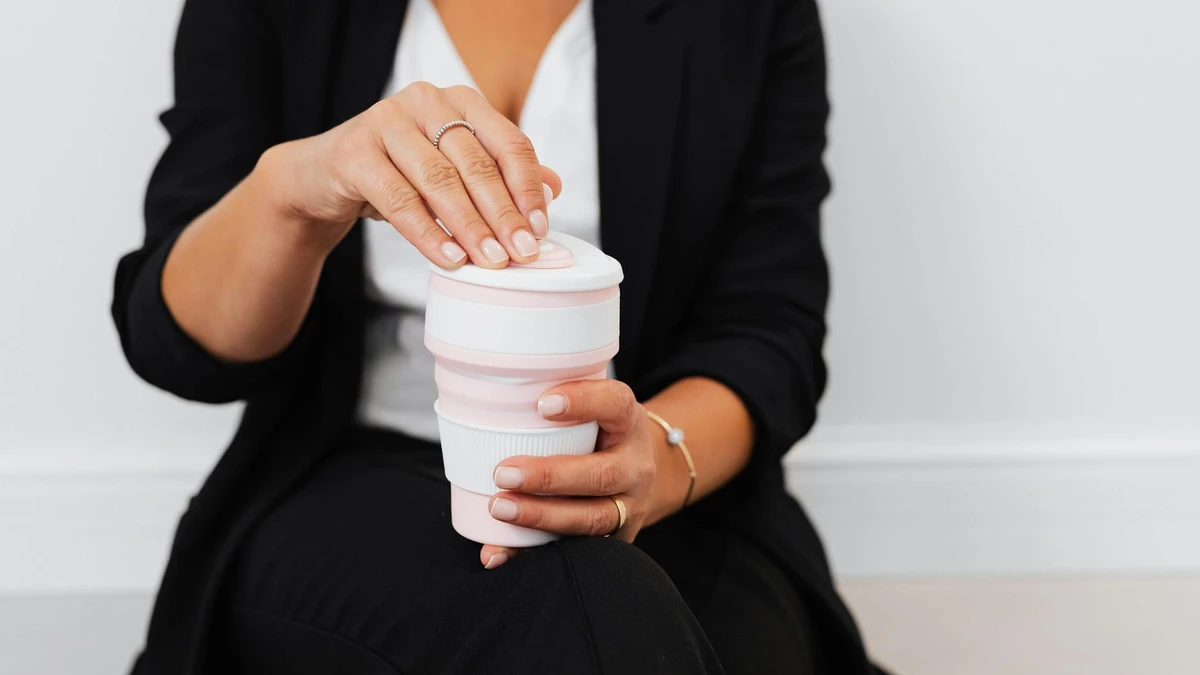
Les gobelets en papier couché PLA utilisent de l'acide polylactique (bioplastique dérivé d'amidons végétaux comme le maïs ou la canne à sucre) comme couche de 15 à 25 g/m² de barrière contre l'humidité sur le carton. Ils sont commercialement compostables en 90-180 jours dans les installations industrielles (55-60°C avec des microbes spécifiques) mais ne sont PAS recyclables dans les flux de papier et ne sont pas compostables à domicile. Ils conviennent parfaitement aux boissons froides et aux boissons chaudes jusqu'à 60°C ; ils s'assouplissent avec les boissons très chaudes de plus de 85°C après 10 à 15 minutes.
Les gobelets en PLA sont meilleurs pour l'environnement UNIQUEMENT s'il existe une infrastructure commerciale de compostage et si les gobelets atteignent effectivement les installations de compostage. Sans accès au compostage, ils n'offrent aucun avantage environnemental par rapport aux gobelets en PE traditionnels et deviennent des déchets de décharge. La réalité : Seuls 5-10% de gobelets en PLA parviennent au compostage commercial ; 75-80% sont mis en décharge. Ils ne sont meilleurs que lorsque l'infrastructure et le comportement des consommateurs s'alignent.
Les gobelets de revêtement à base d'eau sont potentiellement recyclables, mais leur acceptation varie selon les installations. Seuls 20-25% des centres de recyclage américains les acceptent. Ils fonctionnent mieux là où les programmes de recyclage du papier acceptent explicitement le carton des services alimentaires avec des revêtements à base d'eau. Vérifiez toujours auprès de votre transporteur de déchets local avant de faire des déclarations de recyclabilité. Taux de recyclage réel : 20-35% même là où ils sont acceptés (contre 65% pour le papier de bureau).
Le revêtement en PE reste supérieur pour le café chaud (85-95°C), conservant indéfiniment son intégrité structurelle. Le revêtement à base d'eau est adéquat pour les boissons jusqu'à 80-85°C pendant 20-30 minutes (taux de plainte de 2-4%). Le revêtement en PLA se débat au-dessus de 60°C, avec un ramollissement après 10-15 minutes (taux de réclamation de 5-8%). Pour le service traditionnel de café chaud, le PE est plus performant que les autres solutions. Pour le café légèrement refroidi ou les tasses à double paroi, les produits à base d'eau sont acceptables.
Les gobelets enduits de PLA coûtent 15-25% de plus que les gobelets enduits à base d'eau et 35-50% de plus que les gobelets enduits de PE. Fourchette de prix : PLA ($0,10-0,14/unité), à base d'eau ($0,08-0,12/unité), PE ($0,07-0,09/unité) pour des gobelets chauds standard de 12 oz à des QMo typiques de vente en gros. Le coût total de possession (y compris l'élimination, l'éducation et les taux de défaillance) réduit cet écart, mais le PLA reste l'option la plus coûteuse dans la plupart des scénarios.
Les gobelets en PLA nécessitent des conditions de compostage commerciales : température de 55 à 60°C, micro-organismes spécifiques, humidité et aération adéquates, et 90 à 180 jours. Les tas de compost domestique n'atteignent généralement que 40-45°C et manquent des bactéries et champignons nécessaires. Les gobelets en PLA ne se décomposent pas dans le compost domestique et peuvent contaminer le tas. L'accès à une installation de compostage commerciale est obligatoire pour que les gobelets en PLA puissent atteindre leur potentiel de compostabilité.
Choisir en fonction de l'infrastructure locale de traitement des déchets : (1) si le compostage commercial existe et accepte les articles de restauration → PLA viable, (2) si le recyclage du papier accepte les gobelets à revêtement à base d'eau → à base d'eau viable, (3) si aucune infrastructure n'existe → revêtement PE plus pratique. Il faut ensuite tenir compte de la température de la boisson (froide/chaude = n'importe quel revêtement ; chaude = meilleur revêtement PE), des attentes du client (soucieux de l'environnement = investir dans une solution de remplacement ; sensible au prix = PE) et du coût total de possession (calculer avec les taux d'élimination et de défaillance).
Le choix entre les gobelets en papier enduits de PLA et l'enduction à base d'eau ne consiste pas à savoir lequel est universellement “meilleur” - il s'agit d'adapter la technologie d'enduction à votre infrastructure locale de traitement des déchets, à la température de service, aux attentes des clients et aux exigences en matière de coût total. Les deux solutions offrent des avantages environnementaux par rapport au revêtement PE traditionnel, mais uniquement lorsque des systèmes compatibles existent pour les traiter en fin de vie.
Principaux enseignements :
1.Les gobelets en papier couché PLA offrent des avantages environnementaux UNIQUEMENT avec l'accès au compostage commercial - sans infrastructure, ils sont fonctionnellement équivalents aux gobelets en PE mis en décharge.
2.Les gobelets à revêtement à base d'eau offrent de meilleures performances pour les boissons chaudes que le PLA (adéquates jusqu'à 80-85°C) et une recyclabilité potentielle là où les usines de papier les acceptent.
3.Le coût total de possession (matériau + élimination + formation + échecs - valeur de la marque) favorise souvent les revêtements à base d'eau pour une meilleure rentabilité.
4.Le revêtement PE reste plus performant que les deux autres solutions pour les boissons chaudes à plus de 85°C - les options écologiques présentent des compromis en termes de performances
5.La disponibilité des infrastructures (compostage commercial pour le PLA, recyclage spécialisé pour les produits à base d'eau) détermine quel revêtement a un véritable impact sur l'environnement par rapport à l'écoblanchiment.
Pour les cafés et les services de restauration, une évaluation honnête des systèmes de déchets locaux combinée à une communication transparente avec les clients sur les limites des revêtements renforce la crédibilité plutôt que de faire des déclarations “écologiques” non vérifiées. Choisissez le revêtement qui correspond à la disponibilité réelle de l'infrastructure, qui offre de véritables avantages environnementaux et qui définit des attentes réalistes pour le client en matière de performance et d'élimination.
Découvrez d'autres solutions d'emballage alimentaire :
-Gobelets en papier et emballages pour le café
-Guide de sélection des gobelets en papier Eco
-Emballages alimentaires Conteneurs
Papacko fournit des gobelets en papier avec un revêtement PLA, un revêtement à base d'eau et un revêtement PE traditionnel aux cafés et aux services de restauration du monde entier. Nous fournissons des conseils honnêtes sur le choix du revêtement en fonction de votre infrastructure de déchets, de vos exigences de performance et de vos objectifs de développement durable.
Prenez contact avec nous :
Dernière mise à jour: novembre 2025
Équipe chargée du contenu: Papacko
Révisé par: Département de la science des matériaux et de la durabilité