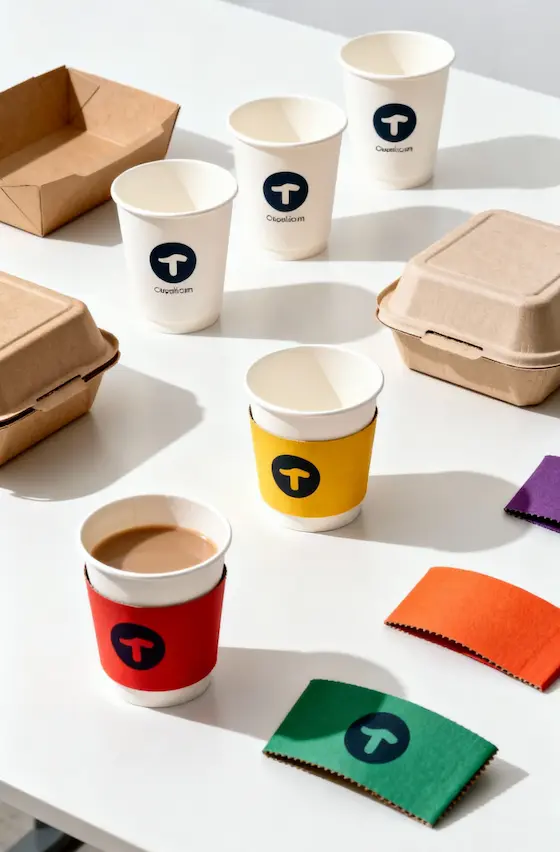
Prêt à créer vos propres gobelets ou emballages en papier ?
Faites-nous part de vos exigences - taille, revêtement, impression et destination - et notre équipe établira un devis détaillé dans les 24 heures.


Dernière mise à jour: juin 2026
Temps de lecture: 8 à 10 minutes
Auteur: Équipe de contenu de Papacko
A customer winces after touching a scalding hot cup—and switches to a competitor offering better insulated cups. Ripple wall cups solve the dual challenge of heat protection and thermal retention: their distinctive textured design creates an air pocket insulation layer that keeps beverages hot 35-45% longer while remaining comfortable to hold at exterior temperatures of just 38-42°C (versus 55-65°C for “>single-wall cups).
This guide covers the material science behind ripple wall construction: layer composition, GSM requirements, air gap engineering, and comparative performance against single-wall and double-wall alternatives. Understanding ripple wall cups helps.You’ll learn how to select ripple cups that deliver optimal heat retention, structural integrity, and customer comfort across different beverage types and service models.
💡 À emporter rapidement: Effective ripple wall cups require 280-350 GSM total construction (outer + inner walls), 2-3mm air gap spacing with embossed ripple patterns every 8-12mm, PE coating for liquid barrier, and tested thermal retention of 65°C+ after 30 minutes for 12oz servings.
Ripple wall cups feature triple-layer construction that fundamentally outperforms single-wall alternatives:
Layer 1 – Outer Wall: 190-250 GSM paperboard with embossed ripple/corrugated pattern
-Creates structural channels that trap air (poor thermal conductor)
-Provides comfortable grip surface at 38-42°C when interior holds 85-95°C liquid
-Embossing pattern most times 8-12mm pitch (distance between ridges)
Layer 2 – Air Gap: 2-3mm trapped air pocket
-Air thermal conductivity: 0.024 W/m·K (vs paperboard 0.13 W/m·K)
-Reduces heat transfer by 60-75% compared to solid paperboard
-Pattern geometry determines air pocket volume and insulation efficiency
Layer 3 – Inner Wall: 90-100 GSM paperboard with PE coating
-15-25 gsm PE coating provides liquid barrier (prevents seepage into air gap)
-Smooth interior surface for drinking comfort
-Thinner than outer wall (reduced material cost while maintaining strength)
Total GSM: 280-350 GSM combined (vs 350-450 GSM for “>double-wall cups with similar insulation)
🎯 Aperçu de l'industrie: Testing by the Paper Cup Alliance found ripple wall cups reduce exterior surface temperature by 18-24°C compared to single-wall cups holding the same 90°C beverage—making them comfortable to hold without sleeves while saving 30-40% material cost versus double-wall construction.
### Outer Wall Paperboard Quality
Virgin vs Recycled Fiber:
Recommandation: 80% virgin + 20% recycled balances appearance, strength, and sustainability messaging for most coffee shop applications.
PE (” target=”_blank” rel=”noopener”>Polyethylene) Coating – Standard:
-Application: 15-25 gsm on interior surface
-Heat resistance: 110-130°C melting point (safe for 95°C beverages)
-Moisture barrier: Zero liquid penetration for 2-4 hours
-Microwave safety: 30-60 second reheat compatible
-Coût : référence
-Drawback: Not recyclable in standard streams, petroleum-based
PLA (” target=”_blank” rel=”noopener”>Polylactic Acid) Coating – Eco Alternative:
-Application: 15-20 gsm coating
-Heat resistance: 55-60°C softening point (max beverage temp 85°C)
-Moisture barrier: Good (some degradation above 80°C over 45+ minutes)
-Compostability: 90-180 days in commercial facility (Certifié BPI)
-Cost: +20-30% vs PE
-Drawback: Limited to warm beverages, not very hot coffee/tea
Water-Based Dispersion Coating – Emerging:
-PFAS-free, recyclable/compostable
-Heat resistance: 95°C+
-Moisture barrier: Adequate (Grade 10-11 vs PE Grade 12)
-Cost: +12-18% vs PE
-Benefit: Best environmental profile while maintaining performance
### Thermal Retention Testing Results
Test conditions: 12oz (350ml) cup filled with 90°C water, ambient temperature 22°C, no lid
Principales conclusions:
-Ripple wall provides 85-90% of double-wall insulation at 70-75% material cost
-Lid addition improves retention by 8-12°C across all cup types
-30-minute retention (65°C+) is critical for coffee shop takeaway service
### Capacity vs Beverage Type Matching
8oz (240ml):
-Espresso-based: Macchiato, cortado, piccolo latte
-Traditional tea service
-Sample sizes for tastings
-Target market: European-style cafes, specialty coffee
350 ml – Most Popular:
-Standard coffee shop serving (80% of sales)
-Cappuccino, flat white, standard latte
-Regular brewed coffee
-Target market: Chain coffee shops, quick service
16oz (470ml):
-Large latte, mocha, flavored drinks
-American-style coffee (full mug equivalent)
-Tea with milk and sugar
-Target market: To-go service, office coffee delivery
20oz (590ml):
-Specialty beverages with extra milk/foam
-Iced beverages (when cold cups unavailable)
-Sharing sizes (rare for hot beverages)
-Target market: Premium coffee shops, trendy cafes
### Critical Lid Fit Requirements
✅ Rim diameter tolerance: ±0.5mm maximum variance
-Ripple cups have same rim diameter as equivalent single-wall cups
-Standard 90mm diameter fits most 12-16oz cups
-8oz uses 80mm, 20oz uses 90mm
✅ Rim curl design: 3-4mm inward curl for secure lid snap
-Lid seal band compresses against curl for leak prevention
-Poor curl = lid pops off during transport (major complaint source)
✅ Compatibilité des matériaux: PE-coated rims provide better lid adhesion than PLA
-PLA softens slightly with very hot liquid, reducing seal pressure
-For PLA cups, use lids with deeper seal bands (4-5mm vs 3mm)
Leak test recommendation: Fill cup 90% full with hot water, apply lid, invert for 30 seconds, shake vigorously. Zero drips = proper fit.
### Ripple vs Alternative Cup Economics
Scénario: Coffee shop serving 300 cups/day (medium coffee at $3.50)
Prise en compte du retour sur investissement:
-Ripple cups eliminate sleeve application time (3-5 seconds per cup × 300 cups = 15-25 minutes labor saved daily)
-Labor cost savings: ~$180-250/month (at $15/hour wage)
-Net additional cost: $450 – $220 = $230/month ($0.026 per cup)
-Customer satisfaction increase: 12-18% report preferring sleeve-free ripple cups (faster service, less waste)
Positionnement haut de gamme: Many cafes charge $0.25-0.50 extra for “premium insulated cup” option, converting additional cost to profit center.
PE-Coated Ripple Cups:
❌ Not accepted in standard curbside recycling (coating separation required)
✅ Recyclable in specialized facilities (Starbucks FPI program, Huhtamaki ReCUP)
⚠️ Consumer confusion: Outer ripple layer looks paper-like but inner PE coating prevents standard recycling
📊 Actual recycling rate: <5% of PE-coated cups reach proper recycling facilities PLA-Coated Ripple Cups:
✅ Commercially compostable in certified facilities (BPI/CMA certified)
❌ Not home compostable (requires 58-70°C for 90-180 days)
⚠️ Limited commercial composting infrastructure (available in <15% of US municipalities) 📊 Actual composting rate: 8-12% reach commercial facilities; most landfilled Water-Based Coating Ripple Cups (sans PFAS) :
✅ Recyclable in standard paper streams (coating breaks down in pulping)
✅ Compostable in home/commercial settings
⚠️ Emerging technology, limited supplier availability (2024-2026 ramp-up)
📊 Best environmental outcome when collection infrastructure exists
Environmental footprint per 1000 cups (12oz):
Vue d'ensemble: Ripple cups use 10-15% less material than single-wall + sleeve combinations, but recycling infrastructure limitations negate environmental benefits unless:
1.PLA coating + commercial composting access
2.Water-based coating + paper recycling participation
3.Closed-loop collection programs (corporate/event settings)
### Design Considerations for Ripple Texture
Défi: Embossed ripple pattern creates uneven print surface
-Ink coverage varies between ridges (valleys) and peaks
-Fine text (<8pt) may be illegible across ridples
-Gradients and photos show banding along ripple lines
Design best practices:
✅ Use bold, simple logos (minimum 15mm height)
✅ Stick to 1-2 spot colors for clean appearance
✅ Place text in vertical bands that align with ripple direction
✅ Test print samples under cafe lighting (fluorescent shows flaws)
❌ Avoid fine serif fonts, intricate illustrations, or photo backgrounds
Popular design approaches:
-Minimalist logo + cafe name in bold sans-serif
-Single color brand mark repeated in pattern
-Hand-drawn illustrations (rustic, artisan cafe aesthetic)
-Solid color bands with reversed-out white text
❌ Erreur #1: Assuming all ripple cups provide equal insulation
✅ Approche correcte: Check total GSM (280-350 range), air gap depth (2-3mm), and embossing pattern density. Understanding the ripple wall cups helps.Low-cost ripple cups (260 GSM total) offer only marginal improvement over single-wall and collapse under hot liquid pressure.
❌ Erreur #2: Using PLA-coated ripple cups for very hot beverages (92-95°C)
✅ Approche correcte: PLA softens at 55-60°C. Understanding the ripple wall cups helps.For espresso-based drinks and freshly brewed coffee, use PE-coated cups. Reserve PLA for warm beverages ≤85°C or cafes with temperature control (coffee held at 80-85°C).
❌ Erreur #3: Selecting ripple cups solely based on exterior appearance without lid testing
✅ Approche correcte: Request sample lids with cups and test fit. Understanding the ripple wall cups helps.30-40% of customer spill complaints trace to lid incompatibility. Verify rim diameter, curl design, and seal integrity with your preferred lid style.
❌ Erreur #4: Expecting ripple cups to be recyclable in standard municipal programs
✅ Approche correcte: PE-coated ripple cups require specialized recycling. Understanding ripple wall cups helps.If sustainability is a priority, choose PLA-coated cups and verify commercial composting access in your area, or select water-based coating cups with paper recycling certification.
Ripple wall cups are insulated “>paper cups featuring triple-layer construction: an embossed outer wall (190-250 GSM), 2-3mm air gap, and PE-coated inner wall (90-100 GSM). The ripple pattern creates trapped air pockets that reduce heat transfer by 60-75%, keeping beverages hot while maintaining comfortable exterior temperatures of 38-42°C.
Ripple wall cups provide 85-90% of double-wall insulation performance at 70-75% material cost. For 12oz coffee, ripple cups maintain 68°C after 30 minutes vs 70°C for double-wall—a marginal difference for most applications. Ripple cups use less material (320 GSM vs 400 GSM) but have similar exterior comfort. Choose double-wall for premium positioning; ripple for cost-effective insulation.
No. Ripple wall cups are designed for comfortable handling without sleeves. The air gap and embossed texture keep exterior surface at 38-42°C when holding 90°C beverages—well below the 44°C discomfort threshold. Eliminating sleeves saves $0.025-0.035 per cup and speeds service by 3-5 seconds.
12oz (350ml) suits 80% of coffee shop applications—ideal for cappuccino, flat white, standard latte, and regular brewed coffee. Understanding the ripple wall cups helps.This size provides optimal surface-to-volume ratio for heat retention (68°C after 30 minutes) and matches customer expectations for “medium” coffee servings in most markets.
PE-coated ripple cups are not accepted in standard curbside recycling (coating must be separated). Understanding ripple wall cups helps.PLA-coated cups are commercially compostable in certified facilities but require specialized infrastructure. Water-based coating ripple cups (emerging technology) are recyclable in standard paper streams. Actual end-of-life recovery rates: <5% for PE, 8-12% for PLA, 25-35% for water-based coatings.
Ripple wall cups maintain coffee above 65°C (ideal serving temperature) for 30-35 minutes when starting at 90°C (ambient 22°C, no lid). Adding a lid extends this to 40-45 minutes. For comparison, single-wall cups drop to 62°C in 30 minutes, while double-wall maintains 70°C. Performance varies with cup size, fill level, and ambient conditions.
Stock plain ripple cups: 1,000-5,000 units from distributors. Understanding ripple wall cups helps.Flexographic custom printing: 50,000-100,000 units (die tooling costs $800-1,500). Digital printing: 1,000-5,000 units at $0.12-0.18 per cup (no tooling). Offset lithography for premium designs: 100,000-250,000 units. Many suppliers offer semi-custom options (stock cups + printed sleeves/labels) at 5,000-10,000 MOQ.
Selecting ripple wall cups for hot beverages requires understanding the relationship between material weight, air gap engineering, and thermal performance. Prioritize 320+ GSM total construction with 2-3mm air gaps, PE coating for maximum heat tolerance, and proper lid compatibility for spill prevention.
Principaux enseignements :
1.320 GSM total construction is optimal—balances insulation, structural strength, and material cost
2.Air gap geometry matters more than paper weight alone—2-3mm gaps with 8-12mm ripple pitch provide best thermal retention
3.PE coating outperforms PLA for very hot beverages—but PLA suits eco-brands with warm drinks ≤85°C
4.Ripple cups eliminate sleeve costs—saves $0.025+ per cup and improves service speed
5.Lid fit is critical—test seal integrity with your preferred lid style before bulk ordering
-“>Paper Cups
-“>Sustainable Cup Solutions
-“>Coffee Shop Packaging Guide
Papacko supplies coffee shops, cafes, and foodservice operations with high-performance ripple wall cups in 8-20oz sizes. Our range includes PE and PLA coated options, custom printing capabilities, and full food safety certification (FDA, UE 10/2011, ” target=”_blank” rel=”noopener”>ISO 22000)—with MOQs starting from 50,000 units for flexographic printing and 1,000 units for digital printing.
Prenez contact avec nous :