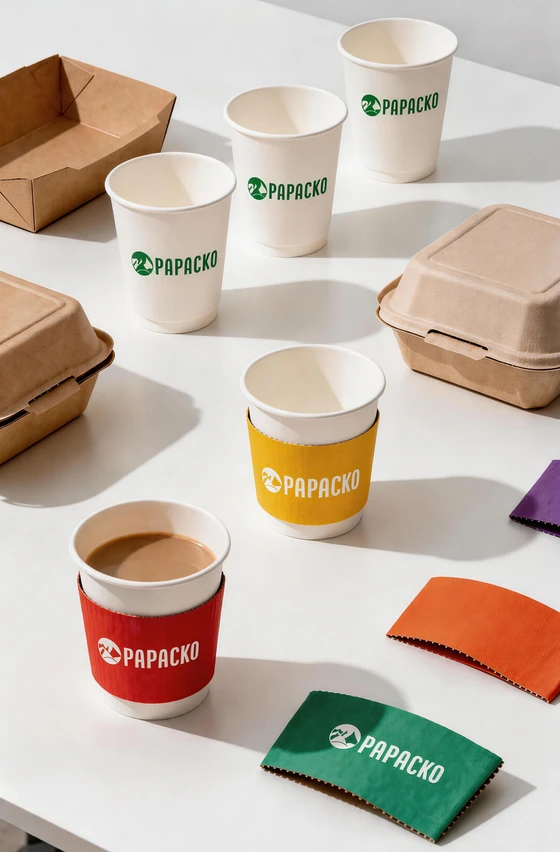
¿Está listo para crear sus propios vasos o envases de papel con su marca?
Díganos sus requisitos -tamaño, revestimiento, impresión y destino- y nuestro equipo le preparará un presupuesto detallado en 24 horas.

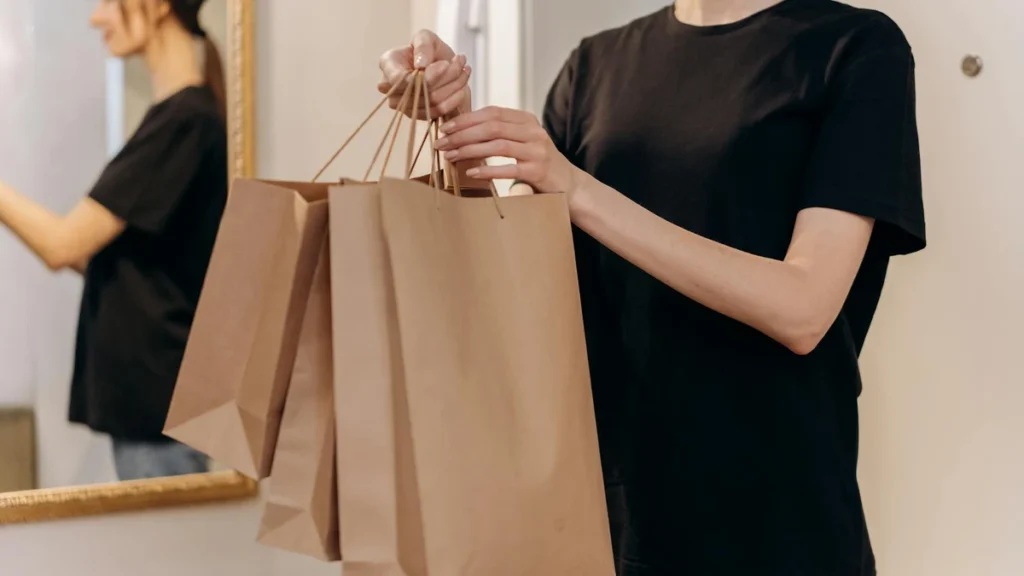
Los comercios minoristas distribuyen más de 180 000 millones de bolsas de papel al año, y las bolsas de papel kraft representan el 68 % de este mercado gracias a su resistencia, sus características de sostenibilidad y su atractivo estético natural. Sin embargo, entre el 40 % y el 55 % de los minoristas...
Las empresas minoristas distribuyen más de 180 000 millones de bolsas de papel al año, y las bolsas de papel kraft representan el 68 % de este mercado gracias a su resistencia, sus credenciales de sostenibilidad y su atractivo estético natural. Sin embargo, entre el 40 % y el 55 % de los minoristas eligen especificaciones inadecuadas para las bolsas: asas que se rompen con el peso del producto, tamaños que suponen un desperdicio de material o métodos de impresión que no superan las pruebas de durabilidad durante el transporte.
Esta completa guía de selección abarca todo lo que los comercios minoristas y los negocios de comida para llevar necesitan saber para elegir correctamente las bolsas de papel kraft: comparación de tipos de asas (retorcidas, planas y de cuerda), cálculos de la capacidad de carga adaptados a los tipos de producto, fórmulas de optimización del tamaño que reducen el desperdicio de material entre un 20 % y un 35 %, pruebas de durabilidad de las técnicas de impresión, análisis del coste por bolsa en función del volumen de pedidos y errores comunes en las especificaciones que provocan quejas de los clientes y dañan la imagen de marca.
💡 Resumen rápido: Para elegir correctamente una bolsa de papel kraft, es necesario que la resistencia a la tracción de las asas se adapte al peso del producto (asas retorcidas: 3-5 kg; asas planas: 5-8 kg; asas de cuerda: 8-12 kg), elegir unas dimensiones de la bolsa entre 15 y 20 % mayores que el volumen del producto, seleccionar un gramaje de papel de 80-120 g/m² en función del contenido y realizar pedidos de 1.000 a 5.000 unidades para que la personalización sea viable a un precio de 0,15-0,45 € por bolsa.
Aspectos clave a tener en cuenta:
La normativa y la demanda de los consumidores impulsan el uso de las bolsas de papel:
-Prohibición de las bolsas de plástico: 127 países y 8 estados de EE. UU. han aplicado restricciones (2023-2026)
-Preferencias de los consumidores: El 731 % de los compradores considera que las marcas que utilizan bolsas de papel son más respetuosas con el medio ambiente
-Percepción de la durabilidad: Las bolsas de papel kraft de calidad transmiten una imagen de alta gama frente a las alternativas de plástico fino
-Factor de reutilización: El 62% de los clientes reutiliza las bolsas de papel kraft con la marca para guardar cosas, hacer regalos o ir de compras, lo que aumenta la visibilidad de la marca
Datos de mercado: El análisis del sector minorista revela que las empresas que están pasando de las bolsas de plástico a las de papel kraft registran un aumento del 15 % al 22 % en las puntuaciones de satisfacción de los clientes, citándose la sostenibilidad como el principal factor impulsor. El mercado mundial de bolsas de papel kraft creció un 18 % anual entre 2023 y 2026, alcanzando los 4,8 mil millones de dólares.🎯 Perspectiva del sector: Las tiendas de alta gama señalan que pasar de las bolsas de plástico genéricas a las bolsas de papel kraft personalizadas con la marca aumenta la percepción del valor del producto entre un 12 % y un 18 %, lo que justifica un recargo en el precio de entre un 8 % y un 15 % sin que los clientes se opongan.
Aspectos clave a tener en cuenta:
Construcción: Dos o tres tiras de papel entrelazadas y pegadas en los puntos de unión-El menor coste por bolsa (entre 40 y 60 céntimos más barato que las asas de cuerda)
-Fabricación rápida (no se necesitan componentes adicionales)
-Suficiente para 70% de aplicaciones minoristas
Limitaciones:-Capacidad de carga limitada (no apto para libros, botellas ni conservas)
-Menos cómodo para llevarlo durante mucho tiempo (su perfil delgado se clava en las manos)
-Se perciben como de menor calidad en comparación con los tiradores planos o de cuerda
Ideal para: Tiendas de moda, tiendas de regalos, panaderías, productos básicos de alimentación, tiendas de cosméticosPara comprender bien las bolsas de papel kraft, hay que tener en cuenta los siguientes factores:
Construcción: Tiras anchas de papel (25-35 mm) dobladas y reforzadas, pegadas o cosidas-Una superficie más amplia reduce la presión sobre la mano (más cómodo)
-Más resistentes que las asas retorcidas (60-80%: mayor resistencia a la tracción)
-Mejor presentación de la marca (más espacio para los logotipos impresos)
Limitaciones:-El modelo 30-50% es más caro que los de asa retorcida
-Tiempo de producción ligeramente superior (fase de refuerzo)
-Sigue siendo insuficiente para objetos pesados (botellas de vino, conservas)
Ideal para: Librerías, tiendas de calzado, establecimientos de comida preparada para llevar, comercios minoristas en general con productos de peso moderado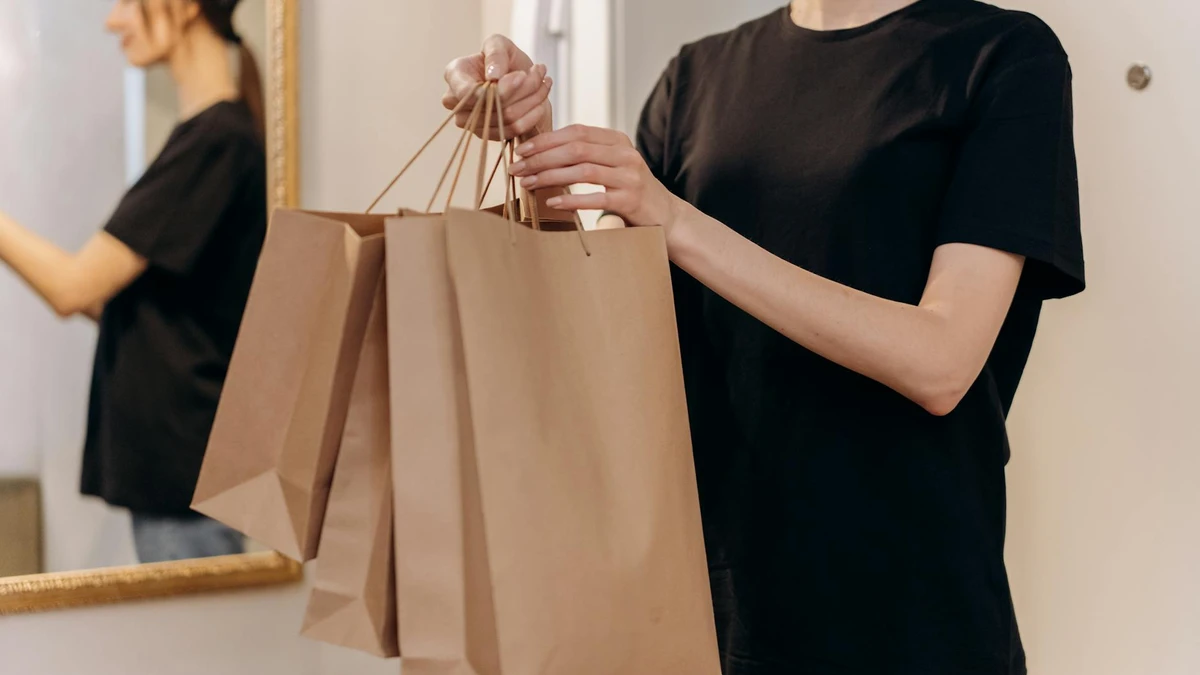
Para comprender bien las bolsas de papel kraft, hay que tener en cuenta los siguientes factores:
Construcción: Cuerda de algodón, yute o papel, pasada por los agujeros perforados y anudada por dentro-Mayor capacidad de carga (apto para botellas, libros y productos pesados)
-La experiencia de transporte más cómoda (cuerda suave, distribución uniforme del peso)
-Percepción de alta gama (asociada a las marcas de lujo)
-Resistente y reutilizable (los clientes lo reutilizan durante años)
Limitaciones:-La opción más cara (cuesta entre dos y cuatro veces más que las asas retorcidas)
-Tiempo de producción más largo (enhebrado manual de la cuerda en algunos procesos)
-Puede parecer demasiado sofisticado para productos ligeros
Ideal para: Tiendas de vinos, tiendas de productos gourmet, moda de lujo, envoltorios para regalos, joyería, cosméticos de alta gamaPara comprender bien las bolsas de papel kraft, hay que tener en cuenta los siguientes factores:
Entender el gramaje del papel:-Peso del producto < 2 kg → 100-110 g/m²
-Peso del producto: 2-5 kg → 120-130 g/m²
-Peso del producto: 5-8 kg → 140-160 g/m²
-Peso del producto > 8 kg → 170+ g/m² con asas reforzadas
La clave para elegir las bolsas de papel kraft depende de:
-FSC (” target=”_blank” rel=”noopener”>Forest Stewardship Council): Verifica las prácticas forestales sostenibles
-Porcentaje de contenido reciclado: residuos posconsumo 30%, 50%, 80% o 100%
-Biodegradabilidad: Tanto el papel kraft virgen como el reciclado son compostables (entre 60 y 90 días en instalaciones industriales)
A la hora de evaluar las bolsas de papel kraft, ten en cuenta lo siguiente:
-W = Ancho (abertura de la bolsa)
-D = Profundidad (refuerzo, expansión lateral)
-G = Altura (de abajo arriba)
1.Mide las dimensiones del producto (longitud × anchura × altura)
2.Añadir un margen de 15-20% para facilitar el embalaje y dejar espacio para el asa
3.Redondea al tamaño estándar más cercano (los tamaños personalizados tienen un coste adicional de entre 25 y 401 TP3T)
Ejemplo de cálculo (caja de zapatos):-Caja de zapatos: 30 cm × 20 cm × 12 cm
-Con espacio libre de 20%: 36 cm × 24 cm × 14,4 cm
-Bolso recomendado: Tamaño grande (32 × 15 × 42 cm): el ancho es ligeramente menor, pero la altura lo compensa
Errores comunes:-❌ Sobredimensionamiento: El uso de bolsas grandes para productos pequeños supone un desperdicio de entre un 30 % y un 40 % del coste de material
-❌ Subdimensionamiento: Meter los productos a la fuerza en bolsas pequeñas provoca roturas y una mala experiencia para el cliente
-✅ Ajuste de plantilla: El producto ocupa entre el 60 % y el 75 % del volumen de la bolsa (presentación profesional, rentable)
-Colores de alto contraste: Negro, azul oscuro, verde oscuro, blanco (se imprimen bien)
-Contraste medio: Rojo, naranja, morado (requieren ajuste de la densidad de tinta)
-Escaso contraste: Amarillo, tonos pastel claros, beige (casi imperceptible sobre el papel kraft marrón)
Buenas prácticas de diseño:1.Tamaño del logotipo: Ancho mínimo de 60 mm para garantizar la visibilidad a una distancia de 2-3 metros
2.Grosor de la fuente: De medio a negrita (las fuentes claras desaparecen sobre el papel kraft texturado)
3. Cobertura de tinta: Los rellenos lisos quedan mejor que los degradados (el papel kraft absorbe la tinta de forma irregular)
4. Capa base blanca: Para diseños en color, imprima primero una capa base blanca (aumenta la intensidad del color entre un 40 % y un 60 %).
-1 000 bolsas pequeñas (en paquete plano) = 0,4 metros cúbicos
-1.000 bolsas medianas = 0,6 metros cúbicos
-1.000 bolsas grandes = 0,9 metros cúbicos
Optimización de la frecuencia de los pedidos:-Al pedir 5.000 unidades en lugar de 1.000, se ahorran entre 35 y 451 TP3T por bolsa
-Para un consumo mensual de 300, ahorro anual: (($0,28 – $0,18) × 3.600 bolsas = $360 guardado)
-Coste de almacenamiento para 5.000 sacos: ~1.450-1.000 € al mes por 3 m³ de espacio de almacén
-Ahorros netos: $260-310 al año, al realizar pedidos de grandes cantidades
-Identidad corporativa básica (1 color): +$960 al año (+$80 al mes)
-Imagen de marca premium (a todo color): 2 640 TP4T al año (220 TP4T al mes)
Valor comercial:-Cada bolsa de marca es vista por entre 15 y 25 personas (cuando se lleva en público o se reutiliza en casa)
-12 000 bolsas al año × 20 impresiones = 240 000 impresiones de marca
-Coste por impresión: $2.880 ÷ 240.000 = $0.012 CPM ($12 por cada 1 000 impresiones)
-Comparación: CPM de los anuncios de Facebook = 1,48-1,5, Red de Display de Google = 1,43-1,0
Impulsores del ROI:1.Recuerdo de marca: Los clientes del segmento 28-35% son más propensos a recordar los envases de marca
2. Clientes habituales: 12-18%: aumento de las visitas repetidas cuando el embalaje refuerza la marca
3. Prueba social: Los clientes que llevan bolsos de marca en público = publicidad gratuita
4.Percepción de calidad superior: Las bolsas de calidad justifican un precio del producto entre un 5 % y un 10 % más alto
-✅ “Fabricado con papel kraft reciclado 80%”
-✅ “Silvicultura sostenible con certificación FSC”
-✅ “Totalmente biodegradable y compostable”
-❌ “Respetuoso con el medio ambiente” (demasiado vago, carece de credibilidad)
-❌ “100% natural” (sin sentido sin contexto)
❌ Error #1: Elegir asas retorcidas para productos que pesen más de 5 kg (botellas, libros, artículos múltiples) ✅ Enfoque correcto: Elige el tipo de asa en función del peso: retorcida para menos de 3 kg, plana para entre 3 y 7 kg, y de cuerda para más de 7 kg. Prueba las bolsas con productos reales antes de hacer un pedido de más de 5.000 unidades. Si el asa falla, el cliente se sentirá frustrado y la marca se verá perjudicada.
❌ Error #2: Pedir tamaños personalizados pensando que así se ahorra dinero en productos de formas irregulares ✅ Enfoque correcto: Los tamaños personalizados cuestan entre 25 y 401 TP3T más que las dimensiones estándar. Utilice una bolsa estándar del tamaño inmediatamente superior y rellénela con papel de seda. Especifique tamaños personalizados únicamente para volúmenes muy elevados (más de 50 000 unidades), en los que el ahorro compense los costes de utillaje.
❌ Error #3: Elegir papel kraft de 70-80 g/m² para reducir costes, con el consiguiente problema de que las bolsas se rompen ✅ Enfoque correcto: No escatimes en el gramaje del papel. El estándar del sector minorista es de 100-120 g/m². El ahorro de 1 TP4T0,02-0,04 por bolsa sale caro cuando las bolsas se rompen y los clientes se quejan. Elige bolsas con las especificaciones adecuadas desde el principio.
❌ Error #4: Impresión de colores claros (amarillo, tonos pastel) sobre papel kraft natural con el objetivo de lograr una buena visibilidad ✅ Enfoque correcto: Elige colores de alto contraste (negro, azul marino, verde oscuro) o imprime primero una capa base blanca (+$0,04-0,06 por bolsa). Realiza pruebas de impresión bajo la iluminación de la tienda antes de encargar más de 3.000 unidades. Los logotipos invisibles echan por tierra toda la inversión en imagen de marca.
❌ Error #5: Pedir 10 000 unidades para conseguir el precio más bajo sin probar el diseño ni calcular las necesidades de almacenamiento ✅ Enfoque correcto: Empieza con entre 1.000 y 2.000 unidades para validar el diseño, comprobar la durabilidad con productos reales y evaluar la reacción de los clientes. Aumenta la producción a entre 5.000 y 10.000 unidades una vez que se haya demostrado su viabilidad. Los costes de almacenamiento de 10.000 bolsas pueden contrarrestar el ahorro por unidad.
Para elegir las bolsas de papel kraft adecuadas para la venta de comida para llevar, es necesario que cinco características fundamentales se ajusten a las necesidades de su negocio: el tipo de asa y la resistencia a la tracción, acordes con el peso del producto; el gramaje del papel, adecuado para el contenido; unas dimensiones estandarizadas que combinen el ajuste del producto con la rentabilidad; métodos de impresión adecuados a la complejidad del diseño y al volumen del pedido; y certificaciones de sostenibilidad que resulten atractivas para los clientes objetivo.
Principales conclusiones:1. Adapta los mangos al peso—retorcida para menos de 3 kg ($0,12-0,22/saco), lisa para 3-7 kg ($0,18-0,32/saco), en forma de cuerda para más de 7 kg ($0,28-0,48/saco)
2. No subestimes el gramaje del papel—El gramaje de 100-120 g/m² es el estándar para el comercio minorista, mientras que el de 130-150 g/m² se utiliza para productos más pesados; ahorrar 0,02-0,04 € por bolsa no compensa el riesgo de que estas se rompan.
3. Utiliza tamaños estándar—Las medidas personalizadas tienen un recargo de entre 25 y 401 TP3T; elija la talla estándar inmediatamente superior y añada relleno en su lugar
4. Empieza poco a poco con la impresión—Probar entre 1.000 y 2.000 unidades antes de comprometerse con pedidos de más de 10.000 unidades en flexografía; las bolsas con la marca generan $12 impresiones de marca por cada 1.000 personas
5. Las certificaciones influyen en las primas—El certificado FSC y el contenido reciclado permiten subidas de precios del 5-15 %, y el 68 % de los consumidores valora los envases sostenibles
-“>Accesorios de embalaje
-“>Servicios de impresión personalizada
-“>Soluciones de embalaje sostenible
Papacko suministra a los comercios minoristas bolsas de papel kraft personalizadas con todo tipo de asas (retorcidas, planas, de cuerda), en tamaños estándar y a medida, y con opciones de impresión que van desde la flexografía a un color hasta la impresión digital a todo color. Nuestros especialistas en embalaje ofrecen muestras gratuitas, pruebas de capacidad de carga y optimización del diseño, lo que garantiza que sus bolsas se adapten perfectamente a los productos y maximicen el retorno de la inversión en la imagen de marca.
Póngase en contacto: