¿Está listo para crear sus propios vasos o envases de papel con su marca?
Díganos sus requisitos -tamaño, revestimiento, impresión y destino- y nuestro equipo le preparará un presupuesto detallado en 24 horas.

Última actualización: enero de 2026
Tiempo de lectura: 8-10 minutos
Autor: Equipo de contenidos de Papacko
Combo meals generate 35-45% of quick-service restaurant revenue, but standard single-compartment bowls create presentation and cross-contamination problems. Rice absorbs sauce flavors, crispy items turn soggy, and portion control becomes guesswork. The result: inconsistent quality, customer complaints, and wasted ingredients from over-portioning.
Los boles de papel divididos resuelven estos problemas gracias a su compartimentación: espacios separados para proteínas, cereales, verduras y salsas. Sin embargo, muchos operadores tienen dificultades para elegir la configuración correcta de los separadores, lo que provoca una colocación incómoda de los alimentos, una contención inadecuada de las salsas o fallos estructurales durante la entrega.
Esta guía cubre los factores críticos de diseño de los boles de papel divididos: ratios de tamaño de los compartimentos, altura de la barrera y resistencia a las fugas, selección de materiales para alimentos multitemperatura y opciones de personalización para la marca. Aprenderá a especificar boles que mejoren la presentación de los platos combinados, mantengan la integridad de los alimentos y mejoren la eficiencia operativa.
💡 Comida rápida para llevar: Las papeleras divididas eficaces requieren un diseño de compartimentos bien pensado (las proporciones 40/30/30% o 50/25/25% son habituales), barreras resistentes a la grasa (15-25 mm de altura, recubiertas de PE o PLA), cartón de 400-500 GSM para la integridad estructural y divisores sellados para evitar la contaminación cruzada durante las entregas de 30-60 minutos.
La clave para elegir cuencos de papel dividido de calidad depende de:
1. Separación y conservación de la calidad de los alimentos
-Mantiene las salsas alejadas de los componentes crujientes (no se empapan)
-Evita la contaminación cruzada de sabores (el teriyaki no satura el arroz)
-Mantiene la integridad de la textura (las verduras crujientes permanecen crujientes)
2. Control de porciones y gestión de costes
-Los compartimentos premedidos garantizan porciones uniformes
-Reduce el desperdicio de alimentos por exceso de raciones (ahorro de costes de 8-15%)
-Simplifica la formación del personal (guías visuales de las porciones)
3. Mejor presentación y valor percibido
-Separación visual con calidad de restaurante
-Los clientes perciben un mayor valor de 18-25% con una presentación dividida
-Un emplatado digno de Instagram impulsa el marketing en las redes sociales
4. Eficacia operativa
-Montaje más rápido (el personal coloca los artículos en los espacios designados)
-Menos errores (una colocación clara reduce los errores)
-Mejores opciones de etiquetado (identificar el contenido por compartimento)
🎯 Perspectiva del sector: Un estudio realizado en 2025 en 180 establecimientos de comida rápida reveló que el uso de cuencos divididos aumentaba las ventas de platos combinados en un 12-18% gracias a la mejora de la presentación.
Los clientes pedían combos premium con más frecuencia cuando los alimentos aparecían “estilo restaurante” separados que mezclados.
Para cuencos de papel divididos duraderos, céntrate en:
### Elección de la proporción correcta de compartimentos
Para platos combinados estándar (arroz + proteínas + verduras):
-Recomendado: 3 compartimentos 40/30/30 o 50/25/25
-Porción de arroz: 150-200g → necesita 40-50% de cuenco de 750-1000ml.
-Proteína: 100-150g → necesita 25-30% de espacio.
-Verduras/salsa: 80-120g → necesita 20-30% de espacio.
Para platos con mucha salsa (curry, salteados, pasta):
-Recomendado: 2 compartimentos 60/40 con sección principal profunda
-Sección principal: 60% volumen, 50-70mm profundidad para contención de salsa
-Sección lateral: 40% para arroz, fideos o pan (se mantiene seco)
Para lotes de comida premium (varios componentes):
-Recomendado: Disposición de 4 compartimentos o bento personalizada
-Priorizar la variedad sobre las grandes raciones
-Incluye un pocillo específico para salsas (compartimento más pequeño, volumen 10-15%)
### Por qué es importante la altura de la barrera
Demasiado bajo (10-15mm):
-Las salsas se derraman durante el transporte (gravedad + chapoteo)
-La grasa migra a través de los compartimentos
-El vapor de los objetos calientes se condensa y se acumula en las secciones adyacentes.
-Aceptable sólo para productos secos (ensaladas, cuencos de cereales sin salsa)
Alcance óptimo (15-25 mm):
-Contiene porciones típicas de salsa (30-50 ml por compartimento)
-Evita la contaminación cruzada durante la manipulación normal
-Equilibra la eficiencia del material con la funcionalidad
-Funciona para 80% de aplicaciones de comida combinada
Altura máxima (25-30 mm):
-Necesario para salsas tipo sopa o currys muy líquidos
-Crea compartimentos estancos (barreras a prueba de fugas)
-Requiere refuerzo acanalado para evitar el colapso
-Añade un importante coste de material (+15-25%)
✅ Separadores moldeados (más común):
-Integrado durante el proceso de conformado
-Barrera continua desde la base hasta el borde
-Sin vías de fuga en las juntas
-Mejor rendimiento, coste moderado
✅ Separadores insertados (rentable):
-La pieza separadora se desliza dentro del bol
-Permite un diseño de cubeta única con compartimentación opcional
-Riesgo de fugas en los puntos de inserción a menos que estén pegados/sellados
-Flexibilidad para los clientes que quieren elegir
❌ Pliegues poco profundos (evitar para alimentos húmedos):
-Hendiduras simples en el fondo del cuenco
-Sólo proporciona una separación visual, no una barrera real
-Los líquidos fluyen libremente por los “compartimentos”
-Sólo apto para ingredientes secos para ensaladas
Por qué los divisores exigen mayor GSM:
-Las paredes de la barrera son finas, sin soporte (propensas a doblarse bajo carga)
-Múltiples secciones = más puntos de concentración de tensiones
-Las salsas crean presión lateral en los separadores
-Los clientes juzgan la calidad por la rigidez estructural
Recomendación mínima: 400 GSM para cualquier cuenco dividido con compartimentos para salsas. 350 GSM aceptable solo para ensaladas, cuencos de cereales o artículos completamente secos.
Desafío: Diferentes compartimentos pueden requerir diferentes propiedades de barrera
-Sección de arroz: Resistencia a la humedad (vapor)
-Sección de proteínas: Resistencia a la grasa (aceites, grasas)
-Pozo de salsas: Máxima barrera a los líquidos (fluidos acuosos)
Opciones de revestimiento:
PE (Polietileno) revestimiento - 25-35 g/m².:
-Ventajas: Excelente barrera contra la grasa y la humedad, resistente al calor (120°C+), menor coste
-Contras: No compostable, a base de petróleo
-Aplicación: Todos los compartimentos revestidos uniformemente
-Lo mejor para: Máximo rendimiento, servicio rápido tradicional
PLA (Ácido poliláctico) revestimiento - 20-30 g/m².:
-Ventajas: Compostable, de base biológica, buenas barreras a temperaturas moderadas
-Contras: Se reblandece a 60°C (limita la temperatura de los alimentos), 30-40% cuesta más
-Aplicación: Todos los compartimentos, pero los alimentos deben estar a ≤85°C.
-Lo mejor para: Marcas con conciencia ecológica, comidas templadas (no muy calientes)
Doble revestimiento (base de PE + parte superior a base de agua):
-Ventajas: Exterior reciclable/compostable, interior de alto rendimiento
-Contras: Fabricación compleja, disponibilidad limitada de proveedores
-Aplicación: PE interior superficies en contacto con alimentos, exterior base agua
-Lo mejor para: Posicionamiento premium en sostenibilidad
Recubrimiento selectivo de compartimentos:
-Estrategia: Capa pesada en el pozo de salsa, más ligera en las secciones secas.
-Ventaja: Ahorro en costes de material (10-15%)
-Desafío: Utillaje complejo, mayor MOQ (200k+ unidades)
-Lo mejor para: Cadenas de gran volumen con diseños optimizados
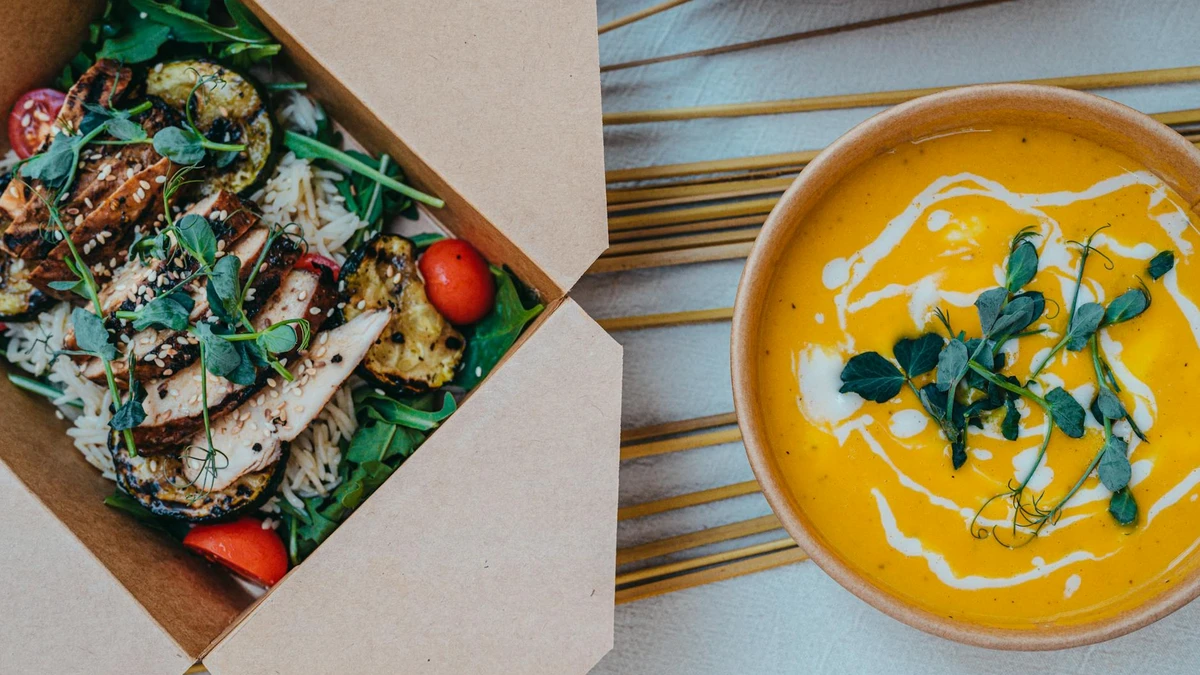
1. Colapso del divisor bajo el peso de la salsa
-Causa: Barreras finas (350 GSM o menos), divisores altos (25mm+) sin soporte.
-Prevención: Separadores acanalados, contrafuertes en las uniones de las bases.
2. Alabeo de la base con alimentos calientes
-Causa: Dilatación térmica desigual, grosor inadecuado.
-Prevención: 400+ GSM, refuerzos cruzados bajo los compartimentos, diseño de fondo plano
3. Deformación del borde durante la instalación de la tapa
-Causa: Los divisores reducen la continuidad estructural de la llanta
-Prevención: Banda de borde reforzada, diseño de borde enrollado
4. Agrietamiento de las esquinas durante la manipulación
-Causa: Concentración de tensiones donde los separadores se unen a las paredes de la taza
-Prevención: Esquinas interiores redondeadas, juntas reforzadas
Mínimo recomendado: Paredes divisorias acanaladas + soportes de contrafuerte para cualquier cubeta con altura de barrera de 20 mm+ y compartimentos para salsas.
Tapas planas (más común):
-Despejar Plástico PET permite la visibilidad de los alimentos
-Diseño de perfil bajo (fácil apilamiento)
-Fijación a presión o plegable de la llanta
-Coste: $0,05-0,10 por tapa
Pros: Muestra la presentación de los alimentos, cierre seguro, el cliente puede inspeccionar el contenido
Contras: Se forma condensación en la parte inferior (gotea sobre los alimentos), problema de percepción del plástico
Tapas abovedadas:
-El centro elevado permite colocar artículos más altos (pollo frito, guarniciones)
-Mejor gestión de la condensación (goteos a la periferia)
-Aspecto premium
-Coste: $0,08-0,15 por tapa
Pros: Evita el aplastamiento de los alimentos, aspecto elegante, menor contacto con la condensación
Contras: Mayor coste, más difícil de apilar, más material
Tapas de papel (opción eco emergente):
-Fibra moldeada o cartón recubierto
-Compostable con bol
-Reducción del uso de plástico
-Coste: $0,10-0,18 por tapa
Pros: Sostenibilidad total y sólidas credenciales ecológicas
Contras: Visibilidad limitada, menor resistencia estructural, sensibilidad a la humedad
Problema: Los separadores interrumpen la continuidad de la llanta, creando puntos débiles de sellado
Soluciones:
1.Diseño de llanta continua: Los separadores terminan 3-5 mm por debajo del borde de la llanta, manteniendo una superficie de sellado ininterrumpida.
2.Borde reforzado en las uniones de los divisores: Grosor adicional del material donde los separadores se unen al borde
3.Material elástico de la tapa: PP o PET con flexibilidad para adaptarse a las interrupciones de los divisores
4.Tapas abatibles: Las tapas preadheridas eliminan los problemas de alineación
Prueba de estanqueidad: Llene el bol hasta la capacidad 80% (incluidos los líquidos del compartimento para salsas), cierre la tapa, inviértalo durante 60 segundos y agítelo suavemente. Cero fugas = diseño de sellado adecuado.
Problema: El exceso de personal cuesta a los restaurantes 8-15% de los gastos de alimentación
-Cucharadas inconsistentes (varía según la persona)
-“Porciones ”generosas" para que el cliente se sienta a gusto
-No hay referencia visual de la ración correcta
Solución: Cuencos divididos como guías de porciones
Ejemplo de cálculo (recipiente de 1000 ml con tres compartimentos, proporción 40/30/30):
-Compartimento del arroz (400 ml de capacidad = 150-180 g de arroz cocido)
- Ración estándar: 150g
- Exceso de porciones a 200 g = +33% de coste
- La capacidad del bol evita el exceso de porciones = ahorro de $0,12-0,18 por comida
-Compartimento proteico (300 ml = 120-150 g)
- Ración estándar: 120g de pollo a la plancha ($0.80)
- Exceso de porción a 180 g = +50% de coste (+$0,40)
- La restricción de compartimentos impone la porción = $0,40 de ahorro por comida
-Compartimento para verduras (300 ml = 100-120 g)
- Porción estándar: 100g ($0.20)
- Exceso de porción a 150 g = +$0,10 de coste
- Exceso de los límites de la taza = $0,10 de ahorro
Ahorro total por comida combinada: $0,62-0,68 frente al porcionado a pulmón
Ahorros anuales (1.000 combos/semana): $32.000-35.000
Prima por el coste de la bolera (compartimento dividido frente a compartimento único): $0,08-0,12
ROI: 500-700% retorno de la inversión en actualización de cuencos
Impresión exterior:
-Flexografía (estándar): Logotipo de 2-4 colores, gráficos sencillos
-Offset (premium): Fotos a todo color, diseños complejos, degradados
-Pedido mínimo: Flexo 50k unidades, Offset 100k unidades
Marca en el compartimento interior:
-Imprima los nombres/iconos de los alimentos en cada sección (“Arroz”, “Proteína”, “Salsa”)
-Etiquetado multilingüe para diversos mercados
-Recuento de calorías por compartimento (posicionamiento consciente de la salud)
Coordinación de la tapa:
-Combine el estampado de la tapa con el diseño del bol
-Las tapas transparentes pueden mostrar la organización de los compartimentos
-Códigos QR que enlazan con información nutricional, reordenación de pedidos
Separadores por colores:
-Colores de cartón personalizados para distintos tipos de comida
-Ejemplo: Separadores rojos para las comidas picantes, verdes para las vegetarianas
-Requiere cartón especial (+20-30% de coste, 150k+ MOQ)
Cuándo invertir en utillaje a medida:
-Compromiso de volumen: más de 200.000 unidades anuales
-Los diseños estándar no se adaptan a las necesidades específicas de los menús
-Prioridad a la diferenciación de la marca
-Dispuesto a invertir $8.000-15.000 en el desarrollo de moldes
Desglose de costes de utillaje:
-2 compartimentos personalizados: $5.000-8.000
-3 compartimentos personalizados: $8.000-12.000
-Complejo de 4+ compartimentos: $12.000-18.000
-Amortización: El coste se reparte entre las series de producción
Escenarios de ROI:
-Cadena de gran volumen (500k unidades/año): Coste de utillaje = $0,016-0,024 por unidad
-Operador de volumen medio (200.000 unidades/año): Coste de utillaje = $0,040-0,060 por unidad
-Justificable si el diseño personalizado añade un valor ≥$0,10 o ahorra ≥$0,08 en operaciones.
### Adaptación del tamaño del cuenco al menú
Comidas rápidas (oficinistas, comidas de 20 minutos):
-Recomendado: 750 ml, 3 compartimentos (40/30/30)
-Arroz/fideos 150 g + proteína 120 g + verdura 100 g = ajuste perfecto
-Tamaño compacto (cabe en el escritorio o en el portavasos del coche)
Cenas combinadas en familia (2-3 personas compartiendo):
-Recomendado: 1200ml, 3-4 compartimentos personalizados
-Mayor ración de proteínas (200-250 g), doble ración de cereales
-Incluye salsera (50-80 ml de capacidad)
Comidas para niños:
-Recomendado: 600 ml, 3 compartimentos (tercios iguales o 40/30/30)
-Control de porciones integrado (evita la sobrealimentación)
-Factor de diversión (separación visualmente atractiva)
❌ Error #1: Elección de cuencos de 2 compartimentos para comidas combinadas de más de 3 platos para ahorrar costes
✅ Enfoque correcto: Cramming three items into two compartments defeats the separation purpose. Sauces still mix with rice, presentation suffers. The $0.05-0.08 savings per bowl costs you $0.15-0.25 in wasted ingredients from over-portioning and $2-5 in lost customer satisfaction. Use 3-compartment bowls for true combo meals.
❌ Error #2: Selección de una altura divisoria de 15 mm para platos salseados de curry o teriyaki
✅ Enfoque correcto: 15mm barriers can’t contain 40-60ml sauce portions—they spill during transport. For any dish with significant liquid component (curry, teriyaki, pasta sauce), specify 20-25mm barrier height. Test by filling sauce compartment and tilting 45° for 30 seconds—no spillover confirms adequate height.
❌ Error #3: Uso de cartón 350 GSM para cuencos divididos con alimentos calientes y pesados
✅ Enfoque correcto: Thin dividers in 350 GSM bowls sag under weight of 150-200g hot protein + sauce (thermally weakened fibers). Minimum 400 GSM for hot combo meals, 450 GSM for very saucy dishes. The $0.08-0.12 material upgrade prevents structural failure and maintains premium appearance.
❌ Error #4: Pedir una configuración de compartimentos personalizada sin probar con elementos de menú reales
✅ Enfoque correcto: Always request samples and conduct real-world tests: Fill compartments with actual portions, seal lid, transport in delivery bag for 30 minutes, evaluate leakage/presentation/structural integrity. A $12,000 custom mold for poorly sized compartments is an expensive mistake. Validate design before production tooling.
Los boles de papel divididos separan los componentes de los platos combinados (arroz, proteínas, verduras, salsas) en compartimentos individuales, lo que evita la contaminación cruzada y mantiene la integridad de los alimentos durante el reparto. Los utilizan restaurantes de servicio rápido, servicios de preparación de comidas y camiones de comida para controlar las porciones, mejorar la presentación y aumentar la eficiencia operativa.
For standard rice/protein/vegetable combos: 3-compartment 40/30/30 or 50/25/25 ratio (750-1000ml total capacity). For main dish with sides: 2-compartment 60/40. For premium multi-item meals: 4-compartment with dedicated sauce well. Choose based on your specific portion sizes—test with actual menu items before bulk ordering.
Minimum 15-20mm for light sauces (dressings, light gravies), 20-25mm for moderate sauces (teriyaki, pasta sauce), 25-30mm for heavy/liquid sauces (curry, soup-like consistencies). Test by filling sauce compartment to 80% and tilting bowl 45° for 30 seconds—zero spillover confirms adequate barrier height.
Minimum 400 GSM for hot combo meals with sauces. 350 GSM acceptable only for cold salads or dry items. Dividers are structurally weaker than solid walls—thin barriers sag under weight of heavy — hot foods. 450-500 GSM recommended for premium service or very saucy dishes requiring maximum structural integrity.
Yes. Exterior flexographic printing (2-4 colors, 50k MOQ) or offset printing (full-color, 100k MOQ) for logos and designs. Interior compartment labeling possible (food names, portions, calories). Custom compartment configurations require tooling investment ($8k-15k) and 200k+ unit commitment but offer unique brand differentiation.
Yes, sometimes $0.08-0.15 more per unit (20-40% premium). That said, portion control savings offset this cost: Divided bowls prevent over-portioning, saving $0.35-0.65 per meal in food costs. ROI calculation: $0.12 bowl upgrade saves $0.50 in ingredients = 417% return. Enhanced presentation also increases combo meal sales 12-18%.
Clear PET flat lids ($0.05-0.10) for food visibility and secure sealing. Dome lids ($0.08-0.15) for taller items and better condensation management. Paper/molded fiber lids ($0.10-0.18) for full compostability. Ensure continuous rim design (dividers terminate 3-5mm below rim) for proper seal. Always conduct 60-second inversion test with filled bowl before ordering.
Los cuencos de papel divididos transforman el servicio de comidas combinadas mediante una compartimentación diseñada que preserva la calidad de los alimentos, controla las porciones y mejora la presentación. El éxito depende de que la configuración de los compartimentos se adapte a su menú (3 compartimentos 40/30/30 para combos estándar), de que se especifique una altura de barrera adecuada (20-25 mm para platos salseados) y de que se seleccione el gramaje de cartón apropiado (400+ GSM para integridad estructural).
Principales conclusiones:
1.El diseño de los compartimentos permite controlar las porciones-ahorra $0,35-0,65 por comida frente a la porción libre (417% ROI)
2.La altura de la barrera debe coincidir con el volumen de la salsa-20-25mm mínimo para salsas típicas, 25-30mm para sopas
3.El cartón de 400 GSM es mínimo para los combos en caliente-Los separadores necesitan una rigidez adicional frente a los cuencos de un solo compartimento
4.El valor de la presentación aumenta las ventas de combo 12-18%-los clientes perciben mayor calidad con los alimentos separados
5.Pruebas con elementos de menú reales antes del mecanizado-validar el tamaño de los compartimentos, la altura de las barreras y la integridad del sellado
-Soluciones de envasado para reparto de comidas
-Buenas prácticas para el control de las porciones
Papacko fabrica cuencos de papel divididos para restaurantes de servicio rápido, servicios de reparto de comidas y catering: Configuraciones de 2-4 compartimentos, construcción de 400-500 GSM, opciones de revestimiento PE/PLA y herramientas personalizadas para diseños únicos. Las cantidades mínimas de producción empiezan en 50.000 unidades para diseños estándar y 200.000 para configuraciones de compartimentos personalizados, con certificación de seguridad alimentaria y servicios de marca.
Divided bowls usually sit inside a wider packaging decision that also includes bowl lids, salad presentation, and container formats for mixed-menu takeaway operations.
Póngase en contacto: