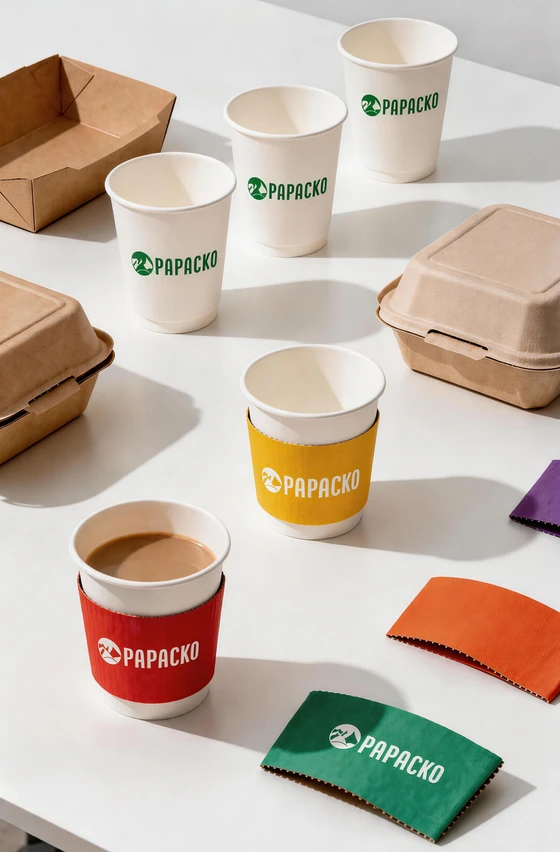
¿Está listo para crear sus propios vasos o envases de papel con su marca?
Díganos sus requisitos -tamaño, revestimiento, impresión y destino- y nuestro equipo le preparará un presupuesto detallado en 24 horas.

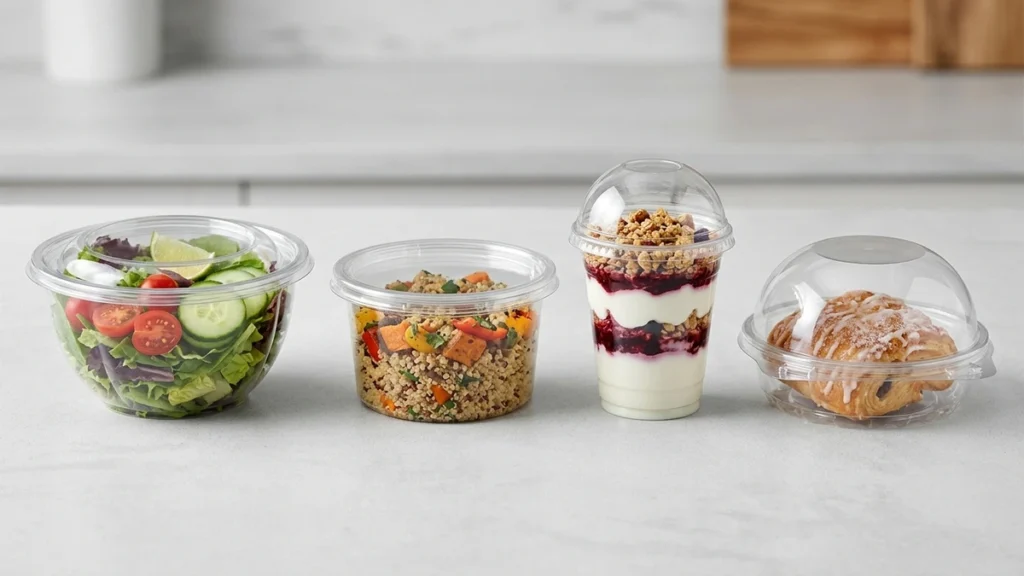
Los envases transparentes para alimentos ayudan a los compradores a encontrar el equilibrio entre la visibilidad del producto, la idoneidad operativa y la fiabilidad del envase. En la mayoría de los programas B2B de restauración y venta al por menor, la elección adecuada depende de cuatro variables prácticas: la temperatura de llenado, la transparencia requerida, el rendimiento de la tapa y los requisitos de la cadena de suministro. Las ensaladas frías, los postres refrigerados y la exposición de productos de panadería suelen apuntar hacia el PET o el rPET. El llenado en caliente, el recalentamiento o el uso en microondas suelen inclinar la decisión hacia el PP.
Esto es importante porque un envase que parece adecuado en una revisión de muestras puede fallar en la producción. La salida de la tapa, la flexión de las paredes laterales, el apilamiento deficiente, la condensación y las variaciones entre proveedores son problemas habituales cuando se elige un envase transparente basándose en la imagen del catálogo, en lugar de probarlo en el flujo de trabajo real. Los compradores que revisan varios formatos también pueden comparar aspectos relacionados envases para alimentos a la hora de planificar una gama de envases más amplia.
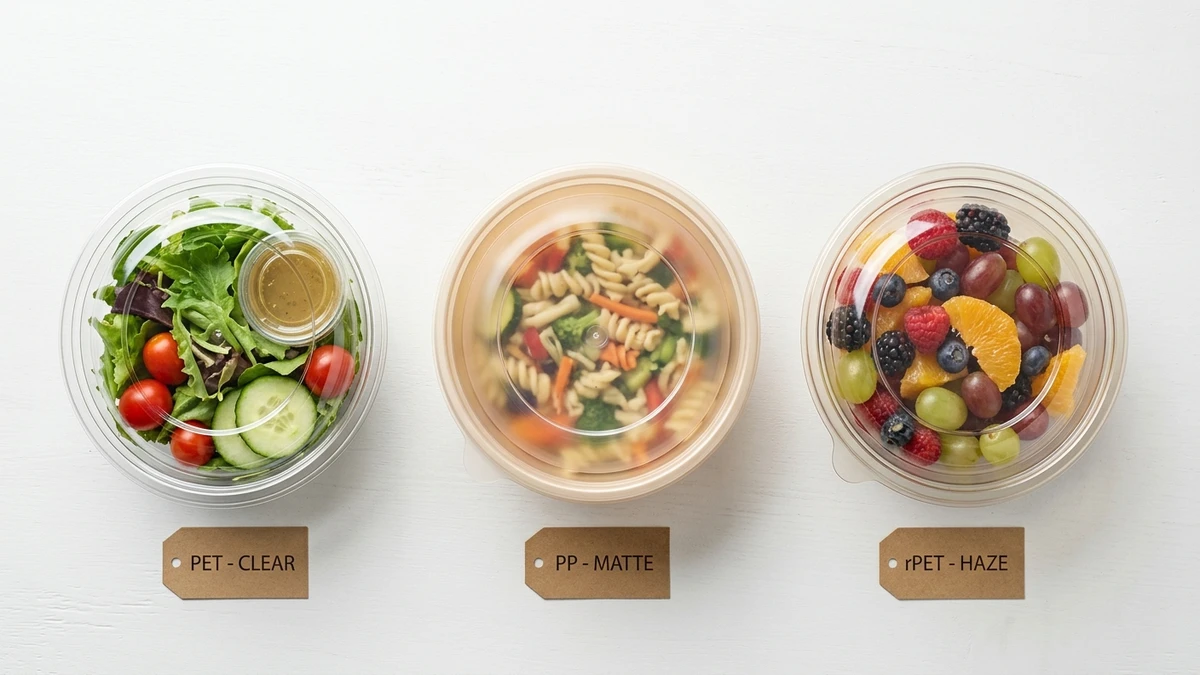
El material debe elegirse en función de las condiciones reales de uso, y no solo del coste unitario. La decisión fundamental es sencilla.
El PET se utiliza ampliamente para ensaladas, productos frios de charcutería, fruta, productos de panadería y vasitos de postre, ya que ofrece una gran transparencia y resulta muy atractivo en el punto de venta. Su punto débil es el calor. Si el producto se envasa en caliente o desprende vapor residual, el PET puede deformarse y la tapa puede dejar de encajar correctamente.
El rPET suele ser la segunda opción cuando el contenido reciclado forma parte de los requisitos de adquisición. Su rendimiento puede ser similar al del PET, pero su transparencia depende de la calidad de la materia prima y del porcentaje de contenido reciclado. Antes de dar su aprobación, los compradores deben solicitar declaraciones de aptitud para el contacto con alimentos y documentación sobre el contenido reciclado. Para la revisión del cumplimiento de la normativa estadounidense, el Directrices de la FDA sobre sustancias en contacto con los alimentos es la referencia más relevante en materia de validación de fuentes y procesos.
El PP sacrifica algo de transparencia a cambio de resistencia al calor. Es la opción más práctica para acompañamientos calientes de charcutería, productos envasados en caliente o menús aptos para microondas. Sin embargo, si el alimento se vende basándose en la frescura visual, es posible que el PP no resulte tan atractivo para el consumidor como el PET.
Un método de cribado rápido es:
Los envases para ensaladas y productos delicatessen necesitan algo más que transparencia. Deben cerrarse de forma fiable, evitar fugas, soportar el apilamiento y mantener su aspecto durante la preparación, la conservación en frío, el transporte y la exposición.
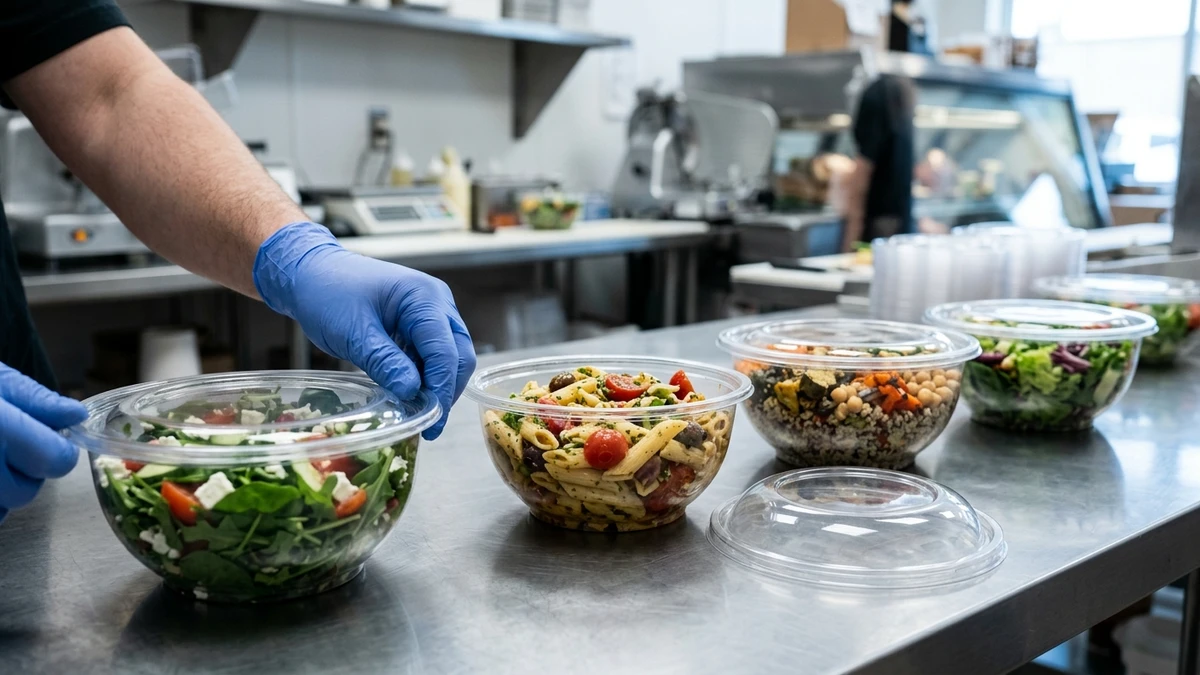
Para ensaladas frías, cuencos de cereales, fruta cortada y mezclas de charcutería, el PET suele ser el primer material que se prueba. Ofrece una buena transparencia en las paredes laterales y un aspecto fresco en los expositores refrigerados. Pero el mejor envase no siempre es el que tiene mayor transparencia. Los productos húmedos, los aderezos aceitosos y los ingredientes voluminosos pueden afectar al rendimiento del envase.
Los compradores deberían comprobar primero estos puntos:
Una regla práctica es evitar llenar el recipiente hasta el borde. Una ensaladera que, técnicamente, tenga el volumen adecuado puede resultar poco práctica si los ingredientes que la cubren presionan la tapa y hacen que esta no cierre bien. Las tapas abovedadas permiten que los ingredientes sobresalgan, mientras que las tapas planas suelen facilitar el apilamiento y aumentar la densidad de almacenamiento.
El ajuste de la tapa es el punto en el que fallan muchos programas. No basta con que coincidan los diámetros. El perfil del borde, la fuerza de cierre y la tolerancia de moldeo varían según el proveedor. El uso de tapas y recipientes de distintos proveedores suele provocar fugas, dificultades para el cierre o que se salgan durante el envasado y el transporte. Los compradores deben solicitar muestras de conjuntos a juego del molde de producción previsto, no solo muestras de exposición.
El pedido mínimo (MOQ) y el plazo de entrega también son importantes. Las ensaladeras en stock pueden estar disponibles con pedidos mínimos más bajos y ciclos de reposición más cortos, mientras que el utillaje a medida o las tapas de colores personalizados pueden requerir pedidos mínimos más elevados y plazos de entrega más largos. Para las empresas en expansión, suele ser mejor estandarizar dos o tres tamaños básicos que gestionar demasiadas referencias (SKU) casi idénticas. Los equipos que combinan formatos transparentes y de papel en la misma operación también pueden revisar envases alimentarios desechables para simplificar el abastecimiento.
El envasado de los postres se basa en gran medida en la presentación. En los envases transparentes para alimentos, la transparencia de las paredes laterales, la geometría del recipiente y el espacio libre en la parte superior suelen ser tan importantes como el propio material.
El PET suele ser la mejor opción para preparar parfaits refrigerados, mousses, pudines y postres en capas. Resalta bien el contraste de colores y contribuye a una presentación de alta calidad. El rPET puede ser una buena alternativa cuando se requiere contenido reciclado, pero antes de realizar un pedido a gran escala conviene comprobar si presenta una ligera opacidad o alteraciones en el color mediante muestras de calidad de producción.
En el caso de los postres, los compradores deben tener en cuenta lo siguiente:
Las copas de postre más pequeñas pueden volverse inestables si la base es demasiado estrecha en relación con la altura. Las copas de parfait más grandes pueden deformarse si el grosor de las paredes es demasiado fino. Un recipiente puede parecer adecuado cuando está vacío, pero resultar frágil una vez lleno, tapado y apilado.
Es necesario realizar pruebas físicas para comprobar el ajuste de la tapa. Un vaso y una tapa que parezcan compatibles sobre el papel pueden no quedar bien sujetos tras un almacenamiento en frío o las vibraciones del transporte. Esto es especialmente importante en el caso de capas de líquido, siropes y coberturas batidas. Si el postre va a estar expuesto durante varias horas o se va a enviar a través de un servicio de reparto externo, un cierre seguro es más importante que el precio unitario más bajo.
La imagen de marca debe potenciar la visibilidad, en lugar de ocultarla. Para la mayoría de los compradores, las etiquetas autoadhesivas siguen siendo la opción de menor riesgo, ya que se adaptan a pedidos mínimos más reducidos y plazos de entrega más cortos. La impresión directa, las fundas retráctiles o el etiquetado en molde resultan más adecuados cuando una referencia tiene un volumen estable y un diseño gráfico que no cambia. Si la imagen visual forma parte de una familia de productos más amplia, los principios de diseño de envases minimalista puede ayudar a mantener la visibilidad del producto y, al mismo tiempo, garantizar una imagen de marca impecable.
Los envases de exposición para el comercio minorista deben proteger los alimentos y, al mismo tiempo, facilitar su venta. En el sector de la panadería, los productos para llevar y los productos refrigerados, los envases transparentes adecuados conservan la forma, resisten los golpes y mantienen el producto visible a través del escaparate previsto.
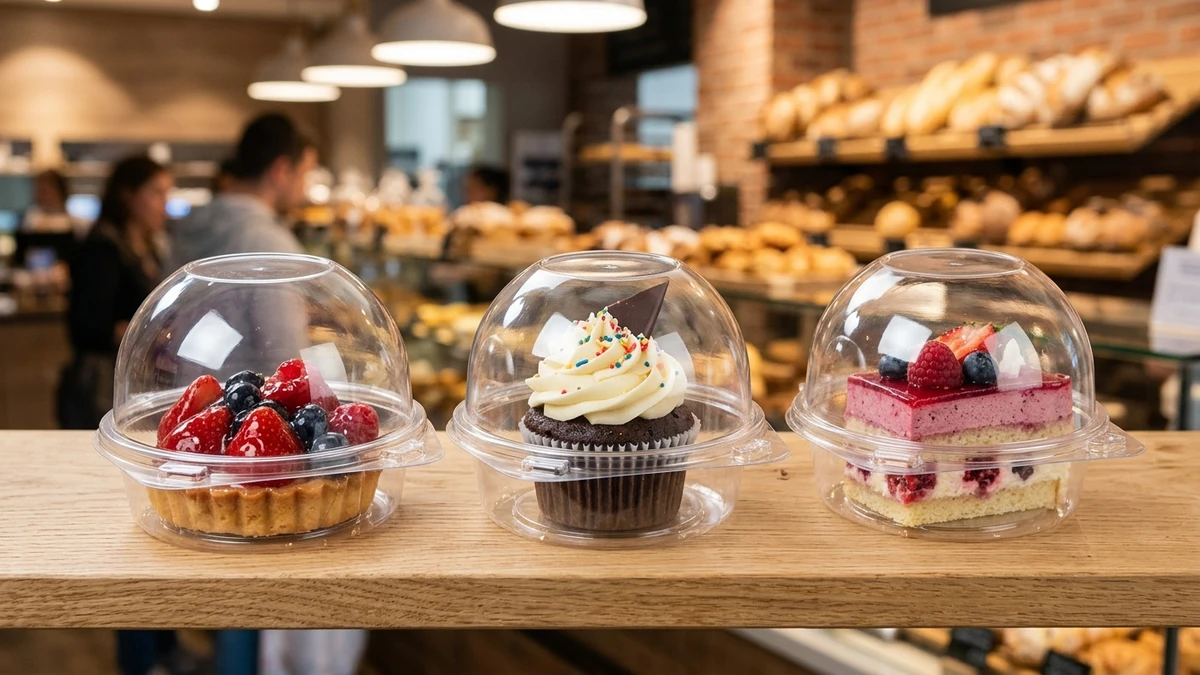
En el caso de los productos de panadería, la forma abovedada suele ser más importante que el volumen nominal. El glaseado, el barniz, la cobertura de fruta o la decoración en capas pueden dañarse si el espacio libre en la tapa es demasiado reducido. Los compradores deben medir el punto más alto del producto una vez terminado y enfriado, y dejar un margen adicional para su manipulación.
Entre los aspectos clave que los compradores deben comprobar en los envases de exposición se incluyen:
Los envases tipo clamshell pueden agilizar el proceso de embalaje, ya que eliminan el paso de colocar la tapa por separado y reducen el riesgo de que no encajen bien. Los sistemas con tapa separada ofrecen mayor flexibilidad, sobre todo cuando la base se puede combinar con opciones planas o abombadas. La mejor opción depende del volumen de producción, el estilo de presentación y la complejidad de las referencias.
En el sector de la panadería y la pastelería al por menor, el PET suele seguir siendo el material preferido, ya que ofrece una gran transparencia y resulta muy atractivo en el punto de venta. En el caso de los rellenos de panadería calientes o de los productos envasados antes de que se enfríen por completo, los compradores deben comprobar si el calor residual afectará al envase. Un envase visualmente atractivo pierde valor rápidamente si la tapa se deforma o las paredes se hunden tras el envasado.
En los programas con objetivos de sostenibilidad, a veces se plantea si el PLA puede sustituir al PET en los envases de exposición. En algunas aplicaciones puede ser así, pero solo cuando existe una infraestructura de compostaje industrial y el rango de temperaturas es adecuado para el producto. Los compradores que estén comparando estas opciones pueden consultar envases alimentarios compostables antes de realizar un cambio sustancial.
Una vez que se ha concretado el formato, la disciplina en la adquisición se convierte en el principal mecanismo de control de riesgos. Los envases transparentes para alimentos deben aprobarse como un sistema operativo, y no solo como un artículo concreto.
Empecemos por los conceptos básicos de la publicidad:
La impresión personalizada, el estampado en relieve personalizado y los moldes personalizados suelen aumentar la cantidad mínima de pedido (MOQ) y alargar los plazos de entrega. Si la demanda mensual sigue siendo inestable, un envase de stock con una etiqueta personalizada suele ser la opción más segura para el lanzamiento. En el caso de referencias consolidadas con un volumen predecible, los programas personalizados pueden mejorar la imagen de marca y el control de costes.
Las opciones de materiales y revestimientos también deben confirmarse por escrito. Es posible que los compradores tengan que especificar:
– PET virgen, rPET, PP o PLA
– Rango del porcentaje de contenido reciclado
– Tratamiento antivaho para la pantalla en condiciones de frío
– Tratamiento de la superficie si se prevé la impresión directa sobre PP
– Tapa con sistema de seguridad antimanipulación o con orificios de ventilación, según corresponda
La documentación del proveedor es un requisito imprescindible para la aprobación. Como mínimo, solicite:
Por último, somete las muestras de prueba al flujo de trabajo real. Esto implica el llenado, el cierre, el apilado, el almacenamiento en frío, el envasado, la simulación del transporte y la revisión de la presentación. Este paso permite detectar problemas reales, como el desajuste de las tapas, la opacidad por condensación y los fallos en la carga superior, antes de que se confirme el inventario. Si el programa de envasado también incluye la coordinación de bebidas y comida para llevar, elementos relacionados como tapas para tazas de café es posible que deban ajustarse a las mismas normas de abastecimiento y de marca.
El PET suele ser la mejor opción inicial, ya que combina una gran transparencia, una buena rigidez y un comportamiento fiable a bajas temperaturas. El rPET es una alternativa válida cuando el contenido reciclado es una prioridad en la adquisición y la transparencia resulta aceptable para la aplicación.
Algunos sí, pero no todos. El PET y el rPET suelen ser malas opciones a temperaturas superiores a unos 60 °C, mientras que el PP suele ser la opción más segura para envases que contienen alimentos calientes o para uso en el microondas.
A menudo se acercan, pero no siempre son idénticas. La claridad depende de la calidad de la materia prima reciclada y del porcentaje de PCR, por lo que las muestras de calidad de producción deben aprobarse antes de realizar un pedido grande.
No es fiable. El perfil del borde y las tolerancias varían según el proveedor, por lo que los vasos, los cuencos y las tapas deben someterse a pruebas como conjuntos completos antes de su puesta en marcha.
Por lo general, cuando un SKU tiene un volumen mensual estable y el diseño no cambia con frecuencia. En el caso de volúmenes más reducidos o programas de temporada, las etiquetas suelen ser la opción más flexible y de menor riesgo.
En la mayoría de los programas, el problema radica en un mal ajuste entre la tapa y la base, más que en el material en sí. El uso de proveedores alternativos para los componentes o el hecho de omitir las pruebas de transporte son causas habituales de problemas de desprendimiento y fugas.